
One of the more underrated aspects of the International Feature competition is seeing how the rest of the world treats various sectors of their respective populations. Issues like sexual diversity, gender roles, religion, and class hierarchy are given a treatment that is intriguing for those of us watching in America, but in their home countries run the gamut from pedestrian to revolutionary. The best challenge of this whole process is trying to put yourself as a viewer in their native shoes and absorb the experience within that context. Sometimes it offers a whole new perspective on the story. Sometimes it’s downright impossible due to some mitigating factor that we just can’t get past, but it’s essential nonetheless.
As we approach the first major hurdle of this year’s contest, it becomes somewhat necessary for me to condense reviews of the myriad entries, simply because I want to have something on record for when the shortlist comes out in two weeks’ time. By my latest count, I will have seen 36 of the 89 (or 92) candidates by that point, many of which were either viewed in special screenings or festivals, and thus either don’t have a domestic release date or has one that will come after the cutoff.
When this point inevitably comes, I do my best to group the hopefuls together on some thematic basis, if for no other reason than to make it all easier to digest. However, I want to make clear that I’m not doing this because I’m discounting these films’ chances or my reactions to them. In some cases, yes, it’s easier to review them this way because despite whatever quality they have, I just don’t have all that much to say to warrant a full-length review. But I want to emphasize that this is a move done out of necessity because there are only so many days on the calendar and I only have so many hours of consciousness in a day, not because I’m trying to make a meta statement about any of these candidates. Even the rare ones that I truly despise have some kind of value to the people in their respective homelands to have their Oscar committee give them their endorsement and put them in this race, and I will always respect that.
For this edition, we’re going to look at one of the most important metrics of any international profile, the rights and agency of women. I’ll be looking at five very different movies in this column, but all of them share that core, exploring how women navigate their lives within certain scenarios, be they on home soil or in a foreign country, young or old, mothers or childless, it’s all important. As ever, I’ll rate them in the order I saw them, and provide any release data I have available.
Inshallah a Boy – Jordan – In Theatres January 19
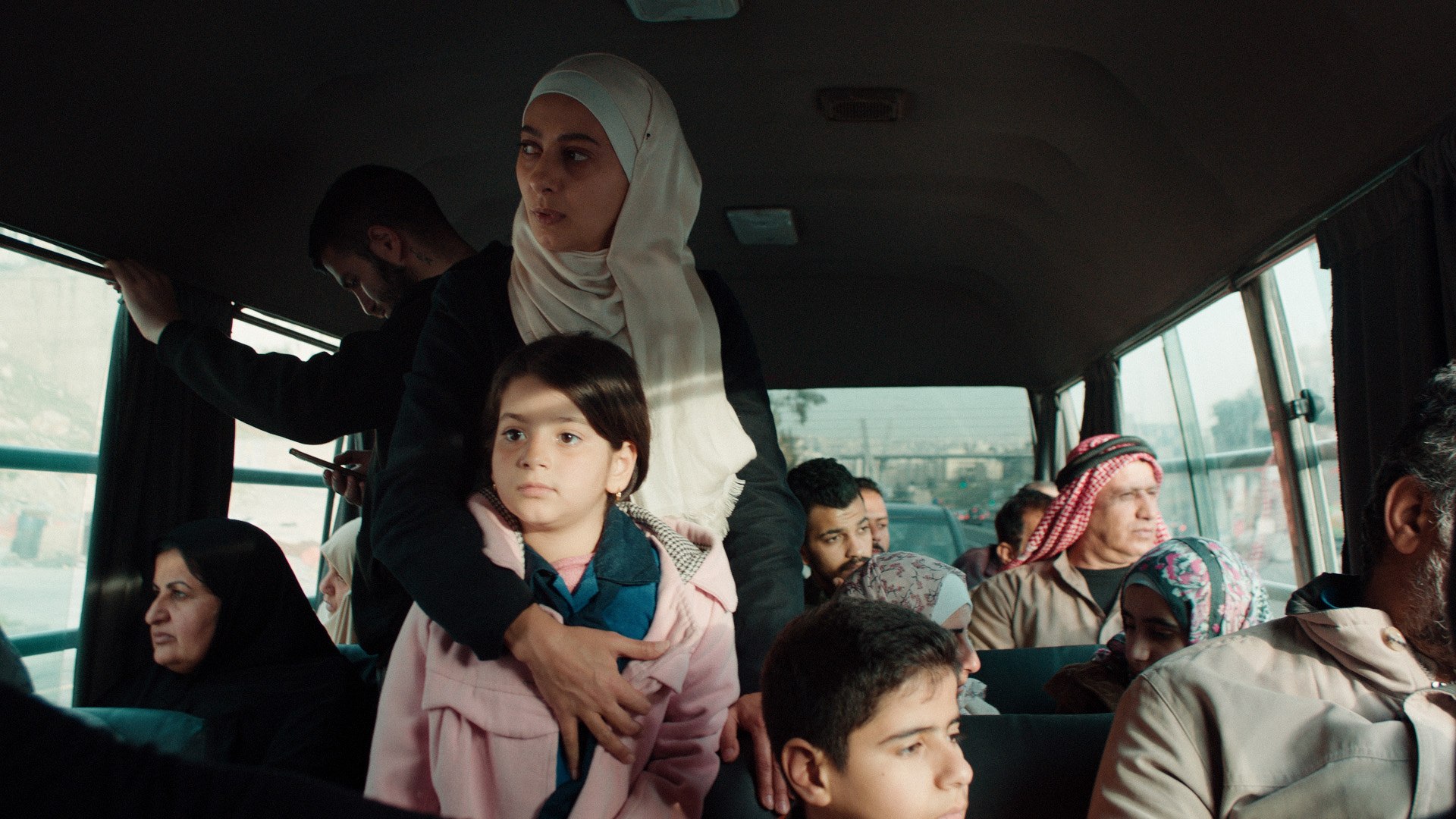
This was the first film (of 15!) I saw at this year’s AFI Fest, and it still rattles around in my head, a testament to how well it’s made and how significant its message can be. It’s an excellent character study about a woman who loses just about everything in her life, until realizing she has even more to lose once other forces try to take them from her, but her resilience and intelligence shine through in an inspiring manner, spotlighting a fairly predictable social ill in Jordan while still keeping matters focused on the person rather than the message.
Mouna Hawa stars as Nawal, a working-class wife and mother. She’s a Muslim woman who works as an in-home nurse for a wealthy Christian family, whose matriarch is bedridden with dementia. Still, she maintains a familiarity with the patient’s daughter Souad (Salwa Nakkara) and granddaughter Laura (Yumna Marwan) because it helps her to have an outside perspective to compare with her own home life, where she raises the young Nora (Celina Rabab’a) and is hoping to conceive a second child with husband Adnan (Mohammad Ghassan).
When Adnan suddenly dies in his sleep, however, everything begins to spiral. While friends and family offer the customary shows of support, it quickly becomes clear just how quickly and easily her life can be figuratively taken away to align with her husband’s literal loss. The biggest and most immediate threat comes in the form of Rifqi (Hitham Omari), Adnan’s brother, who wastes no time in taking advantage of the situation for his own personal gain.
Under Sharia Law, which Jordan does use, in cases of inheritance, if there is no will, a person’s assets transfer to the most direct male heir. If no such male exists, then everything is divided evenly among all next of kin. Before he died, Adnan bought a truck from Rifqi on loan, and still has four payments outstanding. Further, the mortgage on their apartment, which Nawal thought was solely willed to her, was not properly signed by Adnan, and thus can’t be counted as separate. Rifqi, himself apparently low on funds, insists quite heavily that he be made whole despite knowing that Nawal is both in mourning and only working a low-wage job. When she doesn’t instantly acquiesce, he uses the Sharia court system to compel the split of the estate, as Nawal only has a daughter, again knowing that doing so will basically either put her on the streets or make her entirely dependent on him. Nawal’s own spineless brother Ahmad (Mohammad Al Jizawi) is initially sympathetic, but always cowers in the face of conflict and offers no real assistance when it comes down to it, conditioned as he is to side with the man in such cases, including Rifqi over his own blood.
In her quest to find any kind of money to pay Rifqi off, Nawal learns some potentially horrible truths. She sells most of her and Adnan’s belongings – because unbeknownst to her he was fired from his job months before and had no income – and finds condoms in his clothing pockets, which she believes connects to a mysterious string of phone calls from someone who won’t speak to her when she answers. An affair is clearly implied but not explicitly stated, which fills her with rage, not just because of her own loyalty, but also in light of the fact that while trying to conceive, he often claimed exhaustion as a reason not to have sex. Was he losing his energy and money elsewhere, and has that now come back to doom her twice over? It’s heartbreaking to see her go through this gauntlet.
However, she does come up with a brilliant loophole to at least forestall her complete downfall. As she and Adnan were trying to have another baby, she claims that she is indeed pregnant. If the unborn child turns out to be a boy, then under Sharia Law, he becomes that needed heir, and thus nullifies Rifqi’s claims. This is where the title comes from (“Inshallah” meaning “God willing”), as in a cruel twist of irony, a widowed single mother must now pretend that her burden is about to be doubled for life in order to mitigate the cost of her husband’s death. The way she goes about this plot to buy herself nine months is beyond clever, including enlisting Laura’s help, as she has become pregnant at the hands of her abusive ex-husband. She tries to forge Laura’s positive test as her own to show the court, but the price of doing so is accompanying Laura to a secret, illegal abortion clinic. Again, the juxtaposition is fantastic. A woman who doesn’t want a baby needs the help of someone who desperately needs to lie about one, and both of them are lectured about sin by a doctor performing a procedure he himself finds abhorrent. It’d be delicious if it weren’t so tragic.
There are a few drawbacks here and there. For one, I think too much time is spent hammering in how much of an asshole Rifqi is. One or two times is plenty, and we get at least a half dozen different incidents, including a low-key kidnapping of Nora. Similarly, a side plot about Nawal’s co-worker Hassan (Eslam Al-Awadi) having a crush on her, trying to flirt before Adnan’s death and immediately initiate a relationship afterwards, is both creepy and unnecessary. Nawal gets the exact same mileage out of a two-minute scene where she tries out Tinder (in hopes of finding a one-night baby daddy to conceive on the sly) and just finds it all gross before giving up. The weirdest bit revolves around the truck itself. Nawal doesn’t have a driver’s license, and the truck is blocking an area of the street where workers need access. Rifqi, jerk that he may be, reasonably asks her to sell it so that he can get his remaining payments and she can have the rest, as she has no practical use for it. I hate to agree with him, but he’s absolutely right in this one area. Holding onto it for sentimental purposes makes no sense given that Nawal sells everything else of Adnan’s and her anger at his likely philandering. I understand the desire to learn to drive, but there’s a time and a place, and this crisis isn’t it. Sell the truck now, stave off Rifqi’s near-rapacious requests, and live to fight another day.
Still, despite that, this is a really good film. Hawa’s performance is superb, the character motivations work within context, and there is legitimate suspense and tension throughout, even in the more superfluous moments. Plus, it gives western audiences a look into an issue that many in this country rail against without any actual knowledge, highlighting its absurdity without casting aspersions on people who come to these beliefs honestly.
Grade: B
Slow – Lithuania – No Release Information Available
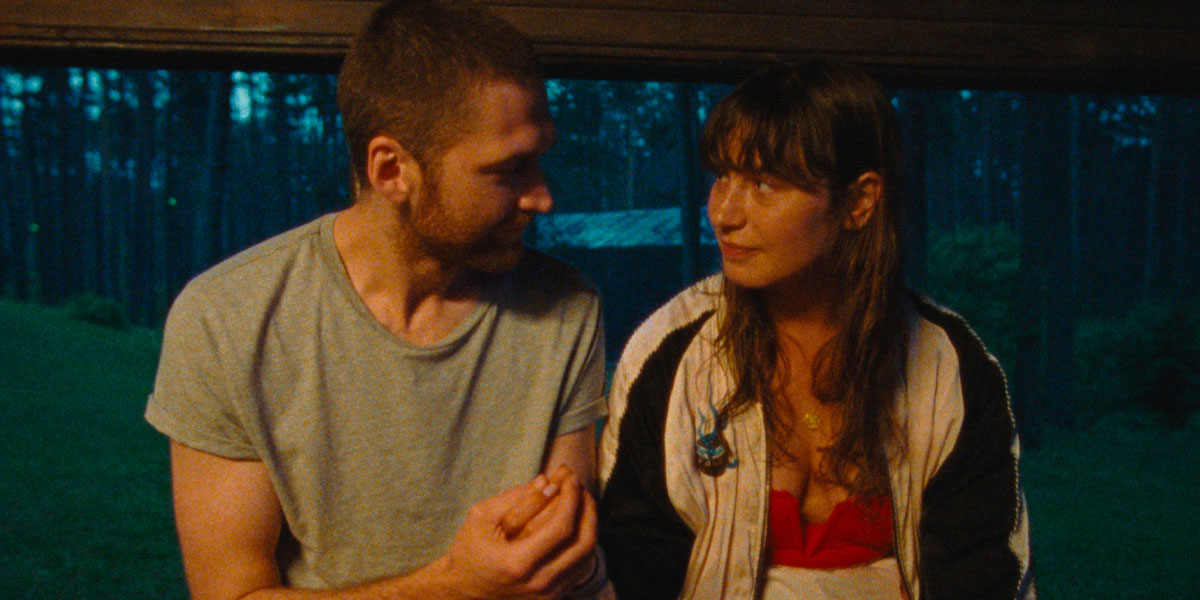
One of the more crucial aspects of a woman’s life that’s finally getting the respect it deserves is sexuality, not just in the allowance for pleasure, but the agency to dictate her wants and needs without it being reduced to just a consent issue. Lithuania’s entry, Slow, is a perfect example of this idea, featuring a doomed romance centered on its fatal flaw – sexual incompatibility – but handling it in a tender, even-handed, empathetic way we don’t often see.
The film stars Greta Grinevičiūtė and Kęstutis Cicėnas as Elena and Dovydas. Elena is a sexually liberated dancer and instructor, using her art the same way she uses her eroticism, as a means of expression to show that she isn’t meant to be boxed in or pigeonholed. Her mother (Rimantė Valiukaitė) used to denigrate her as a child, telling her she wasn’t thin enough to be a ballerina, and thus would have no use for dance in her life. Elena took that traumatic cue and turned it into a fulfilling life, both in public and private.
Dovydas is a sign language interpreter, developing the skill as a child to help communicate with his deaf brother. He’s charming, friendly, and always willing to lend a helping hand. He meets Elena while working with a group of deaf teenagers who will soon be attending a camp, and they want to learn dance for their talent show display.
Before they even meet, we see the surface contradictions that make this coupling feel star-crossed. Dovydas’ work involves transmitting sound to those who can’t hear, while Elena’s career all but requires sound that she can react to through movements, which she then must help convey to eager students who cannot experience the music that provides their choreography. It’s a wonderful visual irony, and when the students finally do their routine, it’s kind of magical.
This is because we also get early scenes that perfectly demonstrate the leads’ weaknesses. The film opens with Elena hooking up with a random guy who demands that she tell him she loves him as foreplay, insisting he can’t get it up without hearing those words. This means that our first instance of seeing Elena is in a form which forces her to lie about who she is to satisfy someone else. Conversely, Dovydas is in a studio where a band is filming a music video. It’s his job to translate their lovelorn lyrics into sign, with the camera focused solely on him as he emotes a loneliness he knows he can’t fully get across.
These scenes are excellent thesis statements for both characters, who hit it off fairly quickly. On their second date, Elena invites Dovydas to her place, already satisfied in her attraction to take things to the next level. This is when Dovydas drops the inevitable axe. He’s asexual. He likes Elena a lot, and as the film goes on, it’s clear he’s fallen in love with her, but he feels no sexual attraction, and thus cannot satisfy her more carnal needs.
So now it’s a case of which sadness will eventually win out? Will Elena suppress her desires for his sake, or will Dovydas continue to be alone because he can’t force himself to consummate in what he feels are purely mechanical terms?
Under normal circumstances, this entire plot would be dead on arrival for me, because once the central conflict is established, we’re just counting the minutes until it inevitably ends. And to be fair, there are a few moments where I certainly felt that. But the reason this movie doesn’t fail is two-fold. One, the script takes the time to fully explore what both sides feel, want, and need in a given situation. There are times when Elena can tell that Dovydas is trying to perform just to make her feel better, even though she knows he doesn’t want to, so she stops him because the thought is truly enough. There are other times when Elena tries to initiate, only for Dovydas to rebuff her, asking how many times they’re going to do this dance when they both know the end result. There’s a maturity to this very adult material, to the point that for once we don’t need to use terms like “mature” and “adult” as euphemisms for porn, but rather by their actual, intended definitions.
Secondly, the actors really do have great chemistry together. There’s a natural charisma that both of them bring to these roles, a romantic familiarity that shows they know how to be a functioning couple rather than just sexual partners. There are scenes where they’re out partying or going on dates that are just so goddamn cute and sweet that it feels straight out of a cheesy rom-com, but they play off each other so perfectly that rather than roll your eyes, you’re actively rooting for them, even though deep down you know it can’t last.
The lengths this movie goes to show how something so complex can be handled nonjudgmentally is not only compelling, but comforting and welcome. This isn’t perfect, but no relationship is, and it’s in those imperfections that the film shines the brightest, giving us a fairly unique look at an aspect of love we often take for granted. And not for nothing, this is the first time I’ve ever truly seen asexuality depicted in film. It’s the diversity of stories that draws me to this competition, and Lithuania delivered.
Grade: B+
Tiger Stripes – Malaysia – No Release Information Available

This is something of a difficult film to critique, because it represents so much more than it actually is. Directed by Amanda Nell Eu in her feature debut, this combination coming-of-age/body horror/comedy became the first Malaysian film from a female filmmaker to screen at the Cannes Film Festival, where it won the Critics’ Week Grand Prize. This is what put it over the top to be submitted to the Academy.
But then, a self-defeating moment occurred. On the week of October 19, literally seven days before I saw it at AFI Fest, the movie debuted in Malaysia for its qualifying theatrical run. However, the Malaysian Ministry of Home Affairs censored it, removing some scenes that, per Eu, showed “the very joy of being a young girl in Malaysia.” Eu has since disavowed the government-approved cut of the film, which may end up helping its Oscar candidacy in the long run. Nothing the Academy likes more than fighting any restrictions on free speech, especially ones that directly reinforce the themes of the flick by trying to countermand them. I’m honestly surprised a U.S. public release hasn’t been announced yet in the wake of this, but the news alone may still compel voters to at least advance it to the shortlist.
That said, I didn’t really care for this. I have no problem with the message that Eu is trying to convey, I just don’t think it was all that well done. You can see the bind I’m in. The cause is noble, especially when exacerbated by ignorance. But that doesn’t make the film retroactively better.
The story revolves around three adolescent girls in a rural village: Zaffan (Zafreen Zairizal), Farah (Deena Ezral), and Mariam (Piqa). They’ve been the best of friends all their lives, and they sort of complement each other. Zaffan is rambunctious and extroverted, Farah is more reserved and believes in following the rules, and Mariam sort of bridges the gap between their extremes. They work well off each other, including in early scenes where Zaffan does a semi-strip tease dance in the school bathroom for social media and they all play in a local river (I’m guessing these are the scenes that were cut for the Malaysian release, though Eu doesn’t specify).
The problem is, these moments also demonstrate why I just don’t care about them as characters. Zaffan is annoying in the extreme and her priorities are completely messed up, even for a pre-teen. Farah is far too uptight to be believable. Mariam doesn’t do enough to speak up for either side throughout the film, but it’s especially glaring in the first few minutes, where Zaffan (playfully in her mind) treats Farah like absolute shit. You already lost me at the opening image of a twerking tween, but then to have her bully her supposed friend? Apart from the quality of the performances (ironically the characters are so awful that I found myself wondering how kids could pretend to be this bad, so they must be great actors), what am I supposed to really latch onto here?
The tables turn drastically, however, when Zaffan becomes the first in her class to get her period. The uncontrollable changes in her body – including accidentally peeing at her desk and quickly developing body odor – leads to a swift alteration in the school’s social pecking order, with Farah leading the charge, avenging her own torment by giving it back to Zaffan ten-fold. Zaffan tries traditional methods of getting back in good graces, like joining the local scout troop and excelling on a camping trip, but it’s all for naught.
This brings us to the real crux of the film. As Zaffan’s puberty develops, she begins changing into a tiger-like beast. She sheds hair, grows fangs and claws, and even develops a thirst for blood and raw meat. She spends her nights running wild in the jungles surrounding her village, threatening anyone who comes near, while also distraught because she can’t understand what’s happening to her.
Now, this could work if it weren’t so derivative and cheaply done. We’ve seen this trope a bunch of times across media, where the onset of puberty is tied to a much grander physical transformation: Turning Red, Steven Universe, Inside Out, Big Mouth, Teen Wolf, Twilight, Brightburn, the list goes on. It’s not that it can’t be done again, but you have to bring something new to the table, and sadly, for whatever reason, Eu just doesn’t do that. Not only are the body prosthetics laughably fake looking (at one point Zaffan gets cat’s eyes that look like they were edited in from Michael Jackson’s “Thriller” video), but they rarely have any bearing on the plot, save for a late scene where a different social media charlatan (Shaheizy Sam) gets some comedic comeuppance.
More importantly, though, the opportunity for originality is wasted in favor of appealing to digital influence. There were tons of chances to make this into a nuanced story, one that could also be genuinely scary. The biggest missed chance of all is in Farah herself. She uses her adherence to rules and religious practices as the pretense for claiming the moral high ground and justifying her eventual torture of Zaffan. So why not take this down the path it was begging to go down? Why not have Farah get her period, too? Why not have her start to transform? Why not have her be forced to reconcile her own behavior once it happens to her, because spoiler for the real world, it’s going to happen to them all eventually. There’s even a scene before Zaffan’s turn where the main trio is talking and Farah outright says how horrifying she finds the idea of menstruation (one of the few points in the film’s favor is that religious fundamentalism engenders horror stories about death and dismemberment surrounding a woman’s cycle rather than a competent sex education curriculum). Deliver on that! Don’t set up the obvious foreshadowing and then not pay it off! That’s Filmmaking 101!
This is a worthwhile effort, I’ll grant. It’s an attempt to put a different spin on a familiar plot, but it doesn’t commit to its own premise and explore it for all it’s worth. The film’s profile might have been raised as a result of government censors being offended by a TikTok video, but the real problem is that Amanda Nell Eu’s film cares more about those videos than telling a compelling story. There was something here that could have been really special, but like Zaffan herself, the priorities of this movie were woefully misguided.
Grade: C-
Smoke Sauna Sisterhood – Estonia – In Theatres Now

This is a prime example of what I said in the preamble, where a lack of something to say doesn’t necessarily detract from the quality of the film. There’s just not enough to warrant a full review. Estonia’s entry, Smoke Sauna Sisterhood, is an intelligent, inspired documentary. It’s just that there’s not much to it beyond the basic premise.
In Estonia, smoke saunas – non-ventilated cabins heated by burning wood – are considered a piece of cultural heritage, and for the purposes of this film, a symbol of the community of women. Over the course of the picture, we meet about 13 or so different protagonists, only one of whom (Elsa) is referred to by name, and even she does it as part of an anecdote rather than being addressed by someone else. Each of these women help to take care of the sauna, prepping the wood and fire and supervising the long process of heating the room (it can take up to a full day), treating it as a part of their close knit group.
Once inside, the various participants take it in turns to discuss the issues they face as women in the modern world. Like America Ferrera’s big speech in Barbie, they talk about the cognitive dissonance that comes with being female, the inherent contradictions of societal pressure to be perfect while being vulnerable. Some discuss the pressures of motherhood, others the choice to have an abortion, another coming to terms with being gay, and of course, sexual assault.
As the steam rises and the sweat pours down, the women talk in frank terms, supporting each other both emotionally and physically, be it by providing a damp shoulder to cry on, or literally washing one another. There’s a comfort in both their words and their nudity, baring all in every sense of the word and being honored for it.
The problem with director Anna Hints’ feature debut is just that. This really shouldn’t be a feature. There isn’t enough content to fully justify 90 minutes of this. The formula is exactly the same. We see the exterior of the sauna, the women go in, a few of them talk on a certain topic, the matter is resolved for the moment, and we get an interstitial segment of something outside, like skinny dipping in a frosted pond or chopping wood, before the whole thing starts over.
After the first two or three times, we’ve all gotten the point, and for the savvy viewer, it becomes a waiting game until we get to the rape stories, because surely Hints will end on that as the harshest topic. There’s no variation, no story to guide us and keep our attention for the full runtime, and in fairness, it’s not the only candidate for this award that falls into this trap (I’ll talk more about those in another column). But that said, this clearly should have been a short, and would have worked so much better as one. Instead, by padding it out to a feature, it got Estonia’s endorsement for the Oscars, but it lost a lot of its impact, the haze of the setting dulling the audience’s senses to the point of detachment.
Grade: B-
Shayda – Australia – In Theatres Now
With the addition of Australia’s entry, Shayda, I think I’ve accomplished something with this category that I’ve never done before. If I’m not mistaken, this is the first time I’ve seen at least one contender from each of the six participating continents (sorry, Antarctica). While I haven’t reviewed a representative from each one yet, I have seen Canada’s entry and will eventually see Mexico’s, so that takes care of North America, this checks off Oceania, and I definitely have reviews up for films from Africa, South America, Europe, and Asia. This truly is a journey.
Anyway, this film has similar themes to Inshallah a Boy, but with a different direction. That film was about the aftermath of a woman becoming a widow and fighting for her rights within a sexist system. This one, however, is about a woman’s choice to extricate herself from such a system and start over, with or without a man. Sadly, the underlying threat remains the same.
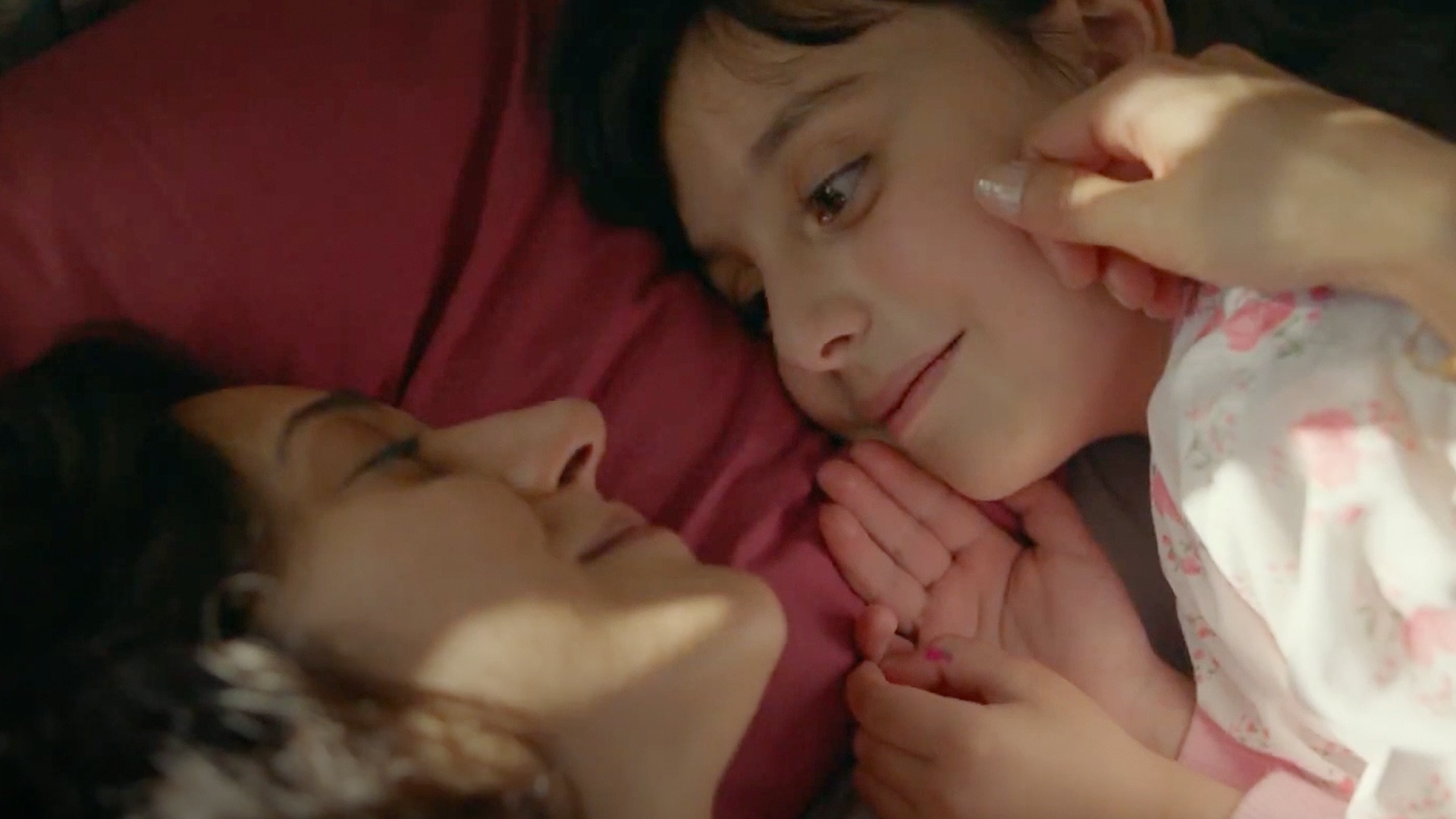
The movie begins in the Melbourne airport, where the title character, played wonderfully by Zar Amir Ebrahimi (seen last year in Denmark’s entry, Holy Spider), nervously tries to escort her daughter Mona (Selina Zahednia) through customs with the help of a woman named Joyce (Leah Purcell). Shayda, who has travelled from Iran, is filing for divorce from abusive husband Hossein (Osamah Sami), and is under Joyce’s protection while the case is pending, including for custody of Mona. Shayda was once a medical student in Australia, so she has a valid visa, and Hossein himself is working on his doctorate, so it’s necessary for Shayda to be in the land down under, and she’d rather be away from the judgments of her homeland anyway. Mona, who doesn’t quite understand why she can’t see her father or go back to living with her grandmother, has to be coached several times by Shayda and Joyce to seek out uniformed security personnel in case her father ever tries to bring her back here.
This is a very tense opening, and it only gets more harrowing when Shayda and Mona go to a women’s shelter that Joyce runs. There they will stay in relative anonymity until the proceedings play out. All the other women there, from a teenage mom with a new baby trying to get clean with her own mother’s supervision (Lucinda Armstrong Hall and Bev Killick, respectively), an Asian refugee (Jillian Nguyen), and a British woman who fled her husband and hasn’t seen her son in years (Eve Morey), are sworn to secrecy for their own safety, as any number of bad actors could come after them if they know where they’re staying.
Written and directed by Noora Niasari, and based on her own experiences as an immigrant in Australia, there’s a blunt but not harsh honesty to the whole affair, particularly the imperfections of the women in such a desperate situation. Hall’s character guilt trips Shayda into babysitting so she and Nguyen can go clubbing, inviting dangerous strangers and drugs into the house. Morey’s character is overwhelmed by trauma and self-doubt, unsure she’ll ever see her son again despite repeated assurances that he’ll be brought to live with them at the group home. Shayda herself has to balance what she tells Mona and what information she withholds, trying in vain to spare the poor girl’s feelings, while also attempting to figure out what her next steps are, both in the immediate divorce case and her life afterwards. Will she be granted a divorce from the Iranian government at all? Will she be forced to give up her child? Will she have to seek asylum in Australia rather than going back to a country that could well imprison and execute her for disobeying a man who rapes her? And through all that, is she entitled to seek a second chance at happiness for herself? The constant need to put up a brave face while internally collapsing, combined with all the other flawed individuals who are still aiming for a better life, emphasize a deep humanity that few other films can claim.
And then there’s the ever-present threat represented by Hossein. When the courts grant him unsupervised visits with Mona, it not only forces Shayda into the open to meet with him, but it also poses the very real possibility that he’ll try to abscond with the child, believing as he does in his home country’s system that grants him near-absolute authority over the females in his life. Every encounter is a tense, suspenseful affair where we all wait on tenterhooks to see if he’ll make a subtle move to get his way, or simply assert dominance in broad daylight. All the while, poor Mona just wants to watch The Lion King (the film takes place in 1995, and in an impressive bit of prop mastery, actually gets some of the associated Happy Meal toys for accuracy) and learn about Nowruz (Persian New Year) traditions. For someone going through so much, the innocence behind her curiosity and normal desires is gut-wrenchingly sweet, especially because it belies a knowledge of the goings-on that you wouldn’t otherwise expect.
The only area where this falls short for me is when it comes to Shayda’s social life. After goading from her erstwhile roommates, she agrees to go dancing at a nightclub with them, where she meets up with some of her old university friends, particularly Elly (Rina Mousavi), who introduces her to Canadian-Iranian student Farhad (Mojean Aria). Shayda and Farhad hit it off and become friends, hanging out at other social gatherings (house parties, Nowruz celebrations, etc.), with a hint that there might be an attraction that could be explored.
My problem with this tangent is three-fold. One is that it’s just superfluous. It really adds nothing to the proceedings, other than to create an impetus for Hossein’s jealousy and rage that doesn’t feel organic. Second is Hossein himself, who conveniently shows up at these same events, including a Nowruz dinner hosted by Elly and her husband. That makes no sense to me. Elly knows what Shayda is going through. Why would she allow Hossein in her house? The scene itself already illustrates Shayda’s discomfort, as there are guests who refuse to enter while she’s there, because they believe she’s betrayed her country and her wifely duties under Muslim law. That was enough to get the point across. We didn’t need for him to then show up, and to basically be welcome in the house despite his bad intentions.
Third is that, while I applaud Niasari’s commitment to showing all the women in the shelter as layered beings who make mistakes and have depth to their characters, it doesn’t exactly work with Shayda, because she’s been shown to be smarter and more pragmatic than the others. We watch her recount her trauma to court-appointed translators over the phone, oftentimes getting overcome with emotion, but still asserting her rights and her intellect (there’s a brilliant moment where she catches one perspective interpreter leaving out some crucial phrasing, tricking them into revealing that they know who Shayda is, and thus could be a danger to her). So in this respect, it doesn’t make sense that she’d put herself at risk by making any public displays of affection or socialization, given how much she has to lose. Iranian courts would jump at any excuse to call her immoral and take Mona away from her, or worse not grant the divorce at all and try to have her arrested by vice and virtue police, so going to nightclubs while her daughter is at the shelter, or being seen with a man who is not her husband only invites scrutiny. That scrutiny is wrong on its face, but that’s beside the point, and knowing what Shayda is trying to escape, it doesn’t make all that much sense for her to gamble like that.
Still, that doesn’t take away too much from what is a thrilling examination of a woman on the brink of freedom on multiple levels. Ebrahimi’s performance is spectacular, and the way Niasari keeps the tension high without succumbing to cliché is to be celebrated. And again, spare a thought for Zahednia, who carries such a heavy load as Mona yet handles it deftly. What I wouldn’t have given to see her in a movie theatre watching Simba take back Pride Rock at the end of it all, but I’m guessing they couldn’t license the footage.
Grade: B+
***
That’s all for this set of hopefuls. Each of them has something to laud and to criticize, and you never know where the Academy will go with this category. Any of these titles could be called out in a couple of weeks, and it wouldn’t surprise me.
Join the conversation in the comments below! Have you seen any of this year’s International Feature submissions? Which types of stories do you like to see tackled by other countries? What’s the most interesting dynamic of these films? Let me know! And remember, you can follow me on Twitter (fuck “X”) and YouTube for even more content!

 I Actually Paid To See This
4 thoughts on “Back Row Thoughts – A Woman’s World”