
As of this writing, we are one week from the Academy releasing its shortlists for next year’s Oscars. Among the most anticipated categories getting the semifinal news is International Feature, where 88 films were deemed eligible to vie for the prize (of 92 total submissions; apologies to Cuba, Hong Kong, Kyrgyzstan, and Tajikistan). By the time the list is revealed, I’ll have somehow taken in 32 of these hopefuls, meaning it’s very possible that I will have cleared the category well in advance.
This also means that the pressure is on to get reviews out for everything I’ve seen so far. I suppose it’s not completely necessary, but I like to be as timely with these things as possible, and it might look odd if I were to sit on a film I saw at a festival over a month ago only to put out a review after it’s been eliminated from contention. So the condensed parade continues, as I’ve got 15 entries to go over before the field is reduced to… um… 15.
So, just like last time, the name of the game is thematic grouping. For this edition, we’re taking a look at one of the more crucial viewpoints expressed in films in this competition – coming together in common cause. You see this an awful lot in world cinema, as the idea of shared goals and working for the greater good is universal. It’s essential to convey themes and images that transcend language if you want to get a let up in this contest, as voters and audiences always look for something they can latch onto in lieu of understanding the nuances of the spoken dialogue.
Below are three prime examples of this practice, all of which have superb qualities. As always, I’ll offer whatever release information I have available.
The Shadow of the Sun – Venezuela – No Release Information Available

I gave this film a fuller review for my friends at No Rest for the Weekend, which you can read here. It was through them that I was able to see this picture in a private, intimate screening in Beverly Hills, hosted by the film’s director, Miguel Ángel Ferrer, hoping to get it in front of the eyes of awards voters, and eventually, general audiences here in the States. Having seen it, he’s right to campaign hard, as the movie most definitely deserves to be seen on a big screen in front of a crowded theatre.
The story is fairly simple. In fact, it’s straight out of the 80s trope book, as an ambitious teenager and his jaded former rock star brother come together in hopes of winning a talent contest for $10,000 to alleviate their dour financial situations. Despite the cliché setup, however, Ferrer smartly just uses it as a backdrop for the real plot, about two brothers complementing each other and working with friends to show the resilience of a downtrodden community that most of the world would ignore. That story is so much more important than the framing device, in fact, that the titular song written by Alex (Anyelo López) is practically an afterthought.
Through the elder Leo (Carlos Manuel González), we see how life gets in the way of our dreams. He had a burgeoning music career, with his powerful voice and passionate delivery, to the point that even the deaf Alex can sense his immense talent. Sadly, with the deaths of their parents, it fell to Leo to give up his ambitions and take whatever jobs he could in order to provide for his (at the time) very young sibling. Now in middle age, Leo has been left cynical to the world, forced to strike a balance between encouraging Alex in spite of his disability and forcing him to deal with the realities of the world around him, particularly as it relates to his sexuality.
It’s their unbreakable rapport that drives the emotion of the movie, getting you to push past any elements that might feel too familiar. The wide-eyed (but notably not naïve) aspirations of Alex to become a songwriter, coupled with his unwavering love for the brother who sacrificed everything for him, shines through brighter than anything, giving the audience a rare feel-good story for the International Feature race. The addition of a great supporting cast, a sense of humor that will constantly put a smile on your face, expert cinematography and sound design (the use of compressed vibrations to show how Alex “hears” Leo and his band rehearsing is perfect), and the sheer hopefulness of this scrappy duo make it all the more memorable. If you think you’ve seen this story before, you probably have, but that doesn’t make this version of it any less special.
Grade: A-
Concrete Utopia – South Korea – In Theatres December 15

South Korea’s entry was one of the first to be announced for this year’s competition, having been selected all the way back in August. Based on the webtoon Pleasant Outcast, director Um Tae-hwa’s film posits the negative extreme when it comes to the idea of people uniting, showing the darkest side of humanity in the face of a crisis.
After a brief montage showing how the apartment lottery system became a major part of South Korean culture, with families and individuals falling over themselves with joy when they get picked to live in towering buildings, the whole thing comes crashing down, literally, when a massive earthquake levels the capital of Seoul. Only one building survives the devastation intact, the Imperial Palace Apartments.
At first, the community comes together to offer shelter to the displaced, ration resources, and generally help one another out, waiting for the moment when rescue would come. When that salvation never arrives, however, the residents of the building become greedy and paranoid, believing that they’re entitled to whatever food and electricity remains, as this is their building. They act like they were saved by divine providence, when in reality they just got extremely lucky, both in having the lone building still standing, and in being drawn to live there by the apartment lottery in the first place.
Seeking leadership, the residents turn to a man named Yeong-tak (Lee Byung-hun), an initially softspoken loner who nonetheless leapt into action to help put out a fire and save some other people when the disaster first started. He reluctantly takes on the role, offering democratic and pragmatic rule at first, before becoming increasingly authoritarian, including strict rules for all residents and a zero-tolerance ejection policy for all non-residents, coldly throwing them on the streets and sending them to their deaths for the simple crime of having been assigned to live somewhere else by a government that no longer exists.
Caught in the middle of this is married couple Min-seong (Park Seo-joon, recently seen in The Marvels) and Myeong-hwa (Park Bo-young). Min-seong has experience in civil administration, and helped out Yeong-tak during the fire, so he’s appointed to be the head of security, essentially Yeong-tak’s chief enforcer. Myeong-hwa, a compassionate nurse, meanwhile does everything she can to help as many as possible (including sharing her rations with a group of non-residents secretly squatting in an unused apartment) and tries her best to remind Min-seong of his kindness, decency, and humanity.
Yeong-tak maintains a tenuous grip on power until the arrival of Hye-won (Park Ji-hu from All of Us are Dead), a teenage survivor who was away with her mother when the earthquake hit, and took several weeks to make it back home on foot. She is welcomed home as a true resident, but Yeong-tak has his suspicions. When Hye-won becomes close with Myeong-hwa, Yeong-tak can sense the creeping dread of dissent in his ranks, and a potential disruption of his airtight order, especially when the truth of his past comes to light.
The human drama of this film is top notch, as is the acting, with Yeong-tak making for a great antagonist. I also really enjoyed the set designs in the various apartments. Essentially it’s one or two physical sets just decorated different ways depending on who’s living there. It goes a long way to showing the homogenous nature of these buildings, providing a sense of personal pride in ownership as well as an irony that people clamor for slight variations of the exact same thing. I also 100% buy the mob mentality of the residents, as far too often these days we see real-life examples of groups feeling entitled to a certain privilege or advantage even though they did nothing to earn it. Whether it’s a religious group asserting that their faith supersedes someone else’s civil rights, or wealthy individuals feeling that being born into riches entitles them to lord it over those who didn’t, there are plenty of parallels to the flaws of the world we currently occupy.
What I didn’t buy, sadly, were two of the major elements. One, the effects just don’t look that good. Korean cinema doesn’t necessarily have the big budgets that American films do, but I’ve seen what they can do with more modest resources (just look at great films like The Host or Okja). The sense of scale in Um’s work gets across through the visuals, but in each effects-driven set piece, the rendering is less and less convincing. Second is that I just can’t get behind the fact that help never arrives. If South Korea were a third world country with no allies (like, say, North Korea), then maybe I could suspend my disbelief enough to think that both the government and the international community might leave the citizens twisting in the wind. But South Korea is a major ally, and an economic power player. In order for a devastating earthquake to be completely ignored with no one coming to help, you’d have to have a situation where the entire country got leveled instead of just Seoul, so that no one on the peninsula could render aid, and you’d have to create a scenario where America would completely abandon its friends (okay, different from what the GOP is trying to do with aid for Ukraine and Israel), and the whole civilized world would follow suit. That’s too much of a stretch for me.
Still, I can say with confidence that I enjoyed myself throughout the picture. The allegory is solid, the acting superb, and the characters completely believable, for good and bad. While the effects and the underlying premise are shaky at best (get it… cause it’s an earthquake… I’ll see myself out), the more essential themes ring true, from a young couple trying to maintain their souls in the midst of the worst of times, to a group of randomly-assigned survivors holding parties that the outsiders can see but never join, based solely on the perception of superiority rather than the achievement of it.
Grade: B+
2018: Everyone is a Hero – India – No Release Information Available
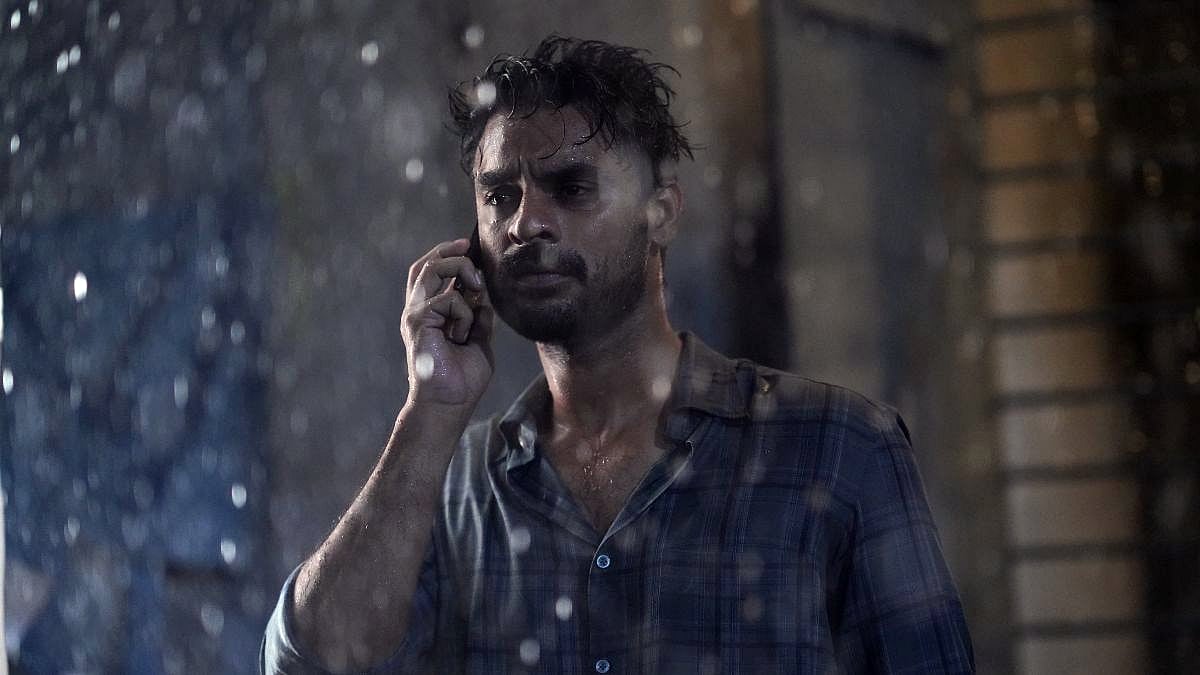
India found itself in a bit of a bind last year when, after the sublime RRR became an international super-hit, the country somehow submitted Last Film Show to the Academy instead. They made the shortlist, but it felt like a consolation prize to lend the decision some degree of credibility, and it was the bombastic revisionist historical epic that stayed in people’s minds, even winning the Oscar for Original Song.
As such, the nation has seemingly decided to go with the larger scale saga this time around in hopes of righting the previous wrong. Directed and co-written by Jude Anthony Joseph, 2018: Everyone is a Hero is a sprawling story about a small community coming together during a natural disaster, in this case the severe flooding in the state of Kerala in August 2018. As explained in the movie, heavy rains during the monsoon season often lead to flooding in the coastal state, but five years ago, the storms brought devastation not seen in nearly a century, and it became incumbent upon the citizens of this tiny fishing village to save as many lives as possible.
The plot focuses on a wide array of characters, each of whom contributes in their own way to the eventual rescue efforts, and each of whom has their own personal path and ambitions that connect with one another. Anoop (Tovino Thomas), a former soldier, works in a shop for the blind owner, Bhasi (Indrans) while he waits for a visa to move to Dubai. His plans are put on hold when he meets the new school teacher, Manju (Tanvi Ram), and falls in love, with the pair quickly planning a wedding. Meanwhile, career fisherman Mathachan (Lal), deals with his frustrations over his son, Nixon (Asif Ali), who pursues a modeling career rather than taking up the family business with his older brother Winston (Narain). Nixon is dating Giji (Gilu Joseph), the daughter of the wealthier Chandy (Joy Mathew), who scoffs at the thought of his daughter marrying into a family that has to live in shelters during the annual rains because they can’t afford an elevated home. Chandy’s son, Alex (Harikrishnan), who also happens to be Anoop’s best friend, does his best to convince his father to relent on the issue.
As the rains approach, the citizens take the normal precautions, including going into pre-made shelters to wait out the storms, as they do every year. However, as the weather refuses to relent, local government is forced to open up a massive dam for the first time, leading to catastrophic flooding. While all this is going on, IT specialist Rameshan (Vineeth Sreenivasan) can only watch on screens hoping his wife and child have gotten to safety, and a cab driver, Koshy (Aju Varghese) is conscripted to give a Polish couple a guided tour of the area, the pair being social media influencers flying in to see a boat race that is obviously canceled.
Suffice to say, there is a LOT going on in this picture, from personal politics to romance to harrowing acts of derring-do. And yet, surprisingly, it’s not all that hard to follow. The characters are, for the most part, fleshed out enough so that their motivations are pretty clear, and we all understand what each has to sacrifice to make it through the crisis. There are others that basically seem interchangeable, which can be confusing at times, but the majority of the characters are quite distinct, which can often get lost in disaster films.
I also really appreciated the presentation. Shot on ultra high-def cameras, much of the action is clear and sharp, even in the thunderous nighttime scenes during the storm. Joseph plugged the technology as the future of cinema when introducing the movie at the screening I attended. I won’t go that far just yet, but it was impressive how easy it was to assess each sequence where so many other films intentionally use nighttime shots to obscure bad effects. I’ll even give the script massive credit for having the balls to kill off certain characters that you’d normally expect to survive, especially after some really triumphant moments like a parade of fishing boats coming out of nowhere or negotiating with helicopter pilots to save a pregnant woman in the midst of the chaos.
The film slightly loses me on two fronts, and I admit they’re kind of nitpicky, but they did detract from the overall experience. For one, the title becomes something of a misnomer due to one circumstance late in the film. I won’t go into too much detail, but one of the major climactic events involves saving the blind Bhasi after other, more cowardly people, intentionally leave him behind while evacuating. Clearly, not everyone is a hero here. Second, there’s a character nicknamed “Roly Poly.” I can’t find the actor’s name in any of my normal resources, and that’s probably for the best, because he’s by far the worst part of the picture. “Roly Poly” is an adolescent child who’s developmentally disabled. Joseph mentioned afterwards that the actor isn’t handicapped, but was able to play the part to his satisfaction. That’s all well and good, I’m firmly of the belief that the performance matters more than the demographics of the performer. That said, this kid had me ready to walk out at times, especially late in the film when he and his family get trapped inside their house. Having previously been injured and lying in bed with a cast on, he falls out into the rising water and begins crying. And he doesn’t stop. For what feels like 15 minutes of total screen time. Every time the story cuts back to him, he’s screaming at the top of his lungs, making me want to pierce my ears with a nail gun so I could feel less pain. The only time he eventually shuts up is when he passes out and nearly drowns. This leads to one of the more emotional moments of the entire flick, but I couldn’t get excited for it, because I was just relieved that there was finally some quiet. You wouldn’t think that one bad character, especially such a minor one, could ruin an entire movie-going experience, but this kid came close.
Apart from those two issues, however, this is a very strong entry. There’s a good degree of earned pathos, the script takes risks, and the visuals are surprisingly effective, especially in a genre where they’re often terrible. I don’t know if there’s enough steam behind it to get it onto the shortlist, but I wouldn’t be offended if it did. Indian cinema continues to gain a foothold here in America, and this is, on the whole, a fine addition to the canon.
Grade: B
***
That’s all for this edition, but you’d best believe there’s more to come. Like I said, we’ve only got a week until the semifinalists are named, and there’s still so much to share with you all before that point. Stay tuned!
Join the conversation in the comments below! Have you had a chance to see any of these films? Which one piques your interest the most? Can you imagine a world where you’re willing to kill for your shitty apartment? Let me know! And remember, you can follow me on Twitter (fuck “X”) and YouTube for even more content!

 I Actually Paid To See This
One thought on “Back Row Thoughts – International Co-operation”