
Awards Season is in full swing with tonight’s broadcast of the completely fraudulent Golden Globes. There weren’t many surprises, other than it sucking, The Boy and the Heron winning Animated Feature, and tomorrow’s obituary for Jo Koy, as he will be executed at dawn by a horde of Swifties for daring to make fun of their vainglorious queen.
Nevertheless, the annual celebrations are unofficially underway, sort of like how summer unofficially lasts between barbecues on Memorial and Labor Day regardless of the actual calendar. As such, it’s time for me to start doing a massive catchup of titles that are vying for prizes that I didn’t get to in a theatre for one reason or another, in anticipation of the Oscar Blitz. This is where I normally do my rush through the Documentary Feature shortlist, as well as some updates on Animated and International Feature. This year we have the added twist of me getting an Independent Spirit vote, so if I see a nominee (typically via screener) that got a theatrical release, I’ll lump it in with others for mini review blocks. Those that didn’t will wait until they see a public release, likely later this year.
Not to be outdone, however, is Netflix, which is once again lobbing an aggressive campaign for a slew of streaming titles, all of which got the requisite qualifying run in cinemas, but of course were never intended for the big screen. There are a bunch of them this time around, so it only feels appropriate to divide them up based on their respective areas of the ballot. For this first part, we’ll look at the two entries that are shortlisted for the aforementioned Documentary Feature prize. Later on we’ll have a separate entry for Animated Feature hopefuls, and probably two installments for films on the general listing, jockeying for position in the so-called “major” categories, including Best Picture.
Everybody on board? Ready to go? Alright, let’s do this!
American Symphony
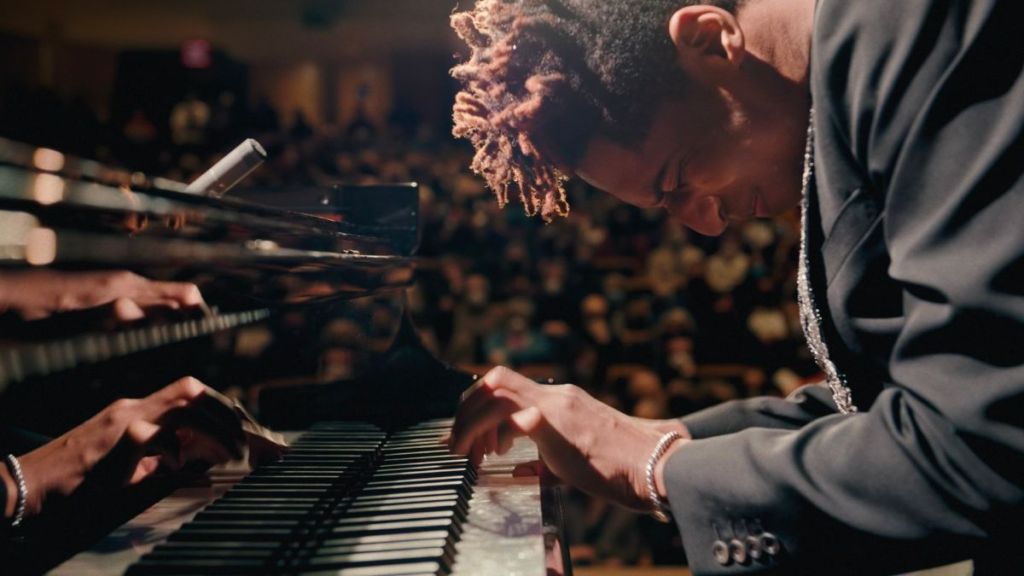
Directed by Matthew Heineman (previously nominated for Cartel Land and shortlisted for The First Wave) and produced by Barack and Michelle Obama’s Higher Ground Productions, American Symphony is a look at the life and career of Oscar-winning composer Jon Batiste (he won Original Score along with Trent Reznor and Atticus Ross for Soul). A highly laudatory profile, the film rises above the chaff due to its heart and commitment to artistry over popularity.
There are two easy works from which to draw comparisons when watching the film. The first is, appropriately enough, Mr. Holland’s Opus, which also showed the struggles of a modern composer trying to cultivate an appreciation for truly American music, and which also ended with a performance of the same titular opus. The passion that both the real Batiste and the fictional Holland showed resonates in equal measure, as their work comes from a place of both joy and pain. For Holland, it was in reaction to the events of the middle of the 2oth Century, whereas for Batiste it’s the late 20th and early 21st. For Holland, it was the irony of having a deaf son when music was his life, and for Batiste it’s his wife Suleika Jaouad’s battle with cancer. For Holland it was being powerless as music and arts education was stripped from the curriculum, leaving him with a dwindling legacy as he gave up his dreams to provide for his family. For Batiste, it’s constantly being dismissed because he can’t be pigeonholed into one genre or style or subconsciously discounted because of his race. There’s a particularly poignant moment where some members of the media scoff at him winning the Grammy for Album of the Year over the likes of Billie Eilish, Taylor Swift, Justin Bieber, and Olivia Rodrigo, before someone else points out that he’s the first black artist to win the award since Herbie Hancock 14 years previous. Suffice to say, there are a lot of thematic parallels.
Speaking of Eilish, the other major contrast point is with her own puff piece documentary from a couple years ago, The World’s a Little Blurry, which was also shortlisted by the Academy. In that film, we saw how much of a commodity Billie Eilish is, acting like an emo Veruca Salt and parading around like she’s better than the rest of us. The only quality in the entire project – which was produced by her record label as a piece of pure promotional material – was in the irony of reading between the lines and realizing just how messed up her situation is, even though she and her parents will never acknowledge it.
American Symphony is the counter argument to that earlier “documentary,” because it shows a person with real problems and real artistry. Batiste had to learn to perform and play multiple instruments. Billie relies on Finneas for most of the composition and computerized background. Batiste had to fight and struggle for everything he got. Billie had it handed to her by stage parents who basically engineered her for stardom. Batiste writes about issues that actually matter. Billie had an emotional breakdown over Bieber. Batiste’s wife fights cancer and needs multiple bone marrow transplants. Billie berates her video directors for not making her eyes bleed black ink in the exact way she wants. Batiste wins Grammys and gets questioned. Billie wins them and gets fawning praise.
But the most important juxtaposition comes in the climactic performance at Carnegie Hall. At a crucial moment, the electrical power on the stage cuts out for unknown reasons. There are still lights on, but there’s no power to the few electronic instruments in the orchestra, including ones that Batiste himself is using. So what does he do? He improvs on the piano for several uninterrupted minutes until power is restored and they resume the symphony. On the other hand, we watched Billie refuse to go on stage at Coachella because the giant video screens weren’t working, delaying her show by over 90 minutes, and when she finally did go out, she insulted the stage crew that broke their backs for her entitled ass. One person demonstrated the true philosophy of “the show must go on.” The other didn’t.
And before anyone jumps down my throat, yes, Billie has matured since then to a degree. And yes, there’s a separate scene where she does go back out and perform after spraining her ankle jumping around like a fool. But it’s clear she didn’t want to (she even said as much on stage) and there’s the impression that she was made to do so out of obligation rather than a desire to share her so-called art. She’s gotten better (to the point that I won’t be the least bit offended if she gets an Original Song nomination this year; Batiste is also shortlisted for “It Never Went Away,” which plays over the credits), but in a direct apples-to-apples comparison of the two musical profiles, the one about Batiste demonstrates the right way to go about things, while hers showed the opposite.
This isn’t nearly as hard-hitting as some of the other candidates on the shortlist, but maybe that’s for the best. The Documentary Feature category rarely highlights feel-good stories (in the last decade, only Summer of Soul, Free Solo, and 20 Feet From Stardom really fit the bill among the winners), so it’s more than fine to have some musical and cinematic comfort food on offer. Plus, Batiste is just certifiably awesome.
Grade: B+
Stamped from the Beginning
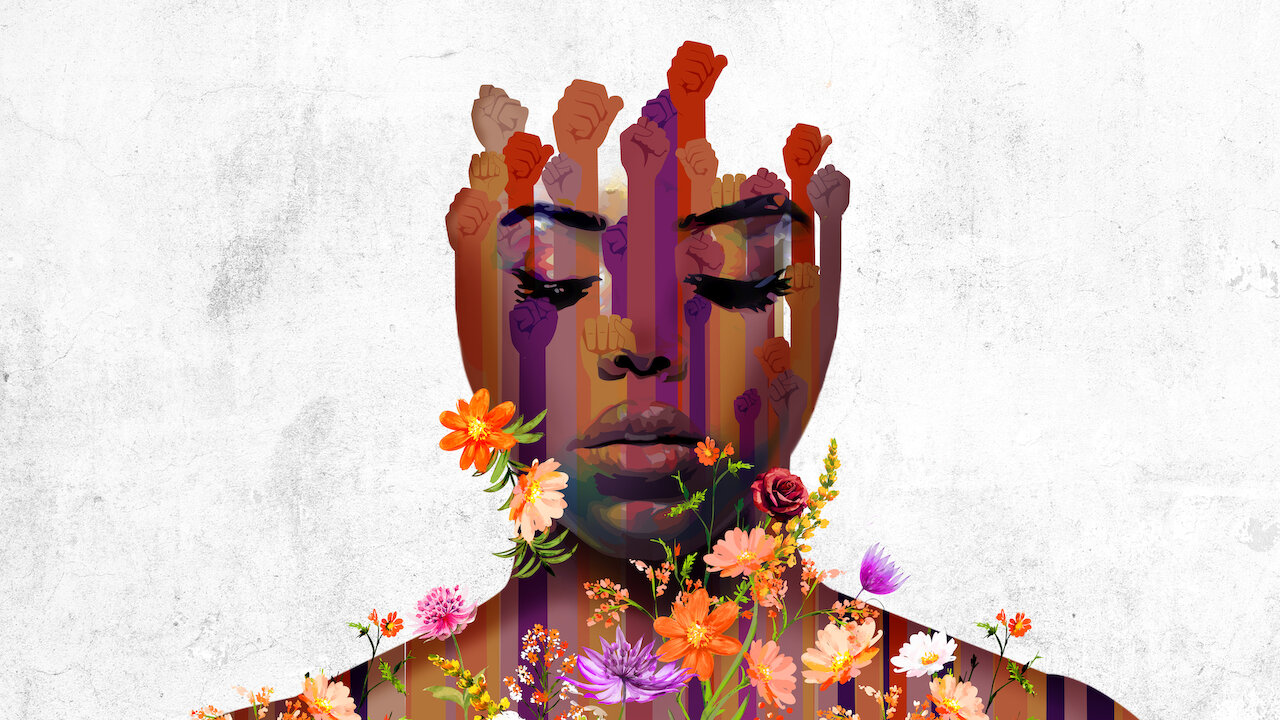
Directed and produced by Roger Ross Williams (Oscar winner in Documentary Short for Music by Prudence), Stamped from the Beginning is a film adaptation of a series of nonfiction books on America’s racial history from Ibram X. Kendi, who makes several appearances in the final product. At times insightful, and at times painfully frustrating, this is a movie that takes some serious looks at one of the biggest problems in this country, but at the same time shoots itself in the foot when it comes to its own messaging.
On the plus side, the meticulous and methodological approach Kendi and others take to the process of dehumanizing black people in our society is masterful. The film poignantly opens with a speech by then-Senator Jefferson Davis about why slavery is good because he believes that black people are inherently inferior, and then expands the point to every major historical instance of systemic bigotry, all the way up to the present day. That stuff is gold, because it contextualizes the disadvantages that minorities have faced since the beginning of Western civilization, not just American society.
There are also some notable figures explored that don’t often get the attention they deserve. The most memorable of these chapters relates to Phyllis Wheatley, widely considered the first black woman poet in America. Writing her work while still enslaved, she had to prove in court that she herself created it, rather than a white abolitionist using her name. Against a panel of all white men, a black woman had to justify her existence. This story is linked brilliantly in video to Clarence Thomas’ confirmation hearings in the Senate, where an all-white committee heard testimony from Anita Hill accusing then-Judge Thomas of sexual harassment, only for her words to fall on collectively deaf ears, as Thomas was confirmed to the nation’s highest court in a 52-48 vote.
When the film sticks to that stuff, it’s brilliant. However, it paints several issues with far too broad of strokes, to the point that it becomes massively counterproductive. In an examination of black depictions in media, for example, there are relevant references to minstrel shows and the stereotype of the rapacious black man coming for white women, but then it goes off the rails by suggesting that King Kong was racist because it was an ape and Fay Wray was white. That’s just dumb, especially when a simple Google search will tell you that Merian C. Cooper conceived of the character because he had a fascination with gorillas since childhood, and lobbied heavily to have Kong show no human features and be purely animalistic. That simple record of fact flies right in the face of this project’s assertions.
There are other examples throughout the picture, including a prideful declaration from one of the interview subjects about how she loves being black, her black husband, her black hair, her black church, etc. So… you love all things black to the exclusion of other races? Even if that’s not true, the assertion could be easily inferred, and that’s before we get to the idea of ironically (or hypocritically) loving the “church” that was used to justify your people’s bondage. But the larger problem is that while each major talking point starts off strong, many eventually go off the rails into hyperbole that feeds into the very narratives being used to deny people, especially children, the more crucial aspects needed for a well-rounded education. It’s one thing to show kids The Birth of a Nation as an example of intentional stereotyping, but King Kong? Fuck off with that. It’s one thing to acknowledge that George Washington and Thomas Jefferson owned slaves. It’s another to say that they were horrible people that you “hate,” ignoring the social norms of the time and the important things they did to liberate our nation from colonial rule. It’s one thing to note that Abraham Lincoln had to deal with a fraught battle in Congress to get the Union back together and pass the Reconstruction amendments, but it’s a whole other thing to basically dismiss him as hating blacks as much as any slave owner, blaming him for compromise as a means to end a bloody civil war rather than granting full equality and equity along with emancipation.
This is the sort of stuff that regressive – and racist – forces in media and politics are just itching to tear apart. The same people that rage against Critical Race Theory being used in schools as a strawman (it’s graduate level legal theory, and has never been taught in public elementary or secondary curriculum), or that want any racial education that makes white people uncomfortable banned, are chomping at the bit to see a film like this and spin it as saying that in Williams and Kendi’s ideal world, children would be taught to hate America and its Founding Fathers. Is that what Williams and Kendi want? Of course not, but they do themselves absolutely no favors by reaching so far on many of the points being discussed. You’re giving the powerfully ignorant forces in this country free ammunition.
As such, this film, while noble in its intent, falls short as a compelling documentary. I learned some truly important and interesting facts while watching it. I was also told that everyone and everything is racist, and that accomplishes nothing. The movie ends on the hope of an antiracist society, which is good and proper. Had the focus been more on that, I think it would have turned out much better.
Grade: C
Join the conversation in the comments below! How many Netflix films have you seen this past year? Do you have any favorites you’re hoping compete for Oscars? How the hell does Jon Batiste make the melodica cool? Let me know! And remember, you can follow me on Twitter (fuck “X”) and YouTube for even more content!

 I Actually Paid To See This
6 thoughts on “DownStream – The Big Red N-velope, Part One: Documentary”