
We’re just over a week away from nominations for the 96th Academy Awards, and as usual, I’ve been going into overdrive to clear as many potential candidates as possible. As such, I have a huge backlog of reviews to get through between now and then, including the final two theatrical releases I saw in calendar year 2023.
I’m doing my best to keep things as organized as possible, thanks not only to the usual preliminary Oscar Blitz habits I’ve developed, but also because I’ll be voting for Independent Spirit this year. I have access to screeners for most of the nominees, so I’ll be running through those in due course as well, but the emphasis will be on films that hope to vie for the biggest prizes.
That brings us to this particular “DownStream” column. If you’ve been keeping up, I’ve already begun a mini-series in this space as it relates to Netflix. There are still three installments left for that, because the premiere streaming service in this country has decided to pull out all the stops in hopes of bringing home some gold this year. While Apple and Hulu scored Best Picture wins during the pandemic out of necessity (CODA and Nomadland, respectively), Netflix has been trying to crack that nut in open competition for the past five years. They want this BAD.
But that doesn’t mean the other streamers aren’t putting their best collective feet forward as well. Or at least, I’m sure they think it’s their best feet. Part of the gamble of Awards Season is when a studio campaigns for projects that get released earlier in the year, as most of the attention and buzz comes during the autumn or later. There are exceptions of course, as The Silence of the Lambs was a February release, this year’s winner, Everything Everywhere All at Once held momentum from its March opening, and one has to think that “Barbenheimer” will be favorited for several awards despite a July debut.
But for the most part, anything that comes out before the typical fall window has something of an uphill climb. And since Netflix is the dominant force in streaming for this particular exercise, it’s even harder to jockey for position. So in that spirit, we’ll be looking at three films – each one from a different streamer – that are attempting to break through. In two cases, they’re already shortlisted in one category. For the third, the push has been quite aggressive. We’ll see in nine days if it pays off, but it’s worth the time to at least acknowledge all three.
Flora and Son – AppleTV
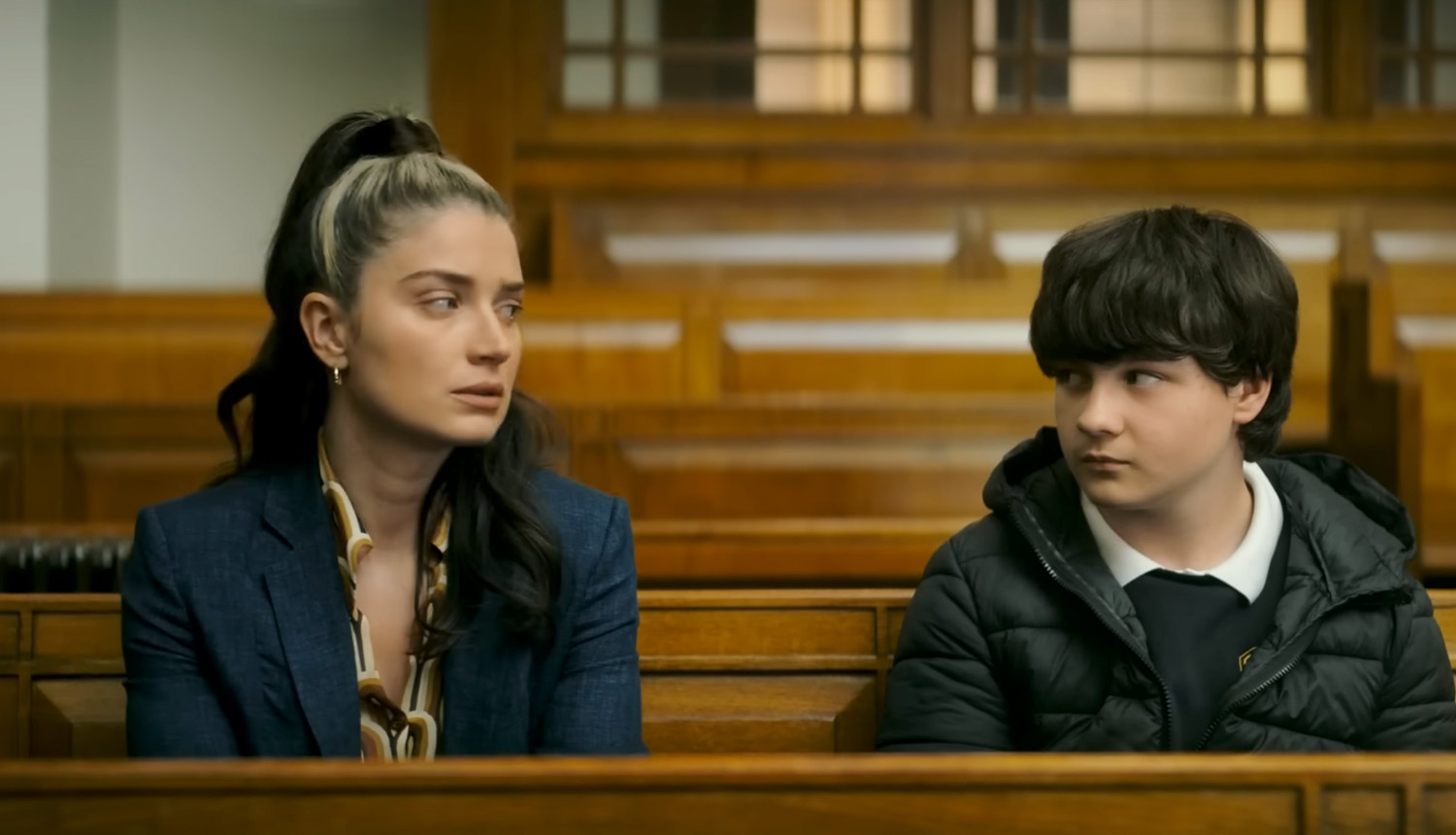
Of the three movies in this piece, this one released closest to what we typically think of as Awards Season, getting a qualifying theatrical run in late September before transitioning to Tim Cook’s platform. Written and directed by John Carney, the film carries on his excellent track record from Once, Begin Again, and Sing Street, creating yet another beautiful modern music-centered tale in the Irish tradition, emphasizing all the ways love and art can be expressed.
Eve Hewson, daughter of U2’s Bono, gives a tremendous performance in a breakout role as the titular Flora, a young single mother in Dublin who has a history of making bad decisions, and who has incredible difficulty connecting with her juvenile delinquent son, Max (Orén Kinlan). She barely gets by, working odd jobs and stealing a few extra Euro as she goes so she can provide for herself and Max, who basically wants nothing to do with her, constantly getting himself into trouble with the local authorities (represented by Don Wycherley) to the point that he’s risking time behind bars. Flora gets little support from her ex-husband Ian (Jack Reynor), a failed musician who’s basically resetting his life with the plastic Juanita (Sophie Vavasseur).
Having missed Max’s birthday, Flora takes a bit of initiative in trying to make amends with a proper gift. Knowing that he’s a music lover (she sees him hanging out with friends who make electronic and rap tracks, including filming videos for social media), she sees a more well-off household disposing of an old acoustic guitar. She has it repaired and gives it to Max, who promptly rejects it.
Rather than be hurt, Flora opts to take lessons, for once committing herself to seeing something through in hopes that developing the skill can translate to her attempts to right her offspring’s ship. Through Skype, she meets Jeff (an excellent Joseph Gordon-Levitt), and the two form a bond over several sessions, acknowledging a budding attraction as they – like Glen Hansard and Markéta Irglová before them – make beautiful music together.
Aside from the performances, which are pretty solid across the board, there are two noteworthy elements. The first, naturally, is the music. The entire soundtrack is beautiful, highlighted by two cuts that have been shortlisted for Original Song. The first, “Meet in the Middle,” evolves over the course of the film, beginning as a verse and chorus from Gordon-Levitt, then modified and supplemented by Hewson. The rest is filled in by Carney, Scottish musician Gary Clark (not to be confused with American artist Gary Clark, Jr.), and Robert John Ardiff. It’s a fantastic song, fitting in immaculately with the film’s narrative progress, and encapsulating the respective personalities of Flora and Jeff better than a million rom-com meet-cutes ever could. The second, “High Life,” represents the climax of the film, and playfully blends the mellow aspects of Flora’s arc and music with the high-octane electronic sound that Max favors. It’s a note-perfect coda to the proceedings.
Not to be outdone, however, is the editing. In several important scenes, the admiration between Flora and Jeff grows through their lessons over a computer screen. To enhance the effect, cinematographer John Conroy and editor Stephen O’Connell partake in some fantastic cuts and pans to basically drop the virtual screen and place Gordon-Levitt and Hewson in the same room, allowing them to interact while maintaining just a hint of detachment, mostly in the form of Jeff’s voice coming over computer speakers or Flora hiding a glass of wine even though it would be in plain sight were they actually together. It’s a very subtle element of the presentation, but it’s done to great effect, bringing the audience into their world while also keeping things appropriately separate to emphasize their non-traditional attraction.
This is an altogether excellent film that fell by the wayside for me when it initially came out, so I’m glad I finally got a chance to see it. It’s unlikely that it’ll compete for anything other than Original Song, but I hope at least one of the shortlisted tracks makes it in, if nothing else than to see Eve Hewson and Joseph Gordon-Levitt perform it on stage together, a culmination of their virtual connection in the movie. And seriously, I hope Eve Hewson becomes an A-list star after the performance she turned in here.
Grade: A-
Air – Amazon
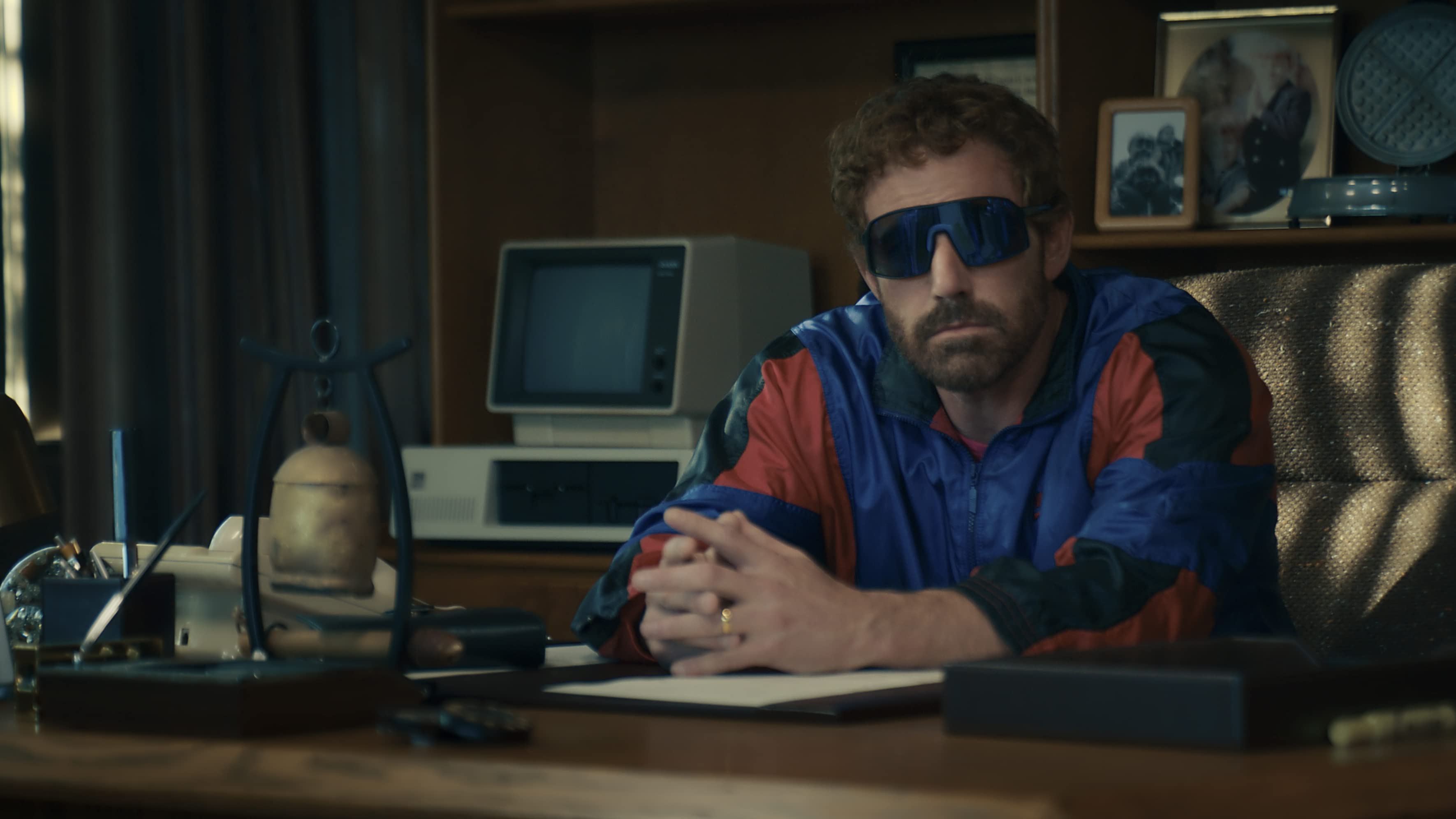
Debuting back in March, Amazon has gone to great lengths to keep this project in the collective consciousness in hopes of picking up some residual affection and attention, and maybe sneaking in with a nomination or two. It’s got the toughest task among the three entries discussed herein, mostly because it can only really vie for the major awards, and the field is quite crowded. Also, given the plethora of similarly-themed movies that came out in 2023, it wouldn’t surprise me if this got completely lost in the shuffle.
Directed by Ben Affleck (who also takes a supporting role), Air is another in this odd sort of subgenre for the year about movies based on established commercial properties. You have BlackBerry, Tetris, Pinball: The Man Who Saved the Game, The Beanie Bubble, and one more that I’ll get to shortly. Obviously Barbie stands tallest of the bunch, mostly because it properly used the IP as a backdrop to tell a more important story, a la The Lego Movie, but the fact that there have been so many product-based flicks this past year is staggering.
In this particular case, Air focuses on Nike’s pursuit of Michael Jordan (Damian Young, always filmed from behind) to sign a shoe contract, and the eventual formation of the “Air Jordan” line of sneakers around him. “How do you make a movie about a shoe interesting?” I hear you ask. Well, it comes down to Affleck’s assured direction, a snappy script, and some decently fun performances.
Front and center in this is Matt Damon as Sonny Vaccaro, a marketing executive at Nike. In 1984, the company was more famous for making running shoes than anything for basketball, so they languished in a distant third place behind Converse and Adidas, only signing a few young talents to wear their product. With a very limited contract budget, Vaccaro pitches to his supervisor Rob Strasser (Jason Bateman), his colleague Howard White (Chris Tucker), and eventually company chairman Phil Knight (Affleck) that rather than split their budget among multiple low-profile NBA draft picks, they spend it all on Jordan, whom Vaccaro is convinced will be the greatest to ever play the game.
There’s a lot of clever dialogue in Alex Convery’s script, particularly when it comes to Vaccaro’s profanity-laced interactions with Jordan’s agent David Falk (Chris Messina) and his aggressive strategy of going straight to Jordan’s mother Deloris (Viola Davis), circumventing the traditional clientele approach in favor of a more strategic yet personal lobby. Half the charm of the performances comes from a deluge of “smartest guy in the room” one-liners that would make Aaron Sorkin proud.
But what really makes it shine is in how the various competing interests are used as representations of Jordan’s actual path to the NBA. He was undersized. He was “just” a shooter. He wasn’t nearly as fast as his teammates in high school or college at UNC. And yet, his drive was relentless. He reinvented the game by figuring out how to turn his disadvantages into advantages, evidenced by a hype speech that Vaccaro gives to Strasser breaking down the tape of Jordan’s game-winning basket in the 1982 NCAA Championship game. This then carries over to Vaccaro’s impassioned speech to Jordan, which is equal parts genius and an asshole full of blown smoke. That’s the core of Jordan’s persona and his career arc. He was discounted until he proved everyone wrong and rewrote the game in his image. Air echoes that with almost surgical precision.
All that said, we have to look at this movie for what it is alongside its ambition. There’s a lot of fun to be had, but at the end of the day this isn’t a film about the greatest basketball player in history, but of the rich white guys who helped make him famous. In the age of inclusion, that’s a little tone deaf. Despite the eventual Nike ad campaign featuring Spike Lee as Mars Blackmon declaring, “It’s gotta be the shoes,” in reality Nike had very little to do with Jordan’s skill and dominance. Sure, the footwear was tailored to his comfort and style, but I’m guessing that had he signed with Adidas or Converse, his all-timer status wouldn’t have been denigrated. As such, the real difference is that Nike was willing to give Jordan a cut of the sales, thus changing the paradigm of how athletes are compensated for their endorsements and how they operate as businessmen in addition to being professional sportsmen. So when it’s all said and done we’re kind of saying that the real achievement on Nike’s part was the largesse of the wealthy to let a poor kid in and share in the profits for once. And that’s not nearly as inspiring as they want you to think it is.
Like I said, this is a strong, fun movie, but it’s also the poster child for not letting something become overblown. Jordan earned his status as the best ever. Nike cut a check and signed a contract, and in exchange they got the Hollywood biopic treatment. Enjoy this for what it is, but don’t delude yourself into thinking it’s anything more. If you do that, you’ll be fine and have a good time, kind of like watching Jordan’s highlight reel all these years later.
Grade: B+
Flamin’ Hot – Hulu

Full disclosure, I didn’t want to watch this. I made my initial objections known when I featured the trailer in last June’s edition of TFINYW. I don’t care about Eva Longoria becoming a director, I hate the product in question, and the underlying story has been proven to be basically bullshit. It’s even been compounded by Longoria doubling down on the falsehoods, countering the backlash against the film by only conceding that a late scene where the main character’s co-workers all cheer for his promotion was “the one thing that did not happen.”
So why in the name of Sweet Baby Jeebus did I hit “play” on my Hulu app? Well, because Diane Warren wrote a shitty song for it. In a weird way, it’s almost appropriate. The Music Branch of the Academy has been openly rigging the game for her for the last decade, even though every song she writes for movies is fundamentally the same ballad over and over again with only superficial changes in lyrics and/or orchestration to just barely fit the theme of the project (in this case, the obviously named, “The Fire Inside” has a slightly faster tempo and a few Latin beats underneath the usual tautologies about chasing your dreams and realizing how great you are), so why not keep the streak going by shortlisting – and almost certainly nominating – her latest effort as the closing statement for a movie that outright lies to the audience about a man’s so-called great achievement? It makes an oddly nihilistic degree of sense, and it sickens me.
So is there anything to actually recommend in this thing? Well, despite my gut instincts, I always give whatever I see an honest look, and there are a couple of things that stand out as positive. For one, Jesse Garcia as Richard Montañez does eventually grow on you. At first he’s borderline insufferable, trying to affect Michael Peña’s charm as Luis in the first two Ant-Man movies, including flashbacks where he narrates more gangsta-style lines of dialogue lip-synced from stuffed shirt white characters. But once we get past that and focus on his ambition and his desire to do right by his family, it becomes sort of endearing. This extends to the relationship with Montañez’s wife Judy, played by Anna Gonzalez. There’s not much I buy in this movie, but their bond and unwavering commitment to each other I definitely do. This is mostly down to Gonzalez playing every moment in a funny yet compassionate manner that feels very real.
Along similar lines, I enjoyed the mentorship at the Frito-Lay factory provided by Dennis Haysbert as machinist Clarence C. Baker (his middle name is one of the only solid jokes in the whole affair). Haysbert brings a jaded honesty to the role, initially reluctant to allow janitor Montañez to shadow him and learn the equipment, as he’s already inadvertently trained his own replacements and eventual superiors before and doesn’t want to get duped again. But through their interactions he eventually sees something genuine in Montañez and takes him under his wing. These sorts of relationships are crucial to a story like this, whether it’s real or imaginary, and Haysbert is always a strong performer, so it made for some brief moments of levity and character development.
Apart from that, however, there’s not much here. For most of the runtime, the most interesting element is constantly seeing Matt Walsh without his mustache. Longoria has almost no cinematic eye, clumsily blocking shots (a cafeteria scene that illustrates the social hierarchy of the factory has everyone apart from Montañez’s Mexican clique sitting on one side of the table like they’re in The Last Supper), not letting scenes breathe properly, and failing to get across crucial information to the viewer. For instance, the eventual Flamin’ Hot Cheetos were created, according to Montañez, by taking home unflavored, disused Cheetos after a machine broke down. In the film, however, he and his cohorts simply scoop them right off the conveyor belt. So, in order to tell the ostensibly inspirational story of a man who changed his criminal hustler ways to save a company and his family… we have him steal from his bosses in broad daylight? Of all the parts of Montañez’s made-up story to leave out, that’s the one you pick?
More importantly, though, Longoria just has no sense of narrative discipline. The script was written by Linda Yvette Chávez and Lewis Colick (the latter publicly admitting to not caring about historical inaccuracies), but apparently Longoria either took everything at face value and decided not to question it, or she put completely undue emphasis on the wrong things. To wit, it’s been established that the McCormick company in Wisconsin came up with the actual seasoning for the titular snack, and not Montañez. Longoria has gone on record saying that the important thing to focus on with this movie is Montañez’s life story, not the petty details of objective fact. Okay, but even if I buy into that assertion (which I most certainly do not), why have scenes where Montañez references McCormick multiple times only to dismiss them as clueless white people? You’re not promoting Montañez’s story by insulting an entire race of people, especially when all the antagonists and obstacles that he faces (apart from his abusive father played by Emilio Rivera) are just different versions of racist whites. It feels like literally every third scene there’s some white asshole calling Montañez a “beaner” or telling him to “go home” or that his “people” ruin everything. Subtlety, thy name is assuredly not Longoria. Of course, she tries to buy this back by having one token white guy, company CEO Roger Enrico, actually believe in Montañez, except that oh wait, he’s played by Tony Shalhoub. Now I love Shalhoub to death. He’s one of the best character actors alive. But if you tell me you think of him when you hear the words, “white man,” you’re just lying to yourself.
That’s the real failing of this movie. It’s not just that Montañez’s version of events has been all but disproven. It’s the insistence in going forward with it, intentionally casting facts aside, and claiming that your real priority is telling an inspirational rags-to-riches story when all you’re really giving the audience is an entry-level depiction of lazy racism. Whether Montañez actually invented Flamin’ Hot Cheetos or not should have been irrelevant, as there is already a worthy story about his rise through the ranks of the company because he learned how to tap into the Latin market in ways that hadn’t been previously explored. If you want to take his side and present his assertions as the inventor of the product as real, that’s fine, but like I mentioned above, the product itself has to be used as a catalyst for the plot, not be the plot itself. Instead, what Longoria has done here is make it all about the snack, insist that Montañez really did save everyone’s jobs with his brilliance, and then use it as a platform to make a cheap Afterschool Special about bigotry, all of which is about as fun as the interminable time you’ll spend on the toilet if you actually eat the fucking things.
And yeah, the song sucks ass. Seriously, someone at the Academy needs to rein this Diane Warren shit in.
Grade: C
Join the conversation in the comments below! Have you seen these films? Which one is most worthy of an Oscar? Have you ever bought Air Jordan shoes, and did they actually improve your game? Let me know! And remember, you can follow me on Twitter (fuck “X”) and YouTube for even more content!

 I Actually Paid To See This
2 thoughts on “DownStream – Early Blitz Hopefuls”