
It seems that every year, there is at least one acting category at the Academy Awards where the winner is pretty much a given. No matter how many strong performances are nominated, the writing is on the wall fairly early on. Sometimes the Academy itself will work to facilitate this lack of competition. A few years ago the Acting Branch decided to nominate Brie Larson for Best Actress for her role in Room and Alicia Vikander for Supporting Actress for her turn in The Danish Girl, even though Vikander was the female lead and had more screentime than the title character, played by Eddie Redmayne. This was to ensure that both women won, as the ceremonies that pitted them against each other for Best Actress all ended with Larson on top. Rather than have a legitimate debate about who gave the better performance, the Academy’s largest subsection decided it was better to eliminate all suspense in two separate fields.
This year is no different. While all four acting contests have stellar nominees in at least four of the five slots, the only one where the result is legitimately in question is Best Actress. Sure, there might be an upset, but there is a clear favorite in each of the other three.
Of those, the only one that offers even a glimmer of realistic suspense is Supporting Actor. This is a spectacular group from top to bottom, so much so that I can’t even be all that upset that Willem Dafoe was the odd man out despite a fantastic effort in Poor Things. Despite the strength of this pack, however, most of the momentum is behind one man who most viewers and voters would say is “due” for his victory. That said, there is a decent possibility that one of the craft’s longstanding greats could play spoiler with a tremendous turn of his own. It really comes down to whether or not one of his co-stars will get a boost to win Best Actress.
If that last paragraph confused the hell out of you, don’t worry. I’ll explain my meaning in just a bit. There is a certain logic to my ramblings… usually. The larger point is that with a group of hopefuls this strong, I wish there was more of an open discussion about who will take home the proverbial gold, as all five deserve serious consideration and would be a worthy winner on the merits of their respective roles. To take any of this as a foregone conclusion – a sad side effect of the entire awards circuit being so well publicized in the digital age – is to do all of them a disservice.
This year’s nominees for Best Supporting Actor are…
Sterling K. Brown – American Fiction
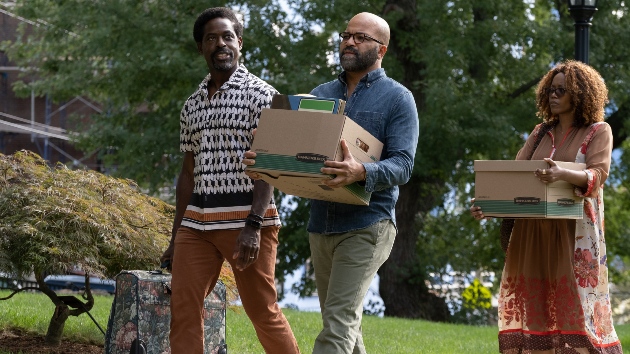
As Cliff Ellison, Brown is the closest thing American Fiction has to a true antagonist for his brother Monk (Jeffrey Wright), other than his own ego and the absurd degree of political correctness that’s being satirized. As we learn over the course of the film, Cliff has had something of a falling out with his family, mostly due to resentment for the way their father treated him, as well as their mother (Leslie Uggams) refusing to acknowledge him, if not openly resenting him. He’s unwilling to lend much of a hand to Monk when dealing with the financial and emotional fallout of their sister’s death and their mom’s medical issues, mostly because he’s got a ton of baggage of his own to deal with. He’s in the middle of a messy divorce after coming out as homosexual, sapping much of his time and money, as well as leaving him with a profound sense of guilt because his children are being mocked and bullied by extension.
So what does he do to process his stress and grief? He parties like he’s in his 20s, sleeping with every random dude he can hook up with and taking a ton of drugs. I’ve heard this phenomenon referred to as being “baby gay,” a phase that some LGBTQ people experience if they come out later in life. In essence they’re newly born into their true selves, and are thus living it up for the first time in the way they’ve always wanted, making up for lost time and experiencing as much as possible. I’ve witnessed this behavior in some of my gay friends after they came out as well.
As such, Cliff is uninhibited and fully alive throughout the film, asserting the value of his own life and prioritizing his own happiness. He’s freeing himself from years of trauma and living his best existence, something that Monk is not really capable of based on his personality. This leads to a bevy of comedic moments where Cliff’s sudden hedonism gets directly in the way of everyone else’s business. He truly does mean well and bears no malice to anyone, but he does act selfishly at times and is just painfully oblivious in others.
Brown plays this to the absolute hilt, relishing every moment of liberated goofiness. His pure charisma elevates the tone of just about every scene he’s in, and he serves as an excellent foil to Monk’s more serious demeanor. But most important of all, when Monk needs him, he’s there, without question, to offer his support and simultaneously call him out on his bullshit. He’s the most real character in this year’s set.
Robert De Niro – Killers of the Flower Moon

This is what I was talking about earlier when I mentioned a possible upset. As the dastardly William King Hale, De Niro puts on an absolute master class in cinematic villainy. Proving he can still act circles around his peers 50 years after becoming a star, he shows us that he’s still got a few new tricks up his sleeve, including breaking out a very convincing southern accent that doesn’t feel the least bit tacked on.
In a form of western prima nocta, Hale concocts his scheme to marry his nephew Ernest (Leonardo DiCaprio) to a wealthy Osage woman named Mollie (Lily Gladstone). Once there’s a formal, legal connection to the oil fields owned by her family, Hale systematically orchestrates the murder of Mollie’s relatives one by one, so that all of their headrights pass to her. Ultimately, the goal is then to kill Mollie herself, leaving Ernest as the sole heir, and then have him give the rights to Hale either by consent or by inheritance and quick death.
The plot alone is nefarious enough, but where it gets downright evil is in how De Niro portrays Hale as the wolf in sheep’s clothing. Posing as a friend and benefactor to several Osage clans, he walks among them, clad all in white to contrast the darker, earthier tones of the tribal people (you’d best believe I’ll bring this up again when I break down Costume Design next week), participating in their rituals, learning their language, and even offering condolences to the survivors of those he personally had put in the ground. He doesn’t even need to do this, as he operates with impunity through most of the film as a deputy sheriff in the community, but he keeps it up as a bragging symbol of his heinous bigotry.
It’s this insidious, deeply-held belief that not only is he superior to the natives as a white man, but that by orchestrating this bloody conspiracy, he’s doing actual “work” to “earn” the wealth he so covets. This also illustrates why Killers of the Flower Moon was such a great film while Saltburn, which dealt with similar themes, was shit. In this movie, Hale is already independently wealthy, so he doesn’t require more riches. He simply wants them to prove his own greatness, and because of that, he’s the bad guy. In the other, terrible flick, Barry Keoghan is middle class and hatches his plan so he can literally dance naked in a mansion, and Emerald Fennell (herself an heiress) paints him as an ironic anti-hero, making her feelings about us plebeians quite apparent. You can clearly see why one idea works and the other does not.
So what are De Niro’s chances? It all depends on Lily Gladstone. Over the next few weeks, results will start to pour in from various other awards outlets. Of particular note will be the Screen Actors Guild and the BAFTAs. Gladstone and Emma Stone split the Golden Globes, making them the presumptive leaders for Best Actress, and the contest could go either way, making it the only acting field with real uncertainty. If those results come back with Stone winning over Gladstone, the Academy writ large might want to ensure that Killers as a film wins something as a consolation prize. It has 10 nominations, just one behind Poor Things and three behind Oppenheimer. If it were to get completely shut out (especially after the same fate befell The Irishman a few years ago) it could be seen as a slight to Martin Scorsese more than anything else. So, if the momentum is behind Stone for Best Actress, I can certainly see a scenario where De Niro wins here, so that the overall movie doesn’t walk away empty handed. It’s weird that the politics of the Oscars might play out like this, as you can make an easy case that De Niro would deserve the win on pure merit, but that’s just the reality of this process sometimes.
Robert Downey Jr. – Oppenheimer

If De Niro does pull the upset, this will be the man forever left wondering what might have been. Robert Downey Jr. has been the leader in the clubhouse since Oppenheimer premiered, and he most certainly deserves it. Even before it became clear that this was the movie to beat for the top prizes, everyone agreed that this was one of Downey’s best performances ever, if not THE best, and that he should definitely score some long overdue hardware for his efforts.
Sometimes the best villains are the ones that hide in plain sight, whether it’s Keyser Soze posing as Verbal Kint to intentionally throw the investigation off his trail in The Usual Suspects, John Kramer lying on the floor of his own torture chamber in Saw, or WandaVision fans learning that it was “Agatha All Along.” There’s a lot of fun to be had when your biggest threat comes from someone who appears to be an ally right up until the literal moment of truth. That’s what Downey brings to the role of Lewis Strauss. Whether in the leadup to the Manhattan Project or in his Senate testimony as a prospective cabinet secretary, Strauss keeps up the appearance of being on the same side as Robert Oppenheimer (Cillian Murphy), until he doesn’t.
The long game he plays is fantastic, presenting himself as kind, jovial, curious, and committed to the cause of science and the free exchange of ideas. But deep down, like many politicians old and new, he’s callous, calculating, petty, and deeply insecure. The fact that his grudge against Oppenheimer stems from the perception of a personal slight that never happened would be the most unbelievable part of the entire story if it weren’t for the fact that the former President and current GOP front-runner has literally made sport of destroying people’s reputations and livelihoods if he even thinks they’re less than 100% loyal to him.
Unlike Donald Trump, however, Downey as Strauss conducts himself with dignity and empathy, saying all the right words and doing all the right things to make it seem like he’s on Oppenheimer’s team, even when Robert and Kitty (Emily Blunt) have long figured out that he’s talking out of both sides of his mouth. That is ultimately his downfall, as his hubris extends so far into his ego that he always thinks he’s a step ahead, when in reality he’s two steps behind. He may win the small battles, but he loses the war of attrition, and seeing Downey process this all in calm, deliberate fashion until he’s truly beaten makes his one emotional outburst all the more vivid.
I don’t like the idea of any category being taken as read so far in advance, especially the so-called “majors,” but in this case, it’s more than warranted. I’ve said it before, but I can’t wait until a few years go by and film historians can start having the discussions about where this ranks in Downey’s long list of great roles. For me, it’s just below Chaplin and Kiss Kiss Bang Bang, but with time, I could be convinced otherwise.
Ryan Gosling – Barbie

A lot has been made about the irony of Ken getting a nomination and Barbie not, but in the end I think that’s a bit self-defeating. They both deserved to be here. The fact that one wasn’t shouldn’t discount the other. Gosling isn’t the strongest of this group, but he does a lot of the grunt work to make Barbie as fun of a movie as it is.
First and foremost, he’s fully committed to the bit. I mentioned this yesterday when talking about the “I’m Just Ken” number, but a lot of the comedy would fall completely flat if Gosling wasn’t so gloriously over-the-top in his childish naïveté. His simpering devotion to Margot Robbie as Stereotypical Barbie is equal parts pathetic, sweet, hilarious, and tragic, because given the relatively rigid nature of the dolls (both figuratively and literally at times), all he’s ever known is his job of “beach” and his strictly defined relationship status of “Barbie AND Ken.” He’s fine getting second billing, so long as he has the billing at all, which in a roundabout way makes him an ideal supporting character.
There are some parts that don’t land as well as others, particularly his churlish attitude after instituting a patriarchy in Barbie Land. It makes sense that he’d be angry and have wounded pride over Barbie not being direct in her lack of romantic interest, but nothing in his actions read as mean-spirited until the script calls for him to be a total asshole, which just doesn’t track. It’s one thing to feel inadequate. It’s one thing to realize that in the real world it’s men who are the dominant gender. I get where that might lead to some ill-advised and surface-level excitement to change the status quo, but it’s out of character to take over Barbie’s house, rename it, and kick her out. That’s a bridge too far. Gosling still sells it for all it’s worth, and it leads to the absolutely gorgeous musical battle in the climax, but there are certainly parts that ring false just for the sake of escalation.
Most of that is the fault of the screenplay rather than Gosling, but this category is a game of inches as far as the overall quality goes, so the inconsistency does ding him in a couple of spots. He’s a companion and a comic foil, not a villain, and the few moments where he makes that heel turn just didn’t work nearly as well as they could have, given the level of absurdity. I still absolutely adored his work in this movie, and really no one else could have done this role justice, which is why I have my own “I Am Kenough” t-shirt.
Mark Ruffalo – Poor Things
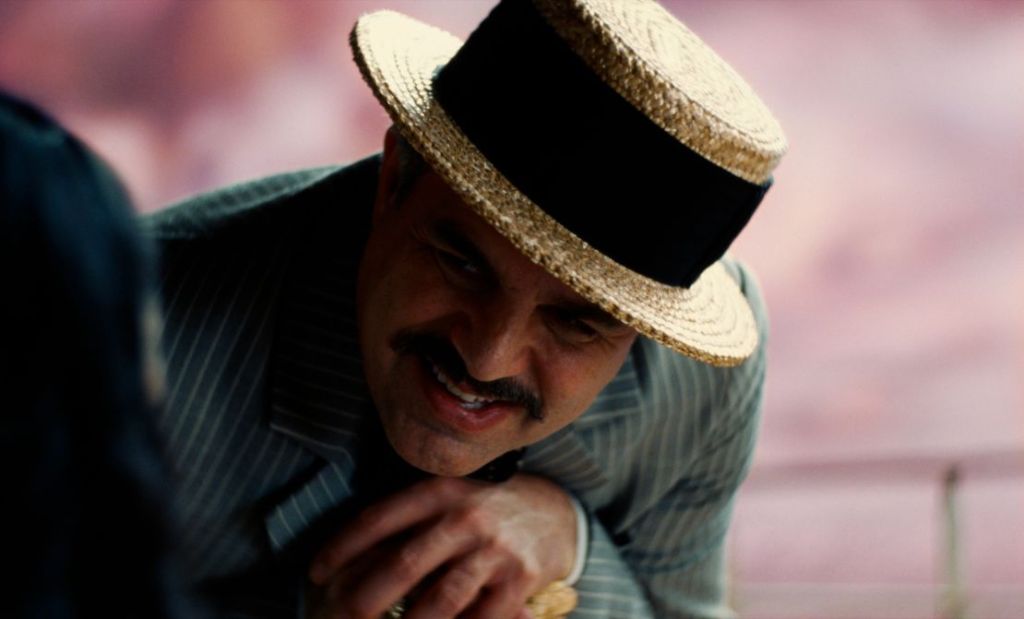
I’m glad one of the supporting roles in Poor Things got nominated, even if it wasn’t Dafoe. That’s not to take anything away from Ruffalo, who is one of the greatest character actors in the world. His performance is fun, engaging, and just the right amount of bonkers. In many ways he’s the most textbook “supporting” player in this bunch, as all of his actions revolve around, and include, the leads, specifically Emma Stone as Bella.
As Duncan Wedderburn, Ruffalo initially comes into the story to draw up a marriage contract between Bella and Max McCandles (Ramy Youssef), so that Max can continue observing Bella’s development and actively participate in her sexual exploration, which she has already demonstrated in earlier behavior. Max does genuinely love Bella, or at least what her scientific potential represents, but Duncan is instantly infatuated, to the point that he orchestrates her escape from the home of Godwin Baxter (Dafoe) and whisks her away to adventure, with a healthy dose of “furious jumping.”
As Bella grows, Duncan takes on a sort of Henry Higgins-style role as educator in both knowledge and social norms. The problem is that Higgins was a sophisticated academic, whereas Duncan is an outright cad, attempting to control Bella in public while exploiting her wild nature in private. In a time and place where men were not only allowed but encouraged to have it both ways, Duncan is merely a product of his environment, and as such acts on his most base instincts, while at the same time asserting authority as if he’s more sophisticated than his paramour.
This turns into a delicious quasi-addiction to Bella, to the point where any time she acts in a way he can’t predict, Duncan responds with reckless abandon to try to quantify it and get his fix. He cries for Bella outside of a brothel like Stanley Kowalski calling for Stella to let him back in the house. When Bella hits him, he offers only a stunned but foppish, “Ow.” When he denounces her at her own wedding, he’s taken aback when informed that Godwin has cancer. All of these moments are delivered in perfectly hilarious fashion by Ruffalo, leaving a distinct impression that stays with the viewer long after the credits roll.
Unlike with Ken, Duncan’s lesser qualities are fairly apparent early on, and they progress in a believable manner, even though he has significantly less screentime than our beloved beach man. He also does a bit better when it comes to exaggerated physical comedy, particularly in his dance scene with Bella that feels like something out of an 80s new wave music video even though it’s set in Victorian Europe. Essentially, Ruffalo makes more out of less resources than Gosling, which ultimately raises him slightly higher in an apples-to-apples comparison.
***
Like I said, there’s not a bad choice in this bunch. Any one of them can say they deserve this and be completely accurate. Based on the actual quality of the performances, this race should be a lot closer than the buzz indicates, but such is the way of Awards Season sometimes.
My Rankings:
1) Robert Downey Jr.
2) Robert De Niro
3) Mark Ruffalo
4) Sterling K. Brown
5) Ryan Gosling
Who do you think should win? Vote now in the poll below!
Up next, I’m going to take the next few days to do some catching up on other coverage, including the February edition of TFINYW, as well as some more reviews. The Blitz resumes on Monday with another category that’s in the proverbial bag, but I’ve got an entire shortlist (and more!) to go over in addition to the nominees. It’s International Feature!
Join the conversation in the comments below! Which performance did you like best? Which one was most essential to their overall film? If you got to have half the encounters Ruffalo had with Emma Stone, wouldn’t you be begging her to take you back, too? Let me know! And remember, you can follow me on Twitter (fuck “X”) and YouTube for even more content!

 I Actually Paid To See This
One thought on “Oscar Blitz 2024 – Supporting Actor”