
Before we get to tonight’s breakdown, we actually have some fresh Oscars news to report. The Academy surprised the press today by announcing a new category! Starting two years from now, with the 98th annual ceremony, we will have an award for Casting! This is very intriguing, as there’s been an official Casting Directors Branch in the organization since 2013, and members have been clamoring for years to get this category off the ground. I think only Stunt Performances has had more rigor behind it. I’m also quite curious to see what the judging criteria will be for this. Is there a concrete set of skills that voters will need to weigh? Or will this be a de facto award for movies with large ensemble casts that don’t really lend themselves to the spotlight categories of Lead and Supporting roles? I look forward to dissecting this beyond the capacity for reason!
Now, to business. The pursuit of the Documentary Feature shortlist is always something of an adventure. This comes down to two main reasons. One, there are so many films that qualify each year (anywhere between 150 and 200) that you could literally watch every publicly released entry, either in a theatre or on a streamer, and not even get any of the semifinalists in advance. This leads into the second factor, where a qualifying release isn’t required in this category. In order to be eligible, a documentary has three options. It can either make the public run in both Los Angeles and New York, win a competitive award at a film festival the Academy deems worthy, or be their country’s submitted film for International Feature.
As such, strictly speaking, this is one of two categories where the eventual nominees and winner don’t have to ever be made available to the average viewer. It certainly behooves the filmmakers and producers involved to do so, but they don’t have to. This makes tracking down the candidates extremely challenging year in and year out, especially now that Netflix has stopped DVD rentals, so that’s a form of media I can no longer exploit for this purpose.
The first time I tried to complete the shortlist was in 2018, and I came up one short, as Ex Libris: The New York Public Library, was not out on any home format or screening locally. I ended up renting it on DVD months later… and falling asleep during its grueling three-hour runtime. The next two years were much easier, as the Academy worked with the local Laemmle theatre chain – as well as several others across the country – to put the shortlisted docs in theatres for a limited run and, when possible, make the creators available for Q&A sessions. That was a great system, but it ended with the onset of the pandemic and hasn’t been resurrected since. The Laemmles currently do a sort of redux version on their own each year, bringing back previously screened films for a couple of weekends once the announcements have been made.
This combination of influences has made it so that I’ve cleared the 15 semifinalists every year since that first attempt, until now. Unfortunately, In the Rearview has slipped from my grasp, as it’s still on the festival circuit, and has not gotten a public release. I had one chance to see it a month ago, and I messed it up. I booked a spot at a screening hosted by American Cinematheque in Hollywood, along with Apolonia, Apolonia the next day. When I drove to the theatre and pulled up my ticket, I realized far too late that I got the dates wrong. In the Rearview had played the day before, and I was three hours early for Apolonia. Whoops. I’ve had a couple of close calls over the last few years, including relying on a PBS stream to see the nominated Writing with Fire two years ago, and high-tailing it to a private screening at USC to see A House Made of Splinters last time around, though at least with the latter, it did get a streaming release two weeks before Oscar Night. What I’m saying is that I was bound to break the streak at some point, and now is that time.
However, I still saw 14 of the 15, which ain’t bad, and the five eventual nominees were squared away quite some time ago. I haven’t reviewed all of the films yet (I’ll get to them soon enough), but I am relatively satisfied with how things have shaken out. These are not the five I would have necessarily picked, but none of them is bad, either. And for what it’s worth, for once I actually kind of correctly predicted how the Documentary Branch would make their decision. I guessed last month that, because the 15 semifinalists could all be broken down into various subgroups based on common subject matter, that the Branch would pick the best of each as the final five. I was right in four out of those five cases, with my self-described “Cultural Oppression” category getting two finalists while the “Artistic Expression” one came up empty. It’s hard as hell to determine where this most mercurial branch will lean from year to year, so to even come close feels like an achievement in and of itself, more than making up for the fact that I finally missed one of the shortlisted films.
This year’s nominees for Documentary Feature are…
Bobi Wine: The People’s President – Moses Bwayo, Christopher Sharp, and John Battsek
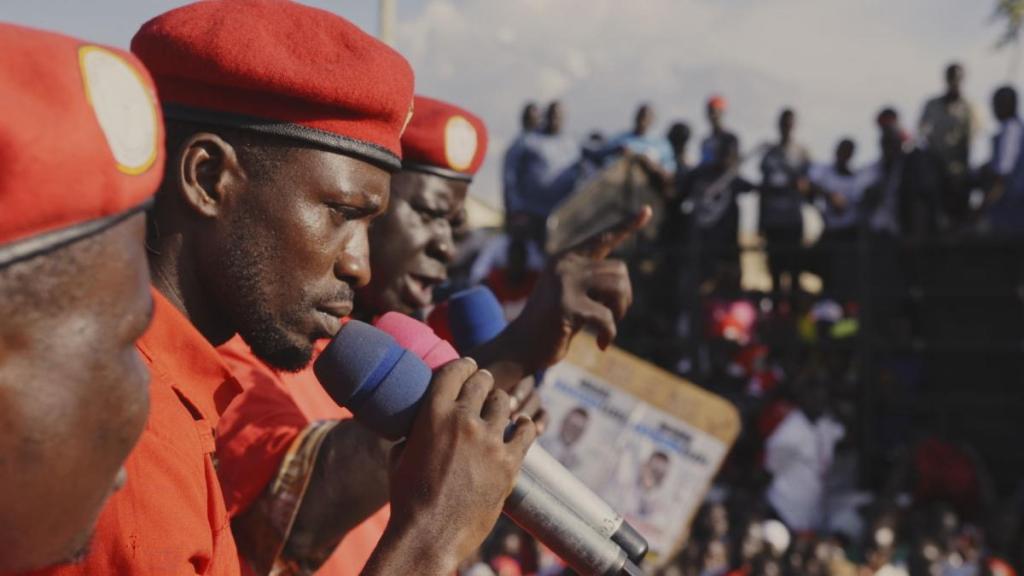
This is an intriguing and poignant piece to watch against the backdrop of our own current political climate. Bobi Wine, a Ugandan musician, joined his country’s Parliament based on a grassroots campaign of representing the poor and repressed people of his home district, particularly those still living in slums. A member of one of the opposition parties to the country’s long-serving President Yoweri Museveni, he fought in vain to prevent the ruling party changing the country’s constitution to remove the age limit for public office, allowing Museveni to stay in office, potentially for life. Once believing in Museveni’s revolutionary spirit when he helped topple Idi Amin, Wine has since soured on the entrenched leader, and decided to run against Museveni in 2021, with devastating results for himself, his family, and his supporters.
Seeing his story unfold is to hold a mirror up to the political discourse in our country. Four years ago, we voted the incumbent President out of office. He claimed up and down that the election was rigged and stolen from him, repeating a similar line he propagated in 2016 in a contest he actually won on a constitutional technicality. Unwilling to accept his legitimate loss, one confirmed by numerous audits and investigations, he fomented an insurrection against his own government to prevent the peaceful transfer of power. In the years since, he’s continued to promote the lie, encouraged his party to whitewash the entire affair even though it unfolded on live television, and silence all opposition to him. Now he’s running to get back into office, where our constitution requires that he’d only be allowed to serve one more term, a law that he has repeatedly scoffed at and threatened to cast aside despite lacking the power or authority to do so, and has mused that he’d like to be a dictator, but “just on Day One.”
He is awaiting trial for his alleged criminal efforts to interfere with and overturn the election, as well as numerous other felonies, arguing that he has complete and total lifetime immunity from any prosecution, even when the courts say otherwise. He’s made it clear that if he resumes office he will dismiss all federal charges against himself, and even his so-called primary rivals have stated that they’ll pardon him, arguing that he’s somehow being persecuted by a weaponized justice system that’s targeting him solely for political reasons. Just today, our Supreme Court heard arguments about whether he is even eligible to be President under the plain language of the Constitution’s 14th Amendment, which states that anyone engaging in insurrection cannot serve in federal office unless Congress grants him an exception by a 2/3 majority. That court, under relentless scrutiny for corruption, bribery, and willful disregard for legal theory and precedent in favor of political ideology, contains three justices appointed by this former President, and despite all claiming that they are strict “originalists” when it comes to the letter of the Constitution, spent today’s hearing contorting themselves into myriad hypotheticals as a means to give themselves an out and place him back on the ballot in the states where he has been judged an insurrectionist and removed.
The crux of Bobi Wine is to see real examples of the hyperbole spewed by the former President and his followers. He says he’ll disregard term limits. Uganda actually changed their constitution to accommodate that for their leader. He says that the election was rigged, even when he won. In Uganda, we have compelling evidence that it actually was, including the expulsion of international observers and mysterious leaps in the count in districts where Bobi Wine was polling well ahead. The former guy says he’s going to be a political prisoner because the current one is targeting him. Bobi Wine actually was targeted, imprisoned, placed under house arrest, and after the release of this film, imprisoned again, simply for opposing Museveni. Other supporters and staffers have faced similar treatment, as well as torture and death, despite no proof of any crime other than opposition.
It’s the old adage of “show, don’t tell” taken to its extremes. In our country, we have a guy who tells people whatever insanity is on his mind if he thinks it’ll get him elected again, so that he can end his own legal jeopardy. Bobi Wine showed the world how this stuff really happens. It’s a testament to how great this year’s class of nominees is when I can safely say this wouldn’t have made my personal cut. Mostly that’s due to somewhat lackluster production value and an overuse of Wine’s own music in lieu of editing (though one of his lyrics plastered on screen, “Why have a constitution if you’re not going to follow the constitution?” is pretty on the nose). On messaging and narrative, it’s one of the absolute best.
The Eternal Memory – Maite Alberdi, Juan de Dios Larraín, Pablo Larraín, and Rocio Jadue
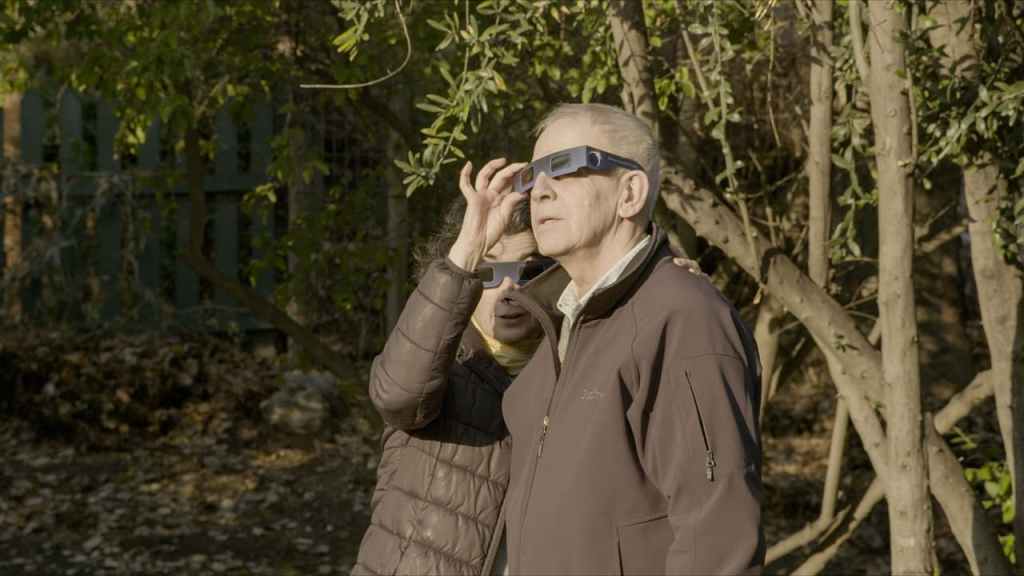
Man this movie broke me. I won’t go into too many details or we’ll be here all night, but this movie fucking. Broke. Me. I’ve mentioned many times before how the last several years have taken an emotional toll on me, watching my mother deteriorate and eventually die thanks to dementia (and other factors), so right away I was sensitive to the subject matter. But to watch what I spent three years enduring (and almost a year now mourning) condensed into 85 minutes was almost more than I could take.
Every mental lapse, every spasm of paranoia and fear, every outburst, I’ve witnessed first-hand. The day I truly cried for mom was the last day I saw her in person, and got the gut punch of her not recognizing me. You see all of this and more in Augusto Góngora’s progression with the disease, and the patience and will of Pauli Urrutia is absolutely heartbreaking. It’s so hard to love someone so deeply and know they can’t return that affection, at least not in any stable manner, and you find yourself clinging to the rare moments of lucidity, a faint glimmer of the person that you’re rapidly losing.
This story is particularly tragic and ironic as Góngora was once a renowned journalist, risking life and limb to deliver the truth to the public, particularly during the Pinochet regime and its aftermath. A man who dedicated his life to making sure history was properly recorded could no longer remember any of it, though there are hints that he retained a sense of importance around it. One of the most jarring scenes is when he has a panic attack, thinking that someone will take away all the books he’s collected over the years. He’d never be able to read or understand them ever again, but he knew that they were a part of him. Watching that sequence, I thought back to the task of cleaning out mom’s house, including her bookshelves. She had so many biographies, old first editions, and a family Bible that dates back generations. She treasured every page she had on those shelves, and to know that they sat there for years, unable to be appreciated properly, tore me apart.
There are a lot of films that, once I watch them, I can probably never bring myself to watch again, just because they hit far too close to home. This is definitely one of them. It’s beautiful and crucial, and I’m grateful to have watched it just to know that I didn’t suffer alone. But even thinking about it as I write these paragraphs just kills me.
Four Daughters – Kaouther Ben Hania and Nadim Cheikhrouha

From some of the worst pain you can vicariously experience to a slight degree of catharsis, Four Daughters is tragic for its own set of reasons, but it does at least offer a sense of hope and a modicum of healing for a family that’s been torn apart by extremism. It’s a step in a long recovery process that may never be fully realized, but the film’s novel concept and presentation helps to enhance our understanding of the wider world if nothing else.
Tunisia’s entry sees Olfa, a stern but loving mother who survived her own string of hardships due to social and religious doctrine, raised her four children as best she could. However, as teenagers, the two eldest, Rahma and Ghofrane, became radicalized and joined ISIS, running away from home and defecting to the caliphate. Now, years later, Olfa’s youngest two, Eya and Tayssir, have come of age themselves and are finally able to process the gravity of their departure. Using actors in place of the two lost souls (and one for Olfa when the emotion is too strong), this documentary reenacts the formative moments from their collective rearing, allowing them all to come to terms with what’s happened, and to plead for their loved ones to come home.
The amount of reflection and second-guessing these three women go through is truly tremendous, particularly for Olfa. Having had to be so strong as a young woman and mother, she wonders if pushing back against tradition helped push Rahma and Ghofrane towards those who have corrupted them. She is a flawed person, which she accepts, but she’s reluctant to change, because in the end she feels she did what was right and proper, even when she made mistakes. Her remaining daughters – as well as the actors substituting for the others through present-day observation – are old enough to speak openly with her about how they felt growing up with her, and in a sign of improvement, Olfa is receptive to the criticism, though she still scolds them for contradicting her.
Every parent questions their approach, and when a child turns out to do or become something horrible, the natural impulse can be to blame themselves for messing them up somewhere along the way. Four Daughters makes it clear that there’s no such thing as a perfect figure in that regard, and that Rahma and Ghofrane might have wound up in ISIS regardless. What matters now is showing them the love that Olfa, Eya, and Tayssir still have for them. Whether there’s an eventual happy reunion or not, this cinematic form of exposure therapy can at minimum allow them to move forward as a supportive unit.
To Kill a Tiger – Nisha Pahuja, Cornelia Principe, and David Oppenheimer
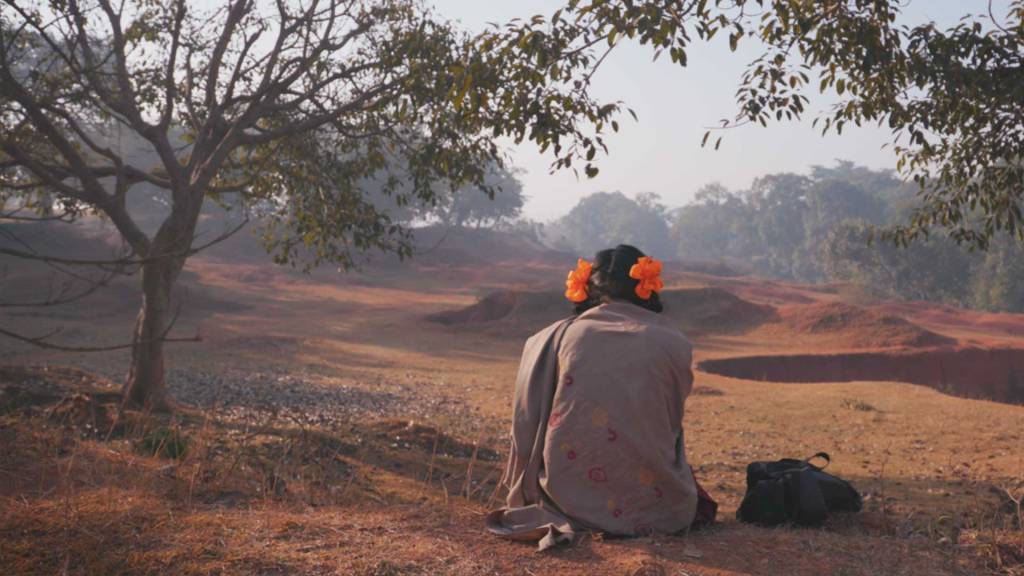
Hey, maybe Oppenheimer can win in this category, too! That lame joke represents all the levity that remains in this year’s field, as each of the nominees packs one devastating kick to the joeys after another. To Kill a Tiger may be the height of that, coupling a great sadness with righteous anger at the appalling aftermath of a heinous crime. I haven’t officially reviewed this yet, even though I saw it a month ago. That’s how badly I’m still struggling to process it all.
In a small village in India, a girl, called “Kiran” as a pseudonym to protect her identity (director Nisha Pahuja initially was averse to showing her face, but the subject, having turned 18 and seen an earlier cut, agreed to have her face on screen), was gang-raped at a local wedding by three men, including one of her cousins. Overcome with grief and shame for not being able to protect his daughter from the worst thing that can happen to her, father Ranjit bucks tradition and takes the relatively unprecedented step of pressing charges against the attackers. What unfolds is a 14-month stress test of provincial life in the region, as the entire village turns on him, the family, Kiran, and even Pahuja’s crew for continuing to document the case.
In almost cult-like fashion, everyone in town demands that the affair be handled internally as a “village matter,” and not to involve authorities. They continuously shame Ranjit and Kiran, saying that they’ve lost their honor as a result of this situation, and that if they want to restore peace, they should “compromise” and marry Kiran off to one of her rapists. My stomach churns just typing this out, it’s so grotesque. Similar to Children of the Mist last year, it amazes me that there are societies still so regressive as to have rituals in place that not only treat women as property, but underage girls, saddling them with the responsibility of marriage and motherhood because someone else assaulted them.
Thankfully, there is relief in the ultimate resolution, but it takes a while to get there, and it is harrowing to say the least. The fact that people just walk straight in to Ranjit’s house in the middle of the day to harangue him and his family, or to threaten Pahuja for daring expose it, is terrifying. And given the level of pressure coming from all sides, the resilience of Ranjit and Kiran is astounding and inspirational. The world is never going to get better unless people brave the obstacles preventing it. It was very nearly traumatic to watch this saga unfold, but it’s extremely important to steel yourself and take the journey with them.
20 Days in Mariupol – Mstyslav Chernov, Michelle Mizner, and Raney Aronson-Rath
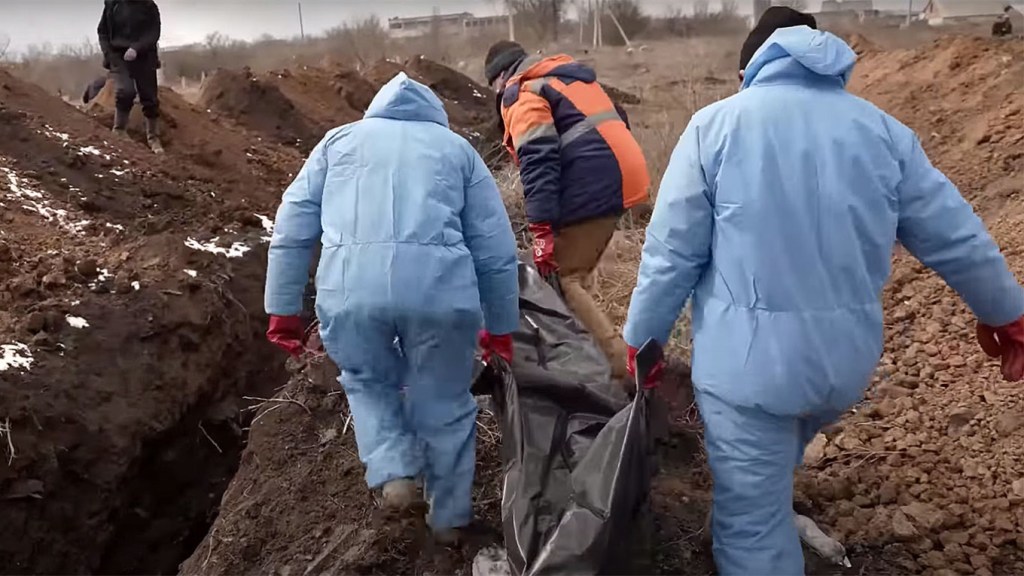
Even if you haven’t seen this film yet, you’ve almost certainly seen it. Recorded during the opening days of Russia’s invasion of Ukraine, Mstyslav Chernov and his crew with the Associated Press stayed behind in the city of Mariupol and reported out the devastation for the whole world to see. If you watched any news program during this period, you likely saw their footage, just one of many ways in which we’re all affected by these events, indirectly making us part of the story.
This is by a considerable margin the most essential film of 2023. After nearly two years of relentless bombardment at the hands of a madman, somehow Ukraine is still standing, still fighting for its freedom, against Vladimir Putin’s murderous hordes. As yet another consequence of the age of disinformation, foreign aid may start drying up for the Ukrainian forces, and members of our own government (as well as right-wing propaganda media outlets) are even parroting Putin’s talking points, choosing a dictator and threat to the world over our ally.
As hard as it is to watch, it’s necessary to keep this war crime in the collective consciousness, and Chernov does everything he can to sear the images in your mind. From a pregnant woman and her fetus dying from a hospital bombing, to tanks rolling through the streets and menacingly turning their gun turrets towards the vacated building where the crew is hiding, to the desperate attempts to get an internet signal just to transmit the truth to the wider world, this film unequivocally demonstrates the power and dedication of the fourth estate. Even when it comes time for Chernov and company to escape for their own safety, the camera almost never stops rolling. The one advantage to our current era is the fact that the entire world can watch events unfold basically in real time. There’s no spin, no agenda, no obfuscation. The bombs are dropping, lives are being destroyed, and names are cast into the ether, cut woefully short due to a monster’s ambition.
***
At its absolute core, this is what the Documentary Feature category, and the entire artform, is all about. It’s about reality, about relaying the truths of humanity, for good or ill, unvarnished and untainted. This is a complex world, one with a lot of problems, as each of these nominees effectively conveys. But 20 Days in Mariupol stands apart from them all, because on this planet that’s constantly getting smaller in terms of information and human connection, this is the most human story with the widest reaching consequences.
My Rankings:
1) 20 Days in Mariupol
2) To Kill a Tiger
3) Four Daughters
4) The Eternal Memory
5) Bobi Wine: The People’s President
Who do you think should win? Vote now in the poll below!
As mentioned, this is the first time in seven years that I haven’t been able to complete the Documentary Feature shortlist. But just like that initial attempt that came up one short, I’ll see the outlier at some point, and when I do, I’ll compare it with the rest of the field. But for now, there’s no reason why I can’t rank 14 of 15, so here it is.
1) 20 Days in Mariupol
2) To Kill a Tiger
3) Four Daughters – Yes, my top three overall got nominated.
4) Still: A Michael J. Fox Movie
5) A Still Small Voice
6) The Eternal Memory
7) Beyond Utopia
8) Bobi Wine: The People’s President
9) American Symphony
10) Going to Mars: The Nikki Giovanni Project
11) 32 Sounds
12) Desperate Souls, Dark City, and the Legend of Midnight Cowboy
13) Apolonia, Apolonia
14) Stamped from the Beginning
Up next, it’s our first video breakdown of the season, taking a look at how five films went from page to screen. It’s Adapted Screenplay!
Join the conversation in the comments below! How many films on the shortlist did you see? What sorts of documentaries do you prefer? Would it have killed the Documentary Branch to give us one quasi-cheerful nominee? Let me know! And remember, you can follow me on Twitter (fuck “X”) and YouTube for even more content!

 I Actually Paid To See This
One thought on “Oscar Blitz 2024 – Documentary Feature”