There’s no right or wrong way to judge the Original Score category, mostly because each film requires a different atmospheric touch from the orchestral music to properly convey the tone. For some, like Star Wars or Jurassic Park, a bold, sweeping theme locks the scenes and the overall movie in your memory for all time. In other cases, like Soul, you need a score that demonstrates the key thematic ideas in the most literal of terms. Elsewhere still we have a film like last year’s winner, All Quiet on the Western Front, that kept a distinct, recurring note sequence as a constant companion/omen. And sometimes, you just need pleasant ambiance that matches the story, like Ennio Morricone’s score for The Hateful Eight.
All of these disparate soundtracks were precisely what was needed for their particular project, and you pretty much can’t ask anything more than that. For myself personally, I try my best to create as strong of a link to the core subject as possible, while also listening for something distinct and memorable. Essentially, if someone plays the album, I want to instantly be able to associate it with its film. That’s not always an easy task, and sometimes the best pure piece of music wins the day, but for the most part, that’s where my preferences lie.
Fifteen different compositions were shortlisted for this prize, and I listened to all of them. Some were spectacular, some were just noise, but in their own way, they all related back to the picture properly, for better or worse given the overall quality. Of the five finalists, I’d say that the Music Branch got it right on at least three, if not four of them, so I really can’t complain. This is often one of the more unique fields each year, so let’s get to the breakdowns!
This year’s nominees for Original Score are…
American Fiction – Laura Karpman
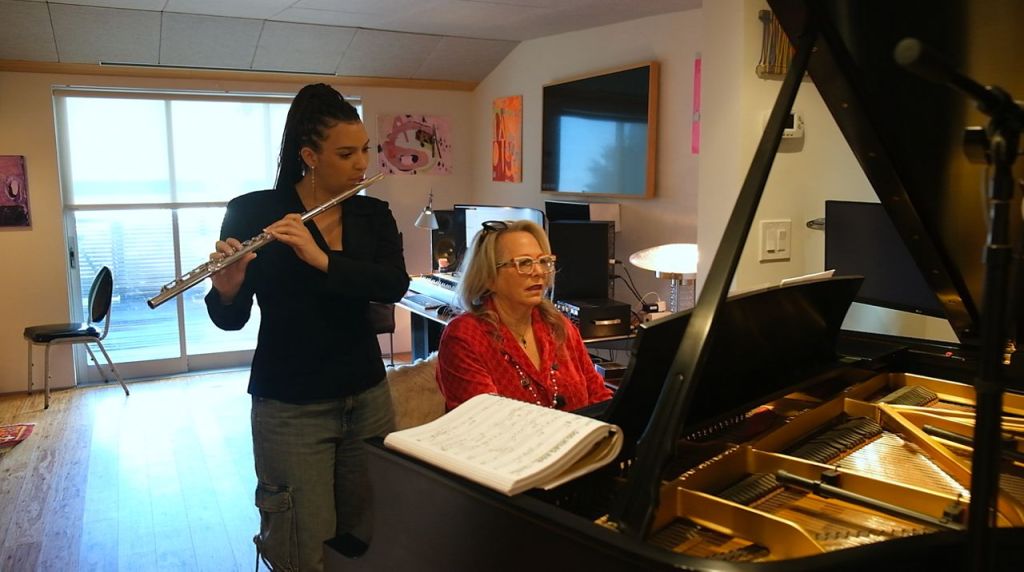
Two basic themes run throughout this soundtrack, both of which are appropriate to the story. The first is an overall motif of up-tempo jazz. This might have something to do with the racial component of the plot, but for me it just feels right given the intellectualism involved. When you think of intelligence and literature in the modern day, what do you picture? I’m guessing a lot of people would say cafes, where light music flows freely to get the creative juices going. There’s something sophisticated about jazz that sets it apart from most other modern forms of music, and that aligns perfectly with Monk Ellison’s character, particularly the movements and cues that seem inspired by the likes of George Gershwin.
The other side of the equation comes back on Monk as well, and that’s pure chaos. As the character’s frustration mounts over the course of the film due to the compounding absurdity, so too does the score become more frenetic and amelodic, with fits and spurts of loud blares to jangle your nerves for just a moment. When you hear these quick bleats, you can feel the veins in Monk’s head about to burst from sheer consternation. That’s the mark of a really good score. If you can shut your eyes and see the scenes play out while listening, chances are you’re on the right path.
Indiana Jones and the Dial of Destiny – John Williams

I mean, what else can I say? He’s John freaking Williams. This is his 54th Oscar nomination to date, five behind Walt Disney’s record of 59. He’s also in his 90s, so who’s to say how many more times we can honor the greatest composer to ever work in this medium? Like Diane Warren, he seems to get nominated every year. Unlike Diane Warren, he actually earns it most of the time.
That said, this particular nod is kind of dubious. Strictly speaking, it meets the Academy standards of having a certain percentage of the music be original, but far too much of this score is borrowed from earlier films in the franchise, including Indy’s iconic theme song. Even the original pieces sort of expand upon previous movements. The most glaring instance of this by far is Helena’s theme, which sounds far too close to the more sentimental cues for Karen Allen. I remember watching the film and thinking that if they didn’t establish her as Indy’s goddaughter, their banter would be more akin to that of a love interest. The instrumentals behind her don’t help.
I can’t hate on it too much, because even in his sleep John Williams can outwrite nearly every composer in existence. And part of me is just so wistful for his indelible scores of the past that I kind of want him to keep getting on the ballot until he ties or exceeds Disney. It may come with something of an asterisk due to artificially inflating the numbers with entries like this, but again, he’s earned the deference.
Killers of the Flower Moon – Robbie Robertson
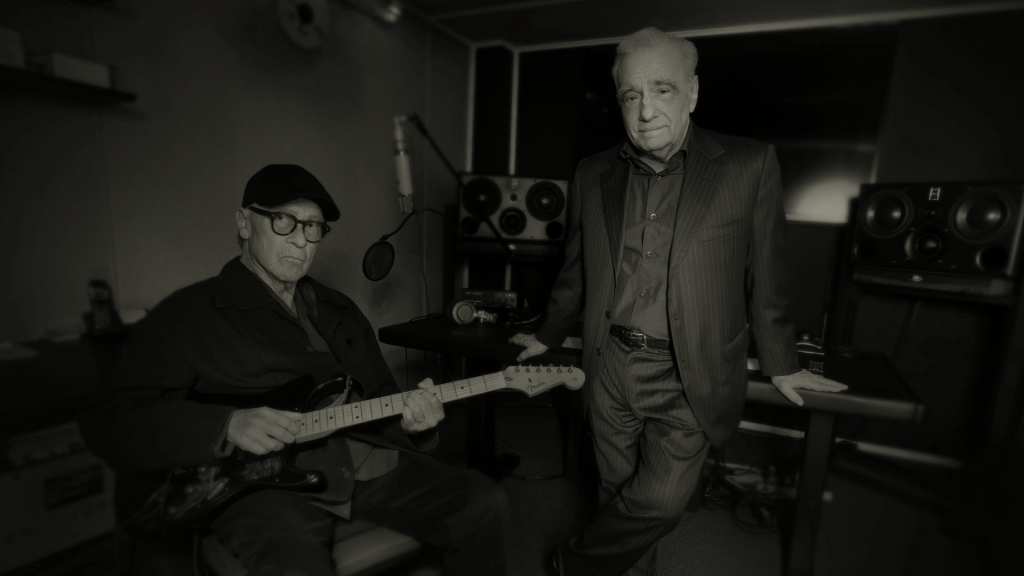
This is a posthumous nomination for one of the greatest musicians in folk rock, Robbie Robertson of The Band (“The Weight” is still an all-timer for me). For Killers of the Flower Moon, he brilliantly combines two musical influences into a seamless whole, representing the two diametrically opposed parties at play.
For those under William King Hale’s influence, there’s an infusion of Western blues, led by electric and slide guitars, banjos, and subtle strings. The interludes are aggressive, but not overpowering, especially when they relate to Leonardo DiCaprio’s dullard Ernest, oscillating between hopeful and ignorant when it comes to his crimes. As things get more intense, the tempo rises to meet it, making for a fast-paced approach without becoming overly loud and distracting.
For the Osage, the use of tribal pipes and percussion is paramount (say THAT three times fast). Not only is it crucial to include movements inspired by tribal tradition, but to hammer home who’s on the side of right and wrong, the Osage music is given a softer timbre, so that it feels innocent. Never weak, mind you, as the drumbeats convey a sense of passion, determination, and discipline, but always clear that they’re on the defensive thanks to Hale’s devious deeds. A few melodic movements are thrown in for good measure as they relate to Mollie, letting the viewer know that her struggle is meant to be felt as viscerally as possible.
Oppenheimer – Ludwig Göransson
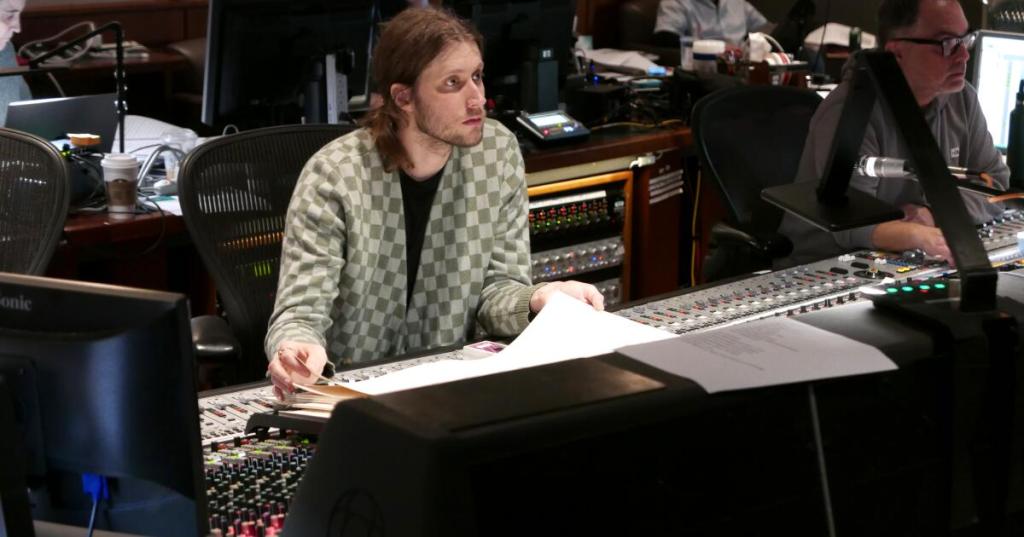
Ludwig Göransson has already won this prize, for the Black Panther score. He was also nominated for Original Song last year for Wakanda Forever‘s Rihanna track. He’s an expert on orchestral sounds enhanced by digital and electronic influences, and he’s been rewarded for his skill in combining the two.
The score for Oppenheimer is much more traditional than his normal work, however. There’s still the influx of electronic effects, but they’re more subdued. This is mostly because Oppenheimer is a traditional biopic when outside the scientific moments. During those scenes, we get electrical buzz, distorted strings, various popping sounds, and pyrotechnic shock waves. This illustrates the potential of the Manhattan Project, as well as the inner turmoil going on in Robert Oppenheimer’s brain, as he contemplates the scope and fallout of his actions.
For the more human scenes, like his marriage to Kitty or his affair with Jean, Göransson defaults to more standard fare, with melodic strings, harmonic winds and brass, and soft piano and percussion. This creates a fine and delicate balance that keeps in line with the plot, but is also just very nice to listen to.
The one additional element that can’t be ignored, though, is the ticking clock. Just like All Quiet had that three-note progression pop up at various different times, often out of step with the music, so too does Oppenheimer use a combination of percussion and actual gears to insert ticking sounds at the moments where the tension needs to be ramped up significantly. Time is running out for the war, for the project, for Oppenheimer’s credibility, and after we see the devastation that the atomic bomb leaves in its wake, an ominous reminder of how we as a species dangle on a very dangerous precipice. It’s a very nuanced touch, but essential to the score’s success.
Poor Things – Jerskin Fendrix
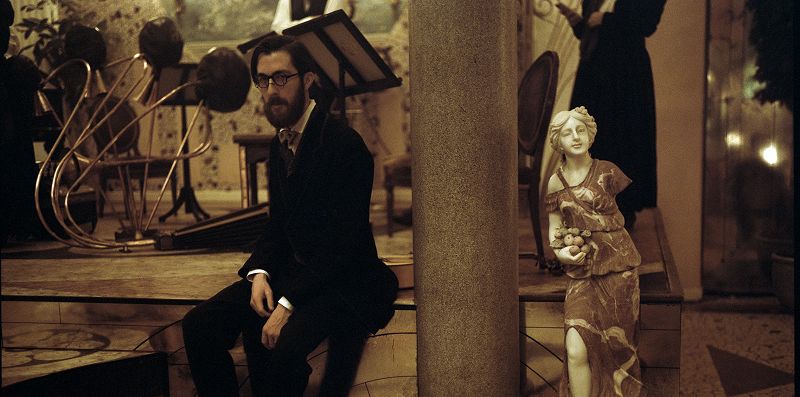
Easily the most unique and distinctive score in the set, the Poor Things soundtrack is designed to put you off and fascinate you at the same time. Using intentionally out of tune strings that border on the atonal, the very first track feels like a warped lullaby to symbolize the undeveloped mind of Bella Baxter. As we watch her, she has the intellect of an infant, and the music matches that precisely.
This style permeates the entire composition, with everything feeling just a little bit off, even the more traditional orchestral cues. Given the Frankenstein-esque story, the intent is to come across like the whole thing is a jumbled work in progress, with all the pieces there, but none of them quite fitting together correctly. This thematic through line carries over to the supporting cast, all of whom are trying to build Bella into an image of their own making, despite their own flaws and imperfections.
There’s almost never a moment where the music sounds “normal,” and that’s by design. Bella is a curiosity, a disruption, and a constantly evolving creature. As such, the music grows with her in complexity, but never gives up its quirks. Even in scenes like the famous dance number, we’re given high-pitched squealing strings meant to instantly grab your attention because of just how weird it is, in keeping with its human counterpart.
All of this builds to the one regular piece of music that plays over the end credits, when Bella herself is fully realized. Now complete and in control of her own destiny, the closing track is loud, bombastic, and triumphant, announcing her full self to the world. And yet, in a genius touch, that child-like theme still hovers on the periphery, a reminder of what she came from, what she once was, and the potential of all she can be going forward.
***
From where I sit, only one entry doesn’t belong here, and it was clearly nominated because it’s a legacy pick. It’s not nearly as egregious as some other chicanery from this branch, but it is still noticeable. I have a pretty good idea what’s going to win based on previous Awards Season results, but that doesn’t change my opinion on what I think should be the victor.
My Rankings:
1) Poor Things
2) Killers of the Flower Moon
3) Oppenheimer
4) American Fiction
5) Indiana Jones and the Dial of Destiny
Who do you think should win? Vote now in the poll below!
As always, this is a category where I completed the entire shortlist, so here is my personal ranking for the full set.
1) Poor Things
2) The Boy and the Heron
3) Killers of the Flower Moon
4) Oppenheimer
5) Spider-Man: Across the Spider-Verse
6) American Fiction
7) The Holdovers
8) The Color Purple
9) Elemental
10) Barbie
11) Indiana Jones and the Dial of Destiny
12) Society of the Snow
13) American Symphony
14) Saltburn
15) The Zone of Interest
Up next, from a feast for the ears to one for the eyes, we take a look at what made the nominated films so visually memorable with practical sets and color (including one that threatened to use up the nation’s entire supply of pink). It’s Production Design!
Join the conversation in the comments below! What criteria do you have for film scores? Does John Williams deserve an automatic nomination each year? Where’s the line between pleasantly odd and annoying for non-traditional sounds and music for you? Let me know! And remember, you can follow me on Twitter (fuck “X”) and YouTube for even more content!

 I Actually Paid To See This
One thought on “Oscar Blitz 2024 – Original Score”