
One of the cooler side effects of the last decade of Oscar viewing is in how short films are getting much more attention and praise. I first saw the shorts 10 years ago. I don’t know if ShortsTV had done any curated screenings before that, but even if they did, what I saw back in 2014 looked nothing like how the presentation does today. For the longest time, the shorts were only shown privately to Academy members who could only vote if they came to one of those special engagements. Now it’s an event for movie buffs. As soon as the nominees come out, you can bank on all three categories being available within three or four weeks, and thanks to streamers, many of the nominees exist in the public sphere outside of these shows.
Because of this, there’s been a renewed interest in the artform for high-level talent. Well-known writers, directors, and actors lend themselves to these films, sometimes in front of the camera, sometimes behind. A few years ago a film called The Phone Call took home the prize, and it starred Sally Hawkins and Jim Broadbent. Two years ago Riz Ahmed won for The Long Goodbye. Other A- and B-listers like Martin Freeman, Danielle Macdonald, Jonathan Tucker, Idris Elba, Alfonso Cuarón, Kobe Bryant, Issa Rae, and Gabriel Byrne have all left their mark in these works, showing that audience reaction and popularity have grown enough that even the biggest stars find them worth their time and energy.
It’s yet another reason why it was such a travesty to see these categories relegated to a pre-show a couple years back. We’re on the cusp of a solid, lasting trend of short film fandom in this country, and the Academy almost snuffed it out by assuming “no one cares” because Disney wasn’t nominated. Instead, the demand has only grown, with Netflix and other outlets giving them particular focus, and emerging artists are getting unique chances to collaborate with their professional inspirations on important passion projects. Fifteen years ago, it was a novelty that Kenneth Branagh was nominated for a short film, or that a nominee one year afterward – Jonathan Penner – would go on to become a beloved Survivor player. Now, these are fully legit. People clamor for them during Oscar Season just as much as any other nominee, and I’m overjoyed.
This year’s nominees for Live Action Short are…
The After – Misan Harriman and Nicky Bentham

Right off the bat we have one of the very star-studded entries I was mentioning. Directed by first-time filmmaker Misan Harriman (he’s well-known as a photographer, especially for his work during the “Black Lives Matter” movement), the project stars David Oyelowo as a man who loses everything, comforting himself in hearing other people’s problems until confronted with his own trauma.
Oyelowo plays Dayo, a family man and successful businessman. One fateful day, he decides to prioritize his daughter (Amelie Dokubo) over his work obligations, beginning a wonderful day of memories until disaster strikes. A year later, Dayo has left his job, working part-time as a rideshare driver instead. He doesn’t go to therapy sessions, and is generally aloof. When he works, he basically doesn’t say a word to his passengers, seeming to find peace in listening to them talk about their own issues like he’s not even there. A chance encounter on a regular fare ends up bringing all of his emotions to bear in a moment of pure release.
There are two things I absolutely love about this film. The first is that Oyelowo gets to speak in his normal voice for once. He’s had many roles here in America, most notably as Dr. Martin Luther King Jr. in Selma, so it’s nice to hear him use his regular British accent. The second is the film’s climactic moment. Shot in an absolutely glorious one-take, you see first-hand why Oyelowo is such a brilliant actor. All the buildup of the picture is let loose on the audience in a way that, if you feel nothing, I would suggest you seek counseling. This is one of those rare moments where a performer lays it all out there, and it’s devastatingly beautiful.
Invincible – Vincent René-Lortie and Samuel Caron
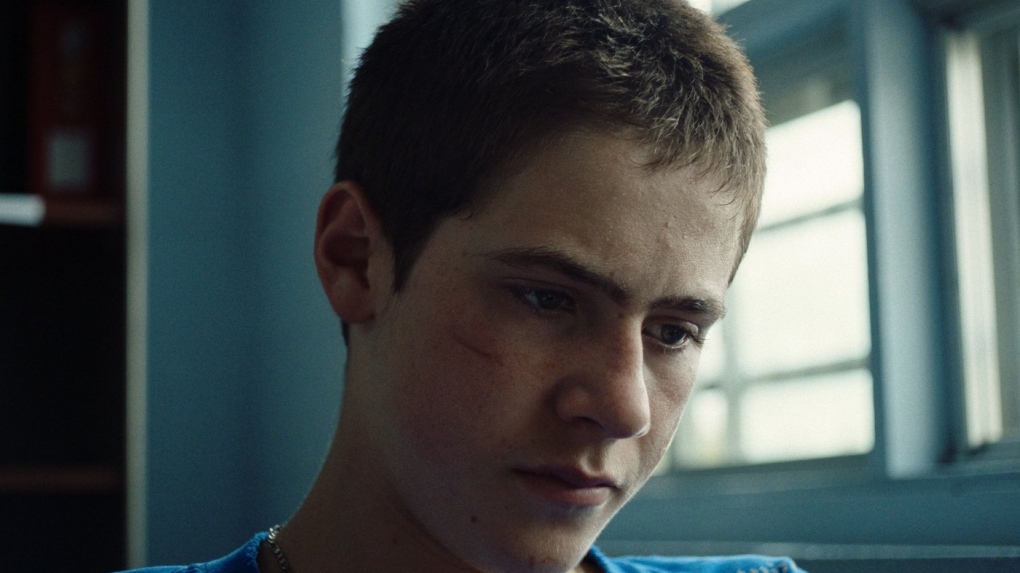
Coming from Canada and based on the real-life story of Vincent René-Lortie’s friend, Invincible is an intriguing character study about freedom and consequences. Cleverly edited, the film offers an intriguing perspective on how kids can fall through the cracks despite the best of intentions.
A teenager named Marc (Léokim Beaumier-Lépine) sits in a van in the dark, sobbing to himself as his mother pleads to him over a cell phone. Asking him to go back to “the center,” you can sense a slight annoyance in her request, however, as if she’s not being altogether sincere. As Marc makes his decision, we flash back a few weeks to see how we got here. On furlough from juvenile detention, Marc spends a happy weekend with his family. When he has to go back inside, he promises his sister he’ll return soon, because he’s invincible. However, when he enters to the facility, you can tell he very much isn’t. He constantly causes trouble, argues with his case worker, and even smuggles in a lighter to set off the sprinklers in his cell on a hot day. You can tell the boy is quite smart, but he betrays trust and constantly sabotages himself.
There were a fair few movies I saw last year that I thought would have been better as shorts, but this one I think would have benefitted from being expanded to feature length. At minimum, this half-hour film probably should have used the 10 minutes it had left to still qualify as a short. This is because, while I feel for Marc, I don’t think we got all that much of a chance to get to know him, apart from one scene where he reads a poem he wrote. We don’t know what he did to land in juvie. We don’t know if the conditions are actually detrimental to him or if it’s just his personality. We don’t know why his parents treat his escape as a sort of “boy crying wolf” situation. There’s so much more I wanted to understand, but instead it felt like we rushed to the ending. This is still quite good, but I’m left wondering how much better it could have been.
Knight of Fortune – Lasse Lyskjær Noer and Christian Norlyk

Just about every year, we get a delightfully twisted European entry that deals with dark and heavy subjects in surprisingly fun ways. Last year, eventual winner An Irish Goodbye fit that bill nicely. This year we have Knight of Fortune from Denmark, a light farce about shared grief and the importance of human connections, even in the saddest of times.
An old man named Karl (Leif Andrée) is in a morgue, unable to bring himself to opening the casket of his departed wife. Looking for just about any excuse to do something else, he busies himself attempting to fix a fluorescent light (it ends up in even worse condition than he found it), before ducking into the men’s room. Collecting his thoughts in the stall, he hears a faint request from the next toilet over. A fellow widower named Torben (Jens Jørn Spottag) asks for an inordinate amount of paper, and when he sees that Karl is a kind man, requests that he accompany him to a different room in the morgue to lift the coffin on his own wife. Better able to help this man through his pain than deal with his own, Karl goes along with the escalation of Torben’s process, which leads to some truly zany moments, with the two forming a bond over the fact that both their wives loved a song that shares its title with the film.
The tone of this short is absolutely perfect. The two leads play off each other immaculately, the comic timing is impeccable, and the turns of the plot are both surprising and inspired. But more importantly, there’s something beautiful about how Karl and Torben wind up needing each other. The old adage that misery loves company is demonstrated amazingly here, as Karl somehow has an easier time with all of the absurdity surrounding Torben than simply lifting the lid on a box. No matter how odd it all is, Torben offers possibilities. Opening the casket simply confirms the finality of his loss, and the film shows a remarkable degree of empathy in that dichotomy while still being hilarious. This movie proves there can be catharsis at laughing at another’s pain, because these two are fully committed to the bit.
Red, White and Blue – Nazrin Choudhury and Sara McFarlane
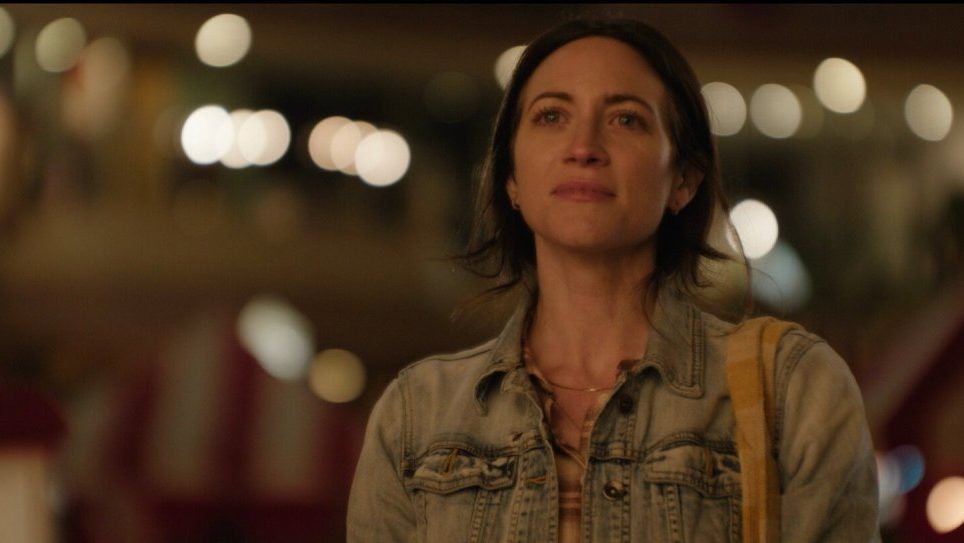
Automatically goes to last place for not using the Oxford Comma! I’m kidding of course. I’d actually say that, given the current political climate, this film is probably in the top two in terms of its chances of winning, thanks to a poignant and unfortunately predictable situation that the more regressive elements of our nation conveniently ignore.
Rachel (Brittany Snow, another celebrity in this growing trend) is a single mother to two children working as a waitress in Arkansas. Barely able to make ends meet, she feeds her kids her comp meals at the diner where she spends most of her day, and they sleep in the lone bedroom in their apartment while Rachel herself uses a pull-out sofa bed in the living room. So as you can guess, when the film opens with Rachel looking at a positive pregnancy test, things are not ideal.
Desperate for proper care despite living in a state where abortion is effectively illegal now, she works extra shifts, hoards tips, and does whatever she can to secure the needed services before anything shows. Once she’s raised enough money, she drops son Jake (Redding Munsell) off to stay with friends while she and daughter Maddy (Juliet Donenfield) road trip to Illinois. The journey offers an odd sort of parental bonding for the two of them, with Rachel reminiscing about when Maddy was younger, and wondering what would happen if another child was forced upon this family, compounded by a major turn in the plot that recasts everything we’ve seen.
The short gets a lot of mileage out of its messaging and its twist, the latter of which can be guessed, but is still effective even if you do. Snow gives an excellent performance as well, putting a very real face on the most galvanizing issue of the day. The Supreme Court decision that overturned Roe v. Wade triggered a catastrophic wave of laws and restrictions that basically rendered women as second-class citizens in this country, hoping to win a GPS lottery to live in a state where they have bodily autonomy. This subject was made even more idiotic just this week, with Alabama’s Supreme Court invoking the literal wrath of God as they ruled that IVF embryos have the same rights as fully-developed and alive children, contrary to that of the woman who might have sought that treatment, and arguing that U.S. federal law should be based on biblical text despite that pesky First Amendment.
So yeah, the environment is ripe for a film like this to grab the attention of Academy voters, especially those wishing to make a political statement. Thankfully, if it does win, this won’t be just an issue decision, as the project is very well done.
The Wonderful Story of Henry Sugar – Wes Anderson and Steven Rales
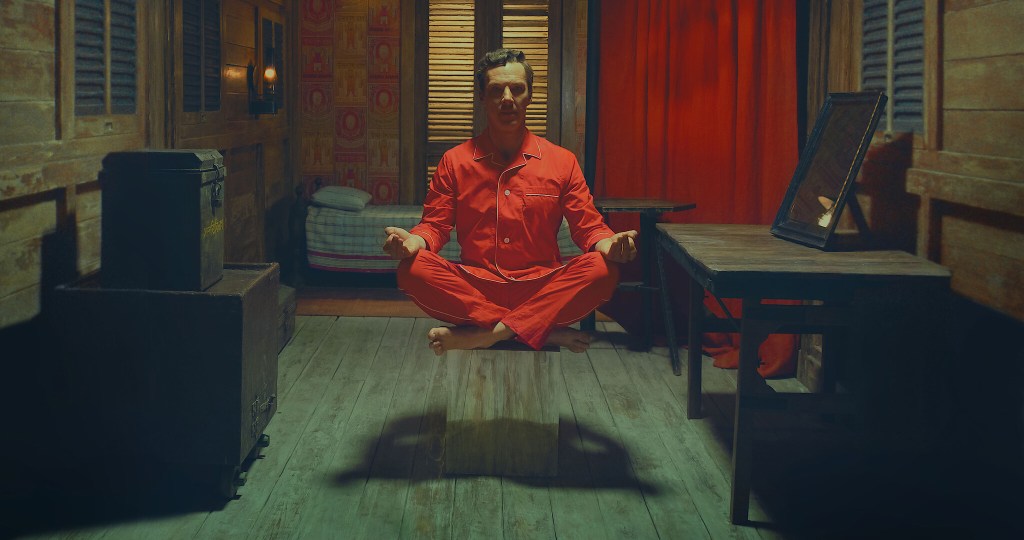
Yes, Wes Anderson is nominated for the eighth time (in his fifth different category), and it’s not for Asteroid City. Instead, this quirky little short in the filmmaker’s trademark style gets the nod, and if you’ve already seen it on Netflix, you know it’s absolutely charming in the extreme. This is the first of four planned short films based upon the works of Roald Dahl, yet another sign of the increasing viability of the medium.
Telling the story of a rich man who learns about a yogic method to see without using his eyes, the film principally stars five spectacular British actors in multiple roles: Ralph Fiennes, Benedict Cumberbatch, Ben Kingsley, Dev Patel, and Richard Ayoade. Treating the fourth wall with his usual lighthearted disdain, Anderson has his cast constantly moving in and out of frame, addressing the camera and each other (often in rotation), and proceeding more as if this were a reading of a bedtime story than an actual performance. It has shades of The French Dispatch, but because it’s only 40 minutes long and far more lively, it’s exponentially more fun and interesting.
The key to the whimsy of this particular entry is the pacing and the production design. Using minimal cuts, the actors often perform very long takes, moving forwards and backwards in frame as sets are built and struck around them in a fluid motion (a wooden box painted to blend into the scenery is a great touch). The blocking and stage choreography must have been insane. The almost monotone line delivery from all five only aids in the cheeky humor, ironically reducing Dahl’s massive imagination into something intentionally rote. Each actor plays at least two parts, but their speech and speed almost make them entirely interchangeable, allowing for some light chaos in a highly controlled setting. I’ve had my issues with Anderson’s work in the past, but in smaller doses like this, it feels just right.
***
Just like with Animated Feature, for me this category is in three tiers. The fifth place film is good, but is missing something crucial to get it in the conversation with the others. Third and forth are great works that could easily win without controversy. First and second are on another level entirely, and I agonize over my choice between them. I crave such “problems” in this process.
My Rankings:
1) The Wonderful Story of Henry Sugar
2) Knight of Fortune
3) Red, White and Blue
4) The After
5) Invincible
Who do you think should win? Vote now in the poll below!
Up next, we close Week 3 with another video breakdown, this time for one of the biggest categories of the entire affair. The result already looks secured, but does that mean it was earned? And just who should actually be up for the prize instead of those ultimately nominated? It’s Best Director!
Join the conversation in the comments below! Are you able to see the Shorts in your area? Which of the three categories is your favorite? Do you want to see even more celebrities taking on shorter projects? Let me know! And remember, you can follow me on Twitter (fuck “X”) and YouTube for even more content!

 I Actually Paid To See This
One thought on “Oscar Blitz 2024 – Live Action Short”