We’re almost done, everyone. The Academy Awards are less than two weeks away, and tonight begins the final full week of Blitz coverage! I can feel the softness of my pillow as we speak, yearning for the day when I will rest my head upon it, knowing I have no obligations the following day. Hell, I might even skip an entire day and just curl up for a solid 24 hours when this is all over. What I’m saying is this is a labor of love, but rest is needed.
Tonight, we close out the Shorts program with Documentary Short, and while every short film category has a ton of variety, this one has followed more of a pattern in recent years. There’s usually some mixture of the following themes: political statements, inspirational stories (especially those involving children), delightful old folks, historical/culture education, adorable animals, community leaders, and the Holocaust. Very few nominees over the last decade have fallen outside of these categories, and even those that do are relatively adjacent. It’s not a bad thing, but it does cool some of the anticipation for the longest of the three contests (documentaries average far closer to the 40-minute limit than live action or animated shorts) to be even remotely predictable.
That doesn’t mean these films are formulaic or lacking in quality. Far from it, in fact. It’s just that, if you’re like me and try to see all the Shorts in one day, you’re kind of exhausted by the time you get to the end, and for me every year the docs are the last screening. As such, it’s just that much harder to keep my attention. The last thing I want to happen is to get bored, especially when dealing with relevant topical issues happening in the real world. Each of these entries stands out in its own way from one another. I just wish there was more variety year to year, so that they stand out more from what has already come before.
This year’s nominees for Documentary Short are…
The ABCs of Book Banning – Sheila Nevins and Trish Adlesic
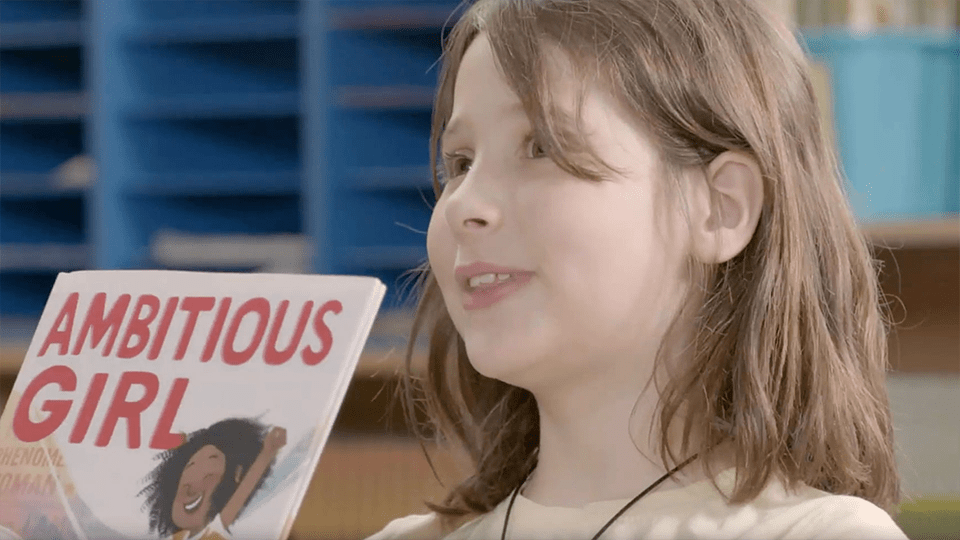
Among the many culture war issues raging in this country today, especially in areas run by small pockets of influential conservatives (despite their dwindling numbers nationwide) is that of controlling education and censorship of material. There have always been those who challenge books in public schools and libraries, but the current surge is the most powerful that’s come along in decades, yet another example of history repeating itself because small-minded people don’t want it taught. We literally fought a world war against those who banned and burned books, and now there are forces trying to do it here in the name of “freedom,” which is just sickening.
The beauty of The ABCs of Book Banning is that, for the most part, it eschews the political debate. The filmmakers take it as read (pun intended) that the audience is aware of the facts surrounding the matter, including the inherent “minority rule” sentiment behind it, where just about any pissed off individual can raise enough of a stink to dictate the academic curriculum for an entire generation of kids they’re not raising. We all understand that, so it’s basically left on the margins (pun intended again), reduced quite plainly to images of books with innocuous passages put on screen, followed by a red stamp as to their challenged status.
Instead, the focus is on the people that these restrictions are ostensibly there to help and protect – the children. The filmmakers took several banned books and did the unthinkable. They gave age-appropriate material to kids, had them read the books, and simply provide their thoughts on whether it should be banned from their school. It’s so simple and obvious, and yet so brilliant. Idiotic adults with far too much time on their hands are railing in school board and town council meetings to get And Tango Makes Three ripped from the shelves, because “how dare two male penguins raise a baby (the story is based on real events at a zoo) and ‘groom’ my kids to become teh ghey!?!?!?!?!?” But when a child actually reads it, their reaction is just natural and plain. “What’s the problem with this?” they ask. “It’s just saying that two penguins are capable of love for a baby. Why is that dangerous for me to know?”
Freaking DUH! Imagine that. A kid reads a book and gives it actual thought, rather than casting aspersions based on prejudice and bias. This is literally a case where books are judged by their covers, and yet we have adults acting like kids and kids acting like the adults in the room. If you don’t want your child reading something that you feel is inappropriate for them, then that’s a decision you can make for yourself and a conversation you can have with your child, even if you’re a hateful prick. But nothing gives you the right to deprive every other kid of access to knowledge. The fact that nine-year-olds understand this but 40-year-olds don’t is a gob smacking juxtaposition.
The Barber of Little Rock – John Hoffman and Christine Turner

One of the major problems with capitalism that we still fail to reckon with is the idea of equity. Under the law, all people have equal rights (whether they’re enforced or upheld is another matter), but in almost no part of the country is there true equity of economic access and opportunity. This is the issue this film seeks to spotlight.
Arlo Washington, an Arkansas barber, has seen the effects of the racial wealth gap firsthand. Even if we presumed that all things were equal in the here and now (hint, they aren’t), there’s been so much historical disparity in the ability for black people to accumulate and grow generational wealth in this country, that minorities almost automatically start from a disadvantage when trying to make something of themselves. Rents go up, red-lining occurs, people are denied loans and jobs because of their social status, and Heaven forbid they make any mistakes in life, like go to jail, because even after that debt to society is paid, laws exist that can prevent them from ever getting off the bottom rung.
Because of this, Arlo has dedicated himself to expanding opportunities for people in his community through two avenues. The first is setting up a barber school to train hundreds of people in this crucial trade, setting them up for success in shops down the road, or in starting one of their own. The second is through setting up a Community Development Financial Institution, or CDFI, to give out grant and loan money to those trying to get on their feet, with absolutely no credit checks or profit motive. The idea is that since no other banks will give these people a shot (a poignant drive through Little Rock shows banks on every main thoroughfare in the “white” neighborhoods but none in the “black” ones), they’ll help out with a bit of money and an intrinsic trust so that people can build credit and make a better life for themselves.
We see a good deal of people from many underserved backgrounds doing their best to make the most of this largesse, and honestly, it just feels good to see any kind of bank working for its members rather than itself. There are points where the film itself kind of feels like an infomercial (one scene has one of Arlo’s workers pointedly praise him in a meeting for all he’s done for the city that feels tacked on), and I’m sure there’s more to what goes on than what we saw, but on the whole, I’m behind any force for good that seeks to actually give that proverbial “hand up” to people who need it instead of writing them off as being “lazy.”
Island in Between – S. Leo Chiang and Jean Tsien

There’s a really cool moment early in this film, which talks about the Taiwanese provincial island of Kinmen. Standing on the coast on a military watch post, the camera turns and we are shown the Chinese mainland, demonstrating just how close China and Taiwan are in practical terms. That’s amazing to me, as I never knew Taiwan consisted of other islands besides, well, Taiwan, and I certainly didn’t know that there were some that close to the continent.
Once that novelty wears off, however, there’s not much to this. Director S. Leo Chiang talks about the difficulties of life on either side of the Chinese divide, especially for him as he’s also a naturalized American citizen. There’s an intriguing aside where he pulls out his three passports – one American, one Taiwanese, and one Chinese “Neighbor Pass,” as China doesn’t recognize Taiwan’s independence – that shows the complicated hoops people have to jump through between China and Taiwan just to experience their common culture. Unfortunately, it doesn’t really go anywhere as far as a narrative or timeline is concerned. It’s more a series of meditations.
It reminded me a lot of one of the nominees from last year, Haulout, which had the eye-popping image of a man opening a cabin door to see a beach jam-packed with walruses that was empty the night before. It’s one indelible visual that sums up the entire thesis, and it’s awesome, but we pretty much stay in a holding pattern the rest of the way, getting minor observations about life and history that don’t really add up to all that much. It’s incredible to think about, especially if you’re like me and just love learning new things. But against this field, it comes up short.
The Last Repair Shop – Ben Proudfoot and Kris Bowers
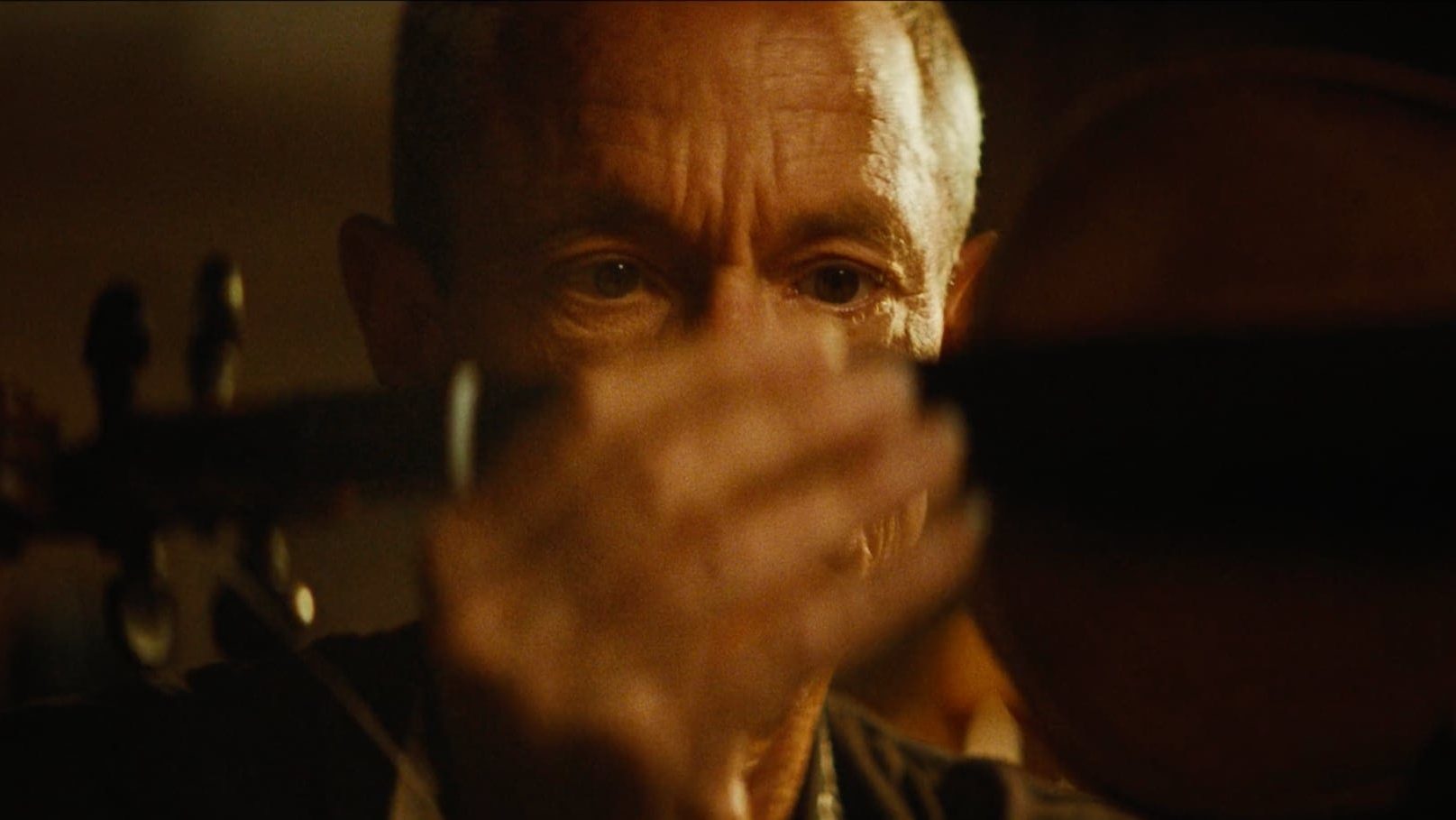
These names may seem familiar to you, as the pair were nominated three years ago in this category for A Concerto is a Conversation, and Proudfoot won two years ago for The Queen of Basketball. If you saw those films, this will feel very familiar to you, as it is also a story of community triumph and the power of music.
In this case, the title refers to a shop in the Los Angeles Unified School District that repairs musical instruments and lends them out for free to students to use for their music education. I wish such a program existed when I was in school. I wanted to join the band and learn trumpet or saxophone, but my family couldn’t afford to buy me such a thing. I did take piano for a couple of years (we had an electric one at home that my mom got for a huge discount at the mall), and I’ve tinkered off and on with my guitar for the last decade, but I always regretted never being able to study an instrument as part of my schooling. Thankfully, at least here in L.A., such a program allows for kids of any background to learn if they so choose.
A team of four dedicated craftsmen – Dana Atkinson, Paty Moreno, Duane Michaels, and Steve Bagmanyan – works to fix instruments while also sharing how music changed their lives. These stories are then accompanied by testimonials from current student in the LAUSD who talk about how much their ability to play means to them. The whole affair ends with a heartwarming, Mr. Holland’s Opus-style orchestral performance comprised entirely of past and present students who were helped by this program.
Heartwarming in the extreme, this one is sure to put you in a good mood. The stories of the workers and the skill of the kids is all but guaranteed to put a smile on your face. If you want a truly positive story, this is the one to go with, as it’s about as inspiring as you can get in the ever-expanding sea of misery we often find ourselves in. It’s simple, straightforward, and everything you need when you’ve given up hope on the world.
Nǎi Nai & Wài Pó – Sean Wang and Sam Davis

If you still need a pick-me-up, then Nǎi Nai & Wài Pó will do the job nicely. Directed by Sean Wang, the film is a feel-good slice of life wear he documents the day-to-day routines of his two grandmothers (the title refers to their nicknames), one on his mother’s side and the other on his father’s. One is 83 years young, the other 94, and the two live together in an adorable Odd Couple sort of arrangement where they complement each other perfectly.
The two are an absolute delight, especially since they make it clear they’re sort of playing things up for the camera because they want Sean to have a good time while he’s visiting (there’s a glorious punchline to this thread that’s absolutely perfect). They share stories, memories, activities, cooking, exercises, and just about anything else you can imagine together, living a life free of worry because they’ve done all they really wanted to do. They know their time is coming sooner rather than later, and of course there’s fear and apprehension about the subject, but they’ve also experienced so much that they’re at peace with it, resolved to enjoy the time they have left.
There’s no real point to this film, other than to show two wonderful women living their best lives now that they have all the time in the world. It’s kind of amazing that they’ve basically become sisters (and even sleep in the same bed for convenience), purely through the act of their children getting married. The movie is a chronicle of happiness from beginning to end, allowing the viewer to just relax and know that sometimes the greatest joys in life come from something as simple as watching your grandma pretend to rap for shits and grins.
***
Just like the other two Shorts categories, this one has clear dividing lines as to the overall quality for me. There’s an obvious number five despite it being a fine film. There’s a noteworthy second tier for third and fourth place that I absolutely loved and might even vote for against a different set of contenders. And finally there’s a solid separation at the top, where I honestly didn’t know what to pick for a while. In this case, either way it’s all about what comes out of the proverbial mouths of babes.
My Rankings:
1) The ABCs of Book Banning
2) The Last Repair Shop
3) Nǎi Nai & Wài Pó
4) The Barber of Little Rock
5) Island in Between
Who do you think should win? Vote now in the poll below!
Up next, I cut a thing here, place it over there, adjust the gradients, cut one bit from another bit and paste it over there, and voila, a category! It’s Film Editing!
Join the conversation in the comments below! Have you seen any of these films? Which of the short categories is your favorite? Do you want to party with Nǎi Nai and Wài Pó? Let me know! And remember, you can follow me on Twitter (fuck “X”) and YouTube for even more content!

 I Actually Paid To See This
2 thoughts on “Oscar Blitz 2024 – Documentary Short”