The art of editing is a tricky one. I know because I did it for a living for close to a decade. As great as a writer or director can be, if a film is not properly paced, delivering satisfying images in a timely and appropriately dramatic manner, the story will seem tedious and boring. Luckily for me, I mostly just had to do it in the context of sports highlights, snippets of video anywhere from 30 seconds to three minutes, telling the audience the story of the game. Even before the age of smartphones, the idea was that we couldn’t keep the viewer’s attention for too long, otherwise they’d change the channel (or in modern terms, look at another screen) out of disinterest.
For movies, it’s obviously way more difficult and way more involved. A writer has a creative mindset. A director has a creative vision. The cinematographer captures it on camera. It’s the editor’s job to ensure it all makes sense, and that means accounting for continuity, sound effects, coloring, and even some minor visual effects, all while keeping things as tight as logically possible. Can you imagine how hard this was when they also had to literally cut and paste film cells together? A flick edited the right way can make more than three hours go by in an instant. A poor edit can make 90 minutes feel like 90 days. It’s so much more than just picking the best takes.
The five nominees all have a massive amount of skill, each one tasked with a fairly unique challenge within their respective projects. As I learned all those years ago, you very rarely do the same job twice as an editor, and our group of contenders demonstrates that admirably.
This year’s nominees for Film Editing are…
Anatomy of a Fall – Laurent Sénéchal
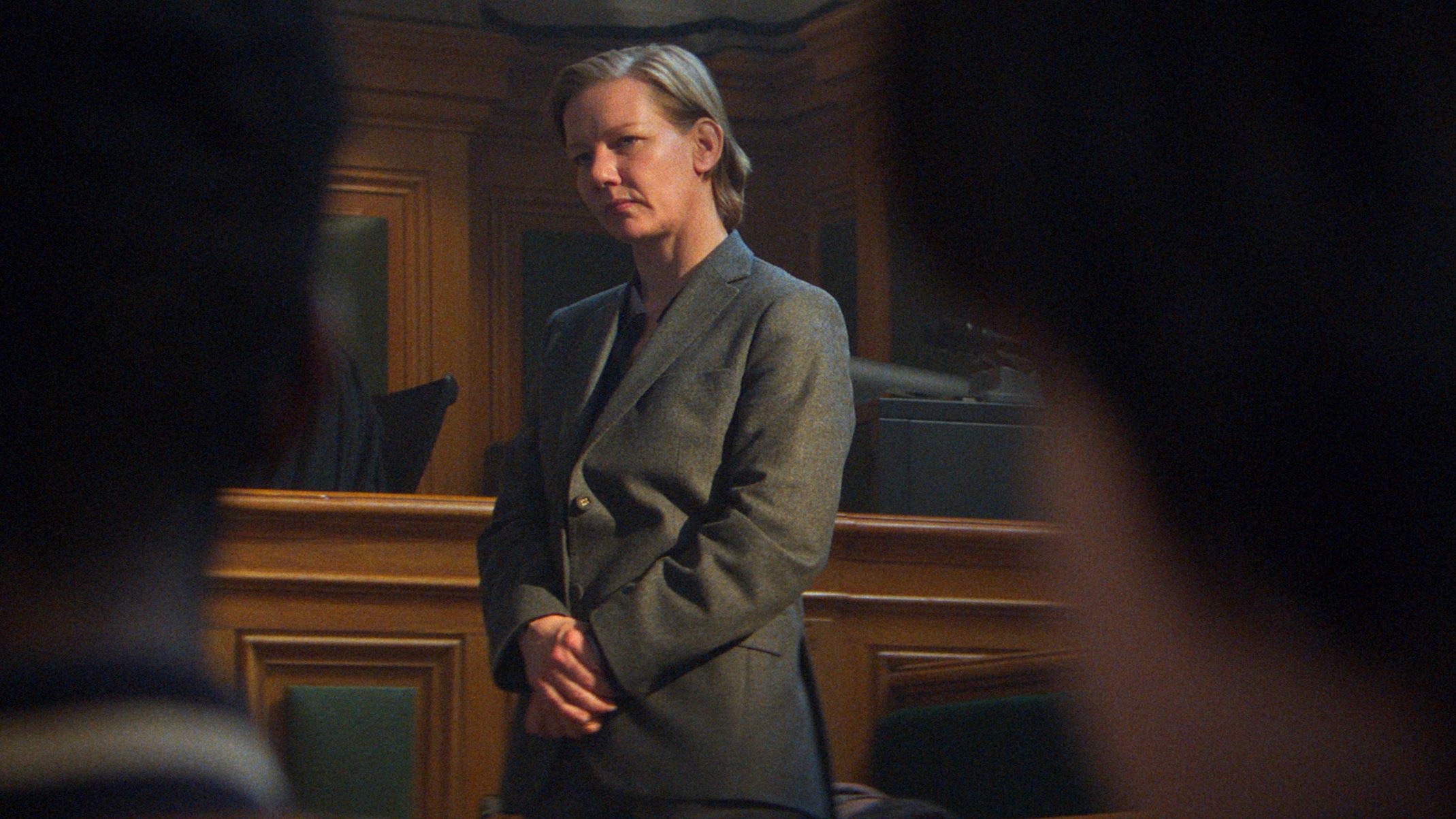
The task for Laurent Sénéchal in Anatomy of a Fall is two-fold. The first is to create different perspectives of how the character of Samuel died. This is most effectively done in the trial, where both sides of the case present a reasonable explanation for the fall, whether it was intentional or accidental. The editing also helps us imagine the final confrontation between Sandra and Samuel, crisply leading the audio recording of their fight into an imagined visual representation.
The second is to create doubt in the audience’s mind. This, I feel, comes up a tad short. The biggest flaw is, as previously mentioned, the inclusion of a website called “didshedoit.com” as the film begins. This immediately tells the savvy viewer that the story will not be resolved. This is reinforced when the social worker literally tells young Daniel that it basically doesn’t matter if his mother is a killer. He just has to decide which version of events to believe for himself. This is more a sin on the director than the editor, because all the work to create suspense is undone by these choices. We’re told upfront not to expect an ending, and what we do get is one where we’re told to throw up our arms and see the whole process as futile. No amount of discipline in the booth is going to overcome that, unfortunately.
As such, this becomes more of a case of doing the best you can with what you’re given. After all, the director has final say as to what goes in and what doesn’t. In that respect, Sénéchal does admirably enough. The court case, while flimsy, never drags on too long (save for a few extended takes during questioning where the camera stays on the lawyer while they’re walking from their podiums and grabbing some sort of reading material), and the shot selection is usually quite good, particularly the extreme close-ups on Sandra while she’s testifying or observing someone else. It’s fine work, but in the key areas where the film itself falters, the edit suffers by extension.
The Holdovers – Kevin Tent

For this film, the trick is to keep things moving at a steadily up-tempo clip, as there are only three principal characters in the movie. Also, given that two of the three leads are clever but negative characters, there has to be enough speed and punch to their scenes to make the dialogue seem as witty as possible, that way we can laugh rather than judge.
Thankfully, Tent more than succeeds in this regard. The cuts are timed out properly, never lingering on a shot for too long, but also not being so rapid as to seem superfluous and sloppy. When the right person is talking, we’re seeing their full body and facial expression to go along with the snark, instead of imagining a reaction offscreen.
Another high point is in showing the viewer the scale of this prep school. When the winter break starts, and there are six “holdovers,” we see just how big this campus is, how bleak it looks in the New England snow, highlighted by the fact that a helicopter can comfortably land there to pick up everyone but Tully. By contrast, we also see the tight, almost claustrophobic nature of the halls during the chase scene between Hunham and Tully, which culminates with the latter’s injury after performing an ill-advised stunt.
Director Alexander Payne has stated in interviews that he wanted this movie to have the feel of a “New Hollywood” film from the 70s, and the editing is a key part of that. There has to be an emphasis on the character work and the physical nature of the performances. The dialogue has to be snappy in the extreme, only lingering on the more poignant and dramatic moments. We, in essence, have to be able to see the characters thinking in real time. Tent gets that across quite nicely.
Killers of the Flower Moon – Thelma Schoonmaker

Thelma Schoonmaker is the best representation of a sort of X-Factor in this category. Four of the five nominees have pre-existing relationships with their film’s directors over multiple projects, but Schoonmaker has been collaborating with Martin Scorsese for decades. When you have that long of a professional rapport (in addition to what I assume is a personal one; you can’t work for someone for this long if you don’t like each other), you get a sixth sense about their wants and needs, and you know how to deliver the exact vision they’re going for.
Because of this longstanding relationship, Schoonmaker knows precisely what to do in Killers of the Flower Moon, and she does it to great effect. The first job is to properly convey the scope of the Osage Murders. Working in Scorsese’s signature crime drama style, she almost effortlessly gives viewers the bluntest version of events, dispassionately cutting to cinematic asides where people are unceremoniously shot or strangled in cold blood. The death of Mollie’s sister in the woods is particularly jarring in just how matter-of-fact it all is, and how she basically expects it to happen.
Number two on the list is to convey Mollie Burkhart’s plight in the most sympathetic and empathetic manner possible. Where the actual killings are intentionally detached in their presentation, the effect on her is the exact opposite. You feel her pain and struggle almost viscerally. Most of that is down to Lily Gladstone’s tremendous performance, but Schoonmaker plays her part as well, holding on shots long enough so that we can experience the trauma that Mollie’s going through, so we can hear the rasp in her voice as she slowly loses her will to carry on, or so we can see the step-by-step process by which Ernest poisons her, as we’re powerless to help her. That’s all part of the editor’s influence.
Third is the length of the film itself. At nearly three and a half hours, it’s the longest movie in the category and the larger field for Best Picture. You have to be able to hold attention not just for a longer period than normal, but beyond the human body’s instinct to pee. That’s where sweeping exterior shots, economical cuts between different story arcs, and a mixture of regular speed and slow-motion shots come in. Schoonmaker’s been doing this so long, and especially with Scorsese, that this element is second nature.
Oppenheimer – Jennifer Lame

The ask of Jennifer Lame is simply stated, but incredibly complex. Keep the audience interested for three hours, including a full hour after the atomic bomb is detonated, and do it through interweaving two separate storylines. This is a MASSIVE undertaking, especially because Christopher Nolan makes his bones on fucking with time. If he’s not convinced, we’re not convinced, and Lame rises to the occasion.
The plot device is laid out in the opening moments of the film, as alternating black-and-white and color shots are fonted with “Fission” and “Fusion” as the core scientific principles and thematic through lines. From there, however, it’s up to Lame to make sure the viewer completely understands just how far each of these narratives goes.
The trick to this is picking the correct moments to switch sides, and by extension, visual formats. Whenever we cut from the Manhattan Project to Lewis Strauss’ Senate hearings, and everything surrounding them, Lame makes sure that there’s some visual or piece of dialogue that informs the next installment of what we’re about to see. We get a color shot of Jason Clarke grilling Cillian Murphy about the possible mole in Los Alamos, then cut to black-and-white for the Atomic Energy Commission meeting where Strauss presses the issue as a way to assert his authority and presumed dominance over Oppenheimer. These are opposing forces constantly coming together, and Lame has to make sure we never lose sight of that.
And of course, testing the bomb two-thirds of the way through the movie is an enormous gamble that pays off beautifully. Many other filmmakers would have just left it at the end of the war, but Nolan knew that the bomb was just a reaction to a catalyst, similar to the political machinations of many powerful people in government. As such, he made the determination to continue the story until well after the climax, so that the literal and figurative fallout could be experienced. For Lame, the job then becomes about keeping our eyes glued to the screen. For the average movie-goer, the bomb was a tease, and we got the payoff with an hour to spare. So how do we keep caring? You emphasize the human drama. You start bringing the disparate plot threads together. You delineate the conspiracy. You show the audience that the explosion was just the flashiest moment, not the final one. To do that for a solid 60 minutes is incredible.
Poor Things – Yorgos Mavropsaridis
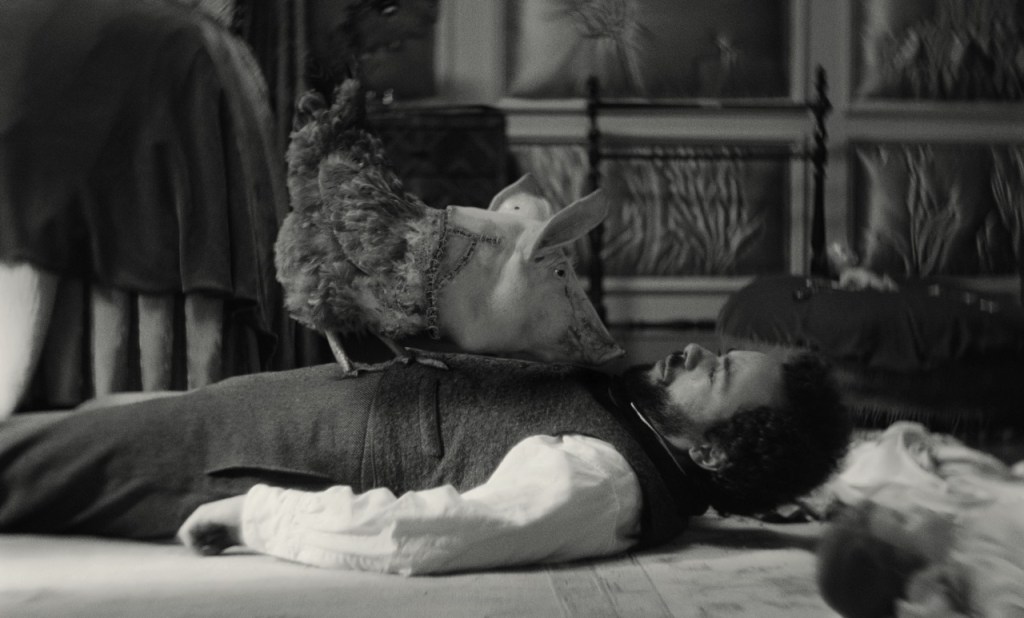
The name of the game for Poor Things is to bring order to intentional chaos. Giving the audience a voyeuristic experience as they observe Bella Baxter’s development, the film employs several different camera lenses, color schemes, and aspect ratios, and it all has to come together in a way that feels like a bridge between the scientific and the emotional. This is no easy task.
Essentially, we have to watch this film as if we’re both interacting with it and just viewing it with curiosity. However, as Bella becomes more fully realized, there has to be a progression from the absolutely frenetic to something more calm and straightforward. Yorgos Mavropsaridis is more than up to the assignment. For the early part of the film (up to the cruise scenes, basically), the cuts are quick, the angles more varied, and we watch it all play out as if looking through a microscope. Once Bella hits France, however, the style becomes much more traditional. We still have some quirky asides with the visual presentation, but they’re more like momentary ticks than full-on behavioral trends. It shows us that Bella is figuring things out, but she’s still got that hint of macabre unpredictability.
Along this tangent, there’s a great change in the color profile. For the first several scenes, everything is in black-and-white. Then things start to mix a bit before going full color (and vibrant colors at that). This is because newborn babies can’t see color at first. It takes about four to six months on average for children to develop color sight. When we first meet Bella, she has the mind of a toddler, barely verbal and lacking sophisticated motor skills. This is because the woman she was killed herself while pregnant, and Godwin transplanted the fetal brain into her skull and accelerated it to reanimate her. So essentially, even though she’s a full-grown woman in her 30s, when we see her for the first time, she’s for all intents and purposes a baby, and we see the world as she’s able to. It’s a fantastic touch.
***
There’s not a bad entry in this batch, as each of the editors gives their all to the material, and likely accomplishes exactly what was asked of them. That said, the demarcations of overall quality are pretty clear, and while we don’t yet have the results from the American Cinema Editors “Eddie” Awards, I think it’s safe to say that this will be a runaway.
My Rankings:
1) Oppenheimer
2) Killers of the Flower Moon
3) The Holdovers
4) Poor Things
5) Anatomy of a Fall
Who do you think should win? Vote now in the poll below!
Up next, we only have a handful of categories to go, and I’ve expended thousands of words so far. Might as well add a few more to talk about the actual words. It’s Original Screenplay!
Join the conversation in the comments below! How much do you notice the editing in a film? Which techniques leave the biggest impression? Should more movies use multiple lenses to convey their theme? Let me know! And remember, you can follow me on Twitter (fuck “X”) and YouTube for even more content!

 I Actually Paid To See This
My editing instructor at Colorado film school used to say, “editors are time manipulators.” Like you said, a good edit can make a 3 hour movie like Titanic or Ben Hur go by in a flash.. Great post; I’ll come back later to finish. I haven’t seen many of these movies yet
LikeLike
Also, as a digital editor, I think about celluloid and old cutting rooms all the time. The thought makes my skin crawl. The pressure! To cut at the perfect frame in one try. Much respect.
LikeLike