
We’re at the midway point of the year, where Summer Blockbusters and various studio tentpole films dominate the multiplexes. However, away from the typical glitz and glamor, we’re also smack dab in the middle of Festival Season, where high profile independent works compete for hardware and distribution, clamoring for those precious moments of attention that might get them picked up and shown to the world. Sure, there are big fests during the early months (Sundance and SXSW chief among them), and there are tons of smaller celebrations year-round, but this is where the meat of the indie fare lives. The summer months feature the likes of Tribeca, Toronto, the Oscar-qualifying Hollyshorts Festival, the animation-centric Annecy, and of course the biggest showcase in the world, Cannes. For a lot of projects, this will be their biggest stage, as autumn brings its own slew of prestige festivals where big name Awards Season hopefuls take up all the oxygen in the room.
So there’s no better time than now to highlight some films that were able to break through and get the exposure that every entrant so richly desires. Each of the movies I’ll be looking at here all excelled at one or more festivals last year, but finally got a full theatrical run in 2024. And because just about everything I do has to have a theme, it’s only fitting that this grouping has something crucial in common. In this case, it’s the fact that all the entries are led by children. For each of the four stories below, it’s a core of minors who drive the narrative and the drama, and in every case, the youngsters rise to the occasion, giving us intriguing and nuanced takes on complicated material. Their performances help raise these works to the highest levels of the 2024 pantheon to date, and are well worth seeking out in arthouses, independent theatres, and VOD services.
Stopmotion
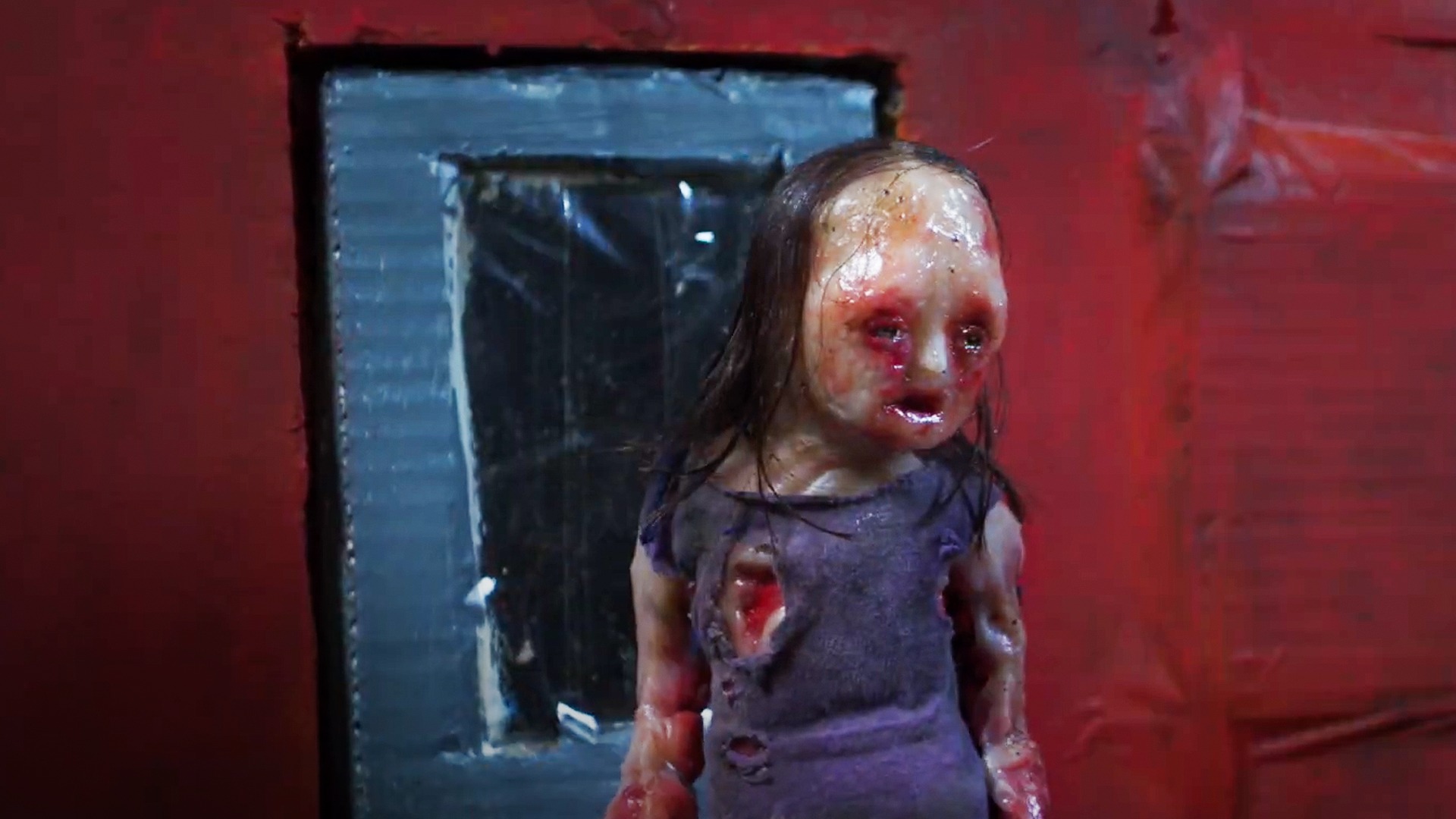
If you’re a horror fan like me, you know there are few things more satisfying than a good old fashioned descent into madness. That’s exactly what Stopmotion offers. Debuting at Fantastic Fest – one of the premier genre festivals – before being screened at BFI London last year, director Robert Morgan (who won a BAFTA for Best Short Animation in 2012 for Bobby Yeah) delivers a solid slow burn in his first feature-length project, one that combines live action and animation in extremely satisfying ways to convey uneasy terror filtered through a struggling artist and an ambitious yet pushy child.
Aisling Francoisi (who American audiences would probably know as Anna from The Last Voyage of the Demeter last year) stars as Ella Blake, a stop motion animator working for her mother Suzanne (Stella Gonet, a well-known British TV and stage actress who also starred in Spencer and El Conde). Suzanne has advanced arthritis and can no longer mold and shape the various models in her film, so she has enlisted Ella to finish it, obsessed with completing this final piece of art. However, she is cruel and demanding of Ella, with no shot ever being good enough to satisfy her sense of perfection, and after she has a stroke and falls into a coma, Ella decides to scrap the project entirely and work on her own short film.
The other impetus for this change of heart comes in the form of a small girl in Ella’s apartment building (Caoilinn Springall, who played Iris in The Midnight Sky). Hearing the plot of Suzanne’s film, the girl decides she doesn’t like it, and pitches one of her own, about a girl being chased through the woods by a demon known as “The Ash Man.” Inspired by the idea, Ella begins crafting this new bit of surreal scariness, becoming ever more devoted to it at the expense of her relationship with her boyfriend Tom (Tom York) and other potential professional work with Tom’s sister Polly (Therica Wilson-Read), who works for a major animation studio.
The fun and scares in this film lie with Springall acting as the devil on Ella’s shoulder. As the Ash Man story progresses, the girl becomes more and more of a toxic influence, insisting on deeper and darker depictions of terror and demanding that more and more grotesque materials be used in the animation itself, like spoiled meat and a fox carcass. It’s fairly obvious what the girl represents (especially if you watched Springall’s other high-profile film role), but the execution is on point. She’s delightfully creepy without coming off as trite or cliché, and when her machinations force Ella into self-harm and outward violence, you feel both sympathy and an odd sense of catharsis because the escalation is paced so well.
I initially watched this because, based on the title, I thought it would give me a head start on this year’s Animated Feature contest. However, despite some really awesome animated sequences, there’s no way this will be eligible in that field. Still, what I got instead was a well-told (if predictable) story of slow-moving insanity that echoes the art style of stop motion perfectly. Thanks to Springall’s committed performance and Franciosi’s ability to properly depict the conflict as she slowly loses her mind, this small but intense picture winds up being the best bit of horror I’ve seen so far this year.
Grade: A-
Riddle of Fire

The debut feature from Weston Razooli is one of the most unique films you’re likely to see, partly because it was one of the only entries (if not the only) from a first-time director to screen at Cannes last year, where it was part of the Directors’ Fortnight, as well as being shown at Fantastic Fest and Toronto. But also, this delightful throwback to 70s and 80s aesthetics stands out because it was actually shot on real film, 16mm Kodak to be exact. That alone makes it worth your time, just to know that there are still artists out there who know the value of celluloid.
But even if you don’t geek out at the technical aspect of cinema, Riddle of Fire is dazzling for the commitment to its “neo fairytale” story, where a young trio risks life and limb on a grand quest in a possibly enchanted forest to… make a pie so they can play video games. You can’t help but laugh at the Goonies and South Park influences on display, but at the same time the movie inflames the imagination with its oh so endearing touches of magical realism.
The story revolves around two groups who give themselves names that feel like they’re out of a role-playing game. The Three Immortal Lizards are kids in the rural community of Ribbon, Wyoming, consisting of quasi-leader Alice (Phoebe Ferro), along with brothers Hazel (Charlie Stover) and Jodie (Skyler Peters). Tooling around on dirt bikes that they treat as noble steeds and wielding paintball guns in crucial moments of derring-do in one another’s defense, the three break into a warehouse and steal a gaming console, hoping to while away their summer playing indoors. However, Hazel and Jodie’s mom Julie (Danielle Hoetmer), has locked the television behind a password to prevent exactly that. Sick in bed, Julie tells the kids that she’d really like to have her favorite blueberry pie as a comfort meal to help in her convalescence. If they can procure it, she’ll let them use the TV. After a series of mishaps where the bakery is closed and the baker herself is ill, the Lizards resolve to make the pie themselves after a side quest to procure the recipe. At the grocery store, they are able to nick all the ingredients save one, a “speckled” egg, the last carton of which is taken by a shit-kicker called John Redrye (Charles Halford from Logan Lucky and Bad Times at the El Royale).
The Lizards pursue John to the home of the other major party, the Enchanted Blade Gang, led by self-described faerie Anna-Freya (Lio Tipton, who formerly competed on America’s Next Top Model and has had small roles in films like Crazy Stupid Love and Warm Bodies). She somehow controls her family – brother Marty (Razooli) and twin sisters Suds and Kels (Rachel and Andrea Browne) – through a form of hypnosis triggered by magic words, which her daughter Petal (Lorelei Mote) has learned through observation. The Enchanted Blade is a group of poachers who hunt elk illegally on protected lands, and Anna-Freya is determined to bag one in particular, thinking it to be a deity of some kind. The Lizards and Petal, unbeknownst to each other, all stow away on John’s truck as the Blade Gang make their way into the woods for their hunt. What follows is an utterly absurd, but wholly inspired, journey to steal back the eggs, escape the poachers, make new friends, and save the day… again, all in the pursuit of being able to play video games.
There are so many wonderful elements that Razooli peppers throughout this story. The speckled eggs glow like a treasure in Final Fantasy. Hazel and Jodie’s house is a bright red, solitary building in the middle of nowhere, like a modern-day version of Tom Bombadil’s house alone in the Old Forest. The various skills employed by Anna-Freya, Petal, Alice, Hazel, and Jodie to achieve their ends feel like a kiddie version of The Princess Bride at times. It all works so well to tug at the viewer’s sense of nostalgia without pandering to it. This plays like a bedtime story a parent would tell their children while trying to incorporate the actual kids as the main characters, making it feel both new and familiar at the same time.
And my hat’s off to the young core cast, who all give some of the best performances I’ve ever seen from child actors. Mote, Ferro, and Stover never lose a step, giving their all to every moment of the proceedings, including an absolutely bonkers impromptu dance number set to “Baby Come Back,” the licensing of which probably took up half the film’s budget. And as for Peters, the boy is so young that his dialogue has to be printed on the screen as subtitles to deliver their full impact, and it only endears you more to him, because to hear (and read) the tiny Jodie say things like “fuck” and “sunnovabitch” is just too adorable for words.
Things start to fall apart in the third act, mostly because what instigates and drives it is a plot decision that betrays what we’ve already established about the character involved. It doesn’t kill the movie by any means, but it is so far out of left field that I remember sitting in the theatre and openly cringing at the direction it was going. Thankfully the story regains its momentum and finishes things off properly, making it so most people can probably just excise that unpleasantness from the overall profile. This is one of the most highly creative tales I’ve seen in a while, and its intentional throwback style adds to its massive dreamlike impact, as if watching it allows you to tap into your inner child and relive the adventures that almost certainly only took place in your own mind. And my cynical heart is grateful for it.
Grade: A-
Chicken for Linda!

It took until April for Chicken for Linda! (the French title, Linda Veut le Poulet! literally translates as Linda Wants Chicken!) to finally get a stateside release, and I was waiting with bated breath the entire time. The film was the overall winner of last year’s Annecy Film Festival, and will surely be in the running for the Animated Feature Oscar this year now that it’s been screened in public. Annecy is the most prestigious animation festival in the entire world, so whatever comes out of it is definitely worth your attention.
Drawn in a lovely minimalist fashion reminiscent of 70s shows like Wait Till Your Father Gets Home, only with fewer but brighter colors, Chicken for Linda! focuses on the madcap story rooted in emotion and memory, along with the character-driven shenanigans that are as charming as they are funny.
The film begins with a series of colorful bubbles as the infant Linda (Melinée Leclerc) watches her father die very suddenly as the family sits down to dinner. Like a scene from Inside Out, this trauma forms something of a core memory for Linda, who never got to know her dad, and has grown up solely with her mother Paulette (Clotilde Hesme, who starred in the award-winning French musical film, Love Songs). Linda is your typical precocious adolescent, hanging out with friends and getting into mischief. She’s constantly a thorn in Paulette’s side, but they get along the best they can.
One day, Paulette’s prized ring goes missing, and she instantly blames Linda, who wanted to borrow it. Calling her a thief and a liar, Paulette reaches the end of her rope and foists Linda upon her sister, yoga instructor Astrid (Laetitia Dosch), for a last-minute sleepover. Astrid has been left holding the bag and cleaning up Paulette’s messes for years, so she acquiesces despite the huge inconvenience. When Paulette returns home, she finds that the family cat had been playing with the ring the entire time, and rushes back to collect Linda and apologize for distrusting her. After promising anything to make it up to her, Linda has but one request: a dinner of chicken with peppers.
Sounds simple enough, right? Well, not so much. See, Paulette isn’t that much of a cook (relying on the microwave most of the time), and she has a particular aversion to that specific meal, as it was what she served the night her husband died. This is also why Linda wants it, because the smell and taste is all she remembers of him, and she wants to relive it at long last.
Even more than the emotional impact of the request, the logistics of creating such a dish prove to be overwhelming. Paulette relents, but as it turns out, the workers of the city have called a general strike to protest wage and benefit cuts. As such, the supermarket is closed, so Paulette can’t actually buy any chicken. Determined to do right by her daughter (who in true kid fashion can’t grasp the concept of a reasonable delay to another night), Paulette drives Linda to a nearby farm, where after trying to purchase a live chicken to no avail, simply absconds with one, leading to a chase in and around the city between Paulette, Linda, Astrid, Linda’s friends, a chivalrous truck driver who falls for Paulette at first sight (Patrick Pineau), and a rookie police officer (mononym actor Estéban) in an attempt to either recover the fowl or serve it.
The mixture of solid colors for the characters (highlighted with thick outlines to distinguish physical features) is inspired throughout, allowing the audience to interpret mood based on them (Linda is bright yellow to represent her free spirit, Paulette is orange to hint at some fire in her belly, and lonely trucker Jean-Michel is blue, for a few examples), but also to show how simple the wants and needs of the players involved are. This is very much a character study, not meant to show off impressive visuals, which oddly makes them even more spectacular in their own way, because there’s still a lot of creativity in the bare bones design of it all.
Also, while the comedy is certainly on point (particularly when it comes to the continually put-upon Astrid), I was amazed at how well the emotional moments were handled and how each character was given full agency to be themselves without thematic judgment. Astrid acts as something of an antagonist at times, but it’s because she wants her younger sister to stop living in the past, take some responsibility for herself, and move on as a true adult. Paulette is caught between her duties as a mother and her mourning as a widow, trying to sort everything out despite her own admitted shortcomings, and just wishes for a little support and peace of mind. Linda is rambunctious, but in a way that all kids are, always meaning well even when she gets into trouble. More importantly, the film is able to have Linda deal with the concept of death in mature and borderline profound ways. She wants this simple dinner so she can cling to the memory of someone she barely knew, but at the same time knows that she has to kill a living thing to make that happen (everyone is squeamish about actually offing the chicken, unintentionally leaving the deed to Linda herself), and her ability to process this quasi-paradox is the most crucial part of this life lesson.
I’m overjoyed that I got to see this at last. You’re never quite sure what will sway the jury at Annecy, but rest assured that whatever they pick, there’s something worth seeing. Chicken for Linda! thrives in its simplicity, conveying universal truths through something lovingly childish and silly, and we’re all the richer for it.
Grade: A-
We Grown Now

This film had quite the journey before it premiered on public screens in the U.S. back in April. It won the Changemaker Award at Toronto and the Audience Prize for best feature at Chicago. It was also one of the most anticipated movies playing at AFI Fest when I went last year. I desperately wanted to see it, but there were too many conflicts with other stuff on my coverage list for me to make time for it. Thankfully, I got to see a screener as part of my voting privileges at the Independent Spirit Awards, where it was nominated for its Cinematography and Editing, as well as for Best Feature. I can safely say that every accolade and bit of praise its received is well earned, and it stands as my third favorite movie of 2024 as we hit the halfway mark.
A testament to the complexity of childhood friendship, We Grown Now focuses on two inseparable boys named Malik and Eric (Blake Cameron James and Gian Knight Ramirez, respectively), growing up in Chicago’s Cabrini-Green housing project in 1992. Their almost brotherly love for each other is as pure and innocent as companionship can be at that age, as they share almost every moment they can, even going so far as to brush their teeth together. Their bond is best exemplified by their favorite pastime, “flying,” where they take the biggest leap they can onto piles of disuses mattresses.
Outside of their blissfully ignorant sphere, the harsh realities of the world start to creep in. The projects are not a wonderland by any means, as Eric and Malik’s families struggle to get by. Lil Rel Howery’s Jason imparts wisdom as best he can as a single dad, while just a few doors away Dolores (Jurnee Smollett) does her best to advance her career for the sake of her kids, even if it means moving them all to the suburbs, thereby breaking Eric and Malik apart for the first time in their short lives. Dolores’ mother Anita (a fantastic S. Epatha Merkerson) serves as a constant reminder that stagnation can lead to tragedy, and that to make life better, you must make sacrifices and always push forward.
The idyllic version of urban life for the boys is shattered one fateful day when they play hooky from school. While exploring the sights of Chicago (including their own version of the art museum visit from Ferris Bueller’s Day Off), a young classmate of theirs is killed in a random act of gang violence (this is a direct reference to the murder of Dantrell Davis in October of that year), and a curfew is put in place, including forced ID cards for all the project residents. When the boys return home later that night and learn what happened, they are punished severely, and a fissure starts to form as the need for maturity and the wish to cling to the joys of youth clash.
The degree of intellectual and emotional honesty on display here is staggering in how real and precise it is. We all remember our best friends from when we were kids, and for most of us, those friendships inevitably ended for one reason or another. People move away, feelings change, some new interest or hobby takes precedence over previous shared activities, priorities shift, and ultimately, some of us just grow apart. It’s a natural part of life, one that gets a much heavier emphasis in a story like this because of the dangers that shatter whatever illusions the boys may have had about everyone getting along, and James and Ramirez play it to the absolute hilt.
You ache for them, wishing against everything that they can maintain their happiness, but as years and experience have shown all of us, it just isn’t possible. Nothing can truly remain the same, and the people and places that feel like home at one point will almost certainly not stay that way forever. The use of Cabrini-Green as the main setting is a perfect example of this, as the projects no longer exist, having been slowly demolished and gentrified over the last 30 years, to the point that there are more upscale townhouses in the neighborhood now than public housing.
But in spite of all that, you can’t help but feel a warmth in your heart as you watch Eric and Malik come to terms with this and commit to the love and good nature within us all. As police presence turns the project into something more akin to a prison, their defiant cries of “I exist!” cut you right to the quick, and you know, deep down, that they’ll be alright. They may not have each other forever, but they’ll carry what truly matters with them always, and that’s something we can all get behind.
Grade: A
Join the conversation in the comments below! Have you had a chance to see any of these films? Do you feel like tracking any of them down? How much have you kept in touch with your childhood besties? Let me know! And remember, you can follow me on Twitter (fuck “X”) and YouTube for even more content, and check out the entire BTRP Media Network at btrpmedia.com!

 I Actually Paid To See This
4 thoughts on “Back Row Thoughts – Festive Tykes”