
In Netflix’s never-ending quest to destroy the theatrical film model once and for all, they put forward a lot of movies in hopes of garnering some Academy hardware. In addition to the two International Feature submissions they put their marketing heft behind (Chile’s In Her Place and the massively overblown exercise in missing the point known as Emilia Pérez), the Big Red N puffed out its digital chest on behalf of seven regular features. Some of these got high critical praise, others not so much. Sadly, I didn’t have time to watch them all, because there was just too much to do, and it seemed that only three had any realistic chances of an Oscar nomination. So apologies to Hit Man, His Three Daughters, Woman of the Hour, and The Deliverance, but you never really stood a chance.
That leaves three flicks on the net that I was able to take in, two of which did end up receiving a nod from the Academy. Unfortunately, the one that didn’t was the only one that actually deserved it. Sigh. Well, let’s polish them off.
The Piano Lesson

The latest of the Denzel Washington-produced adaptations of August Wilson’s Pittsburgh Cycle plays, The Piano Lesson is something of a family affair, with son John David in the starring role, other son Malcolm directing, wife Pauletta having a small part, and daughter Olivia playing the younger version of that same character. There’s nepotism, and there’s “Why not just have a family vacation on set?” Still, if anyone’s earned it, it’s Denzel, and we’ve seen how talented of an actor John David is, more than capable of standing on his own, so it doesn’t bother me.
Set primarily in the 1930s (each of Wilson’s plays in this group takes place in a different decade of the 20th Century), this particular story stands out from the rest of its kin, as it includes an overt supernatural element, which Malcolm translated pretty well to the screen. The titular piano was once owned by Robert Sutter (David Atkinson), the son of a slave owner who subjugated the Charles family, which was separated as part of the trade to get the piano as a wedding present for his wife. The faces of that broken family and their African heritage were carved into the instrument by Willie Boy (Malik J. Ali) as a way to remember his loved ones through art. In 1911, as an act of retribution, son Boy Charles (Stephan James) stole the piano and saw it spirited away to Pittsburgh at the cost of his own life. Twenty-five years later, it still resides in the home of Doaker (Samuel L. Jackson) and his niece Berniece (Danielle Deadwyler, who should have gotten a Supporting Actress nomination without hesitation). Berniece used to play the piano all the time as a child, but as an adult finds it too traumatic, but also won’t get rid of it, because she believes that Sutter’s ghost haunts her house.
Her brother, Boy Willie (John David Washington) arrives with his friend Lymon (Ray Fisher) and a truckload of watermelons. He plans to sell the fruit and the piano in order to purchase three portions of Sutter’s land, reclaiming it for the family that broke their backs working it. Willie is headstrong and loudmouthed, like many Wilson protagonists, while Berniece is quieter but still assertive. However, it’s clear that there’s a massive conflict here, and both sides have merit in their arguments.
Where the film finds its best moments are in those heated exchanges, be they between Willie and Berniece, Doaker and the kids, Berniece and her suiter Avery (Corey Hawkins), or in the tired reminiscences of Wining Boy (Michael Potts), a former musician. Through it all, they also have to be cognizant of how their histrionics affect the impressionable Maretha (Skylar Aleece Smith), Berniece’s daughter. The exorcising of personal demons coinciding with the elimination of a real one is also a tremendous metaphor for the generations of culture that were abused and lost through America’s Original Sin.
The performances are tremendous across the board, though Deadwyler shines the brightest. The production design is also extremely on point, as the normal one-set play setting of Doaker and Berniece’s house feels appropriately compact, but still has some surprises in store. And as I said, the incorporation of the horror element is really well done. I imagine on stage Sutter shows up as a ghostly specter off to the side and there are some light and wind effects, because that’s how theatre works. But here, Malcolm goes above and beyond to generate legit scares, doubling down on the tight spaces of the house to make it feel like there’s no room to escape. As play adaptations go, there isn’t a false note to be had, and it’s an absolute crime that the Academy ignored it.
Grade: A
Maria
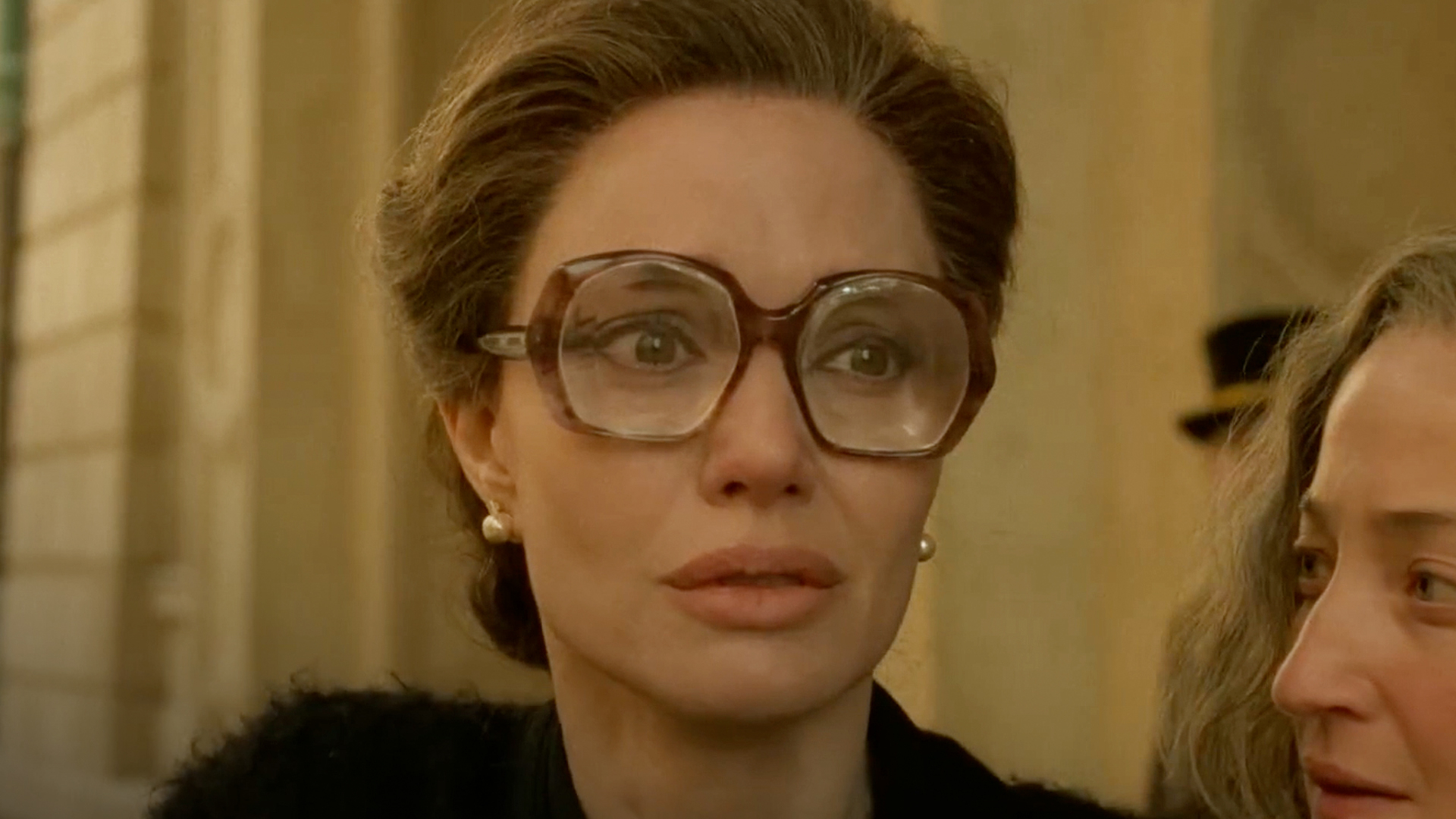
A memo to Pablo Larraín. Just because you liked the way that certain high-profile women of the 20th Century dressed, that doesn’t mean that there’s an entire movie there. Please reassess your priorities. Yes, after the pretty decent Jackie and the abomination that was Spencer, we now have Maria, focusing on the final week in the life of opera legend Maria Callas. It’s a run-of-the-mill Best Actress showcase for Angelina Jolie, but curiously, that’s not where this film got its sole nomination. Somehow, some way, it was nominated for Cinematography, over the likes of Nickel Boys. Consider my gast flabbered.
Jolie’s performance is fine, but nothing special. She spent seven months training to sing opera, but we basically only hear her voice during the final act (recordings of Callas are blended with an increasing level of Jolie). It feels like more care was taken in replicating all of Maria Callas’ fur coats to not be animal-based, so as not to piss off PETA, though given how (intentionally bad) Jolie’s singing is in the final act, I’m surprised they didn’t protest the obvious raccoon being murdered on set. As far as her mannerisms and line deliveries, she basically affects something akin to Katharine Hepburn’s “REH-LY” New England voice for most of the proceedings, which is odd because she’s playing someone of Greek ancestry.
In her final days, Callas attempts to regain her vocal abilities, though she remains adamant that she’ll never perform again, so it’s unclear why we even have a plot. She’s addicted to various drugs, including Mandrax (we know it better as Quaaludes), which has her hallucinate a fawning TV journalist (Kodi Smit-McPhee, looking like he came to set from an audition for a remake of The Outsiders in which he’d play a Greaser and a Soc simultaneously) who interviews her as she gallivants around Paris waiting to die. Her dedicated servants (Pierefrancesco Favino and Alba Rohrwacher) dote on her incessantly, but really, there’s just not much to it all. She reminisces about her affair with Aristotle Onassis (Haluk Bilginer), and implies that Ari loved her more than Jackie Kennedy. What I wouldn’t have given for Natalie Portman to show up in a cameo just to bring Larraín’s leitmotif full circle.
As for the nominated camera work, I don’t know what the hell the voters saw, because all I got was crap. Half the shots are super wide scenes that involve incredibly slow zooms in and out of doorways, while most of the rest are given this horrible golden gradient, like the piss stains from Megalopolis spilled onto an entirely separate production. How this got nominated instead of the first person perspective of Nickel Boys I’ll never know.
All in all, this is pretty disposable. It did very little for me, but if you’re into Larraín’s very specific type of 20th Century nostalgia, it might work for you.
Grade: C+
The Six Triple Eight
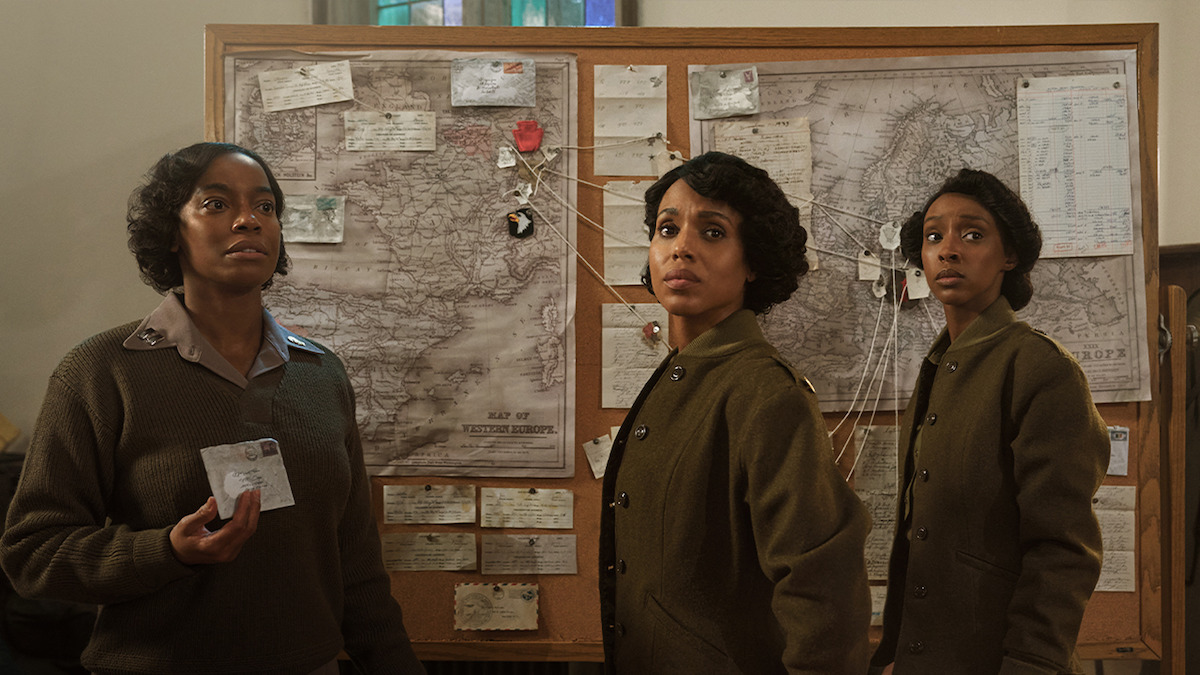
The story of the 6888th Central Postal Directory Battalion during World War II is a fascinating one, a tale of tenacity and ingenuity to raise the morale of troops, and a bright spot in the dark shame of the segregated armed services. Sadly, little of that matters because this is a Tyler Perry movie, which means exactly two themes will get drilled repeatedly into your skull: basically all white people are racist, and basically all black women are strong and independent… but also need a man in their lives.
The story largely revolves around Lena Derriecott (Ebony Obsidian). An ambitious and smart student, she decides to enlist after her boyfriend, Abram (Gregg Sulkin), is killed in action, which is sad because he’s the one white character who’s in any way redeemable, mostly because he’s Jewish and also experiences some discrimination, particularly from Lena’s mother (Donna Biscoe). Lena has lived a somewhat privileged life in the suburbs of Philadelphia (where everyone speaks with a southern accent because the movie was made in Georgia), so when she gets in the Women’s Army Corps, she’s instantly the weakest and least capable of her platoon. She makes friends with some of the other ladies, and gets some snide comments from a boisterous woman named Johnnie Mae (Shanice Shantay, an utter delight and a respite from the more tired elements). When the battalion is deployed to Europe to sort out and deliver the backlog of over seven million pieces of mail between soldiers and their loved ones, it hits her hard, because she never got any letters from Abram before he died. But don’t worry, there’s a convenient soldier named Hugh (Jay Reeves), so she’ll be able to love again, just as soon as almost literal divine intervention allows her to, because God forbid a woman in a Tyler Perry film have agency of her own.
At the head of the group is Charity Adams (Kerry Washington). Don’t worry if you don’t remember her name, it will be said over and over again as an act of defiance that she is CAPTAIN (later MAJOR) CHARITY ADAMS! Yearning for a chance to prove that black women have just as much to contribute to the war effort as anyone else, she lobbies hard for overseas orders, but wouldn’t you know it, General Halt (Dean Norris from Breaking Bad) just so happens to hate women and blacks AT THE SAME TIME! Also, no white soldiers salute her despite her outranking them. Some even call her the n-word! The pearls, I must clutch them! Initially unconvinced of Lena’s worth, she gives the recruit the standard “three strikes” speech, but of course Lena makes it through, and when they’re in Glasgow sorting, Charity forms a rapport with her, finally seeing value in their assignment because it affects one of her own.
I could get behind this if it wasn’t so transparent in beating you over the head with its messaging. Great actors like Susan Sarandon and Sam Waterston are trotted out as the Roosevelts just so they can cede the spotlight to Oprah Winfrey playing Mary McLeod Bethune. Every other scene there’s some white character insulting the group or actively sabotaging them, only to be countered by yet another speech from Charity about how black women are resilient. Seriously, if they only said things once, this movie would be 28 minutes long. Even the complete bullshit Diane Warren ballad that got nominated – the only reason this movie even got mentioned during Awards Season – is just H.E.R. chanting “It’s the journey” for three and a half minutes. That said, in a slight departure from Warren’s norm, the song plays over a montage of actual footage of the battalion interspersed with speeches from the real Lena and Michelle Obama, rather than just over the credits. Small victories, people.
This could have been an incredible film, highlighting some unsung heroes of the Greatest Generation, but Perry is so heavy-handed with his ham-fisted tropes that I struggle to even give a damn. Yes, we know racism existed then and still does now, but that doesn’t mean that every single scene should hinge on cartoonish levels of discrimination. For God’s sake, the first line said in the main narrative is from a bigoted blonde named Mary Kathryn (Sarah Helbringer, presumably bringing Hell) as she blocks Abram and Lena from embracing after school, because it “isn’t proper” for an interracial couple to exist. Christ, the Earth’s mantle isn’t laid on so thick!
Even sadder is how this film’s attempt to keep the titular regiment’s legacy alive might end up being for naught. An army base in Virginia that was once named for Confederate General Robert E. Lee was changed in 2023 to Gregg-Adams in honor of Arthur J. Gregg and Charity Adams, and to undo a major social wrong in naming American bases after traitors in the first place (Lee himself was against commemorating the Confederacy with monuments). So naturally, one of Donald Trump’s top priorities to “Make America Great Again” is to restore the original name, as well as all the other bases formerly named for Confederates. I’ll be amazed if “Gregg-Adams” survives the year. How those egg prices doing?
Grade: C
***
That’s all I got for this edition. There’ll be one more installment in this series in a couple weeks to clean up the Animated Feature submissions. Join me then (and for the entirety of the Oscar Blitz as well)!
Join the conversation in the comments below! Did you see any of these films, and did you enjoy them? Are either of the nominations warranted? What are your thoughts on Netflix’s campaign strategy? Let me know! And remember, you can follow me on Twitter (fuck “X”) as well as Bluesky, and subscribe to my YouTube channel for even more content, and check out the entire BTRP Media Network at btrpmedia.com!

 I Actually Paid To See This
One thought on “DownStream – TUDUM! Part Three – Narrative Features”