I always like to include some fun trivia and facts about certain categories when I do the Oscar Blitz. It’s not just a run-of-the-mill opinion piece, there’s got to be some flavor. I mean, we have nearly a century of history to draw from, so there’s always something interesting to discuss.
Take tonight’s category, Original Score, for instance. There are two bits about the class of nominees this year that I find utterly fascinating. First, we have two musicals in the mix. It’s rare that musicals are nominated at all, because the actual performed songs cannot be considered as part of the entry. This is only the ambient orchestral soundtrack (though some choir music is also allowed). Take a guess as to the last time we had two musicals nominated in this category.
Don’t worry, I’ll wait.
Go on.
Give up?
Okay, I’ll tell you. You have to go all the way back to 1999 and the 71st Academy Awards. Back then, both Mulan and The Prince of Egypt were nominated, though both lost out to Shakespeare in Love. This was during the final year in which the category was split between “Original Musical or Comedy Score” and “Original Dramatic Score.” In its current form as just “Original Score,” this is technically unprecedented.
The second bit is a tad more obvious. I’m sure you’ll notice one particular name absent from the list of candidates, that of legendary composer John Williams. He currently stands at 54 career nominations, second all-time behind Walt Disney’s 59. He has 16 nominations in this category in the 21st Century alone, and the longest gap he’s gone between nods was the five-year period between 2006-2010. Apart from that, he’s never gone more than two years without being nominated. He’s 92 years old right now, and he’s made it clear he’s never going to retire, so it’s theoretically still possible that he’ll meet or break Disney’s mark, but even if he doesn’t, the amount of consistent quality and memorable pieces he’s written over the years is so astonishing, it almost feels weird not to see his name on the list. Mind you, the only film score he composed last year was for the documentary about himself, so there wasn’t really anything to campaign on, but I’d rather see his name every year than Diane Warren’s.
Now, on to the actual contenders. As far as I’m concerned, this is a two-horse race. There were a lot of great scores made last year, but very few of them are present here. Even one of the potential front-runners is really just noteworthy for one four-note melody. As you’ll see during the course of the Blitz, this is not the strongest year when it comes to sound and music. That doesn’t mean these five have nothing to offer, just very little that truly blows you away.
This year’s nominees for Original Score are…
The Brutalist – Daniel Blumberg
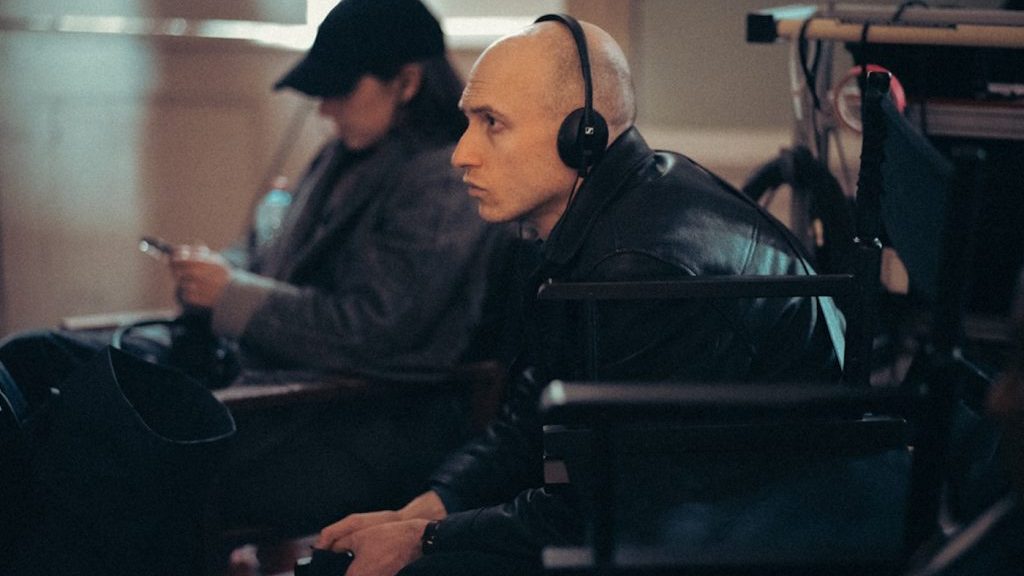
When I watched The Brutalist, I noticed the score, and I even commented in my review that there were booming cues that reminded me of Rocky. Having listened to the entire soundtrack independently of the film, however, I realize that I kind of tricked myself. The big selling point is the aforementioned four-note phrase that accompanies Adrien Brody to Ellis Island during the Overture. That’s the note progression that’s used heavily in the marketing as well. It repeats a few times during the rest of the orchestration, and sometimes it’s reduced to three notes, but it’s not nearly as all-consuming as I had previously thought.
Really, the vast majority of the score is soft jazz piano. It’s very light and pleasant, serving as something of a juxtaposition to the more emotional and harsh moments on the screen. Apart from that memorable phrase, the instrumentation rarely intrudes on the proceedings. The few exceptions to that are a couple of scenes that needed more lively, rousing horns, but they’re few and far between. None of it is bad. In fact I rather enjoyed it. It makes for nice reading music. Still, while none of it rings hollow, none of it really leaves much of an impression, either.
Also, for what it’s worth, there are individual tracks called “Porn” and “Handjob.” Teehee.
Conclave – Volker Bertelmann
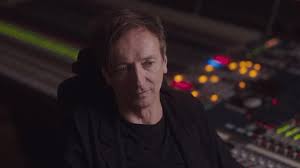
Bertelmann won this category a couple years ago for Germany’s All Quiet on the Western Front remake, and director Edward Berger brought him along for this project as well. Like Blumberg’s Brutalist score, Bertelmann relied on a single dramatic note progression (only three notes for him) to carry the thematic weight of that film’s audio profile. Where they differ is that Bertelmann used it in an intentionally discordant manner, inserting it into different cues against the rhythm to keep the listener on their toes. It was an excellent aural illustration of how doom could be lurking where you least suspect it and pop out at you at any moment.
He plays with tones again with his Conclave score, which is much more orderly this time around. Disciplined strings and brass denote the tradition and hierarchy of the Catholic Church in ways that don’t betray the mood of the scene. Percussion is added to create a complementary degree of tension and suspense, making this mystery procedural into an occasional thriller. The tempo creeps ever faster as the pressure builds, and the occasional violin sting gives off the feel of an old Western showdown, which in a lot of ways, this dramatic papal conclave indirectly mimics.
But the real trick he pulls this time, and it’s really quite brilliant, is once again doing something innovative with a recurring phrase. Very early on you hear a combination of viols and cellos creating a descending, 13-note scale, almost like a play on Psycho and its iconic high-pitched violin, only going in the opposite direction, like we’re falling into our own personal Hell along with the supposed holy men jockeying for the highest position on Earth. It comes up during every vote, and in every significant scene where Ralph Fiennes’ Cardinal Lawrence is having a personal crisis of faith and indecision. It’s cool enough on its own, but what really sells it is that Bertelmann engineers the phrase to move around the listener as it plays out. Play it on Spotify (or your streaming service of choice), and you’ll see (hear) what I mean. The first time it plays, it starts out dominating your left ear, then arcs around the front of your face until it ends dominating your right ear, and in future instances it travels back and forth.
The music is literally following and surrounding you. And yeah, you can chalk that up to the existence of, you know, SURROUND SOUND, but Bertelmann does so much more with it. He creates this atmospheric bubble as a means to say that the threat and uncertainty is coming from all sides, and you can’t escape it. Your only hope is to move forward, which is the ultimate peace of mind that Lawrence grants himself once the process is over. It’s one thing to have a memorable sting. It’s quite another to make sure it sticks with you long after you’re done watching.
Emilia Pérez – Clément Ducol and Camille
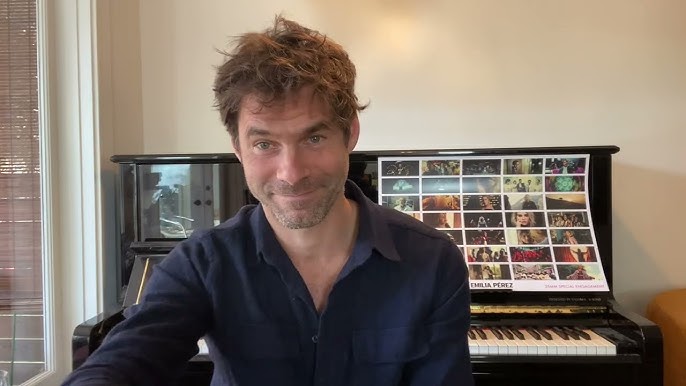
Well, we’d have to get to it eventually. This is the first of 13 wholly undeserved nominations for one of the worst and most insulting films of 2024. At least with this one we don’t really have to go into why this film should be up for nothing due to Jacques Audiard’s baffling exercise in “getting it wrong” and not caring, and just focus on an artistic and technical aspect where his involvement was presumably minimal.
The problem with this score is that it’s basically non-existent. If you listen to the soundtrack album, you can literally skip almost half the cuts because those are the song numbers that are not included in the consideration. The rest is just generic European attempts to replicate mariachi and other Latin genres, accompanied by, checking my notes, oh my God, “The Mexican Choir” that just shouts random things in Spanish that have little to nothing to do with the proceedings. I guess even this gets bogged down by the ethnocentrism.
The two “Subiendo” (roughly translated as “Going Up”) tracks aren’t bad, as Camille distorts the choir enough to make things feel a bit otherworldly and fever dream-ish, but that’s about it. I just listened to these scores four days ago, and this registered so little in my brain that I had to go over some cuts again just to have something to say. This is a nothing nomination that’s only here to artificially inflate the movie’s unwarranted prestige profile.
Wicked Part One – John Powell and Stephen Schwartz
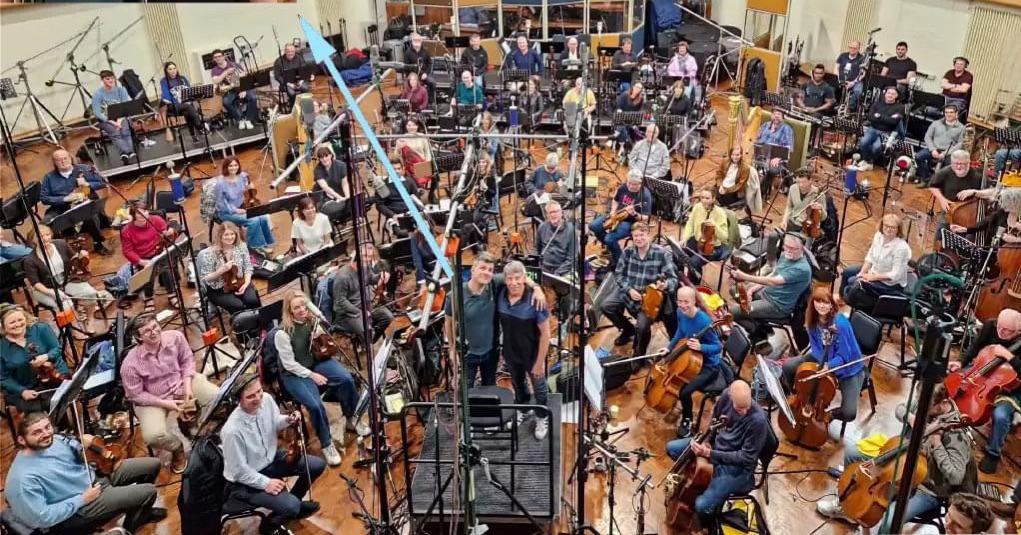
While I’m not the biggest fan of Wicked Part One, there are some enjoyable elements, enough that I could give it a tepid endorsement. One of the ironically unsung aspects is the score, which often gets overlooked because the songs are so well-known. But honestly, I rather enjoyed listening to it, and it was both cool and fitting to have Stephen Schwartz, who wrote the original book and lyrics for the stage musical, participate fully enough to get equal billing on the nomination.
If there’s one easy way to sum up the score (which to its credit is an entirely separate album to that of the vocal numbers), it’s to say two words: Disney Movie. The score has that swelling feel of a classic animated Disney film, filled with high-pitched and light winds, fantasy-inducing strings, pounding percussion, and bombarding brass. The mood of each cue is easily translated to the listener just as you would be able to guess the emotion of something like Sleeping Beauty. When you hear this, you feel like you’re inhabiting the world that the film is trying to create.
The flaw, at least for me, is that none of the tracks tie into any particular moment. The music is lovely, don’t get me wrong, and I like that odd nostalgic feel, whether it was intended or not. But nothing distinguishes itself as being from an important Elphaba scene or Galinda moment. I can’t tell the difference between anything that plays in the Emerald City versus something at Shiz. It’s all very nice, but it’s just generically pleasant. The only way you can tell which part of the movie these tracks come from is to literally read the track listing and see titles like “How to Loathe Your Roommate” or “Hall of Grandiosity.” Nothing in the music gets that across. You just have to trust that these are the accompanying scenes. Still some really good stuff, though.
The Wild Robot – Kris Bowers
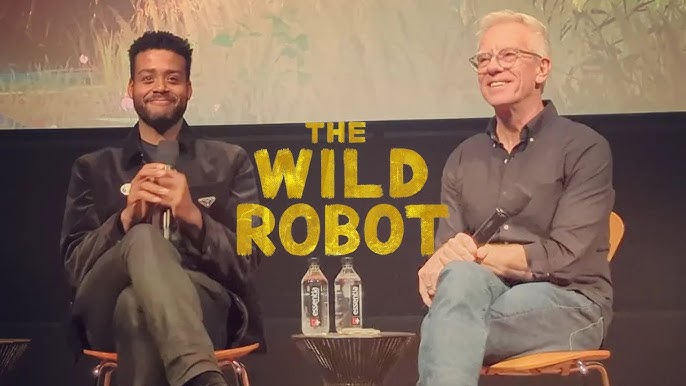
The reason I count the lack of scenery analog in Wicked as a knock against the score is because Kris Bowers’ orchestrations for The Wild Robot absolutely succeed on this front. Having previously been nominated twice as a documentarian (Documentary Short for A Concerto is a Conversation and The Last Repair Shop, winning for the latter), this is Bowers’ first nod as a composer, and he absolutely nails this connection of music to emotion.
Like the previous entry, the soundtrack for The Wild Robot is very much in the vein that you’d expect from an animated film, with mood conveyed through the timbre and power of the respective instruments. You know what you’re supposed to feel with each cut.
But where Bowers goes further is to incorporate that feeling with the actual story and characters. A somewhat warped, distorted digital melody supplements every track dealing with Roz’s discoveries and emotional state. There’s a light-hearted, almost slapstick motif to songs associated with Brightbill’s development. The moments of soaring and conflict are given an appropriately epic tone. It’s like Bowers reverse-engineered his own version of Peter and the Wolf and added some Top Gun in for good measure.
As I listened to this soundtrack, I could replay the entire film in my head, even though I haven’t seen it since it first came out in September. From the pastoral opening when Roz arrives on the island, to the fast-paced fight against Vontra, to the calm serenity that came with Roz sending Brightbill off into the world and knowing her job was done (for the moment), I could see every second of this beautiful movie as if it were right in front of my face. That is no small feat.
***
So like I said, for me this comes down to two, and it’s not an easy choice. Do you go with the memorable phrase that thematically carries the film, or do you simply go with the best music that reminds you why you love the film in the first place? There’s no right answer here, and in other years I might change my mind. But for now, I choose the one that more surprised me in how it enhanced the viewing experience rather than acting as its own meta character. It’s a razor-thin margin, but that’s how I feel right now.
My Rankings:
1) The Wild Robot
2) Conclave
3) Wicked Part One
4) The Brutalist
5) Emilia Pérez
Who do you think should win? Vote now in the poll below!
Up next, we conclude this short opening week with the first video breakdown of the season. It’s Best Supporting Actor!
Join the conversation in the comments below! Which of these scores stuck out the most to you? What are your criteria for great soundtracks? Do you think John Williams will live long enough to secure the nomination record? Let me know! And remember, you can follow me on Twitter (fuck “X”) as well as Bluesky, and subscribe to my YouTube channel for even more content, and check out the entire BTRP Media Network at btrpmedia.com!

 I Actually Paid To See This
2 thoughts on “Oscar Blitz 2025 – Original Score”