
A few weeks ago, I began my crash course through this year’s Documentary Feature shortlist. I make it my mission every year to see all 15 semifinalists, preferably before Oscar nominations are announced. For the past few years, I’ve succeeded more times than not, and that includes the class of 2024. This is far from the easiest list of films to track down, as documentaries don’t have the same public release requirements as movies on the general Academy ballot.
Last month, we kicked things off by looking at four entries that all had to do with artistic expression in some way. This time around, we have to go a bit darker, unfortunately. The four features we’re dealing with tonight all have to with international conflicts and needless bloodshed. It’s a sad state of affairs that even when pared down, the Documentary Branch still had plenty of options for these types of stories. No matter how much we progress as a people, there are still far too many individuals who care more for personal wealth and empowerment, regardless of who suffers in the process, and the human cost is too often overlooked. Two of the eventual five nominees come from this set, and it really does break your heart to know just how easy it is to NOT murder people, but the lust for power never subsides.
The Bibi Files
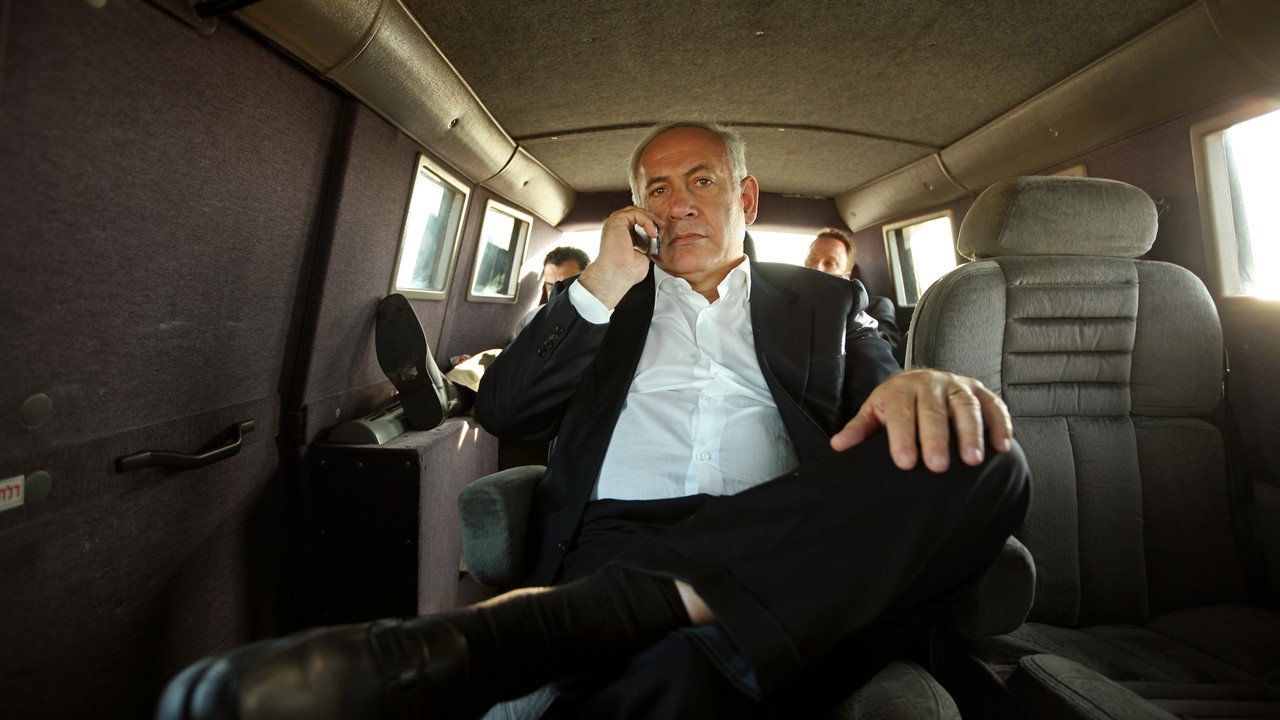
If you pay attention to overseas news, one of the ongoing sagas has been the radicalization and corruption of Israeli Prime Minister Benjamin Netanyahu. Once a beloved center-right consensus builder and patriot who became a political force after his brother was lost in Entebbe, Netanyahu has over the years become entrenched in power, going to extreme lengths to prolong his premiership, especially after he lost it the first time. In 2019, things came to a head after a multi-year investigation led to indictments for bribery. Rather than resign, as every sane politician would do when facing legal jeopardy, he doubled down, built coalitions with dangerous and hateful right-wing groups, and tried to even overthrow the entire judicial system to avoid standing trial. Now more than a year into a war with Hamas where an estimated 50,000 have been killed (the vast majority of them civilians), he’s digging in even deeper, attempting to delay his trial while the war goes on, and even taking multiple pages out of Donald Trump’s playbook, including potentially allowing the U.S. to annex Gaza entirely and forcibly relocate the Palestinians to other Arab nations who’ve said repeatedly that they won’t take them.
The Bibi Files, directed by Alexis Bloom (Divide and Conquer: The Roger Ailes Story) and produced in part by Alex Gibney (Enron: The Smartest Guys in the Room and Going Clear: Scientology and the Prison of Belief), is a textbook prosecution of Netanyahu’s many alleged wrongdoings (in addition to the bribery and corruption charges in Israel, the International Criminal Court has issued an arrest warrant for him, citing crimes against humanity and war crimes). Using newly leaked audio of the interrogations from Israeli police from witnesses, employees, and even Bibi himself (along with wife Sara and son Yair, his own personal Don Jr.), the film lays out a solid, point by point case detailing how Netanyahu came to power, how he feared losing it, how he got so accustomed to luxury that he demanded it in exchange for political favors (regular deliveries of jewelry, cigars, and champagne totaling tens of thousands of dollars apiece), and how he’s attempted to unilaterally change the laws of his land to protect himself and justify genocide.
This is a thorough and complete takedown of the man’s life and career, bolstered by several corroborating testimonies, to the point that even if you don’t buy the whole package, it’s just willful ignorance to suggest that he’s innocent. It doesn’t stop him or his family from flatly denying everything and using Trump’s favorite phrase, “witch hunt,” and they even go so far as to use Nazi comparisons, as if trying a man for his crimes is tant amount to another Holocaust or the elimination of Israel, but to any rational viewer, it’s basically impossible to conclude that he didn’t do anything wrong or that this is some sort of political conspiracy. Pretty much everything asserted here is verifiably true. The sadder truth alongside it, however, is that there’s little that can be done. The film is a powerful statement of fact, but as long as Netanyahu remains in power, that’s all it will be, a statement. Now that Trump’s back in power here in the States and is actively working to protect Bibi’s interests, it makes the prospect of actual consequences even less likely. Still, this film should serve as a reference guide for aspiring investigative journalists and future politicians as to how the system is supposed to work, and let’s just all hope that his lust for never-ending power doesn’t result in more innocent blood being spilled.
Grade: A
Hollywoodgate

In August of 2021, the United States withdrew from Afghanistan, ending the 20-year war and occupation that was launched in the wake of the September 11 terrorist attacks. The mission when we went in was to drive the ruling Taliban out of power and capture the Al Qaeda fighters that they were harboring, especially mastermind Osama bin Laden. We accomplished the first goal, deposing the Taliban, and eventually helped install a more friendly government that made slow but steady progress in modernizing the country (we also launched a wholly separate and illegal war in Iraq, and we’d eventually find bin Laden in Pakistan 10 years later). However, we did not wipe out the Taliban, as pockets of the old regime survived in the mountainous regions, living in caves and biding their time. In 2020, Donald Trump negotiated with them directly, bypassing the Afghan government, and signed a pact that legally bound us to leave by a certain deadline, which turned out to be a disaster. Trump himself bragged about creating such a clusterfuck for the incoming Biden Administration, and then campaigned on it against Kamala Harris as if he had no involvement. And sadly, enough people were stupid enough to buy it and elect him again.
In the wake of that humanitarian catastrophe, the Taliban quickly retook Kabul and reestablished control over the entire nation. Twenty years of progress was wiped out in a matter of days. During this time, journalist Ibrahim Nash’at was able to secure permission from Taliban leadership to film and document the transitional period. Under deadly restrictions, Nash’at was able to follow along with newly-appointed air force commander Mawlawi Mansour as he surveyed the equipment that U.S. soldiers were forced to leave behind, repair it to a usable state, and train new pilots in order to quickly build an aerial authority for the new order. Thus, we have Hollywoodgate, named for the entry to one of the abandoned American bases.
This is a fascinating work, mostly because of the inherent danger. Nash’at was only able to get this footage because Mansour and others allowed it, and he basically had to make a cut of the film that would satisfy their propagandist desires. Whenever they told him not to shoot, he had to put the camera down and turn it off, lest he and his translator be shot in a much more permanent sense. Entire flashy displays of loyalty had to be orchestrated and recorded for their posterity, just so he could get some candid moments from Monsour and others about what’s really going on. Of particular note is a scene where leaders make overly gracious protestations about how they will protect women’s rights to work and get an education, only for seconds later to give orders to arrest women who work in jobs they don’t approve of and prepare for the likelihood of being sold into marriage.
Very little is spared here, and we even see some extreme sights, like Taliban soldiers bragging about their patrols and how they beat and shoot people just as a show of strength, a demonstration that they can act with impunity because they “won,” and God finally got rid of the Americans. Some even openly fantasize about invading the U.S. someday as revenge. Thanks, Donny! I’m just so tired of winning!
If there was one thing more that I wanted from this, it was for it to go into even more depth. I know Nash’at had to be extremely careful, but I would have loved some more discussions and interviews about how this withdrawal came to pass, as well as some sneaky explanations of just how our abandoned machinery was made to work again for the enemy. You never know when that information might come in handy. Still, for the sheer stones that it took to make something like this and live to tell the tale, it’s worth your eyeballs.
Grade: B+
Soundtrack to a Coup d’Etat
The Cold War is one of the more shameful pieces of our collective past, particularly here in the U.S. The fear of communism led allies to become enemies, created a massive arms race that never really stopped, and brought the world to the brink of annihilation several times over. There were some triumphant moments for the history books, like the Moon Landing and the eventual reunification of Germany once the Soviet Union fell, but we also had the Cuban Missile Crisis, Vietnam War, and countless other terrible episodes.
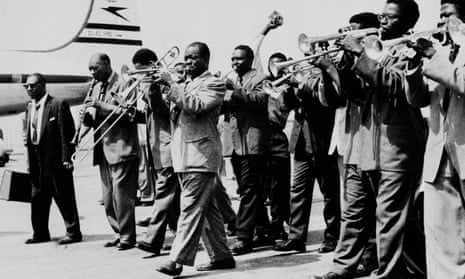
One that you don’t often hear about concerns what is now the Democratic Republic of the Congo (formerly Zaire, or the Belgian Congo under colonial rule). In 1961, the newly-independent nation elected its first Prime Minister, Patrice Lumumba. Within six months, he was assassinated after a separatist coup that was backed by former colonial forces as well as possible covert operatives from the United States. Soundtrack to a Coup d’Etat, directed by Johan Grimonprez, uses archive footage to parse out this conspiracy, including America’s use of prominent jazz musicians as an envoy/smokescreen to win over African hearts and minds while plotting Lumumba’s demise.
This is a chapter of the Cold War most people wouldn’t likely know about, because it deals primarily with our own sins, like trotting out the likes of Nina Simone and Louis Armstrong as goodwill ambassadors during a time when much of this country was still segregated. But also, this is an incident where honestly, the U.S.S.R. was able to claim something of a moral high ground. Nikita Khrushchev is featured in a lot of the footage here, arguing at the United Nations about our racial hypocrisy, and rightly calling out our intentions to exploit the new African nations for favorable political and trade alliances. As the film asserts, part of the reason why we were fine with having Lumumba taken out was because the DRC was a rich bed of uranium and other materials, and it was more advantageous to us to strike deals with those loyal to European powers and the West rather than someone like Lumumba, who wanted to turn Africa into its own version of the European Union or NATO and negotiate for the betterment of the continent. Can’t have that if you’re a country that still lives under Jim Crow laws in half its states, now can you?
It’s definitely an interesting thesis, but to me, it was a little too disjointed in places. Like jazz itself, there are moments and sequences that are just out of rhythm with everything else, playing their own lines and going off on their own tangents. When we’re talking about government-sanctioned murder, I kind of need you to be as straightforward as possible. The musical asides are fun, and I think they’re meant to simulate the actual media distraction that these performers were unwittingly a part of, but that only works to a point. After the third or fourth time, it starts to feel like the film itself doesn’t have a direction. It never truly goes off the rails, but it got close too many times for my comfort.
Grade: B
Porcelain War
You might be wondering why I didn’t include this in the previous installment focusing on art, as it spotlights Ukrainian artists in the midst of the Russian invasion. I put it here for two reasons. One, as much as the artistic aspect is featured in the trailers, it’s more of a framing device for the people we meet in the film rather than being the key element. Two, my minor OCD brain decided that I had to do this in a 4x4x4 distribution, and that 5x3x4 wouldn’t make sense. I’m weird like that.
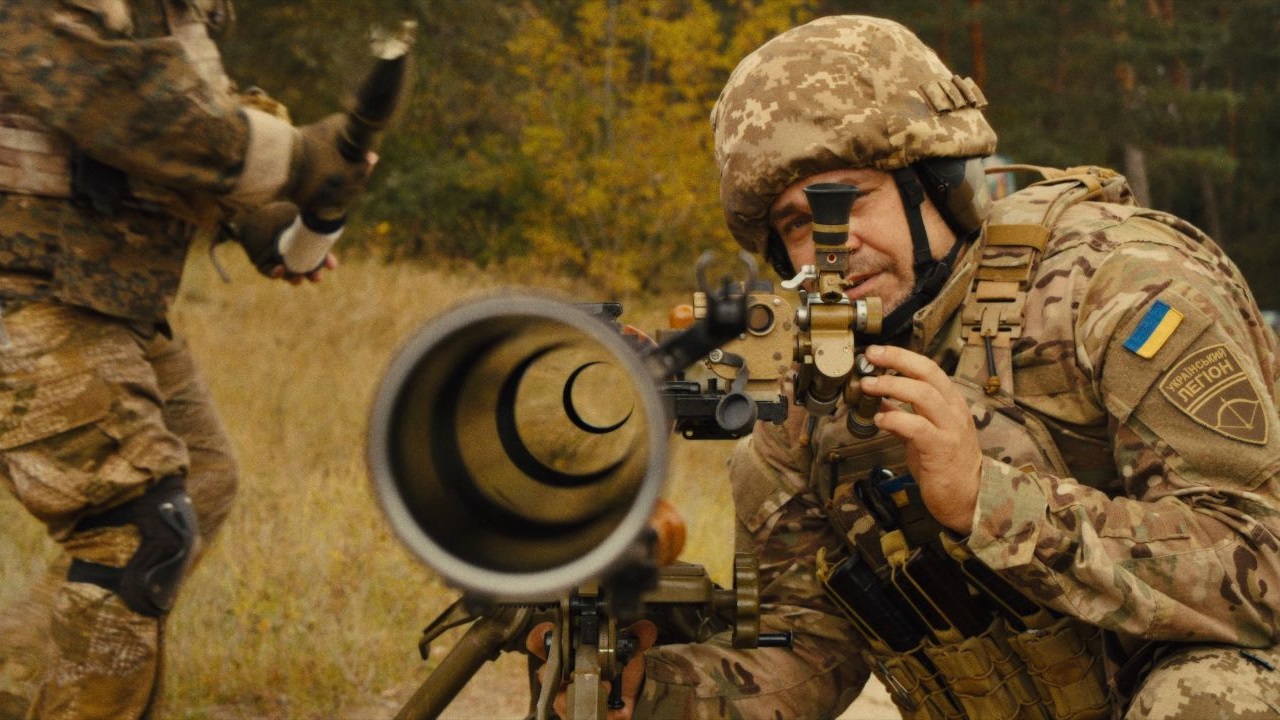
Directed by Brendan Bellomo and Slava Leontyev, Porcelain War is an essential lesson in how art endures even in the worst of times. Leontyev and two fellow artists (Anya Stasensko and Andrey Stefanov) live near the border with Russia, and as the war begins, all three join the national defense. As a means to keep themselves sane and centered, they design and make little porcelain figurines of dragons and other mythical creatures, as well as real animals. They are then painted with culturally-significant imagery (which are endearingly animated in post), and placed at various battlefields and given to friends as mementos, a defiant statement that no matter what Russia may try to destroy, the Ukrainian people and their heritage are alive and well.
It’s a fantastic message of hope and solidarity, and from this establishment, we get a heartwarming story of unity and camaraderie. Our three protagonists take on active roles in the military, including training new recruits, many of whom have never used a weapon in their lives, nor did they ever want to. As we progress, we get to know the rest of the unit that they’re a part of, and through the use of GoPro cameras and drones, we see them in action. Bellomo spends more than enough time with everyone so that we in the audience understand them and are genuinely concerned when they’re forced into the thick of it. It’s a deeper catharsis when we watch them survive, because we’re embedded with them, and we feel like we’ve formed our own rapports with them. Every loss in this war is a tragedy, especially because they come at the hands of a madman like Vladimir Putin, but it always hits harder when it’s someone you can put a name and a face to. Bellomo provides that exact context, which makes it even more of a relief when they turn up all right.
As far as stories from this atrocity go, this is about as positive and uplifting as we can get. Creativity still flourishes, people are still able to be people, and some of the strongest individuals on Earth remain unbroken. Little victories.
Grade: A-
***
That’s all for this edition. There are four more entries to get through, and hopefully I’ll cover them in just over a week. I hope you’ll join me then!
Join the conversation in the comments below! Have you seen any of these films? Which one stuck out the most to you? What will it take to end the murderous evil of these very few men? Let me know! And remember, you can follow me on Twitter (fuck “X”) as well as Bluesky, and subscribe to my YouTube channel for even more content, and check out the entire BTRP Media Network at btrpmedia.com!

 I Actually Paid To See This
One thought on “Back Row Thoughts – The True Killers”