I may have mentioned this before, but when I worked as an editor, especially my time at ESPN, there were a few areas where I was, shall we say, less than expert. One was color correction, adjusting various hues and lights in a shot to make them look as natural as possible. It was a challenge because I’m partially colorblind. I see basic color without issue – I can easily distinguish all the major shades on the spectrum – but I have trouble with finer variations. When it comes to the Ishihara test – detecting different-colored letters and numbers hidden within a pattern of spots, one of the standard color tests – I fail about half the time, because my eyes and brain just blend them all together. Similarly, if you give me a hue progression test, where you essentially put all the different shades in order to transition from pink to purple for example, I struggle mightily. The way I had to adapt was to rely on scopes that skewed in certain directions if one color was demonstrably sharper than the others, or if it wasn’t properly balanced. That way I could tell if things needed work, like if something was “too red” even though to me it looked just fine.
Another area was sound. We had a bank of various sound effects on our servers, and I’d put them to use to supplement a visual effect or graphic (making them myself was another handicap for me because I can’t draw for shit), and we also had several reels of “fake nats,” artificial natural sounds from any number of sporting events. If I was given a feed that had proprietary music and sound effects embedded in it (golf was surprisingly the biggest offender most of the time), I had to go to our fake nats reel, find a similar play, typically a tee shot or a putt, and sync up that audio to the impact of the club against the ball (along with properly-timed crowd applause) so that I could create a highlight without running afoul of other networks’ copyrights.
I also learned how to balance sound through compression. While ESPN is a cable network, and therefore not bound by FCC regulations, we had our own internal SOPs (standard operating procedures) on how loud or soft sound could be, and we needed to create a proper mix of nats, sound effects, and SOT (sound on tape, typically an announcer) so that the viewer could hear things properly. Most of the time, a simple adjustment of a few decibels up or down did the trick, but other times you could see from looking at the waveform that the various noises were all over the place. That’s where compression came in. We had advanced settings that could essentially narrow the gap between the loudest and quietest sounds in the video. Over several months of trial and error, I found the exact ratio that gave me the proper levels, and I sort of defaulted to them for the rest of my time working there. I even carried it over to my time at Fox, as they used the same system.
The weird thing is, I can’t tell if sound has been compressed unless I play it next to natural sound at the same level. Over the course of the decade or so that I edited professionally, my focus was more on trying to notice what stood out rather than what blended in, as my one true area of expertise was quality control. I could spot errors and anomalies from a mile away, like a dropped frame, a shot change inside a dissolve, or a sound cue out of sync. It sometimes annoyed people that I would always take an extra 30 seconds or one more pass of the final video before publishing it to the control room servers, because we were always on tight deadlines for live broadcast, but it mattered to me to make sure I got it right the first time, as I hate doing redundant work. At ESPN, our managers kept track of any “returned clips,” that were sent back because of a mistake, and there was an overall goal in the department to be vigilant and limit ourselves to one or two per month. There were entire years where I didn’t have that many.
So while the finer points of sound design still evade me, I did train my ears to notice anything out of the ordinary, be it a music sting at a key moment or a really cool effect that enhances a scene. Further, I notice more than most when an overall mix is slightly (or egregiously) off, like when music drowns out dialogue or an effect is raised too much or doesn’t match with the items that “generate” it within the movie. Part of this is that I’m predisposed to misophonia, so ASMR is practically painful to me, and I hate whenever I see a commercial where keyboard typing sounds are cranked up to 11. Normal keystrokes aren’t that loud, even if you’re a fast typist like myself.
But the real crux is that I spent so much time training my ears and eyes to notice things that just don’t make sense, to the point where it’s basically part of my brain wiring. For example, today I saw the new horror film, Heart Eyes. I’ll review it in due course, but one of the things I probably won’t mention is the sound, because it doesn’t really factor into the overall enjoyment of the flick. But since I spent so long attuning myself to these minutiae, I couldn’t help but be bothered by the fact that every time the killer drew any number of weapons or simply swung or threw them, they were always accompanied by a metallic sound, as if the blade itself is being honed or sharpened, steel against steel. Knives, swords, machetes, arrowheads, none of them make that sound when they’re cutting through air, or flesh, or are just being taken out of a leather pouch. There’s no other metallic surface for the weapon to clash against, so what creates that sound? Sadly, it’s a lazy director relying on tropes rather than logic, and a foley artist who’s not allowed to question their marching orders. Keep that in mind the next time you hear that *ki-shink* noise when someone pulls a knife out of a wooden holder in their kitchen in a movie or TV show. Once you notice it, you’ll never un-notice it.
These are the things I think about when I weigh a category like Sound. It used to be two separate fields, Editing and Mixing, and over the years I’ve learned through sheer habit how to judge each key discipline. How do the effects play into things, and how is the overall balance, particularly on the live set? Can I pinpoint the exact moment when sound goes from natural to compressed? Hell and no, I cannot. But can I notice that dialogue doesn’t match lip movements, meaning it was an ADR re-read in post? Absolutely. I think the biggest example of how this is all done wrong last year was Madame Web, which got raked over the coals repeatedly for the laughable way in which the mix and editing absolutely butchered Tahar Rahim as the villain. There was a distinct difference in quality between what he said on set and what was clearly ADR, with the overdubbing becoming even more pronounced whenever his back was to the camera. The few times you see his lips move, almost nothing he says syncs up. Of the many reasons why that picture was rightly lambasted, that was one of the bigger ones.
So, did our five contenders show us how it’s done properly? For the most part, yes, in that 60% of the entrants did the job. There are things to note and nitpick, and I will, but on the whole, you could do worse. I think one clearly rises above the rest, but that won’t stop me from giving them all a fair shake.
This year’s nominees for Sound are…
A Complete Unknown – Tod A. Maitland, Donald Sylvester, Ted Caplan, Paul Massey, and David Giammarco
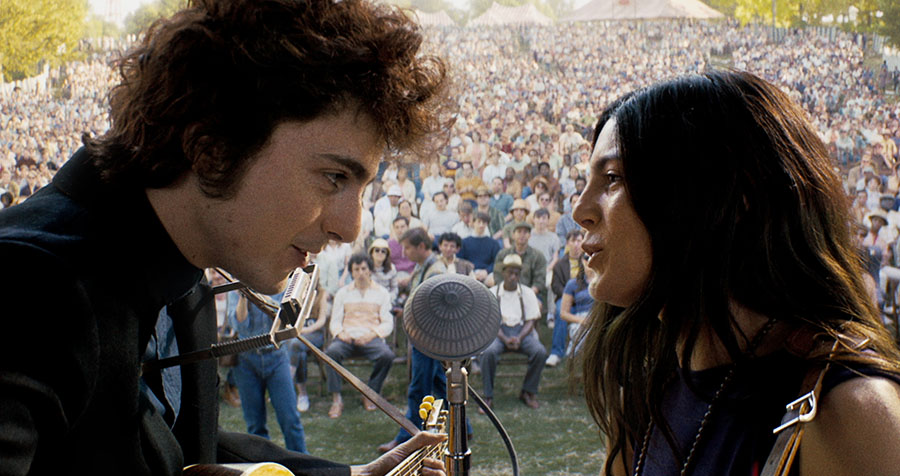
Of all the films nominated this year, this is the one where sound as an entity is most important. Sure, Wicked and Emilia Pérez are musicals that heavily feature singing, but for the purposes of this category, this is about music as a science more than an artform. This is about songwriting, instrumentation, vocal ability, electronics, and recording. No one in this film bursts into song, but rather sits down, pulls out a guitar, quickly tunes it, adjusts their fingers, and plays the damn thing before even opening their mouths to sing, and then just for good measure, they’re doing it live on set.
The sound team went to incredible lengths to properly simulate the folk music scene of the 1960s, including training the cast on their various instruments, combing antique shops and private collections for era-appropriate microphones, mixing boards, and amplifiers, and scouting locations and building sets with the proper acoustics to make each song feel like its own actual concert. Because yes, these actors are indeed singing live on set, which means that the extras playing the audience on screen actually have to hear them just as well as the audience in the theatre. Nothing is mimed here. Timothée Chalamet is really playing a guitar and harmonica, Ed Norton is really playing banjo, and the backup band is really a backup band. Not only does this require an insane amount of skill by the actors to learn these instruments, but every scene has to be precisely mic-ed up so that the sound comes through clearly as the shots are filmed.
One of the major points of the film was to show how Bob Dylan is a transcendental yet natural talent, so every single one of these moments has to feel as real as possible. You can tell when a musical moment looks intentionally staged versus a moment where there’s general stage direction but the cast is able to just “do their thing” while the camera rolls. This is clearly in the latter category, from the moment Dylan opens his guitar case so that he can sing for Woody Guthrie, to the open mic night in the lounge, to the grand stage at Newport. Every single one of these moments has to flow as if these were real, emotional, shows, and the team pulls this off to an amazing degree.
Then you have the smaller moments that are more focused on sound effects rather than the on-set mix. Dylan’s motorcycle, the playing of a crisp vinyl record, the incorporation of the famous police whistle, the hustle and bustle of New York City as a living metropolis, all of these things have to blend in with the overall profile of the film’s presentation, not stand out any more than intended, and also be realistic. It would completely kill the moment if, say, one of the festival attendees at Newport threw tomatoes at him but they thudded like rocks. Like any great piece of music, the foley art is tight and disciplined. The mixing gets more attention because in this case it’s the flashier element, but the editing is 100% on point as well. With the exception of Ted Caplan, everyone named in this entry is a previous nominee in this field, and their combined experience shows throughout.
Dune: Part Two – Gareth John, Richard King, Ron Bartlett, and Doug Hemphill
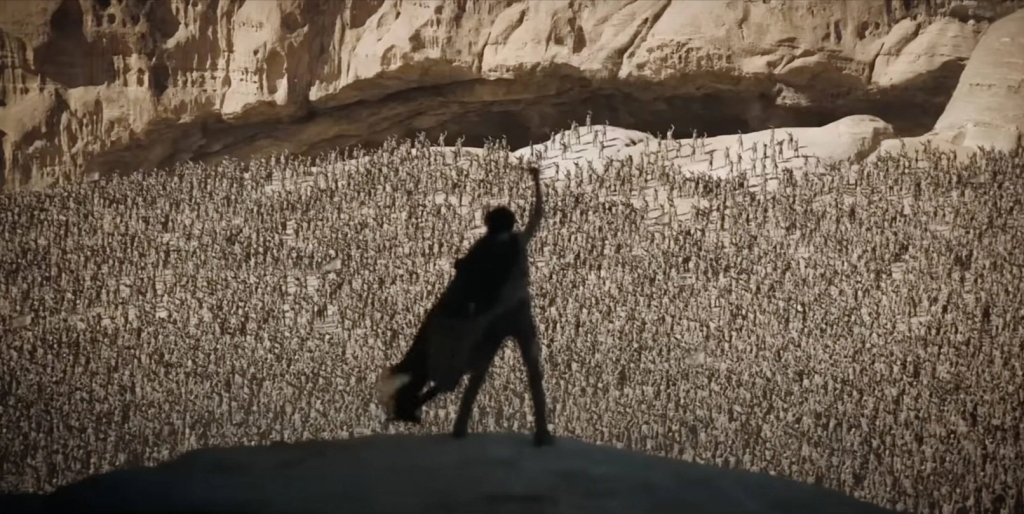
Hemphill and Bartlett were part of the winning team from the last Dune film, and now they’re hoping for a repeat, much like all the other technical categories. They’re certainly in with a good chance, because like all those other fields, the name of the game was remaining consistent with the things that worked while improving where needed.
The sci-fi sound effects are as grand as ever, with appropriate levels of pew pews, ‘splosions, heavy bass rumblings, and clanging weapons (they know what actual daggers coming together sound like). In addition to all that came before, we have a bit of fun with Baron Harkonnen’s goo, various fauna on Arrakis, and in a surprising bit of attention to detail, acknowledgement of the sounds clothing makes. Stealth is an important part of Paul’s guerrilla tactics in defeating the Harkonnens, so the noises of motion play a part in wardrobe choices. There’s even a fun contrast with how quiet and efficient the Fremen need to be and the gaudy accessories worn by the Emperor and Princess Irulan. I remember being impressed when I saw Florence Pugh in that metal dress (for obvious reasons), not just because it was a cool design (how is this film not nominated for Costume Design but Gladiator II is?) but because those bits of metal made believable sounds as she moved about.
What I appreciated the most, however, was in how the mix improved. The first film came out while we were still recovering from the COVID pandemic, and the theatrical model was suffering. Because of their scale, these movies were designed for larger format screens like IMAX, but I didn’t get the chance to see the previous one in that setting. I instead had to wait until it was available on HBO and watch it at home. The way things were downscaled for streaming and television resulted in a huge lapse in quality, particularly in the sound mix. There were several scenes where I wasn’t able to follow the dialogue, because the whispers just faded into the background. I could still keep up with the plot thanks to the superior visual profile, but the audio experience suffered. This time around? No such issues. Much of the dialogue was recorded at normal speaking volumes this time, so that even on a smaller screen, it was well balanced. I haven’t watched the entire film a second time, but I have checked out bits and pieces on streaming just to see if the problem was fully solved, and it has been. I’ll never know for sure how well the first movie’s mix sounded in IMAX, but I do know that it’s just easier when you’re not speaking in hushed tones for half the runtime.
Emilia Pérez – Erwan Kerzanet, Aymeric Devoldère, Maxence Dussère, Cyril Holtz, and Niels Barletta
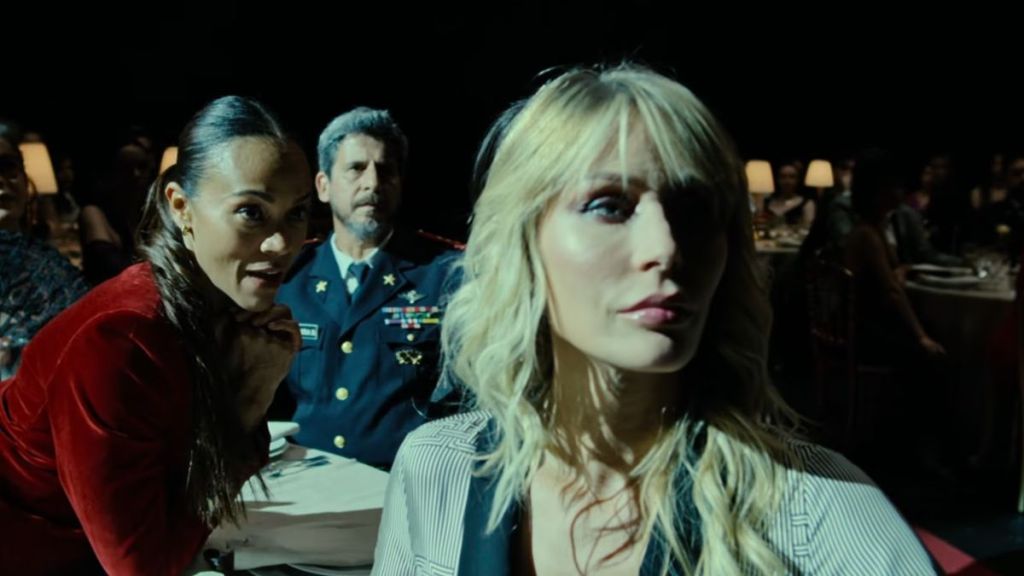
This is yet another fraudulent nomination for Emilia Pérez after voters got sucked up into the hype without actually seeing (or in this case, hearing) the damn thing. About 90% of the audio profile doesn’t apply to this category, as those are the songs and score. Everything else is either unnoticeable at best or downright annoying at worst.
There’s only one way in which the musical numbers enter into the equation, and that’s in the Stomp-esque sound effects during the choreography. See, for some reason, someone thought that having a bunch of people go clap-clap-stomp, clap-stomp-clap, stomp-stomp-stomp, clap-clap-clap like a bad imitation of Beyoncé’s “Formation” video was a good idea, so about half the numbers include it in some ham-fisted way. That shit might have been fun 25 years ago, but now it’s just lame and derivative.
Beyond that, it’s just one misfire after another. While in “Manitas” form, Karla Sofia Gascón grumbles her dialogue as if trying to impersonate a dying lawnmower, the subtitles being the only indication that she’s speaking intelligible words. Further, as I mentioned earlier, I can’t stand amplified sounds that aren’t naturally loud, so Zoe Saldaña’s typing was particularly grating, as was “Manitas” tapping his fingers on the table as a way to transition into another talk-song (the vast majority of all the so-called “music” in this flick), and simple acts like opening doors or walking in heels are clomped up past any level of tolerability.
Finally, while this wasn’t an issue for me personally because I don’t speak the language, the lack of proper Spanish dialect coaching does factor in here. I actually enjoyed Selena Gomez’s performance, but I am squarely in the minority, due in large part to her not being a native Spanish speaker. It was bad enough that Jacques Audiard wrote the dialogue as if he was copying and pasting from Babelfish, but the lack of Mexican actors in favor of Americans and Europeans was particularly glaring when it came to syntax and accents, especially with Gomez. Again, it didn’t bother me because I don’t know enough to be bothered. However, unlike Audiard, when I don’t know something, I tend to defer to those who do, and the Mexican audience has made their opinion perfectly clear. In the less than three weeks since the film debuted in Mexican cinemas – the same day that Oscar nominations were announced – the audience score on Rotten Tomatoes has dropped from 70% to 17%, due solely to the misguided depictions of Mexicans and trans people, and the horrible accenting is a significant part of that. This is a case where excessive ADR was probably the right way to go in order to correct this error, but Audiard didn’t care, and because of that, the mistakes here are basically disqualifying.
Wicked Part One – Simon Hayes, Nancy Nugent Title, Jack Dolman, Andy Nelson, and John Marquis
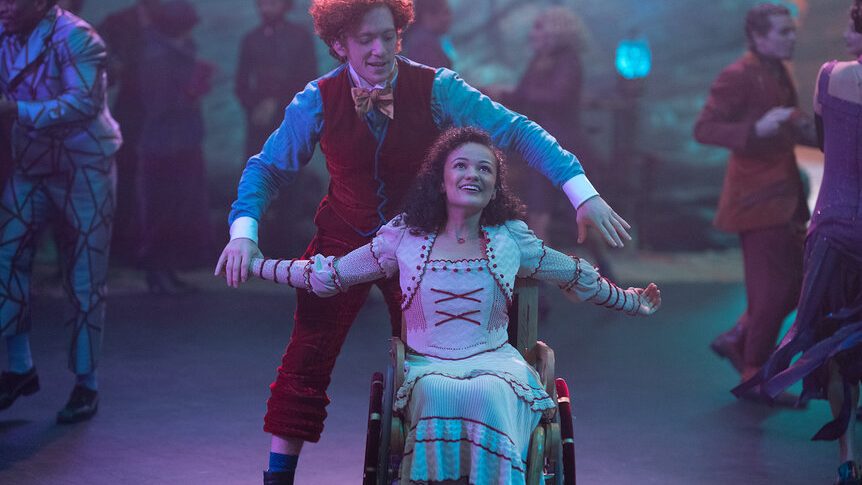
Here’s a fun bit of trivia. Sound mixer Andy Nelson has two Oscars to his name, for Saving Private Ryan and Les Misérables, and his nod here marks 25 total nominations for his career, the second most of any living person behind the legendary John Williams. Unfortunately, that’s about the most interesting thing with this entry. Emilia Pérez might have done everything wrong, but Wicked barely registers.
This is because most of the sound effects are decidedly mundane for such a fantastical setting. Sure, various contraptions have foley attached to them, like Professor Dillamond’s blackboard or the hamster wheel bookshelves, but nothing stands out as being distinct or attached to a certain character or object. It’s just stuff that sounds like stuff. It’s competent certainly, but utterly plain and uninteresting.
And to a degree, I get it. This is a musical, and the numbers matter far more than edited effects, so much so that just like with Original Score, I didn’t even really notice their existence until I had to listen to them in isolation. This is yet another situation where I would have loved to attend a Bake-Off to see what the production itself wanted to highlight, because pretty much the only sounds anyone remembers are the music and singing. A few bells and whistles don’t really move the meter. The only distinct sound effect I even kind of remember is a slight whoosh to accompany Galinda’s hair tosses, which were literally the most irritating part of the entire picture for me, so I’d rather not acknowledge them.
Honestly, the only bit of sound design that jumped out to me was for all the wrong reasons. I know that just like A Complete Unknown, members of the cast sang live on set. However, unlike that other film, you can’t tell they’re singing on set, because studio recordings are dubbed over in a lot of places. Nowhere is this more noticeable than with Ariana Grande, who as a pop singer is used to the engineers doing the bulk of the work and just lip syncing on set. Some of her actual, unfiltered voice was heard in the film, particularly her “ah-AH-ah” melodic flourishes in her dialogue, but in the major numbers, you can tell it’s a dub because her lips barely move, and her jaw only marginally opens despite grandiose, booming notes. You can’t belt out a ballad with your teeth two millimeters away from each other. With Cynthia Erivo, you can convince yourself that what you hear come out of her mouth might have been recorded on set, but with Grande, you can tell she’s going through the motions like she does in a music video. I didn’t necessarily love or hate what I heard, but I could tell it was artificial.
The Wild Robot – Randy Thom, Brian Chumney, Gary A. Rizzo, and Leff Lefferts
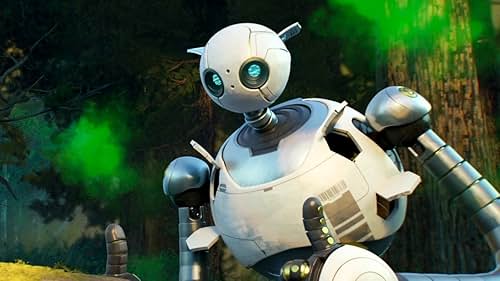
The audio profile for The Wild Robot is fairly straightforward, but that doesn’t mean it’s not a lot of fun. As an animated film, there basically is no on-set mix to consider, so it’s pretty much all down to the effects, and for what the team had to do, it excelled.
The biggest element, obviously, is Roz. Lupita Nyong’o did a fantastic voiceover job in the booth, but that’s not nearly all that went in to creating her sound. As a robot, there had to be an intentional degree of artificiality, so her dialogue was partially distorted through some form of Auto-Tune to add a digital motif. There had to be monotones that eventually evolved into a more emotive state to demonstrate her AI learning capacities being exceeded. By the end of the film, this is then countered by the likes of Vontra and the other machines. You also have to do a lot of work on the foley stage to create mechanical sounds for Roz’s basic movements. The fact that she’s a robot in nature has to always be subtle but starkly contrasted.
When I saw the film, I was reminded of M3GAN, and how this element was somewhat flubbed for Blumhouse Bullshit purposes. The android was given mechanical sound effects to accompany her movements for most of the film, including a digital, computerized vocal when she used the neighbor’s voice to lure the dog to its doom. But then, because it’s a PG-13 horror movie, those noises were intentionally and “strategically” removed and/or omitted whenever the film wanted to set up a jump scare. M3GAN makes robot noises everywhere she goes, unless she wants to suddenly become silent to surprise her prey, kind of like how dinosaurs in the Jurassic sequels can somehow move their two-ton bodies without making a sound when they want to get the jump on some tasty human vittles.
The Wild Robot doesn’t do that. The fact that Roz is artificial has to be a constant, otherwise the theme of her personal growth and development of parental instincts doesn’t land. We have to always be aware, even if it’s in the back of our minds, that this is not her environment, that there’s a barrier and a learning curve between nature and nurture in this context. As such, Roz’s engineering is never left out of a given scene.
In addition, there was one really cool bit of audio design, and it probably comes the closest to what you’d consider a traditional mix. When Roz first activates on the island, she’s surrounded by wildlife, all of which make their own natural sounds. She activates a translation program and learns their “language” like Antonio Banderas in The 13th Warrior simply by listening for long enough, and then the creatures speak normal English. That’s a very clever way to ease the audience, especially the kiddos, into this scenario where a robot can talk to animals. I’ve said before that you didn’t necessarily need the animals to talk, but if you’re going to do it, this is a brilliant way to go about it.
***
So, this is pretty cut and dry for me. Two of the films don’t really belong here, despite having audio-centric profiles. Whether the movies themselves are good or bad is immaterial (and one is in fact really bad), there’s simply not enough in them outside of the pure musical element to justify their inclusion. As for the other three, all were great in their own way, but only one truly fit the bill as a thorough, “complete” exercise in sound design, so this is an easy call.
My Rankings:
1) A Complete Unknown
2) Dune: Part Two
3) The Wild Robot
4) Emilia Pérez
5) Wicked Part One
Who do you think should win? Vote now in the poll below!
Up next, I sit at my computer with only about a 50-50 chance that I’m even wearing pants to discuss how well people dress themselves. Seems legit. It’s Costume Design!
Join the conversation in the comments below! Do you think music should count when judging this category? Do you have a physical reaction to unnaturally loud noises? No seriously, did “Manitas” ever actually form words? Let me know! And remember, you can follow me on Twitter (fuck “X”) as well as Bluesky, and subscribe to my YouTube channel for even more content, and check out the entire BTRP Media Network at btrpmedia.com!

 I Actually Paid To See This
2 thoughts on “Oscar Blitz 2025 – Sound”