
For years now the Academy of Motion Picture Arts and Sciences has been attempting to find ways to improve their annual awards ceremony to draw in more viewers. They’ve tried adding pandering categories, removing categories from the telecast, emphasizing musical numbers (even for songs that aren’t nominated), expanding the Best Picture field to 10 films, and making the Oscars into something of a three-hour commercial for upcoming movies.
But you know what they still haven’t tried? Making the various categories more competitive. It’s easy to see why people aren’t always interested in the show. If they already know who’s going to win, there’s no point in tuning in. Sure, you have the appearance of credibility with PricewaterhouseCoopers keeping the results sealed until they’re read live on the stage (assuming they present all the awards live; I will NEVER forgive that “pre-show”), but when awards themselves become a cottage industry, to the point where more money is spent advertising to voters through “For Your Consideration” campaigns than was spent on the actual movie in some cases, it results in so many contests being over before they start, with several victories made into foregone conclusions, and that sucks all the fun out of it.
It’s one thing for a film to gain momentum over the course of Awards Season, as more and more people get a chance to see it and endorse it with their money and praise. It’s another thing entirely to simply decide that something has to win, regardless of public opinion or critical reception. This year’s race for International Feature is a perfect example. There were 89 films submitted by various countries and governing bodies, 85 of which were deemed eligible. But we might as well have not even bothered, because Emilia Pérez locked up the category months ago. It doesn’t matter that it has an audience score of 17% on Rotten Tomatoes. It doesn’t matter that the critical score has been falling steadily since the public release of the film, with its current rating of 72% standing as the third-worst of every feature nominated this year (only Gladiator II at 71% and The Six Triple Eight at 53% are lower). It doesn’t matter that the same vulnerable groups that the film depicts are the ones calling the film insulting and retrograde. It doesn’t matter that the director himself admitted he did no research on Mexico, that his casting director said that Mexico had no talented actors to cast, or that the Spanish used in the film is European and not Latin American. It doesn’t matter that the initial critical praise came at the Cannes Film Festival, where you don’t often see a lot of trans or Mexican critics. It doesn’t matter that the star is kind of a hateful bitch.
Nope, all that mattered was that Jacques Audiard, a Frenchman, made a movie that debuted at a French festival, in front of a largely French and European audience, and that his film ticked off all the boxes for what Academy voters love, even if they never actually watch the damn flick. It was a trans movie. It was a musical. It had American stars. It was on Netflix. That’s all that was needed for various awards bodies to shower it with praise, and for the Academy to make it the most-nominated foreign film in history, and for the fourth year running (and sixth of the last seven), render the entire International Feature competition moot. Sure, they can pretend there’s still an actual race by nominating Flow for Animated Feature and I’m Still Here for Best Picture and Best Actress, but those are essentially token nods to create the illusion of dissent. No serious person would look at a film with 13 nominations against one with two and think, “Oh yeah, the one with two nominations totally has a chance.”
All we can hope for is that the long-awaited backlash will be sufficient enough to convince Oscar voters that they made a mistake, and get them to change course. A few have spoken anonymously (it’s against Academy rules to reveal your vote in any way, especially in advance of the ceremony) and said that they won’t vote for the film in any category, which is good, but it should have never come to this. I’m not saying it’s impossible to like the movie, but it’s clear that there wasn’t an en masse honest assessment, because if there was, we wouldn’t even be here talking about it.
This is almost as egregious as Diane Warren getting nominated for Original Song every year. I know I harp on this all the time, and you’re probably sick of me bringing it up, but for once, I can at least let a part of the chicanery slide. Warren will almost certainly never win, because the Academy writ large has long understood that she only writes these songs – and the productions only commission her – to get nominated, even though in most cases the film is mediocre at best, and the songs are all basically the same. Her presence is bullshit, but all it really means is that the Music Branch reserves a spot for her every year, so the 70-90 entries are fighting for four spots instead of five. Those that get in still have a live shot to win. Here, the entire world put their best foot forward, with 88 countries telling us, “This is the best example of cinema we had in the past year,” and the voters were like, “Cool, cool, don’t care.” Fourteen made the shortlist and four made it here, but unlike the Original Song contenders, these will be relegated to footnote status while a false queen is crowned.
You want to get more viewers, Academy? Stop letting this shit happen.
This year’s nominees for International Feature are…
Emilia Pérez – France – Directed by Jacques Audiard
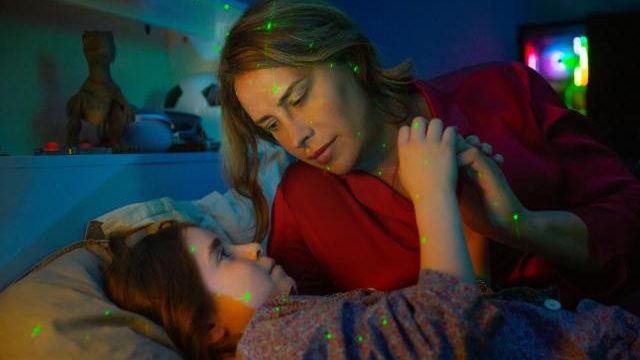
I’m not spending one more second on this bullshit. You already know why this movie sucks. You already know why it shouldn’t win. So unlike the Academy, I’m going to pay attention to the films that actually matter here. Cinema is supposed to teach you something about the world while entertaining you. The only thing this taught me was how to memorize the Alt+ code for an “e” with an acute accent while repeatedly typing out the title.
Flow – Latvia – Directed by Gints Zilbalodis

This is one of the most gorgeous films I’ve seen in a long time, and it’s a credit to the universal language that is film that everything gets across in Flow without anyone uttering a single word. From dazzling environments to absolutely adorable character designs, Gints Zilbalodis has created a potential all-timer in the field of animation.
It’s so beautiful and yet so simple. It’s just a tale of survival and friendship in crisis, told through the eyes of a curious, wide-eyed cat. When a tidal wave floods the forest where it lives (humans are conspicuously absent save for a few relics of civilization that could be days or years old), the kitty scrambles for higher ground and dry land, only to be left with one option – a passing boat piloted (somehow) by a lazy capybara. They’re eventually joined by dogs, a lemur, and a secretarybird of all things. Together they must adapt to this new life on the water, finding whatever food they can, protecting one another from predators, and keeping themselves afloat as a massive leviathan inadvertently threatens their safety as it moves through new maritime territory.
What Zilbalodis does here is nothing short of amazing. I’ll talk more about it when I cover Animated Feature next week, but one of the things that absolutely stunned me was in how he was able to strike a balance between the grand scale of the adventure and the natural behaviors of the animals. There are a few moments here and there that require suspension of disbelief, like any of the animals figuring out how to steer the boat for example. It doesn’t quite approach the line of anthropomorphism, but there are a couple of times where the menagerie acts too evolved for its own good. However, before you can even start nitpicking, the lemur starts looking in a mirror, shining a light upon the deck surface, which the cat tries to chase like a laser pointer. Whether it’s mortal peril or insane levels of cuteness, this is a film that will overwhelm you in the best ways possible!
The Girl with the Needle – Denmark – Directed by Magnus von Horn
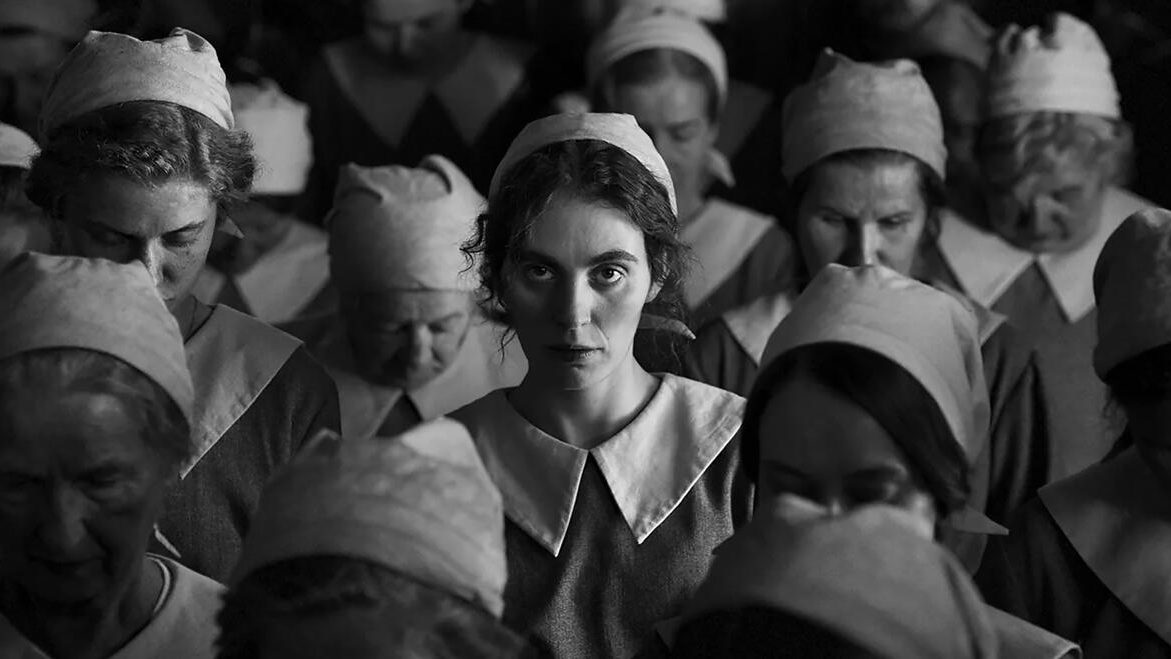
As fascism rises up once again around the world, it’s important to remember the real humanity that is at stake when a person has no rights. That’s the core of the first half of The Girl with the Needle. Karoline is a perfect example of a woman with literally no options. She can’t mourn her husband, missing overseas fighting in World War I, because he’s not officially declared dead (and it turns out, he does survive). She can’t make ends meet because she has no income as a war widow in waiting. Living in squalor and working for pennies, her only chance at a better life by marrying her employer is snuffed out by his judgmental mother. When her husband does return, he’s horribly deformed from injury, and she can’t see any way to let him raise a child that’s not his (she was impregnated during her affair). With nothing left, she tries a self-administered abortion with the titular knitting needle, because she’s metaphorically at the end of her rope.
The second half of the film pivots into psychological horror, as even Karoline’s salvation comes at a terrible price. A woman named Dagmar offers to sell the baby as an adoption, and even gives Karoline a job as a wetnurse for incoming infants who have no home. Karoline makes what she thinks is the right choice, only to learn a devastating reality that true crime lovers would eat up in a heartbeat. There’s a cruel irony to the idea that the default argument for those who would deny a woman her bodily autonomy (“There’s always adoption, no need to ‘kill’ the baby”) becomes the very source of the film’s deep, twisted darkness.
The story is sound all around, with incredible performances, but what really sold it for me was in how Magnus von Horn created the atmosphere. Everything’s shot in black-and-white, and nearly every setting (even the lavish house of Karoline’s boss/lover) has a wet, dingy feel to it, as if everything is about to become soaked and moldy to the point of disease. It’s absolutely terrific world-building that allows the film to stand on its own as legit horror without even considering the meta political implications if you don’t want to.
I’m Still Here – Brazil – Directed by Walter Salles
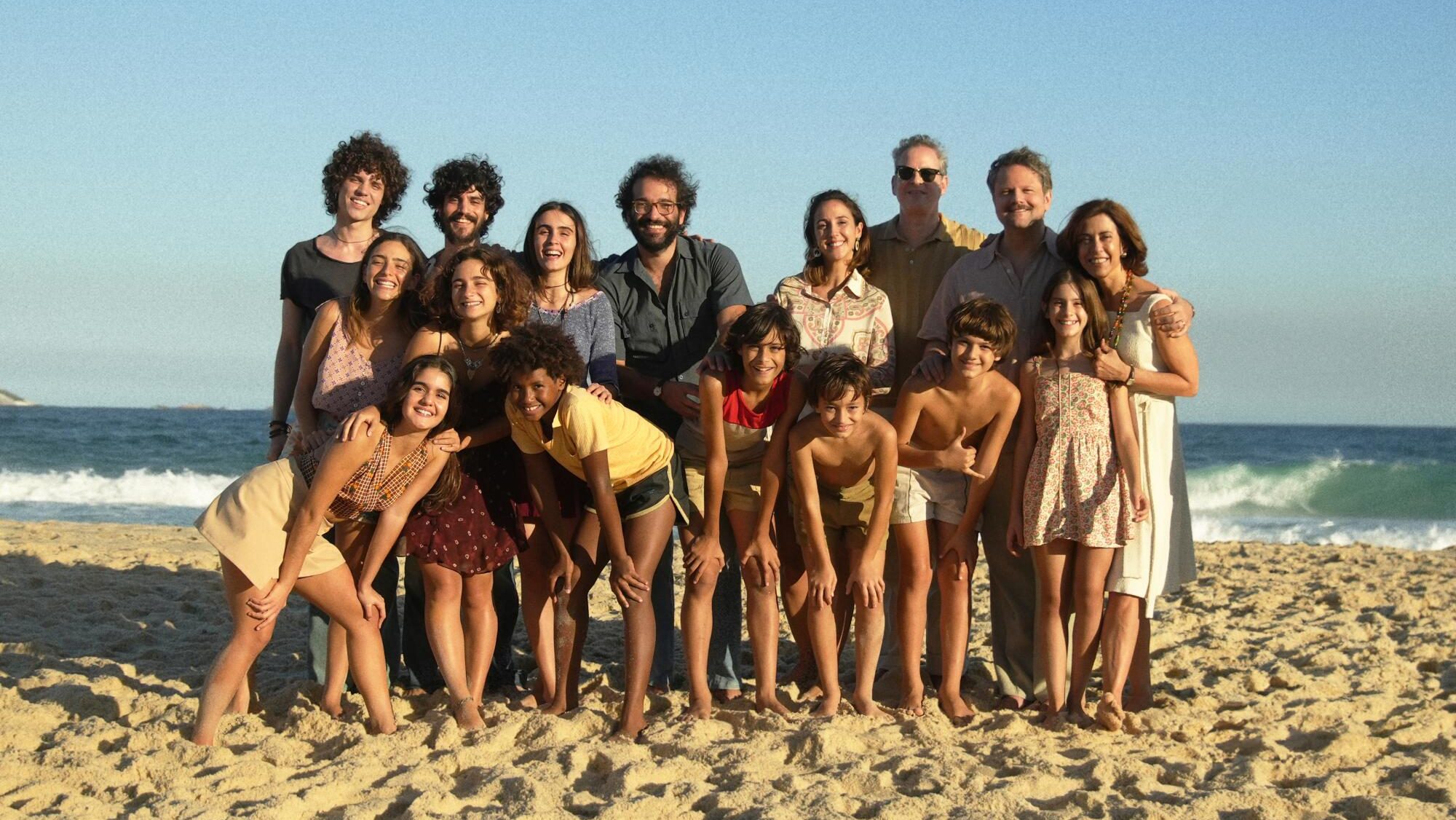
Speaking of fascism, let’s head down to Brazil and see what a campaign of “mass deportations” looks like… if said deportations were into the Atlantic Ocean with a bullet in your head. Set during the military dictatorship of the 1970s, I’m Still Here is a straightforward but still inspirational tale of perseverance in the face of an oppressive government that wants to silence all opposition. From the very first moments, when the teenage children of the Paiva family are aggressively searched and interrogated at a checkpoint because they “matched a description” of a political assassin, you know this is going to be a tense exploration of how authoritarians wield their power.
What makes the film stand out is what happens after we see all this awfulness. Fernanda Torres earns her Best Actress nomination as Eunice Paiva, forced to pick up the pieces and keep going after her husband is disappeared, and after she and her daughter go through their own rounds of torture as the junta tries to find more targets for swift and devastating reprisals. Anyone would be forgiven for curling up into a ball from all this trauma, and in a weird way, it would almost be too cliché for Eunice to become a one-note crusader for freedom. Instead, she stands up straight, holds her head up high, and persists in the one act of defiance she can, to simply live a normal life. Yes, she works endlessly for information on her husband’s death and the eventual acknowledgement from the democratic government once the dictatorship ends, a process that consumes her and her children for the rest of her days. But what really shows her strength is in how she refuses to be a victim, refuses to be a tool for anyone else’s agenda but her own, and how she refuses to let her family forget what happened to them.
I said this when I reviewed the film, that I hold it in slightly less regard than some of the other entries I’ve seen, because it’s probably the most accessible story for Americans. Walter Salles made a film that feels very “Hollywood,” for want of a better term. On a personal level, I look for something more in this competition, but that doesn’t mean this is a bad movie by any stretch of the imagination. If you want a bit of familiarity in this category, this is very much a film you’ll enjoy, and to be clear, I enjoyed it as well. It’s just that quite a few others blew me away.
The Seed of the Sacred Fig – Germany – Directed by Mohammad Rasoulof
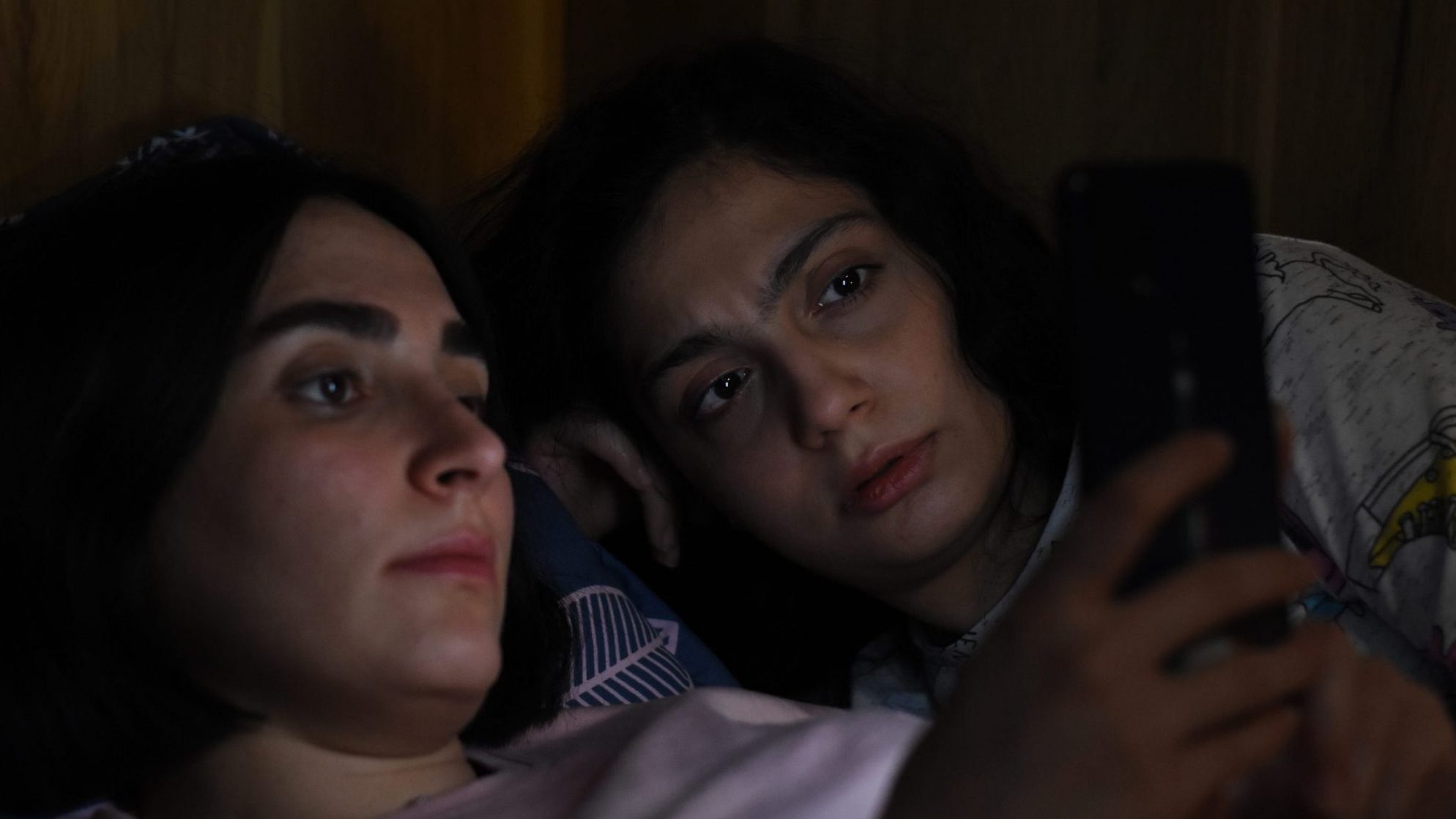
If you ever want to see the clear difference between real bravery and Emilia Pérez‘s performative bravery, look no further than The Seed of the Sacred Fig. Not only was this the best film in the competition for me (spoiler for the rankings, I guess), it was in my top five for the year, full stop. Like the presumptive winner, it takes place in a country outside of the one that submitted it, it deals with women’s rights in a criminal environment, and it shows the extremes that someone can go to in order to assert their identity. Unlike that piece of garbage, this one deals with reality rather than fantasy, doesn’t insult anyone who doesn’t deserve it, and oh yeah, the director and cast are so intimately familiar with the setting that they had to risk actual life and limb to make the film.
Mohammad Rasoulof has run afoul of the Iranian regime several times for his work criticizing the government, and with The Seed of the Sacred Fig, he went so far that he actually had to flee the country and smuggle the footage to Germany to avoid a prison sentence. His cast, who could not leave, still face legal jeopardy for daring to assert such incredibly radical ideas as *checks notes* women should not be killed for not wearing a head scarf, broadcasting truth to the world is not propaganda, and *gasp* maybe it isn’t God’s will that all dissenters be punished. Perish the fucking thought!
Rasoulof’s film is an essential case study in female agency and the disparity of rights in Iran since the revolution, creating a Hitchcockian (and later Kubrickian) thriller about a man put into a position of power while losing his grip on his family and his life, all because he chose to follow orders and his warped interpretation of faith over basic empathy and humanity. Immaculately shot, superbly acted, and incredibly suspenseful throughout, this is a prime example of what it means to take actual risks as a filmmaker, rather than just saying you are for Academy brownie points. Every single person who considers themselves a cinephile needs to see this movie!
***
Well, I’ve pretty much already told you what ranks top and bottom of this field, so what about the other three? It’s not hard to figure out, and in a better, more artistically and intellectually honest year, the top four could easily be joined by one of the many also-rans for a rigorous and exciting competition. Sadly, schadenfreude is our only hope.
My Rankings:
1) The Seed of the Sacred Fig
2) Flow
3) The Girl with the Needle
4) I’m Still Here
5) Being displaced so Donald Trump can build a desert casino
6) Emilia Pérez
Who do you think should win? Vote now in the poll below!
Hold on, we’re not done yet. As I do every year, I endeavor to see as many International Feature submissions as possible, including the entire shortlist. I accomplished the goal this year, so here’s how the 15 semifinalists rank, along with the countries who put them forward.
1) The Seed of the Sacred Fig – Germany
2) Flow – Latvia
3) From Ground Zero – Palestine
4) Kneecap – Ireland
5) How to Make Millions Before Grandma Dies – Thailand
6) Armand – Norway
7) The Girl with the Needle – Denmark
8) Touch – Iceland
9) I’m Still Here – Brazil
10) Universal Language – Canada
11) Santosh – United Kingdom
12) Waves – Czech Republic
13) Dahomey – Senegal
14) Vermiglio – Italy
15) Getting deported to, I don’t know, let’s say, Venezuela
16) Emilia Pérez – France
Finally, in total I took in 26 of the 85 eligible films, so this is the grand ranking of them all.
1) The Seed of the Sacred Fig – Germany
2) Flow – Latvia
3) From Ground Zero – Palestine
4) Kneecap – Ireland
5) Drowning Dry – Lithuania
6) How to Make Millions Before Grandma Dies – Thailand
7) Armand – Norway
8) The Girl with the Needle – Denmark
9) Touch – Iceland
10) I’m Still Here – Brazil
11) Old Fox – Taiwan
12) La Palisiada – Ukraine
13) Universal Language – Canada
14) 12.12: The Day – South Korea
15) The Devil’s Bath – Austria
16) Santosh – United Kingdom
17) Waves – Czech Republic
18) The Glassworker – Pakistan
19) Laapataa Ladies – India
20) Under the Volcano – Poland
21) And So it Begins – Philippines
22) Dahomey – Senegal
23) Sujo – Mexico
24) Grand Tour – Portugal
25) Vermiglio – Italy
26) Forced gender reassignment surgery
The 9th Circile of Hell -1) Emilia Pérez – France
Up next, we take a look at one of the Best Picture nominees that we sadly haven’t been able to discuss yet, because this is the only other category where it’s competing. It’s Adapted Screenplay!
Join the conversation in the comments below! How aggressively do you pursue international entries? Is there any enjoyment to be had in winners being basically determined in advance? For real though, how cute is that cat? Let me know! And remember, you can follow me on Twitter (fuck “X”) as well as Bluesky, and subscribe to my YouTube channel for even more content, and check out the entire BTRP Media Network at btrpmedia.com!

 I Actually Paid To See This
2 thoughts on “Oscar Blitz 2025 – International Feature”