
I’ve said time and again that the Short Film categories are my favorite part of the Blitz, because it’s just so fun to be able to sit in a theatre with other devotees and watch the entire field in one go. It’s amazing to see the variety of stories that are told in new and innovative ways, and when we watch these works of art, we’re seeing the potential future of the industry, as many young filmmakers get their starts with shorts, and the experience not only leads to future opportunities, but teaches them the value of true creativity, rather than just churning out algorithmic studio fare.
This year was something of a new experience for me on two fronts. One is that, for the first time in about five years, I didn’t do all three categories in one day. My usual routine is to go to the Landmark NuArt theatre on Santa Monica Blvd. to watch the Animated and Live Action screenings, as they play back-to-back, then go a few blocks down the street to the Laemmle Royal for the Documentaries. All three shows are usually spaced out so that I can fit them all into a single afternoon/evening. That had to change this year, as the Documentary screening moved to a bigger auditorium at the Laemmle Monica Center, which is in downtown Santa Monica. It’s just off the same street, but about three or four miles away. Given the traffic that “SaMo” gets on a Saturday night, I was not enthused about trying to race my way there from what is technically “West L.A.” knowing that the Live Action show (which is typically second in line at NuArt) could run anywhere from two to three hours, and that I’d have to pay for parking when I arrived. If I got there early, I’d be out at least $10 extra, and if I was even a little bit behind, I’d either have to scramble or give up and go home, forcing myself to navigate right back out of that traffic that I had just endured. So with all that in mind, I watched the Documentaries early Friday afternoon and saved the others for Saturday. Easy peasy.
The second change is that I actually had several of the titles already cleared. I cover the Animation program at the Brooklyn Film Festival for my friends at No Rest for the Weekend every year, and occasionally that yields an eventual nominee, and every once in a while there’s a Pixar short that everyone sees because it plays before a feature. Apart from that, though, I basically go into these screenings blind. Not so this time. Because I also covered the Hollyshorts Festival last year, I was exposed to one of the Live Action nominees, which became eligible for the Oscars by winning its category at that fest, as well as two of the Animated finalists. I could have actually done four of them had I watched them in person at Hollyshorts, but I was only able to attend for one day, so I had to rely on online screeners, and sadly two of them were not made available, especially since they were both nominees in the animation field and one was the ultimate victor. I can’t remember ever having a run where Documentary Short was the only category for which I’d seen none of the nominees at announcement, and given that one of them was part of Netflix’s FYC campaign, I could have easily taken the time to see it in advance, meaning I would have seen at least one nominee from every category before nominations were revealed. Perhaps that’s a goal for next year.
Anyway, tonight we’re tackling the first of these three contests, Live Action Short, which if I’m being honest, is usually my least favorite of the bunch. It’s not that anything is bad, just that the other two stand out more. Animated is obviously its own dazzling artform, and Documentary often features deep, probing stories that also happen to be true, and sometimes they use animation as a means to up the production value and distinguish themselves. Live Action simply can’t do that as a main function because of the nature of the category, eliminating the use of animation and non-fiction. There have been some mind-blowing examples in the decade-plus that I’ve been able to watch these screenings (ShortsTV has been putting them out for 20 years now), like Helium, An Irish Goodbye, Skin, and Two Distant Strangers. But apart from those, I’m hard-pressed to remember the other winners, including high profile ones like The Long Goodbye and last year’s champion, The Wonderful Story of Henry Sugar, to say nothing of the nominees who don’t take home the gold. They just don’t register in my mind as much as their counterparts, and that’s honestly really sad, because I always remember enjoying seeing them, especially in the collective and communal experience of a packed auditorium with other like-minded enthusiasts. Somehow, though, they are the quickest to fade. I sincerely hope this year’s crop doesn’t.
This year’s nominees for Live Action Short are…
A Lien – David Cutler-Kreutz and Sam Cutler-Kreutz
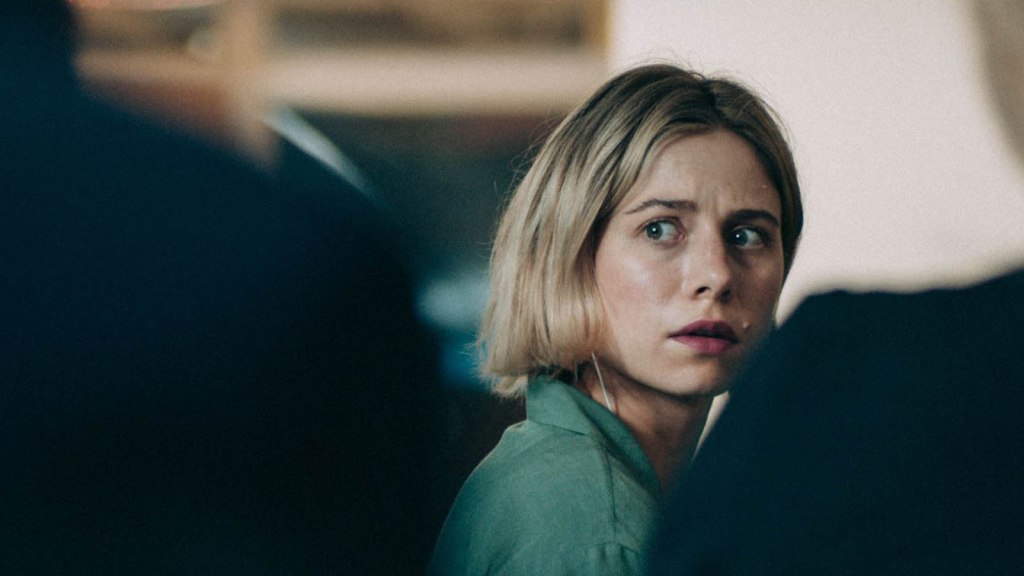
If the Academy voters wish to make a political statement, this may be one of their best opportunities, similar to the way Two Distant Strangers took the world by storm a couple years ago. Thankfully, also like that previous winner, the film is spectacular even without that backdrop.
The story focuses on the Gomez family: husband Oscar (William Martinez), wife Sophia (Victoria Ratermanis), and daughter Nina (Koralyn Rivera). They’re on their way to an interview with the Immigration and Naturalization Service, as Oscar has finally become eligible for a Green Card. He’s lived as an undocumented immigrant in the U.S. since his parents fled El Salvador when he was four, and as he relates to his case worker, Queens is the only “home” he’s ever known. The interview is to establish that Oscar and Sophia’s marriage is valid, and to finalize his application so he can at long last have legal status in this country.
While Oscar is being interviewed, ICE shows up, calling out names of several people in the waiting room, arresting and removing them as soon as they identify themselves. This is a very real tactic, and one of the most purely evil things our government does. They make a regular practice of luring undocumented migrants to INS for Green Card interviews, giving them a firm deadline, one shot only, to get legal status, meaning if they miss it their application is summarily rejected, and then round them up for detention and deportation, even though their only crime is following the rules. Not only is this disgusting and borderline illegal action commonplace, but it’s facilitated by the local officials because they operate in different federal agencies and thus don’t have jurisdiction to intervene, and Donald Trump is attempting to ramp up these raids, eliminating the sanctuaries of schools and churches that had previously been in place, and dropping corruption and bribery charges against New York City Mayor Eric Adams in exchange for even more aggressive enforcement. That latter part is an illegal quid pro quo, and grounds for impeachment, but it’ll of course never happen.
The performances in this short are fantastic, particularly from Ratermanis as she tries to navigate the chaos of the situation. She constantly calls and texts Oscar, even though any interruption of the interview could be interpreted as disrespectful or flippant. She and the young Nina had to surrender their passports for processing when they arrived at the office, and Sophia has to scramble to get them back in order to save her own daughter, because the ICE agents only see a brown child and assume she’s not a natural-born citizen. The panic throughout this story is palpable, and the tragedy all too preventable if we just acted with an ounce of humanity.
If there’s one thing I’d change, it would be to make Sophia the immigrant. I think that would have driven home the point even further about these racist policies – and they are racist. If all this rigmarole went down and it turned out the white lady was the “illegal alien,” that would have laid things bare perfectly. Still, as it stands, this is a tense and necessary film that spotlights a sin in this country for which it will take generations to make amends.
Anuja – Adam J. Graves and Suchitra Mattai

I saw this during Hollyshorts, and I really enjoyed it. It’s a lovely tale of the sisterly bond set against the backdrop of social inequity in India, and presents a genuine dilemma for its star. After it started winning awards and gaining momentum, Netflix picked it up in hopes of getting a win that they could take credit for despite doing nothing to finance or produce the film, which makes them closer to the villains of this story than I think they realize.
Sajda Pathan plays the title role, a young girl and math whiz working with her adult sister Palak (Ananya Shanbhag) in a textile factory. The two live alone in an abandoned/condemned warehouse, having nowhere else to go after the deaths of their parents. One day, Anuja is called into the office of her boss, Mr. Verma (Nagesh Bhonsle, who appeared in the 2018 film, Hotel Mumbai), a crass, exploitative employer who operates the factory as little more than a sweatshop. Verma is confronted by Mr. Mishra (Gulshan Walia), a local teacher, who accuses him of illegally hiring Anuja as child labor. Aware of Anuja’s intelligence, Mishra says he’ll launch a formal complaint against her work, and informs her that there is an entrance exam for a gifted boarding school coming up in a few days. The exam itself costs 400 rupees, but if Anuja passes, she’ll likely get a scholarship for her actual tuition and rooming.
Palak makes Anuja promise that she’ll sit for the test, but Anuja doesn’t want to, especially when she finds out that boarding school means that the two of them will be separated. Palak assures Anuja that she’ll be fine, as she’s figured out a way to make money on the side by turning excess fabric into shoulder bags that she can then sell on her own. She’s also actively searching for an arranged marriage so that she can have a permanent home. A final wrinkle is thrown into the mix when Verma discovers the extent of Anuja’s skill, as she helps him do some complex budgeting math that he hadn’t previously considered. He offers her a promotion, contingent on her showing up to his office at the exact day and time of the exam. If she refuses, she’ll not only be fired, but Palak as well. So now Anuja is faced with a critical choice. Does she risk her sister’s wellbeing and leave her behind for her own future prospects, or does she take an immediate payday to stay with Palak, even it means cutting off opportunities and her own potential down the road? There is no easy answer, and it’s to the film’s credit that it’s not handled in traditional means.
The film itself was funded by advocacy groups and homes for displaced children in India, of which Pathan is one. As the credits roll, we get to see the young actress watching the film with her friends and housemates for the first time, and the look of pride on all of their faces for her achievement is incredibly heartwarming. This is a very well written and shot film, and the performances are top notch. This would be a very worthy winner.
I’m Not a Robot – Victoria Warmerdam and Trent
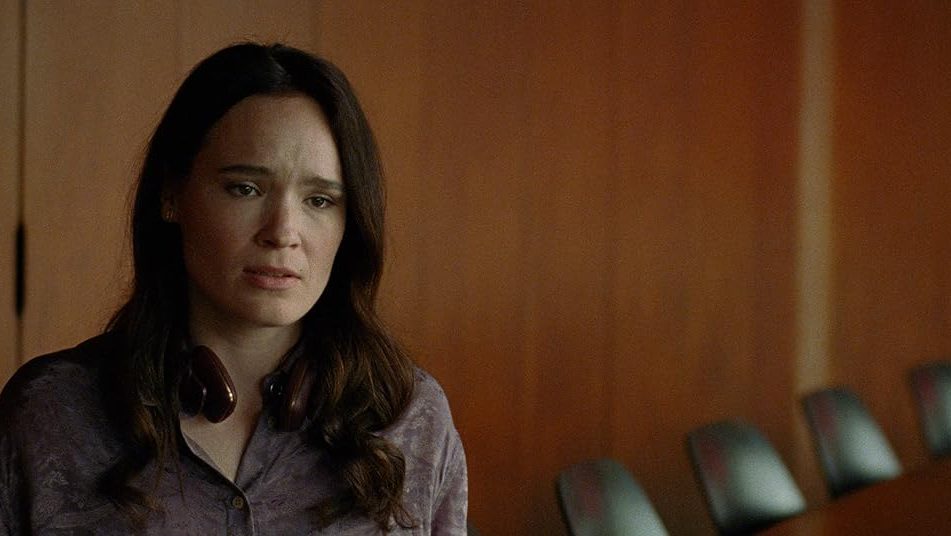
This farcical Dutch short suffers a bit due simply to bad luck and timing. The film stars Ellen Parren as Lara, a producer at a record company. While working one day, she’s forced out of one of her computer’s systems and has to log back in, using the standard CAPTCHA tests, clicking a box to declare that she’s not a robot. When that’s not accepted, she has to go through several advanced screens, where you have to click on all the sections of a given picture grid that contain the requested image (a car, a bird, traffic lights, etc.). When that fails, she calls IT, who says they can’t help her, and then ask the oddest question of all, “Have you considered the possibility that you ARE a robot?”
Wait, what?
Yes, as it turns out, she is in fact a machine. At least, that’s what her boyfriend Daniel (Henry van Loon, who voiced the father character in the animated film, Oink, from 2022) and a sales executive named Pam (Thekla Reuten) try to convince her is the case. Dan reveals that Lara has only been “alive” for the five years that they’ve been together, that she was purchased and activated as a means for him to get over the loss of a previous love, that all of her memories are shared coding with other androids, and that she is programmed with free will, save for her own death, which come moments after Daniel passes, whenever that is, so that he doesn’t have to mourn again.
This is extremely fucked up, but unfortunately for the filmmakers, it comes just a touch too late for mainstream audiences. Essentially, this is a short version of Companion, which came out in theaters at the end of January. I’ll review that this coming weekend, because there are key differences in tone and execution, but for all intents and purposes, it’ll be seen as the same in viewers’ minds.
That said, even if there wasn’t this meta link just hanging over the whole affair, I’d probably still rate this one pretty low compared to the other nominees. Despite it being a short, there are several moments that are unnecessarily padded out, most notably a series of attempts from Lara to talk to Dan on the phone and ask if she is in fact mechanical. She fumfers on repeatedly, noting how silly and embarrassing the question really is, but she won’t just come out and ask it. Even when she says things like, “Okay, I’m just going to say this now,” she still hems and haws for several seconds and goes on numerous tangents before getting to the point. We all get that this is an inherently silly premise, so just get on with it.
Also, the film opens and closes with that god-awful boys choir rendition of Radiohead’s “Creep” from The Social Network. I know it’s meant as a meta joke that Lara is basically a social network made flesh, but I fucking hate that cover. It’s pretentious as all get out, and it ruined the movie the last time it was used. To put me through it twice here basically dooms this short.
The Last Ranger – Cindy Lee and Darwin Shaw
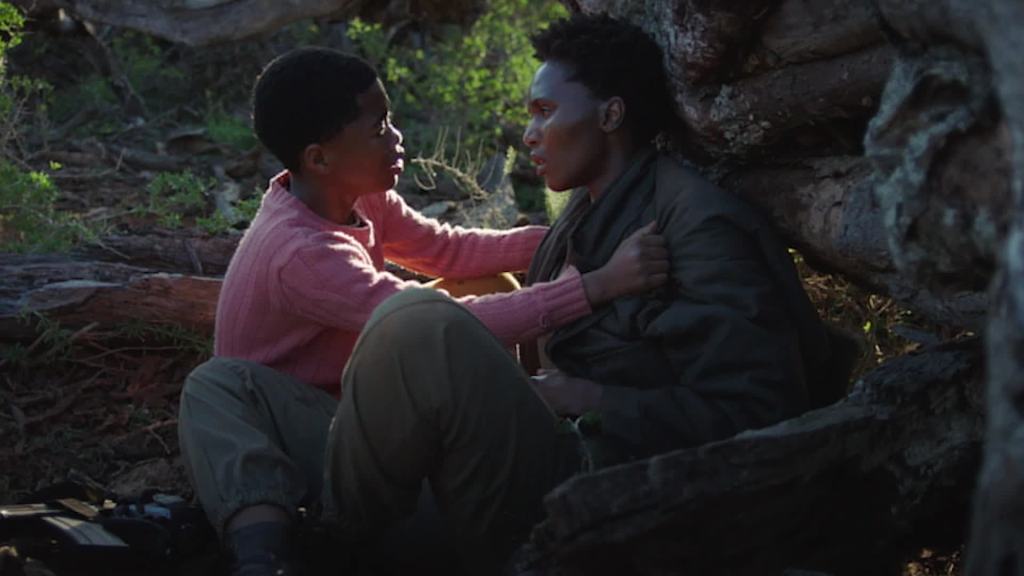
One of the more egregious social ills in the world is the continued existence of wildlife poachers, who kill and maim endangered wild animals for rare body parts that are sold on the black market. The Last Ranger, based on actual events from a few years ago, is a heartfelt and empathetic dramatization of efforts to combat these dangerous killers and inspire a new generation of conservation.
Liyabona Mroqoza stars as Litha, a young girl living in a small shack near a South African wildlife refuge. She enjoys her life, befriending the local rangers and playing with carved miniatures made by her father (Makhaola Ndebele). When dad goes out to “look for a job,” as he says, Litha is left to her own devices, so she hangs out with Khuselwa (Avumile Qongqo), one of the rangers. It’s only her and her supervisor Robert (David S. Lee) patrolling the preserve these days, as the film takes place during the COVID pandemic, and tourism has been brought to a standstill, forcing numerous layoffs.
Khuselwa takes Litha to see the rhinos, introducing her to one of the more gentle ones, named Thandi. The excursion is short-lived, however, as a trio of poachers moves in with the intent of cutting off and selling Thandi’s horn. Among them is Litha’s father, who’s job is to tranquilize the rhino so that it can be harvested without risk of harm to the others. Realizing what’s going on, Khuselwa leaps into action, having no time to wait for Robert to arrive. Things then turn into a very tense bit of action, as Litha must do whatever she can to help her friend and save the innocent and peaceful beast.
This is pretty intense, especially for a short. In the span of just 28 minutes (the longest of the set), we have to establish the characters, provide stakes, and bring everything to its deadly head, and the filmmakers pull this off admirably. We know exactly what everyone’s motivations are, how they’re in conflict, and what the consequences are should anything go wrong. They also give us an uplifting epilogue about Thandi herself.
It may not seem like the most essential of entries, particularly when the President’s son is often in the news for shooting protected big game in defiance of international law, and when said President actively employs the worst white South African to ever live and advocates for protected status for the 5% white minority in the country that he believes are victims of reverse racism ever since apartheid ended. Given all the other problems, this may feel like a drop in the ocean, but preserving wildlife and key ecosystems is essential for our continued survival as a species. We need people like Khuselwa and Litha to take up the mantle of a ranger, be it in Africa or here in the U.S., to protect the vulnerable and teach respect for natural life. It’s dangerous and thankless work, but when you look into the eyes of such graceful and beautiful creatures, you know it’s worth it.
The Man Who Could Not Remain Silent – Nebojša Slijepčević and Danijel Pek
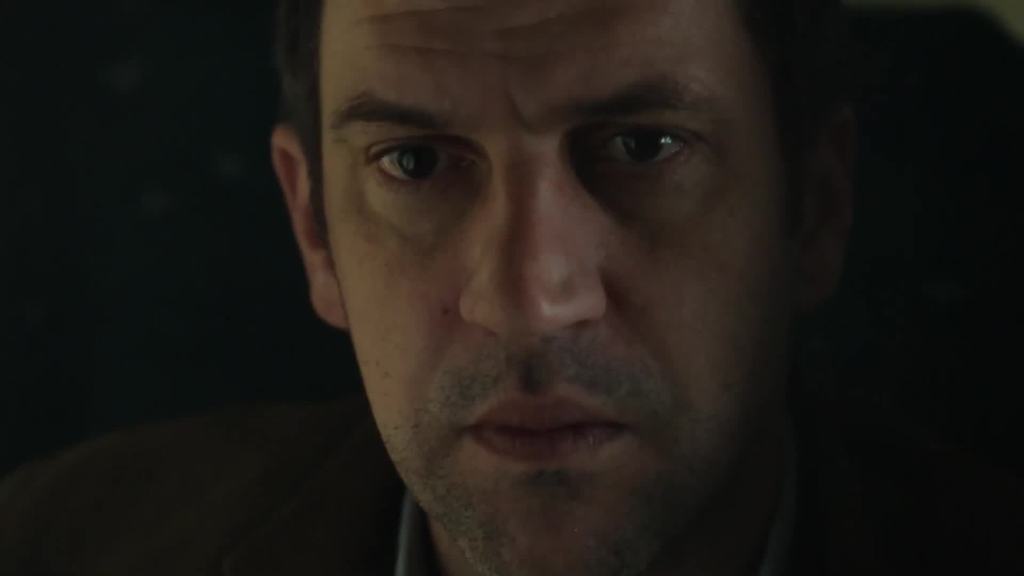
This Croatian entry is the shortest of the lot at only 13 minutes, but it makes sure to pack a punch in that very brief window. A true story of what happens when racist militias have unchecked power to terrorize innocent civilians, the blunt impact of the film should be something we all keep in mind as we endure the next four years and beyond.
A passenger train is suddenly stopped at a snowy checkpoint operated by an unsanctioned militia. The fake soldiers demand access to the train to check IDs of the passengers. In one of the compartments sits a group of about eight people, chiefly two men named Dragan (Goran Bogdan) and Milan (Silvio Mumelaš). Milan has no papers, and as he sees people being taken from the train, he fearfully wonders what he should do. Dragan assures him that everything will be fine, and that he won’t let anything happen to this stranger.
An armed man (Alexis Manenti from the 2019 French submission, Les Misérables) comes to their compartment and demands IDs. When Dragan asks for what purpose, he’s threateningly interrogated with irrelevant personal questions, including who his family’s patron saint is. Dragan puts on a brave face but is obviously intimidated by the fact that there’s a gun pointed at his head. When the weapon turns to Milan, the same questions are asked, and when Milan admits he has no papers, the reason for the questioning becomes clear. These people are hunting Muslims, and while the gunman tells Milan that he can come back to get his things later, that the train will wait for him, you can clearly see trucks full of people leaving the area, never to return. What happens next is incredibly shocking, but set up well by the camera and the scripting, before the final reveal of what we just saw and when it took place.
It really is infuriating to know that in the 80 years since World War II ended, genocide and “ethnic cleansing” still goes on in many pockets of the world. It’s even more sickening to realize that we as Americans may be tacitly responsible for more to come thanks to a slim plurality of our voting populace that could justify any far-flung atrocities for cheaper eggs (which are now even more expensive). The collective number of people in the world who have no basic respect for human life is pretty small, but they control far too many deadly resources to be summarily conquered. All we can do is look to stories like this one as reminders that we all need to do better.
***
The Short categories are always difficult to sift through, because so often the stories are so varied that just about any comparison is barely better than apples and oranges. Sometimes you just go for the funniest or most uplifting entry, but even that is in short supply here, as each of the nominees is a downer in its own way. Some are lighter than others, but every one of these stories is born from a pretty shitty situation. I guess the best I can offer this year is to say that all of these films are a call to action, be it to prevent injustice or just put up more guardrails against artificial intelligence. In that respect, my vote goes to the one that we here in the States can actually do something about. There are laws and rules in place that allow us to protect and defend our neighbors from agents who would do them active harm based solely on the color of their skin or an appearance of being “unqualified” to be American. So let’s all do what we can. Fuck ICE!
My Rankings:
1) A Lien
2) Anuja
3) The Last Ranger
4) The Man Who Could Not Remain Silent
5) I’m Not a Robot
Who do you think should win? Vote now in the poll below!
Up next, these shorts had a lot of great performances, but it’s been a while since we checked in with those who are actually up for hardware for putting on a fantastic show, so we’ll rectify that in short order. It’s Best Actor!
Join the conversation in the comments below! Which of these stories intrigues you the most? Have you ever tried to make a short film? What steps have you taken to protect your loved ones from ICE raids? Let me know! And remember, you can follow me on Twitter (fuck “X”) as well as Bluesky, and subscribe to my YouTube channel for even more content, and check out the entire BTRP Media Network at btrpmedia.com!

 I Actually Paid To See This
2 thoughts on “Oscar Blitz 2025 – Live Action Short”