
I miss acting. Like many people, I once harbored dreams of being a movie star, but I also knew that I’d never be a leading man. That was the realm of beautiful people like Brad Pitt, Leonardo DiCaprio, and for some reason in the 70s and 80s, Gary Busey. That was never going to be me. Even before I became overweight, I was bulky, with broad shoulders and a doughy physique. I have improved a lot since then, but I’m still chubby, I still have a double chin, and enough damage has been done to my torso that I’ll never look like those hunks (a woman I went on a date with once told me my stretch marks looked like I either had four kids or had been mauled by a tiger; great gal, that one). The combination of my face, hair color, and body type led me years ago to the fun but self-effacing joke that I look like Matt Damon… if he ate Ben Affleck.
I made peace with all that long ago. I would never be a suave and debonair lead, but I could still be a lead character. Ever since my first days on the stage, playing a talking dog in 6th grade and a flying monkey in 7th, I just had so much fun getting into character, no matter the size of the role I was playing. I watched movies, old and new, to study how actors delivered their lines, their intensity, and their physicality, be it for dramatic or comedic purposes. I tried to imitate cartoon voices, because they just sounded so cool.
All of this eventually translated to the stage. I got my first significant role in 8th grade playing a parody version of Boris Karloff named Theo Bartok in a dinky little farce called The Great All-American Musical Disaster. The highlight was getting to kick a bratty, diva child actor character in the butt to stop one of her tantrums. In high school our normal drama director always found me fun things to do, like an offstage side role in Guys and Dolls where he told me to try to mimic Pumbaa’s voice, which I did. When we finally did Shakespeare, my nameless merchant was meant to be a riff on Inigo Montoya. I finally got the lead for Up the Down Staircase, playing the troubled greaser teen Joe Ferrone. In my final show, Fiddler on the Roof, I played Lazar Wolf while understudying Tevye, a real spectrum of performance.
Once I got to college, things shifted from stage to screen. Student films, running a sketch comedy show on the campus TV network, stand-up, improv, whatever I could do, I did it, because I just loved entertaining so much, even if it meant me being the butt of the joke. I remember we did a sketch once where I “switched places” with one of the girls in our cast (sadly she was at times the only girl in our cast; I was not good at recruiting). She sat in my dorm room playing video games and occasionally sniffing her armpits while a Green Day track played in the background. I sat in her room wearing a bathrobe watching “Friends” and having a pillow fight with her roommate, all while Diana Ross played. I allowed all that, but they wanted me to go further, including buying plus-size ladies clothing from Lane Bryant. Thankfully we didn’t do all that because one, I couldn’t afford it, and two, I had enough trouble convincing people I wasn’t gay before you put “I’m Coming Out” into the soundtrack.
As an adult, though, I haven’t had very many opportunities. Work schedules sort of precluded anything like community theatre or open mic nights. I did two total days as a professional background actor, which I mentioned earlier in the Blitz, and that was definitely a fun way to scratch the itch again, but it also illustrated the core problem about never being a leading man because of my looks. You’d be amazed how many job listings there are, again for BACKGROUND ACTORS, that say things like “Must be super attractive and HOT,” “No one over a 34-waist pant,” “No visible tattoos,” or “Six-pack abs REQUIRED.” Yeah, it turns out that even extras have to be models, because casting directors and producers don’t want anyone in the background to draw attention away from the leads, especially fatties.
That’s part of the reason why I started the YouTube channel. When I’m doing Blitz stuff or ranked lists, or any other sort of experiment, I’m basically my genuine self. When I do “The Worst Trailer in the World,” I’m playing an exaggerated character for the sake of comedy. Yes, I’m relaying what are pretty much my opinions, but I’m doing it a bit over-the-top to make it clear that it’s mostly just jokes. It’s me, but a different version of me, just so I can perform again. That’s how much I miss this part of my life, and why I’m still trying to find outlets for when the acting bug bites. I think voice acting would be super fun, for example. It’d let me get back to the enjoyment of making silly characters without people judging my looks. I’ve been looking into it for several years, and I’m definitely in the city to do it, it’s just that things (particularly schedules and financials) have never really lined up to give it a proper go.
All of this is to give context to how I judge a category like Best Actor. I’ve said it many a time before that I always grade a performance on whether I see the character, or just the actor. With a lot of leading men, that may seem hard. You’re always going to recognize Robert De Niro, for example. This isn’t about a makeup job or some other change in appearance. It’s whether I can detect that spark, that moment when someone loses themselves in the role. My mom said she saw that in me all those years ago as a chorus member in The Wiz, and I felt it, too. Pure euphoria. I wasn’t Bill Hammon. I was someone else entirely, with his own history, hopes, dreams, and different circumstances, even if it was just for a couple minutes of stage time. When I see that in an actor’s performance, that’s how I know it’s great. It’s not just an ability to read lines, emote properly, or affect stage direction and blocking. It’s making me see the person on the screen doing things that person would do, making me believe that this person who looks like Jack Nicholson is actually a mental patient or the leader of an Irish mob. It’s a tall order to be sure, but when you’re going for an Oscar, you’d better bring it.
This year’s nominees for Best Actor are…
Adrien Brody – The Brutalist
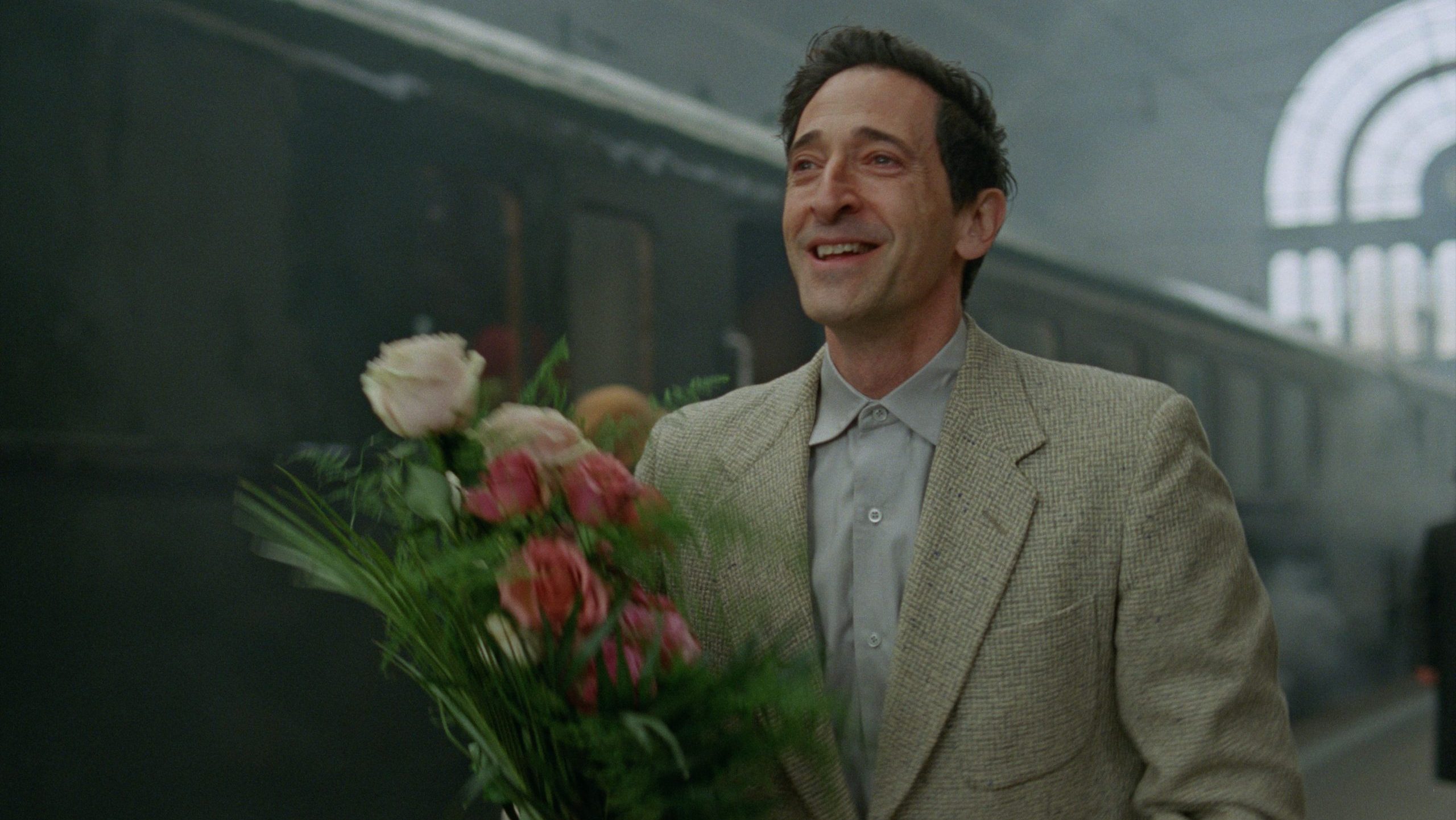
In a lot of ways, Adrien Brody’s performance here is an extension of his Oscar-winning turn in The Pianist. Both characters are Holocaust survivors, both use their art as their means of survival and endurance, and both are forced to be separated from their families. The big difference is that the previous role focused on experiences during the war, while this one is about the aftermath, spotlighting the lack of empathy even after liberation.
There are moments where Brody is truly transcendent. You can see in his eyes the wonder and hope of a better life for László Tóth, a genuine and tearful gratitude not just for the opportunities granted him, but also the knowledge that his work has endured as intended. You can also see that light fade from his visage as the harsh realities of American life continue to pile up, leaving him spiritually broken by the end. Through this character you can see the contradiction and hypocrisy of how immigrants are needed to keep America going while still denigrating and dehumanizing them. It’s never enough to just assimilate – especially when there’s no firm identity or collective to assimilate into – you have to do it while being servile and accepting the assertions of your own inferiority.
There are two places where the performance falters just a touch for me. The first is the constant smoking. I know I keep harping on this, but I wouldn’t bring it up if it weren’t that severe. When several scenes stop dead in their tracks so that László can light up for many seconds at a time, it goes from being an affectation to an intentional statement that this is a defining character trait, and like the heroin addiction, it isn’t remotely justified. I know more people smoked back then. I don’t care. It’s one thing to be historically accurate to the era (remember that László wasn’t a real person), but this is just gratuitous, and it doesn’t serve any narrative or character purpose. If a cigarette burn was the inspiration for one of his buildings, or if he suffered trauma related to it, that’d be one thing, but absent that, it’s just needless padding in a movie that’s already too long. Ask yourself, what does his chain smoking add to the character or the plot? The answer is nothing. Once or twice is fine, but when it’s every other minute seemingly, that just detracts.
The second isn’t really Brody’s fault, but it does affect how we perceive his performance. As noted when I covered Sound, AI was used to “clean up” the Hungarian accents used by Brody and Felicity Jones. As such, the words we hear him say technically aren’t entirely his. The same way I wouldn’t give a Grammy to a singer who used Auto-Tune, I’m not willing to give an Oscar to an actor whose voice was digitally altered, again for no justifiable reason. Nobody watching this film would have dismissed it as low quality due to the Hungarian accents, because he’s still mostly speaking English (this sets it apart from Emilia Pérez, because those actors were speaking the wrong dialect of Spanish with incorrect accenting to boot). Obviously Brody probably wasn’t aware of what would happen in post while he filmed on set, but the fact that it happened does take away from the experience. We just got over a massive SAG strike over the use of AI, and here’s a possible Academy Award-winning performance being changed by the very technology that the industry had to shut down in order to fight.
Timothée Chalamet – A Complete Unknown
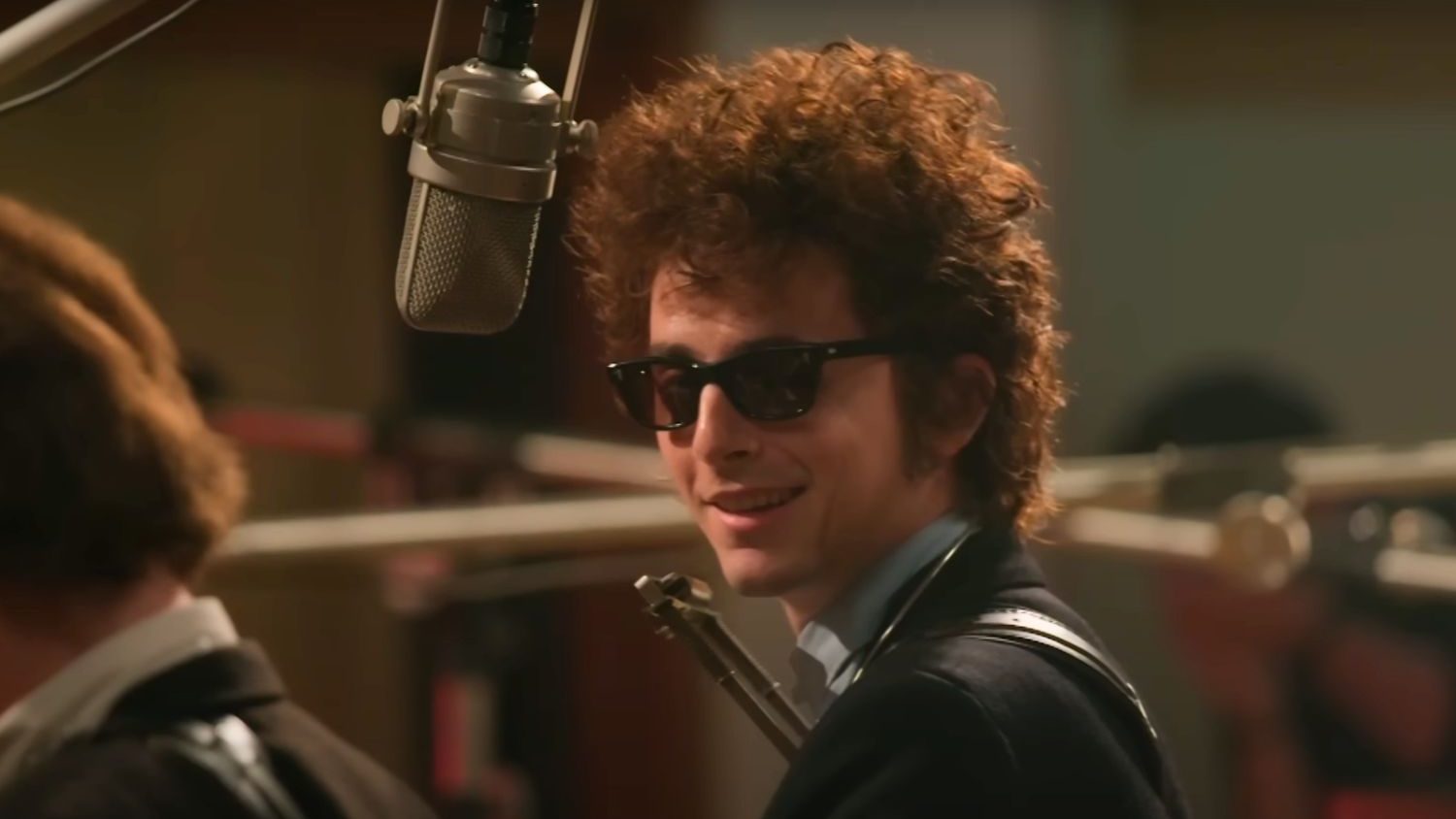
Timothée Chalamet recently hosted Saturday Night Live, where in his monologue he did a bit about never winning a major award. It was very funny, particularly when he asked to simulate a victory, only for the “winner” to be Kenan Thompson. Good stuff. But really, while Chalamet hasn’t taken home the big prize yet, this is only his second Oscar nomination, and he got a ton of minor circuit hardware for Call Me by Your Name. He will win one someday, and he certainly has a case here, but it’s not some worldwide scandal if he doesn’t. He’s got a long way to go before he’s in the “What More Can They Do?” club with the likes of Glenn Close, Amy Adams, and the late Peter O’Toole.
In A Complete Unknown, his job is relatively simple. Turn up the charm and be the center of attention at all times, but be just enigmatic enough to make us occasionally wonder why he’s the center of attention. He accomplishes this through his natural charisma and winning smile, his ability to reasonably affect Bob Dylan’s voice (both speaking and singing), and every once in a while lobbing some harsh but grounded truth bombs. Of particular note on that last point is when he brings a date to a party, but leaves early when he becomes bored of being a tool for everyone else’s amusement. Outside the building, he parts with the young woman, and when she says she loves him, he retorts something to the effect of, “How can you? You’ve known me for a day.” Those brief instances of being less than poetic really help to make the character of Dylan feel more accessible than the myth of the real person.
Once that aspect is nailed down, it’s all about the musical performances. Like the rest of the cast, Chalamet sang live on set and learned to play the various instruments he uses, chiefly guitar and harmonica. That not only requires an insane degree of commitment to the method, but it also helps draw out the passion on screen. You can see the moments when Chalamet lets the emotion and drive of a song just wash over him, getting into that “zone” that great musicians enter when they sort of rise to a higher plane of existence. On the whole, Chalamet is tasked with giving us a believable impression of Dylan, which he definitely pulls off (with shades of Billie Joe Armstrong thrown in for good measure), but it’s in these rock and roll moments that it becomes something more.
Colman Domingo – Sing Sing
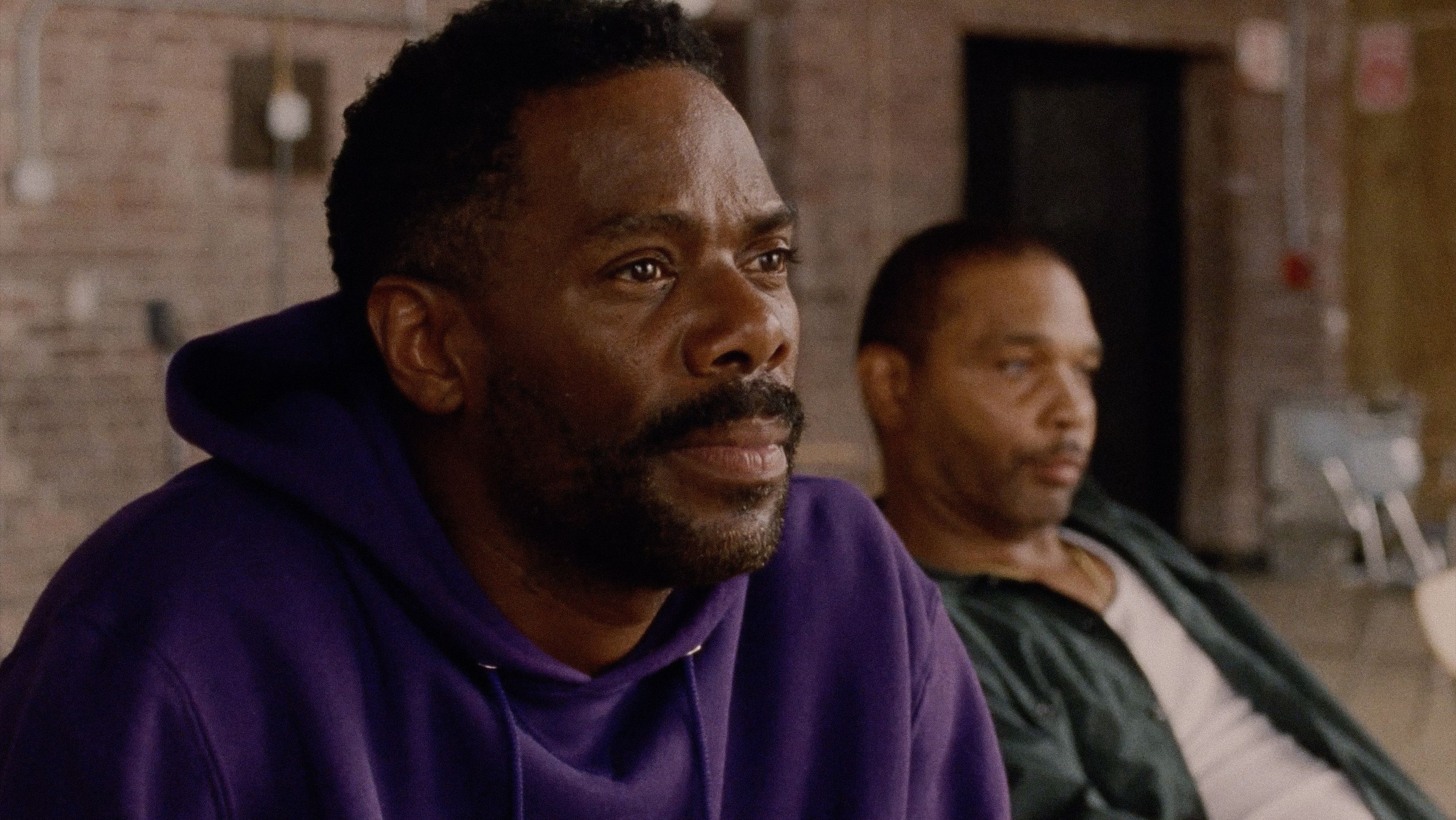
This is the second nomination in a row for Domingo, another one where you think, he’s got to win one at some point. It probably won’t be this year, but his turn in Sing Sing is a perfect demonstration of why he’s so great. Arguably, he has the toughest job out of the bunch here, because he has to put on several different performances throughout the film, to the point where his skill is used against him in a key plot point.
The film opens with Domingo as “Divine G” performing Shakespeare as part of Sing Sing prison’s RTA program. It establishes him as having tremendous ability to embody a role. From there, it’s a rotating gauntlet of dramatic demands. He has to play mentor to Divine Eye, elevating the somewhat derivative Red/Andy dynamic through their respective on-screen chemistry. He has to be a leader and a team player within the RTA, balancing when to assert his wishes and when to back off and trust the will of the group. He has to be a friend and model prisoner. He has to offer emotional support to Mike Mike. He has to set an example as a performer during rehearsals and acting exercises. He has to work tirelessly on his appeal and his upcoming parole hearing, holding out hope that he’ll finally be exonerated and freed. When that fails, he has to recover from the depths of despair.
Domingo is an incredibly versatile performer, and few could have done what he did here. You believe every aspect of his character as it creates a full-fledged, multidimensional person that we can root for regardless of his circumstances. That’s what makes it all the more devastating when that hearing comes up, and the board turns the tables on him, asking if his “reform” is just another act, another role he’s playing to dupe them. This is a man who has verifiable evidence of his innocence, surviving years in unjustified incarceration through this artistic outlet, and now his one link to the outside world is used as ammunition to beat him down further. The shock on his face as he hears these words is palpable, and yet he acts with a dignity that most of us would not be able to muster.
This is why it’s such a joy to watch Domingo perform. He’s that rare perfect mix of a stage and screen actor, and a film like Sing Sing is an ideal setting to show off his inspiring talent. This is a man who can whisper into a microphone or project to the back row of the auditorium, and you’re hanging on his every word. He will definitely get his due one day.
Ralph Fiennes – Conclave
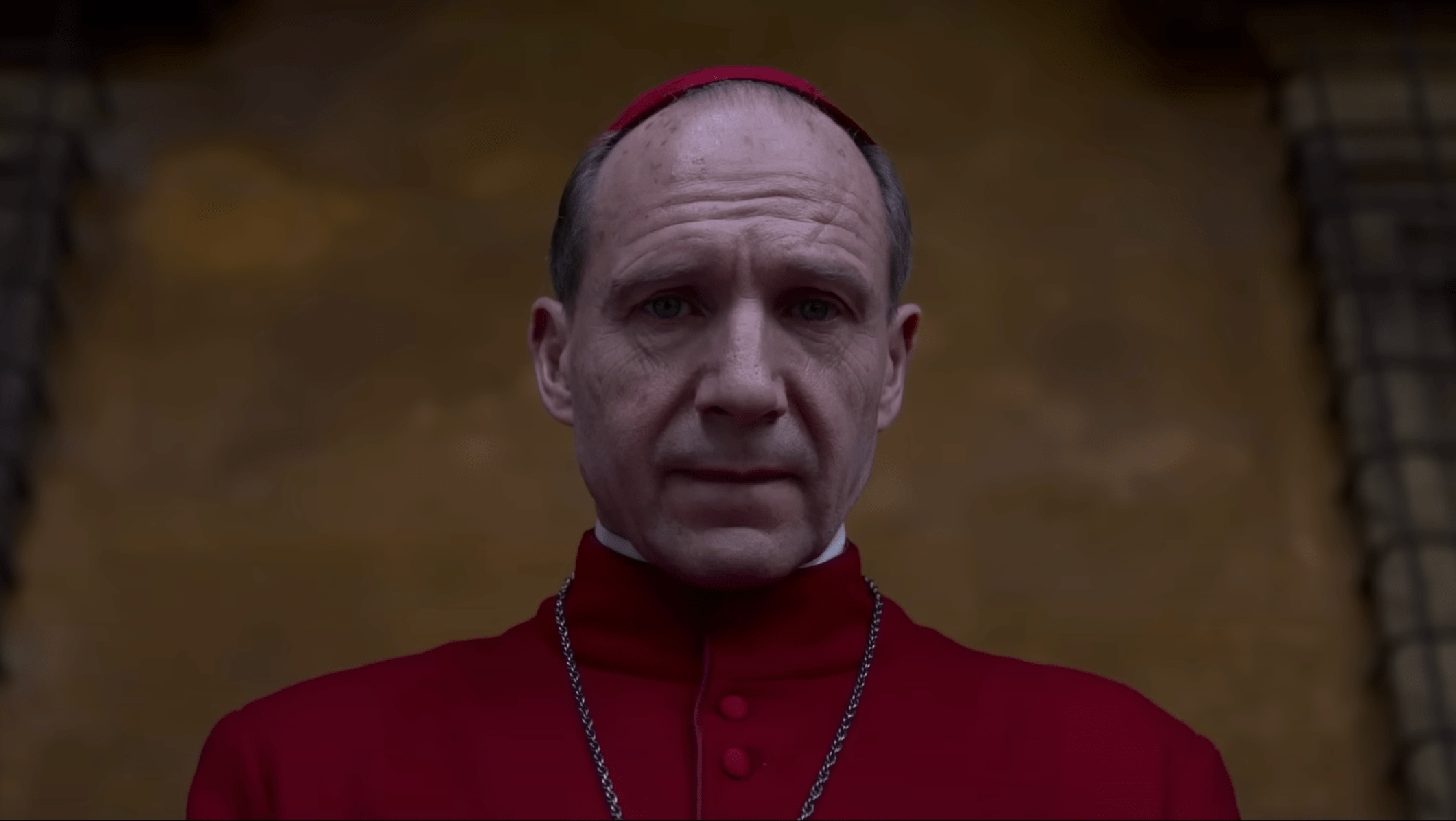
Ralph Fiennes’ turn in Conclave is a perfect example of what I mean by seeing the character and not the actor. We all know who Ralph Fiennes is. Even when his nose was CGI-ed off so he could be Voldemort, we still could see his face through it all. What matters is how much he’s able to convince us that he’s a dark wizard, or a serial killer, or a gentlemanly hotel manager, or even 007’s boss. His is a skill rarely seen in film, that of a true character actor as a consistent leading man. No matter the role, we will always see and feel the man on screen rather than write it off as Fiennes doing his thing.
For Conclave specifically, the key is doubt. Fiennes has played a slew of characters who knew exactly what they were doing at all times. Whether playing hero or villain, a lot of his roles involve being the smartest person in the room, predicting outcomes, and acting accordingly. Here, while Thomas Lawrence is the Dean of the College of Cardinals, we learn very early that it’s a job he really doesn’t want, having attempted to resign before the Pope’s death. He is duty-bound to carry out this last task of mediating the conclave, but we know that his faith is failing him. He tires of backroom conversations, political plotting and posturing, and the uncertainty surrounding the Church’s actions and path forward. In his mind, he’s done enough, and has no desire to go further. He acts out of a lifelong devotion and obligation to help those he believes in, but he no longer has the conviction of his own ideals.
Fiennes demonstrates this in nearly every scene, from the homily to the twist ending. He is humble, but never naïve, and while he must surrender his certainty to the Almighty in more holy matters, he’s fixated on what can be verifiably proven as fact here on Earth. It’s not enough to simply say that Lawrence is losing surety in his path, he has to show it through actions, and Fiennes pulls this off perfectly. There are so many moments of frustration and insult where any of us would be justified in screaming someone’s face off and telling them to go fuck themselves, but he has to comport himself with grace and dignity at all times. When even his own friend, Bellini, accuses him of secretly wanting the papacy for himself, he has to be calm and diplomatic in defending himself, lest he and his ideological peers look weak by extension and association. But even then, he has to concede his own fantasies. Halfway through the film, when Bellini begins to question Lawrence’s loyalty, he points out that every single priest, bishop, and cardinal decided on their papal name the moment they took the cloth. Later on, when they make peace and momentum seems to be swinging to Lawrence in the votes, Bellini asks him as a genuine friend what his name would be, and Lawrence, acquiescing to what could be his fate, answers honestly. It’s a beautiful moment.
One of the things I’ve always wanted to see in films about religion, no matter what that religion is, is the ability for the characters to question it. They can decide to reinforce their faith, but I always have a problem with any story that presents the supernatural or divine as a built-in fact. Fiennes gave me exactly what I was looking for. Conclave is a story about the destruction and restoration of faith, and it comes through allowing our main character to examine the institution that he’s given his life to. He speaks of the value of embracing uncertainty as a means of strengthening faith. By the end, we see that he’s taken his own lesson to heart, and that not knowing what happens next is what gives him peace of mind at long last. This is a powerhouse performance.
Sebastian Stan – The Apprentice

Sebastian Stan gave two performances in 2024 that required extreme hair and makeup jobs to help form the visual profile of the character. One was A Different Man, and the other was The Apprentice. The former transformed him into confused soul who felt so trapped by his deformities that even removing them didn’t bring him happiness. The latter turned him into a monster.
The question is, would the performance hold up even without the makeup job? The answer is a resounding yes. Stan plays Donald Trump the way every rational person has known him for decades. He’s deluded, entitled, hateful, misogynistic, dismissive, a rapist, and a borderline sociopath. The fact that he’s been elected President twice (once through our unique Constitutional technicality, once through a slim plurality of the vote) is more a reflection on how ignorant and easily manipulated certain sectors of our populace are than it is any indication of his statesmanship, intellect, or skill. Hell, part of his appeal to those various groups is his complete lack of said.
Stan embodies all of this throughout The Apprentice. He begins the film by bragging to a random woman in a social club that he’s the youngest member there, a potentially dubious claim, but if it gets her panties off, then mission accomplished. He then sucks up to Roy Cohn, looking for his help in fighting a federal discrimination lawsuit, of which he and his father Fred are completely and irrefutably guilty, by asserting that he should be allowed to gain unfettered wealth however he sees fit, and that the government has no right to regulate him. He is above the law.
What makes this more than just a dramatized tally of Donald Trump’s numerous crimes is in how it’s presented. This isn’t a trial so much as it is a supervillain origin story, with Trump learning the ropes from Cohn until he becomes so powerful that he can cast his friend aside and claim that he was the mastermind all along, like how young Sith lords always plot the assassination of their masters. He is Brutus to Cohn’s Julius Caesar, only with the desire – and some would argue, emotional need – to take the crown as Emperor once Caesar is dead.
That’s where Stan really shines. Not only does he affect Trump’s voice and physical mannerisms perfectly, he employs them all in service of this scared, simpering fool who has no idea what he’s doing, but he does know that the simple act of doing it makes him superior, and therefore deserving of a life of luxury and worship that he never even remotely earned. He believes everyone should love him, even when he refuses to show it to anyone else, and even when he makes a performative gesture of affection, it’s couched in cruelty because empathy is an impediment and a weakness in his eyes. He’s a hedonist and a glutton who can never have his fill, and who believes wholeheartedly that life is a zero-sum game. If someone else isn’t losing, that means he is, and he’d rather be dead. There’s a genuine terror and paranoia that comes with such a worldview, and that’s what Stan gets across best. Even without the fat suit, hair plugs, or spray tans, Stan would still perfectly translate that fear to the audience, so while we always see the caricature or Donald Trump, Stan makes sure we see the character.
***
As of the time I’m writing this, it’s pretty safe to say that this race is locked up, with only the SAG Awards this weekend still pending for a full undercard sweep. In fact, three of the four acting categories are fairly secure at this point, with only Best Actress having any intrigue. I have no real problem with the presumptive winner (except for the AI stuff), but it’s a testament to how strong a class this is that he honestly ranks last to me. It’s a good performance, certainly, but the other four are miles ahead in my mind. Oh well. Such is the nature of Awards Season, I guess. At least we can confidently say that no one got robbed in favor of a bad performance, like in recent years with Ariana DeBose, Casey Affleck, or Renée Zellweger’s predetermined victories.
My Rankings:
1) Ralph Fiennes
2) Colman Domingo
3) Sebastian Stan
4) Timothée Chalamet
5) Adrien Brody
Who do you think should win? Vote now in the poll below!
Up next, it was so much fun doing a Shorts category yesterday, so LET’S DO IT AGAIN! Also, we’re just running out of categories at this stage, so like, we gotta. It’s Documentary Short!
Join the conversation in the comments below! Which performance was your favorite? Should anyone have been nominated in place of one of these five? Have you ever been bitten by the acting bug? Let me know! And remember, you can follow me on Twitter (fuck “X”) as well as Bluesky, and subscribe to my YouTube channel for even more content, and check out the entire BTRP Media Network at btrpmedia.com!

 I Actually Paid To See This
2 thoughts on “Oscar Blitz 2025 – Best Actor”