
One of the more depressing aspects of life in these United States over the last decade or so is the systematic eradication of facts. One individual at the center of our government has been the focal point of this problem, employing a campaign of just making up the most hateful shit imaginable so that those responsible for conveying the truth to the public are too overwhelmed to keep up, but he’s simply the most virulent symptom of the disease. On all sides of the political spectrum, but most aggressively on the far right, the modus operandi for years has been, if the facts don’t comport to the narrative, don’t change the narrative, change the facts. Thomas Jefferson once famously said, “A well informed citizenry is the best defense against tyranny,” and those who seek unchecked power have taken that message to heart. As such, they’ve sought over and over to make people more stupid.
You see it throughout our public discourse. A so-called “free speech absolutist” bought one of the world’s largest social media platforms just so he could remove people who make fun of him, and now he’s gleefully taking a sledgehammer to the administrative state and gesturing vaguely in the general area of his crotch whenever someone brings up the thousands, if not millions, of people in this country alone who will lose their livelihoods as a result. The man who holds the highest office in the land just unilaterally banned media outlets from the White House Press Corps because they wouldn’t acknowledge his illegal renaming of international waters. Books are being banned and entire curriculums outlawed if they make privileged white people “uncomfortable,” intentionally ensuring that the next generation can’t learn from the mistakes of history. Millions of people are starving around the world because USAID funding was frozen, in part over a complete lie about Hamas soldiers getting condoms.
Through sheer disinformation overload, authoritarians gain power by demanding that the citizenry not be well informed, or in some cases, informed at all. We’re so bombarded by all of this that it genuinely becomes difficult not to become numb to it, which is the point. The American people should be outraged that this country now stands officially with the likes of Russia, North Korea, Syria, Belarus, and Hungary against the people of Ukraine, but we’re too busy recovering from the pain of our jaws dropping when Donald Trump literally asserted that Ukraine started the war. I’d call it Orwellian, but the concentrated strategy of dipshittery has been so successful that I’m fairly sure the people who need to understand this have never heard of George Orwell, assuming they can even read.
This is why we need nonfiction filmmaking, and why a category like Documentary Feature is so essential. The subject of the winning film from two years ago died in a Russian gulag a year later, another victim of the corruption and outright evil he tried to combat. If you go through the history of the competition, especially the recent history, you’ll find a lot of downers as far as subject matter is concerned, with only a few lighthearted winners peppered in as something of a collective palate cleanser. Sometimes we just need to distract ourselves from the bad things in the world. I wish we could talk about more positive things, but the real world is a harsh place, and the only way we’re going to advance as a society is to acknowledge the wrongs of life and do our best to right them. That can only be done through exposure to truths, hard though they may be. I can’t wait until we get back to nominating films about inspiring teachers or awesome musicians on a regular basis. But for now, we’re barely holding on to the basic tenets of freedom, and many are struggling just to survive. So if no one else will give them the floor to tell the truth to the masses, at least there are still filmmakers willing to do the job.
This year’s nominees for Documentary Feature are…
Black Box Diaries – Shiori Itō, Eric Nyari, and Hanna Aqvilin
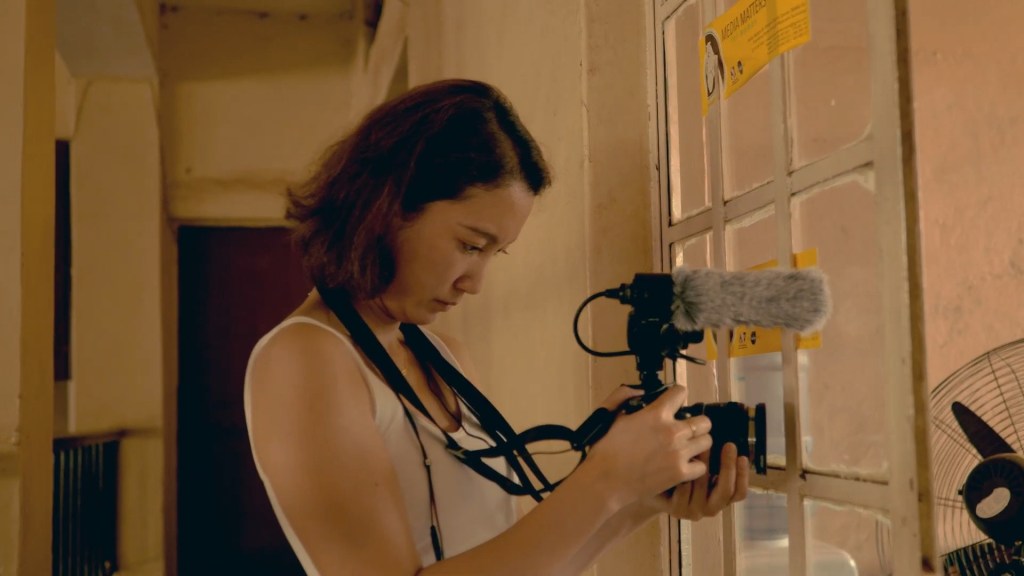
In 2015, Japanese journalist Shiori Itō was sexually assaulted by Noriyuki Yamaguchi, who was at the time the Washington, DC bureau chief for the Tokyo Broadcasting System. They met at a bar, he got her drunk, and then took her back to his hotel. Security footage shows her trying to resist his attempts to drag her inside. She eventually passed out, and when she woke up, Yamaguchi was on top of her and had penetrated her. He professed his innocence, saying the sex was consensual, and attacked her credibility by claiming she was trying to “sleep her way” into a better job.
Black Box Diaries, the chronicle of Itō’s legal journey of suing Yamaguchi (because as is noted, a criminal warrant was pulled at the last minute before he could be arrested, as Yamaguchi has friends in VERY high places), is a fascinating work because it gives lie to the very assertion that victim shamers like to employ in situations like this. In so many cases, including this one, there’s this weird misogynistic presumption – that comes from women as well as men – that a woman uses her sexuality to succeed in the professional world, and that Itō would not get attention otherwise, because she must be unqualified.
Itō takes that slander and turns it on its ear by doing exactly what a good journalist would do. She follows the story, seeks out witnesses who will go on the record about the case, and tells the truth, not just as she interprets it from personal experience, but through verifiable fact. The way she meticulously builds a friendship with the lead investigator who initially dismissed her claim to get him to eventually concede what happened at the police department is both inspiring (from her) and damning (as a reflection of law enforcement). The way she refuses to be portrayed as a victim, or to kowtow to pressure, shows what true strength is. She knows that this is bigger than what happened to her. Hers is just one of a number of cases where women are essentially bullied into silence, and Itō realizes that she has the resources to speak up for those who can’t and to expose those who do wrong in order to make a real change.
No Other Land – Basel Adra, Rachel Szor, Hamdam Ballal, and Yuval Abraham
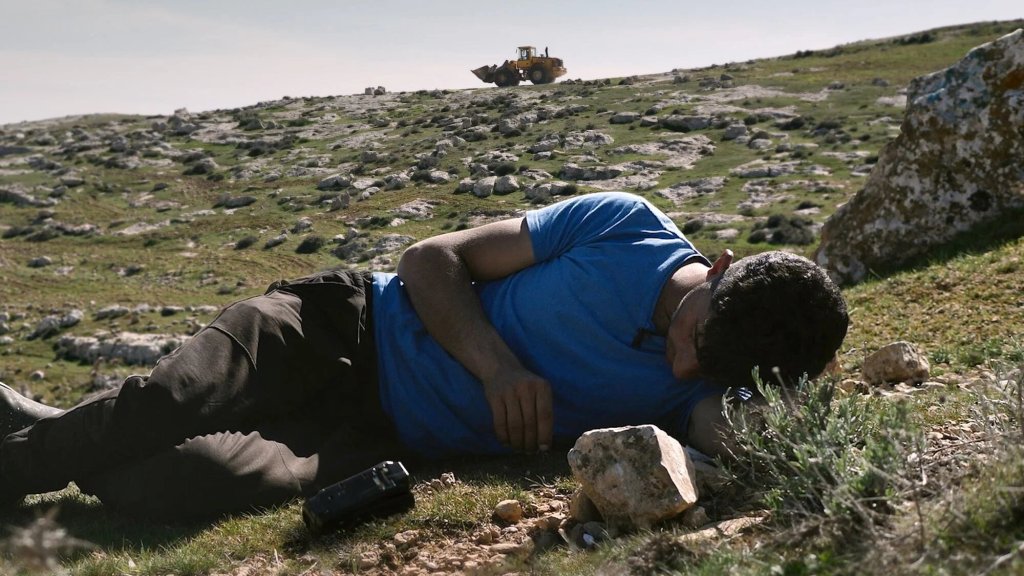
There were several films on the various Academy shortlists that dealt with the ongoing conflict between Israel and Palestine, particularly the corruption of Prime Minister Benjamin Netanyahu and the genocide going on in Gaza. No Other Land was the only to make it over the finish line to get a nomination, likely because it doesn’t address that specific travesty. Instead, it focuses on the West Bank, and the gradual cultural erasure of the Palestinians through forced evictions and bulldozing of villages.
Basel Adra has spent the last several years risking his life to record these human rights violations and get the message out to the rest of the world. In the small region of Masafer Yatta, a collective of just over a dozen hamlets with little infrastructure, the Israeli military has spent decades trying to force the locals out, creating literal apartheid and destroying people’s homes. The goal is to get rid of all the Palestinians so that their land can be used as an artillery testing ground. So not only are these people being robbed of their shelter, but the Israelis aren’t even trying to develop the land, just blow it up repeatedly. Imagine if you were forcibly removed from your house by the government, with nowhere else to go, and they only did it so they could dump trash in your living room and otherwise leave the place empty. That’s what’s going on here, with much more violent results.
Hope exists in the form of Yuval Abraham, a Jewish Israeli journalist, who becomes friends with Basel and helps him to expose the truth of what’s happening. For his troubles, he’s labeled a traitor and terrorist sympathizer by state media. He also has to be a sounding board for the grievances of the Palestinian locals, as he’s the only Israeli they can complain to who won’t point a gun at their heads in response. Abraham suffers these slings and arrows because he’s aware of his privilege. He gets to go home in safety every night, while Basel and the others have to avoid military raiding parties looking to arrest them, or worse. He also understands that if any progress is to be made, olive branches have to be extended. You have to see the Palestinians as human beings first, something his government often does not do. His works are but a drop in the ocean as they relate to the struggle, but it has to start somewhere.
Porcelain War – Brendan Bellomo, Slava Leontyev, Aniela Sidorska, and Paula DuPré Pesmen
The resilience of the Ukrainian people is the lone and continual bright spot in this ongoing horror. Vladimir Putin expected the country to fall within days and for President Volodymyr Zeleneskyy to fold like an origami swan. Instead, this invasion is entering its fourth year because they will not back down to that monster, even if our President has officially switched loyalties. These are a people who’ve rewritten the meaning of “endurance.”
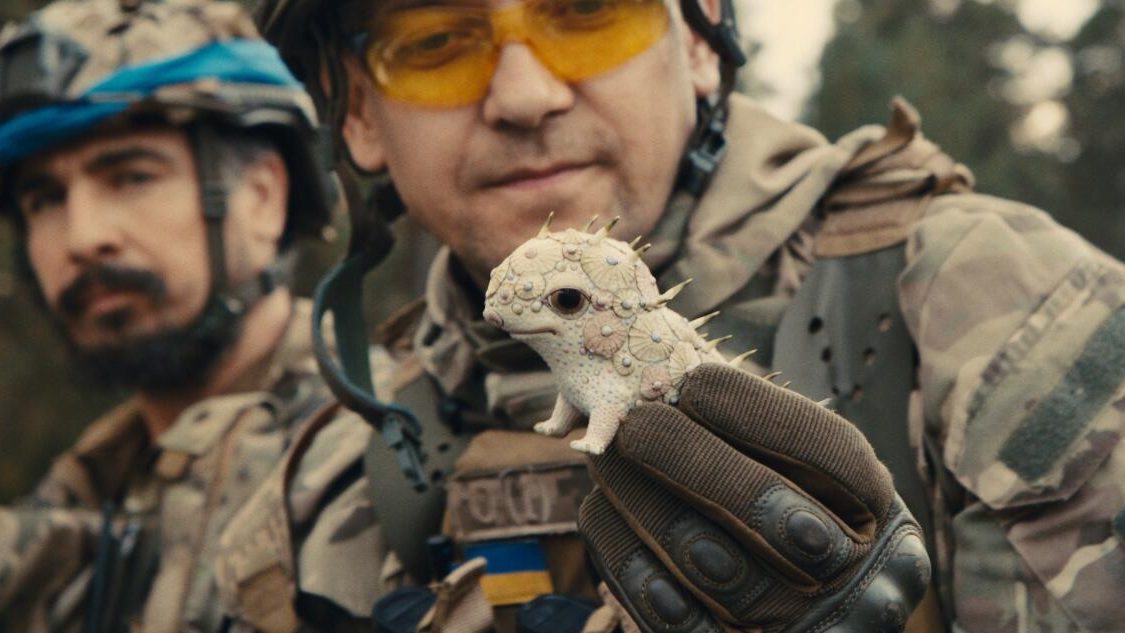
As a film, Porcelain War looks at two different angles of that will to survive. The first is a group of artists living near the frontlines. They all join the national defense, but in addition to their new military service, the trio spends their free time making miniature porcelain figurines of animals and mythical creatures. They’re highly detailed, especially the paint jobs that are rendered into animation for the movie. These tiny sculptures are left at every battle site, a sign of life and creative growth in the midst of wanton destruction.
The second half is more obvious, as the leads grow in their wartime experience and in turn train new recruits, many of whom have never held a weapon before, and are now being tasked with defending their home soil from an onslaught by one of the world’s largest military forces. We get a deep, immersive look into how they drill, ration ammunition, master pinpoint targeting and drone surveillance, and venture bravely into the bloody fray. Body cameras record the harrowing experience, showing anyone who dares to watch just what these people are up against, and how they carry on. Just like the small art pieces, their continued existence is proof that no one can erase them. No matter what Russia tries, the spirit of Ukraine will live on.
Soundtrack to a Coup d’Etat – Johan Grimonprez, Daan Milius, and Rémi Grellety
The United States has existed for almost 250 years, and yet we still haven’t truly reckoned with our racial past and the numerous injustices inflicted on minorities, particularly black Americans. Hell, depending on what backwards state you live in, your kids might be subjected to “history” books arguing that black people were better off as slaves. Let that sink in.
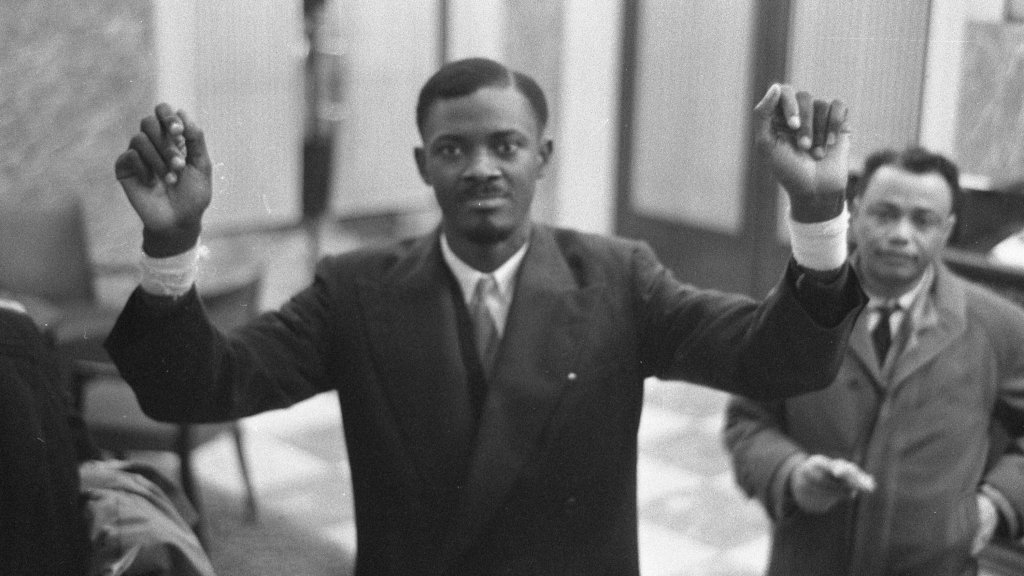
So obviously, something more nuanced like a covert operation to assassinate an African head of state is highly unlikely to be taught at your local high school, or even in public colleges. That’s what makes Soundtrack to a Coup d’Etat so fascinating. This is very recent history, just a little over 60 years ago, and yet I’d bet dollars to donuts that most people who see this have no idea this took place.
This is mostly an archival documentary, which I’m not always keen on, but I think the job is done effectively here. During the Cold War, the country that is now known as the Democratic Republic of the Congo (formerly Zaire) gained independence from Belgium. It was one of several new African nations that became self-determinable in the late 50s and early 60s. Seeking an opportunity to present a united continental alliance similar to the European Union and reckon with the harm done by the former colonial powers, the DRC elected Patrice Lumumba as their Prime Minister, who aspired to form the United States of Africa.
This did not sit well with Belgium or the U.S., as the new country might want to negotiate directly for trade and rare earth mineral mining contracts, and they could opt for the Soviet Union and Nikita Khrushchev as their primary partner. As such, the Eisenhower Administration launched a two-pronged attack. On the surface, several jazz musicians like Louis Armstrong and Nina Simone were dispatched to Africa as goodwill ambassadors, unaware that they were being used as tools to win hearts and minds. Covertly, however, agents worked with international mercenaries to murder Lumumba and install a new leader friendlier to the West.
The mix of music with mayhem is very well done here, and the story itself is almost too sensational to believe. But it happened, and not that long ago. Protests were held at the United Nations which led to several arrests, and Khrushchev himself got to dunk on us because he had proof of what went down. He also pointed out the hypocrisy of a country that still had Jim Crow laws in effect in many states saying anything about racial equality or acting with friendship towards Africa. That’s probably the other reason you never learned about this in school. This is one skirmish where most agree that the USSR won the moral battle, if not the physical one.
Sugarcane – Julian Brave NoiseCat, Emily Kassie, and Kellen Quinn
One of the more intriguing films of 2024 is Nickel Boys, which is up for Adapted Screenplay and Best Picture this year, and should arguably be nominated in several other categories. Based on Colson Whitehead’s acclaimed novel, the movie is a dramatization of the horrors at southern reform schools here in the U.S., which served as little more than prison camps, where teenage boys – mostly black – were sent as punishment for minor offenses, or no offenses at all. They were abused regularly, exploited as free labor, and many didn’t survive.
The same thing happened up north in Canada, where indigenous people were subjected to a boarding school system – mostly run by the Catholic Church but with the official sponsorship of the national government – that sought to forcibly assimilate natives into a more Eurocentric, Christian identity. The program removed children from their homes and reservations, attempted to beat their culture out of them, and like the reform school boys, many were simply killed and dumped in unmarked graves.
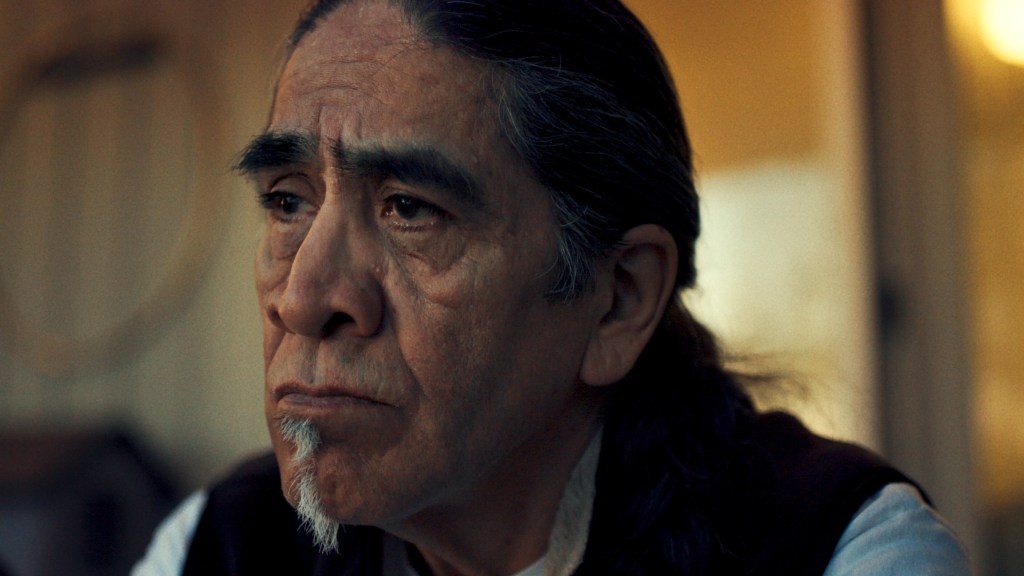
Set in the Lake Williams First Nation region of British Columbia, Sugarcane (named after the town where some of this genocide took place) deals with the generational aftermath. Fathers and sons go on a journey of healing to confront what was done to them. Researchers pore over hundreds of thousands of documents hoping to recover remains and possessions for families who still don’t have closure. A former chief visits the Vatican to plead with the Pope for some tangible acknowledgement.
Despite the blathering of our government’s chief executive, Canada will never become “the 51st state,” but there’s a reason why they’re our biggest ally (or at least they were until about a month ago) and friendliest neighbor. We share a common history, and have done since the respective founding of our nations. Sometimes, that history is very ugly. The difference is that they’re willing to bring it to light and do something to make things right. We, at least in our current state, are not.
***
This is a pretty strong set this year, so much so that all of these nominees would be a worthy winner, even though I personally only would have nominated one of them. The Documentary Branch of the Academy is notoriously mercurial, and it’s rare to find consensus on what the best entry is. For me, the answer is simple. We need to face the truths all around us, no matter how much it hurts. But we also have to look for hope and a way forward, and one film accomplishes that better than any other.
My Rankings:
1) Porcelain War
2) No Other Land
3) Black Box Diaries
4) Soundtrack to a Coup d’Etat
5) Sugarcane
Who do you think should win? Vote now in the poll below!
Finally, as always, this is a specialty feature category, so I make it my mission year in and year out to watch all the films on the shortlist, if there is one. There were 15 semifinalists this year, and I took them all in. Here are my overall rankings for this year’s list.
1) Will & Harper
2) Union
3) The Bibi Files
4) Porcelain War
5) The Remarkable Life of Ibelin
6) No Other Land
7) Hollywoodgate
8) Eno
9) Black Box Diaries
10) Soundtrack to a Coup d’Etat
11) Sugarcane
12) Dahomey
13) Frida
14) Daughters
15) Queendom
If you’re looking for a cutoff point between the good and bad, basically any of the top 11 are worth your time, and Dahomey is an interesting curiosity. Feel free to skip the bottom three, however.
Up next, there’s one more performance category remaining, and the result is pretty well signed, sealed, and delivered. But does the presumptive winner deserve her prize? We’ll find out. It’s Best Supporting Actress!
Join the conversation in the comments below! Were you able to see any of these films? Which story is most important to you? Are we about to have three straight winners that serve as middle fingers to Putin? Let me know! And remember, you can follow me on Twitter (fuck “X”) as well as Bluesky, and subscribe to my YouTube channel for even more content, and check out the entire BTRP Media Network at btrpmedia.com!

 I Actually Paid To See This
2 thoughts on “Oscar Blitz 2025 – Documentary Feature”