
The Supporting categories have been in an odd sort of flux for the past few years, mostly because we seem to be unclear on what “supporting” actually means. In theory and literal title, this is an award for a performance in a supporting role. They supplement the leading characters and complement the story without taking the primary spotlight.
In practice, however, there are times when it just looks like the Acting Branch – and the Academy writ large – are just trying to pad out the category or kibosh competition. Since 2010, I’d say that four of the winners of this award shouldn’t have been eligible, because they aren’t supporting roles. Alicia Vikander, Lupita Nyong’o, Viola Davis, and Patricia Arquette were all the female leads in male-centric films, but their parts didn’t shrink enough to justify calling them support. On the men’s side, both J.K. Simmons and Mahershala Ali (his second win) were co-leads in their films, same with LaKeith Stanfield and Daniel Kaluuya, who were forced to compete against each other for Supporting Actor rather than deciding which one was the lead, which defies basic logic.
I feel we face the same problem this year with Supporting Actress, as two of the nominees, arguably the two most high-profile, fall into this group. You can maybe make a case that Ariana Grande should be split off from Cynthia Erivo and not be considered a co-lead, but Wicked is presented as being the story of BOTH Elphaba and Glinda, not just the former, and the latter is the one telling it. However, our presumptive winner, Zoe Saldaña (she’s swept Awards Season), is definitely not a support player. You know how I know? Because she shared Best Actress at Cannes with the rest of the core cast. That may seem convoluted, and it is, because Selena Gomez and Adriana Paz most certainly ARE smaller parts, but Saldaña is co-equal with Karla Sofía Gascón, and probably has more screen time. You may argue that it doesn’t really matter what Cannes says, but seeing as how Cannes is the only reason that piece of shit movie even has a profile, I say it counts here.
A lot of this is down to the fact that the Acting Branch reserves the right to nominate performers in any category they choose. Most of the branches only deal with one or two fields at most, and they have strict rules about what constitutes eligibility. The Writing Branch has longstanding guidelines about what is an Original Screenplay versus an Adapted Screenplay, which became a point of contention last year, mostly because some people wanted Barbie to be considered Original so it would have a better chance at winning. It didn’t matter what decades of precedent said, they wanted the rules bent or broken to try to ensure a victory.
The reason the naysayers thought they could get away with that is because the Acting Branch does have that flexibility, and they have used it in the past to help fix an outcome. Even if a production submits their performers under one heading, the voters can simply assign them to the other, and that has indeed happened multiple times. Pitting Kaluuya and Stanfield against each other ensured that one of them would win, while Vikander was moved from Lead Actress to Supporting so as to avoid an actual debate between her and Alison Brie, giving both a trophy and removing all suspense.
As such, we’re left with a high profile contest that’s over before it even starts, and it’s not just here. Both Supporting competitions are already over due to Awards Season sweeps, and really, the problem persists in both. You can very easily argue that Kieran Culkin is the lead of A Real Pain, with Jesse Eisenberg as the support. He’s certainly the emotional, comedic, and narrative center to the proceedings. I don’t pretend to understand why this is done, but it’s very noticeable, and if the Academy is earnest about trying to build their audience again, they need to nip this stuff in the bud. We want MORE uncertainty on Oscar Night, not less.
This year’s nominees for Supporting Actress are…
Monica Barbaro – A Complete Unknown
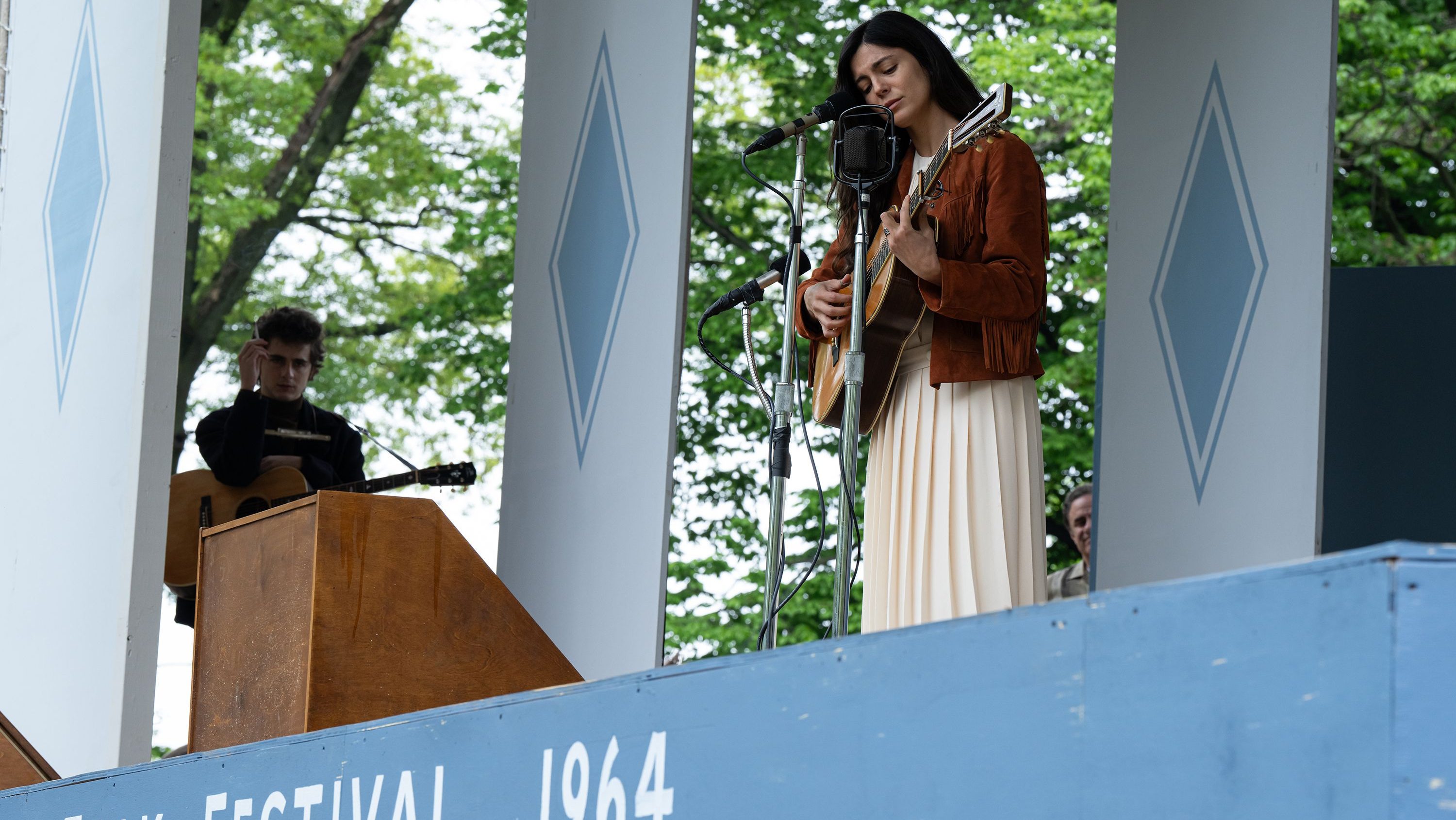
The entire cast of A Complete Unknown is spectacular, and Monica Barbaro is a huge contributor to what makes the film so fun. As Joan Baez, she straddles this fine line between the freedom of music – especially 60s folk – and the obligations of a professional trying to get by. Her torrid affair with Bob Dylan is mostly sanitized for the screen, but that conflict is always present.
From the moment we first meet her, arguing with Albert Grossman about loyalty to her smaller label, we see how much she cares about artistic integrity. She won’t abandon those who helped her make a name for herself, and when Bob gives her a backhanded compliment from the microphone after her set, she sees him as both an obstacle and a challenge. She understands that her looks contribute to her public profile, same as it does for Dylan, but she dedicates herself to overcoming such perceptions, while Bob sometimes doesn’t seem to care. She both despises that ease and envies it.
While Elle Fanning’s “Sylvie” asks the most direct questions about Bob’s past, it’s Barbaro as Baez who puts in the most effort in trying to solve the riddle that is Dylan. Through collaboration, friendship, romance, and occasional emotional support, she spends most of her time hoping to figure out just who this person is, until just like Sylvie, she realizes it’s a fool’s errand, that Bob is just Bob. You can’t untangle his mind, only hope that it’s used for the greater good of music. Barbaro maintains this tricky balance almost flawlessly.
Ariana Grande – Wicked Part One
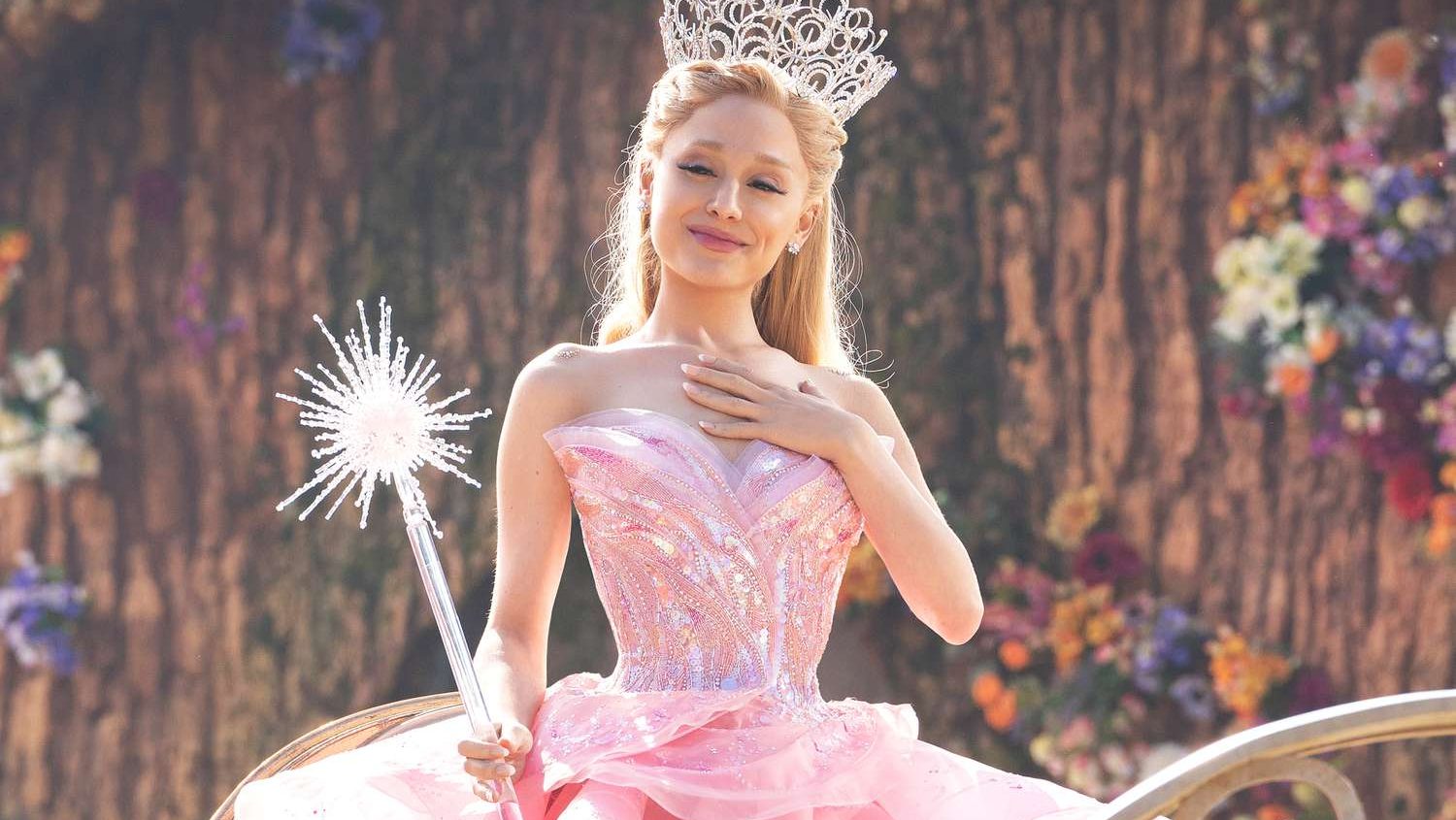
I mentioned this in both my review of this film and in breaking down Best Actress last week, but my main complaint about Ariana Grande is not that she can’t act, or that her character is basically just an exaggerated version of her own public persona. It’s that she just phoned in this performance, doing an impersonation of Kristin Chenoweth rather than making Galinda her own.
Every moment she’s on camera, you don’t see an artist embodying a role, and you certainly don’t see a believable person. You just see Chenoweth. This is laid bare in the “One Short Day” number, where you can see Cynthia Erivo sharing the screen with Idina Menzel and fully distancing herself to give her own take on the part, while Grande spends the entire sequence silently screaming “WE’RE TWINSIES!” as she gazes in awe at her superior.
This was a golden opportunity for Grande, and I feel it was wasted. I’m very much not a fan of her as a pop singer, but I don’t judge people who do enjoy her. When it became clear (about 5 minutes in) that she wasn’t going to just play herself, I thought to myself that this might turn out to be a very pleasant surprise. Instead, she just played another celebrity, not her actual role.
An interesting trend I’ve noticed is how different sectors of the crowd react to her. Those who love her obviously love the performance by proxy. Those who’ve never been exposed to her as a pop diva tend to think she did well. Those who do know her work were as confused and frustrated as I was. Finally, some obsessed fans of the musical didn’t mind her performance, but many have said that they can just watch Chenoweth if we want to get the same result. To me that’s a failure.
Felicity Jones – The Brutalist
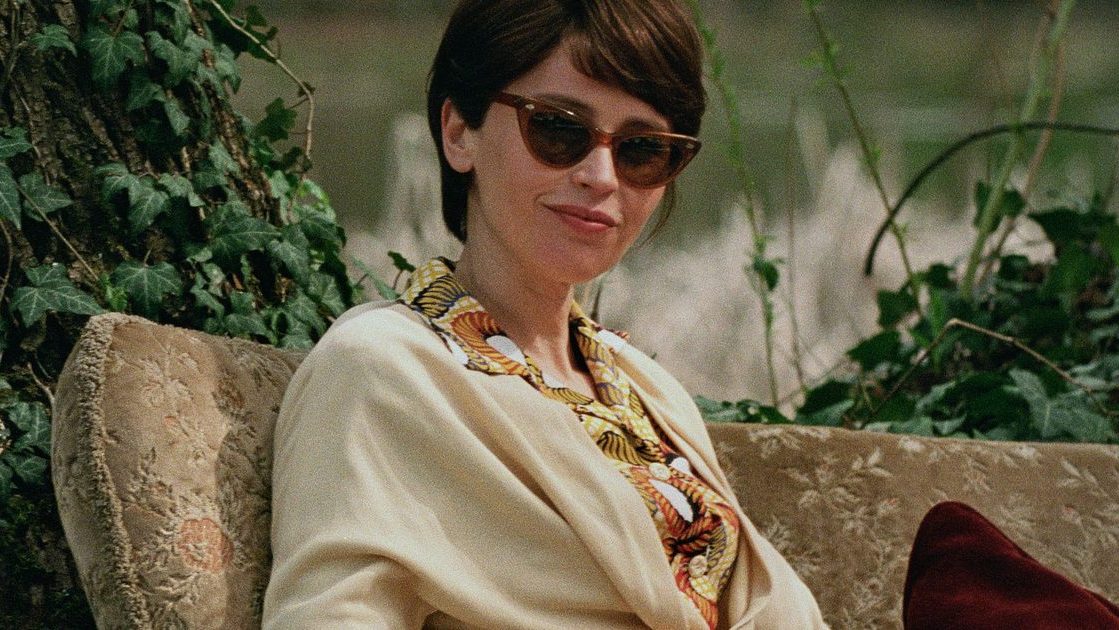
Felicity Jones basically isn’t even in the first half of The Brutalist (apart from a couple brief scenes that are mostly voiceover), but once she joins the main story, she is utterly fantastic. As the resilient Erzsébet Tóth, she is arguably the heart and soul of the entire movie, a living testament to everything László is trying to build (which makes it really shitty to remember that he pays a hooker for a handy two minutes in).
When she arrives in America after the intermission, László is crestfallen to see that Erzsébet is in a wheelchair. She developed osteoporosis while living under Soviet occupation, and the lack of food and proper nutrients weakened her bones. However, as she makes very clear, she is not broken. In most scenes she’s stronger than her husband, more assertive, and determined to make the best life possible for her family. The way she looks into his eyes when she asks for them to make love is her way of telling him that the woman he married has not changed. There are some physical limitations, but she is the same person she’s always been, the same one who loves him with all her heart.
That’s the main thesis of everything László does. His structures are meant to last, to endure, to withstand relentless punishment and not crumble. That is Erzsébet to a tee, no better exemplified than when she confronts Harrison at the end. Stumbling in on arm crutches, she refuses to sit down, refuses to be dismissed, and refuses to be ignored while she has her say, and it’s some powerful stuff. There’s an argument to be made about how the Academy likes “affliction” as a nomination box check, and Erzsébet’s disability certainly qualifies, but the point of her role is to make that disability a visual one at most. Her entire character is formed around the idea of someone who can never be toppled.
Isabella Rossellini – Conclave
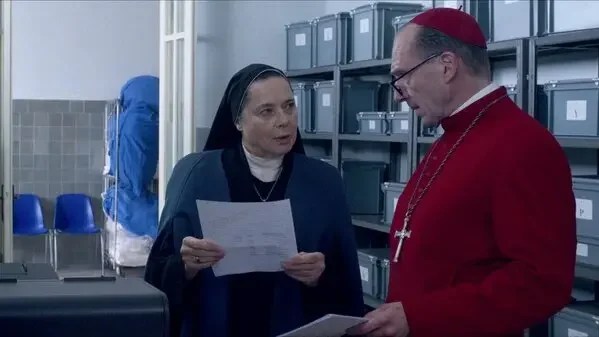
Can you believe this is Rossellini’s first Oscar nomination? You’d figure she’d at least have gotten one for Blue Velvet, but somehow no. Anyway, she gives one of the finest performances of the year full stop. As a textbook example of “less is more,” Rossellini shines mostly in silence.
As the head of the nuns, Sister Agnes plays the hardest and most essential role in the papal conclave. She must be aware of everything going on, but only speak up at the right moment. Given the restrictions the Church puts on women within the institution, it falls to her to be the moral and ethical center of everything going on, all while operating almost entirely in the background. In nearly every major scene involving the full College of Cardinals, she can be found, firmly out of focus, but absorbing everything.
The mystery thrives because Sister Agnes is so adept at gathering information without being noticed. Those who would tell her to “know her place” fail to understand that she’s helping Lawrence expose the corruption of the various candidates precisely through those means. She has the confidence of all the Sisters, she tests Lawrence’s trustworthiness before giving him any valuable intel or open assistance, and she’s the secret keeper for everyone. She’s not working towards any specific political end, but she also won’t accept the Church moving backward.
When she finally does raise her voice, it’s an expert lesson in picking your battles. She accepts the rules that are placed upon her, because it’s part of the commitment she made when she joined the faith in the first place. But within those confines, she has learned far too many harsh truths, truths which need to be exposed for the sake of all. While these powerful men are jockeying for position to be the shepherd, she speaks for the flock, and when she does, she makes sure her voice is heard.
Zoe Saldaña – Emilia Pérez
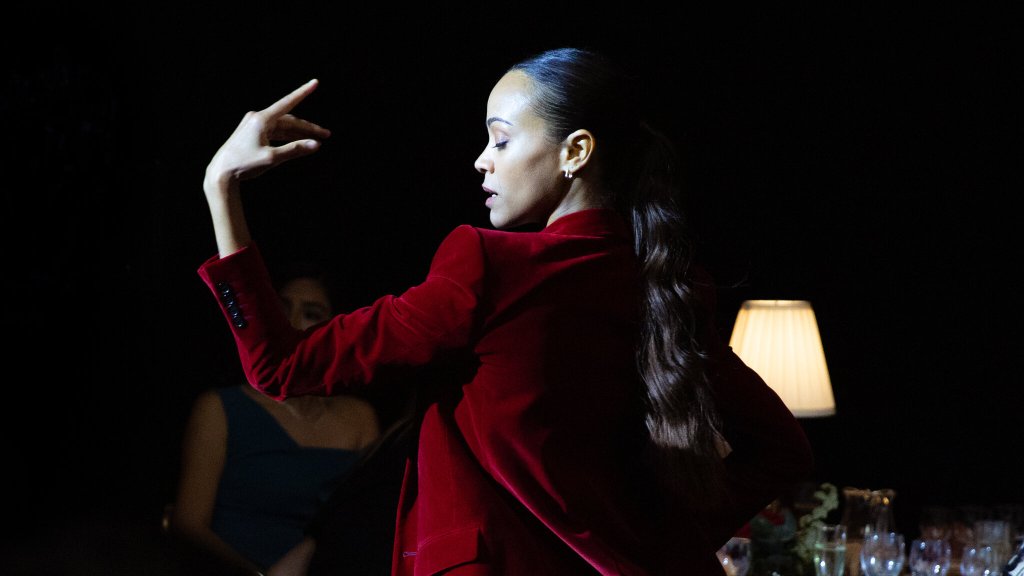
The kindest thing I can say about Zoe Saldaña’s performance is that she does the best she can with the material, which is shittier than a sewage treatment plant next to a hog farm. Rita is a terrible character. She spends half the movie bitching about doing work for evil men, only to cast that principle aside the moment she’s offered a fuck-ton of money. This hypocrisy is never once addressed, in fact the script doubles down on it, creating a horrible cognitive dissonance where the film seems to argue that cutting off your dick and changing your identity somehow makes you not a criminal and a murderer. The willingness with which Rita engages in all of this corruption while complaining about men is astounding. And just for good measure, in one of the lower profile instances of regressive gender assumptions, all Rita really wants is to be a mother, and of course, because the movie treats her like the good guy (there are none in this film except for maybe Jessi), she gets exactly what she wants in the most messed up way possible.
As for how she plays it, well, she’s a walking corpse for the first half hour or so. It was the first red flag I noticed while watching the film. For a musical, it was very odd that the first major character we see is sleepwalking through both her line deliveries and her singing. Literally, Saldaña shows no emotion whatsoever until the “Vaginoplasty” number, when in truly cringe fashion, she finally lights up, screaming “Yes! Yes! Yes! Yes!” when the surgeon suggests that they can reduce the size of an Adam’s Apple. That’s the first time she actually reacts like she’s in a movie.
From that point on, she’s serviceable, but nothing special. There are hints of inner conflict in how she deals with Jessi, first in moving her to Switzerland and then again from moving her back. I also enjoyed her one scene with Adriana Paz late in the proceedings. Apart from that, though, I don’t buy anything she did here. And to be clear, I love Zoe Saldaña as an actress. She should have gotten recognition long before now. But this is not the role, or the film, to be celebrated on any level.
***
So, my opinion should be fairly clear. As far as I’m concerned, 40% of the field doesn’t even belong here by definition, especially when the likes of Aunjanue Ellist-Taylor, Danielle Deadwyler, and Margaret Qualley were left in the lurch. It’s even sadder when it’s all but locked in that one of those “leads posing as a supporter” is going to win this. At least Kieran Culkin gave a performance worthy of the accolade.
My Rankings:
1) Isabella Rossellini
2) Felicity Jones
3) Monica Barbaro
4) Zoe Saldaña
5) Ariana Grande
Who do you think should win? Vote now in the poll below!
Up next, it’s the penultimate breakdown of the season! In other words, I can’t put off talking about yet another fraudulent Diane Warren nomination any further. It’s Original Song!
Join the conversation in the comments below! What did you enjoy about these performances? Should the Acting Branch have more specific guidelines on what constitutes a lead or supporting role? When was the last time you simulated an orgasm over the idea of Adam’s Apple reduction? Let me know! And remember, you can follow me on Twitter (fuck “X”) as well as Bluesky, and subscribe to my YouTube channel for even more content, and check out the entire BTRP Media Network at btrpmedia.com!

 I Actually Paid To See This
2 thoughts on “Oscar Blitz 2025 – Supporting Actress”