
It’s the middle of April, so why in God’s name am I already doing batch reviews of animated films? Well, there are a few reasons. First is that I’m already super stoked for next year’s Oscars. The Academy will be debuting its new category for Casting, and just to keep aficionados like me super hyped, they announced last week that at long last, a category for Stunt Design is coming in a couple years. Basically, I’ve already got the next several Blitzes prepping themselves in the back of my mind.
Secondly, over the last month and a half, I’ve taken in three entries, all of which might be submitted for Animated Feature by the end of the year, and which might be an extreme pain in the ass to track down if I wait until November or later. I’m taking a very aggressive approach this year in hopes of finally clearing the entire eligibility list for the first time, and while each of these pictures has something to offer, they honestly don’t warrant full reviews based on the breadth of their content. I’m trying my best to stay ahead of everything and keep a watchful eye on the calendar, going all out except for feature-length movies from existing anime TV shows, as those are rarely submitted when it’s all said and done (I think the Demon Slayer film was the last one to compete).
Third, and most germane to this post, I’m a sucker for common themes, and the three flicks I’m about to go over all cover similar ground, in that they’re all targeted at younger viewers and deal with supernatural and mythological forces. I watched the first two in quick succession, and both of them featured a trailer for the third, so I knew for a while that I’d end up bundling these together. Doing this also cuts my current backlog by 60%, so it’s good to just clear them off and give myself one less thing to stress about.
Good? Good. Let’s dive into some gods and monsters.
Ne Zha 2
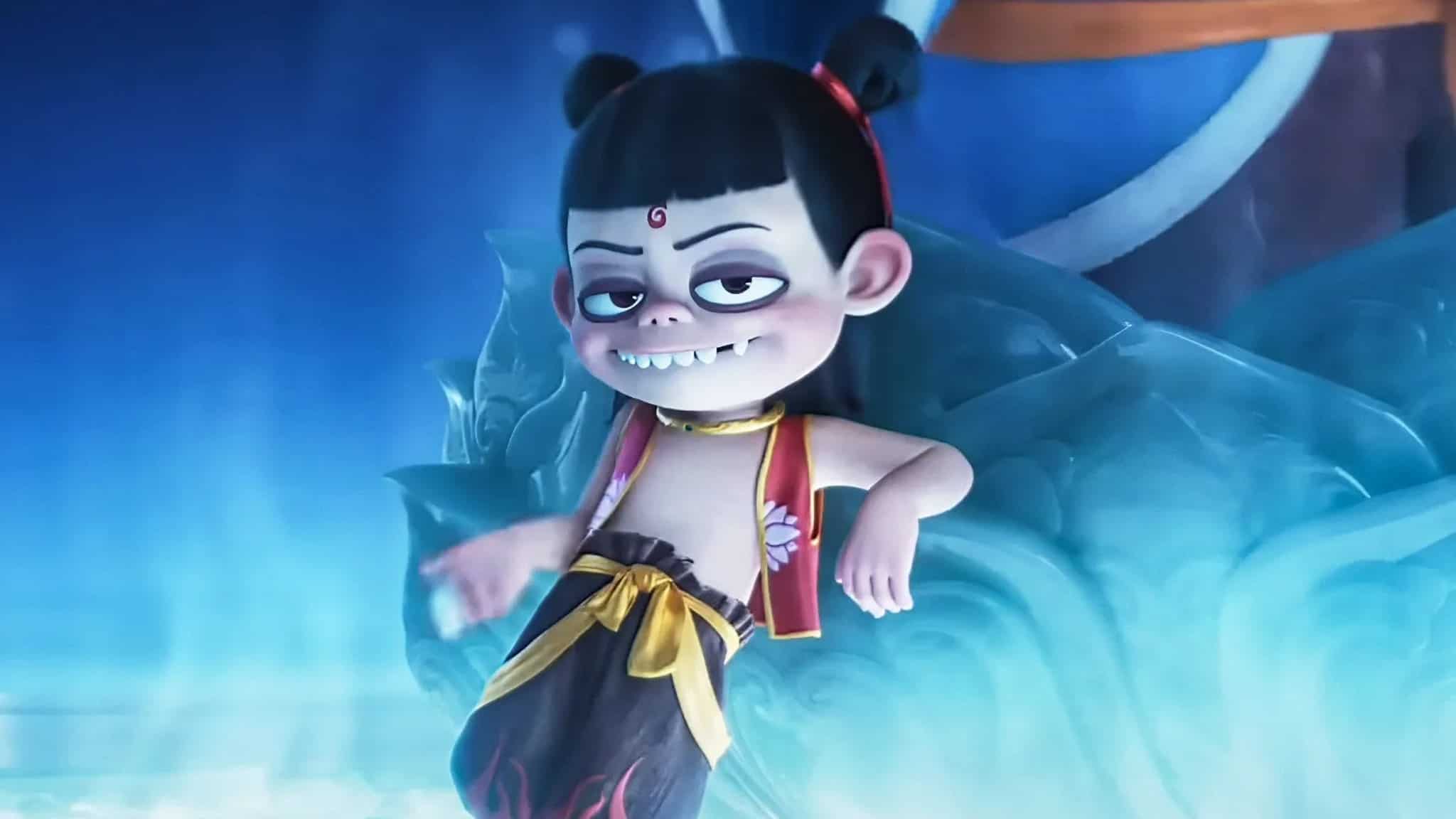
The original Ne Zha from 2019 is a large part of why I’m taking such initiative this year. Not only was that an entry that I missed on the Animated Feature list back then, it was also China’s submission for International Feature that year. I tried desperately to find any sort of screener for it, as its theatrical run in the States was rather limited, and it had no home video availability during the Oscar campaign. When I saw that a sequel was coming out, I resolved not to let it happen again. I also finally watched the first picture, which is now on YouTube and other VOD sources.
So first, a little bit of background. These stories are based on the Chinese deity of protection known throughout Taoist and Buddhist mythology. To recap, the first movie is a very comedic take on his birth and childhood. Ancient high gods meant for him to be created by splitting up an all-powerful Chaos Pearl into two spheres – The Spirit Orb and the Demon Orb. A curse is placed upon the otherwise indestructible Demon Orb that it will be irradicated by heavenly lightning in three years’ time. The Spirit Orb is ordered to be reincarnated into the third son of a noble family. However, the duplicitous Shen Gongbao steals the Spirit Orb just as the Lady Yin is giving birth, and the holy energy forces the Demon Orb to form into her son, Ne Zha. He is raised by his mother, father Li Jing, and Shen’s adoptive immortal brother, Taiyi Zhenren, but is never told of his tragic fate. He grows up very quickly, aging to about the size of a 10-year-old in a matter of days, and is a very mischievous imp feared and ostracized by the townsfolk.
Meanwhile, Shen delivers the Spirit Orb to Ao Guang, the Dragon King of the Eastern Sea, and it is then born as Ao Bing, a kind but powerful warrior. He grows up, trained to hate the gods for the dragons’ imprisonment beneath the ocean, and is destined to lead a rebellion to free his kin. One day, he meets Ne Zha, and the two become instant friends, unaware of their respective destinies. Ao Bing eventually helps Ne Zha channel his power on the day he’s fated to die, leaving their spirits both alive, but lacking corporeal form.
For the most part, I really enjoyed the story. I watched the English dubbed version, which was definitely a downgrade, as the line deliveries were way over the top. This was especially true of Mike Pollock, who voiced Taiyi, as he turned the fat, bumbling drunken master into a Temu version of Jack Black’s Po. Beyond that, though, the animation was cool, and the story definitely grabbed your attention and kept it the whole way through. I’d probably give it a B-.
Ne Zha 2 definitely ups the ante, and since this was the original run (it released in the U.S. right after Chinese New Year), I didn’t have to worry about an overdub. The Mandarin voice cast sounded far better and matched lip flaps more accurately. Since its debut, the movie’s grossed over $2 billion worldwide, topping the international box office by a wide margin, and I wouldn’t be surprised if China put this one forward in multiple categories like its predecessor.
We pick things up right where the last picture left off, with Ne Zha (Lü Yanting) and Ao Bing (Han Mo) existing as souls without bodies. Taiyi (Zhang Jiaming) has a magical lotus charm that can restore them to physical form, but it will take time. Unfortunately, unlike Andy Dufresne, time’s the one thing they haven’t got. Convinced that his son is dead, Ao Guang (Li Nan) orders Shen (Yang Wei) to attack the mountain pass community using an army of demons imprisoned with the dragons, and the battle interrupts the reincarnation process. As such, Ao Bing’s consciousness must reside in Ne Zha’s completed body. The only way to save both boys is for Ne Zha to become an immortal by passing several heavenly trials. If he does, he’ll be given a holy item of his own, which he can use to restore his friend. This leads to some pretty fun hijinks, as Ne Zha must take sleeping pills to hide his demonic nature, during which time Ao Bing assumes control of the body.
Meanwhile, a conspiracy is afoot, as the Dragon Queen of the Western Sea, Ao Run (Zhou Yongxi) seeks to manipulate Ao Guang, free herself, and usurp the throne of the dragons. Everything culminates with a massive battle between gods, demons, angels, dragons, and superpowered humans, filled with tragic loss and commitment to becoming more than what fate has designed.
Like the last film, the animation is breathtaking. Obviously a big chunk is devoted to the action set pieces, but even the calmer moments are deliriously beautiful. Ne Zha and Ao Bing’s designs are really imaginative, with the former tinged with red highlights while the latter is bathed in light blues, creating a constant yin and yang contrast. The camera movements are fluid, giving some scenes a feel of a live action martial arts display. I definitely got Crouching Tiger, Hidden Dragon vibes in a couple of sequences. The whites of the heavens juxtapose nicely with the dark, fiery undersea prison of the dragons, and the choreography of the various monstrous characters is simply lovely.
The big flaw is that the plot goes on too many side tangents and is very dense. This was something of a drawback in the last movie as well, but at the same time, I get the feeling that the domestic audience for the film has far more patience for diversions than American ones. Thankfully, the various pieces do fall into place, so things aren’t exactly hard to follow. You just wonder at times what each subplot is building to, and when the film will finally decide to end after multiple escalations of the climactic fight.
Given the financial success of the project, I get the feeling that a third installment will happen sooner rather than later. If so, I’m glad I invested the time thus far. Even in the areas that are somewhat lacking, this saga is very compelling, and I’m extremely curious to see where it goes next.
Grade: B
Night of the Zoopocalypse
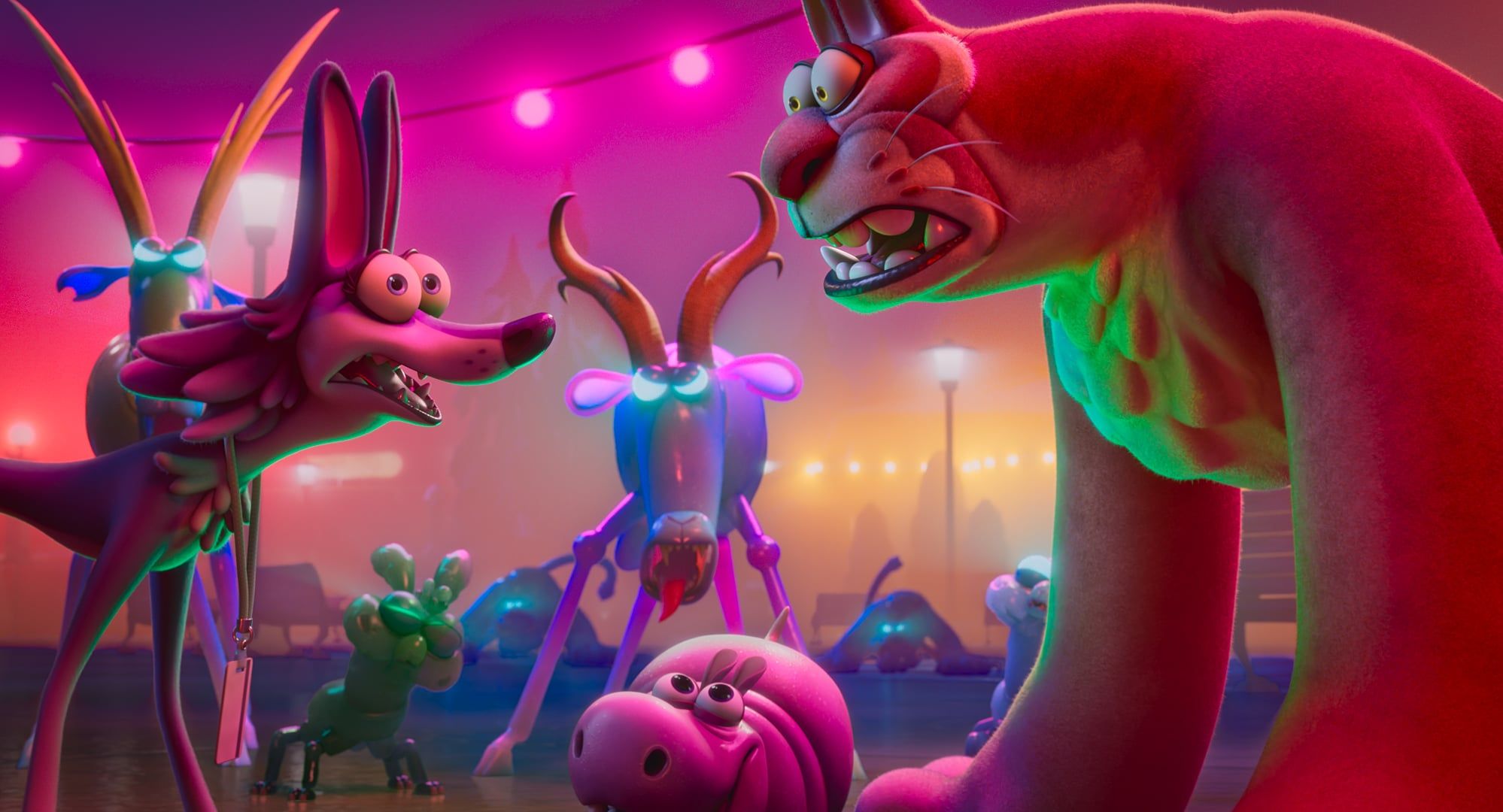
Thankfully, this one is readily available on VOD services, so if you missed the brief theatrical run, you’ve got plenty of options. And honestly, treat yourself, because this was unexpectedly a lot of fun. Based on the trailer, I figured this would be an uninspired kiddie flick, thanks mostly to the vocal samples and line deliveries provided. But once I actually sat down and watched it, I was shocked at how delightfully funny it was, and struck by its willingness to actually give the youngest viewers a good scare. Once I realized this was a Canadian film, it all made sense. They really do deliver great animation. I mean, who else would have the stones to adapt a Clive Barker short story into a horror film for children?
In the tourist trap-like Colepepper Zoo, a young timber wolf named Gracie (Gabbi Kosmidis from Netflix’s Unicorn Academy) goes through the motions training within her tiny habitat to learn how to evade predators, as ordered by her paranoid grandmother Abigale (Carolyn Scott). Gracie doesn’t see the point, given their very humdrum living arrangements, but Abigale is adamant that Gracie and her brothers remain ever vigilant, especially when a new, fierce animal is delivered to the neighboring enclosure.
After the park closes, as luck would have it, a meteor crashes into a satellite, and a small chunk of it bounces onto the property, settling in the petting zoo area, where an adorably off model bunny comes upon it, and naturally, eats it. This infects the poor lagomorph with a strange zombie-like hunger, and it tears its way through the different areas, biting and transforming every animal it comes across. Before long, Gracie is forced to fight for her life, encountering a ragtag group of survivors, including a capybara (Heather Loreto), a self-serving monkey (Paul Sun-Hyung Lee), a sarcastic, fatalist ostrich (Scott Thompson from The Kids in the Hall), a curious and carefree pygmy hippo named Poot (Christina Nova; apparently the production was able to predict Moo Deng’s instant popularity), and a lemur who intentionally gets himself sent to the infirmary with fake injuries so he can watch horror movies on TV late at night (Pierre Simpson). They must all work together to figure a way to either escape or cure the rapidly-spreading terror, while also treading lightly near the park’s newest arrival, a mountain lion named Dan (David Harbour), who will do anything to get back to the wilderness.
The art style here is fantastic, with varying shades of dark blue and black brightened by the neon lights of the zombie animals’ eyes. The whole thing feels like an 80s music video at times, with vibrant colors and just a hint of a Thriller motif. The glowing effects are pitch perfect, just enough to give the kids watching a shudder or two in between laughs. I also love the very distinct character designs, with Gracie looking very thin but exhibiting hidden strengths, Dan’s bulky, intimidating presence including a subtle softness, and Xavier the lemur looking like something Tex Avery might have come up with in his heyday. In one of the better creative decisions, some of the zombified denizens can detach and reassemble their body parts to keep the pursuit going, and it is wonderfully freaky, their forms melding into some strange middle space between furry and gummy.
Also, while Thompson and Harbour are the only well-known voices in the cast, the whole group does a pretty great job. The preview did no favors, particularly with Gracie, as they made her sound like a country bumpkin. Last I checked, timber wolves weren’t rednecks. But it left out the more nuanced line readings from Kosmidis, the survival instinct and impressive logic in her strategizing. By the end, it felt more like I was listening to Holly Hunter in Raising Arizona, and that is very much a compliment.
I do have to dock the story a couple of points for the pacing. It’s a lot of fun to see the chase scenes balanced out with the strategy sessions and bits of character development, but things go back and forth just one or two times too many. It’s hard to know exactly where the sweet spot is when you’re dealing with a very young target audience, because you have to make sure they can keep up with the plot developments while also preventing a lapse in attention. There were just a couple of superfluous moments where the momentum was stopped to explain things over again, and that’s ever so slightly to the film’s detriment. Had they scrubbed one more pursuit or tightened up just one more exposition scene, I think they would have nailed it.
Still, for what it is, this flick is a blast. It’s rare when any studio or production company is willing to spook little kids in the name of good fun, so I’m always going to get behind it when they do. Night of the Zoopocalypse is mostly a safe, comedic tale about working together and not isolating yourself out of distrust (something this country could surely use a lesson on), but the fact that they were eager to give the tiny audience even the most well-meaning of jitters (always prepped by Xavier cleverly explaining the meta horror tropes being employed before each one) takes it to another level, and the quality of the animation itself is so great that it will stick with you long after you finish watching.
Grade: A-
The King of Kings
I already know what you’re thinking. Bill actually watched a Christian movie? What the hell? First off, I appreciate the irony of the question. Second, yeah, I really did. This is also the reason I held off on reviewing the other two films in this set until now, because they both advertised The King of Kings, but I had to wait until this past weekend to finally take it in. You all know my position on this kind of stuff. I’m not religious, but I’m also not hostile to it, so long as it’s used for good and within proper, private, contexts. In essence, believe what you want, just don’t try to convert me or force me to adhere to your specific dogma, because I simply won’t. There’s always a small cadre of Christian films that come out around Easter (there are currently two separate ones out right now about the biblical “Last Supper,” for example), but there’s never a guarantee of a swift home release. Sometimes they happen right away, sometimes at Christmas, and sometimes they’re delayed until the following Easter for maximum profit. You know, like Jesus would do!
Still, I admit I was kind of intrigued about this, given the framing device of having Charles Dickens tell the story rather than just straight up preaching. Also, when you’ve got such an all-star cast behind a project like this, maybe, just maybe, this would have a bit more substance than your standard-issue Angel Studios propaganda.
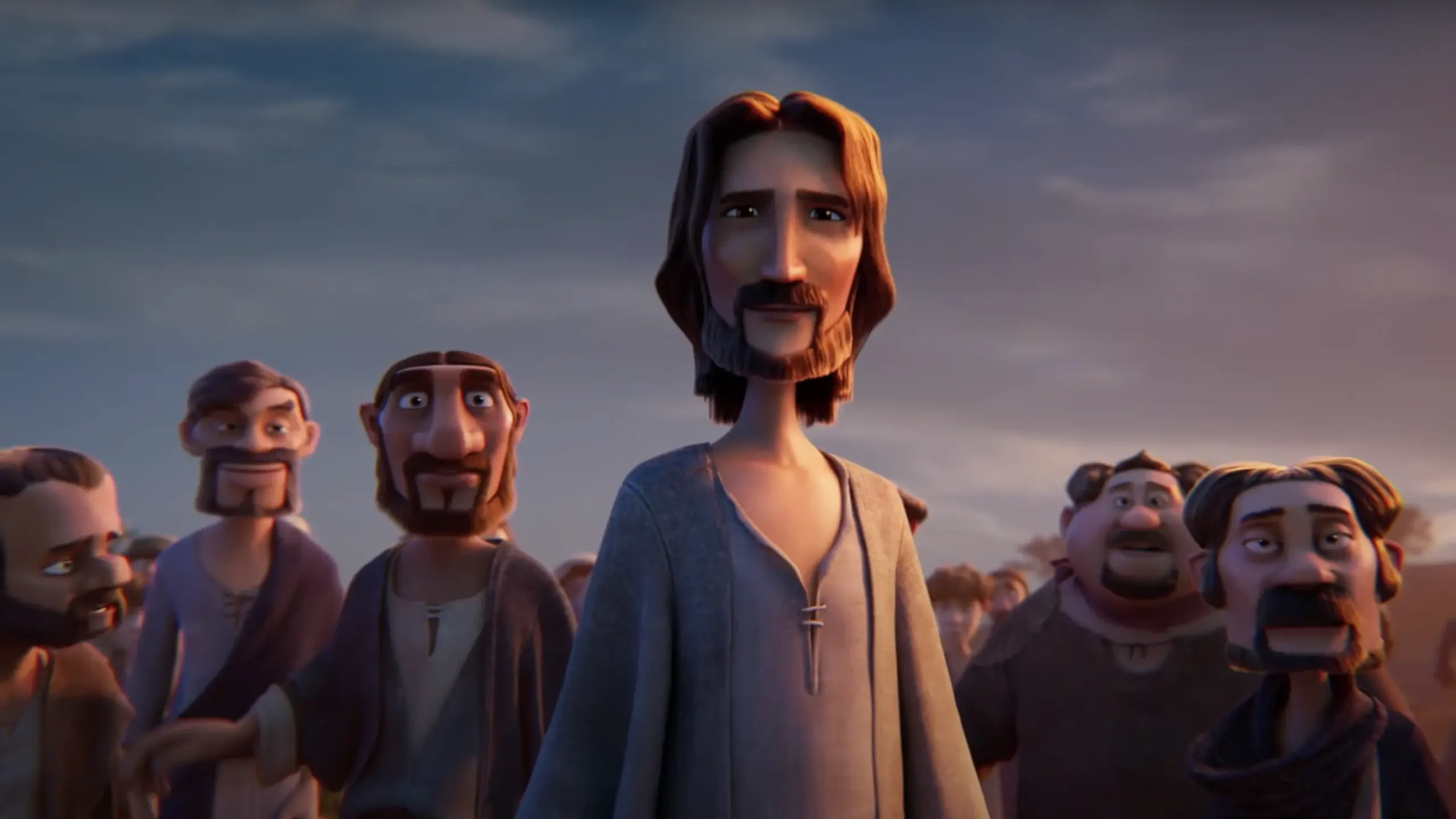
Unfortunately, nope. The final product, directed by Jang Seong-ho (and featuring a largely Korean crew), is competently made, and the animation is perfectly fine (I’d say it’s about three steps up from VeggieTales), but despite its promising profile, it succumbs to the same hypocritical trappings as just about every other piece of putridness put out by this pack of parasitic proselytizers.
It begins with Dickens (Kenneth Branagh) performing a dramatic reading of A Christmas Carol on a London stage. His first wife Catherine (Uma Thurman; the film conveniently doesn’t mention that Dickens had a mistress and later divorced Catherine for her) and three children are backstage, along with the family cat, for some reason. The youngest son, Walter (Roman Griffin Davis from Jojo Rabbit), becomes particularly disruptive, insisting that he get to live out a fantasy of himself as King Arthur (he uses what appears to be a letter opener as his Excalibur) rather than behave with any level of respect or decorum. In the literal behind-the-scenes fracas, a manuscript that Charles was working on is scattered about on the floor. There’s no explanation why it’s there, given that he’s giving a performance of another work entirely, but that’s what happens. He angrily sends his wife and kids away, and when he gets home, feeling guilty, Catherine suggests that he read his new story to Walter, who’s waiting sullenly in the study while the other kids are already in bed.
Taking a leaf out of The Princess Bride, Charles convinces Walter to hear the story about the greatest king of all time, better than King Arthur, even though the boy has no interest in tales that have nothing to do with wizards, swords, or dragons. That story ends up being a CliffsNotes version of the New Testament and the life of Jesus Christ (voiced as an adult by Oscar Isaac). It basically hits the bullet points about Jesus being born in a manger in Bethlehem, with King Herod (Mark Hamill) sending his troops out to find and kill the baby, before briefly checking in on him as a six-year-old, and then fast-forwarding to his 30s. We get the standard beats about the miracles, the loaves and fishes, the raising of Lazarus, the recruitment of the Apostles (Forest Whitaker voices Peter, while veteran voice actors like James Arnold Taylor and Jim Cummings fill out the rest), the plotting of the Pharisees (Ben Kingsley voices High Priest Caiaphas), his condemnation by Pontius Pilate (Pierce Brosnan), and his crucifixion and resurrection.
Despite the somewhat hyperactive start and interesting relationship between Dickens and his son, the back half of the story essentially plays out like a kid-friendly version of The Passion of the Christ, with all of the violence implied and done offscreen, but all the Jewish stereotypes front and center. For God’s sake, they don’t even bother to give the risen Christ his stigmata wounds. They’re willing to graphically show Peter almost drowning because he “doubted” his own ability to defy the laws of physics and walk on water while a giant wave is about to come crashing down on him, but they weren’t willing to let their savior shed a drop of his own blood. It would almost beg for examination, but HEY LOOK, BIG JEWISH NOSES!
Really, that’s the core problem with the film as a whole. This was a tremendous opportunity to help kids understand the life and lessons of Jesus Christ, which have value even if you don’t believe in his divinity (and I pretty much don’t). Instead, it was like animated Sunday School, putting a cartoon sheen on the sanctimonious. It reminded me heavily of a series of TV specials and videos I was forced to watch as a kid, called The Kingdom Chums, where bible stories were depicted using animated anthropomorphic animals (I remember one where Frankie Valli from the Four Seasons voiced King David as a raccoon, Tony Orlando voiced a tiger, and Debby Boone was a cat; I still cringe). It really is just a straightforward telling that omits crucial details, which makes one wonder, if Charles Dickens was so devout as he’s depicted, how have his offspring never heard this story? Surely he would have taken them to church at least once, right?
This wouldn’t be so bad if it didn’t rely entirely on young viewers being unable to think critically and ask questions (or in the film’s parlance, be a cynic). For example, like the scripture, Jesus jumps in age from childhood to 30, with no information about the intervening years. Why not imagine something for the interim? You don’t have to say that it’s true (because almost certainly none of this is true), but at least make it fun to fantasize, especially since part of the storytelling involves young Walter imagining himself and the cat witnessing and interacting with these events in Christ’s life. That’s a more abstract bit, but here are some that are just literally nonsense. When Jesus is baptized by John, the latter initially refuses, stating he is unworthy. Jesus simply says, “It’s what my father wants,” and then John does it. Why not SHOW God saying he wants this? It’s all made up anyway, at least offer the possibility of a visual representation to corroborate the blind acceptance of a man’s word. Similarly, Walter asks what becomes of Mary and Joseph when Jesus grows up. Dickens says, “You’ll see,” and yet we don’t. Mary shows up briefly for the raising of Lazarus and has one line, while Joseph is completely silent and all but absent for the rest of the movie. When Jesus dies, Walter sobs uncontrollably, only consoled when his father says, “Remember what Jesus said about ‘rebuilding the temple’ in three days?” Meanwhile, I’m sitting here going, “Remember when Jesus literally said he was going to die and come back in three days a few scenes ago? Why are you being coy about this?” It’s just a failure of basic plot structure, and a denigration of Dickens as a writer. To see him assert that Satan manifesting as a swirl of wind is more exciting than a battle with a dragon is not only an out and out lie, but it’s contrary to his entire literary style.
And then, of course, there are the more damning meta insults. In a pivotal scene, Caiaphas tells a merchant to “charge whatever you want, the people will pay it,” playing right into the “covetous Jew” trope. This puts Jesus in a rage, toppling tables and crying blasphemy that the Pharisees have “turned the temple into a marketplace.” It’s a wonderful message. Faith should not be used to make money, especially off the poor and ignorant. Tickets for this film cost $16.99 plus tax at my local AMC, and as the credits rolled, a timer in the lower left corner counted down to a “special message.” That message was about 1o or so pristine white kids telling the audience how great the movie is, and how they should scan a QR code on the screen to raise awareness of the movie and help it sell more tickets. What. The. Actual. FUCK?! This was approved by the so-called “Angel Guild,” which apparently includes Lucifer himself, because only the lowest of the fallen angels could explain such perversion.
This feculence extends to the production itself. When I first saw the trailer, I was curious about using Charles Dickens as the narrator, because I couldn’t recall him ever writing a Christian novel or story. Sure, he lived in an era where religion was just a normal part of life (Charles Darwin was a contemporary, so evolution theory only emerged during his lifetime), and his books certainly dealt with questions of morality, particularly in a way that challenged orthodoxy, but I wasn’t aware of anything overt. That said, I haven’t read his entire bibliography, so maybe I missed something along the way. It turns out, he did in fact write the manuscript mentioned in the film. It’s called The Life of Our Lord, and he penned it in 1846. It was meant as a private story exclusively for his children, and it was a tradition for him to read it to them at Christmas. He strictly forbade anyone to remove it from his house (and yet here it ends up just sitting around backstage at a random theatre), and insisted that it not be handed to any publisher while he was still alive. It was ultimately published in 1934, after the last of his children had died, and 64 years after his own passing. Clearly, this was not meant to be used as a tool for literary profit. It was meant as a personal and private family keepsake. I’m sure Angel Studios saw that history and thought, “Yeah, but money, though.”
There was potential here, especially when you’re using an A-list cast, most of whom are not outspokenly faithful. In fact, several of the stars, including Brosnan and Thurman, have actively worked against regressive church influences in politics. So I thought, just maybe, we’d get something other than direct fire and brimstone for cash. While there wasn’t much hope of that after the first five minutes, it was permanently dashed as we wiped to those kids begging for more money, with John 14:6 emblazoned across the screen to condemn all non-adherents. I tried, folks. Truly, I did. But in the end, the most accurate part of the flick was completely unintentional. Having a kid stay up all night to hear bible stories after misbehaving definitely felt like a punishment.
Grade: D+
***
That’s all for this edition. Hopefully the animation calendar will get even better as the year rolls on.
*Remembers that Sneaks comes out later this month*
Oh, fuck me.
Join the conversation in the comments below! Have you seen these films? Are you excited for the slate of animated movies coming out in 2025? Seriously, how as Angel Studios not been smote? Let me know! And remember, you can follow me on Twitter (fuck “X”) as well as Bluesky, and subscribe to my YouTube channel for even more content, and check out the entire BTRP Media Network at btrpmedia.com!

 I Actually Paid To See This
6 thoughts on “Back Row Thoughts – Animation Mythologization”