
The annual quest to complete the Animated Feature category before it starts is a goal I’ve come painfully close to achieving for years now. Every time that I’ve attempted the feat, I’ve fallen just one or two films shy of totality, usually because a foreign entry only got a one-week Academy qualifying release, and I either missed it or didn’t know about it at all until it was too late. That same fate may have already befallen me this year, as Sanatorium Under the Sign of the Hourglass has already come and gone in Los Angeles. I’ll keep my fingers crossed for another round, or a festival appearance, or a streaming release, or for it to just not be submitted for consideration.
Sometimes that latter eventuality does happen. Two of the films I saw last year, Dragonkeeper and The Greatest Surf Movie in the Universe, fell under that heading, which was good because they sucked. It’s also rare for films based on popular anime series to be put forward, as many of them have built-in niche audiences rather than a mass appeal, meaning they have little chance to be nominated or win. There are exceptions, of course, but that is the trend. There are plenty of great (and not so great) anime movies out there, but not all of them vie for the prize.
That’s what brings us to today’s batch review. Over the last few weeks, despite my financial hardship, I still found a way to take in three potential candidates from Asian studios. There’s no guarantee that any of them will be entered, but given that they got theatrical releases stateside, better safe than sorry. Two of these pictures are associated with popular series, while one is an original work. Are they worth putting the time in? Only one way to find out!
Dragon Heart: Adventures Beyond This World

Not to be confused with the 90s medieval adventure with Sean Connery as the voice of a CGI dragon (an effect that has NOT aged well), Dragon Heart: Adventures Beyond This World is something entirely different. I’d say it’s destined to be a cult film, except that it already is… literally. This is a film put out by a religious cult.
Released by a group calling themselves “Happy Science,” the movie has the earmarks of a standard fantasy anime, but as events unfold, things become increasingly problematic, and sometimes borderline sinister. It features two middle school-aged cousins, Ryusuke (Yûsuke Kobayashi in Japanese, Zach Aguilar in the English dub) and Tomomi (Chinatsu Hirose/Ren Holly Liu) spending their summer together, with Ryusuke visiting Tomomi’s household after his planned mountaineering vacation was cancelled. Tomomi shows him around the hills and natural parks near her town, and as they explore, Ryusuke notices a kappa (river monster of Japanese folklore) along the banks. He chases after it, and eventually he and Tomomi fall into the water. They’re saved by a dragon and taken to an old man, who informs them that they are dead, having drowned in the stream. However, if they can find their purpose in life, he will return them to the land of the living.
Thus begins their journey. Now, you’d think the title would imply some mixture of mythology and magic, with the two showing that they too have courageous hearts like the mystical dragon, and that they’d visit many incredible realms in hopes of discovering their destiny. Instead, they go to Hell. Yup, just Hell, though it takes many forms, similar to a Japanese take on Dante’s Inferno. At first I was kind of into it, but things get real judgmental and uncomfortable really quickly. They first go to a “Hell of Villains,” where criminals violently kill each other over and over again, never realizing they’re dead. Later, they go to a brothel where abused and trafficked sex workers are condemned to relive their trauma, because they can’t accept their own complicity in their situation. You read that right. Women who were raped are just as culpable as their rapists in the eyes of this organization. Given all we’re learning about Jeffrey Epstein right now, that’s incredibly tone deaf.
But it gets even worse. While on a train, Ryusuke and Tomomi encounter a Muslim suicide bomber who blows up their compartment. We later learn that this is a “Hell of War,” where terrorists – and their victims – relive the attacks that took their lives for eternity, guilty and innocent alike. As the shot zooms out, we see an array of horrible acts of violence, INCLUDING THE PLANES GOING INTO THE TOWERS! I. Was. Dumbfounded. This film’s thesis – and presumably the thesis of this entire religion – is that the thousands who died on 9/11 are damned in equal measure to the terrorists, and are forced to experience their demises in an endless loop, despite no evidence of any grave sin committed. Fuck entirely off with that bullshit.
Apparently, the only way to any salvation is to find a sacred realm of gods hidden beneath Mt. Everest. There, all deities across all faiths have chosen the “Lord of all gods,” whom they call “El Cantare.” Guess who El Cantare is. If you said the late Ryuho Okawa (died in 2023), who founded Happy Science, have yourself a cookie. It is beyond insulting for this to be the resolution, and for Ryusuke and Tomomi to be so overjoyed to “spread this truth” to the world. This is just as offensive as Christian propaganda, but at least Christianity has centuries of historical cultivation to form a foundation, even if it is nonsense. This is an animated film, intended for children, that literally tells them that whether they’re righteous or blasphemous, mere existence condemns you to a Hell of unending pain and suffering unless you worship a former stockbroker who died two years ago. What. The. Fuck?! Oh, and just for good measure, the kappa that Ryusuke spotted that started this whole mess never shows up again, so we’re left to assume that it was a divine prank by El Cantara and/or the old man to dupe the kids into their own deaths for the purposes of converting them and making them missionaries, because that’s not messed up at all.
I didn’t think anything could piss me off more than Sneaks did earlier this year. Even universally accepted garbage like the Amazon War of the Worlds has some appeal in an ironic sense. This? This is a betrayal of storytelling and art, all in the name of the Japanese equivalent of L. Ron Hubbard. Get fucked.
Grade: F
The Legend of Hei II

Of the three films contained herein, this is the one I’m least certain will be submitted. It’s the second movie prequel to a popular Chinese web series, and the first film from 2019 did not compete. I rented it on YouTube to make sure I had proper context for this second entry, and I found it rather delightful. I’m honestly surprised it wasn’t put forward. It’s the story of a young cat spirit (Shan Xin) who loses his home to deforestation, and in his search for a new place to live, finds himself in the middle of a simmering conflict between spirits and humans, most of whom coexist peacefully, but there are a few who want all-out war. In the first film, Hei meets Wuxian, also known as “Infinity” (Liu Mingyue), a superpowered human who works for “The Guild,” which protects the interests and lives of spirits. Infinity helps Hei awaken his powers of spatial manipulation, and eventually Hei decides to live with him as his pupil.
During their bonding, Infinity mentioned a previous disciple, intended to be his last, but no more information is given. This movie introduces that disciple, Luye (Zhu Jing), and teams her up with Hei to solve the mysterious attack of an entire Guild temple and the murder of all the spirits within. Based on surveillance video, Infinity is the prime suspect, so he agrees to live in sequester with the rambunctious Naza (a parody of Ne Zha also voiced by Shan Xin), playing video games while Hei and Luye investigate (the series’ incorporation of traditional Chinese folklore and modern tech is one of its many charms).
First things first, Luye is a badass. Stoic and cold, she has a lot of traits of a classic tsundere type, but rather than becoming a romantic interest, what makes her compelling is in how she comes to accept herself as a person and begin coping with past trauma, all while dealing out the harshness in her incredibly choreographed action scenes. Like Infinity, she has the ability to manipulate metal, which she uses to fantastic effect by turning solid plates into razor thin wires that she controls like puppet strings. She’s amazing to watch, becoming an object of awe for Hei as well as for the audience.
Then there’s Hei. I instantly fell in love with his design during the first film. He’s feisty in human form, and as a cat he’s basically the chibi version of the feline star of Flow. When he and Luye are in combat, it’s jaw-dropping how quickly they move, and yet the geography of the scene is never lost. As a character, Hei’s abilities improve as things go on, but you can also see his personality evolve. He’s still a kid, as eager for ice cream as he is for physical training, but he’s more multidimensional than the previous outing, where he mostly argued with Infinity for a bulk of the runtime until he eventually warmed up to him. As tensions flare between the spirits and the humans, Hei’s burgeoning understanding of the nuances of the conflict is expertly translated to the viewer.
The only real problem with the movie is its pacing. The first film clocked in at a tight and tidy 100 minutes, getting across a wealth of information while still maintaining a steady rate of action. Here, we’re bloated out to two hours, and the extra 20 minutes does show. Once the mystery is solved, we know how the rest of the flick will turn out, but we still have a half hour to wade through. There are several scenes that could have been cut or montaged without losing any of their impact. Still, I thoroughly enjoyed myself, and was very pleasantly surprised when the theatre I went to started it right on time with no trailers. There were only three of us in the auditorium, and we all left happy.
Grade: A-
Demon Slayer: Kimetsu no Yaiba – The Movie: Infinity Castle
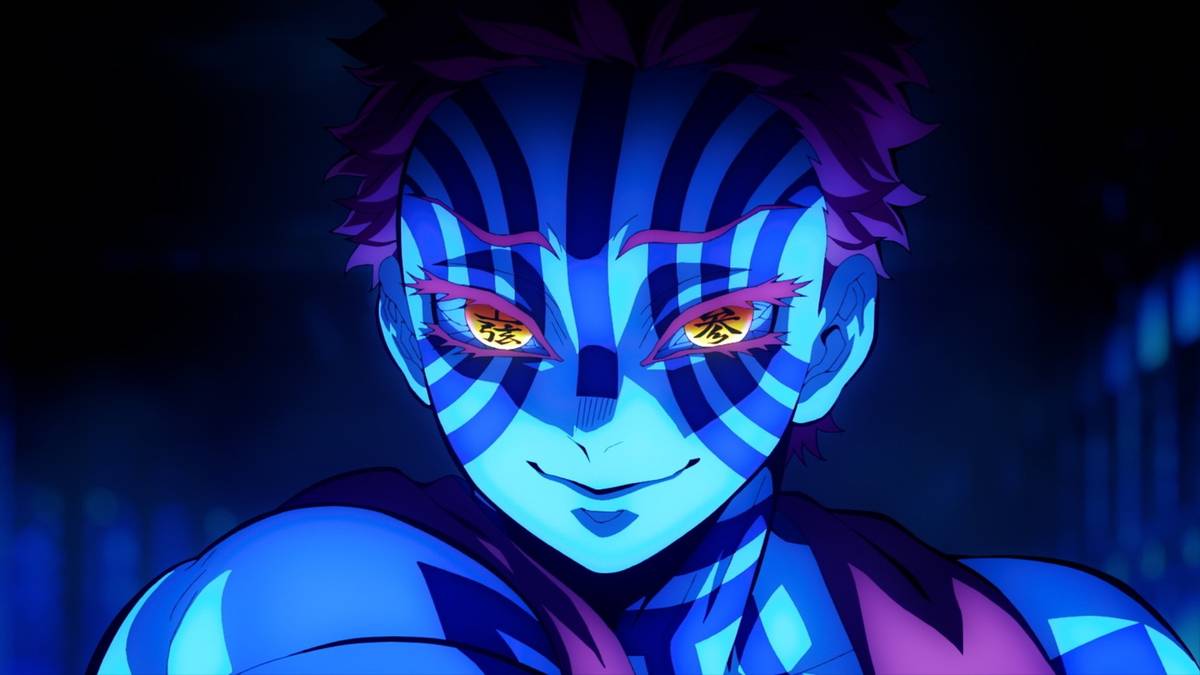
The Demon Slayer series is the rare anime franchise that actually does engage with the Academy. The last feature film, 2020’s Mugen Train, was entered into the competition, and there are a fair few people who felt it should have been nominated. Even with the COVID pandemic shuttering theatres, the film grossed over $500 million worldwide, topping the global box office for the year and overtaking the Oscar-winning Spirited Away as the highest-grossing film in Japan’s history. So when this new installment was announced, I knew I had to see it, because it almost certainly will be put forward. The series has such mainstream appeal that even AMC showed it as a normal film, rather than exempting it from Stubs/A-List discounts like they often do with anime adaptations.
Here’s the thing for me, though. While I’m aware of the show and its fandom, I’ve never seen a single episode, nor have I watched Mugen Train. For the sake of completion, I basically went into this blind, challenging myself to see if I could keep up with basically no frame of reference. The only handicap I gave myself was watching the English dubbed version, because if I had to try to follow along while also reading subtitles, I feared I would be totally lost.
Turns out, I probably needn’t have worried. Set after the events of the show’s fourth season, and serving as the first part of a trilogy to sunset the story, the makers of Infinity Castle seemed to have anticipated that there would be neophytes like me in the crowd, and thus gave just enough contextual exposition and character flashbacks to ensure that no important details were missed. As it is, the only true frustration I had was that the promotional materials I saw didn’t mention that this was a “Part 1 of 3,” unlike in its domestic release. So as the film reached the end of its 2.5-hour runtime, only then did I realize that we would hit a cliffhanger.
The basic plot is that the Demon Slayer Corps has found the lair of Muzan (Toshihiko Seki/Greg Chun), the first demon. In his labyrinthine “Infinity Castle,” the various characters encounter elite demons under Muzan’s command, known as the “Uppers,” while Kiriya Ubuyashiki (Aoi Yūki/Christine Marie Cabanos) leads the operation from headquarters, using telepathic crows to help map out the structure and find Muzan. For the purposes of this section of the arc, we focus on three major battles: Shinobu (Saori Hayami/Erika Harlacher) and Kanao (Reina Ueda/Brianna Knickerbocker) pursuing Upper Two Doma (Mamoru Miyano/Stephen Fu), Zenitsu (Hiro Shimono/Aleks Le) taking on his former senior in Upper Six Kaigaku (Yoshimasa Hosoya/Alejandro Saab), and series protagonist Tanjiro (Natsuke Hanai/Zach Aguilar again) fighting Upper Three Akaza (Akira Ishida/Lucien Dodge) along with Giyu (Takahiro Sakurai/Johnny Yong Bosch). The first two battles play out in 25-minute blocks that would fit neatly into individual episodes, while the final one would likely be its own three or four episode mini-arc if it were the show.
Again, quite possibly the most impressive part of this entire affair is that none of this ended up being confusing for me despite diving in at the beginning of the end. Within a matter of minutes I was able to grasp the stakes of the fight, the level of Muzan’s threat, the history between Shinobu and Doma, how Tanjiro has developed over the run of the story, and so many other crucial elements. I admit things did drag just a bit here and there, particularly when the film devoted over 20 minutes to the backstory of one of the demons, but I just chalk that up to the creators being committed to fleshing out their characters and earning the pathos of the scene. Not once did I ever wonder what was going on or what the point was. For a complete newbie like myself, that’s an almost impossible feat to pull off.
And of course, all of this is to say nothing of the dazzling animation. The fight scenes are masterfully edited, the various powers of each combatant perfectly defined and expressed. We do lose the overall location logic from time to time, but that’s more a symptom of the setting’s design and the blending of CGI with traditional 2D animation as we blast our way through various rooms and corridors. The actual context of what we’re witnessing never feels out of place or overblown, no matter how epic the moment or how quickly it escalates.
The biggest compliment I can give, to both Infinity Castle and Legend of Hei is that, having seen these films, I now really want to see the associated shows. There’s clearly a rich narrative here that justifies the fandom, and I’m extremely curious to see what it’s all about. I want to know who Shinobu really is. I want to watch Tanjiro’s journey. I want to see what other shenanigans Hei gets into as his powers continue to grow. Whether these films end up competing for the Oscar or not, I’ve gotten my first taste of art that is new to me, but has been precious to millions for years now. Better late than never, I guess.
Still though, fuck Dragon Heart.
Grade: A-
***
That’s all for this edition. Hopefully as my life starts to get back on track, I can get even more aggressive in my quest to see all potential Animated Feature candidates. The official list of qualified submissions should be released in late November or early December before the shortlists come out, and with a bit of luck, I’ll already have it cleared, or at the very least have an attainable number of entries to view. Pray for Mojo.
Join the conversation in the comments below! Have you seen these films? Are you a fan of the shows that spawned them? Have you ever seen a literal cult movie before? Let me know! And remember, you can follow me on Twitter (fuck “X”) as well as Bluesky, subscribe to my YouTube channel for even more content, and check out the entire BTRP Media Network at btrpmedia.com!

 I Actually Paid To See This
3 thoughts on “Back Row Thoughts – Ani-Maybe?”