
Filmmaking in Iran is at a crossroads at the moment. Despite the repression of the ruling regime in the Islamic Republic, for years its cinema was a cultural high point, with artists like Asghar Farhadi and Majid Majidi bringing prestige and acclaim from around the world. However, in recent years, the ruling authorities have cracked down severely on anything interpreted as being even remotely critical of the government or its draconian judicial system. This has resulted in several great auteurs being forced to create their films in secret, lest they be imprisoned or worse. We saw this last year when The Seed of the Sacred Fig had to be smuggled out of the country and finished in Germany.
This time it’s Jafar Panahi in the crosshairs. Once lauded by his homeland – including them submitting his 1995 film The White Balloon for the Oscars – he has since been locked up and banned from doing his work, with No Bears produced clandestinely just a few years ago. His follow-up to that effort, It Was Just an Accident, was also made illegally according to his government, with the crew and performers once more dodging the powers that be and Panahi spiriting the footage away to Europe. It debuted at the Cannes Film Festival, where it won the Palme d’Or, and was summarily denounced by the regime. It is now France’s official submission to the Academy, and has gotten its stateside release.
This is a powerful film and a great statement of Panahi’s artistic integrity, mostly because it spotlights a serious issue in Iran in a way that’s alternately suspenseful, insightful, empathetic, and sometimes outright silly. This makes the backlash from his country all the more confounding, because unlike other works critical of the government, there isn’t really anything that’s unique to Iran as a nation. This is much more a statement on human rights, the recovery from trauma, and the thirst for revenge than it is an indictment of the Revolutionary Guard or any of the other myriad problems keeping the nation from being free. The movie itself is also just incredibly entertaining and cathartic in its execution, which only makes those trying to censor it seem all the more petty and ignorant.
The film opens with a family driving home at night. The father, Eghbal (Ebrahim Azizi) ends up hitting a dog on the unlit road, damaging his car and upsetting his young daughter. He utters the titular line as a means to assuage his child’s sadness, though in time it takes on a much larger thematic context of casual cruelty. They go to a nearby mechanic for some quick repairs, where Eghbal is noticed by one of the workers, Vahid (Vahid Mobasseri), who makes every effort not to be seen. The next day, Vahid tails Eghbal through the city, eventually kidnapping him and driving into the desert, where he intends to bury him alive.
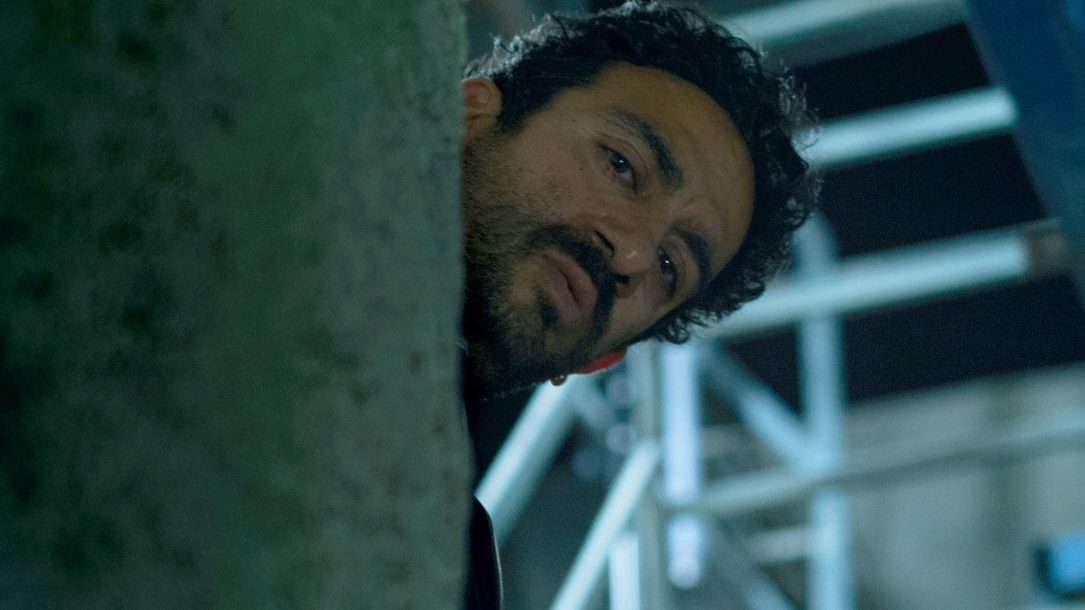
From the moment Vahid heard Eghbal’s footsteps, he believed in his heart that Eghbal was his former jailor, a prison enforcer known as “Peg Leg,” due to him walking with a prosthesis after being injured in combat in Syria (hence the distinct sound of the footfalls). Vahid was arrested during a labor dispute and tortured by “Peg Leg” for years before being released. This is his moment for vengeance, but there’s one major issue. While he was imprisoned, he never actually saw Eghbal’s face, being blindfolded during his interrogations. As such, he can’t be entirely sure that this is his man. As Eghbal pleads for his life, Vahid decides to get some assurances. He locks Eghbal in his van and seeks out others who were harmed through a support network of survivors. Before long he has recruited wedding photographer Shiva (Mariam Afshari), the bride and groom she was working with (Hadis Pakbaten and Majid Panahi), and the hotheaded hustler Hamid (Mohamad Ali Elyasmehr), all of them unsure of Eghbal’s true identity, but all of them thirsty for satisfaction should he be confirmed as their former tormenter.
What follows is a series of pointed conversations and existential farce, like if It’s a Mad, Mad, Mad, Mad World had been about human rights abuses. This is particularly true during a side plot where the group has to set their rage aside and show genuine humanity by assisting Eghbal’s wife in giving birth. The crew tools around the city, crammed into Vahid’s van, seeking anything that can validate their captive’s existence as well as their own suffering, while also offering their own perspectives on how to process their trauma. They’ve all been given a chance at a normal life again, so there is wisdom in letting Eghbal be. At the same time, given what they’ve endured, it’s also totally understandable that they’d want to extract their own pound of flesh, especially given Eghbal’s cavalier nature towards those he deems unimportant. In many ways they are the dog he ran over at the start, and while wounded, as a pack they are strong enough to fight back. The question is whether or not they will, if it’ll even be worth it, and if they can rise above their alleged crimes by showing him a mercy he never showed them.
In addition to the terrific performances and writing, the cinematography Panahi employs is simply superb. The van is a very tiny space, yet he’s able to make it seem both claustrophobic and open depending on the needs of the moment. The desert landscapes are also amazing to look at, giving the proceedings a sense of scale that would be otherwise hard to comprehend. Once outside the city limits, there’s basically nothing but open desert, and yet it’s treated as little more than an inconveniently long walk for anyone to get back to civilization and receive whatever medical treatment they need. It all seems so impossible, but Panahi pulls it off almost effortlessly, which is particularly impressive on a meta level, as that much open space would have made him and his film crew easily spotted should the authorities have looked in that area while they were shooting.
The response from the Iranian government is incredibly overblown in context, as this film is hardly subversive. This is a darkly comedic thriller about damaged people learning the lesson that revenge is only a temporary salve on the wound that is their trauma. It’s a theme that’s been put to screens hundreds of times before. It’s a story of grief, pain, forgiveness, and grace that only brushes against the regime itself. There’s talk of pride on Eghbal’s part for his role as a torturer, and that he’d be happy to become a martyr for the sake of his country, but that’s about as far as the direct criticism goes. You could have just about any authoritarian nation stand in here (China, Russia, Assad-era Syria, etc.), and the story would be basically the same. This isn’t like Sacred Fig, where there were overt references to police and military crackdowns, real scenes of state violence, and the main character defending his role as being the will of God. While I vehemently disagree with their methods, I can at least see where that’s an artistic attack on the ruling party’s system. But here, by condemning the film, the government is tacitly admitting that it engages in these horrific practices, rhetorically creating their own “Peg Leg” situation by proverbially shooting themselves in the foot.
I can easily see why this took top honors at Cannes, and why it will be a strong contender for International Feature next year. In the end, this is a human story, one that embraces the horror and humor of life against the backdrop of a grotesque system of so-called justice. The themes are universal, the pain visceral, and the moments of laughter all too real. It just so happens to be set in a country that uses its iron fist to punish anyone or anything remotely critical of it. If anything, It Was Just an Accident proves how not dangerous Jafar Pahani is as a filmmaker, because his focus throughout is on the decency shown by those who’ve had the worst things imaginable happen to them. To condemn this is to openly announce that you’re in favor of violence and torture, so long as you’re the one dishing it out. Sadly, that holds true for a lot of countries right now. Iran just happens to be one of them.
Grade: A
Join the conversation in the comments below! What film should I review next? What makes for a truly subversive story? When was the last time you saw a woman in a wedding dress pushing a van to a gas station? Let me know! And remember, you can follow me on Twitter (fuck “X”) as well as Bluesky, subscribe to my YouTube channel for even more content, and check out the entire BTRP Media Network at btrpmedia.com!

 I Actually Paid To See This
2 thoughts on “Prisoner Break – It Was Just an Accident”