
Over the course of a given year, I wind up providing coverage for a number of film festivals for my friends at No Rest for the Weekend. This includes the Brooklyn Film Festival, Tribeca, Slamdance, Mill Valley, and AFI Fest on a regular basis, and others like Soho, Newfest, Brooklyn Horror, and the New York Film Festival if timing allows. In doing so, I do my best to take in a good mix of foreign films, domestic features, and documentaries, because you never know what’s going to get the Academy’s attention, and I want to cover as many bases as possible. However, if they don’t get officially submitted for the Oscars, or if they don’t even get a public release, I tend not to review them in this space.
This was the case over the last 18 months or so, as I saw several brilliant docs that just weren’t put forward for one reason or another. and were thus left to fall by the wayside. Even one film that did go wide (or as wide as documentaries go these days) had to be left off my regular coverage here in favor of other, more pressing releases.
However, those omissions get corrected right now. Today, the Academy released their lists of official entries for the Animated, Documentary, and International Feature competitions, and after a cycle of the calendar, some of those films are now getting their proper consideration. As such, it’s time to give them their due here. Each of the three pictures discussed below are now fully in the running, and I’d wager at least one has a very strong shot at a nomination come January. I’ll warn you now, these aren’t the most cheerful of stories, but as we’ve learned repeatedly over the last decade, sometimes we just have to face the worst of things in order to learn from them and make the world a better place.
Checkpoint Zoo
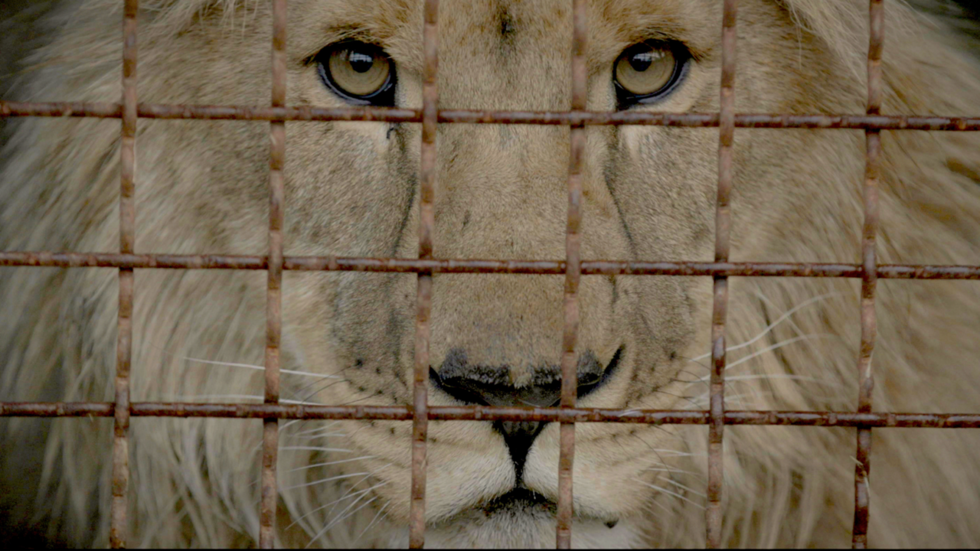
I watched this over a year ago when it debuted at Tribeca, and it’s sadly one of many documentaries over the last few years dealing with Russia’s invasion of Ukraine. Rather than focusing on the human misery that comes with this illegal war, director Joshua Zeman (The Loneliest Whale: The Search for 52) turns his eye instead to the animals caught in the crossfire, yielding an alternately inspiring and tragic tale of people working for the common good.
After Russia began shelling Ukraine, a zoo in Kharkiv known as Feldman Ecopark found itself in the middle of a crisis. It would be a terrible sadness if the animals died, but it would also be catastrophic if the destruction caused them to break free and run amok. As such, the zoo’s director Oleksandr Feldman orchestrated a 71-day effort, fueled by volunteers and Ukrainian soldiers via social media, to transport the denizens from their habitats to either a different zoo further inland from the front lines, or to Feldman’s personal estate, which had enough land for the calmer, more herbivorous species to graze in peace.
The sheer logistics of such an operation are astounding to behold, particularly when it comes to the predators. Several rounds of tranquilizers have to be employed to make sure the lions and tigers and bears (oh my!) can be transported to waiting vehicles, but also to make sure the remaining members of each tiny community don’t attack the workers during the process. The ingenuity on display is borderline miraculous.
However, there is a cost that must be acknowledged in blood and treasure. Food supplies are either destroyed in the shelling or stolen by Russian troops. Several animals do become collateral damage. And of course, as most of the humans are either zoo employees or enthusiastic volunteers, they are not properly armed or armored. One of the most heartbreaking moments you’ll ever see in a film comes after a young Ukrainian soldier is killed, and the Russian unit that carried out the attack is captured. A Russian POW is berated by the young man’s inconsolable parents, breaking down himself when he realizes the gravity of what he’s done. It’s an image that will likely never leave my brain.
Still, the focus here is on the triumph, this pure act of kindness and hope. If you’re an animal lover, or if you just want to see some story associated with this war that has a happy ending, you’ll, for the most part, find it here.
Grade: A-
Democracy Noir

This was a part of last year’s Mill Valley Festival, and an absolutely crucial look into how freedom is backsliding the world over. If you’ve kept up with the authoritarian antics of Donald Trump and others, you’ve likely heard the name Viktor Orbán a fair few times. Democracy Noir, directed by Connie Field, gives the audience an overview of Orbán’s rise to power, and how he’s kept a stranglehold on it, as seen through the eyes of three vulnerable women fighting for their rights.
The first viewpoint we get is from Timea Szábo, a member of Hungary’s parliament, and a leader of the opposition to Orbán’s self-described dictatorial rule. Originally branding himself as a man of the people coming from humble beginnings, Orbán quickly changed his tune once in power, dismantling democratic norms, moving into a palatial mansion, having a soccer stadium built near his house, and aggressively targeting his naysayers. He likes to think of himself as an iconoclast, particularly when he butts heads with other European heads of state at the EU, but really he’s just a bully, as Szábo can attest, as she was the target of a highly-organized smear campaign accusing her of being a prostitute and drug dealer in an attempt to get her voted out of office. Thankfully she represents a fairly safe, progressive district of Budapest, so she was never in any real danger, but in the election depicted in the film, she faced her tightest margins ever. In response, Szábo tried to lead a coalition of opposition parties in an attempt to get a majority in parliament, thus ending Orbán’s reign as Prime Minister, but it was sadly unsuccessful.
Next is Babett Oroszi, one of the few independent journalists still active in the country. As part of his authoritarianism, Orbán orchestrated a hostile takeover of the major media networks in Hungary, placing them all under his thumb and making them parrot his talking points. In one of the more darkly humorous moments, we literally see the same story repeated verbatim on several different stations. Babett has to fight a war on two fronts: one as a journalist speaking truth to power, and the other as a lesbian seeking equal rights and acknowledgement by Orbán’s government. If you’ve read any recent stories about Hungary’s crackdowns on the LGBTQ community, you can guess how that all turns out.
Finally, we have Niko, who’s just a normal, everyday woman working as a nurse. She represents the effects of Orbán’s regime as actually lived by the public. Initially working in state-run hospitals, Niko eventually has to leave and seek out employment in private clinics, not because she doesn’t believe in universal healthcare, but because staff at state facilities have to sign loyalty pledges to Orbán and his government. Speaking ill of anything the regime does can cost her her job, her financial security, and depending on the severity, her freedom. In some truly painful scenes, Niko discusses these issues with her (now late) mother, who dismisses them because as far as she’s concerned, as long as grocery prices are low and public transit runs on time, Orbán can do what he wants. This was particularly poignant when the film debuted last year, as inflation was one of the core problems that saw independents swing back towards Trump to put him back in the White House, only for the economy to get even worse.
All in all, this is a fascinating – and quite thorough – look at just how similar we all are, even though Americans and Hungarians are almost half a world apart from one another. It’s a sad realization that, no matter where you live, if power-hungry men get their way, the suffering of everyone else is always the same.
Grade: B+
2000 Meters to Andriivka
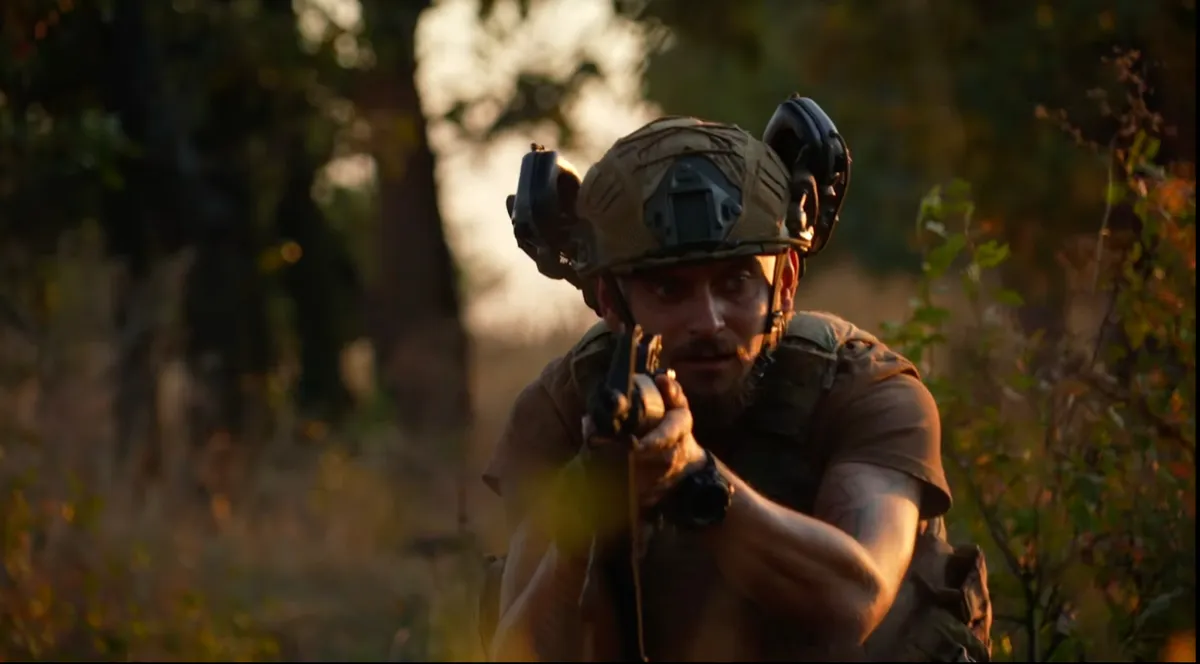
Finally, we have another Ukraine documentary that I saw this summer. Directed by Oscar-winner Mstyslav Chernov, this is his follow-up to 20 Days in Mariupol, and like that previous film, it is now Ukraine’s official entry for International Feature. This had a theatrical release back in July, and I was privileged to sit in for a special screening with Chernov providing a Q&A afterward. It will be available through PBS and Frontline in December.
As Chernov himself described, Mariupol was about framing the beginning of the war basically as a horror movie, and it was quite effective. With Andriivka, the presentation is more like a classic Hollywood war movie, with a focus on the human element and the stories behind the soldiers, as well as their camaraderie, as they band together for a mission that’s more crucial for optics than it is strategic gain.
Using mostly GoPro cameras attached to helmets, Chernov and his co-producer Alex Babenko follow a platoon of Ukrainian soldiers tasked with retaking the village of Andriivka, which has been occupied by Russian forces since the war began. The squad leader is given a Ukrainian flag with orders that no matter what, someone has to survive in order to raise it once the village is captured. From there, we watch a three-day slog through a narrow strip of woodland, charitably called a “forest,” that stretches two kilometers from the Ukrainian base to the village, but as Chernov explained to us, was no wider than the very auditorium we were sitting in. What would normally take less than 20 minutes to walk is now a 72-hour effort with graphic casualties on both sides. Be forewarned, you will watch people die on camera here.
Interspersed throughout the battle are asides and interviews conducted with members of the squadron. We hear about where they grew up, what their ambitions were before circumstances put them on a military path, and what their plans are for when the war ends. Essentially it’s stuff you’ve seen in any number of war films to this point. Only here, it’s real, which makes it all the more palpable when Chernov narrates the fates of those individuals after their scenes are over. Some live, some die, some just barely survive to fall another day.
It’s rare that you see the realities of war in such stark terms, especially as it becomes increasingly clear that taking Andriivka will be, at best, a pyrrhic victory. I said when I first saw the film that I wish it didn’t exist. Not because it’s bad, far from it, but because we as a species should have evolved past this by now. Vladimir Putin should have been stopped well before he tried to annex Crimea, and certainly before this crime against humanity began, and which has now continued for nearly four years. We shouldn’t need a film like this, but unfortunately, we do. If you don’t believe, just look at Trump’s 28-point “peace plan” to end the war, which basically gives Putin everything he wants, including land concessions and pledges for Ukraine to demilitarize. We have failed our ally.
Grade: A
Join the conversation in the comments below! Have you seen any of these films? Do you think any of them are Oscar-worthy? What have you done lately to fight for democracy? Let me know! And remember, you can follow me on Twitter (fuck “X”) as well as Bluesky, subscribe to my YouTube channel for even more content, and check out the entire BTRP Media Network at btrpmedia.com!

 I Actually Paid To See This
4 thoughts on “Back Row Thoughts – Late Doc Appointments”