
I’ve harped a lot on my annual quixotic ambition to clear the Animated Feature list, even though I’ve never been able to accomplish the goal. What I do make a normal habit of is dusting off the shortlists for International Feature and Documentary Feature. This is oftentimes a very difficult mission, as strictly speaking, the films themselves never have to screen publicly. An International submission is eligible if it played in its home country during the designated timeframe (October-September, to allow for applications and paperwork). Documentary hopefuls have an array of options, including a traditional theatrical run, winning at a qualifying film festival, or just simply being its home nation’s submission for International Feature.
For the most part, this is a good system, because documentaries often have difficulty getting distribution for mainstream release. Weirdly enough, we have two coming out in fairly short order: EPiC, which is Baz Luhrmann’s non-fiction follow-up to Elvis (the title stands for Elvis Presley in Concert), and Melania, the behind-the-scenes look at the current First Lady in the run-up to her husband’s second inauguration, which is a well-publicized bribe from Jeff Bezos and Amazon (among the more horrid elements is the fact that half the staff wanted their names removed from the credits out of professional shame at such a brazen, feature-length puff piece to mollify a convicted felon/rapist Nazi). Those, however, are obvious outliers. Most years, the most publicly-available “documentaries” are actually concert films from popular performers, everyone from Taylor Swift to Bruce Springsteen to Beyoncé Knowles. Billie Eilish has one coming out later this year as well.
The problem is that the Documentary Branch, and the Academy writ large, don’t have a system in place to facilitate viewership, leading to many a year where the shortlisted films and eventual nominees aren’t even available for the average viewer to watch. Part of the reason why the Oscars is losing its credibility and essential status is because there’s a disconnect between the body proclaiming something as the best of its kind for the year, but allowing gatekeepers to prevent audiences from judging for themselves.
All this is to say that I did not finish the Documentary Feature shortlist this year. Before nominations came out, I had seen 10 of the 15 entries. It is technically possible to see the other five, but very tight. I’ll know more in the next 24 hours or so, but I’d say the odds are low right now, and the priority has to be on seeing Cutting Through Rocks, which will be coming back into the local theatres for a single day next weekend. That’s the only nominee I haven’t seen yet, so if all else fails, I have to see that one. I’ll do my best, but I make no promises.
In the meantime, though, I’d say it’s about time to start polishing off the various titles that I have seen, and what better place to start than Netflix? As much as I crap on their recent corporate and creative chicanery, it is reassuring that the streamer can be a safe haven for a lot of nonfiction cinema. I hate all the branding and logos they put over each entry, because they didn’t actually help produce a single one, merely buying and hosting the content once it’s completed. I’m sure the actual filmmakers don’t care that much, because at least their work is being seen, and they’re even possibly able to make some cash off of their efforts, but still, it is annoying.
The Big Red N got three of its titles through to the shortlist out of seven that they put their marketing heft behind. One made it all the way through to the final nominations. So are they worth your time and consideration? Let’s give them a look.
The Perfect Neighbor

Geeta Gandbhir has the rare distinction of being nominated in BOTH Documentary categories this year, having also helmed The Devil is Busy, which is up for Academy hardware on the Short side of the equation (she also directed Masaka Kids: A Rhythm Within, which Netflix got behind as well). I haven’t seen that one yet (the short film category blocks don’t come out until February 20), but if her Feature candidate is any indication of her talent, she’s in with a good chance at picking up at least one win.
Told mostly through archival footage and on-the-street interviews from law enforcement, The Perfect Neighbor is an intriguing, tragic, and ultimately cathartic look at implicit bias and the unequal application of the justice system. The title intentionally ironically references its main subject, Susan Lorincz, a resident of a small community in Ocala, FL. As the film repeatedly demonstrates, Lorincz is anything but a good neighbor, constantly calling the police on the other residents of the block, particularly the young black children playing in the street and in the vacant lot adjacent to her home.
Oh yeah, in case you didn’t already realize, Susan is white as FUUUUUUUUUCK, and a complete Karen. To a certain extent, when you know the facts of her situation, you can empathize with her grievance. Her house is one unit of a multi-family house, sitting next to an empty lot that is partially cordoned off by the property owner, who is also her landlord. The roped off section has “NO TRESPASSING” signs along the property line, as does her domicile. Now, kids are going to be kids, and it’s okay to tell them off a little bit when they accidentally or nonchalantly put a toe over the line. Believe me, I just did door-to-door marketing/sales for four months. There are rules we have to abide by, not just for courtesy or the bounds of the law, but for our own safety. If the neighbors and their kids are encroaching too far and too often, you’re within your rights to register complaints, and yes, depending on the severity, it can mean involving law enforcement.
But as the film makes abundantly clear, Lorincz starts from calling the cops – so often, in fact, that the officers tire of her default setting – and only occasionally works backwards to sort of find a basis in reason, and the rest of the neighborhood, when they witness her shenanigans, can openly and credibly contradict her. She also doesn’t help her cause by being the only white woman on the block constantly trying to get black kids arrested (other white residents are shown to have no problem with the kids or their parents), she’s reported to utter racial slurs when yelling at the children, and sometimes she even confiscates their belongings.
It’s that last tactic that leads to the film’s inciting incident and cause for existence. One night, after Susan took a child’s roller skates as punishment for being too loud near her house (she sometimes calls it her “property,” but she’s a tenant, not an owner), the boy’s mother, Ajike Owens, angrily knocks on Susan’s door telling her to give them back, that it’s her right to discipline her child, not Susan’s. At that point, Susan, from behind her door, opens fire, gunning Ajike down. This is how the film opens. What follows from there is a tense examination of Susan’s behavior that led to the shooting, and its eventual aftermath in the legal system, where she invokes Florida’s infamous “Stand Your Ground” laws as her defense.
This is what makes Gandbhir’s direction and editing skills stand out. I’m very much not a fan of in medias res narratives, though I am more forgiving when it comes to documentaries, and here it’s put to an effective use. She starts with the shooting, then backtracks to show the pattern of aggression Lorincz demonstrated for years, with numerous police calls where they have to repeatedly state that the kids aren’t breaking any laws, damaging any property, or threatening her in any way. Still, she acts as if she’s the victim, sometimes bringing up a past sexual assault as justification for being extra cautious… around seven-year-olds playing football in the yard. Yeah, it doesn’t add up. Gandbhir goes to great lengths to show that Susan is the type of person who’ll swear up and down that they’re not racist – and I do think she believes in her heart she’s not – but will still fall back on stereotypes and ingrained bias to qualify her actions. She has no problem with black people, so long as they don’t “act black,” to put it more succinctly.
From there, Gandbhir deftly explores the areas where the justice system falls short, especially when it relates to minority victims and gun violence, particularly in Florida. The “Stand Your Ground” laws have been notoriously applied unequally over the years, most famously when George Zimmerman stalked and killed Trayvon Martin and got acquitted under the broad application of the law, even though he was the one who instigated the confrontation. There have been other egregious cases, like that of Marissa Alexander, a black woman who fired a warning shot above her abusive husband to drive him away, and she got 20 years (pleaded down to three after time served). We’ve literally seen where a white man shooting to kill can walk away scot-free, while a black woman shooting the air as a warning gets sent to prison. So as we watch Susan talk to police detectives, there’s a sick tension hanging over the affair, where if you’re not familiar with her case, you genuinely wonder if she’s going to get away with it. You can even infer an effort on the investigators’ part to try to find some way to make her statements line up so that they don’t even have to charge her.
This is the kind of story that we all wish didn’t need to be told, and in a weird way, the resolution of Lorincz’s case does offer a degree of hope. But that doesn’t undo the damage, and even when you see how it all plays out, this strangely feels like the exception rather than the rule. You’re left to wonder just how damning the evidence had to be to even get her arrested, and whether a slightly more careful loon might have avoided legal scrutiny altogether. In the end, though, this does come down to race, and there are just far too many people, especially in Florida, and especially in the current political climate, who would dismiss this as just another attempt to be “woke,” rather than looking at the facts and examining their own prejudices. If there’s a flaw to be had with The Perfect Neighbor, it’s that we never get a chance to truly look within ourselves and our own communities to see how we can do better, other than the basic ideas of “don’t be a dick” and “don’t shoot people.”
Grade: B+
Apocalypse in the Tropics

Six years ago, Petra Costa was nominated in this category for The Edge of Democracy. That film focused on the almost kangaroo court nature of the arrests and imprisonments of Brazil’s two liberal presidents before the ultra-conservative Jair Bolsonaro was elected in 2018. It was especially poignant, as Bolsonaro’s rise to power echoed Donald Trump’s, and the inherent conflict of interest in having partisan jurists passing judgment against their own political adversaries was something of a warning for where Brazil, as well as the U.S., might be heading.
Now we have Costa’s follow-up, Apocalypse in the Tropics, which explores similar issues, but from a different, less expected angle. Rather than simply noting hypocrisy and corruption in the political world, Petra’s focus falls onto an ostensibly non-partisan body, the Evangelical Church. While Brazil is known as a mostly Catholic country, the Evangelical community has grown substantially over the last two decades, thanks to the calculating (and perhaps charismatic) leadership of Silas Malafaia, a televangelist modeled on the likes of Billy Graham, Pat Robertson, and Jerry Falwell, who believes in using his platform to turn his nation into an enforcement arm for his interpretation of Christianity.
This is a really intriguing look into how religion influences politics, and vice versa. Malafaia believes in wielding and cultivating power, but does so from the sidelines, influencing candidates and messaging while maintaining the plausible deniability of staying neutral by not running for office himself. In some surprisingly candid interviews – given Costa’s views it’s amazing Malafaia agreed to be on camera at all – he lays out his framework for an Evangelical Brazil, where his version of faith rules over everything, including putting an end to the rights and property of indigenous peoples, promoting nationalized businesses that would conveniently profit him (I’m sure he’d tithe, though, right?), and eliminating feminism. He even brags about his role in getting former President Lula da Silva imprisoned because Lula’s pro-working class agenda was rubbing up against his profiteering, which he considers a betrayal of the Evangelical caucus. It’s incredible to see someone so adamant about Jesus being put front and center in Brazilian culture, while also damning himself as being as far from “Christian” as possible, using only his own words.
However, if there’s one common thread to this year’s crop of Netflix documentaries – at least the three on the shortlist – it’s that we do get a bit of justice and see some wrongs righted. Eventually, Bolsonaro loses favor with Malafaia, and while the preacher still advocates for the Brazilian Trump in his 2022 reelection campaign, you can tell he’s upset with the lack of speed in completely reorienting the entire government to operate on kleptocratic minority rule. He has to basically threaten Senators to confirm an unqualified judge to the Supreme Court simply because he’s Evangelical and would issue rulings according to fundamentalist dogma/Malafaia’s whims. He argues with Bolsonaro when Lula is freed from prison, and has his followers issue violent warnings to the Chief Justice. Before the election is even held, he’s front-and-center decrying the result as fraudulent and rigged if it’s anything but a Bolsonaro victory. Sound familiar?
But here’s the thing. Malafaia’s influence was not enough. It was national news even here in the States that Lula beat Bolsonaro, and that in the aftermath, Bolsonaro, Malafaia, and their adherents stormed their own Capitol to try and overturn the result, similar to the attack on our own soil on January 6, 2021. Unlike here in America, though, the rule of law eventually prevailed, with Bolsonaro being banned from public office for a decade and sentenced to prison for even longer. Our country’s response? Trump imposed a massive tariff on Brazilian goods, directly tying it to Bolsonaro’s jailing.
It just goes to show that some things never change, but every once in a while, they do. And when they do, it should be a celebration. That’s at the heart of Costa’s film. Just like with The Edge of Democracy, she shows the vulnerabilities and cracks in the system. But this time, the guardrails held, itself something of a miracle in the modern age. The fact that said miracle was against a man exploiting religion for power makes it all the more sweet.
Grade: B+
Cover-Up
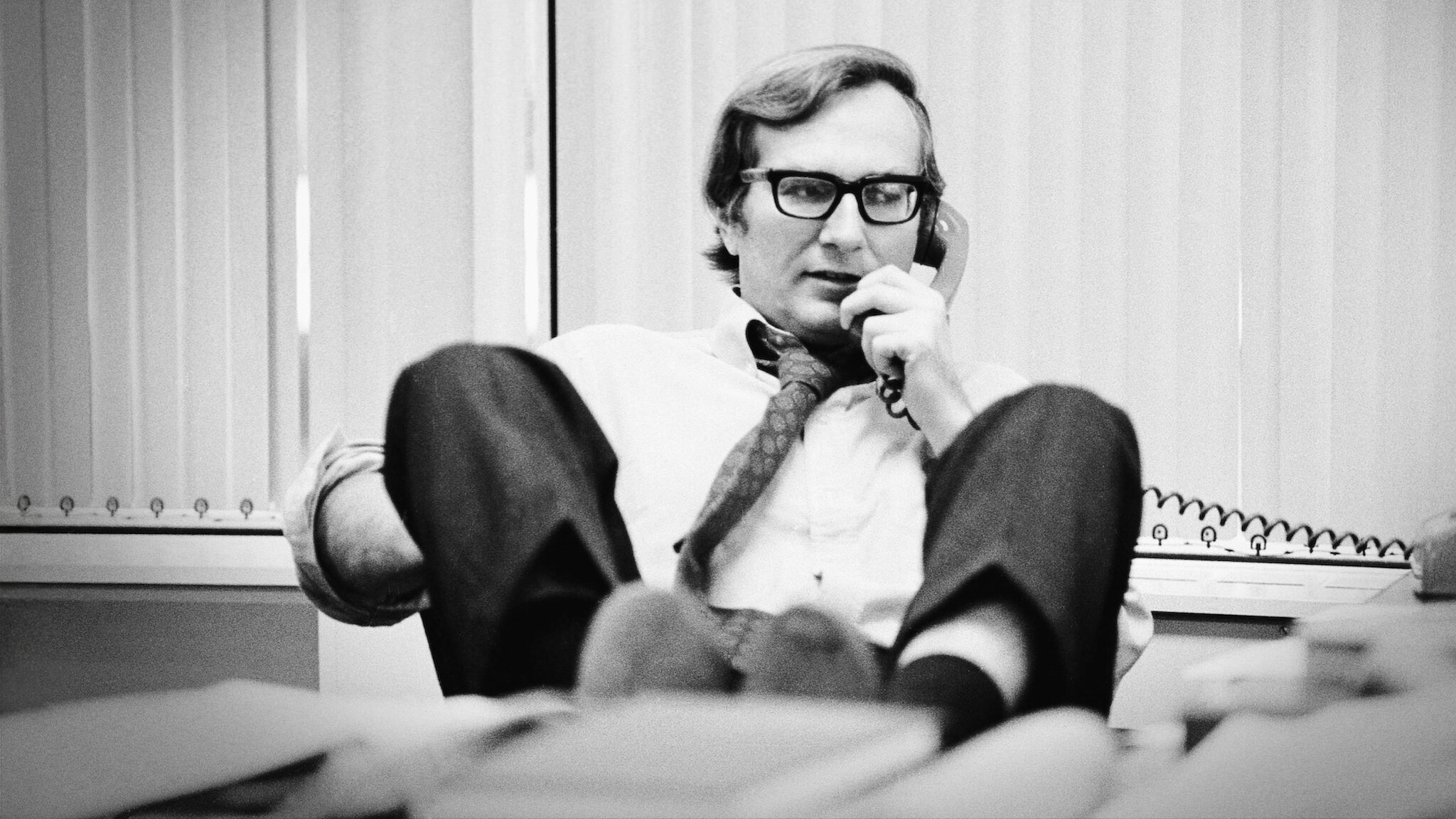
There’s another common thread in these entries, the fact that their directors have all received multiple Oscar nominations. Here it’s Laura Poitras, who won this category 11 years ago for the brilliant examination of the life of Edward Snowden, Citizenfour (she was also nominated for All the Beauty and the Bloodshed three years ago). With Cover-Up, she’s teamed up with Mark Obenhaus to celebrate another exposer of hard truths, journalist Seymour Hersh. Because the subject is much more mainstream than her previous one, the documentary itself is far more straightforward, but no less essential given current events.
Hersh has won the Pulitzer Prize for his work over the last five decades, as well as several George Polk Awards. He’s one of the legends of the fourth estate, bringing light to massive government scandals like Watergate, the Abu Ghraib prisoner abuse, and most famously, the My Lai Massacre, in which U.S. soldiers in Vietnam were ordered to wipe out an entire village of men, women, and children – soldiers and civilians alike. It was that particular incident that turned public opinion against the Vietnam War permanently (not that it was ever popular in the first place), and got him a coveted spot on Richard Nixon’s infamous “Enemies List.”
He’s also been something of a controversial figure over the years. Part of this is his attitude, which is often standoffish and curt, and another part is a reliance – some would argue an over-reliance – on anonymous sources. All journalists use them to one extent or another, particularly government staffers and officials who could lose their jobs or face criminal prosecution for revealing sensitive information about what goes on behind closed doors. Hersh, however, made it an art form, to the point that at several points in the film itself, he’s reticent to continue even talking to Poitras because she and the camera can see his notepad, which has the names of some of his sources on it. Of course, those names are blurred out or otherwise redacted in the final cut, but Hersh can’t know that in the moment, so he becomes increasingly defensive.
The highlight here is the humanity of Sy Hersh. A lot of people lionize journalists who break important stories, but at the end of the day they are still people, just as fallible as the rest of us. Hersh has gotten things wrong before. An anonymous source didn’t pan out. He’s been ridiculed by influences on all ends of the political spectrum. He left the New York Times under less than amicable circumstances. Yet he remains protective of his colleagues. He and his wife have been married for 60 years. At the age of 88, he’s still finding ways to work and keep the flow of information going, even though his reach isn’t nearly as universal as it was in the 60s-80s.
There’s an importance in highlighting his career and achievements. We live in an age of media consolidation and outright manipulation. Fox News has been at the forefront of conservative mouthpieces for nearly 30 years, but so many more outlets, going even farther to the right, have sprung up since, to the point that Fox itself gets accused of being “too liberal” when it dares to report facts about the goings-on in the Trump administration. Hell, the entire right-wing news-industrial complex sprung up in response to the so-called left-wing reporting of people like Hersh, disregarding the idea that facts have no political bias. CBS News, once the home of stalwart newsmen like Walter Cronkite and Dan Rather, is now run by a right-wing lickspittle and apologist named Bari Weiss who literally kills stories if they’re not sufficiently deferential to the regime. The Washington Post, which once had the motto of “Democracy Dies in Darkness” after Jeff Bezos bought the paper, has since eliminated that aspiration, infamously refused to publish its editorial board’s presidential endorsement when it was going to go to Kamala Harris instead of Donald Trump, is about to cut half its newsroom, and as previously stated, the multi-billionaire boss spent millions to produce a cinematic star profile of the First Lady and call it a documentary just to please Dear Leader.
Voices like Hersh’s, dedicated to exposing the truth no matter where it comes from, are becoming fewer and fewer each year. Sure, the man editorializes to what some could reasonably argue is an excessive degree, but the remedy for that isn’t to silence all dissent and never speak truth to power. The solution is to continue reminding ourselves that we’re all human, prone to mistakes, and that there should be grace when there’s truly an error that can be corrected. But more importantly, it’s to continue speaking out about much more grievous wrongs and criminality, and not be muzzled by moneyed interests when literal lives are at stake on a daily basis. Did this film deserve to be nominated? Honestly, probably not. There are better entries on this list. But is the message essential? Absolutely.
Grade: B
Join the conversation in the comments below! Did you see any of these films? Which was the best in your eyes? Have you ever had your neighbors call the cops on you? Let me know! And remember, you can follow me on Twitter (fuck “X”) as well as Bluesky, subscribe to my YouTube channel for even more content, and check out the entire BTRP Media Network at btrpmedia.com!

 I Actually Paid To See This
3 thoughts on “DownStream – For Your Consolidation, Part 2: Documentary”