
A lot of foreign films that compete at the Oscars deal with heavy emotional or political themes, often in the context of world-changing events. Whether they’re narrative films or documentaries, there’s a ton of high-concept, game-changing ideas out there, which is why the Academy likes to curate them in the specialty feature categories (International, Animated, Documentary), because sometimes the medium of cinema is the only window people have to the rest of the planet.
In fact, so much of the content is just so overly grandiose, that it’s often lost on some audiences that we’re far more like our neighbors around the globe than not, and that most of us just go about our business every day, trying to make a positive difference, no matter where we live on this pale, blue dot. Every once in a while, the mundane nature of our lives is interrupted by something important, or even extraordinary, which is also fodder for great films.
That’s the focus of this set of mini reviews. Between International Feature and Documentary Feature, we got quite a few films that gave attention to more everyday heroes. I’ve got three entries in the backlog that illustrate this concept admirably, each of which made it onto one of the shortlists. One even got nominated. So as we continue to build up to the beginning of the Oscar Blitz next week, let’s take a quick look at some submissions that aimed more at highlighting normal people doing amazing things, enough to at least get the Academy’s attention.
Late Shift – Switzerland
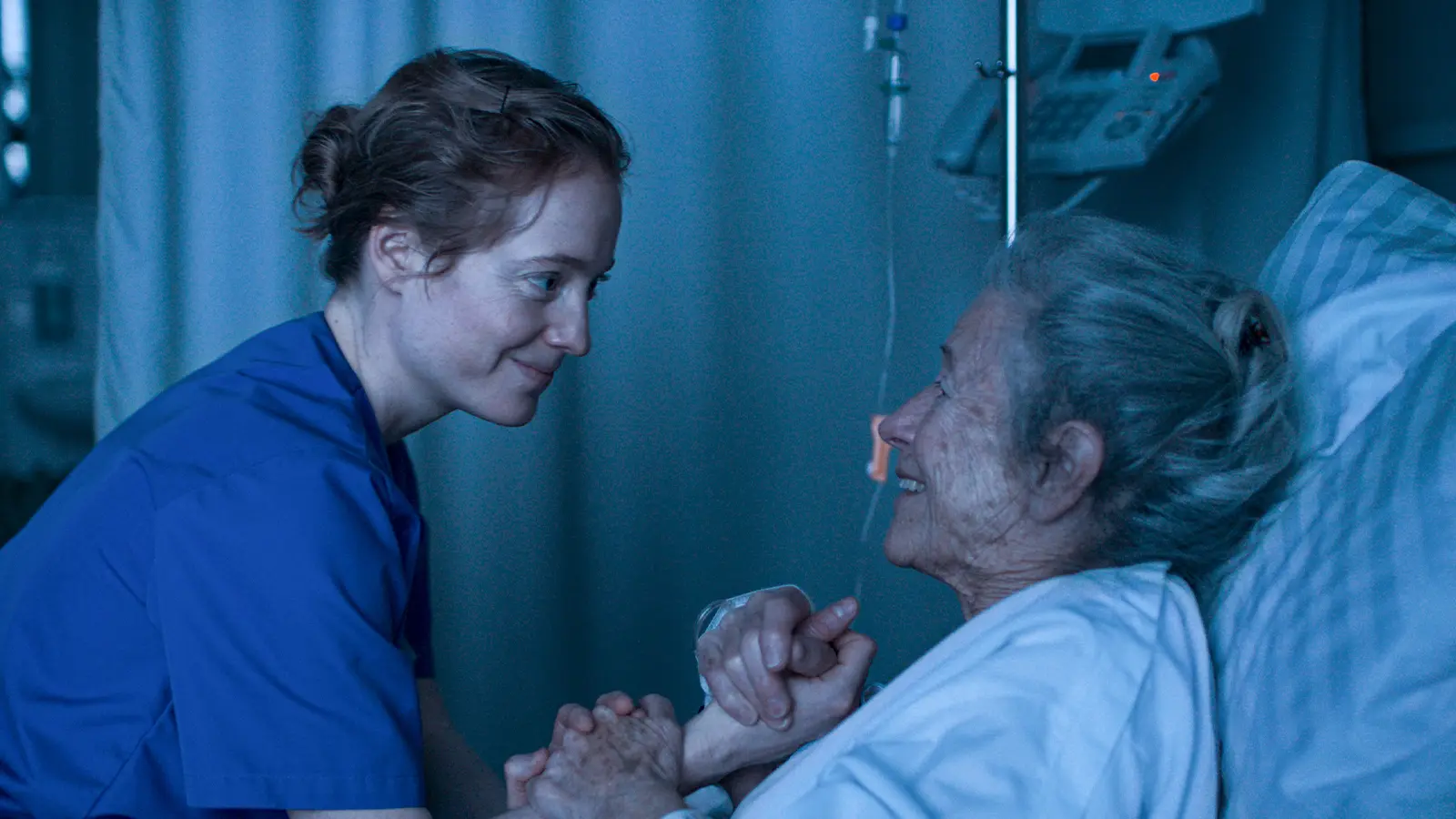
During the COVID pandemic, frontline healthcare workers were the bastion that kept so many of us safe, at an incredible cost to their own wellness and sanity. They were rightfully lauded as warriors for the public good. Once things subsided, however, a lot of us kind of went back to taking them for granted, and at least in this country, very few policy changes were enacted to make any of their jobs easier. In fact, with the regime responsible for mishandling the crisis back in power, active steps have been taken to make their lives even harder and to sabotage the public health system.
The rest of the world thankfully hasn’t gone that crazy, but even in civilized societies, medical professionals have it rough. This is the backdrop for Switzerland’s Oscar entry, Late Shift. Taking place over a single evening, the film follows a stalwart ER nurse (Leonie Benesch, who starred in the previously-nominated The Teachers’ Lounge) as she goes about her highly stressful rounds as part of a very short staff. She alternately has to deal with a family whose mother is dying, patients prepping for surgery, a chain-smoker on an oxygen tank, a dementia patient who won’t eat, and a snooty man with a private room who demands to be given special treatment, acting as if the hospital is a hotel (for those unaware, Switzerland, like the entire First World apart from the U.S., has universal healthcare, but they also allow for people to buy additional private insurance, which does afford certain perks like private wards).
You can see the toll that the night takes on Benesch’s Floria, slowly driving her more and more up a wall. Most of her job is routine, but with every bit of literal and figurative needling, she begins breaking down, thanks in no small part to her patients’ lack of empathy and dismissive doctors who won’t give her proper resources. She even lashes out at a medical student shadowing her station because the young woman simply doesn’t know what to do in situations she has yet to encounter. It’s a crucible by fire, with tension building because you’re just waiting for it all to become so much that Floria makes a mistake that could cost lives. Benesch plays it perfectly, keeping Floria as grounded as possible, but crucially always believable as a person. She’s no superhero. In fact the film itself could serve as a cautionary tale for anyone looking to get into the medical profession. As much as we romanticize the helpers, this is the real shit they deal with on a daily (or in this case nightly) basis, so start steeling yourself against it now.
I’m guessing that, in the end, this was just too straightforward and simple of a story to ultimately make it to Oscar Night, but damn if every second of this isn’t compelling and relatable. There’s a moment late on where Floria finally snaps and takes the watch of the pushy private patient, and just chucks it out the window before lecturing him about the fact that he’s going to die an asshole. It’s weirdly cathartic, to the point that several people in the audience applauded and laughed when she did it. Floria and her colleagues even laugh after the fact, despite knowing that she crossed a line and could easily be fired. She not only lost her cool but she could have destroyed someone else’s property, and she instantly regrets it and tries to make amends. At the same time, though, we have ALL been there, and you could feel the air coming back into the room after some heavy moments because she was allowed to be perfectly imperfect for just a couple of minutes before getting back to business. That’s some very smart storytelling.
Grade: A-
Belén – Argentina
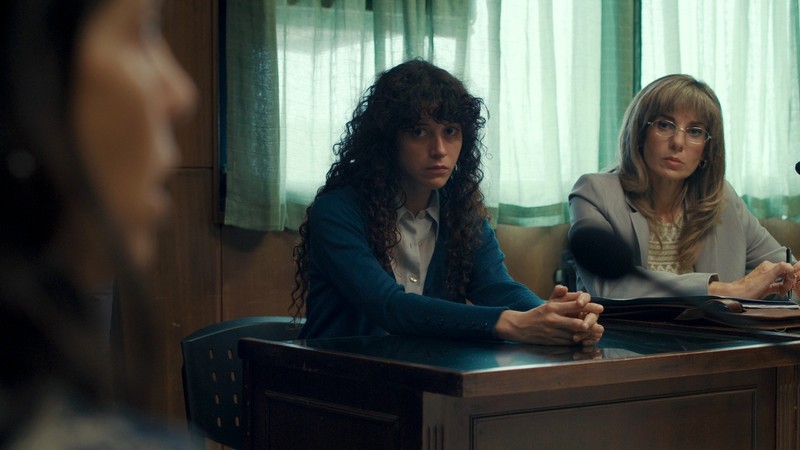
As advanced as we in the States sometimes think we are, it’s crucial to remember that we have a lot of catching up to do with the rest of the world on key issues, especially as some places show us the consequences of a potential backslide. Case in point: Belén, based on a real-life moment of social justice amid Argentina’s somewhat corrupt legal system, even as it modernizes and moderates.
Directed, co-written, and starring Dolores Fonzi, Belén shows exactly what happens when people in power wish to make an example of those in less fortunate positions for their own political gain and culture war advancement. The story begins with a young woman named Julieta (Camila Plaate) showing up to a hospital with stomach issues. She goes to the bathroom and returns bleeding profusely. She’s then taken in for emergency surgery, where she’s promptly arrested and imprisoned, accused of performing an illegal abortion on herself. Saddled with an overworked and apathetic public defender (Julieta Cardinali), the woman is quickly convicted without proof and sentenced to a lengthy prison term. Slandered in the press as a baby killer, Julieta is already a prime target for retaliatory violence from both inmates and guards.
Seeing the lack of due process, Julieta’s case is taken up by Soledad Deza (Fonzi), who has more resources at her disposal to defend Julieta and get her released on appeal. Simple investigations prove that Julieta could not have performed an abortion on herself – she had no tools, the sex of the fetus changes multiple times depending on the report, and it was found in an entirely different bathroom from the one Julieta used – and likely didn’t even know she was pregnant, her bleeding caused by a uterine hemorrhage and miscarriage rather than any interference on her own part. Still, the pressure is on to make Julieta a strawman for anti-abortion demagogues, in a country where the practice is already forbidden thanks to its heavily Catholic population. Deza then works with her colleagues to start a viral social campaign, referring to Julieta by the titular pseudonym (among the many breaches of justice protocol is revealing Julieta’s name in the press before her hearing to bias the public and the media against her), and parading several masked women who all claim to be just like their imprisoned sister, demonized for attempting to exercise any bodily autonomy.
It’s an inspiring story, especially when you consider how much abortion rights have been stripped away in this country over the last few years. Unfortunately, the actual produced film leaves a lot to be desired. Fonzi’s writing, direction, and performance are strong, too strong in fact, as emphasis and attention regularly shifts to put Deza in the spotlight rather than the woman she’s fighting for. More time is spent on threats to Deza’s family than to Julieta behind bars, for instance. Also, the production values are severely lacking, with the picture quality changing from scene to scene, as if they had a different camera on each shooting day and never formatted the dailies. The same goes for the sound, with the audio mix being significantly off in certain scenes, implying that the microphones weren’t properly positioned, and the sound edit wasn’t balanced. This is a clear case where the message mattered more than the medium, but it’s hard to root for everyone involved when some elements border on incompetent.
Grade: B-
Mr. Nobody Against Putin
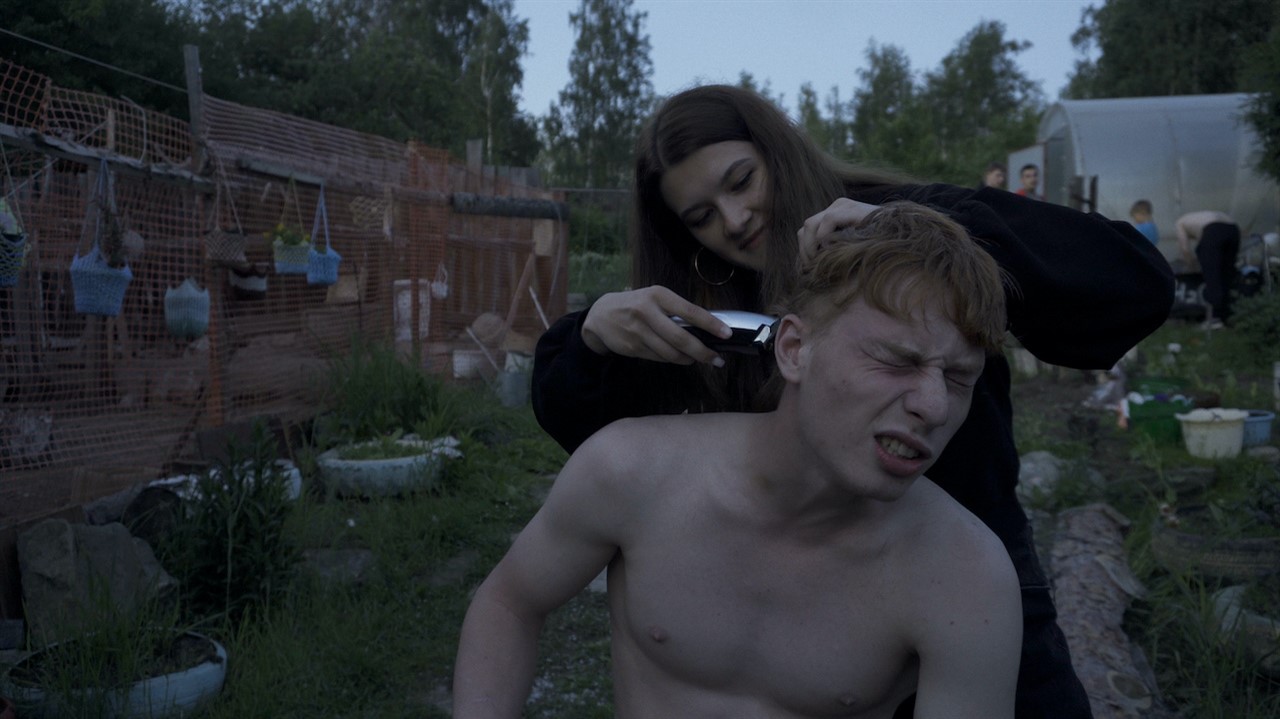
It’s a fairly common thing to see an International Feature submission wind up nominated in other categories, even if it’s already been eliminated from its main competition at the shortlist phase. That was the case with two films this past year, both of which were shortlisted for Documentary Feature instead. I’ve already gone over one of them, 2000 Meters to Andriivka, which represented Ukraine, and was ultimately not nominated. The other is Denmark’s candidate, Mr. Nobody Against Putin, which did make the final cut in the non-fiction field. There are many documentaries about the illegal war Vladimir Putin has waged against Ukraine, which is about to hit its fourth tragic anniversary, but the vast majority are from news outlets and other outside sources reacting to the atrocities on and near the battlefield. This film is a personal look from within.
Directed from afar by American documentarian David Borenstein, who lives and operates out of Copenhagen, hence the Danish angle, the work on the ground is performed by Pavel Talankin, aka “Pasha,” a videographer and events coordinator at a school in Karabash, Russia, a copper mining village about 900 miles east of Moscow. Something of a quirky outsider, Pasha has always had a passion for education and forming rapports with the students, many of whom he’s watched grow up from elementary to high school age. He’s a one-man AV department, planning and recording all the school’s major events during the year, and creating videos for posterity and the enjoyment of students, parents, and teachers.
When Putin announced the “special military operation” in February 2022 and invaded Ukraine with the hopes of wiping it off the map and reabsorbing the territory back into Mother Russia, Pasha decided to tender his resignation, rather than being even an ancillary agent of his government. This became especially important for him as, after the invasion, the Kremlin demanded that schools perform regular “patriotic exercises” using scripted propaganda and lessons to create the narrative of the righteous liberation of a country that didn’t want it. These courses were then meant to be videotaped, with the footage uploaded to a government website as proof that they were following orders. After getting in touch with Borenstein, Pasha made the risky decision to withdraw his resignation and return to his duties, as he was now a source for Borenstein – and the outside world – to see the Orwellian brainwashing going on in real time. From “classes” where students and teachers read off of scripts to prop up the lie that Ukraine is full of Nazis, to government awards to a “true believer” teacher who advocates for the torture and execution of dissidents, to the formation of the Russian equivalent of the Hitler Youth, Pasha captured all of these insidious practices for dissemination by the rest of the world, all in the guise of complying with federal mandates.
Of course, all of this comes with great danger. Pasha’s colleagues know he’s a pacifist, and eventually he notices that his home is being monitored by police. His freedom and safety hang in the balance. And yet, it pains him to even consider fleeing, though eventually he must, because Karabash has always been his home, and he believes himself to be a true patriot because he loves his country. His mother is the school librarian, and he dreads leaving her behind. He’s formed friendships with many current and former students, trying to comfort them as they or their relatives are conscripted to the frontlines. One minute he’s checking in on a girl whose brother has been drafted and is in fear for his life, and the next he has to suck it up and film a birthday party for another who’s about to leave, complete with playfully celebratory head shave, pretending to have any hope of seeing the boy alive again. It breaks his heart – and yours – to see this small community essentially torn apart by a madman with a god complex. Even for those who buy the bullshit, they recognize that Karabash is so far from the western border with Ukraine that it’s literally impossible for the war to affect them, save for Putin’s whims. They know that if the war ends tomorrow, even if everything said about Ukraine is true, they’re so far insulated by their mountainous environment that their neighbors will never touch them, so why must they be part of this charade?
That’s the inner conflict Pasha must deal with every step of the way as he gathers his footage and carefully walks his tightrope. It’s amazing to watch, not to mention devastating. This is a simple man who loved his community and his job, and it was all taken away, and more, by the warmongering of an insane dictator, to the point that survival is the only course he and others have left. But maybe, just maybe, he can make a difference in the long run by being an agent for truth. It’d be one hell of a David v. Goliath story.
Grade: A-
***
That’s all for this set. We’re getting ever so close to the Blitz proper, with coverage starting next Monday. I still have several reviews to clear off, including for the nine films I had to see post-nomination. But we’re getting there, slowly but surely.
Join the conversation in the comments below! Have you seen any of these films? Would you have nominated them? What would you do if given the chance to play a small part in a revolution? Let me know! And remember, you can follow me on Twitter (fuck “X”) as well as Bluesky, subscribe to my YouTube channel for even more content, and check out the entire BTRP Media Network at btrpmedia.com!

 I Actually Paid To See This
One thought on “Back Row Thoughts – Doing the Work”