
Hello, everybody! Ladies and gentlemen, children of all ages, welcome to the 2026 Oscar Blitz! We have five weeks chock full of analysis as we count down to the 98th Academy Awards, and it’s a labor of love every year. However, I do have to open on something of a down note, and admit that this could very well be the last time I do this. The Oscars are a passion of mine, but doing the Blitz requires that I see everything, which seems to get harder every year, thanks to the glut of streaming and the fact that so many documentaries and foreign films don’t get distribution in this country. Living in Los Angeles for the last 12 years has afforded me opportunities and access – through festivals, special screenings, and independent limited runs – to fill in the gaps that most people who live anywhere else (except New York City) simply don’t have.
And the unfortunate truth is, I may have to leave the City of Angels very soon. My employment and financial woes have not gotten better, and if things don’t turn around by the late spring, I won’t be able to sustain my living situation. To be clear, I’m not mad about this (I’d throw my ass out, too), just very upset and sad that it’s come to this, and through the fault of no one involved. With currently no solid income or job prospects, it’s not like I can just move to another apartment, as the rent that I haven’t been able to pay in months is relatively cheap by L.A. standards. It’s incredibly improbably that I’ll find a cheaper option, so it’s entirely possible, if not likely, that my sister’s couch awaits me. When and if that comes to pass, the idea of going to the movies at all becomes basically non-existent. The Blitz will have to be retired, and maybe even the blog and channel themselves. It’s ironic that I’m taking all this time to celebrate the entertainment industry when I’m about to be permanently defenestrated from it, not through errors on my part or vindictiveness from others, but from pure, callous indifference. I care so much, and yet I could lose everything because of people who don’t.
So, with that in mind, let’s truly enjoy ourselves this year. Hopefully it’s not the end, but if it is, then we should go out on a high note.
We begin tonight with one of the major categories, Best Director. Why, you may ask? Well, because in spite of the high caliber of the nominees, the result is pretty much already determined. Paul Thomas Anderson won the Critics’ Choice and Golden Globe last month, and just this weekend he picked up the Directors Guild Award. We’ve got the BAFTAs in two weeks, but that’s the last opportunity for this to become a contest.
It’s a shame, too, because this is a very strong field, with all of the nominees also up in other categories. All five are nominated for their respective screenplays, three are named producers for the purposes of Best Picture, and one more is even up for Film Editing. What this means is that all the filmmakers were heavily involved in the process of bringing these movies to life, and that they all made sure that their particular vision was executed the way they wanted. As such, it makes my job that much easier, because I can truly see how they got their message across, and whether or not it was ultimately effective. This isn’t a case where one director handled their cast well while another was better at shot selection. For all five of our hopefuls, they’ve delivered a complete package, which makes it more simple to judge. Given how wonderfully exhausting the Blitz can become by the end, I’m grateful for anything that can mitigate the eventual stress.
Oh, one last thing. I don’t remember if I’ve ever stated this openly (and I don’t care to spend the time checking my archives to be sure), but be advised that there is a blanket SPOILER WARNING for the entirety of the Blitz. All of the films I’ll cover have been released in some form (with the Shorts coming next week), and while I do my best not to reveal crucial plot details, sometimes I do need to discuss things that may be sensitive when making my analysis. So just keep that in mind. If you haven’t seen these movies, there is a chance you may learn some things you don’t want to know. Good? Good. On we go!
This year’s nominees for Best Director are…
Hamnet – Chloé Zhao

It’s hard to believe that Chloé Zhao’s career has been relatively short, given that she’s already distinguished herself as an auteur, noteworthy for her use of picturesque locations and bright colors in her camera work (even in dingier scenes), a thematic emphasis on empathy and relatability, and a focus on a woman’s perspective, what she somewhat jokingly refers to as the “female gaze.” All of this was front and center with her Oscar-sweeping breakthrough, Nomadland, and it’s fully on display yet again in Hamnet. She’s only directed five feature films, and yet she’s already reached these heights twice. Literally 40% of her output is among the best in a given year (though the less said about Eternals the better; she’s earned a mulligan).
Despite its title focusing on the child, Zhao states her intentions very early on as being about Jessie Buckley’s Agnes. The vast majority of the film is taken from her perspective. It’s about how she falls in love with William Shakespeare – who in a sort of reverse Bechdel Test isn’t even named until the final scenes. It’s about how she copes with the loss of her son. It’s about her feelings of isolation as Shakespeare’s mother dismisses her holistic and mystical upbringing and Will leaves her in Stratford to do his work in London. And ultimately, it’s about her catharsis at seeing Hamlet on stage for the first time, and knowing that her grief wasn’t hers alone.
That’s, sadly, a genuinely unique take. In almost anyone else’s hands, this is a story about Will himself, how Agnes sparks his creativity, and how he channels his pain into his greatest play. In short, in lesser hands this is Shakespeare in Love, which I honestly feared it would be based on the trailers. This is one of the few cases where I’m truly thankful that the marketing was misleading. The elements I just described are in the film, mind you, but they’re deprioritized in favor of Agnes, a woman about whom we know very little in real life. Anne Hathaway’s personal history doesn’t have nearly the pages of her iconic husband, so Zhao (along with co-writer Maggie O’Farrell, who wrote the novel on which the film is based) imagines what she might have gone through. Is it all logical? Perhaps not, but it is plausible, and given Zhao’s previous opus about a woman forced into a background role in life, it is emotionally resonant, which means she accomplished her goals.
Marty Supreme – Josh Safdie
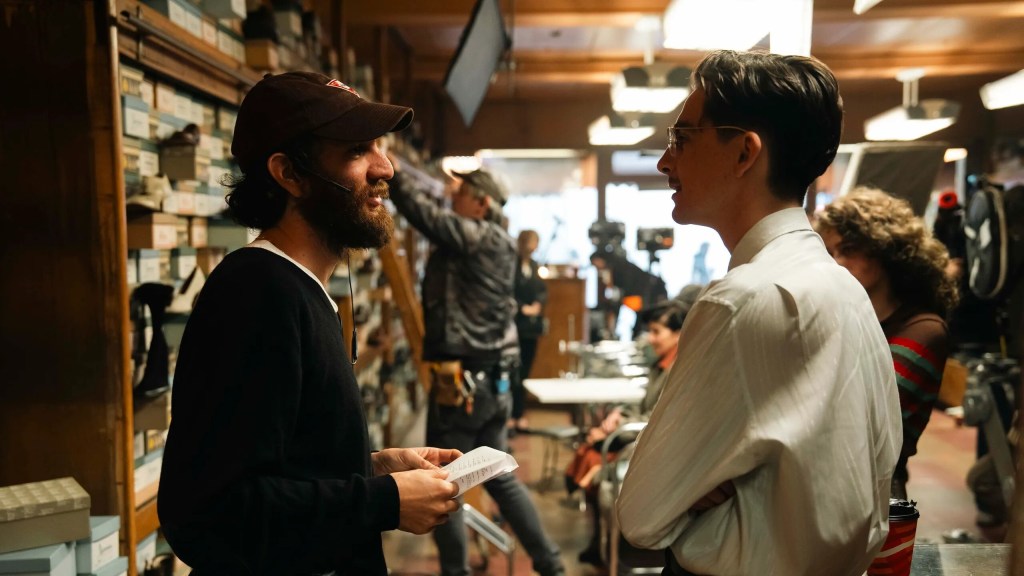
Josh and Benny Safdie were a dynamic duo as directing brothers, breaking into the mainstream with gritty works like Good Time and Uncut Gems. In 2024, they decided to split up and work on projects on a solo basis, with both brothers putting sports movies out last year. Benny released The Smashing Machine, which is up for Makeup & Hairstyling, while Josh gave us Marty Supreme, which has nine nominations, including Best Picture. The disparity in the accolades is somewhat ironic, as at their core, both films are very similar, in that they’re hard-nosed looks at the lives of small-time athletes who succumb to their vices. In the case of The Smashing Machine, Mark Kerr is addicted to the adrenaline rush of fighting, as well as opioids. In Marty Supreme, Marty Mauser is addicted to his own hype. Both protagonists suffer defeats and humiliations, both engage in histrionics and melodrama, and eventually both are offered salvation through a change in their life’s perspective.
Marty Supreme is the better of the two movies, but that doesn’t necessarily equate to Josh earning so many more laurels than his younger brother. You could honestly argue that Benny took bigger risks with The Smashing Machine, and that Marty Supreme hews closer to Uncut Gems, making it feel somewhat derivative. Marty endlessly takes advantage of those around him, just like Howard Ratner, the depiction of New York City is quite grimy, and there are more Jewish stereotypes than The Passion of the Christ. The Smashing Machine isn’t great, but it at least feels more distinct.
All that said, Josh definitely got the story he wanted across, not just in the writing but also in the visuals, as he and co-writer Josh Bronstein also headed up the editing team. The film plays exactly as Josh wants it to, so he owns the final product, warts and all. On a meta level, this makes sense, as Marty is meant to be an anti-hero protagonist who we eventually accept in spite of his myriad flaws. He’s a representation of the hard truths and cruel realities that come with pursuing the so-called “American Dream.” Within context, however, this proves to be the film’s ultimate undoing, at least in relation to the other top contenders this year.
You can see Safdie’s vision on screen… most of the time. The performances are mostly solid, particularly Timothée Chalamet and Odessa A’zion, the cinematography is appealing, and the table tennis sequences are expertly choreographed. The issue is that in trying to portray the darkness of the moment, we’re bathed in far too much literal darkness, with some scenes so poorly lit it’s almost impossible to see what’s going on. Why are we cutting to Gwyneth Paltrow in the stands at the ping pong tournament, keeping the camera on her reactions for almost a solid minute, when it’s so dark that she might as well be in silhouette? That kind of error is 100% on Safdie. He wrote the scene, told her how to perform it, designed the shot, and put it in the final cut. None of this makes the film bad, but it does make for a few very frustrating moments from an artistic and technical standpoint, and the blame for it falls squarely on his shoulders. The Smashing Machine isn’t that good of a movie, but I can at least say that I could see what was going on at all times. Maybe the brothers are better as a team, complementing each other rather than competing.
One Battle After Another – Paul Thomas Anderson
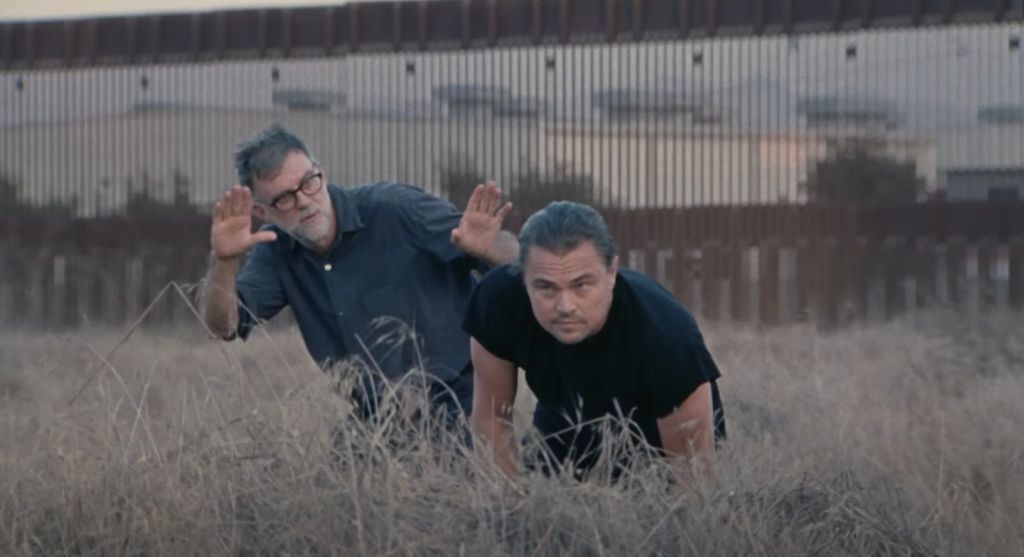
The likely winner of this year’s prize has a lot going for him. One Battle After Another is brilliantly shot, wonderfully edited, uproariously funny at times, and has an A-list cast giving it their all in every scene (plus newcomer Chase Infiniti outshining the lot of them at certain points). It’s very hard to argue against his presumed victory apart from a personal preference.
I think the biggest thing he can point to in a campaign is in managing the cast itself. Not only do you have some of the biggest names in Hollywood in this flick, you’ve got some of the biggest egos. The sheer magnetism of Leonardo DiCaprio can be a double-edged sword, because while his talents only seem to grow with age, he also has some well-publicized shortcomings, particularly when it comes to his personal life and his political advocacy. He’s the type of guy who can command a room with his charisma, then piss you off when he throws his celebrity weight around.
Then there’s Sean Penn, known to a lot of insiders as one of the most humorless, self-important pricks in the business. I still remember the way he killed the mood at the Oscars several years ago, when host Chris Rock made a joke about general audiences not knowing who Jude Law was, and over a half-hour later, Penn comes up to present an award, but prefaces it by defending Law’s honor when no one was asking for it. It was a brief chuckle we all shared, including Law, but Penn couldn’t resist the urge to be “better” than everyone else. In recent years, he’s courted controversy by interviewing/palling around with El Chapo Guzman, and he literally created the 2021 film Flag Day just so he could cast his daughter in it (40% on Rotten Tomatoes). He’s like the cinematic version of Bono. Everyone recognizes that he’s a good person and does fine work, but you can’t escape the feeling that he’s also a smug douche.
At any point, either of these two could have commandeered the production, but Anderson kept them in line at every turn. He understands who these people are, and was able to work with them to wring the best performances possible in a story where, while some roles are more outsized than others, attention and emphasis have to be shared. More importantly, despite the wackiness of the underlying satire, he had to make sure that everyone played their roles straight. For someone as outspokenly liberal as Penn, he could have easily turned Col. Lockjaw into a one-note parody of the authoritarian racist right in this country. Instead, Anderson made sure Penn was as earnest and professional as possible in his approach, focusing on the cruelty of the action rather than winking to the camera and saying, “I’m Stephen Miller with hair.” All of the directors on this list told great stories, but the amount of discipline required for One Battle After Another is arguably Anderson’s biggest selling point.
Sentimental Value – Joachim Trier
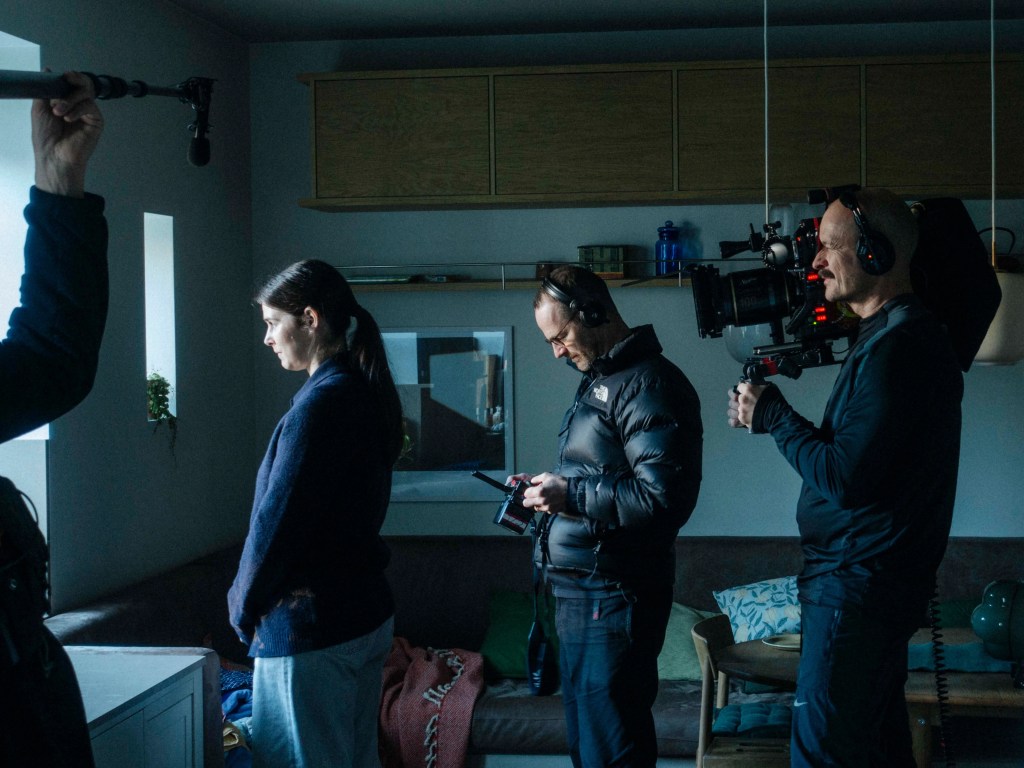
When I was a senior in high school, we put on Fiddler on the Roof for our spring musical. It was my last show as an official “theatre nerd” teenager, and it was a ton of fun having the largest role I’d ever had in the spring show (I played Lazar Wolf and understudied Tevye). Our director was a guy named Damien, who had never worked with us before, and I don’t think he worked with the school afterward, as several members of the cast signed a petition to fire him after the fact (I think I signed as well, but I honestly didn’t care; the only thing he did that offended me was showing up reeking of cigarettes every day). The reason was because he had a very method approach to getting the most out of our ensemble, including intentionally berating some of the cast members to induce the exact emotional response he wanted in a given scene. He always broke the facade once he got what he wanted, but the act itself definitely rubbed some people the wrong way. I respected it to a point, probably because I was never subjected to it.
I relate this anecdote because as I watched Sentimental Value, I wondered if Joachim Trier had similar tactics. This is a very heavy story from an emotional perspective, and a lot of generational trauma and baggage has to be processed in a way that feels raw and genuine. You can’t just read the lines in a story like this. It wouldn’t surprise me if Trier, who worked with star Renate Reinsve on The Worst Person in the World, did the same thing, knowing that his cast was up to the challenge. This story could have easily devolved into soap opera-level melodrama (like a couple other International Feature semifinalists this year), but Trier had a deft enough touch where he knew how and when to push the boundaries but keep it all respectful and grounded so that it didn’t spiral.
From a technical perspective, just like the story, it’s all about intimacy and closeness, even when it’s uncomfortable. There’s a tightness in the space of the various sets and the cinematography that forces the players into the closest of quarters, emphasizing the need to address the issues and come to some degree of an understanding for the sake of sanity. Notably, the camera never constricts the players, but the sets do, and you can sense the freedom that openness allows in contrast. Nora and Gustav are always happier in an outdoor or wider space. This is best exemplified by Gustav’s walk on the beach with Rachel, the exhale of Nora’s panic attack in the opening once she is forced onto the stage, and in the catharsis of the final scene, as the dark reenactment she performs widens out to reveal a film set rather than the claustrophobic house where most of the action takes place. It’s the perfect visual note to reinforce the thematic ones.
Sinners – Ryan Coogler
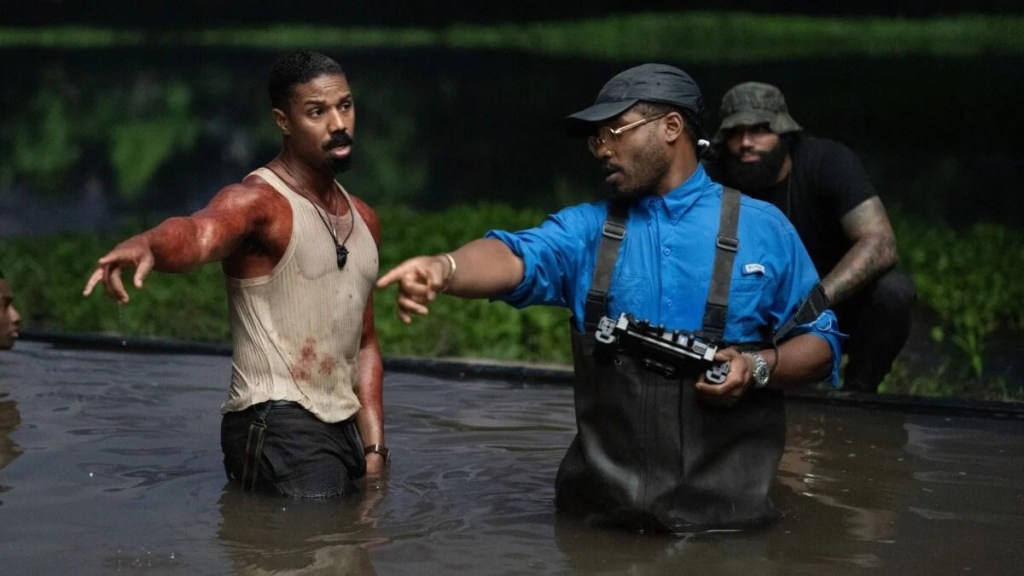
It’s very hard to root against someone like Ryan Coogler, who geeks out over film stock and aspect ratios like you or I might have done with our action figures and dolls as kids. There’s an unbridled joy in what he does that permeates every film he makes, even in the darker moments.
You can see that full force in Sinners, which is ultimately a celebration of culture despite the horrific nature of the plot. The story is about endurance, the dangers of assimilation, and the wonders of shared art and history as a means of survival and identity. It’s about facing our demons – literal and metaphorical – while also acknowledging the flawed humanity that makes us who we are. And then, just for fun, it’s also about doling out some well-earned harshness to racist fuckwads in a bit of revenge fantasy wish fulfillment.
Just like Anderson can hang his hat on the fact that he was properly able to wrangle his cast when personality clashes could have ended up winning the day, I think Coogler can point to the fact that he had the most to juggle out of all the other contenders to make his masterpiece. He’s got an incredibly talented cast from top to bottom, and he needs to make sure that none of them turn into caricatures (except the Klansmen, because fuck them eternally). He has to formulate incredibly complex sequences like the “I Lied to You” juke joint dance, the climactic fight, the shootout, and the haunting Irish jig as Remmick’s army of the undead grows. He has to get really in the weeds when it comes to lighting, cinematography, choreography, and yes, picking the right type of film for each scene (the fact that he’s even still using film as opposed to just digital recordings is another point in his favor), knowing that it has to show up crystal clear on both IMAX and smaller formats. He has to craft a story that’s efficient but still gets across all the necessary information, giving the audience credit to put two and two together without pandering or padding.
And of course, he has to shoot the film in such a way that his lead, Michael B. Jordan, can literally be in two places at once when the editor finishes the job. Essentially every scene has to be shot twice over with identical angles to accommodate Jordan doing it once as Smoke, then again as Stack, complete with all the costume changes and mechanical adjustments that can make it so that each individual shot can take hours to film. That’s insane. Anyone inclined to vote for Coogler can simply point to the enormous amount of stuff he put on his directorial plate, and never once did he make a mess of it. Is Sinners a perfect film? No, of course not. No film is perfect. But the fact that he did so much without ever losing sight of his goals, and never once faltering in the execution, is incredible in its own right. That the film is just so crazy good is enough to put him over the top for a lot of people, myself included.
***
I kind of hate that this is already a done deal as far as who’s going to win, because this is one of the best lineups we’ve had in a while. No one here did a bad job, and they all executed their visions the way they wanted to. You can’t argue that there was some obvious bit of studio interference that diluted the final product with any of these films. Each director took the helm, and the responsibility, to tell their stories the right way. Of the lot, there’s only one that I wouldn’t have nominated, but that’s only because I think others like Park Chan-wook, Clint Bentley, and Kleber Mendonça Filho were overall slightly better. We know who’s getting the Oscar, but all of them are deserving in their own way.
My Rankings:
1) Ryan Coogler
2) Paul Thomas Anderson
3) Joachim Trier
4) Chloé Zhao
5) Josh Safdie
Who do you think should win? Vote now in the poll below!
Up next, we take a journey through the hallowed halls of cinema. Oh I don’t mean the Academy Museum, I mean the actual sets of the films that will one day be featured there. It’s Production Design!
Join the conversation in the comments below! What makes for a great director in your eyes? Are we seeing a new, younger crop of auteurs taking over Hollywood? What very niche thing makes you passionately go full nerd? Let me know! And remember, you can follow me on Twitter (fuck “X”) as well as Bluesky, and subscribe to my YouTube channel for even more content, and check out the entire BTRP Media Network at btrpmedia.com!

 I Actually Paid To See This
One thought on “Oscar Blitz 2026 – Best Director”