Sometime around 2013, I wrote a short story as a form of creative expression in a time when I was feeling very empty inside. It was about a young man who meets a little girl in a Tokyo train station when she mistakes him for her older brother. I had written shorts before, even entered them in national contests, but this one was special to me. It was based on a mental image that popped into my head, and I let the idea gestate for several weeks before I finally put my fingers to the keyboard and just spewed it out in the span of an afternoon.
I shared it with my therapist a week later, because in addition to his profession, he was something of a literati. I trusted him to give me honest feedback. It’s the reason I was a patient/client of his for nearly three years before I moved out west. He would deal with me in real terms, give me actual encouragement and step-by-step methods to deal with my issues, and even at times would call me on my bullshit. I respected that. I needed that.
At our next session, he gave me back the pages, and the first thing he asked was how many drafts I had done to that point. I told him that was the first, and his eyes widened. He said that it was hard to believe, because it was too polished for a first draft, but I assured him I was telling him the truth. He then gave me two recommendations. The first was that I submit it to The New Yorker. He had a subscription, and said that it was good enough to publish. If they rejected it, most likely they would at least give me even more advanced constructive criticism than he could. I was floored.
The second was that I should turn it into a screenplay for a short film. This was because of the style in which I wrote the story, as I kept everything in present tense rather than the standard past tense. He told me that seeing it done that way read at times more like a script with stage direction than traditional prose.
I’ve juggled both of those ideas in my head ever since. I never did submit it, as I’m my own biggest critic, and I’m honestly afraid of it being turned down. It’s too personal for me. But I have pictured the story turning into an animated short, and I have toyed around with adapting my own story into an actual script. What would that entail, beyond just a translation of the text? Should I consult with people in the Japanese-American community to make sure it’s accurate and not pandering? Should I consider art styles and voice actors? There are so many variables.
It’s what I imagine some screenwriters go through when adapting a book or any other property. It’s not just converting prose to dialogue. You have to consider how the story will look on screen. You have to translate complex themes that don’t come across that easily from a visual standpoint. Hell, you have to get permission to even do it if you’re not the owner of the source material. And of course, you have to walk that fine line of being “faithful” to the existing work without necessarily just copying it.
All of this is to say that, as the years have gone on, I’ve come to appreciate the Adapted Screenplay category more and more. I used to be all about fidelity to the material, but that’s no longer the case. Part of that was my young adult attitude about what was left out of the Harry Potter movies, or the fact that Peter Jackson didn’t include Tom Bombadil or the Scouring of the Shire in the Lord of the Rings trilogy. I still loved those flicks, but I did wonder what was missing, rather than realizing that it’s not about what’s put in or left out, but rather how well the story is told in a visual format. LOTR is a perfect example. Tom Bombadil wouldn’t have fit because he’s only in a couple chapters of the first book, and his story arc never resolves. The Scouring wouldn’t have worked because it would have just been one amongst the six endings the last movie already had. That said, it was bullshit not to kill off Saruman in the theatrical cut (it’s restored in the extended edition). For him (and Wormtongue) to spend two movies as the tangible antagonist and then be waved off with “he has no power anymore” felt like a cop out. As we saw in the extended cut, it’s not like the scene added all that much time, and the way it was shot – with him falling off the tower of Orthanc and impaling himself on a water wheel – was incredibly satisfying. Leaving it out obviously didn’t ruin The Return of the King, but it was a disappointing moment.
So how closely should you hew to the IP? It’s impossible to say, and you have to take it on a case-by-case basis. Sometimes a largely direct telling is the way to go, like The Silence of the Lambs, and sometimes you can create something out of whole cloth that just happens to use licensed characters, like Barbie. The point is always to make sure that you write a plot and dialogue that makes sense to the viewer. That’s what I’ll be parsing here tonight.
P.S. – I haven’t adapted the story into a short… yet. I’ve told myself for years that if I ever got enough of a foothold in the industry to be able to get funding to produce it, then I’d go full force. I have started the script, however.
This year’s nominees for Adapted Screenplay are…
Bugonia – Will Tracy; based on the film Save the Green Planet!, directed by Jang Joon-hwan
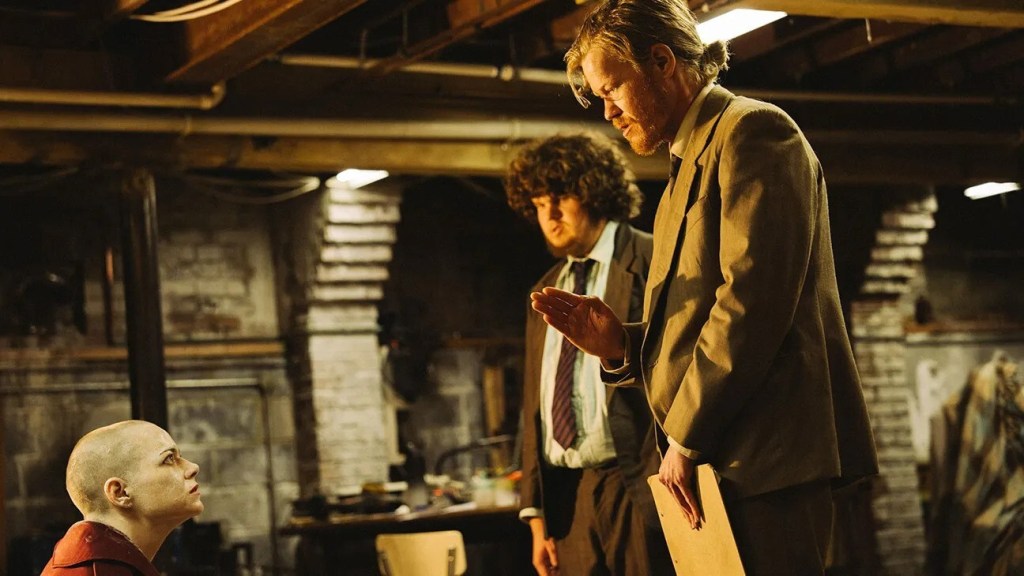
I haven’t seen the Korean movie on which Bugonia is based (the new title is apparently a reference to ancient Greek sacrifice rituals where it’s believed bees would rise from the carcass of a dead cow), but it appears that this film is pretty much a faithful reproduction. The basic plot is the same, only with the addition of Jesse Plemons’s character being an apiarist as a form of development, and gender-swapping the other two leads. In the original film, the pharmaceutical CEO is a man, and our “hero” is assisted by his girlfriend. Early in development, Will Tracy (who says he only watched Green Planet once so as not to copy it) and horror director Ari Aster decided to flip those two roles, making the CEO a woman and turning a “childlike” female circus performer into an autistic male cousin.
There’s nothing inherently wrong with the screenplay. It’s functional, the story flows well enough, and the dialogue isn’t overly clever or pedantic. The problem is that it’s far too straightforward. It lacks the stilted charm of most other Yorgos Lanthimos films, the matter-of-fact absurdity that makes the line deliveries inherently funny. This is a crucial omission because this is a story, and a core scenario, that is patently nonsensical on its face. This is about a conspiracy theorist who kidnaps and tortures a person because he believes she’s an alien. There is nothing serious about this, and yet after a few incredulous lines from Emma Stone early on, it’s played completely straight, as if the proposition isn’t objectively insane.
This speaks to the larger issue, which is a failure to read the room. Plemons’s Teddy is just the latest in a disturbing trend of conspiracy theorist protagonists, and because of that story position, he has to be proven right in the end, even though it makes no sense. The original Korean film came out in 2003, when such idiocy could be played as part of a larger satire. In the here and now, the environment is being actively destroyed by powerful moneyed interests – including the President orchestrating the EPA to repeal its own Endangerment Finding, ending its ability to regulate greenhouse gas emissions from corporations – and Lanthimos, Tracy, et al think NOW is the time to remake a movie where the actual problem is aliens? Really? Twenty years ago, when we still weren’t feeling the massive effects of climate change and there was still plausible skepticism on the science, it could work, especially within the genre context of Korean sci-fi. But now? It almost feels insulting to give such inanity serious weight.
This is a case where deviating from the source material would have likely been more prudent. Instead of just switching the genders of two of the characters, why not firmly establish that Teddy is a deranged moron, and that his mother’s poisoning was simply callous negligence, because that’s what’s really going on? The point of satire is to exaggerate the abuses of the powerful in overly silly ways so that the audience understands that the world should not be like this, but that’s the direction we’re heading. Where’s the punchline in making a murderous shut-in the only possible savior for humanity, where discovering the alien incursion leads to the destruction of our entire species? Again, the script functions just fine as an Americanized remake of an Asian film, but that’s as far as I can go in “praising” it.
Frankenstein – Guillermo del Toro; based on the novel by Mary Shelley
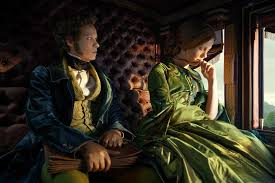
Guillermo del Toro’s Frankenstein is an interesting case study in where and how you should depart from the existing material. Mary Shelley’s novel has been adapted numerous times, from tender character studies to the completely off-base creation of what is now a timeless movie monster. This is a story that you can’t just put on the screen, because it’s been done so many times that you have to make some changes to distinguish each version. Some of the changes worked here, some not so much.
On the plus side, del Toro changed the timeline, bringing the story forward a few decades to the Victorian era. This helps create a different, romantic mood for the characters and setting, by which I mean the literary definition of having an emphasis on imagination, sentimentality, and empathy for the more primitive aspects of man and nature. It also grants context for the rigidity of some of the relationships in the film, particularly Elizabeth and William, as well as Victor and his father. This leads into a very interesting dynamic between Victor and the Creature, creating a nuanced father-son conflict that’s certainly present in the book, but is intriguingly expanded upon here.
On the minus side, there are some choices that feel odd. Like, why is the ship in the Arctic suddenly Danish? It adds nothing to the proceedings, other than an accent for the crewmen and an excuse to cast Mads Mikkelsen’s brother. Why make the change if there’s no point to it? That’s a minor gripe, but it is noticeable. Much more forward-facing is Elizabeth’s outsized role in the story compared to the book. I don’t have a problem with giving her more screen time and exploration, but I do quibble with the purpose for it, which is just to get horny for the Creature. I understand that The Shape of Water won a bunch of Oscars, but it also became a running joke and meme about how the movie ended up being about a lady who fucks a fish, Grinding Nemo, if you will. So why invite that scrutiny again? Bangable monsters is not a compelling story. This is the other definition of “romantic” that just doesn’t work in this context. The Creature wants a companion because he can’t die, not so he can get his rotting rocks off. Given all the sensitivity and empathy lent to the character in every other scene, it feels like a disservice to that thesis to reduce his relationship with Elizabeth to how “hot” she thinks he is. I always appreciate del Toro’s weirdness, but quasi-necrophilia might be a bridge too far.
Hamnet – Chloé Zhao and Maggie O’Farrell; based on the novel by O’Farrell
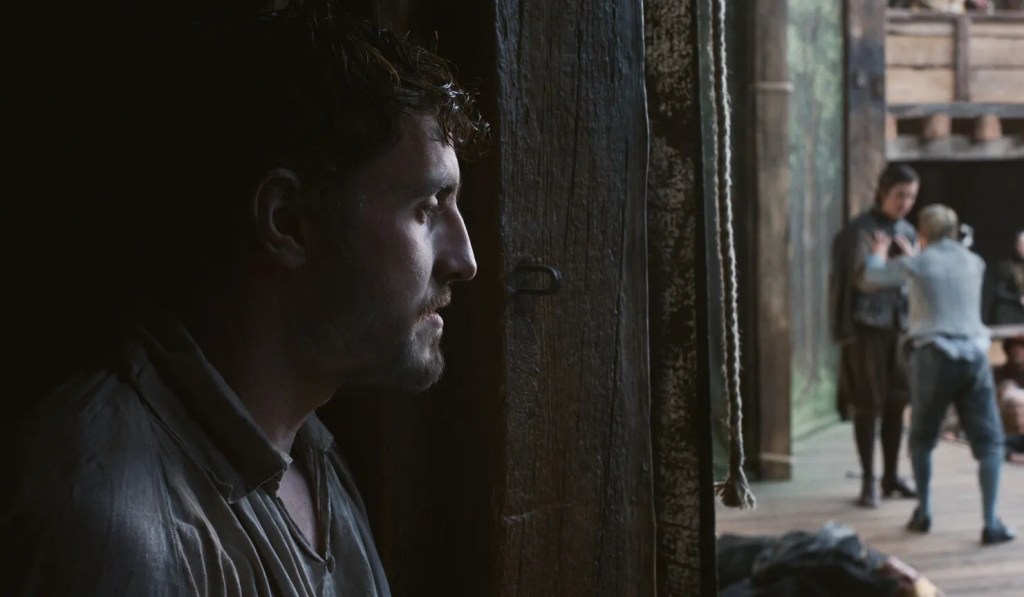
Having the actual creator of the source material co-write the script with you means you’re going to come up with something pretty damn close to what came before, so the task is simply to make what you have as compelling as possible. Imagined as a look at how Anne Hathaway (here called Agnes) coped with domestic life and the death of her son, and how William Shakespeare might have turned that grief into his greatest play, Hamnet has an almost fairy tale emphasis on emotional storytelling. Joy, despair, grief, and love both familial and romantic take center stage over the actual plot beats, granting a dreamlike flow to the narrative that works to great effect
If there’s a flaw to be had, it’s in the slightly disingenuous way the story is presented. This is more in the marketing than the actual product, but the film itself does nothing to disabuse the viewer of the perception. Logic intentionally takes a back seat in emotional stories such as this, but there is this slight framework that the film is meant to be taken as historical fact, when there’s very little to support the idea. This is seen in the opening screen text, where we’re told that in Shakespeare’s time, the names “Hamnet” and “Hamlet” were practically interchangeable. We’re meant to infer that this means that Hamlet was indeed based on his late son, but really, all it means is that people alternated m’s and l’s in their calligraphy. Similarly, the trailer outright says that this is the “untold story” about the love and loss that led to Shakespeare’s greatest work. Well, it’s “untold” because it almost certainly didn’t happen. Historians and scholars have examined the possibility that Hamlet was inspired by Hamnet’s death, and they’ve largely concluded that it’s just a coincidence.
The film script, as well as O’Farrell’s novel, are pure fantasies, but that’s never overtly stated. Did Zhao need to say that upfront? Not necessarily, but there should have at least been a conversation and a direction made to ensure that we don’t misinterpret. The reason the story works is because we know very little about Anne Hathaway outside of the bullet points of her marriage to Shakespeare. There just wasn’t competent record-keeping at the time. So the vast majority of this is imagined fiction, and that’s okay, especially since it’s formatted like a Shakespearean tragedy with all the emotional beats hammered in almost perfectly. I’m not saying that I was particularly bothered by the ambiguous assertions of historical accuracy, but I can see how it might rub some people the wrong way.
One Battle After Another – Paul Thomas Anderson; based on the novel Vineland by Thomas Pynchon
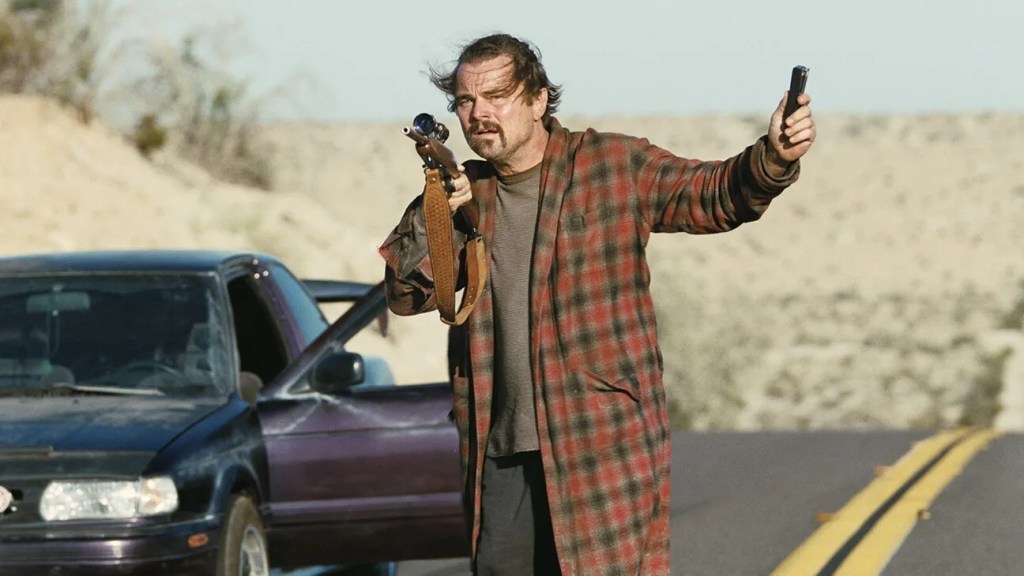
Thomas Pynchon’s work is notoriously difficult to adapt, mostly because he deals in dense metaphors, alternate realities, utterly absurd and bombastic characters, and tricky “of their time” scenarios. Paul Thomas Anderson, who’s a big fan of Pynchon’s and always wanted to adapt Vineland into a film, has noted the difficulty in the actual process, saying in interviews that he had to basically take a chainsaw to the book in order to fit it into a filmable narrative.
The actual novel is set in 1984, around the events surrounding Ronald Reagan’s reelection, and imagines a bonkers set of circumstances where the hippie spirit of the 1960s has mellowed from dope-smoking revolutionary idealism into the modern war on drugs and television as the new opiate of the masses. That’s a lot of material to try to transfer to the screen, so ultimately, Anderson simply took the framework and themes, changed all the character names, and modernized it to reflect the racism and xenophobia of current society as a means of controlling the population and silencing dissent, changing the Drug Enforcement Agency villains of the book into military and immigration officials.
This is much more about maintaining the spirit of Pynchon’s novel than presenting it on screen, and Anderson does an incredible job. The main crux of the book’s themes is in how rebellion and dissent manifest themselves, contrasting the flower children taking on an authoritarian like Richard Nixon with the more subtle oppression of Reagan’s “City on a Hill” form of idealistic conservatism that was just as damaging for those who didn’t conform. Anderson flips it around, contrasting race relations and immigration enforcement from the largely incompetent bureaucracy under George W. Bush with the Gestapo-esque wannabe totalitarianism of Donald Trump as he uses ICE (created under Bush) as his private army, with racial profiling being used as probable cause and white supremacist demagogues like Stephen Miller and Steve Bannon in charge of the operations and media narratives. Either way, the goal is to stamp out any voice or act of resistance to the wealthy and powerful. The difference is recreational drug use in the book and racial equality in the movie.
From that framework, Anderson crafts a multifaceted caper that is just as nuts as the characterizations and scenarios that are Pynchon’s stock in trade, but which is much more linear and easy to follow for wide audiences. In the end, he finds that sweet spot where fidelity to the themes of the novel is maintained, while also deviating enough to create something that almost feels wholly original. It’s a fine line, and Anderson walked it beautifully, creating a compelling and hilarious farce that spotlights one of the major problems with our society.
Train Dreams – Clint Bentley and Greg Kwedar; based on the novella by Denis Johnson
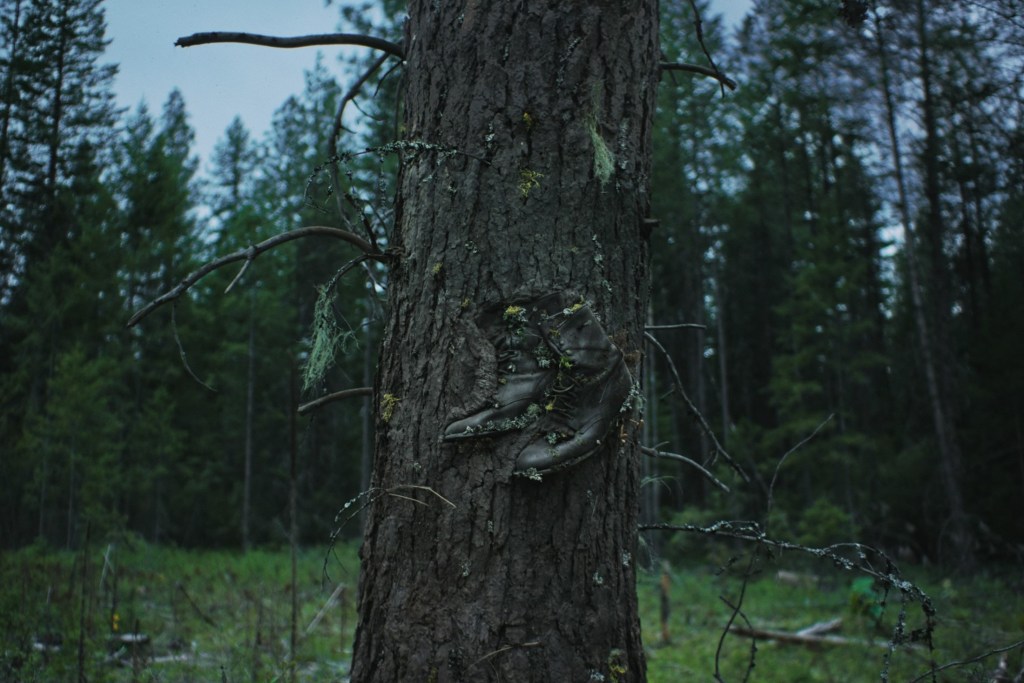
More than any other entry in this year’s field, Train Dreams feels “literary.” The film plays like an elegiac tone poem, chronicling the life of the fictional logger and railway worker Robert Granier at the turn of the 20th Century, turning his otherwise mundane existence into something lyrical and extraordinary. In a story about how people are left behind by the unstoppable march of time and the inevitable obsolescence that industry and technology bring about, the movie is in many ways like the most loving of obituaries, not just for its central character, but for the bygone era in which it’s set.
In a lot of ways, Johnson’s novella translates perfectly to the screen to create this wondrous emotional journey. Will Patton joins the ranks of Morgan Freeman and Ray Liotta with his tender narration, becoming his own offscreen character in the process. It’s hard to make narration not feel cloying or distracting, and Patton is another exception that proves the rule. The way he tells Robert’s story makes us feel like we’re watching a book unfold in front of us, creating a sense of security and comfort as we watch some pretty disturbing shit over the course of Robert’s life. The cinematography also aids this motif, as the natural lighting, POV shots, and box-like Academy ratio make the screen feel like a picture book. You could easily see these images in a coffee table photo book or a children’s bedtime story.
The one area where the script might throw some people off is the dialogue. A lot of the conversations involve some very flowery vocabulary and syntax, far beyond the education level of Robert and his colleagues. At times it feels a bit like a parody of those highfalutin letters Civil War soldiers used to send to their families, only it’s played completely straight with no affectation. As I learned from someone in the audience, that is how Johnson wrote the book, so you can’t exactly fault Bentley and Kwedar for using it in the script. As the film wore on, I did get used to it, and oddly found a lot of enjoyment in Robert’s ironic eloquence, to the point that I started to miss it as the final scenes played out and Patton’s narration sort of took over for Joel Edgerton’s speaking parts. There are definitely some who will find this too smart for its own good, but on reflection I found it more and more essential to the themes of the story and the poetic nature of the character and overall presentation. Your mileage may vary, but while I was resistant at first, I do see it now more as a feature than a bug.
***
The process of writing will always be a passion and fascination for me, because I’ll always wonder why someone did things a certain way. Why this phrase? Why this action? Why this adjective use? It’s served me well throughout my professional career, even when I did work that didn’t involve the written word. Take for example my work as a sports editor. For over a decade – in sporadic chunks – my livelihood had been to tell the story of a sporting event for broadcast consumption. The actual story is the game itself, and all the nuances that played out over the course of it. My job was to take that information, compress it down to anywhere from 30 seconds to five minutes, and present it in a visually compelling way to the audience watching at home, whether they were obsessives looking for details in the highlights, or just casual fans who missed the game and wanted the bullet points of the action.
That’s honestly not that far off from the adaptation process. These writers took films and novels that could be hours or hundreds of pages long, and condensed it into two hours that play across a screen for our enjoyment and study. Some had to effectively translate the page to the screen to make the story consumable, while others let their imaginations soar to distinguish their version of the tale from that which already exists. There’s no right or wrong way to do it, but when it works, you just know it.
My Rankings:
1) One Battle After Another
2) Train Dreams
3) Hamnet
4) Frankenstein
5) Bugonia
Who do you think should win? Vote now in the poll below!
Up next, we wrap up the first week of this year’s Blitz with the first video breakdown of the cycle, going somewhere we’ve never gone before. It’s Casting!
Join the conversation in the comments below! What makes for a good adaptation in your eyes? Have you ever tried to turn a previous work into a script? Just how messed up do you have to be to conceive of the Christmas Adventurers Club? Let me know! And remember, you can follow me on Twitter (fuck “X”) as well as Bluesky, subscribe to my YouTube channel for even more content, and check out the entire BTRP Media Network at btrpmedia.com!

 I Actually Paid To See This
One thought on “Oscar Blitz 2026 – Adapted Screenplay”