
Over the years, when covering Best Actress, I’ve harped on a few major sticking points for me. There are too many Showcase entries that seem to exist solely to highlight the performance. Far too many nominees are shoehorned into wife/mother roles rather than having independent agency. The result is often set in stone way earlier than the rest of the acting categories, though thankfully, the last two years have at least had some intrigue and uncertainty, where the contest was narrowed to two main contenders.
But one of the weird trends that’s hung over the proceedings is this question: What exactly is a lead performance that earns this award?
It would seem like the answer would be obvious. Whoever the female lead is, that’s who gets the trophy. But in practice, it’s not always that simple. The most famous case in recent years was when the Acting Branch nominated Alicia Vikander for Supporting Actress and Brie Larson for Best Actress, guaranteeing both would win, rather than having them duke it out as leading ladies. Larson was the focal point of Room, and Vikander was by far the leading woman in The Danish Girl, but one was recategorized as a supporting role, seemingly to eliminate the thrill of competition, even though other awards bodies had nominated and awarded her as the lead in the run-up to the Oscars that year.
So I did a little digging, checking out the official rules put out by the Academy. When it comes to acting, the process is fairly straightforward. Voting members of the Acting Branch are given “Reminder Lists” of up to 10 actors and actresses for each eligible film. They then vote for up to five performances based on personal preference, with the top five recipients being the nominees, with some exceptions (can’t have two performances from the same actor in one category, if someone would be nominated for the same role in both Lead and Supporting, the higher vote total would win out, etc.). However, when it comes to determining what constitutes a leading role versus a supporting role, the Academy basically just throws up its hands and says, “Do whatever you want.”
Seriously, the exact text of the rule states, “The determination as to whether a role is a leading or supporting role shall be made individually by members of the branch at the time of balloting.”
I think we need to change that, especially given the mild controversy this year, where Chase Infiniti was left off the final ballot for Best Actress in favor of Kate Hudson. This isn’t to say that Hudson gave a bad performance, but it is noteworthy that the Oscars is the only major awards ceremony where Infiniti was omitted, while Hudson seems to have benefitted more from rules that allowed for six nominees (BAFTA), a split of genres (Golden Globes), or the exclusion of non-Americans and/or non-union actors (SAG). Notably, the Critics’ Choice left Hudson off despite having six slots, the extra spot going to Amanda Seyfried for The Testament of Ann Lee.
All this is to say that there has been a lack of clarity at times, and it feels wrong that Infiniti isn’t under consideration here. Even if my preferences had played out, the fact that the Academy, now in year 98 of this experiment, can’t even define simple words in one of its biggest categories, just feels off. Now, when I reviewed One Battle After Another, I noted at the time that I felt Infiniti would easily get a Supporting Actress nod, but I’ve thought about it more and more, because I was initially surprised that she was up as a lead.
But then it hit me. There’s an easy way to determine the difference between lead and supporting, and pointedly, it has nothing to do with screen time (Anthony Hopkins famously won Best Actor for The Silence of the Lambs despite only being in the film for about 25 minutes). I think, in the end, it comes down to whether or not the character drives the plot. What I mean is, when you see a performance, simply ask yourself one crucial question: Is this character the focus of their own story, or are they a part of someone else’s?
That’s what ultimately brought me around on Infiniti. At first I considered her a supporting role because Leonardo DiCaprio was the principal of the main plot. But as the film clearly lays out, DiCaprio and Infinite are co-leads, as each one has a dedicated narrative that has to exist for the movie to work. This led to some similar thinking with regards to Sinners. I initially thought that Michael B. Jordan was the leading man, and he is, but there’s another leading man in the form of Miles Caton. The movie is both the story of Smoke and Stack, AND of Sammie. This doesn’t mean that having focus automatically makes you a lead, as Jack O’Connell’s Remmick has a couple solo scenes where he’s the driving force, but it’s all in service of his eventual involvement in Smoke/Stack and Sammie’s overarching narratives.
I can’t guarantee that I’m going to remember this self-imposed guideline in future, though I hope you’ll all keep me honest. My point in all this is that we need something more defined, because honestly, regardless of the quality of her performance, I’d categorize Kate Hudson’s turn in Song Sung Blue as a supporting role rather than a lead. She does have the focus in some scenes, particularly as it relates to the car crash that costs her a leg, but pretty much everything else she does in the film is in service to Hugh Jackman’s character, and his ambitions. She even joins him as the “Thunder” to his “Lightning” on the premise of being a backup singer. They do form a largely symbiotic partnership and romance, but the plot is driven by Jackman through most of the proceedings. A Supporting role can take the spotlight occasionally, but a Lead can never fully cede it. That’s the rhombus/square logic that I think works best.
This has been yet another installment of “Bill Makes Shit Up.” Thank you for humoring me. Let’s get to the actual analysis and competition now, shall we?
This year’s nominees for Best Actress are…
Jessie Buckley – Hamnet

I promise not to spend the entire column on my new theory, but Jessie Buckley provides an excellent example of what I was talking about above. Even though Jacobi Jupe is the title character, and even though Paul Mescal as William Shakespeare does draw focus from time to time, the true lead is Buckley’s Agnes through and through, to the point that Mescal was only nominated for Supporting Actor in the undercard ceremonies where he received recognition (he’s another who got a nod from everyone BUT the Academy).
This is Agnes’ story. While Shakespeare woos her, the romance is taken from her perspective. While her son dies, it’s about her grief. While the narrative has Will write Hamlet as a way to process his pain, it’s about how she reacts to seeing her “grown up son” on stage, and how she copes with Will being away in London, leaving her alone in her anguish. While Elizabethan England is a Protestant society with associated customs and traditions, the film is about how Agnes is in touch with the Earth, and her naturalistic tendencies/mysticism. Everything centers on her.
Buckley, of course, plays it to the absolute hilt. It’s hard to believe that she only broke through five years ago with I’m Thinking of Ending Things, because just about everything she’s done since then has been Oscar-worthy to one degree or another. Seriously, look at her filmography since 2020. It’s insane how good it is, and this is just another high mark in her superlative career. She imbues Agnes with this gut-wrenching humanity, even when her greatest comforts are animals and spirits. She seems to take the fact that we know so little about the real Anne Hathaway as carte blanche to weave an intricate pattern of consistent behaviors and reactions that form a fully realized personality. She’s not “Shakespeare’s wife” in this film. If anything, he’s her husband, as more often than not she’s the dominant force in the romance. It results in a performance that’s incredibly sympathetic while also being driven, focused, and determined. There are actresses out there who would kill to pull off such a role just once. For Buckley, it’s become amazingly routine.
Rose Byrne – If I Had Legs I’d Kick You
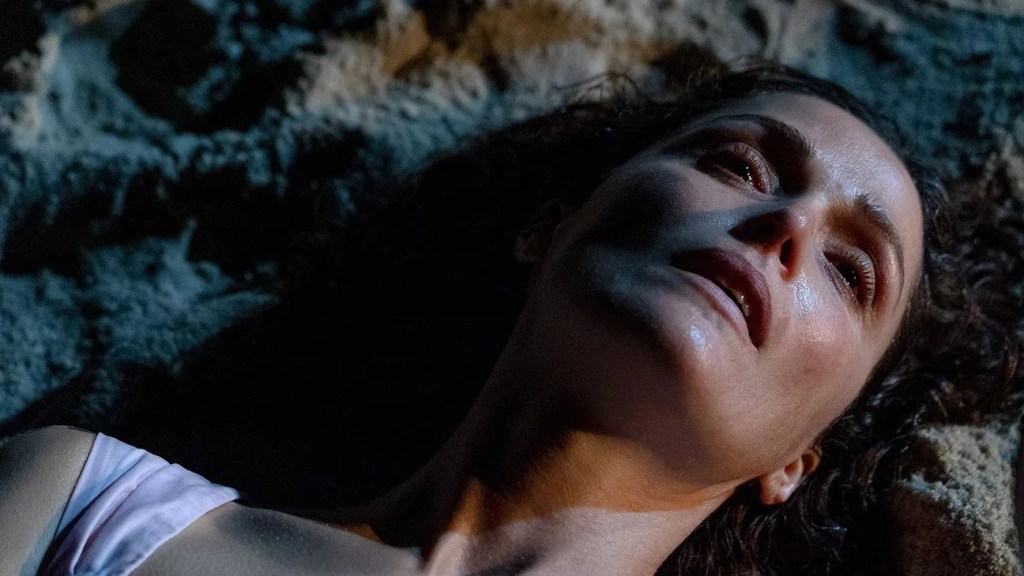
If there’s any threat to Buckley’s victory, it comes from Byrne, who picked up the comedy side of the Golden Globe in this field. It’s hard to argue against her, because she delivers the goods in every scene in Mary Bronstein’s incredibly dark farce. This is another case where the film reinforces who the story is about, though there’s far less plausible ambiguity here. In Hamnet, someone could still make the traditional argument before seeing the whole film, particularly if they paid attention to the marketing. But with If I Had Legs, there’s no doubt. Linda’s husband Charles (Christian Slater) is only a voice on a phone before the final scenes. Her colleague played by Conan O’Brien doesn’t even have a name. Her daughter – the source of so much of Linda’s consternation – is not only unnamed, but also never seen in full until the last few shots.
The story is, on the surface, about the stresses of motherhood, of which several movies have been made over the last decade. Where this one distinguishes itself is in the intensity of the Murphy’s Law setbacks Linda faces, as well as the level of introspection. There’s legit heartbreak in Byrne’s voice as she admits that she never wanted kids, and that she feels guilt to even consider a life without her child, coupled with some amazing comedic timing as she fights every day for that girl’s survival and happiness.
By the time we get to the climax, where the world will literally not let her end it all (one of the best sardonic jokes I’ve seen in a film in a LONG time), Byrne has made sure that we completely understand the Hell she’s gone through, and we’re weirdly on her suicidal side. Part of this is because of the onslaught of everything going wrong all at once, a tension we can all relate to. But crucially, Linda makes several errors in judgment over the course of the film, proving herself to be both brilliant and a fuck-up at the same time. She’s not some idealist or idealized version of a mom who wants to have it all but can’t. She’s been broken both by the outside world and her own mistakes, and the acknowledgement of these faults is what allows us to empathize with her, even when she does some shit that’s demonstrably wrong. I’ve ranted before about how so many Best Actress nominees are pigeonholed into traditional gender roles, but both Byrne and Buckley take those conventions and chuck them out the window in pursuit of their own methodical madness. One’s played for tears, the other for macabre laughs, but both are extremely effective.
Kate Hudson – Song Sung Blue

Setting the argument of whether or not she’s a lead aside, Hudson does do some pretty decent work in this movie. As Claire, she sings well, she’s charming, and she affects a Midwestern “dontcha know” accent quite convincingly. I make no secret that I’ve never really been a fan of Hudson’s (her turn as Mercy in Rock the Casbah was painful in an already historically bad film), but as she’s aged, I have softened a bit. I absolutely loved the winking parody of herself she played in Glass Onion, and she’s entirely pleasant here, lending more credibility to a music biopic based on a documentary than it had any right to.
That said, I don’t think this is Oscar-worthy (though I would have absolutely agreed with a Supporting nod for Glass Onion). Nothing she does here is bad, but it pales in comparison with the rest of the field (and the snubbed Infiniti), because when she does get the chance to take center stage, it’s in service of a very clichéd section dealing with the aftermath of her injury. It’s just the same tired beats of being angry, resentful, and eventually getting addicted to painkillers, a habit she kicks without any real difficulty, because as previously mentioned, this is not her journey. She has to get better so that Hugh Jackman’s Mike can get better, and they can start playing music again.
There’s a moment at the beginning of the third act, when Claire’s daughter Rachel admits to Mike that she’s pregnant. In a tearful scene, the pair of them put their heads together to decide how they want to proceed (Rachel wants to give the child up for adoption), and Rachel confesses that she wants her mom back, so that she can help guide her through this. It’s a great moment for Rachel and Mike, but Claire feels ancillary, because there wasn’t much in the mother-daughter relationship between them to warrant this heartfelt admission. Claire introduces Rachel (and son Dana) to Mike when they first get together, but it’s just a moment for teen angst/ennui/sarcasm. Even as Lightning & Thunder become successful, a lot of the rapport with Rachel is filtered through Mike, particularly when it comes to the Pearl Jam show. We never get that solid bonding moment between Claire and Rachel that would have made this moment feel genuine, whether Claire was on screen or not.
The one great scene Hudson gets is at the end, as she eulogizes with a solo performance of “I’ve Been This Way Before.” It’s a wonderfully manipulative sequence, ensuring there’s not a dry eye in the house, because, you know, we’re human beings with something resembling souls. But even then, you could argue it’s not in service to her own story, but Mike’s. I liked Hudson’s performance here. Truly, I did. But it’s just not on the level of the other nominees, because even if you do consider her a lead, she’s always following and never gets a chance to shine on her own.
Renate Reinsve – Sentimental Value
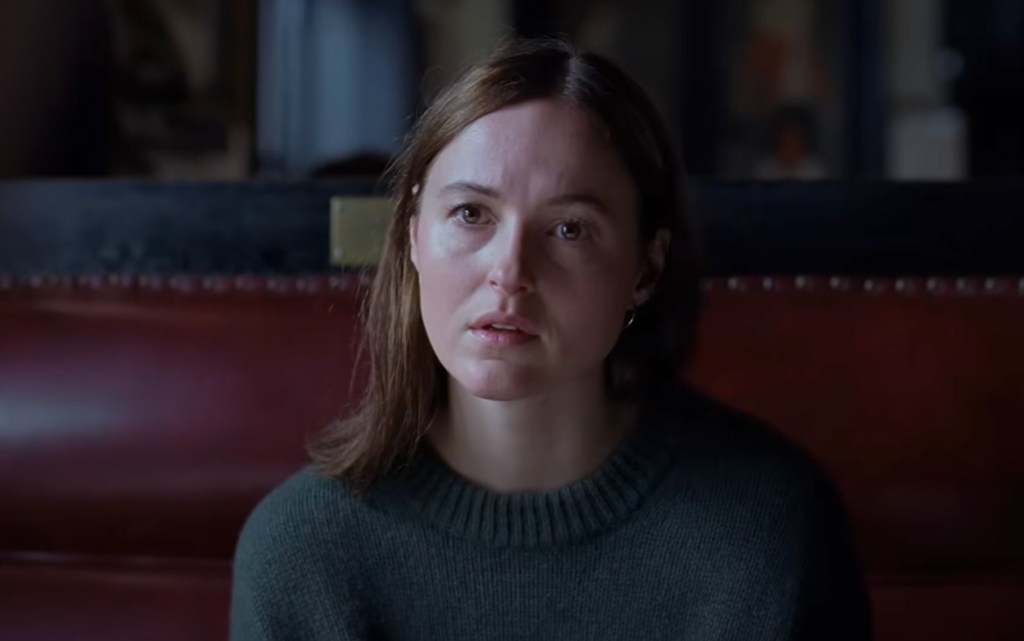
I’ve been singing Reinsve’s praises up and down since her breakout performance in The Worst Person in the World, and American audiences are finally taking notice. She’s one of the best actresses on the planet, and Sentimental Value is an absolutely perfect showcase for her talents.
Reinsve demonstrates an incredibly versatile range as Nora Borg, a successful stage actress trying to distance herself from her estranged father, himself a famed director. She has to navigate years of pent up anger, generational trauma, the expectations of her profession, and walk a tightrope when it comes to her personal life and grievances. She has to present strength to everyone around her, particularly her sister Agnes, but inside she’s constantly on the verge of falling apart. She has to hear her father Gustav out when he offers her a role in a new film, but is assertive in rejecting him, thinking it’s another manipulation. She has full-fledged panic attacks when it’s time for her to go on stage, to the point where she’ll attempt to strip off her costume and solicit sex from her boyfriend on the crew, but once she’s forced to pull it together, she goes out and wows the audience with no hint of her distress.
You could argue that in each sector of Nora’s life, Reinsve is playing an entirely different role. As a sister/auntie, she’s caring, empathetic, and kind. As a daughter to an absentee father, she’s hostile and hurt in ways that are incredibly hard to process and forgive. As an actress, she’s got major issues, but she’s also a professional. The scene she shares with Elle Fanning as they dance around the elephant in the room about Rachel essentially playing her as a stand-in for Gustav’s daughter and mother, is one of the finest of the entire film, because there’s an unspoken understanding between them, where they both know what’s happening on the surface and what’s really going on in the meta sense. Reinsve’s body language alone makes that scene one of the best of the year. The timbre of her line deliveries only enhances what’s an already fantastic conveying of emotional need and priorities.
More than anyone else in this year’s competition, Reinsve’s character is a representation of being all things to all people. Byrne comes close to that line, as Linda is beset on all sides by people only out for their own interests, but in the end it all serves the same storyline. With Reinsve and Nora, there are multiple narratives occurring and converging, and she has to navigate them with expert skill, never losing sight of the objective in the moment or misplacing her sense of drama. It’s massively difficult to pull off, but Reinsve makes it look easy.
Emma Stone – Bugonia
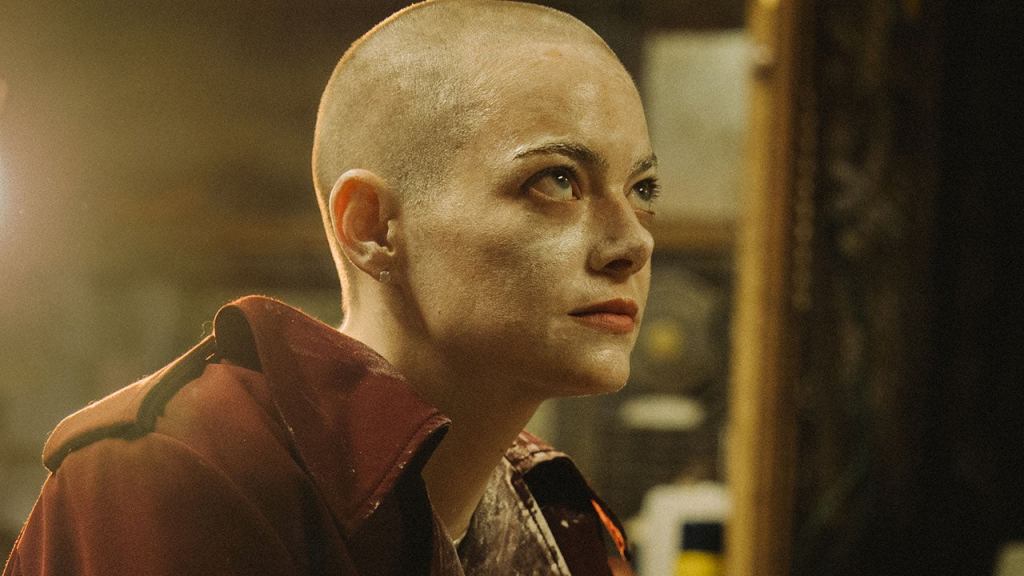
It’s a credit to Emma Stone’s skills as a performer that this is already her fifth acting nomination – with two wins – and she’s not even been in the business two decades yet (her debut was 2007’s Superbad). If she keeps up this level of momentum, she’ll surpass Meryl Streep by 2050. Let that be a comfort, as Bugonia is arguably one of her weaker turns. Just like with Hudson, it’s not that she does anything bad in the film. It’s just that, knowing her body of work, we know she’s capable of so much better.
The problem is more with the script and Yorgos Lanthimos’ direction, but Stone bears some blame as well. She just plays the role of Michelle too straight for the absurdity of the story and the premise. She’s a pharma exec who gets kidnapped and tortured because Jesse Plemons’s Teddy believes she’s an alien, and never is this insanity called out for what it is. There are a few moments here and there where she balks, but for the most part, she engages Teddy on his level, treating him as an equal in a situation that simply doesn’t call for that.
Instead of the usually intentional stilted line readings that are a trademark of Lanthimos’s films, Stone seeks oddity by conducting her interactions with Teddy as if she’s in a board meeting. She speaks matter-of-factly, uses corporate buzz phrases like, “Let’s have a dialogue,” and just bides her time until she gets the chance to needle Teddy or appeal to the simple Don for release. The opening montage of the film depicts her as this boss-ass bitch who takes no shit from anyone. She’s highly organized, keeps everyone on track for their business agenda, and has regular self-defense classes where she routinely beats the crap out of her trainer. And yet all that agency is cast aside when she’s abducted by a dumpy shut-in and his obese lackey. That’s not a dig on fat people – I’m one myself and would kill to be Plemons’s stand-in – but a note on the betrayal of the character the instant the concept is put to the test. From then on out, Stone’s Michelle just engages as if this is all normal, confident that she’ll eventually win, but we never really see her work toward it. She acts somewhat incredulously at the idea of being an alien, but within moments she’s ready to placate (what should have been) Teddy’s delusions, because all she’s doing is calculating.
In a better version of this movie (perhaps the Korean film it’s based on; I’ve never seen it so I don’t know), that almost algorithmic mentality could have been developed into a tell about her true identity, but there’s no real cleverness or subterfuge in the script to grant Stone that space to branch out. Ironically, by eliminating the more obtuse delivery of dialogue, Stone gives us an obtuse character that, frankly, is beneath her talents. She still does fine, but you know it could have been so much more.
***
Jessie Buckley is almost certainly going to win this one, a capper on a half-decade of pure excellence. But despite how much I love everything she does, she wouldn’t get my vote here. In terms of quality, this is one of the tighter Best Actress competitions in years, as three of the five are just head and shoulders above the other two, and any one of them would be more than worthy. It’ll be interesting to see what happens with the BAFTAs and SAG, because that could sow some chaos for Oscar Night, but honestly I doubt it. I won’t be the least bit upset when and if Buckley finally takes home the prize (I say “finally” like it’s somehow been an entire career instead of a measly five years), but for my money, I have to go with the one who basically played three or four roles within the same performance.
My Rankings:
1) Renate Reinsve
2) Rose Byrne
3) Jessie Buckley
4) Emma Stone
5) Kate Hudson
Who do you think should win? Vote now in the poll below!
Up next, we have the first specialty category of this year’s Blitz. Four of the five nominees are up in multiple categories, including two vying for Best Picture. But is the best of the bunch the solo underdog? It’s International Feature!
Join the conversation in the comments below! What was your favorite performance last year? How do you separate leading and supporting roles? What song are you singing at MY funeral? Let me know! And remember, you can follow me on Twitter (fuck “X”) as well as Bluesky, subscribe to my YouTube channel for even more content, and check out the entire BTRP Media Network at btrpmedia.com!

 I Actually Paid To See This
One thought on “Oscar Blitz 2026 – Best Actress”