
As we get closer and closer to Oscar Night, there are moments when we take stock of the year that was in cinema as a whole. So much is ignored when it comes to Awards Season, so it’s often difficult to remember and recognize the quality – or lack thereof – when truly assessing the state of the film industry.
After taking in all of the Shorts yesterday, and in the moments before I started typing up this second batch of reviews, this time for documentaries on the shortlist, it occurred to me that, at least in this one area, 2025 kind of sucked. That’s not that big of a shocker, honestly, because documentaries are supposed to reflect the truth of the world back at us, and I think we can all agree that the last 12 months have been rivaled in their pleasantness only by the likes of diphtheria. As such, non-fiction filmmaking has been downright depressing of late. We occasionally get positive stories, but for the most part, the quest has been to find the few uplifting moments or happy endings that come out of a sea of tragedy.
I wasn’t able to complete the shortlist this year, as doing so would have required some rather tight scheduling, spending of funds I didn’t really have, and in one case, I would have needed to get a VPN and pretend I was Canadian to watch online. It just wasn’t worth it, especially after nominations came out, but I did at least see all five finalists, and with the Shorts yesterday, all Blitz viewing is officially finished, but man was it close. And honestly, I just don’t think my anxiety-addled brain could handle much more in the way of cinematic sadness. The world is descending into fascist chaos, and I’m staring down the possibility of eviction and the end of my career, so my mood isn’t exactly chipper these days (though watching both U.S. Hockey teams take gold was a brief respite of joy). Seeing a bunch of films about state-sponsored murder doesn’t help.
But there is still value in slogging through this misery, and not just from the whole “look what we survived” aspect. The people who bring these stories to the world often do so at great personal risk, and they’re right there in the thick of it all, experiencing a lot of it firsthand (unless it’s an archive edit). They do deserve to be lauded for what they accomplish, and most of the time, what they produce is kind of amazing within the context of what they have to sacrifice to make it happen. The three films I’ll go over tonight, which include two final nominees, all exemplify that ethos to one degree or another, with varying results. They’re dealing with some serious stuff, so I’ll always appreciate that, if nothing else.
But seriously, guys, would it kill you to just make a movie about how awesome dogs are or something?
The Alabama Solution
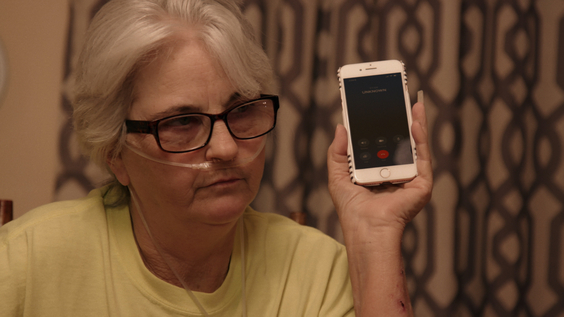
This was the first semifinalist for Documentary Feature that I saw once the shortlist came out. I’ve held it until now because there just wasn’t a thematic place to put it in other batch reviews. That said, the fact that it’s stuck in my head for two months is perhaps a testament to the quality of its messaging. Begun somewhat by accident after the filmmakers were approached by inmates while filming a church revival inside one of Alabama’s prisons, the project evolved into an exposé of the horrid conditions withing the state system, as well as their efforts to silence all attempts to inform the public about it.
The title refers to a slogan from Alabama Governor Kay Ivey, who if you’ve never seen or heard her talk, just think of Bryce Dallas Howard’s character from The Help as an old woman, if she had never been humbled by eating the shit pie. She’s an awful person inside and out, what we would call a relic of the antebellum South, you know, if all of Alabama wasn’t as well. When federal agencies published the results of a yearslong investigation excoriating the state for its treatment of convicts and announced an intervention to fix the myriad issues, Ivey insisted that they would handle it themselves, hinting at Confederate grievances in her steadfast refusal to adhere to national guidelines.
After hearing from inside sources, chiefly Robert Earl Council and Melvin Ray, about how the “solution” was to make cell phones contraband and severely beat prisoners who talked to the outside world, directors Andrew Jarecki and Charlotte Kaufman arranged for clandestine interviews to get the word out about what was really going on behind the walls. Using a network of accomplices across all the state prisons, they were able to piece together information about the subhuman conditions the men were living in, as well as getting eyewitness accounts that directly contradict official statements about the death of Steven Davis, who was beaten to a bloody pulp for allegedly attacking a guard with a plastic knife, and who succumbed to his injuries in hospital, with staff being blocked from treating him. When not dealing directly with the inmates, the film tells a parallel story about Davis’s mother Sandy seeking justice for her son.
It all culminates with the Alabama Prisoners Strike, a multi-week affair in which inmates at every facility in the state refused to work, in an attempt to get better treatment and living conditions. As Ava DuVernay famously illustrated in her brilliant film, 13th, the 13th Amendment to the U.S. Constitution abolished slavery, with an exception carved out for the punishment of crimes. It’s been well documented ever since how state and local governments – as well as private corporations – use prison labor as a means to get full-time work for pennies on the dollar. As we see, the strike does bring several pieces of the state’s infrastructure to a standstill.
Unfortunately, as you might have guessed, this does not end well. Even if you weren’t aware of the strike (I was), the result is revealed in the title. This is Alabama, the state that’s still eternally butthurt that they can’t own black people nearly 160 years after the Civil War. You know how this turns out, and it’s beyond disheartening. This is a state that wholeheartedly decided that the solution to reports of inhumane prison conditions was to make reporting a crime. With that kind of cruel cognitive dissonance, what outcome could there possibly be? It also doesn’t help that the film was released two years too late for anything substantive to be done, as Kay Ivey is one of Donald Trump’s most ardent supporters (she even put out an official ad after 2020 saying that the election was “stolen” from him), and I’m guessing he loves the idea of beating inmates to death for daring to question authority. This is a man who literally got away with red-lining minorities out of New York apartments, so he probably thinks standing water in the hallways is the proper place for those he feels are beneath him.
Ultimately, that’s why the film doesn’t rank that highly for me relative to the rest of the competition. It’s well-made certainly, but in the end it’s meaningless. I know timeliness can’t really be factored in with documentaries, but they are meant to make a difference. This one just won’t. Alabama won’t change. The prison industrial complex won’t change. And until fascism is quelled once more, draconian punishments for dissent – especially as it applies to minorities and the poor – won’t change in this country. Until there can actually be consequences for the abuses the film shows, it’s all sound and fury signifying nothing.
Grade: B
Come See Me in the Good Light
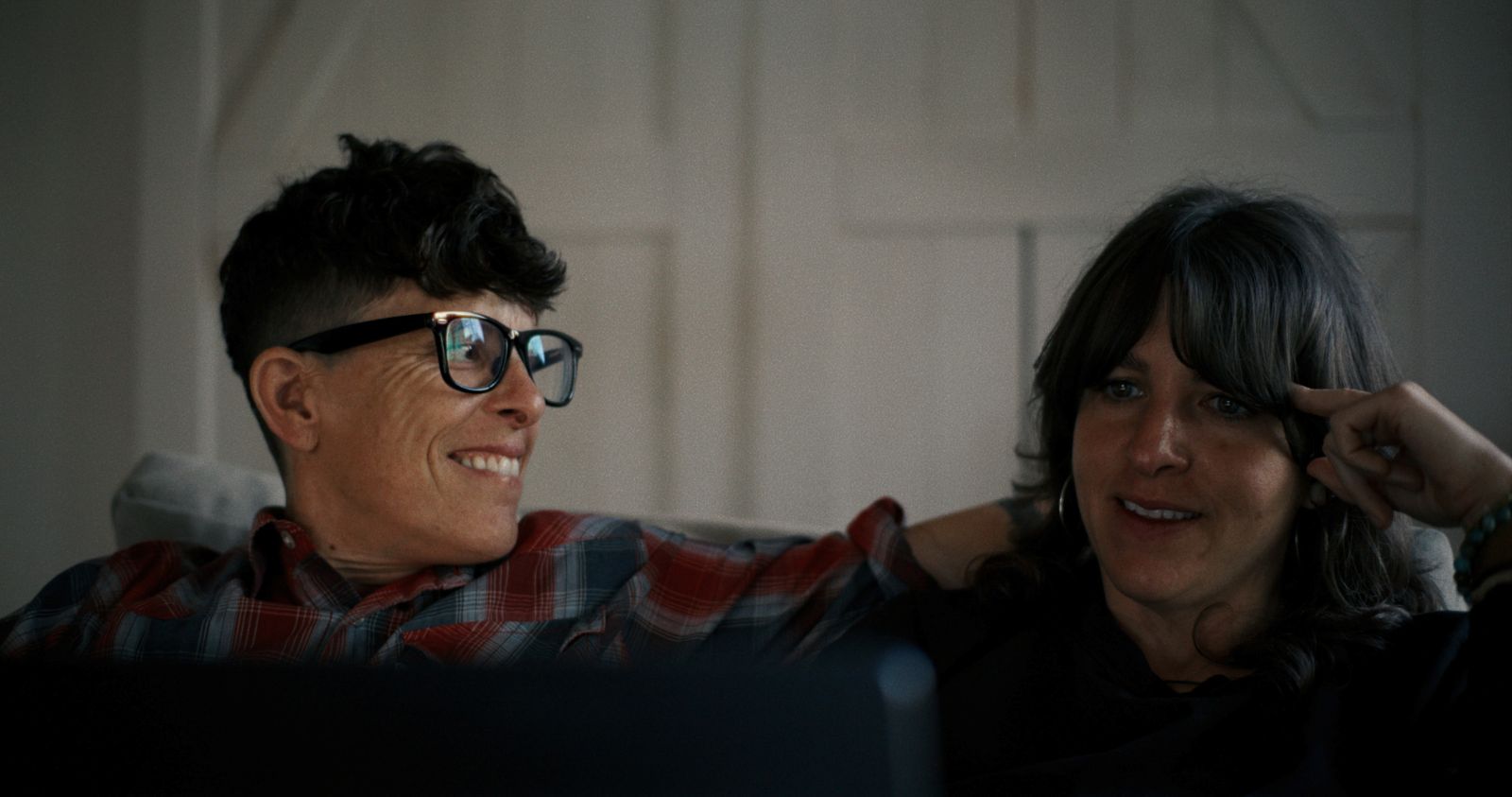
As I said, a lot of these films are depressing as hell, but at least in this case, it’s for good reason. A 100-minute thesis on how art endures and helps to heal, Come See Me in the Good Light is an endearing and life-affirming journey through the final days of that affirmation, and the beauty and joy that comes from a life well lived.
The story revolves around Andrea Gibson, a poet and superstar in the queer community. I confess I was unaware of their work, but as the film progresses, we get some highlights from live readings, and it’s damn good stuff. Gibson has been diagnosed with late stage ovarian cancer, and is in constant pain. Along with wife Megan Falley, Andrea goes through the many ups and downs of treatment, including massive highs when there are signs of remission, and devastating lows when the cancer returns, more aggressive than ever. There’s a tragic irony in their prognosis, as it took Gibson years to figure out their gender identity (queer with neutral pronouns), only for one of the few biological aspects that defines them as a woman being their doom.
Much of the film is spent on preparing for one last show for Gibson’s legions of fans in the LGBTQ community, even as their energy wanes and there are questions on whether they’ll even be able to remember the words while on the mic. We go through the traditional five stages of grief right there on the screen, as Andrea and Megan come to terms with the inevitable and work together to celebrate what time they have left.
The movie is filled to the brim with love and appreciation for life, even when those moments are bittersweet. Andrea is floored by the reception from their fans, the support from their family, and even the adoration of some lovable pups. Even in the darkest of times, there are so many wonderful things about the world, and to know you’re about to say goodbye to it all forever is heartbreaking in the extreme. Reconciling that is the real poetic movement that we take along with Andrea, and the knowledge that there will be a legacy, that the world will go on without them and be better for their involvement in it, is oddly cathartic.
Make no mistake, this is a tearjerker, but it’s the kind that makes you happy that you can take the time to access all these emotions and feel them along with the people on the screen. It reinforces the human condition, because no matter our circumstances, we know that leaving your mark on the world, inspiring others to move forward with grace and love, that’s an amazing gift.
Grade: A-
My Undesirable Friends: Part 1 – Last Air in Moscow

Finally tonight, we go from a lovely story about the final days of life to a film that makes us yearn for the sweet release of death. My Undesirable Friends represents everything Oscar aficionados hate about the Documentary Branch and its nominating process, as the film is utterly inaccessible for all but the most committed of viewers. Had this been nominated, a whole host of people – audiences and voters alike – would have just thrown up their hands and said, “NOPE!” because of what this picture asks of us.
Directed by Julia Loktev, a Russian-born American journalist, the film concerns the days leading up to Russia’s invasion of Ukraine, and Vladimir Putin’s steady crackdown on independent and dissenting media. Loktev goes to visit friends in Moscow who work at one of the few remaining independent networks, TV Rain, which has just been dubbed a “foreign agent” by the government, with each broadcast legally obligated to begin with a disclaimer that everything they say is being fed by foreign influences rather than proper, pro-Kremlin, “patriotic” ones. Most of the group takes it in stride, wearing kitschy t-shirts playfully identifying themselves as spies.
We get a solid look at the day-to-day operations of the network, including the lives of the young journalists working there. There’s also a fair degree of space given to their domestic lives, where we see that they’re just regular people who live together, dine together, shoot the shit over smokes, and enjoy some wine from time to time. They’re fighting a state-sponsored propaganda machine on the air, but there’s a heavy emphasis on how normal they all are in spite of these stresses. It can be a bit tedious at times, as some of the talking points are repeated a few times too many, but on the whole this is a fine profile of young professionals standing up for their country in the midst of an authoritarian battle against free speech. After a screaming protest song from the Russian television equivalent of that hippie guitar guy on every college campus, the credits roll.
Except the movie isn’t done yet. After an hour and a half, that’s just the end of the first chapter. This movie is FIVE AND A HALF GODDAMN HOURS LONG!
Yeah, I’m not joking. The other four chapters, each cataloguing what appears to be separate visits from Loktev in the leadup to the war, just repeat the same points over and over, and it is borderline torturous. By the time we got to the full credits, and there was a listing for editors, I burst out laughing from pure exhaustion, because no, clearly there was no editor on this whatsoever. If there was, they’d have told Loktev to cut the damn thing down to two hours and not to belabor every single point.
The runtime wouldn’t be so bad if each section said anything new, but apart from the casual updates on the husband of one of the journalists (convicted of treason and imprisoned for speaking out against the regime) and a brief aside when one of their anchors is arrested for reporting on an anti-war protest, it’s just the same cycle every time. The government cracks down, the crew alternately jokes and worries about what comes next, people bitch about how unfair everything is over wine and cigarettes, and eventually the chapter ends with a postscript about who has fled and who will eventually flee. That’s it. For 330 minutes. By contrast, the nominated Mr. Nobody Against Putin got the exact same point across in 90, and it actually told a story from a regular civilian rather than the news organizations we’ve heard from for years.
This is a worthwhile story, but it was over after the first chapter. Everything else is just browbeating us into submission. I mean, what audience could ever sit through this? It literally screened ONCE here in Los Angeles as part of an all-day affair, with a lengthy intermission between the third and fourth chapters so people could pee and get something to eat. I only watched this because I had a screener, as it was nominated for the Independent Spirit Award (it lost to The Perfect Neighbor), and even then I had to take it in installments. Can you imagine if this had been nominated, if the Documentary Branch had literally told the public, “Go find some way to sit through five-plus hours” just for the sake of completion? What a slap in the face that would be. I’ll concede the film is thorough (for that length of time it had better be), but it’s incredibly redundant. And yet, Loktev teases at the end that there’s a “Part 2” coming soon. You mean we might have to spend half a day with people we don’t care about? Fuck that!
I sympathize. Truly I do. But Russia is murdering people in Ukraine by the thousands. The plight of a few reporters who have the resources to leave just isn’t all that important right now. Unless they’re willing to go back home and put several bullets in Putin’s brain, we’ve got bigger fish to fry at the moment. We don’t need to be wasting five bloody hours getting to know people we’ll instantly forget as soon as we get to turn on something else.
Grade: C+
***
That’s all for this column. I’ll be back next weekend to tackle the last of the non-documentary nominated films that I viewed post-announcement. In the meantime, the Blitz rolls on again starting tomorrow with Documentary Short!
Join the conversation in the comments below! Did you see any of these films? Were you able to sit through five hours on the last one? Do you think you could survive in an Alabama prison? Let me know! And remember, you can follow me on Twitter (fuck “X”) as well as Bluesky, subscribe to my YouTube channel for even more content, and check out the entire BTRP Media Network at btrpmedia.com!

 I Actually Paid To See This