
I’ve mentioned many a time that the Shorts are my favorite part of the Oscar Blitz. A little over a decade ago, ShortsTV began packaging the nominees together by category and screening them in public theatres for all of us obsessives who wanted to absorb the artistry and talents of the filmmakers, many of whom were just starting their careers. In the beginning, the anthologies were even packaged with introductions and interstitial interviews with celebrated directors and other professionals, emphasizing the importance of short films, both as an entry point into feature cinema and as a unique form of expression.
Over the years, though, those extra features fell by the wayside, and the screenings were just straight up presentations of the nominated films (with some occasional added entries in the Animated category to fill out the runtime to around 90 minutes). Part of this, I think, is that the tradition became so popular that we no longer needed celebrities as a selling point. The shorts were getting so much attention that A-list actors, writers, directors, and producers got in on the game, creating their own projects that competed with the neophytes and small-budget superstars. Sometimes they won, other times they lost. Instead of becoming a crass exercise in sharks dominating minnows, it became an all-encompassing conversation where everyone had an equal say and an equal chance, with some pictures becoming so impactful that they got major distribution outside of the ShortsTV screenings.
This year, things have changed a bit. Instead of ShortsTV, the headlining distributor is Roadside Attractions. Also, for whatever reason, director Taika Waititi put his clout and money behind the screenings, giving himself a “presented by” credit, though notably he never shows up on camera to speak about the value of shorts or muse on the nominees. Part of me is happy that such a well-known and beloved figure is putting his stamp on this all-important part of the Oscars celebration, while another part is cautious and anxious that this is now becoming a profit motive that could one day lead to the end of these screenings. Before ShortsTV started this trend, Academy voters alone would get to see the nominees, and they could only vote if they attended special, private caucuses to watch the full set, closing the public out entirely. I certainly hope we never go back to that model.
This became a more pressing concern as I watched all three sets on Saturday, as it was quickly revealed to those in the audience that this is a fairly weak crop of nominees, across all categories. There are highlights to be sure, but more often than not, each group has three or four stellar entries with a rare mediocre one. This time around, it’s the opposite, as will soon be apparent. Fingers crossed that this is just an anomaly.
This year’s nominees for Documentary Short are…
All the Empty Rooms – Joshua Seftel and Conall Jones
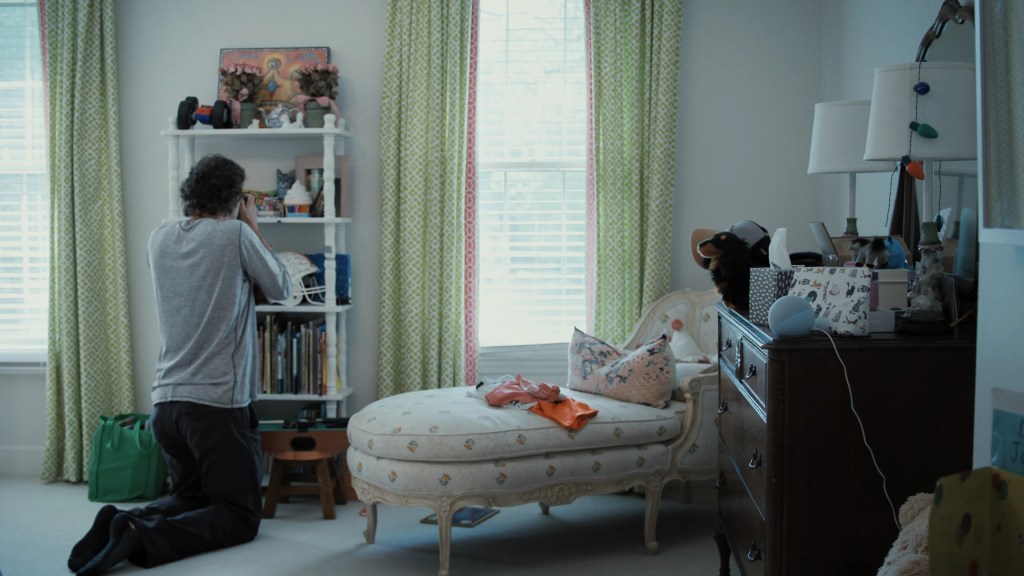
Joshua Seftel and Conall Jones were previously nominated in this category for Stranger at the Gate in 2023, a poignant and hopeful look at how empathy and understanding can prevent tragedy, as they chronicled an aborted terrorist attack on an Indiana mosque. Here, the pleas for peace and understanding take on a different context, the emptiness left in the wake of school shootings.
Focusing on journalist Steve Hartman and photographer Lou Bopp (the former known for a career of doing puff pieces and human interest stories), All the Empty Rooms looks at what has become a public health crisis over the last 30 years, as more and more children are gunned down at what should be the safest space of all, their schools. Mass shootings – both in general and at institutes of education – have grown at an alarming rate since Columbine brought national attention to the issue, leaving more and more young lives cut tragically short. Deciding that he can no longer put a “positive spin” on such travesties, Hartman has taken it upon himself, both as a reporter and a father, to do his own independent project, talking to the parents of slain children and having Bopp photograph the now unoccupied bedrooms, many of which were left intact and untouched by the parents after their loss.
It’s gut-wrenching to hear the stories directly from the families, and to see photos and videos of these kids, some as young as seven years old, knowing that they’ve been robbed of the rich, full lives they deserved. It’s hard not to cry, especially because we’ve seen this happen so many times. It reminded me of Sandy Hook, which was an hour’s drive from where I was living at the time. I still remember going to therapy that day, informing my therapist of the news (he had been in sessions all day and hadn’t heard), and just bawling my eyes out for an hour. What Hartman is doing is noble, because he’s giving the victims and their families the attention that they didn’t get from national press, which often focuses on the killers and the political jockeying that always follows these incidents.
Sadly, though, that’s also the problem. As kind as Hartman’s efforts are, this isn’t going to change anything. The fact of the matter is that there will never be enough dead babies for the gun lobby and the politicians they bribe to agree to any serious, lasting change in this matter. Sandy Hook wasn’t enough. Parkland wasn’t enough. Uvalde wasn’t enough. Until we address the core issue – our nation’s addiction to guns and the racist, paranoid fearmongering that leads to gullible people arming themselves to the teeth to fight threats that don’t exist – it will never be enough. Unfortunately, that leaves All the Empty Rooms as an ironic exercise of screaming into a silent void.
Armed Only with a Camera: The Life and Death of Brent Renaud – Craig Renaud and Juan Arredondo
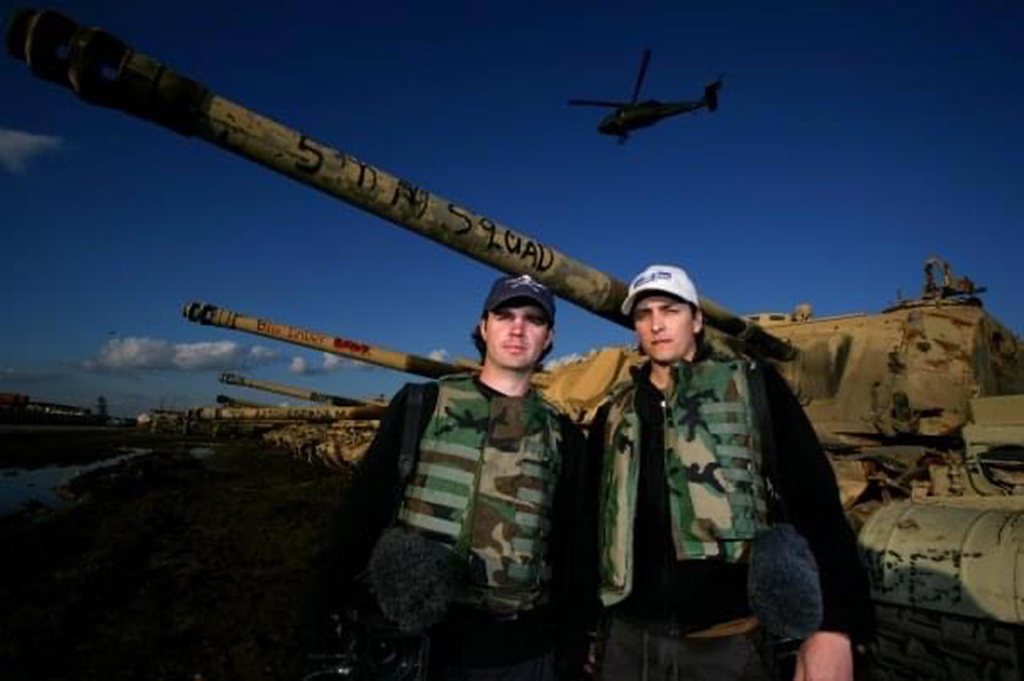
Over the last decade, the occupation of journalism has become one of the most dangerous in the world. As wars break out and authoritarian governments work overtime to silence independent or dissenting voices, the mere act of chronicling the truth on the streets becomes an existential risk. We’ve seen far too many stories of reporters being exiled or killed – Shireen Abu Akleh and Jamal Khashoggi among the more prominent cases – accompanied by cavalier reactions and victim shaming, even from our own government, as the killers face no consequences. Brent Renaud, an Arkansas native who became a documentarian along with his brother Craig, is another in this ever-growing body count, killed by Russian soldiers in Ukraine even though he was clearly marked with a “Press” vest. As I learned from Mstyslav Chernov in 2000 Meters to Andriivka, the situation is such that identifying yourself as a member of the media essentially gives the Russians carte blanche to kill, even though by international law, it’s supposed to make you off limits in the fighting, one of many war crimes committed by Vladimir Putin over the last four years.
Thankfully, Armed Only with a Camera isn’t just a listing of grievances about the wars. Instead, it’s a loving tribute to Brent from his brother, celebrating his life and the great work he did all over the world, from Afghanistan to Central America to Somalia, all in the name of broadcasting truth to the world. Through a mixture of archival footage, interviews, and Brent’s own onsite reporting, we get a true sense of how he tried to make a difference, and how often he came dangerously close to destruction before he was finally done in.
This is not a political piece, nor is it a case where media is patting itself on the back. It’s a solemn remembrance of a man who gave his life for the cause of truth and freedom. There are two moments that are seared into my mind. The first is Craig insisting that he film his brother’s corpse as it lays in his coffin before being sealed up for the final journey home. It’s a morbid sight, to see this body lying lifeless, stitches only covering part of his fatal wounds. But Craig is steadfast that Brent would have wanted it this way, to tell the whole story, and you definitely believe that. The second is at his funeral, where a retired Army commander eulogizes him. Brent was embedded with his unit in 2005 during their first operations in Iraq, and as the officer describes, Brent was instantly considered part of the family and a full member of the squadron. After his speech, he solemnly salutes the casket, even though Brent was never a soldier himself. As someone who grew up in a family attached to the military and veterans issues, I know how significant that gesture is.
Children No More: “Were and Are Gone” – Hilla Medalia and Sheila Nevins
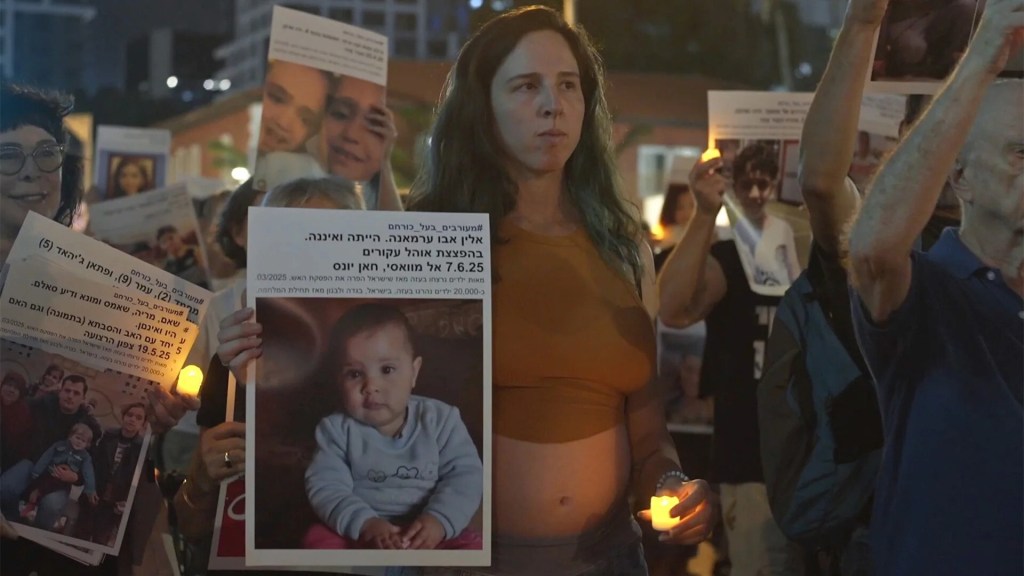
Sheila Nevins is another repeat nominee in this field, having been given a nod two years ago for The ABCs of Book Banning. That film was about how children are silenced by governments when trying to read books that *gasp* mention gay people. This time around, we’re dealing with something far more severe, children being silenced by the Israeli government because they’re being murdered in Gaza.
Specifically, we’re dealing with protesters in Tel Aviv, Jewish Israeli citizens, who organize local demonstrations highlighting the most egregious aspect of Benjamin Netanyahu’s genocide of Palestinians. As part of a growing movement of Israeli civilians speaking out – pointedly by not speaking – people stand on the streets and boardwalks of the city, holding up pictures of children killed in the conflict (as well as other IDF actions in Syria and Iran), noting their names, ages, circumstances of their deaths, and the phrase, “Was and is no more.”
We’re taken through the process of setting up these protests, from a director who scours social media for photos of the kids when they were alive and happy, to the women who work tirelessly to make sure that those holding the posters don’t engage with antagonists, physically or verbally, as it just invites scrutiny and repression from police.
And believe me, there are plenty of antagonists. Several people accost the group, accusing them of being traitors and of disrespecting the hostages, as well as the pain of the nation. Sadly, all of the epithets lobbed at them uniformly fail to recognize the simple adage that two wrongs do not make a right, as well as the fact that the children committed no crimes, that the IDF is intentionally bombing civilian targets, that there’s a difference between “Palestinian” and “Hamas,” and that Bibi has been indicted for crimes against humanity by the International Criminal Court. Hell, Bibi and the Likud rely on these lizard-brained mouthpieces to hold onto power and parrot his propaganda.
Unfortunately, the most positive thing we see is that over the course of the film, the number of protesters does grow. The number of belligerents does as well. There will be a day of reckoning for Netanyahu, but it is not now, nor will it be in the near future, as he and his government have moved towards full annexation of the West Bank, and he pals around with Donald Trump, musing about turning Gaza into a luxury resort for billionaires while the people starve. The only comfort we have is the knowledge that the Israeli people are not a monolith, and there is growing awareness of the atrocities the government is committing, even though they won’t stop anytime soon.
Also, not to quibble, but it’s a bit weird to me that the quote in the title doesn’t match the quote on the posters. You’d think they’d align, right? Maybe there are some grammatical nuances in Hebrew that I don’t understand. I’ll give the benefit of the doubt, but it does look odd.
The Devil Is Busy – Christalyn Hampton and Geeta Gandbhir
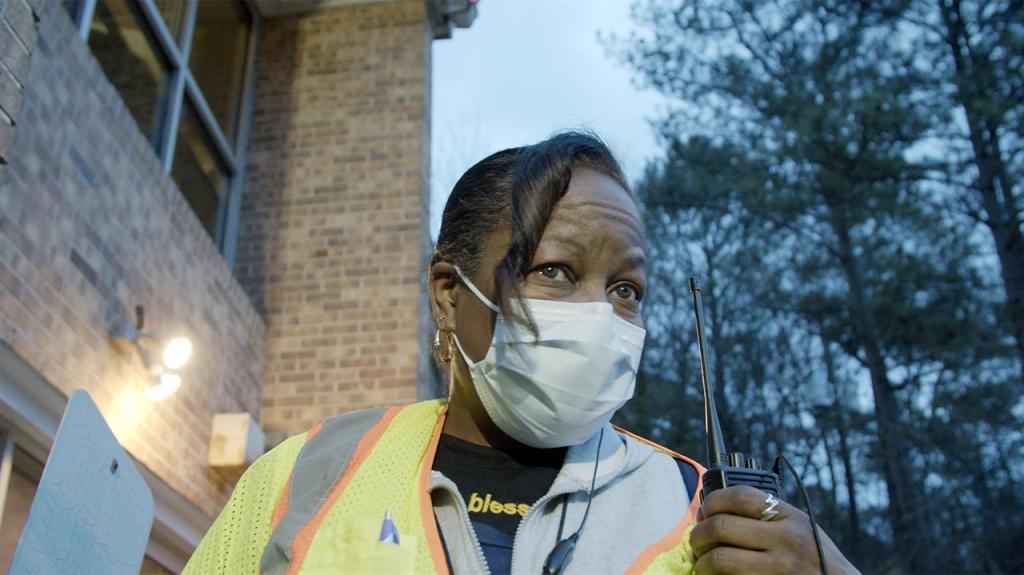
Geeta Gandbhir is another multiple nominee, but not in this category. She’s actually up here and in Documentary Feature for The Perfect Neighbor, which just won the Independent Spirit Award. She’s got two bites at the apple this year, and it’s very possible she could win on both fronts, as The Devil Is Busy represents the closest thing to an uplifting story in the set this time around.
That’s not to say it’s wholly positive, rather that it’s making the best out of a shit situation. The story concerns the staff at an abortion clinic in Atlanta. Beginning with the head of security, Tracii – notably the only member identified by name – the film shows a typical day at the facility, with Tracii arriving before sunrise to run a check to make sure no intruders are hiding in or around the office. As the first rays of daylight creep in, Tracii gets a call and a daily prayer from her pastor, as well as the first harassing chants from “Doug” and “Jason,” two evangelical protesters who stand outside the driveway to pester women with fire and brimstone as they pull in.
Tracii takes us through the protocols of her work, patrolling the parking lot, ensuring that every vehicle belongs to a patient or their support, and taking the appropriate steps to make sure that every patient can be as anonymous as possible. This last part is done using numbered wristbands so that the women are only identified by that number as they receive care. Since Roe v. Wade was overturned, Georgia has become one of the more difficult states to secure abortion care, instituting a “Heartbeat Ban,” where the procedure is illegal as soon as fetal cardiac activity can be detected (about six weeks), as well as mandating ultrasounds as both a means of seeing if there’s the beginnings of a heartbeat, as well as emotionally manipulating women into abandoning their plans. The doctors point out the usual fallacies with this idea – that most women don’t even know they’re pregnant at six weeks, and that the formation of a fetal cardiac sac is not the same as a chambered heartbeat that indicates a viable pregnancy – but they have to abide by the laws for their own safety, and they do their best to give the women as much care as they can in spite of it. There’s an oddly heartbreaking moment when a young woman cries from relief when her ultrasound shows no activity, meaning she can proceed and get the care she needs.
Throughout the film, the audio brilliantly mixes in the slogans of damnation from outside, as “Doug,” “Jason,” and others preach about how it’s God’s plan for women to become mothers, calling it hypocrisy that the staff – most of whom are black – are committing “Black Genocide” while co-opting “Black Lives Matter” signage, and assaulting every entering vehicle by calling the occupants murderers. As Tracii points out, the real hypocrisy is people like “Jason,” who went to prison for firebombing a Black church, saying that God has forgiven him, but he has no forgiveness for the perceived sin of abortion (never mind that the Book of Exodus gives explicit instructions for priests to perform abortions if a woman becomes pregnant through adultery).
What sets this documentary apart is Tracii, a woman of deep, deep faith, who has been in the shoes of the women who come to the clinic. She’s had to make that choice, and she’s had to live with the consequences of it, good and bad, and it breaks your heart to learn what she’s gone through. It also makes it all the more poignant and powerful that she takes her experience and uses it as a weapon of tolerance and empathy, doing everything she can to help women in the same situation she was once in. No matter your opinions on the issue of abortion, it’s crucial to understand that there are shades of grey everywhere, and Tracii is living proof. Her bravery, resolve, and humanity are what give us all hope that this country may one day regain its sanity and stop trying to control women’s bodies.
Perfectly a Strangeness – Alison McAlpine
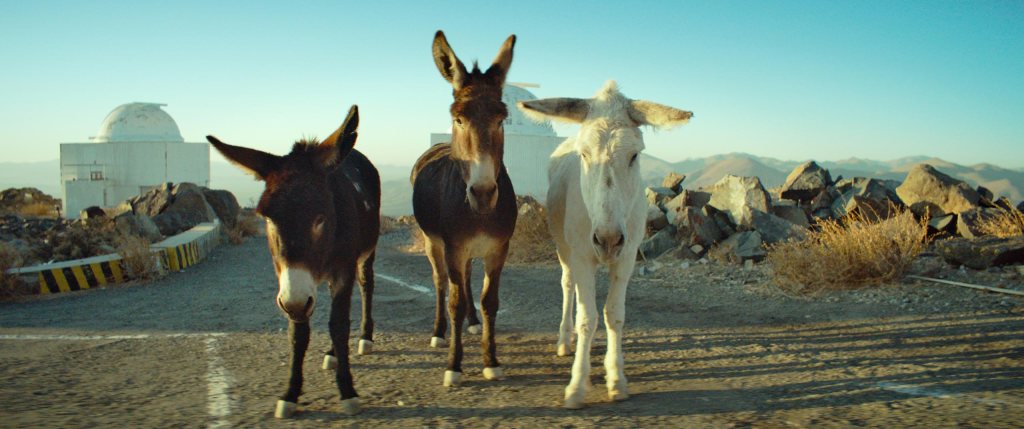
There’s no “right way” to tell a story, but this one left me dumbfounded. I think it’s best if I provide the copy from when it premiered at the Cannes Film Festival in 2024:
“In the dazzling incandescence of an unknown desert, three donkeys discover an abandoned astronomical observatory and the universe. A sensorial, cinematic exploration of what a story can be.”
Um, sure. I guess that’s one way to look at it. But here’s another, more accurate description. Three donkeys go up a road in the Chilean desert. They enter the parking lot of what we’re meant to assume is an abandoned observatory. When the Sun goes down, we get some timelapse footage of an observatory opening up, with telescopes measuring the stars, as well as some mechanical rhythms of various machinery, and an effect where it’s all reflected from the donkeys’ eyes. When it’s daylight again, the donkeys go back down the hill. The end.
Yeah, that’s the entire thing. There’s no concrete narrative, no musings on how donkeys look at the world, no grand statement on how it might be more useful to look at what’s around us rather than gazing at the impossible-to-reach expanse of outer space. It’s just 15 minutes where donkeys go up a hill, a montage of astronomy stuff happens, and the donkeys go down the hill. Whatever poetry you wish to project onto it is your prerogative, but when it’s all said and done, donkeys go up, random stuff, donkeys go down. That’s it. Do with that what you will.
***
In a weird way, I genuinely wonder if the donkeys will end up taking the prize. If you look on the film’s Wikipedia page, you can see a slew of awards that it’s gotten over the last 18 months, and in this particular field, it could have an advantage. With the other four films, you’re dealing with some real bummer topics, from fights against repressive laws to downright devastation as we discuss the open murder of children. For some voters, I can easily see a case where confusing beats out depressing just for being different. It wouldn’t sway me, but in this topsy-turvy world, it wouldn’t be the least bit surprising if it did convince others.
My Rankings:
1) The Devil Is Busy
2) Armed Only with a Camera: The Life and Death of Brent Renaud
3) Children No More: “Were and Are Gone”
4) All the Empty Rooms
5) Perfectly a Strangeness
Who do you think should win? Vote now in the poll below!
Up next, it’s the category that could set up an epic battle for Best Picture, or end the conversation entirely, depending on who wins. It’s Original Screenplay!
Join the conversation in the comments below! Have you seen the Short Film nominees this year? Do you get tired of downer stories in documentaries? No, seriously, what’s with the donkeys? Let me know! And remember, you can follow me on Twitter (fuck “X”) as well as Bluesky, subscribe to my YouTube channel for even more content, and check out the entire BTRP Media Network at btrpmedia.com!

 I Actually Paid To See This
One thought on “Oscar Blitz 2026 – Documentary Short”