
Well friends, it seems that the Best Picture race is all but sewn up. Paul Thomas Anderson has just taken top honors at the Directors Guild Awards, and One Battle After Another cleaned up at the BAFTAs, winning Best Picture, Best Director, Adapted Screenplay, Supporting Actor for Sean Penn, Cinematography, and Film Editing. The presumed co-favorite on this side of the Pond, Sinners, took home the expected win for Original Score, a somewhat surprising victory for Wunmi Mosaku for Supporting Actress, and Original Screenplay.
Sadly, this seems to indicate that Ryan Coogler’s masterpiece will meet the same fate as Jordan Peele’s Get Out. Despite it being a massive success with critics and audiences, the old standards against horror and pro-coronation for celebrated veteran directors indicate that he’ll be given the token consolation prize of Original Screenplay, which just sucks. Not only are we denied a robust competition for the top prize, but once again a black filmmaker who creates an amazing genre picture gets shunted to the side for more traditional fare. Mind you, I’m not going to be mad if One Battle After Another wins. It’s a wonderful film and has more than earned its laurels. I just wish it wasn’t so obvious.
Also, for what it’s worth, I’m getting sick of the Screenplay categories being used as apologies rather than just celebrating great writing. It’s happening less often, but it always sticks out when it’s clear that this is what’s going to happen. Far too many times we’ve seen the Writing fields split between the eventual Best Picture winner and an also-ran, depending on which side of the equation they’re on.
So, at this point, I think we can assume that Coogler will win this award, but is it the best? We’ve actually got a solid group of contenders this year, with only one that I think is sort of undeserving. This means that you could make a solid case for 80% of the field, even though the victor is all but assured. Will this turn out to be an error on the Academy’s part? We’ll soon see.
This year’s nominees for Original Screenplay are…
Blue Moon – Robert Kaplow
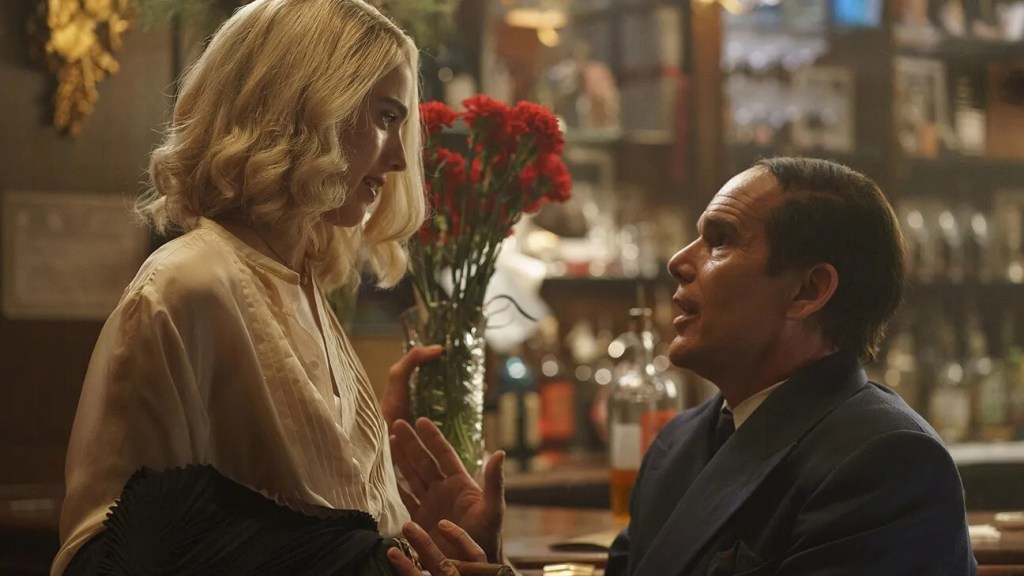
I tend to judge the writing categories based on the strength of the story and the dialogue, and when it comes to Blue Moon, you definitely get your fill of the latter element. There are times when Ethan Hawke as Lorenz Hart is basically performing a one-man show, with monologues, diatribes, tangents, and asides that go on for several minutes at a time without interruption. And before Andrew Scott’s Richard Rodgers and company show up to celebrate their success, the only breakups in Hart’s rants come from brief responses and tee-ups from Bobby Cannavale, doing yeoman’s work as bartender Eddie, or the occasional joining from Patrick Kennedy as E.B. White.
Thankfully, this dialogue is exceedingly clever. Hawke is given all the space in the world to chew scenery and list off a lifetime’s worth of grievances, every once in a while offering a glimmer of hope that he might have an actual chance with Margaret Qualley’s Elizabeth. Then, when the after-party begins, you get this slow twist in the lines, where the once confident and shit-talking Hart shamelessly schmoozes Rodgers et al to the point of begging. What was once a series of cutting quips turns ever so slowly into pathetic groveling, and you don’t really notice it until it’s too late.
Where the script comes up a little short is in three areas. First and foremost, there’s not much of a story. That’s by design, but it does have to be noted. The plot is literally that Hart watches half of Oklahoma!, decides that it’s terrible (I agree, but that’s beside the point), goes to Sardi’s to drown his sorrows, then attempts to put on a fake smile and pretend he doesn’t hate everyone when they show up for the party. Once he’s worn out his welcome, he leaves. That’s it. It’s a very small story, basically a bottle episode of a TV show, which again, is perfectly fine. It just means that other entries have an opening to gain points by telling a more comprehensive tale.
The other two concern minor plot points that felt too on-the-nose for my liking. One is Hart’s pining for Elizabeth. It’s cringeworthy to watch, especially because we all know how it turns out. Not because of any historical record, mind you, just that we all recognize when someone’s in the “Friend Zone,” and it’s always painful for the poor schlub to be the last one to see it. Elsewhere, the idea that Hart somehow inspired White to write Stuart Little felt too cutesy for the themes we’re dealing with here, and of course it never happened. It reminded me of an episode of The Simpsons where Homer gets obsessed with an 80s sitcom. He watches a behind-the-scenes documentary, featuring a moment where the actor playing the father berates one of writers, screaming that he should “fucking learn how to write a fucking script!” before storming off. That writer is David Mamet, who then muses on the word “fuck,” which starts him on Glengarry Glen Ross. When a 20-year-old episode beats you to the joke, there’s really no point in it. It’s very small compared to the greater whole of the Blue Moon screenplay, but it sticks out to me months later.
It Was Just an Accident – Jafar Panahi; in collaboration with Nader Saïvar, Shadmehr Rastin, and Mehdi Mahmoudian
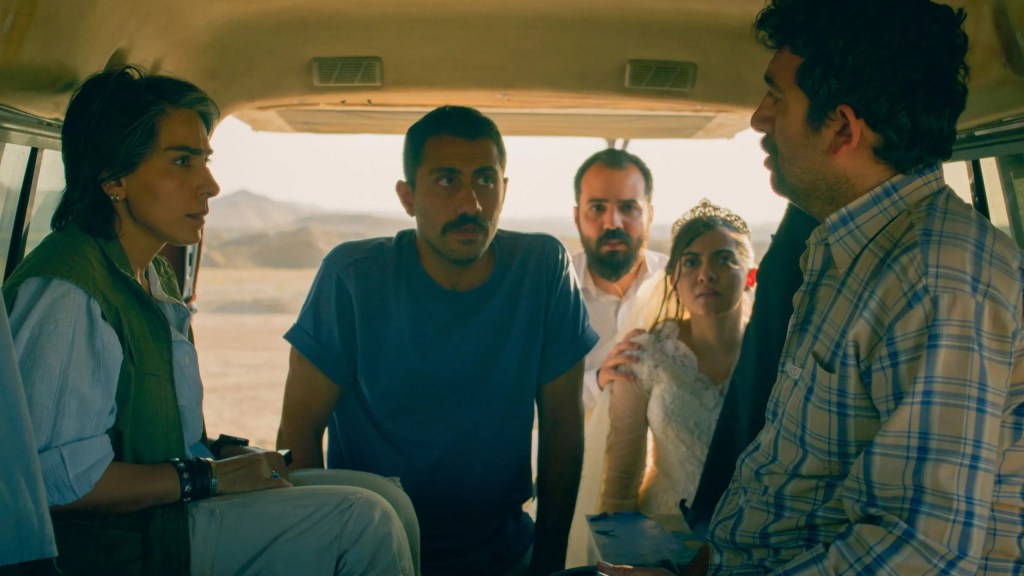
The story of It Was Just an Accident, as well as its sense of comic timing, clearly has roots in absurdist farces like It’s a Mad, Mad, Mad, Mad World, but that doesn’t mean it’s derivative by any means. In fact, the political heft of the film lies in how far it departs from its spiritual forebears, because our ragtag van occupants aren’t looking for some impossible MacGuffin like a treasure. The MacGuffin is literally lying in a box right next to them. The key is the humanity that they display – something their captive apparently not only lacks but rejects out of hand – when deciding how to deal with him.
There is a strange wackiness to the whole affair, and the script delights in its silliness from time to time, especially as the group grows in number and tools around the city, looking for the next person or item they need to prove that they’ve got their former jailor and torturer, so they can then kill him for his crimes. That plays well alongside the general ambiguity about what’s going on. We never truly know if Eghbal is indeed the notorious “Peg Leg,” though the final scene does offer a juicy clue that largely confirms that he is. That uncertainty leads to doubt among some of the group, of course, but it also illustrates how slapdash their plan is.
As the situation grows beyond their control, there are several poignant discussions of what to do, when and how to do it, and whether it’s right to do so. There’s a ton of consideration that goes into this, but most importantly, they speak openly about their situations, sharing personal information that could easily identify them if Eghbal were to escape and come looking for them. He’s in the box, but they don’t know if he’s unconscious all the time. As a trained interrogator and soldier, he could just fake it and listen for the entire day to every conversation, giving him all the ammunition he needs to make their lives Hell all over again if he so chooses.
But again, humanity wins out. The fact that the group abandons their scheme – at least temporarily – to assist Eghbal’s wife and daughter as the former goes into labor, is an example of the grace Eghbal would have never shown any of them. This is what eventually stays their collective hand at the moment of truth, and it’s what probably convinces Eghbal to leave them alone when it’s all said and done. For all his defiant screaming in the climactic scene that he’d love to be martyred for his government, and that he knows his newborn son would grow to worship him as a hero, deep down he does want to live and reunite with his family and raise that child. It’s a stark contrast from the opening scene, where Eghbal utters the titular line as a way to attempt to placate his daughter and absolve himself of responsibility when he runs over a dog in the dark. Even though the plot stays within the confines and outskirts of the city, and even though it occurs mostly over a single day, everyone involved has taken a literal and figurative journey that we can all see play out through the evolution of the characters and their dialogue, and that’s just smart writing.
Marty Supreme – Ronald Bronstein and Josh Safdie
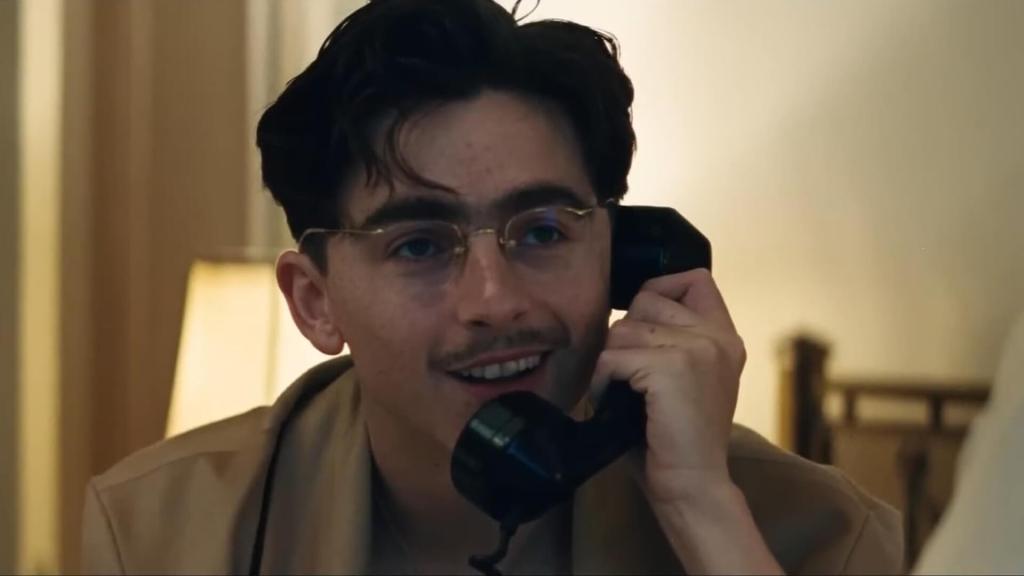
This isn’t a bad script, but it’s nowhere near the caliber of the others. And while I could forgive It Was Just an Accident for nodding to its inspirations, Marty Supreme wears them on its sleeve, and rarely goes for any subversions or insight into the sports and crime movie tropes it parades throughout its runtime.
There are some memorable lines, to be sure. In particular, there’s the “smiling at you from the Wheaties box” bit that played heavily in the trailers. It’s an excellent show of Marty’s confidence, whether warranted or not. My personal favorite, because it’s just so deliciously wrong, is when Marty gives an interview before his semifinal match at the British Open and plays up his wrestling heel persona, telling the reporters in regards to his opponent (and friend) Bela Kletzki, “I’m gonna do to [him] what Auschwitz couldn’t. I’m gonna finish the job.” It’s a hell of a dig at a Holocaust survivor, which Marty tosses off because he’s also Jewish, but it’s the far more indicative line when it comes to understanding his character. He doesn’t care about consequences, only attention, because in his mind, when he achieves glory – not if – it’ll all be part of his celebrity mystique.
Sadly, most of the rest of the time, the script plays like the B-movie Barton Fink was supposed to write about a pro wrestler. It’s just a bunch of generic plot points where Marty tries to rise up from his humble roots and become a champion, peppered with a truckload of character flaws that continually hold him back. It’s nothing we haven’t seen before, and outside of a few scenes (the bowling alley hustle, Rachel’s attempts to pull the same cons as Marty but failing even worse, the bathtub falling on the gangster, etc.), it feels too recycled to properly latch onto. Every line Kevin O’Leary unconvincingly delivers is just standard-issue rapacious businessman villain dialogue. He might as well twirl a mustache while he talks. Marty’s family are all one-note “YOU DON’T BELIEVE IN ME!” sounding boards. Kate occasionally has some words of wisdom as someone who’s had it all and lost it, but the weight of her advice and condemnations is lost when you consider the fact that she willingly sleeps with this twerp multiple times. Hell, even the opening scene straight up rips off the beginning of Look Who’s Talking by having an entire sequence of showing a sperm fertilizing an egg.
It’s enough to make you ask, “What’s actually original about this screenplay?” Apart from making the hero a villain for much of the runtime, not much.
Sentimental Value – Eskil Vogt and Joachim Trier
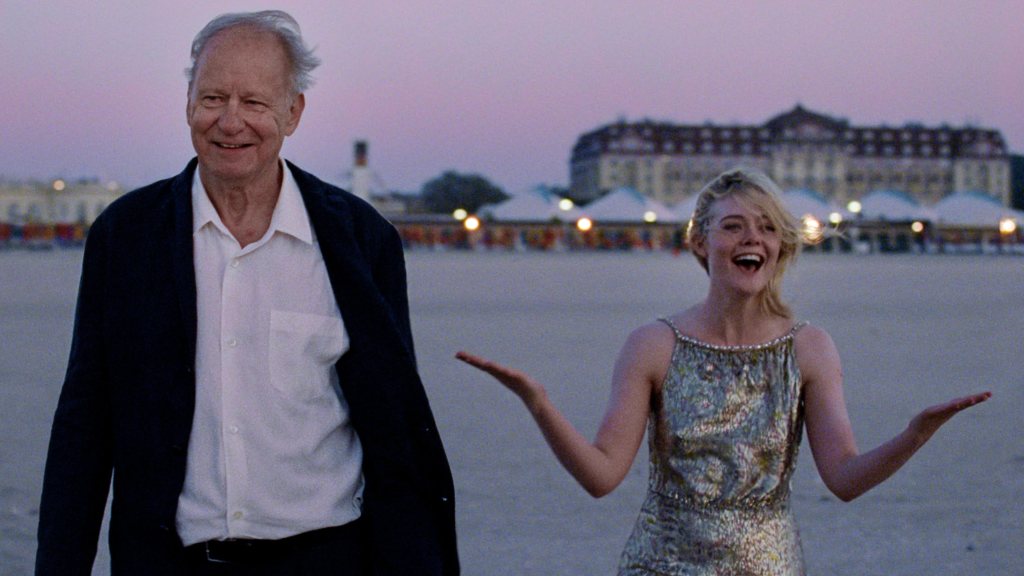
I’ve mentioned this before, but when I first learned how to write scripts, there was an emphasis on understanding the difference between an action-driven screenplay and a dialogue-driven one, with the lesson being that neither option was necessarily better than the other, but that we should make sure that whatever path we took was a justified one. Sentimental Value is very much a dialogue-driven narrative, but it’s perfectly formatted within that framework, because this is ultimately a story about people who’ve failed to properly communicate with one another for their entire lives, and they can’t move forward until they figure that out.
As such, we get a ton of dialogue-heavy scenes, but they’re all correctly contextualized, with layered subtext and nuance as we progress. When Nora refuses Gustav’s request to be in his movie, it’s not just a “Shut up, Dad, you don’t even know me!” bit of soap opera histrionics. There’s deep-seated pain that Nora hasn’t processed, and she can’t even get an honest answer out of Gustav about the successful television show she’s recently done in addition to her famed stage work. She knows he’s only watched bits and pieces, and is dismissive of anything that’s not in his particular wheelhouse, so she confronts him with that knowledge as a reason to not only turn down the role, but refuse to even read the script. She feels he’s trying to use her as a means to an end, and she has a lifetime of evidence to support that conclusion. As it turns out, Gustav is being genuine, and he really did write the script and role for Nora as a way to show that he does understand after years of processing his own grief, but the construction of the scene from within the dialogue expertly establishes their dynamic.
This continues on into crucial conversations that all the characters have. Gustav wants to give Agnes’s son Erik a role in the new film, and initially she’s on board, but then she remembers how her experience sort of warped her outlook on life and family relationships, and thus has to assert herself to turn him down. Agnes is mostly a passive character, having been the net in several domestic disputes, so when she finally does put her foot down, she has to have the proper words to get her needs across, and the script delivers in spades. When Rachel starts to realize that she’s a stand-in for Nora, it gives us two of the best scenes in the movie: the heart-to-heart with Nora and the professional confusion about not being able to convincingly speak Norwegian. The latter is something of a subtle moment, but it’s also the first indication that Rachel understands more than she lets on, and realizes that she needs to find an out. Naturally, it’s a scene of brutal honesty that finally brings it.
I think that’s the core of why this script works so well. It’s all about honesty. It’s about having the hard talks and facing the uncomfortable truths that have been put off for decades. It’s about coming to terms with pain, both caused and received, and finding the grace to at least begin the process of healing, rather than hanging onto resentment. Every major moment in Sentimental Value gets that across, because Vogt and Trier’s screenplay makes sure to give everyone the space they need and the words necessary to convey the emotion of the scene.
Sinners – Ryan Coogler
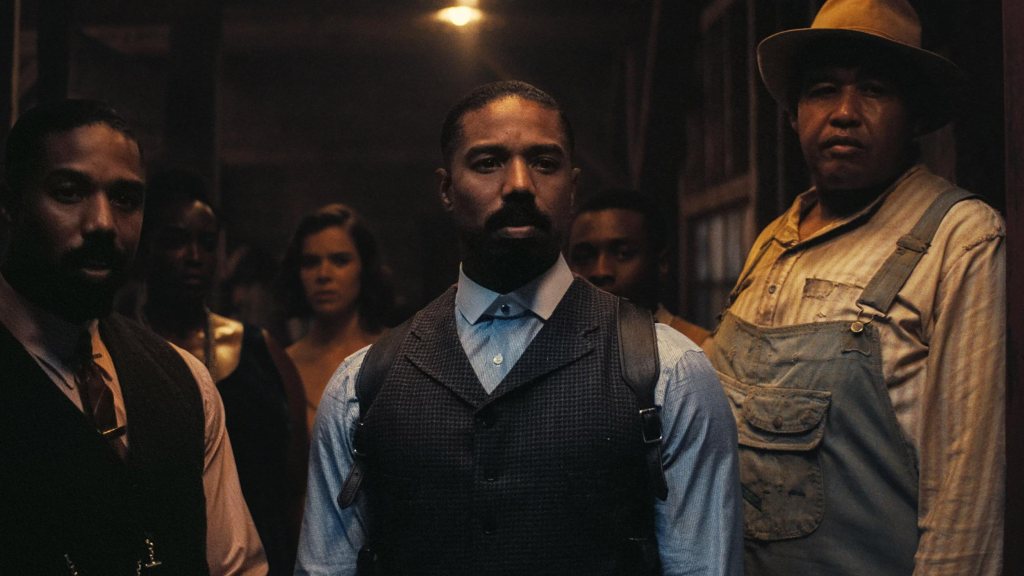
The biggest complaint I’ve seen about Sinners, the closest thing to a true detraction outside of pure contrarianism, is that the script is too reliant on tropes from previous vampire movies, particularly Let the Right One In and From Dusk till Dawn. For me, it’s not a bug, but a feature. One of the biggest problems I’ve seen in a lot of movies over the last few years – particularly genre films – is a reliance on the audience’s knowledge of the format to fill in gaps that aren’t established in the screenplay itself. Far too often I’ve had to dock a movie points because it won’t answer this one simple question: What are the rules?
Ryan Coogler refuses to let the audience fall into that trap. Instead, he lets it be known what genre conventions he’s going to follow, which ones he won’t, and which ones he’s going to make up himself. This is, I think, best illustrated through Annie, who uses her knowledge of Hoodoo (distinct from Voodoo, which the film also helpfully notes) and associated mythology to theorize about how the group might survive. The use of garlic, the need for vampires to be invited in, and even the fatal nature of sunlight, these are all filtered through Annie’s practices as an entry point into the vampire lore this particular film will use, which were also used by the films that naysayers accuse this flick of ripping off. From Dusk till Dawn uses the same general mythos as Sinners does in creating a vampire siege. It wasn’t the first to do it, and it won’t be the last, so it’s disingenuous to suggest that Coogler cribbed from it as a sole source of inspiration. The way he spins these tropes is what makes this more unique than others in the vampire motif.
From there, Coogler creates a layered story, with fully-realized characters, even the ones we know are cannon fodder. Do you know how hard it is to wring pathos out of someone as doomed as Delta Slim? Or Grace? Or Pearline? From the moment we meet them, if you know anything about horror movies, you know they’re marked for death. Yet Coogler still takes the time to make us care about them. Slim’s lived a long life as a blues man, has seen a lot of trouble, and one could argue that death is a release for him, and yet he powers on, inspired by the talent he sees in Sammie, in hopes of contributing to something great. Grace, who has the unfortunate distinction of being the one to set off the final battle by officially inviting Remmick and his horde in, does so out of understandable desperation after her daughter’s life is threatened. She knows she won’t survive, but she’ll be damned if she doesn’t do everything in her power to give her child a chance by keeping the vampires occupied. Pearline gets a ton of development for her love of the blues and her eventual attraction to Sammie. She’s doomed as a “sinner” because she cheats on her husband, but damn if she doesn’t make the most out of her sinning ways. Hell, even Cornbread gets some backstory and emotional resonance, as working at the juke is his chance to get out of picking cotton and sharecropping, giving his wife and kids a chance at a better life. When he’s turned, you genuinely feel bad for him, because he was an innocent. Ryan Coogler made us feel pity for a man named fucking CORNBREAD! That’s insane.
The plot itself is overflowing with metaphor and literary resonance. Again, it’s not the first to talk about assimilation as a means of corrupting culture, nor is it the first to use it as an analog for how racism pervades America. But to do it in this particular way is almost unheard of. To use literal vampirism as a way to illustrate appropriation is genius, and it’s reinforced by Remmick as a nuanced monster. Yes, he’s killing people, stealing their songs and stories by consuming them into his hive mind, but remember that the same thing happened to him. He wasn’t born a vampire. He was the son of Irish immigrants who was also devoured by the beast, his own heritage subsumed into the mass. In a weird way, there are moments where you genuinely believe that he’s trying to do something positive. Yes, he feeds on the identities of those he turns, and he was essentially lured by the strength and power of Sammie’s talent in a manner that suggests intoxication and addiction, but he doesn’t want to destroy Sammie, only add him to his collective.
And then, of course, we get all the smart and fun elements of the story and dialogue. Smoke and Stack are distinct characters, each with their own traits and priorities, and Coogler gives Michael B. Jordan enough material to show the divergence. Mary gets one of the first true shocking laughs of the film when she describes Stack’s sexual prowess in surprisingly graphic terms. There’s the iconic exchange between the twins and the Klansman landowner, asserting their worth as people by throwing his stupid questions back in his face, defiantly but still charmingly saying that they’re cousins instead of brothers. In one of the most clever touches, we never know exactly what Smoke and Stack did in Chicago, only that they ran afoul of Al Capone and other crime lords, to the point that returning to the Jim Crow South was the safer option. There are hints and suggestions, but it’s never explicitly stated, because Coogler knows the audience is smart enough to put two and two together and realize the true danger of their situation. And since no Chicago gangsters actually show up, the knowledge of what they did or who they wronged would just be superfluous information that wouldn’t increase our understanding of the characters.
***
I could go on and on about why Coogler deserves to win here (yeah, spoiler alert for the next paragraph if the previous ones didn’t tip my hand), but again, it very much appears that he’s going to win just so he can get something to show for his efforts, since he won’t be winning Best Director or Best Picture. It is a good thing that the merits align with the presumed victory, but the motivation still leaves me shaking my head.
My Rankings:
1) Sinners
2) Sentimental Value
3) Blue Moon
4) It Was Just an Accident
5) Marty Supreme
Who do you think should win? Vote now in the poll below!
Up next, I piss into the wind in hopes of convincing you that the most popular movie in Netflix history shouldn’t win the Oscar, and that “popular” doesn’t always mean “good,” even though we all know it’s going to wipe the floor with the competition. It’s Animated Feature!
Join the conversation in the comments below! Which script was the best written in your opinion? Should the screenplay categories be used as a legit consolation prize for Best Picture losers? What’s the difference between an homage and a ripoff? Let me know! And remember, you can follow me on Twitter (fuck “X”) as well as Bluesky, subscribe to my YouTube channel for even more content, and check out the entire BTRP Media Network at btrpmedia.com!

 I Actually Paid To See This
One thought on “Oscar Blitz 2026 – Original Screenplay”