When I was a child, there were four things that fascinated me more than anything else: baseball, TV, video games, and camcorders. In my own little world, a bulky camera mounted on your shoulder with a VHS tape inside was the ticket to the whole universe of movies. My family couldn’t afford one of our own until I was about 12 (I was lucky to have my Nintendo; I wasn’t going to push the issue), but before then, every opportunity I could get to either hold one or mug for it, I took.
The pinnacle of this was when I was eight years old and my aunt, uncle, and cousins visited from Texas, and they did have one. All I cared about was hopping around in front of the thing whenever I got the chance. I hardly slept during the week or so that they stayed over, because unless my uncle was also asleep, I was losing face time with the camera. I was completely obnoxious, and eventually I got my comical comeuppance. While my uncle demonstrated an infinity shot on the television, my cousin Chris and I were playing backgammon. I was so struck by what I saw that I turned my head completely away, which allowed Chris to constantly cheat and reposition my men. After the trick was over, I still stared at the lens while my uncle recorded us playing. Every time I turned my head, Chris moved the pieces again. Looking back on it now, it was hilarious. I told that story to my boss when I briefly worked at America’s Funniest Home Videos a few years ago, and he responded by asking me why my uncle never submitted the tape, because a scene like that could have easily won the show.
I carried that obsession through high school, learning as much as I could and manning professional TV cameras for public access broadcasts of our football games. When I got to college, I worked for two and a half years in the video department, being farmed out for classes and lectures that the professors wanted recorded. I flubbed up once during a Q&A when I tried to signal the moderator to look into the lens while speaking, and instead she called me out, thinking I wanted to ask a question of the guest from behind the camera. Oops.
Somewhat sadly, though, I realized my limits as a videographer. I had trouble mastering rack focus techniques. I could never successfully design a lighting scheme. I could never hold the camera steady for a manual shot. And try as I might, I never memorized the different lenses and their effects on the frame. It was at that point that I realized I’d never be a professional cameraman most likely, nor would I ever be a director. The carveout I’ll give myself is that if I was ever on a shoot and someone told me where to look, pan, and zoom, I’d probably be fine. But ask me the difference between various zoom lenses, and I’ll look like I’ve been recently lobotomized.
As such, my hat’s off to anyone who figures this stuff out. Like the 20-year-old version of me, I know what looks cool, and I can kind of discern how it all works, but I’ll likely never put any of that into practice. Hell, I’m happy when the more professional video apps on my phone work long enough for me to record b-roll when I attend a film festival. That’s alternate footage from the primary, or a-roll, footage that a production can cut to, typically during live TV broadcasts. Like, if you’re watching SportsCenter, and while the analysts are talking they cut to some shots of a team practice, that’s b-roll. The a-roll is the people talking at the desk. See, I did retain some of the things I learned. Maybe there’s hope for me yet.
This year’s nominees for Cinematography are…
Frankenstein – Dan Laustsen
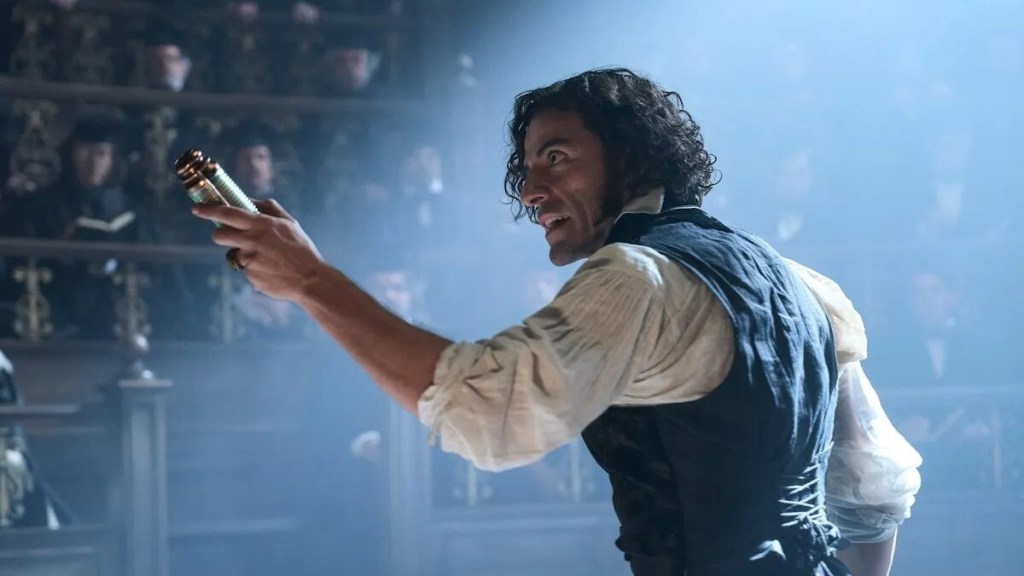
The camera work in Frankenstein is as large and imposing as its central “monster.” This is a gothic horror film with a bit of romance thrown in, and it’s directed by Guillermo del Toro, so Laustsen, who’s worked with del Toro five times and earned three nominations to date, definitely knows the assignment. The wide shots are set up with appropriate wide angle lenses to show the breadth of the scenery that Oscar Isaac is chewing, especially when it comes to the lab and the exteriors in the Arctic. This creates a wonderful visual profile where no matter how much is going on, if the scene calls for a character to be basically isolated, we’ll feel that.
In the more intimate moments, as the camera draws nearer, the mood of the scene dictates the angle. If the Creature (or Victor) needs to be intimidating, Laustsen typically shoots upward from below, making the actors look taller than they already are. Given that Jacob Elordi is 6’5″, that makes him look like a towering giant. However, in the more tender moments, the camera is at eye level or higher, looking slightly down. You see this in the interactions between Elizabeth (Mia Goth is 5’10” so she’s not dwarfed by Elordi) and the Creature, as well as the scenes with David Bradley, where Elordi crouches to more reasonably match him, as he’s also 5’10”.
Outside of the character work, Laustsen employs a good deal of sweeping pans and fast-paced tracking shots on dollies when the action picks up. This is in keeping with the superhuman aspects that del Toro has infused into the Creature. Sometimes this goes off the rails a bit, like lifting the Danish vessel, but it works to great effect when he’s being chased by wolves and hunters. There’s something almost primal about it, which captures the tone quite well.
If there’s a problem to be had, it’s with the establishing shots and vistas, mostly because these environments are dulled by CGI. The various buildings, trees, and water look so fake that the entire shot looks artificial when taken as a whole. It doesn’t fully dilute the cinematography of the film, but it is noticeable when it looks cheap, especially when it’s reduced to the dimensions of your TV if you’re watching on Netflix.
Marty Supreme – Darius Khondji
The best way to sum up the reason why the photography in Marty Supreme just doesn’t deserve to win, is to invoke a quote from Doug Walker, aka Nostalgia Critic on YouTube. In his and his brother Rob’s “First Viewing” video for Fant4stic, he offered the following poignant observation.
“TURN ON A LIGHT! FUCK! TURN ON A LIGHT.”
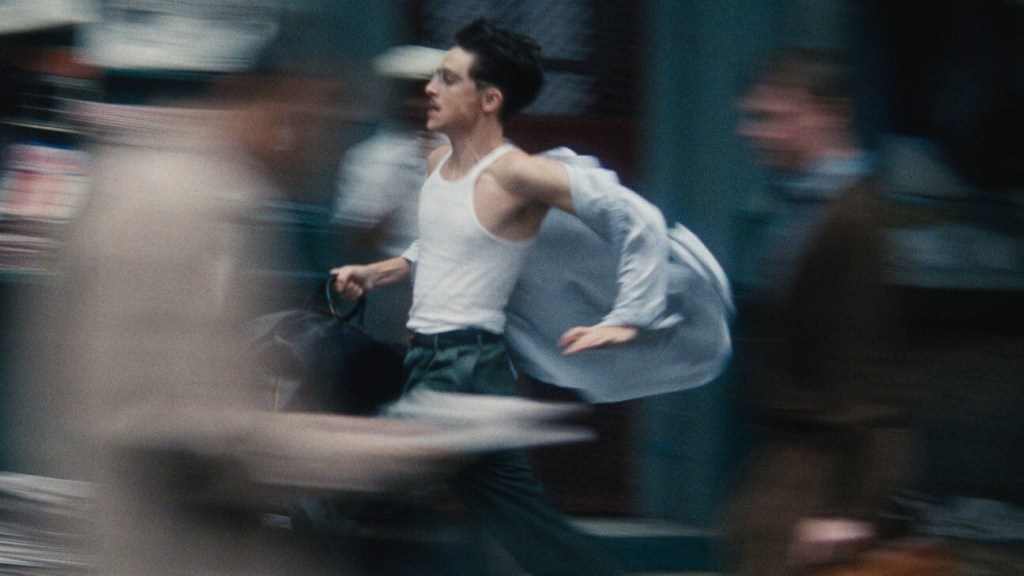
Yeah, there are some nice shots in Marty Supreme, particularly in the way that the table tennis matches are choreographed, shot, and edited. But everything around them is nearly pitch dark, and for no discernible reason. This becomes particularly egregious during the semifinal match, when Kay shows up out of morbid curiosity for this child that’s been hitting on her. We constantly cut from the match, which is decently lit because there’s a bright lamp above the table, to almost total darkness with Gwyneth Paltrow in the stands, barely able to see how she reacts to anything going on.
This is the problem with trying to make something like ping pong “gritty.” It’s a sport that requires light, and yet 90% of the shots involving it are unjustifiably unlit. Like I said in the preamble, I could never properly light a scene, so I understand the difficulty, but even I know that you need to be able to see the fucking ball! Or the table next to you! Or the judges to the side!
Outside of the action scenes, things are lit fine and the shots are perfectly adequate. But in the core focus of this story, Josh Safdie and Khondji opt for dark on top of dark on top of dark, to the point where the audience can’t reasonably tell what’s even going on. To me, that’s disqualifying.
One Battle After Another – Michael Bauman
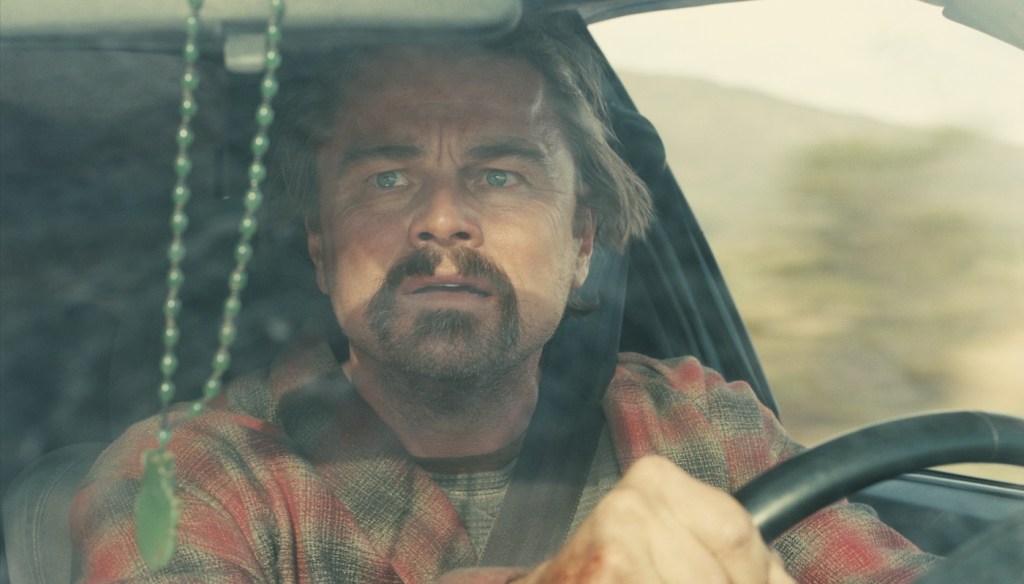
Sometimes the most effective way to get the visual message across is to not mess with it, to just let the scene breathe. Think of it as the Occam’s Razor of cinematography. Michael Bauman clearly understands this, as a lot of the action, drama, and comedy of One Battle After Another comes from steady, disciplined camera work that holds on the shot longer than you’d expect. In a departure from Hollywood norms, there are a ton of extended shots and sequences in this film, to the point where, as I’m editing my video breakdowns, I have to be careful about when I make a cut, because including the full angle of a given scene could put me over the time limit for a content ID and a copyright claim on the footage.
There are so many fun moments that come simply from letting the camera roll here. When Bob/Pat meets with Sergio and they begin their escape, we walk through Sergio’s building and see his entire immigrant settlement network through a series of inspired one-takes, Benicio del Toro and Leonardo DiCaprio walking in and out of several coordinated scenes with background actors all playing intricate parts. Later, as Bob follows some of Sergio’s accomplices on the rooftops, he misses a jump, falling three stories into an alley, his fall broken by tree branches. Without the shot cutting, Bob then gets up, starts to run out of the alley, and is immediately tased from offscreen in a tremendously funny sequence.
And then, of course, there’s the incredibly tense finale, a car chase in the desert where everyone’s fate is decided. There are two brilliant techniques at play here. The first is mounting the camera on the underside of the front fender, so that we basically get a ground-level view of the vehicles in motion, similar to the work done on The Brutalist, which won this category last year. We’re literally seeing where the rubber meets the road. These takes are then contrasted with absolutely gorgeous wide shots of the desert vistas and hilly roads, with the camera static, holding focus on whichever car is in the lead at a given moment for several seconds until the pursuing vehicle comes over the horizon. It’s such a simple trick, but it’s an incredible way to show just how the stakes rise as the cars get closer, the vastness of the desert serving as living proof that being caught means no one will ever find you. Like so many great elements in One Battle After Another, the key is balancing several different styles and schemes to form a cohesive whole. This chase scene, one of the best of all of 2025 cinema, is a perfect example.
Sinners – Autumn Durald Arkapaw
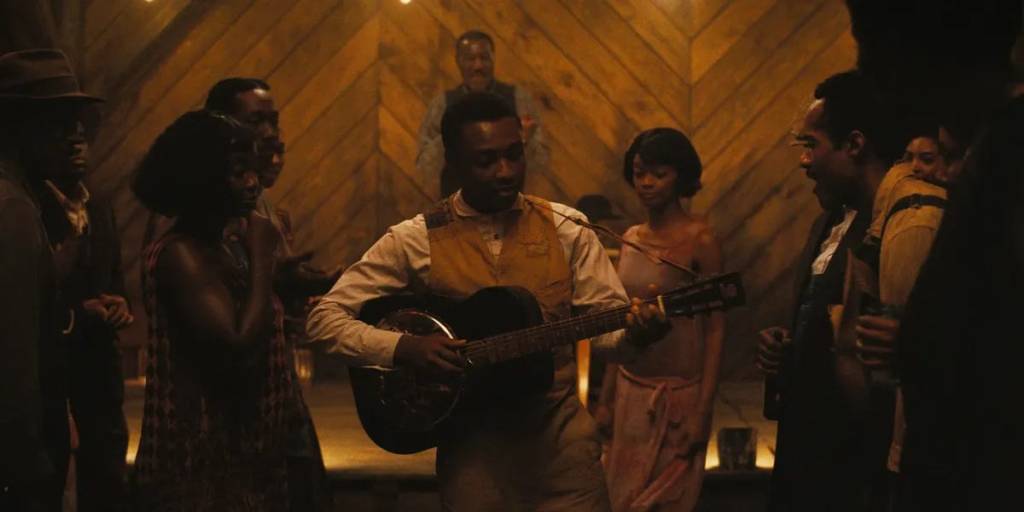
We all know about the absolutely insane one-take that is the juke dance and the “I Lied to You” number. It’s a master class in cinematography, as dozens of background actors all have to move along with precise choreography, while the various influence dancers and musicians work their way into the shot through several “Texas Switch” entrances. A shot like that can take weeks to map out and design, and days to properly shoot so that it looks as seamless as possible.
So let’s talk about the other two ways in which Sinners has some superior camera work. The first is the color scheme. This is a great contrast to something like Marty Supreme, because the bulk of the action takes place at night, yet the scenes are always lit properly so that we can see what’s going on. Arkapaw arguably makes her job harder by tinting many of these scenes with red and blue gradients (depending on if we’re inside or outside the juke), as both colors can obscure light, but the risk pays off. Inside the joint, the red hues give the whole affair a blood-soaked aesthetic, even before the body count starts to rise. Outside, the cool blue of the evening belies the danger of Remmick and his ever-growing horde. But again, we can all see it, and that’s what makes it awesome.
Then there’s the technical difficulty of having twin leads. In order for the editors to properly splice the shots so that Michael B. Jordan can appear on screen as Smoke and Stack at the same time, the scenes involving him have to be filmed twice. From the same angle. With the exact same camera movements. At the exact same speed. That is meticulous as fuuuuuuuuccccckkkkk. It’s even more difficult if the scene is shared with another actor like Miles Caton or Wunmi Mosaku, because they have to interact with both versions of Jordan when one isn’t there, and repeat their blocking exactly each time. That is monumental, especially because you never notice a blip in any given scene.
Oh, and just for good measure, she has to do this with IMAX cameras where Ryan Coogler can change the film stock and aspect ratio from one scene to the next. She had her work cut out for her, and she absolutely nailed it.
Train Dreams – Adolpho Veloso
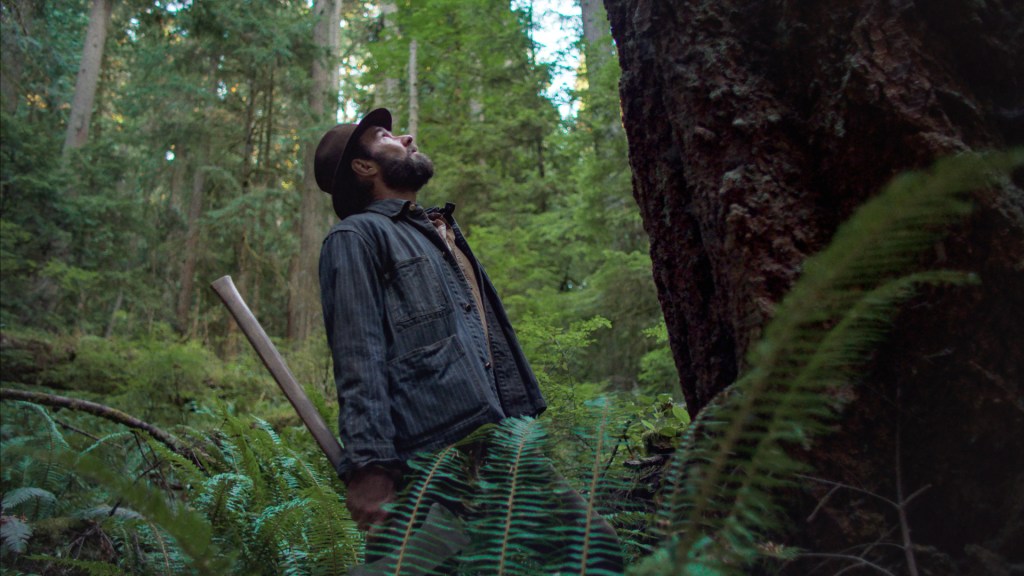
Veloso reunites with director Clint Bentley after serving as his DP on Jockey, and it’s clear they know how to operate on the same page. Bentley knows the exact vision he wants to get across, and Veloso knows how to deliver it. For Train Dreams, the name of the game is perspective, something he handles immaculately.
On the one hand, given the tone poem framework of the film, there’s an emphasis on dreamlike imagery. We see that in the forms of the boots nailed to a tree to memorialize dead loggers, in the one-take where Robert is traumatized by seeing a migrant worker unceremoniously murdered by being tossed off the tracks and into a ravine, and then again when a vigilante just moseys into their camp and shoots one of his coworkers as revenge for an unseen crime. We see it in his literal dreams about his wife and daughter, reminiscing and mourning as he fights through imaginary flames and his own demons. We see it in the final scene of Robert simply grinning as he takes in his first and only flight. We see it in the brilliant shot where the camera is mounted on a tree facing upward, so that we get a POV perspective of it being felled.
On the other, there’s the importance of Robert’s communion with nature, so the cinematography obliges by keeping things as close to organic as possible. The film is shot in 3:2 aspect ratio, which mimics the original Academy ratio of 1.375:1 as a reflection of both the technological capabilities of the time setting, and the rigid nature of Robert’s somewhat mundane life. The dimensions are simple because his life is simple. Within that, the whole affair is shot using natural lighting, making use of the so-called “Golden Hour” at times, but mostly just taking advantage of Washington’s dazzling forests, never needing to enhance the blues and greens in post. In this way, Veloso creates a 20th Century Eden for our lead, a paradise he loses, but still worships. It’s some of the most lovely scenery you’ll find in modern movies.
***
There’s something to be said for camera work that just makes you say, “wow.” I think three of the films nominated this year accomplished that, whether it was through expertly blocked one-takes, delirious landscapes, or just knowing how to properly frame a shot for both dramatic effect and emotional resonance. As for the other two, well, one definitely had its moments, while the other one has no business being here. Cut, print, moving on!
My Rankings:
1) One Battle After Another
2) Train Dreams
3) Sinners
4) Frankenstein
5) Marty Supreme
Who do you think should win? Vote now in the poll below!
Up next, we wrap up Week 3 of the Blitz with another video breakdown. We have one of the most stacked fields in modern Oscars history for one of the major categories, but the winner appears to already be decided. This should be a fun one. It’s Best Actor!
Join the conversation in the comments below! Do you have camera experience? What makes a great shot for you? How many times have you played ping pong in the dark? Let me know! And remember, you can follow me on Twitter (fuck “X”) as well as Bluesky, subscribe to my YouTube channel for even more content, and check out the entire BTRP Media Network at btrpmedia.com!

 I Actually Paid To See This
One thought on “Oscar Blitz 2026 – Cinematography”