If you’ve kept up with the Blitz over the years, you know that a) this category is very much NOT my forte, and that alongside Costume Design and Production Design, it’s where I have the least amount of practical experience and expertise; and b) most of my personal involvements with the discipline have been borderline disastrous, though often humorous. As the last year has gone by, circumstances have brought another bit of my past in this regard to the forefront of my memory.
My senior year in high school, we did Fiddler on the Roof. I played Lazar Wolf (and understudied for Tevye), which was the closest I ever got to a lead role in a musical (the one true lead I had was in the fall drama show the year before). I’ve mentioned the director we had for that show in previous anecdotes, and how he rubbed some people the wrong way with his very method approach to the emotional moments of the show. He wanted real, raw feeling from us teenagers, and he did what he felt was necessary to get it without crossing legal boundaries.
The other bit of realism he desired was in regards to the appearance of the male cast members. He wanted us all to have beards. He asked all of us to grow one naturally if possible, but would opt for a fake one if not (I was working at Burger King at the time, and my boss forbade me to grow facial hair because it could get in the food). When it was all said and done, all but one had to get it done via makeup. The only guy who could grow one normally at the time – you know, when some of us were just learning to shave – was our titular Fiddler, cast because he could play the violin, and ironically, parents and teachers I spoke to after the fact said that his was the only one that looked fake.
Of all the boys in the show, I was one of the only ones who didn’t have a beard, and I stuck out a bit, as Lazar Wolf is an old widower. I should have had the fullest, greyest whiskers of the bunch, aside from maybe Tevye himself. There were two key factors that prevented this from happening. The first is that my skin reacted horribly to the spirit gum used to glue the fake hairs to my face. It felt a little weird when it was first applied, but that was to be expected, as none of us had ever worn prosthetic facial hair before. Everyone noted that the initial sensation was odd. However, as the rehearsal wore on, my face got incredibly itchy, to the point where I couldn’t carry on. When the hair was removed, the lower half of my face was beet red, and I had to apply lotions to relieve the rash so that I could still perform when we did the show for real a few days later.
The other reason was more personal. A lot of us had fun with how we looked in these shows, especially when it came to our costumes and makeup. When we did Shakespeare’s The Comedy of Errors a few months before, the lead got his outfit, complete with puffy shirt, and he and his friend ended up doing the entire bit from Seinfeld in response (“But I don’t wanna be a pirate!”). When the fake beard was attached to my chin, I stood up, and everyone in the room fell silent. Obviously I wondered why, prompting my castmates to point at the nearby mirror so I could see myself. “OH MY GOD, I’M STEVE!” I shouted. Everyone had a laugh, because we were all thinking the same thing. By pure coincidence, in applying my beard, our current director Damien had made me look like a dead ringer for our previous director, Steve. Damien was already a bit touchy on the subject, as he didn’t enjoy being compared with the drama coach we’d had for the past three years. So seeing me as a walking twin did not sit well with him. I think he took it as a relief when he saw how much the makeup job irritated my skin, as it gave him an easy out to have me remove it and never speak of it again. Pride got in the way of realism.
I bring this up because, over the last year, with all the issues I’ve faced, my personal grooming has taken something of a back seat. It’s not that I don’t shower or anything. It’s just that while I know I look better clean shaven, it’s just not a priority when I’ve got so many more pressing matters. This came to a head when I worked the sales job. I didn’t bother to shave or get a haircut in advance of my interviews, because honestly, I just didn’t care. I didn’t expect to get the job anyway, as I had never worked in sales or marketing, so I didn’t feel the need to put out that much effort to look more “presentable” for a job I was unlikely to obtain. To me it was money that I couldn’t afford to waste. I was so broke last summer that when I did get hired, I basically had to go the first week without packing or eating a lunch, because I had no cash (or SNAP benefits) to spare. I didn’t have a full meal on the job until after I got my first paycheck three weeks in.
When I got the offer, however, I decided to treat myself, and got my usual trim, which I hadn’t done in at least three months. I genuinely wondered if my manager would recognize me when I showed up for orientation, as I can sometimes go from full-on Grizzly Adams to Babyface (an affectionate nickname I was given when I first decided to lose my college goatee at age 29) after 15 minutes at Supercuts.
I didn’t get another haircut for a while, and I only shaved occasionally during the four-month period where I tried to sell windows. I shaved weekly at first, but after about a month and a half, if I shave, I run the risk of my hair not sitting correctly, and I can look a bit shaggy. It just doesn’t blend well. That’s what ended up happening, and as I grew more and more annoyed with my lack of results, my manager met me in the field for a pep talk. My biggest frustration was that so many of the homeowners I talked to would just treat me like human garbage. I understand not wanting to be bothered by a solicitor. I often wondered if doing this work was some kind of karmic punishment for every one that I had been rude to in the past. But even then, I always properly framed it within the context of not wanting what they’re selling and/or not wanting to be bothered. I never made it personal. A lot of these people did.
It’s been an emotional trigger my entire life. For whatever reason, people just see me as someone who is to be fucked with. Rules of decorum and basic human decency apparently get defenestrated when I show up. I’m the one you’re allowed to abuse, apparently. So I asked my boss, “Is it because my beard is a little scraggly?” It was a half joke, but I genuinely wanted to know if there was something wrong with my appearance, or personality, or whatever, that invited these reactions. I know I’m no model, but it’s not like everyone else on my team was a 10. Pretty much everybody had some physical imperfection, but I never saw any homeowner treat them the way they treated me. He half-joked back that I could stand to tidy my head and face up a little bit, but reassured me that what I was experiencing was sadly normal for what we were doing, and encouraged me to do my best to not let it get to me. No matter how hard I tried, I could never get around that.
I got my next haircut the day before Thanksgiving, first because I wanted to look nice for the adopted family dinner we would have the next evening, and second because I wanted to show I was putting in the effort, even though I knew my days were numbered (I’d be laid off six weeks later). I decided to “spoil” myself and get my hair shampooed professionally for the first time in years. The total bill when it was all said and done? $70. Are you fucking kidding me? Shampoo, basic haircut, and running an electric razor across my face to get rid of my rapidly-greying stubble costs $70, before tip? Christ!
Suffice to say, I haven’t done anything since. I know I’m overdue, but this definitely falls into “wait until you have a steady paycheck again” territory. We can add this whole affair to the list of follicle follies for yours truly. Anyway, onto the actual reason you clicked on this post.
This year’s nominees for Makeup & Hairstyling are…
Frankenstein – Mike Hill, Jordan Samuel, and Cliona Furey
There are a few notable instances where the HMU team’s efforts are on display, apart from the most obvious. Victor has a wild shock of hair that makes him look like a live action anime character, and he eventually grows a distinctly shaggy beard. Elizabeth, as the main heroine, has her do dolled up to appropriately have her stand out from the rest of the Victorian crowd. Christoph Waltz’s Henrich, who is hiding his myriad terminal issues, gets a moment of raw honesty when he removes his wig. Charles Dance continues to look like Tywin Lannister a full decade after he stopped playing the role. David Bradley’s stringy locks have been a feature of his appearance on screen since he started playing Argus Filch 25 years ago.
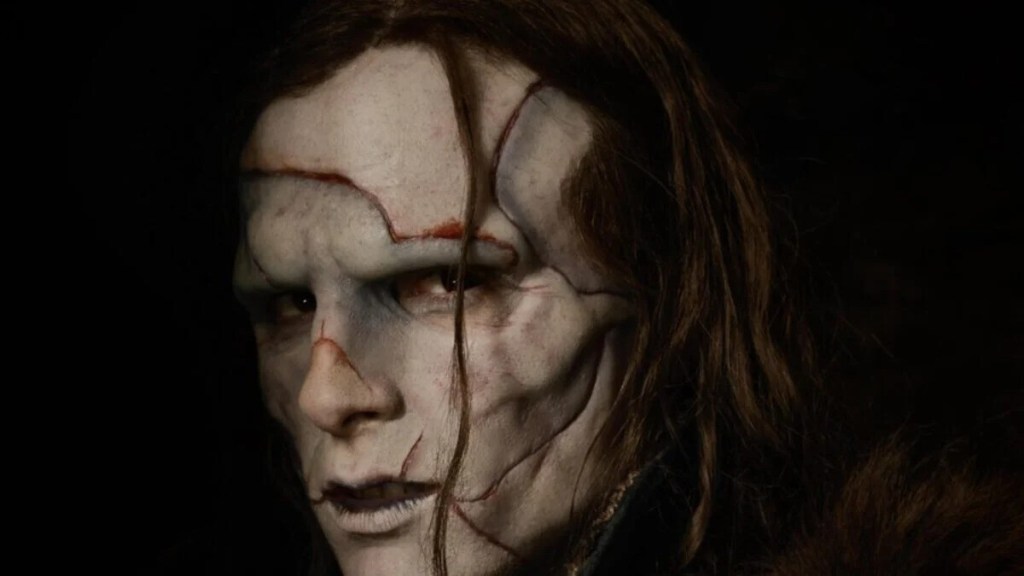
But we all know why we’re here, and that’s because of Jacob Elordi as the Creature. Like many Oscar-winning jobs before (The Whale and Vice immediately spring to mind), this is a full-body piece. Yes, Elordi wears some costumes over the course of the film, so that not every part of him is seen, but you can tell that he’s the focal point, and the entire case to win rests solely on what the artists did to him specifically.
First you’ve got the hair. When he’s brought to life, he’s completely bald. Over time, hair starts to grow in, oily and greasy, to add to his otherworldly nature. It eventually flows past the nape of his neck, an unofficial timestamp for each scene of his story after Victor destroys the lab. Next you have his skin. His entire body – or at least that which is exposed for the camera – is painted quite pale, to show the lack of blood flow to the various bits of dead viscera that were constructed into his whole. He doesn’t become more flush as the film wears on, but his skin takes on a more leathery texture due to exposure to sunlight, so that he’s still pallid, but just a bit tanner. Finally, because he’s been stitched together from parts of different corpses, we have to illustrate the scars of Victor’s morbid surgeries. Unlike the crosshatch marks used in previous adaptations, this version of the Creature has curved seams that look more like they were fused together rather than sewn, creating visible lines of literal pain for Elizabeth to trace with her finger as she develops her attraction. In practical terms, this means placing thin prosthetics all over Elordi’s body, so that his masculine and muscular form is maintained, but we can still create the illusion of cracks and crevices along each scar line.
All in all, this is pretty fantastic work. In order for any Frankenstein film (or adjacent imagining) to work, the Creature has to be distinctive and memorable from a visual standpoint. The HMU team certainly accomplished that necessary goal.
Kokuho – Kyoko Toyokawa, Naomi Hibino, and Tadashi Nishimatsu
Sadly, this is the only nomination for Japan’s Academy submission, which deserved so much more (it was in my personal top 10 for the year, and ranked second among all International Feature entries, behind only The Voice of Hind Rajab). It was the high point of AFI Fest, and I’ve been singing its praises up and down ever since I saw it. I wish it had gotten more love, including what I feel would have been deserved nominations for Best Actor, Supporting Actor, Cinematography, and Adapted Screenplay.
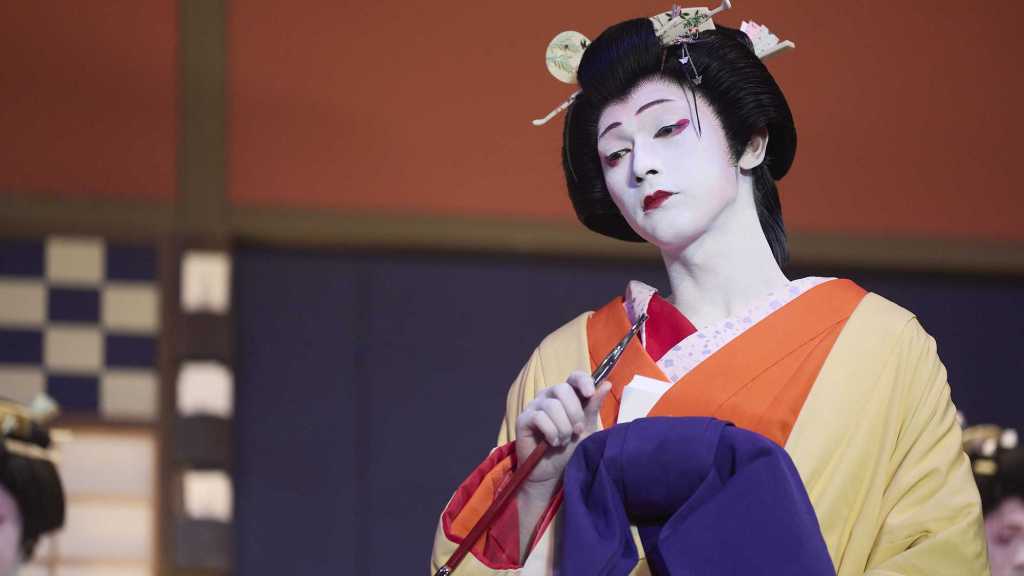
Still, if this is the only attention it gets, at least we’re highlighting one of its best elements. The makeup job in this film is immaculate, because it has to be. Kokuho is about kabuki theatre, one of Japan’s most treasured art forms, and the onnagata performers (the men who play the female roles) who go through intense, lifelong training, to hone their craft. The ability to design and apply their own makeup is an essential skill in this occupation, and the film goes to great lengths to demonstrate its importance.
This is a talent that the actors themselves had to learn as part of their preparation for their roles. Our two leads – played by Ryo Yoshizawa and Ryusei Yokohama – have actual scenes where they apply their makeup while they talk and rehearse before going on stage. This isn’t something you can just mime. In order for the verisimilitude of the story and characters to come through, they actually had to be taught how to do this as part of the 18-month regimen they went through to make their performances as authentic as possible. The placement of paints, lipsticks, and liners is an intricate and delicate process, because the patterns play into the characterizations of their roles in these dances. Every major player, from Yoshizawa to Ken Watanabe, had to learn at least some level of competency as part of the requirement of their parts.
Aside from that, the more detailed jobs done by the HMU team are simply gorgeous. The almost porcelain white pancake makeup that serves as the base, the bright red and contrasting black of the facial patterns, the tightness of the wigs, all of this has to be done at the highest possible levels, or else the presentation of the kabuki within the film might not feel genuine.
If there’s a flaw to be had, it’s with the makeup done to the characters outside of their profession. This is particularly the case late in the film, as main character Kikuo starts to age. The film is presented as a life story, and we see all the major events of Kikuo’s life, from his first performance as a teenager when his Yakuza father is assassinated, to his autumn years when he’s ready to retire and pass his stage name on to a worthy successor. In the early years, there’s no issue, as Kikuo is played by a younger actor, Sōya Kurokawa. The only major makeup job apart from his kabuki design is the Yakuza tattoo on his back. However, there’s no older actor cast to play Kikuo from middle age onward, so instead they use grey hairspray and some wrinkling to make Yoshizawa look slightly older. It’s functional, but not entirely convincing, and not nearly as impressive as he looks when he’s on stage. It’s a very minor gripe, but it could prevent it winning.
Sinners – Ken Diaz, Mike Fontaine, and Shunika Terry
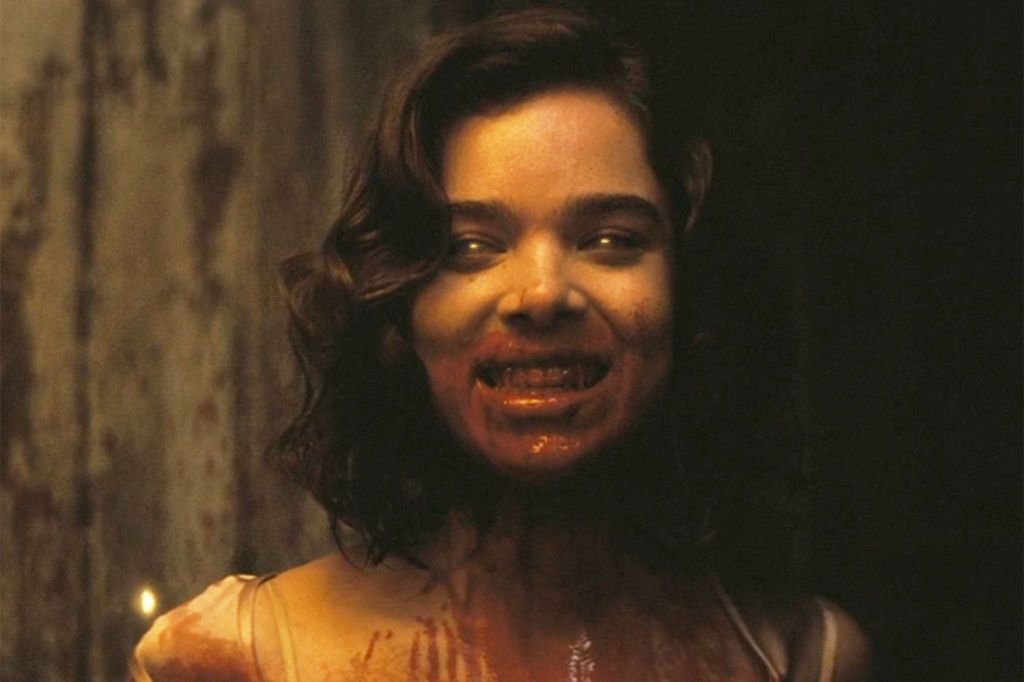
There are two major facets to the makeup job in Sinners. The first is consistency. Over the course of the main events of the film, particularly once we get to the juke, the job is making sure that each character’s look progresses properly throughout the night. When a vampire is revealed, we have to make sure we see the fangs and the drool that announces their intent to strike. Once someone’s bitten, we have to show them turning, and make sure their injuries either stay the same or get worse. When someone’s covered in sweat due to either excitement from the party or fear of their demise, we have to keep their skin moist and glistening. They can’t dry out (I’m sure there’s a sex joke in there somewhere). Once blood is spilled, you have to make sure that blood stays on the characters in a way that makes sense. You see this a lot in moments near the end, like when Lola Kirke’s Joan ironically speaks about a utopia built on love while the bottom half of her face and neck are covered in caked-on blood.
The second is in the various bites, scratches, and wounds suffered by the characters throughout the film. The picture opens with Sammie returning to his father’s church, his face slashed deep by feral claws, an injury that’s painful just to look at, but given everything that Sammie endured the night before, it probably feels numb by comparison. It’s an amazing first impression, especially because we don’t know anything about this character – or the person playing him, as it was Miles Caton’s first film role. It instantly grabs our attention, making us wonder what could have possibly caused such gore. It’s one of the few times where the in medias res beginning actually works for dramatic effect. If that gash didn’t look convincingly gruesome, we wouldn’t care.
That level of detail has to be maintained throughout every major attack the rest of the way through. We have to see burn marks on Remmick as he’s being pursued by the Choctaws. We have to see the small bite on Mary’s shoulder before she feasts on Stack, blood gushing from his neck. We have to see Cornbread try to rip off an arm, the missing chunks from someone’s back as they reanimate, the cuts Delta Slim gives himself to draw the vampires away as a distraction, and the bullet holes in the chest and legs of those the group tries to shoot dead, knowing it will only hold them off for a moment. As people are literally and figuratively consumed by Remmick’s forces, it’s crucial to see what’s been physically taken. We can’t just do PG-13 splotches and imply that blood has been spilled. We need to see organs being ripped from people’s bodies. It has to be felt on an almost personal level. We have to recoil in our seats. You don’t have to go full Tom Savini with the gore, but it has to be believable, and it can’t just be done through CGI. We’ll know it’s fake. The team more than met the moment.
The Smashing Machine – Kazu Hiro, Glen Griffin, and Bjoern Rehbein
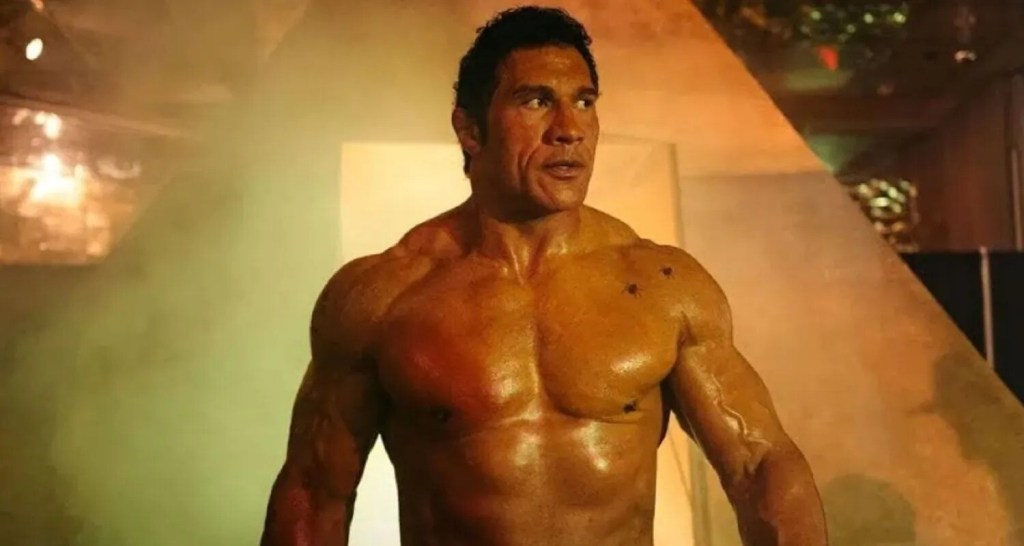
Kazuhiro Tsuji, now known simply as Kazu Hiro, has won this category twice. The first was Darkest Hour, where he came out of retirement to create the incredible body suit and facial prosthetics that made Gary Oldman unrecognizable as Winston Churchill. The second was for Bombshell, where he made blonde movie stars look like blonde Fox News hosts, and created another fat suit for John Lithgow. The Smashing Machine is… not like those previous winning efforts, which is a shame, because Kazu Hiro is unquestionably one of the greatest makeup artists in the world.
I mean, there’s nothing really to say here. The Rock looks slightly less like The Rock. Normally, Dwayne Johnson is either bald or has a very tight buzz cut that shows the borders of his hairline. For The Smashing Machine, they gave him curly hair plugs that extend about an inch beyond his skull. That do matches Mark Kerr’s hair style in 1997, but nothing else does. It’s still Dwayne Johnson. Nothing in his face looks anything like Mark Kerr, then or now. In fact, Ryan Bader, who plays Mark Coleman, looks more convincingly like Kerr than Johnson ever could, and Johnson looks far closer to Coleman (especially now) than Bader. I’d say that it’s like they mixed up the casting announcement or something, but we know that’s not the case, because Johnson is, and was always going to be, the star.
Once you get past that, the rest of the work isn’t all that impressive. It’s mostly just blood and sweat from MMA fights. The only thing that offers even the slightest intrigue is when we see fighters – including Kerr – with cauliflower ears. A lot of martial artists end up with the condition because of the trauma they suffer to that specific area of their heads. It’s irreversible and an unsightly consequence of the nature of combat sports. Creating that prosthetic is far more realistic than trying to convince me that Johnson is anyone but himself.
The Ugly Stepsister – Thomas Foldberg and Anne Catherine Sauerberg
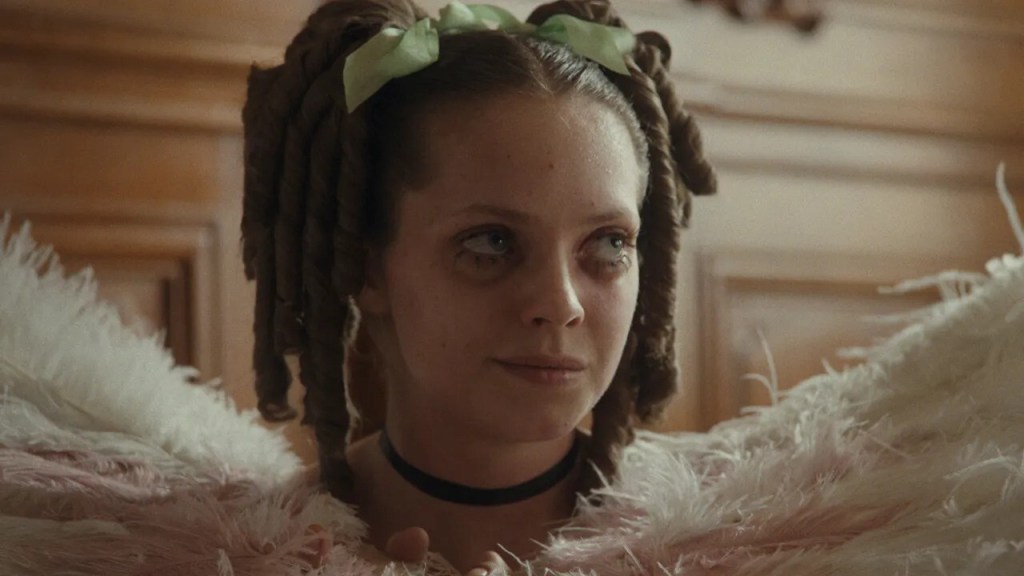
The tragedy of The Ugly Stepsister is in how our lead abuses herself, and is in turn abused by others, in pursuit of a nebulous beauty standard that will allow her to hopefully marry the prince (or any noble, as her mother only cares about wealth and status), even though doing so would only result in more cruelty. It’s about as on-the-nose of a dark, careful what you wish for fractured fairly tale as you can get. The beauty of the film, from a purely artistic standpoint, is just how on-the-nose the makeup job is to illustrate this.
At first, you don’t even realize that there’s anything going on. Sure, given that this is a period piece, all the actors have elaborate hair styles, particularly our lead Elvira, played by Lea Myren. That’s par for the course, though. Nothing really sticks out to you. Our first hints that something devilish is about to happen literally do concern her nose, though. We see her pop a whitehead zit on the tip of her nose, which escapes her pores like a wiggling worm (what foreshadowing!), and a cosmetic surgeon uses a tool to crack the upper bridge as part of a lengthy reshaping procedure. Who knew nose jobs went back so far in history?
Still, that’s not much to go on as far as Oscar-worthy makeup, right? I mean, for the next hour Elvira wears a metal facial cast while her nose heals. We only see it briefly when the somewhat sympathizing Sophie removes the cast, revealing some bruising, which we’re meant to understand is normal. She comforts Elvira, assures her that she’ll be beautiful and succeed at finishing school, and then gives her a tapeworm egg to help Elvira lose weight. At this point I’m just thinking, “Lose weight? What weight? She’s not fat or anything.” But this is all part of the long game the film is playing. As we later see, there was some early makeup work done, to subtly give Elvira pudgier cheeks than Myren naturally has. As she sheds what few pounds she has, her face does narrow, and we even see dimples. Very clever.
In the final act, it all ramps up significantly towards the grotesque. The tapeworm and rapid weight loss causes some of Elvira’s hair to fall out, necessitating an even more bombastic wig for the ball. Fake lashes are literally sewn into her eyelids. Every measure is taken to make this poor girl look like a doll, only for the prince to choose Cinderella, breaking her heart and mind at long last. Desperate and beyond saving, the last two acts of self-mutilation in a final effort to win the prince is like the proverbial train crash, where it’s too horrible to watch, but you can’t look away. It’s insane what this nominated duo accomplished, driving the story through Elvira’s transformation, starting slow and kicking it into overdrive to hammer home just how damaging it is to unnaturally contort yourself, especially for those who don’t love you and never will. It’s heartbreaking, and the images are seared into your memory as you watch them unfold.
And then, just for good measure, they maintain a very dark joke where Cinderella’s father Otto, who dies early in the film, is never buried. His corpse merely rots in the cellar, a morbid gag we check in on from time to time just to let Foldberg and Sauerberg continue to show off.
***
I am a little surprised that this was the set of nominees we got, especially since three of the five aren’t nominated anywhere else. Two of them I buy, but not the third. That said, it’s not like the Academy gave itself any better options, as the shortlist only contained the likes of Wicked: For Good and the apparently god-awful The Alto Knights as alternatives. I’m amazed Blue Moon wasn’t at least considered, given the makeup job done on Ethan Hawke, or even Bugonia since Emma Stone actually shaved her head for the role. I’m not saying any of them would have gotten my vote, but it would have made far more sense than giving The Rock the tiniest of afros.
My Rankings:
1) The Ugly Stepsister
2) Kokuho
3) Frankenstein
4) Sinners
5) The Smashing Machine
Who do you think should win? Vote now in the poll below!
Up next, believe it or not, we’re at the end of the last full week of category breakdowns. We’ve got one more video essay before we hit the final stretch, and it’s for the contest where I have far more authority to speak on than I’ll ever have here. It’s Film Editing!
Join the conversation in the comments below! What’s the best makeup job you saw last year? Do you think Dwayne Johnson’s movie got picked just to let Benny Safdie save face with his brother? Are you sick of my anecdotes about how I know nothing about makeup? Let me know! And remember, you can follow me on Twitter (fuck “X”) as well as Bluesky, subscribe to my YouTube channel for even more content, and check out the entire BTRP Media Network at btrpmedia.com!

 I Actually Paid To See This
One thought on “Oscar Blitz 2026 – Makeup & Hairstyling”