
We’re in the home stretch, folks! The Oscars are this Sunday, all the major undercard ceremonies have concluded, and we’re in our final four categories for this year’s Blitz. Tonight, it’s the last of the so-called “majors” (sans Best Picture), Best Supporting Actress. And just like their gentlemen counterparts, this has been a very competitive field where the result is genuinely up in the air, a refreshing change from the collective shrug from the Awards Season bodies that unanimously gave the prize to Zoe Saldaña last year so that the horrendous Emilia Pérez could save face.
No, this year there’s an actual contest. The first major win went to Amy Madigan at the Critics’ Choice Awards. Then, before anyone could cool off their hot take, the Golden Globes handed it to Teyana Taylor. Well surely that would be it, right? I mean, a two-horse race is often more than we can ask for in the modern era, where there are so many different prestige bodies that often less than a third of Academy results are ever in question. Nope. Last month the BAFTAs had their say, and the award went to Wunmi Mosaku, a bona fide surprise given the body’s collective upturned nose at Sinners. In that specific race, Madigan wasn’t even nominated. Their six-contestant field also removed Elle Fanning and added in Odessa A’zion, Emily Watson, and Carey Mulligan for The Ballad of Wallis Island, a film seen by exactly Mulligan herself and her husband, who presumably brought the rest of Mumford and Sons along for moral support. Then SAG weighed in, circling the whole affair back to Madigan.
It’s uncommon to see a competition so wide open. We have five nominees across four films, and even the two from Sentimental Value can’t be entirely counted out just yet. Is it likely that either will in? I’d say no. But one of the more glaring recent trends at the Academy is a desire for the Oscars to spread the wealth as much as possible unless there’s an absolute consensus #1 film – either by popular demand or FYC campaigning – like Everything Everywhere All at Once, Green Book, or The Shape of Water. Because we have two leaders vying for top honors, the body will, in all probability, want to give out as many consolation prizes as possible amongst the Best Picture nominees, mostly so they can justify keeping the field at 10 rather instead of going back to five. This is why you’ll probably see a token win for F1 in Sound and a fair amount of artistic prizes going to Frankenstein. With two foreign films nominated for the big one, there are voters who will split their ballot to try to make sure that both Sentimental Value and The Secret Agent win something, even though only one can take International Feature. Given that they have three options across both Supporting categories, there will be a temptation to give one of them a win, especially since, somehow, the film was not nominated for the inaugural Casting prize. At the same time, because we have two from the same movie, it’s just as likely – if not more so – that the vote splits between the two, and both are left wanting.
All I’m saying is, we have no idea how this is going to shake out on Sunday, which is precisely how it should be in every category every year. I have a gut feeling about who’s got the momentum, but your guess is as good as mine.
This year’s nominees for Best Supporting Actress are…
Elle Fanning – Sentimental Value
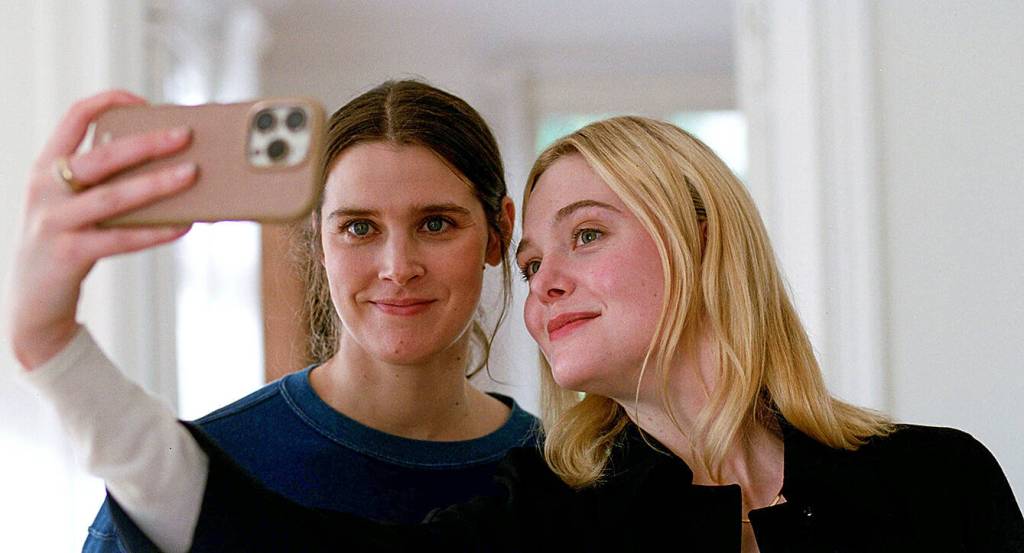
Elle Fanning has come a long way. From her beginnings doing voice roles and uncredited cameos alongside her sister Dakota to the god-awful Maleficent films and the universally reviled The Nutcracker in 3D, things did not look good, and anyone could reasonably dismiss her as the queen of the nepo babies. Thankfully, over the last few years she’s come into her own and established herself as a real talent, with Sentimental Value being her latest high note.
I think part of why she succeeds so much is that there’s a meta understanding of the actress within the role. As Rachel, an American ingenue with tons of social media followers, one could argue that Fanning is essentially playing herself. She’s young, pretty, and popular, but isn’t taken seriously as a performer. She’s more of a brand than a person. After meeting Gustav, she decides to work with him because it will give her the genuine challenge to flex her muscles and prove herself as an “actress” rather than a “celebrity.” Sound familiar?
Fanning rises to the occasion, making this more than just a self-reflexive admission of her career to date. A lot of time is spent on Rachel attempting to not only perform for a completely different audience than she’s ever known, but to connect with Gustav and his daughters to truly understand the role. In doing so, she comes to the realization that, just like with her team of marketing goons and lackeys, she’s still being used. This is a much more earnest and palatable way to be a tool, but she’s still a tool. She’s not allowed to be her own person, which is at the heart of the conflict between Nora and Gustav that drives the main plot. In discovering this, she makes the decision to leave the project, acting both professionally and lovingly in the process, which ironically reinforces the need for Nora to play the role herself. Rachel is unintentionally caught up in some serious family drama and generational trauma, and she knows it would be disingenuous to exploit it for a prestige credit, so she bows out, knowing that it might damage her in the short term, but that it will be better for everyone in the long run.
That’s an amazing arc for a supporting character, especially one that, for the most part, only interacts with one of the other leads. Yes, she meets with Nora and Agnes, but the bulk of her time is spent with Gustav as he tries to make her a stand-in for his own offspring. Blessedly, because Rachel hasn’t spent all that much time in this dynamic, it’s easier for her to disengage. Fanning does an excellent job of making all these seemingly contradictory motivations work, and in so doing accomplishes what Rachel couldn’t, taking a huge step forward in legitimizing her career.
Inga Ibsdotter Lilleaas – Sentimental Value
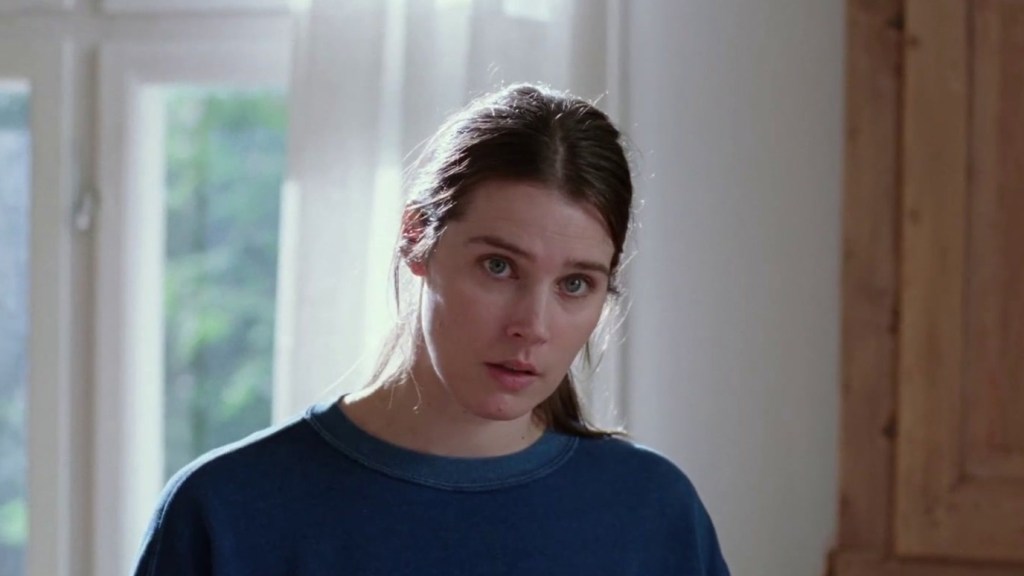
We next come to Fanning’s co-star, and the least known actress in the field. This is only Lilleaas’s sixth film, and all of them have been European (five Norwegian, one Danish; her most recent project, A Beautiful Life, is on Netflix). Of the two nominated turns in Sentimental Value, I prefer Lilleass over Fanning, mostly for personal reasons. See, of all the great performances in this film, hers was the one I most related to.
Lilleaas plays Agnes, the younger sister of Nora, who despite their childhood trauma, has come out of things fairly well-adjusted. She has a good life, is happily married with a son she adores, and at times seems to delight in just being normal. It’s a sad statement on the current state of the world that Agnes can honestly be looked at as the ideal for so many people. I’m just one of millions who would metaphorically kill to have a decent life, raise a family, and make enough money to get by, maybe indulge in a hobby or two. It’s so simple yet completely unattainable for giant swaths of the population.
But that’s not the reason why I love her performance. At least, not entirely. Yes, in many ways Agnes is everything I wanted out of my adult life, but the reason I connect with her is because of what she went through to get there. Agnes is the “net” of her family. Nora leans on her. Her husband leans on her. When Gustav reenters their lives, he leans on her. Her late mother leaned on her. Whenever there’s a dispute, she’s the moderator. She’s the one who has to hear it from all sides, and rarely does she get a chance to speak up for herself. When she finally does, asserting herself and insisting that she doesn’t want her son to be in Gustav’s film any more than she wanted to be in his movies when she was a child, it’s one of the major breaking points of the entire story.
That was me growing up, and well into adulthood. Any arguments between my mother and grandmother or aunts? I had to step in. When my sister rebelled against our stepfather, I had to be the courier delivering the wants and needs to each party. As a grownup trying to get my own life together, I was still being used as the go-between when my mom and sister were fighting. On the rare occasion where I got to make my own feelings known, sometimes everyone would understand and lay off for a while, but most of the time they’d insist that I was being dramatic or accuse me of taking sides. It got to be so much that I literally threatened to cut off contact entirely, because I’d rather have no family than one that treats me so. The reason we use the word “net” to describe this phenomenon isn’t just for a handy tennis metaphor. A net has to be neutral, fair, and wound incredibly tightly to avoid sagging and creating an advantage for one of the competitors. The problem is, when anything is stretched that much, eventually it either snaps or loses its elasticity, rendering itself useless.
That Lilleaas is able to play this role so effectively without ever devolving into soap opera histrionics is incredible. I know from experience how frustration can build when one is forced into being the arbiter of the family conflicts, trying your best to keep everyone happy and peaceful while straining yourself in the process. There were times where I did sink into melodrama and scream in hysterics. Agnes never does. She simply takes what she can, and when she hits her limit, she puts her foot down. And notably, it’s not for her own sake, but for that of her son. She’s still being selfless in a moment where others would accuse her of being selfish, and yet she doesn’t budge until her needs are addressed. I wish I was more like her. One of the more poignant lines sees Nora asking Agnes, “Why didn’t our childhood ruin you?” For a lot of us, it did, and it warmed my heart to see Agnes rise above it all.
Amy Madigan – Weapons
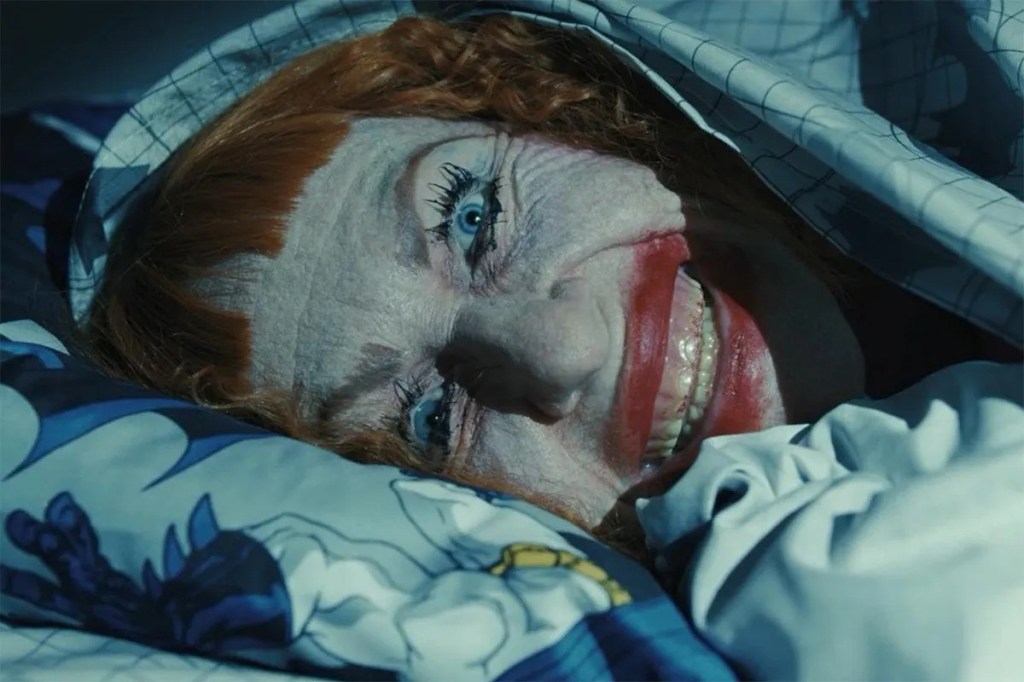
It is criminal that this is the only nomination for the fantastic Weapons, which would easily have been the best horror film of the last year if Sinners didn’t exist. The movie is expertly crafted, deliriously funny in places, and genuinely tense throughout. Thankfully, the best element of the flick is at least getting some well-earned recognition.
We all love a good villain, and the horror genre is arguably the best area in all of cinema to create them. You’ve got Pennywise, Freddy Krueger, Jason Voorhees, Michael Myers, Pinhead, Annie Wilkes, and in recent years Pearl and Art the Clown have been added to the list. You can certainly argue that the vampire Remmick from Sinners also deserves a place in this group because of his layered character, but there’s absolutely no denying that Aunt Gladys has already earned her place among the all-timers thanks to Madigan’s performance.
Gladys is kooky, charismatic, funny, and just that right amount of “off” that slowly devolves into certifiably creepy and insane. We’ve all got that one weird member of our family (if you disagree, it’s probably you), that one who sticks out like a vegan burger at a barbecue. Most of the time, they’re an absolute hoot, and you love getting to know them and hearing stories. Sometimes though, you do wonder if something’s wrong. Madigan takes that all too familiar perception and kicks it into overdrive. The makeup, the wig, that track suit, it all works to create a cheeky recognition of that odd aesthetic. But then she gets to her wicked business, and shit gets real. The way she can be so overly cheerful and accommodating, only to turn on a dime and use some unexplained sort of witchcraft to turn people into killers, is the reason why so many of us love the genre. It’s completely batshit, but in a way that’s both fantastical yet strangely believable. It’s similar to how Catherine Keener could be warm and welcoming in Get Out before turning on a dime and hypnotizing Daniel Kaluuya into the Sunken Place. It’s unexpected because it comes out of nowhere, even if Gladys’s design is so wonderfully over the top.
Once we establish her menace, the whole film coalesces around her and the threat she presents. Suddenly, everyone’s in danger, the body count rises, and a single terrified child is caught in the crossfire between sanity and madness, all through a few simple actions that can seem strange but inocuous at first glance. Before you realize what’s happening, it’s already too late. This is also what makes her comeuppance one of the most hilariously fucked up scenes of the last year, and one of the most memorable genre moments of the century to date. I’ve often said that the most effective horror stories are the ones that could conceivably happen in real life. Obviously, the supernatural elements of Weapons don’t exactly fall into the realm of possibility. But Agnes, odd duck though she may appear to be, is able to worm her way into this deadly scenario because of how uncommonly common she looks. Despite giving off the vibe of an Avon lady from the 80s, you wouldn’t give her a second thought if you passed her on the street. Madigan banks on that, and plays it for all it’s worth.
Wunmi Mosaku – Sinners
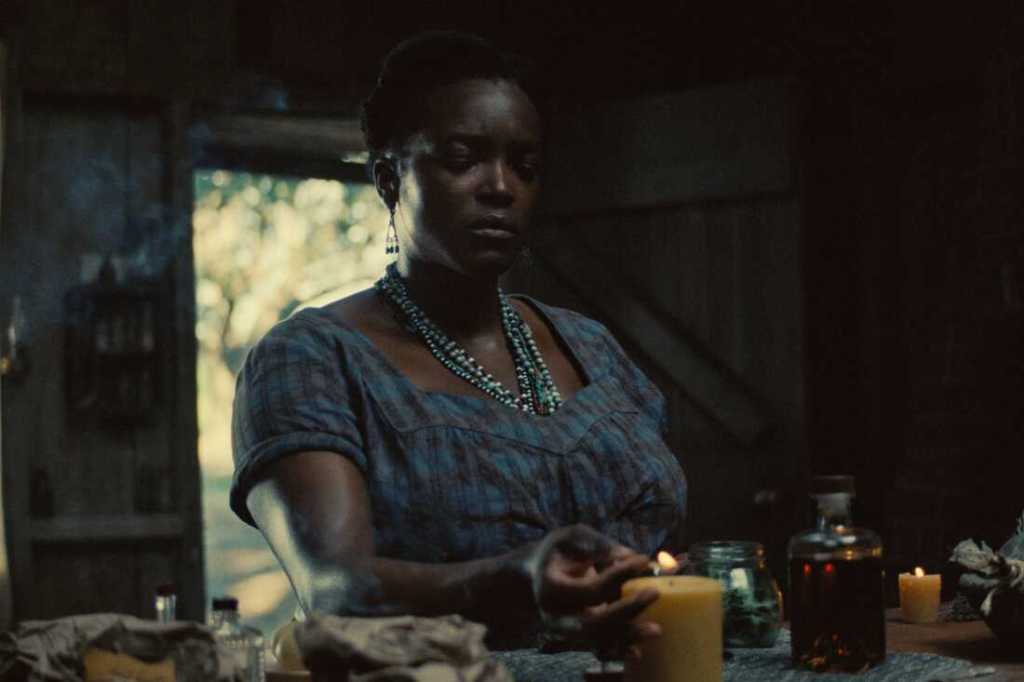
I’ve often complained about how so many performances in the Actress categories can be reduced to traditional gender roles like wives and mothers. Of this group, Wunmi Mosaku’s Annie is the closest to that stereotype, but only because she’s literally married to Smoke and had a child with him (yes, Lilleaas’s Agnes is also a wife and mother, but her character is a daughter and sister first and foremost). Once we get past those absolutes, which play almost no direct part in her character’s story, we see just how complex she is, making her the most sympathetic and tragic of the ensemble cast.
When Smoke first reunites with her, we really don’t know all that much. We know they were married. We know they had a child. We know from Smoke’s tearful scene above a small marker that the child is dead. We know that Smoke and Stack were in Chicago for a long time, where they apparently ran afoul of organized crime, but we’re never explicitly told the details. Based on that small amount of information, Annie’s story could go in any number of directions. Hell, the impetus for even seeing her is to recruit her as a cook for the juke joint, not for a loving reconciliation.
But after a heartfelt airing of grievances, we see that Smoke and Annie are still hopelessly devoted to one another, their love rooted in their devastation over the loss of their son. We see that despite so much time apart, not a day has passed that Annie hasn’t worried, using her Hoodoo traditions and rituals as a means of both comfort and empowerment. In contrast to Stack and Mary, whose romance leans more toward animal lust, Smoke and Annie’s is much more sensual and intimate, though just as passionate physically.
From there, Annie becomes the audience cipher, giving us the necessary exposition dumps about the vampires, which she first believes are haints (ghosts and other vengeful spirits from a mixture of Southern U.S. and Caribbean/Creole traditions), setting the rules for this particular conflict, and in a significant lesson in cultural clarity, making a firm distinction between Hoodoo and Voodoo. In a story about how cultures are assimilated and subsumed into a mass hive mind, emphasizing those key differences is a necessary bit of world-building. She still serves something of a maternal role, doing her best to inform and protect the group by any and every means she knows. It’s what makes her ultimate sacrifice so tragic. Out of everyone else in the cast, she arguably had the most to lose. Not just her life, but the hopes of a return to her loving marriage despite all that the world has already taken from her. When she reminds Smoke of his promise, invoking his real name, Elijah, you know what it means, and you wish there was another way, but there’s simply not, and her sobbing acceptance of that truth just destroys you. You’re not supposed to get this much pathos out of a vampire siege, but here we are.
Teyana Taylor – One Battle After Another
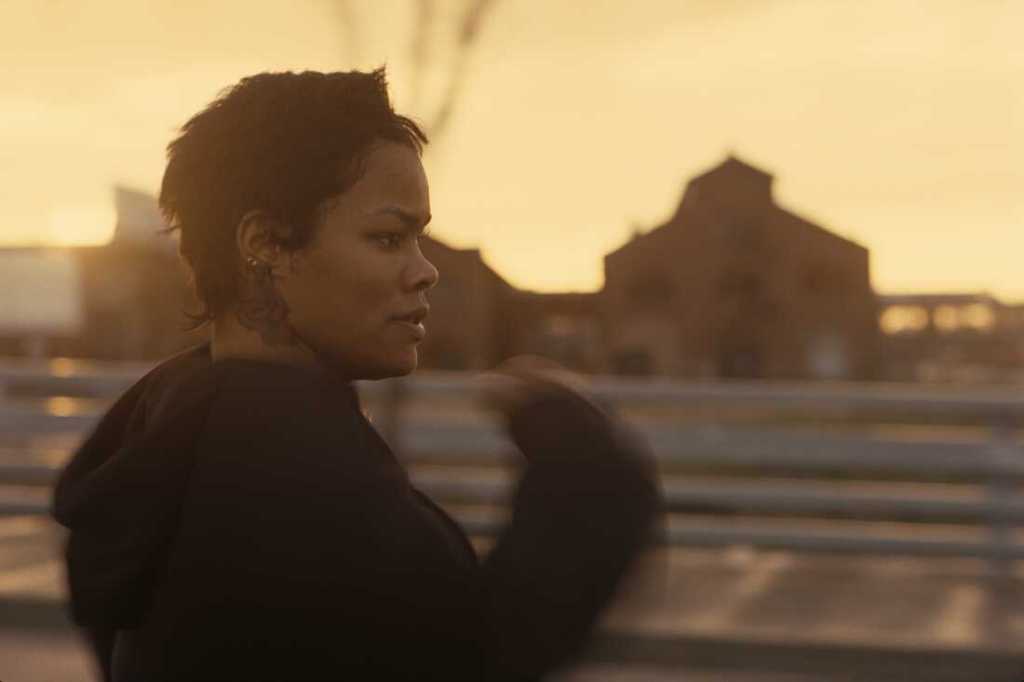
I don’t really take an actor’s screen time into account when judging these categories, but in Teyana Taylor’s case, you kind of have to, mostly because she not only has the least of it amongst the five nominees, but it’s all concentrated into the first act of the film. As we learn about Perfidia’s relationship with Pat, her revolutionary activities in the French 75, and her departure from the main plot after turning state’s evidence and fleeing, we plainly see that she’s not in the flick all that long. However, her impact is still tangible throughout the rest of the story, because her actions still have an effect some 16 years after she exits.
Taylor makes the most of her time, commanding the attention as she and the other rebels execute their acts of subterfuge and sabotage. She delights in making sure that all eyes are on her, not just to be a diversion, but to force everyone to deal with her as the liberated woman she is. There is a tender side to her, as we see when she’s alone with Pat, but even her own mother concedes that she can’t be domesticated.
This is the tragedy of her character arc. She embodies the old adage of it being better to burn out than fade away, as she shines the brightest among the group. The fact that Shayna McHale’s “Junglepussy” leads the fateful botched bank robbery instead of Perfidia is the first sign that the operation is going to go tits up. She’s not just the loudest, she’s the most effective, even when she doesn’t know what she’s doing. She can improvise better than anyone else in the French 75, a bit of expertise that’s gotten her out of several dangerous situations, and her aggressive and assertive nature is what draws the lascivious and racist Col. Lockjaw to obsess over her. Once she takes the irreversible action of turning in her associates to save her own skin, she knows she can never come back and reclaim her life, so she simply leaves to ensure that she can never be used as someone else’s fetish.
It’s a powerful speed run through her story beats, but she leaves such an impression in just a scant 19 minutes that everything she does hangs over the rest of the proceedings. Of course there’s the sentimentality of Pat (now Bob) missing her, and the fact that Willa is becoming so like her mother despite never knowing her. But we also see the Ahab-esque fixation of Lockjaw extend to potentially killing Willa rather than admit he had “relations” with a black woman, the consequences of her actions on not just the remainder of the French 75 but on all subversive groups, and the fact that there’s hesitance to even aid Willa simply by association. When Regina Hall’s Deandra rescues her before Lockjaw’s troops can raid Willa’s school dance, she takes the young woman to a convent run by revolutionary nuns who instantly try to send them away or even turn Willa in, because her mother’s betrayal was so severe that they’re willing to let her child suffer for it. That’s some heavy stuff, and it would ring entirely hollow if Taylor didn’t sell every single second she was on screen. If she were just another side character who happened to rat out her erstwhile friends for safety, we wouldn’t give a shit. But what she did was so harsh that so-called servants of God genuinely consider a teenager’s mortal danger to be a just punishment. That’s the force of Taylor’s performance and personality here. It must be noted that she’s only in 12% of the film, but she made it count.
***
Man this is a great field. I’ve said it again and again, but this is what I always want to see. It’s rare when we get a true game-changer film that should sweep the Oscars, so outside of those years, every contest should inspire rich, passionate debates because EVERYONE is deserving. While it looks like the Lead categories are pretty sewn up (Actress definitely, while Actor has a little ambiguity), the Supporting ones gave us exactly what we wanted. There can be only one winner, but there’s not a single good faith argument for why any of these ladies should lose the award. If the Oscars and the film industry as a whole are going to rebound, we need more competitions like this.
My Rankings:
1) Amy Madigan
2) Inga Ibsdotter Lilleaas
3) Teyana Taylor
4) Wunmi Mosaku
5) Elle Fanning
Who do you think should win? Vote now in the poll below!
Up next, we’ve got just three categories to go, and tomorrow we tackle a contest that always comes up near the end out of pure necessity, because the shorts don’t get released theatrically until midway through the Blitz itself. It’s Live Action Short!
Join the conversation in the comments below! Which of these actresses gave the best performance in your eyes? Will Fanning and Lilleaas split votes? Would you ever fire off a machine gun while visibly pregnant? Let me know! And remember, you can follow me on Twitter (fuck “X”) as well as Bluesky, subscribe to my YouTube channel for even more content, and check out the entire BTRP Media Network at btrpmedia.com!

 I Actually Paid To See This
One thought on “Oscar Blitz 2026 – Best Supporting Actress”