
When it comes to Blitz coverage, the final week is my favorite. It’s not because I’m particularly excited about any of the categories, more that I know I’m coming to the end, and sleep awaits. The stress level goes down significantly, because I’m rapidly running out of deadlines. I finished the video for Best Picture last week, so tonight is the last time I have to analyze the merits of any of the nominees. Tomorrow all I have to write is the preamble, then on Friday it’s just the predictions post, which is the easiest of the bunch. After my final batch reviews on Saturday (of which there are only two films), Sunday it’s just watching and commenting on the Oscars as they happen. And then I sleep for two days before doing the postmortem blog. With each passing day of this week, calm and relief wash over me.
This is a more than welcome situation, because Documentary Feature was, from the moment nominations were announced (and maybe even going as far back as the shortlist), the biggest aggravation of the entire process this year. Literally the reason that it’s the penultimate category breakdown is because I had to give myself as much time as humanly possible to track down the lone unseen nominee, lest I fail in my completion quest – and thus defeat the entire purpose of the Blitz – for the first time in a decade.
It seems that year in and year out, this is becoming the hardest field to clear. When I first started the Blitz – and really when I first started doing this blog – watching documentaries was a cinch. They were readily available at the local Laemmle chain, which specializes in independent and arthouse cinema, and a few even got wider releases in more mainstream theatres. I would regularly watch and review the various films in this space, never knowing or caring if they would eventually get nominated.
But then things started to change, and distributors were less and less willing to even pick up documentaries, much less show them publicly. I started to get worried. In 2018, the Academy helped alleviate that problem by creating the “Oscars Showcase: Documentary” program, where they’d work with theatres in more than a dozen major cities across the country, showing all the shortlisted films, and even arranging Q&A sessions with the filmmakers. This gave audiences a chance to not only see the potential nominees, but get a deeper understanding of how each story was important in its own way. This was invaluable to a completist like myself, and just for fans of cinema in general.
The program ran twice before the COVID pandemic put the kibosh on any kind of specialty programs for seeing films in public. It was an understandable sacrifice, a luxury we literally could not afford. Thankfully, streamers stepped in to pick up a lot of these films, so that they would still be accessible, making it more than possible and reasonable to clear the shortlist before nominations were even announced.
But then the most ugly phrase in our modern discourse reared its head – profit motive. Documentaries rarely draw crowds at the box office, so as media companies started to consolidate, fewer and fewer of these features were shown in theatres, and so many went without distribution at all. Basically, if you didn’t have some kind of celebrity clout behind your picture, if it couldn’t be advertised to make money (which is counterintuitive to anything resembling non-fiction storytelling and/or journalism), then distributors simply left them to die in darkness. We even saw the Academy (and Disney) try to rig the system a little bit, devoting an entire segment of the pandemic Oscars broadcast to Questlove plugging Summer of Soul because he was the in-house DJ for the ceremony. The fact that Disney owned the rights to it, and thus could literally give itself free ad time to say, “Hey, see this fun music documentary when it comes out… or watch it on Hulu a month later and tell all your friends how it’s the greatest thing ever” basically ended that year’s competition before it even started.
The indie theatres did their best to keep things going. Laemmle still brings in just about any documentary that wants a space, but there are massive contracts involved when it comes to U.S. distribution, and in most cases, the run is only for a week, and in only one or two of the chain’s seven Los Angeles locations (they also have two more in the Seattle area). Over the last few years, when the shortlists came out, they’d make an effort to bring films that they previously screened back in, usually for one-off showings on consecutive weekends. There have been years when as many as 10 of the 15 films have been available, but here’s the rub. These screenings were usually just once per day (typically at 10am), and only on Saturdays, Sundays, and occasionally a Monday or Friday, and they would do it over two weekends. This meant that, at best, you could take in six films. At that point, you’re still gambling that you’re going to see the right ones. Sometimes the decision-making process is easy, because if there’s a Netflix or HBO movie, you know you can watch it online. Other times, though, it’s a complete crap shoot.
That was something of a band-aid on a hemorrhage, though, and as the world has gotten demonstrably worse, so too has the distribution model. With wars going on around the globe, human rights atrocities left and right, and entire nations backsliding into authoritarianism and fascism, complete with repression of free speech, distributors are even more hesitant to pick up any film that might be politically controversial or socially sensitive. I got the first taste of this when I tried to track down Writing with Fire four years ago. It got one week in theatres sometime in 2021, but then disappeared, and it wasn’t going to be released on any streaming services until a month after the Oscars. I tried everything I could to track it down, but had no luck, until about a week before I covered the category. A PBS station in North Carolina was going to screen it online and have a Zoom Q&A with some critics and journalists afterward. The catch was that they had to operate within a very tight window, so they could only play an edited version of the film that cut out about 15 minutes. Five of those minutes were presumably the credits, but basically I had to just hope that I got the gist of the story, and that the missing 10 minutes weren’t crucial. It was that or nothing, because no distributor wanted to touch it before it was nominated, lest we piss off the government of a major trading partner that was criticized in the picture.
The next year I had a similar problem. A House Made of Splinters was acclaimed the world over, because it showed some of the most vulnerable, innocent victims of Russia and Vladimir Putin’s illegal invasion of Ukraine. It had no distribution whatsoever, and I was scrambling. I eventually found a free screening, with a director discussion afterward, at USC. I had to go to a college campus for a special screening put on by the film studies department, a screening I’m certain was intended for actual students first and foremost (but there were no restrictions on booking, so I don’t feel too bad), and I basically had to sit in a small classroom with folding chairs to see an Oscar-nominated film. The timing also sucked, because it was my best friend’s birthday, and I had to bail on the festivities, because to that point it was the only chance I was going to get. Eventually, like the fraudulently nominated Tell it Like a Woman and To Leslie, it did get VOD rental status on Amazon a week before the Oscars, but there was no fanfare about the release. I only heard about it secondhand after I’d already thrown my weekend into a chaotic flux.
Last year was the nadir of this experiment, as the eventual winning film, No Other Land, didn’t get any distribution prior to the Oscars. In fact, the film was actively being embargoed because of business interests that absolutely shut the gate to any content that was critical of Israel, even when it came from a Jewish filmmaker. The only reason I got to see it was because it was also nominated for – and won – the Independent Spirit Award, and because I was a paid member who could vote in the contest, I got a screener that I could watch online. Had it not been for that $100 membership, I would have been defeated. I have since let that membership lapse, because I have far greater financial concerns at the moment. Hopefully things turn around and I can re-up, but that is not a guarantee.
The thing is, this is a uniquely American issue. Only in the United States do we have these massive, capitalistic distribution models for films, TV shows, and music, where everything has to come down to bottom line profit. So many of these films are easily accessible if you live outside this country. A House Made of Splinters was available for months on the BBC’s iPlayer if you lived in the United Kingdom or its commonwealth countries, and it was free so long as you were current with your BBC license. No Other Land was literally made available for free on YouTube through the filmmakers’ own website for the movie… except in the U.S.
Now you can say, “Just get a VPN,” but that misses the point entirely. Throughout the rest of the free world, there are no restrictions to seeing these projects. In the home of the film industry, however, you have to be seen as noncontroversial and extremely profitable just so audiences have the chance to fork over cash that the actual creators will never see in order to view what the preeminent institute of this art form says is one of the best – if not the best – of the entire year.
That is fucked up, and what’s sadder is that it’s easily rectifiable. At minimum, the Academy can just reinstate the “Oscars Showcase” program and facilitate viewership in major markets once the shortlist comes out. They clearly have the infrastructure to do it, and I’m guessing it’s not that expensive of an undertaking, all things considered. That alone would be a major help. A more important step they could take is to create a model similar to what they do with the Short Film nominees, and package them for special screenings across the country. Obviously with features you can’t do all five at once, but you can spread them out and keep them under a united banner.
Or, you know, the Academy could just volunteer to be the films’ distributors for this sole purpose, and expand it to every nominee regardless of its source. All it would require is a simple clause in the submission agreement that if the film does not have a U.S. distributor, the Academy itself will serve the role for the purposes of public screenings during the period between nominations and the Oscars ceremony. Split the box office receipts reasonably between the filmmakers and the Academy, and after the Oscars have concluded, the production is free to make whatever deals they can.
Because here’s the thing. For the fourth time in the last five years, I and so many others almost had to pack it in with this category. When the nominees were announced, I had only seen 10 of the 15 films, because the other five were basically impossible to track down. One of them, Seeds, was showing at the Laemmle in Glendale that week, a 45-minute drive for me on a good day, but a massive inconvenience when I’m dead flat broke. As for the other three that weren’t nominated, Mistress Dispeller was on VOD for rent, Yanuni was never released domestically, though I did find a link to watch online through a film festival that was screening it, and Coexistence, My Ass! was available online… in Canada, which would again require me to buy a VPN and essentially pirate the film. Even among the ones I did see, I still had to rely on special screeners in some cases. My Undesirable Friends: Part 1 – Last Air in Moscow only screened once in a local theatre (it’s five and a half hours long, so it was an all-day affair for those who went in person), but I watched it over several days through an Independent Spirit screener. Mr. Nobody Against Putin, which was nominated, was also Denmark’s International Feature submission, but my work schedule prevented me seeing it during its one-week theatrical run. It eventually went to VOD, but I had to watch it through someone’s Dailymotion playlist.
As for the final film, the nominated Cutting Through Rocks, once again I had to get lucky. An independent film with no distribution other than themselves, the film played for a week at the Laemmle, the literal week before the shortlist was announced, so unless you were clairvoyant, you missed it. When the nominations were announced, the best I could find was on the production company’s own website, where you could request a screener, presumably if you were a major critic or an Awards Season voter. I’m guessing common schlubs like myself weren’t eligible. That was it. So I pushed this category all the way to the end, and hoped for the best. Thankfully, Laemmle pulled through again, booking the film for two days, one each in separate locations, with directors Q&A. And that was it. As of now, from what I can see, the film still doesn’t have a distributor, and the closest thing to release news I can find is that it will be available on a service called DocPlay… which is only in Australia… in JUNE!
This is unacceptable. The model is broken, and the Academy has to be the one to fix it. You cannot in good faith suggest that the best documentary of the year is one that no one can see. At some point, enough has to be enough, and the Academy has to make a choice. Either step in and facilitate viewership of the films they nominate, setting aside all the political and business bullshit, or they have to change their eligibility rules to ensure that candidates are actually available to the public before they can be considered. I have notoriously bad luck, and it’s amazing that it’s held out this long in this one context. It won’t hold out forever.
This year’s nominees for Documentary Feature are…
The Alabama Solution – Andrew Jarecki and Charlotte Kaufman
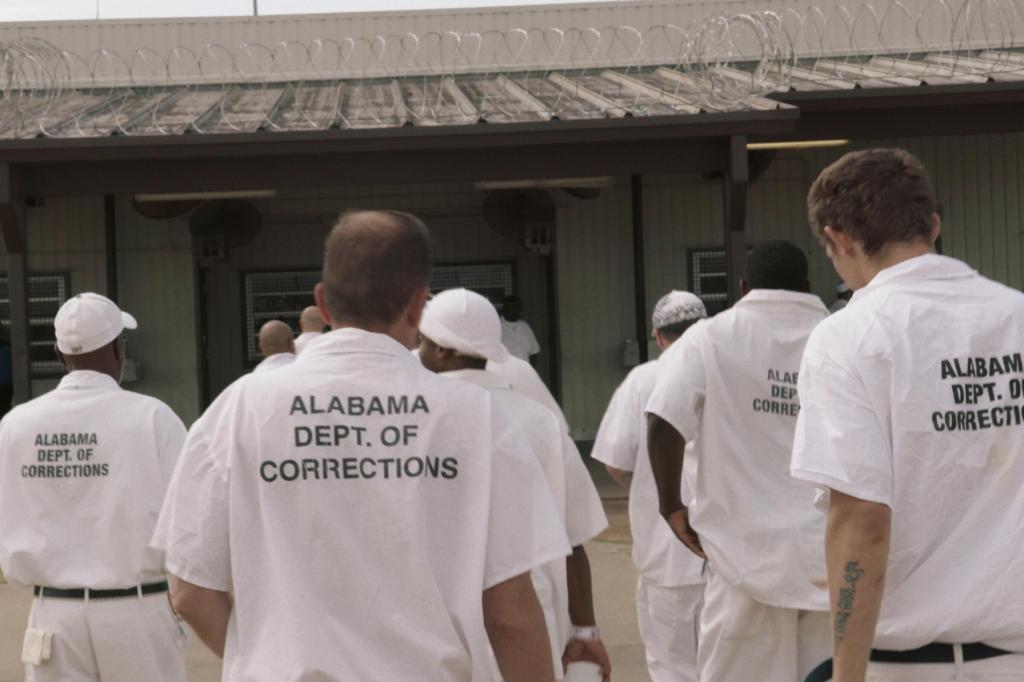
The most impressive thing about this film is how it came about. In 2019, the filmmakers visited the Easterling prison to film a religious revival meeting inside the yard, because leave it to Alabama – a state that used to use scripture to justify slavery – to facilitate church services inside state institutions in lieu of actual rehabilitation. While there, some of the incarcerated men alerted them to the inhumane treatment they get and the squalid conditions they live in. This began the actual meat of the film, clandestine interviews with contraband cell phones and other recording equipment to show the truth of what goes on inside these walls rather than the self-serving lines propagated by those committing what are essentially human rights violations.
The title comes from a speech by Governor Kay Ivey, who is what you would get if the phrase “if only they’d comply” was also a grandmother. Despicable and racist to her core, she adamantly refused to accept the findings of the Department of Justice in regards to their prison system, and used Civil War rhetoric to push back against the idea of a federal takeover to bring their facilities up to code. Of course, the titular “solution” is, sadly, the solution we always have in controversies like this: kill the messenger. The film itself centers on retaliation against any inmate who talks to the media, especially when it comes to the death of Steven Davis, an inmate beaten into oblivion by the guards and prevented from receiving medical treatment that could have saved him, and then fabricating a story about him attacking the guards with deadly knives. Being a white man, Davis’s likely murder at the hands of law enforcement is made all the more poignant, because as the black organizers of the eventual prison labor strike point out, if a white dude can get killed just for talking back to a guard, what hope do the brothers have?
The film is well made, but ultimately depressing, because we know that nothing of consequence has changed. If you follow the news, you know that the strike was eventually put down, living conditions have not improved for the inmates, and with Donald Trump back in office, people like Kay Ivey are empowered to be even more draconian. We see some of the consequences of these actions in the film, with organizers being beaten and shoved into solitary confinement for months at a time (which is illegal, but who would dare to police the police in the deep south), and Steven Davis’s former cellmate, who toed the line on the official account in interviews with lawyers and reporters under what clearly appeared to be duress, just happened to die shortly before he was to be released, where he could go on the record without fear of reprisal. Even Davis’s mother Sandy, who gets a significant chunk of screen time, gets no justice and no peace of mind as she’s continually stonewalled for information on the death of her son. It’s all just too miserable, and there’s no real resolution to any of it. It’s just another bit of human misery that we have to log in our minds for a future date when people with souls are back in charge, and even then it’ll be low priority amongst all the other damage we’ll have to undo.
Come See Me in the Good Light – Ryan White, Jessica Hargrave, Tig Notaro, and Stef Willen
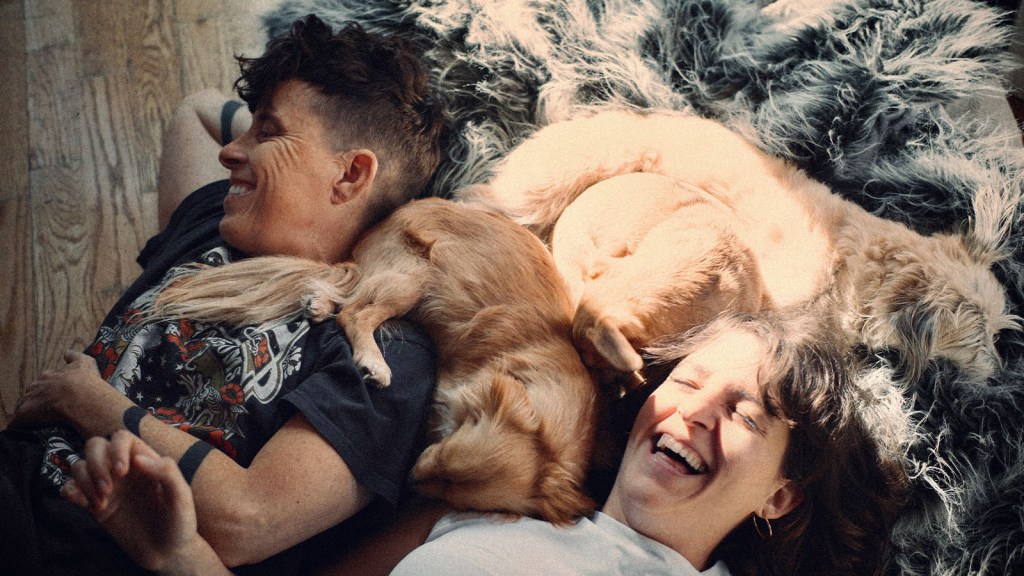
I knew nothing of the life and work of Andrea Gibson before seeing this film, which in itself is part of the overall tragedy of the story. A superstar poet in the LGBTQ community, I’m guessing most people outside that group were also unaware of their contributions to the collective discourse. We get snippets throughout the film, and the work is beautiful, bringing a lifetime of pain, regret, and hope to the forefront in the midst of an attempt to cope with the inevitable.
Gibson was diagnosed with ovarian cancer in 2021, and despite numerous rounds of chemotherapy and other treatments, the disease spread and became terminal. As a writer, the gender queer artist obviously knows a thing or two about dramatic irony, and it sort of hangs over the whole picture that one of the few things that made them land objectively on the female side of the binary is what ultimately doomed them.
Still, the movie proceeds with a sense of positivity and hope that few could pull off in these circumstances. I sure as hell couldn’t. If I knew my days were numbered, I’d probably just stay curled up in bed waiting for the reaper to just get it over with. I’d sob uncontrollably for all the experiences I’d never get to have, all the love I’d never get to give or receive. and just the sheer unfairness of it all. Andrea and wife Megan Falley, however, approach each day as a gift because they know it will not keep on giving, working towards getting Andrea healthy enough for one last show, one last thank-you to all of the fans that have kept them going through the worst of this ordeal. It’s inspiring, but also heartbreaking, knowing that Gibson passed shortly after the film came out.
In the end, this is a loving tribute, not just to a lost member of a strong community, but to all those who feel alone in the depths of life’s indifferent cruelty. This isn’t the best made film in the world, but it’s a necessary reminder that even in the darkest of times, there are those who still care.
Cutting Through Rocks – Sara Khaki and Mohammadreza Eyni
Thankfully, all the trouble I went through to see this picture was worth it. Cutting Through Rocks is one of the few genuinely uplifting stories we’ve gotten in the category for a long time. So many entries in the Documentary Feature competition of late deal with death, disease, abuse, tragedy, war, and repression that you could be forgiven for thinking that non-downer films were somehow rendered ineligible after the pandemic. And yes, while there are certainly some sad moments in the film, it is all about a positive, progressive message of empowerment and shows a genuine step in the right direction. Given current events, who knows if there will be any further steps, so it’s all the more important to celebrate the little victories we get.
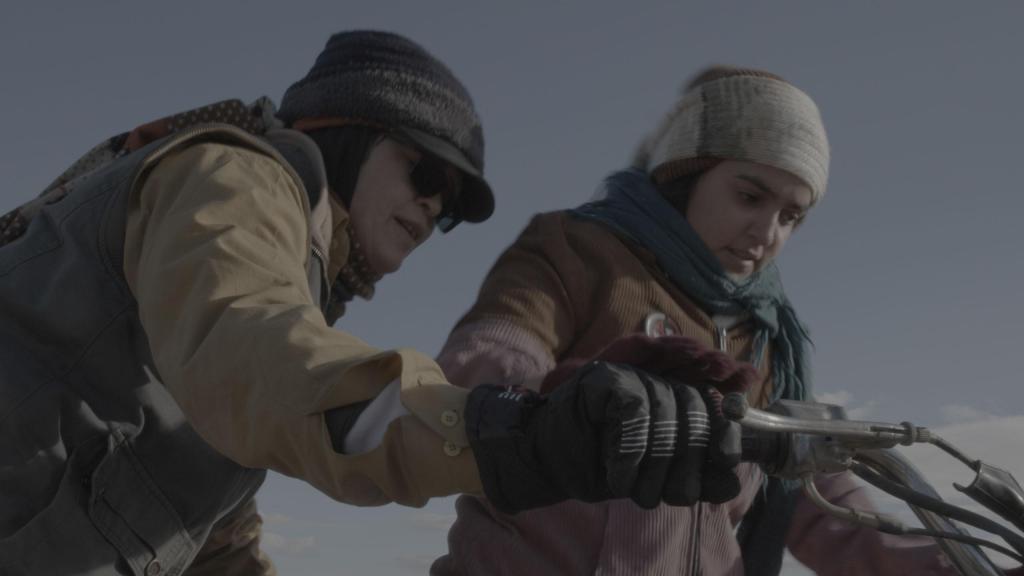
Sara Shahverdi, a divorcée who takes pride in her independence and “take no bullshit” attitude, made history a few years ago as the first woman elected to local office in Iran, voted as one of five members of her rural village council, and getting the most total votes of the entire campaign. Taking her mandate from her community to heart, she sets about the task of implementing real change in the village, including a sly bit of property law that allows for married woman to get an equal ownership share in their homes with their husbands, and aggressively acting to ensure that young girls and teenagers stay in school and continue their educations, rather than letting their parents essentially sell them into early marriage. Sara even takes one of the students in, serving as temporary guardian to prevent her from being made into a child bride.
Of course, there are agonizing setbacks. The other four councilmen try to impose a double standard and reverse longstanding precedent by demanding that Sara share the village’s official seal with them, so that they may unilaterally impose their own self-serving legislation, even though the law dictates that the seal stays with the top vote-getter in the election, which was Sara. They constantly try to shout her down simply because she’s a woman. They shame her for taking part in a meeting of all the region’s councils because it’s held in a mosque, in the room specifically designated for men. When the girl’s uncle sees Sara teaching her and other girls how to ride a motorcycle, he violently intervenes and tries to force her back home to consent to marrying a man she’s never met.
It’s tough to watch at times, but Sara’s very presence is indicative of the key message, that change is incremental, it has to be fought for tirelessly, and perseverance is its own form of radicalism. The more you defy them simply by existing, the more you will eventually wear them down and get results. Sara’s an inspiration and a hero, even though she would just tell you to shut up and help her install a fence, because she’s all about getting shit done.
Mr. Nobody Against Putin – David Borenstein, Pavel Talankin, Helle Faber, and Alžběta Karásková
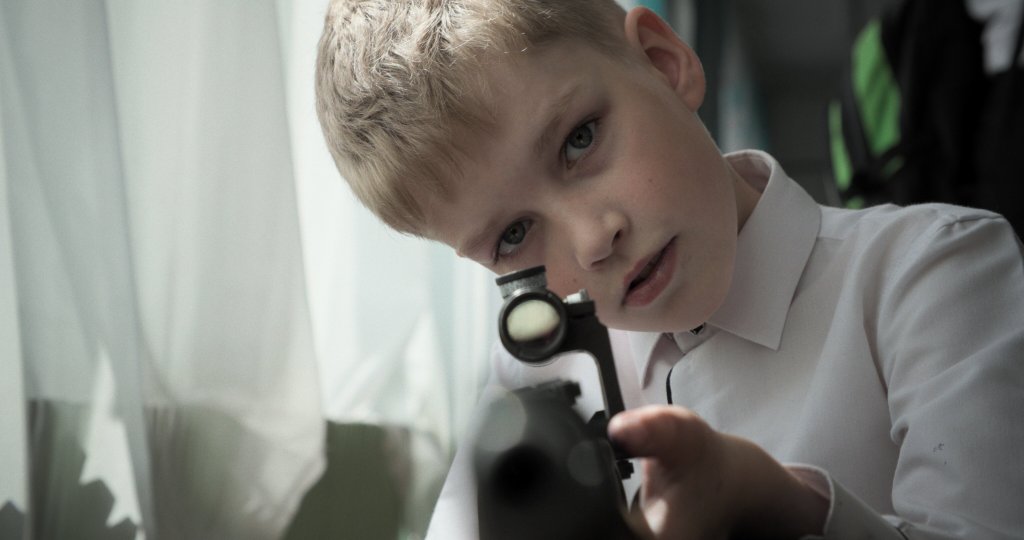
Denmark’s International Feature submission is everything that My Undesirable Friends isn’t. It’s intimate, measured, shows an angle of Putin’s menace that we haven’t yet seen, and it’s mercifully short. Hidden in plain sight, the film’s protagonist, Pavel Talankin, better known as “Pasha,” shows the evil of the Russian dictator simply by doing exactly what he’s told, and in doing so, gives the world a whole new example of the depths of Putin’s depravity.
Pasha is not a political crusader or a foreign agent. He’s just a support teacher and head of the A/V department at a school in a small, rural community of about 15,000 people that’s fallen on economic hard times in the wake of its mining industry falling apart. He’s a pacifist by nature, but mostly he’s just a fun, affable guy that the students love, and whose mother is the school librarian (the state of the education system in Russia is laid bare by the fact that she spends most of her time taping old and worn textbooks back together so they can continue to be used, their information almost certainly outdated). Pasha videotapes all of the major school events, and even hosts a few of them, making copies and editing footage as keepsakes for the families. A lot of the older students confide in him, because he’s the member of the faculty closest in age to them.
We all know the major areas where the Russian government suppressed free speech and journalism when Putin invaded Ukraine, the biggest being the shuttering of all independent media outlets and banning anyone from calling it a “war.” Pasha is ready to resign his position in protest, as he doesn’t want to be an agent of this government, even in an indirect, functionary role like working in a school. However, after contacting the film’s director, who is looking for any inside source to report from within, he withdraws his resignation, especially in light of what the regime is now demanding. In addition to the information blackout, Putin has opted for a full youth indoctrination project, including mandatory “patriotism” lessons that exist solely to ingrain propaganda about the war into the youngest of minds, and he has required that these literal performative curricula be recorded and uploaded to a government website to ensure compliance. This is literally Pasha’s job, so why not go back to it, act as if everything’s okay, and do precisely what’s asked of him, while also smuggling that footage out to show the world?
It’s a small act of defiance, but it has a massive ripple effect. Pasha sees firsthand, and records, how young men with no agenda are conscripted to fight on the frontlines for Putin’s insane ambition of restoring the Soviet Union. He offers a comforting shoulder when those same boys die for nothing and their siblings still in school are inconsolable. He observes how a draconian “history” teacher, who is despised by the faculty and students, is rewarded for his bootlicking with an incredibly ironic “favorite teacher” award and given a new apartment. He has to direct kids who are reading off scripts to not make their acting look so obvious. Eventually, like so many others, Pasha has to flee for his own safety, as even being a pacifist has made him a target, police openly casing his apartment building.
Sadly, these are the steps that have to be taken in order for anything to get fixed in this completely fucked situation. People with the means and opportunity to expose the truth have to risk everything to do so, and as we’ve seen, the real enemy only tends to get stronger as this madness wears on. Russia is currently supplying Iran with intel on American strategic targets in the war we started. Will our government do anything to stop it? Of course not. We’re too busy copying Putin’s playbook (several administration officials and their lackeys chastise the press for using the term “war” even though Trump does himself) and easing sanctions on Russia’s oil industry because Old Vlad’s probably got that pee-pee tape somewhere. This is the reality of the world at the moment, where no big power is willing to do anything to stop a psychopathic killer. That’s why the smallest of us keep stepping up instead.
The Perfect Neighbor – Geeta Gandbhir, Alisa Payne, Nikon Kwantu, and Sam Bisbee
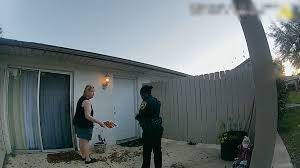
Geeta Gandbhir has accomplished a feat that’s happened only three times before through the 90 years of these awards, in that she’s nominated for both Documentary Feature and Documentary Short (The Devil Is Busy). The last time this happened was in 1995, when Charles Guggenheim was nominated for the feature D-Day Remembered and the short A Time for Justice, winning in the latter field. Before that, you have to go all the way back to the 1950s. In 1957 Louis Clyde Stoumen won for his short film, The True Story of the Civil War and lost for his feature, The Naked Eye. Two years later, Ben Sharpsteen amazingly won both categories for White Wilderness and Ama Girls.
Gandbhir seems to have good odds in both contests herself, because she’s dealing with domestic social issues that have real resonance for audiences and voters. The Devil Is Busy deals with the restrictions and harassment women go through while trying to secure abortion care in Georgia, while The Perfect Neighbor takes on one of the biggest stains in our national discourse – so-called “Stand Your Ground” laws and the inherently racist way they’re used by bigots to justify murder.
Using mostly pre-existing footage, Gandbhir and her team take a methodical approach to the killing of Ajike Owens, a mother who was shot through the front door by Susan Lorincz in 2023. Lorincz initially claimed self-defense, saying that Owens was threatening her and that she feared for her life, the boiler-plate excuse used in so many of these cases. However, as the raw video explains, Lorincz had a history of being belligerent to her black neighbors, often called the police on local kids playing in the street and on an empty lot adjacent to her apartment building, and had even confiscated their toys for daring to come near her lawn. Even police body and dash cam footage reveals that local law enforcement were tired of being called out because a racist old lady couldn’t deal with black kids simply existing in her neighborhood.
But more than giving lie to her defense, we see the baked-in entitlement that comes with Stand Your Ground laws. During interviews after the shooting, we see, quite damningly, how Susan believes she will walk away scot-free on this, and also how the detectives go out of their way to find some way to justify her actions so that they don’t have to arrest and prosecute her. It genuinely appears that the only reason she was even charged with a crime was because the pattern of behavior was so blatant and the circumstances of this shooting so clear-cut, that no honest jury could possibly acquit, and even then, public outcry from the neighbors and media exposure that led to protests probably tipped the scales more than the actual facts.
Remember, this is the law that allowed George Zimmerman to face zero consequences after he pursued, accosted, and murdered a teenager for the crime of being black, wearing a hoodie, and carrying Skittles. And yet it’s also the same law that has put black people away for sentences of 20 years or more, even when they didn’t fire a shot or the gun wasn’t loaded. It is the focal point issue when it comes to the racial disparity of our justice system, outside of police themselves killing unarmed minorities. And only now, through these intense, graphic exposés are we finally seeing some pushback against the laws themselves, and accountability for the perpetrators. The Perfect Neighbor is a very important addition to the overall case for reform.
***
Whew, this one took a while, huh? Well, consider it getting your money’s worth, although you spent nothing. Like I said, this is the last category where I have to actually write out my analysis, so I might as well give you all I’ve got as I push my self-imposed midnight deadline to publish. Again, this category gets harder and harder to finish each year, but at least I did in fact finish it.
My Rankings:
1) Cutting Through Rocks
2) Come See Me in the Good Light
3) Mr. Nobody Against Putin
4) The Perfect Neighbor
5) The Alabama Solution
Who do you think should win? Vote now in the poll below!
As I do every year, here are my complete rankings for the Documentary Feature shortlist. I didn’t finish it this time, but I always want to be as transparent as possible in my process.
1) 2000 Meters to Andriivka
2) Cutting Through Rocks
3) Come See Me in the Good Light
4) Holding Liat
5) Mr. Nobody Against Putin
6) The Perfect Neighbor
7) Apocalypse in the Tropics
8) Cover-Up
9) The Alabama Solution
10) Folktales
11) My Undesirable Friends: Part 1 – Last Air in Moscow
Unseen:
Coexistence, My Ass!
Mistress Dispeller
Seeds
Yanuni
Up next, there’s just one category left, one blog left, and one video left. You know it, you love it, you tolerate my face. It’s Best Picture!
Join the conversation in the comments below! How many shortlisted documentaries were you able to see? How many nominees did you miss due to lack of access? Just how hard is it to make a documentary that isn’t wholly depressing these days? Let me know! And remember, you can follow me on Twitter (fuck “X”) as well as Bluesky, subscribe to my YouTube channel for even more content, and check out the entire BTRP Media Network at btrpmedia.com!

 I Actually Paid To See This
One thought on “Oscar Blitz 2026 – Documentary Feature”