
We are in the 11th hour. By the time most of you read this, the Academy will have announced the nominees for the 96th Oscars. As I’m writing, we’re but nine or so away, and while I obsess over this, I have no intention of getting up before dawn to see the live reveal. I will rest until my alarm goes off for work, confident that I’ve done all I can to plow through as many hopefuls as possible in anticipation.
As such, we come to the last entry in this mini-series exploring Netflix’s lengthy “For Your Consideration” campaign (here are links to Part One, Part Two, and Part Three if you need to catch up). I haven’t reviewed everything I’ve seen yet (we still have a handful of documentaries and Independent Spirit nominees to get through), and I’m sure there will be a few surprise nods tomorrow morning for films I haven’t even considered. But the hardest part of this process is concluded with this post.
Of the narrative features that Netflix is plugging, I’ve watched all but one (Fair Play, which I had no desire to see, and which has gotten no attention from the awards circuit despite positive critical assessments). The three we have remaining tonight are gunning for the big prizes. Each of these movies has gotten a massive marketing push, hoping to land nominations for acting, directing, writing, technical and artistic achievements, and the mother of them all, Best Picture. I’m confident that at least one will succeed in this effort, but the question is, are any of them worthy of the hype? It’s time to turn one last page for America’s go-to streamer and find out.
May December

Loosely based on the infamous scandal surrounding Mary Kay Letourneau, May December is the most cerebral candidate in this set. Written by Samy Burch and Alex Mechanik and directed by Todd Haynes (who has a history of telling unorthodox stories, especially as they relate to sexuality), the film was somehow nominated in the comedy side of the Golden Globes film equation, eliciting a mass confusion not seen since the same thing happened with The Martian, but still accomplishes its goal of taking a sympathetic, humanistic approach to its complicated subject matter.
Natalie Portman gives her best performance since Jackie as Elizabeth Berry, a successful actress researching her upcoming role in an independent film about Gracie Atherton-Yoo (Julianne Moore), the Letourneau stand-in who 23 years previous began a sexual relationship with a 13-year-old, to whom she is now married with three children. The scandal shocked the nation at the time, and Gracie had the first of her kids with the teenage Joe in prison. However, since then they’ve lived a quiet and happy domestic life, with the eldest child Honor (Piper Curda) in college, and their younger twins Charles and Mary (Gabriel Chung and Elizabeth Yu) set to graduate high school.
Berry arrives in Georgia to meet with Gracie and Joe (Charles Melton), assuring them that she wants to portray their story honestly and without judgment, but it soon becomes clear that her intentions are more salacious. Initially quite friendly and curious, Elizabeth works her way through the family and all around the city, reaching out to everyone who knew Gracie and picking at old wounds. She seemingly gets a method thrill from the exercise, simulating sex by herself in the pet shop where Gracie and Joe first got together, and later straight up seducing the latter. As rumors begin flying once again, Gracie seems to become ever more uncomfortable, discord arises in her marriage, and Joe begins to question his life choices.
At its core, this is a story about control. Elizabeth conducts herself as if she’s holding all the cards, delighting in the drama she thinks she’s subtly causing. There’s a great meta scene midway through where she speaks to the drama class at Mary’s school, describing the intimacy that actors share when performing a sex scene (in answer to the juvenile question of an adolescent), only to later give lie to that very thesis when she and Joe hook up and it lasts all of 20 awkward seconds. However, she feels like she’s accomplished her goal by making Mary distinctly upset, referring to her desire to play “morally ambiguous” characters.
Continuing the theme, Joe is a man desperate for control. He carries on something of an emotional affair with a friend from social media over their love of lepidoptery, even going so far as to propose they go on a trip together. This unknown woman declines, noting that he is married, which is his core frustration. He not only married the first person he ever slept with, he did it at the age of 13, which was not only a crime, but an incident that stunted his emotional growth. As his hormones developed, he doubled down on his decisions, thinking he was doing the right thing, but having no real concept of the consequences. As such, he’s looking for any outlet he can for something resembling independence. He loves Gracie and his kids without question, but there’s a reason he raises butterflies. The act of breaking free from the cocoon holds romance for him, to the point that he’d even risk his domestic comfort for those 20 seconds with a different warm body, and a famous one to boot.
But at all times, the one truly in the power position is Gracie. She is quite unhappy with how Elizabeth is conducting her research, even breaking down emotionally on a few occasions. But she still maintains a solid grip on her routines and her prerogatives. She allows Elizabeth to seek out the most sordid version of events possible, knowing that she’s already done her penance and rebuilt herself. Nothing Elizabeth can do will ultimately affect her life, but she wants to give this stranger the chance to live up to her word. As Berry digs for dirt with Gracie’s first husband (D. W. Moffett) and her son from that marriage (Cory Michael Smith), Gracie herself just sits back and waits for the unpleasantness to pass, having learned enough hard lessons about human nature over the past two and a half decades to no longer be fazed by it, for the most part.
A lot of attention is paid to the three main performances, as well as the script and direction. There’s a very solid chance we could see Haynes up for Best Director and Burch and Mechanik up for Original Screenplay, and both would be well-deserved. But what about the actors? The big push has been for Portman, but otherwise the cast hasn’t scored that many nods. All three were nominated for the Globes, but those are bought and paid for, and none of the three central players won. Portman is up for an Independent Spirit Award, as is Melton, but they’ll both have stiff competition, as last year Film Independent decided to merge the acting fields into super-sized genderless categories. Apart from that, the only big ceremony they’ve had any chance at is the Critics’ Choice Awards, where both Moore and Melton were nominated in the supporting contests, but both came up short. They were completely shut out of SAG and the BAFTAs, which doesn’t bode well.
It’s something of a shame, too, because of the three, Portman is the one I’d be least likely to nominate. Yes, her performance was tremendous, but Moore and Melton are that much better, because they’re the ones we’re meant to care about. Portman is an interloper, attempting to manipulate a situation for personal gain… and so is her character (I kid because I love). Elizabeth considers this a job, a story, but for Gracie and Joe, it’s their lives, and the true conflict lies in how little it matters to Elizabeth that she might upend all of that for the sake of a headline-grabbing performance. I’m not sure if there’s a meta commentary in that, but it wouldn’t shock me if there was.
Grade: B+
Maestro
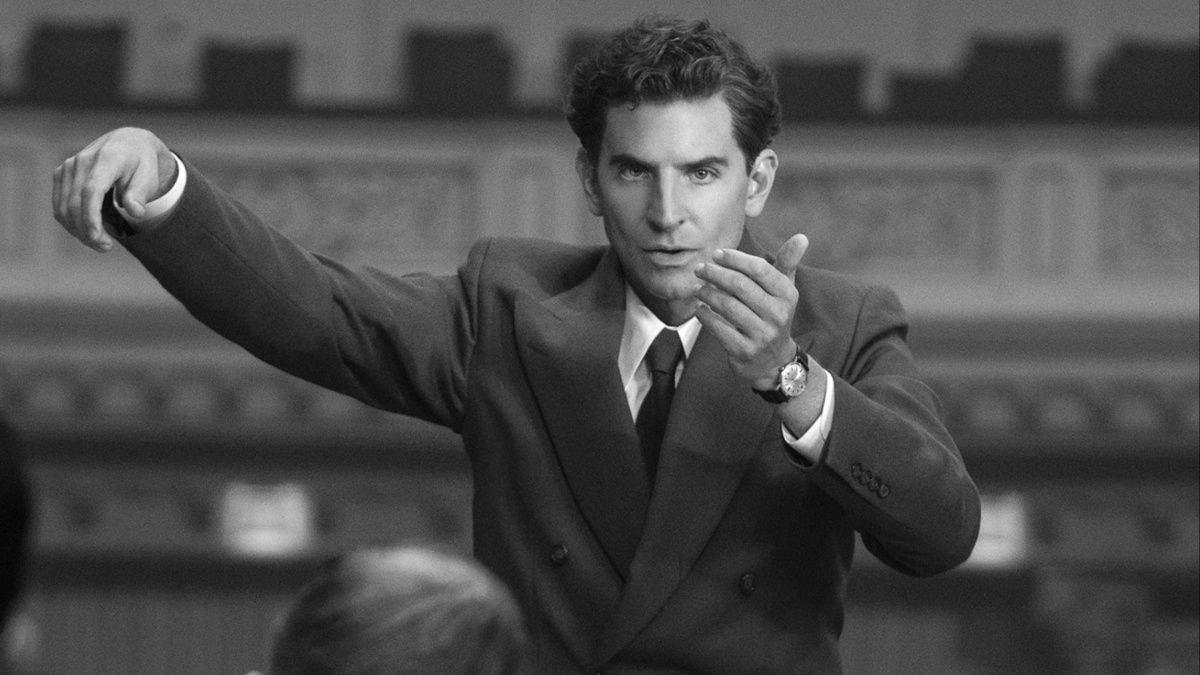
No film in Netflix’s lineup has gotten higher priority than Maestro, Bradley Cooper’s directorial follow-up from the third A Star is Born remake, and his ostensible Citizen Kane, examining the life and career of composer Leonard Bernstein. And to be fair, I think he succeeds in the attempt. Oh, I don’t mean that he’s made a film as timeless, poignant, or revolutionary as Orson Welles’ classic, I mean Cooper has also created a work of supreme ego. This is the most naked attempt to shill for awards I’ve seen in a good long time. As my good friend Jason Godbey from No Rest for the Weekend put it, Maestro is little more than “weaponized Oscar bait.”
Presented as a long series of flashbacks during an interview that bookends the proceedings, the film basically starts in black-and-white, when a young Bernstein (like Cooper would dare cast someone other than himself in the lead) is given his first chance to conduct the New York Philharmonic in 1943 on short notice. Excited beyond measure, he initiates a madcap sequence that ends with his exhausted triumph. After his instant fame, he meets an actress named Felicia Montealegre (Carey Mulligan) at a party, beginning a whirlwind romance. As the years go on, they marry, have children, switch to color, and live an opulent lifestyle due to their many successes.
However, Bernstein has three vices he can’t overcome – booze, drugs, and men. His relationship with Felicia devolves into a series of her covering up his indiscretions and infidelities, as the genius is too swept up in his own hubris to care. They eventually reconcile after another massive display of artistic passion, and live their “happily ever after” until time takes its inevitable toll.
Now, to the positives. The cinematography by Matthew Libatique is absolutely brilliant, quite possibly the best of the year. He’s able to expertly blend color with black-and-white photography, 4:3 with 16:9 aspect ratios, and he keeps everything lit perfectly despite a ton of camera movement. This pairs exceptionally well with Michelle Tesoro’s editing, creating several seamless one-take sequences that still involve cuts that replace actors and scenery along the periphery of the various shots. Among the better moments are a fast-paced progression where Bernstein runs around Carnegie Hall when it’s both empty and filled, and the wedding of Leonard and Felicia, which is double framed in a wide shot where all the action is within the shape of a shrubbery arch in the center.
Second is an unsung supporting role from Sarah Silverman. Playing Leonard’s sister Shirley, she’s a ray of blunt sunshine, participating in all the pomp and circumstance but maintaining a grounded sense of reality and responsibility. The way she can honestly love her brother while still admitting that he treats Felicia like shit is an all too rare show of narrative discipline and nuance.
And of course, there’s Carey Mulligan. There’s hardly a false note to be had in her turn as Felicia. She’s never just “the underappreciated wife.” This is her story just as much as it is Bernstein’s, because she maintains her agency throughout, even if it’s by the sheer force of Mulligan’s performance and screen presence. She refuses to be painted into an archetypical corner, asserting her wants and needs in equal measure to the ostensible star. In a year where the Best Actress field wasn’t so stacked, she’d be almost a lock to win, and she’d deserve it.
But once you get past all that, oof. I can’t remember the last time I saw a movie that was meant to be prestige, but was basically just an exercise in the director screaming, “Look how great I am!” I honestly lost count of the number of scenes that consist entirely of Bernstein in center frame bowing to fawning applause. It takes some balls to make a movie about a legendary entertainment figure and turn it into a referendum on yourself, I’ll grant. But what has Bradley Cooper honestly done to earn this moment? He’s a fine actor, both in dramatic and comedic roles, and he was technically proficient as a director in his previous outing. But that’s it. Martin Scorsese this man is not, and even Marty knew to keep his performance in Killers of the Flower Moon to a respectable cameo. Yes, Orson Welles made the greatest film of all time on his first try, but he also had years as a stage and radio actor, writer, director, and producer before that, so he could still develop his signature style in other media. What is Cooper’s style, other than liking music and beautiful women? I don’t know, and neither does anyone else.
This causes some basic filmmaking techniques to come off as patently silly. For example, there are several scenes where Bernstein holds a baby, for whatever reason. In the vast majority of them, he’s smoking, because 2023 was the year of commercial product movies and lighting up a butt every other shot, apparently. Since we live in the 21st Century, and no competent set medic or chaperone would allow second-hand smoke to be blown directly into an infant’s face, you can tell that in most of these shots he’s holding a plastic doll. It’s not even subtle. How do you whiff that badly?
This lack of directorial vision is upsetting, because to be perfectly frank, Cooper misfired on this story and this performance by a pretty considerable margin as well. We learn almost nothing about Bernstein’s skill as a composer or conductor or even his creative process, opting instead for the E! True Hollywood Story version of events where he screws everything in sight and puts whatever he can up his giant nose. His impersonation of Bernstein’s voice sounds like George Takei with a head cold. I know Bernstein had an oddly deep, nasally voice in real life, but when a person sounds as distinctive as that, you either have to nail the impression dead on or just not bother, because it will only be ripe for parody.
From a technical and artistic standpoint, this is a competent film, and it has a few superlatives worthy of Academy consideration, as previously noted. That will probably be enough to get this a Best Picture nomination as well, and I’m sure Cooper will be up for something, only because it will be very conspicuous if he isn’t, given all the campaigning. But when you come right down to it, Maestro is this year’s Tár, only slightly more accessible to a general audience. That film was a great story and lead performance that suffered due to directorial pretentiousness. This one is a well-made project with a cliché story that suffers because the creator cared more about cultivating and commoditizing his own sense of pride than actually doing something extraordinary. Like the song awkwardly belted out by a couple at that early showbiz party where Leonard meets Felicia, the real theme of this movie is that Cooper got way too “Carried Away.”
Grade: B-
Nyad

Did you know that naiads are water nymphs? And did you know that the word “naiad” sounds exactly the same as the last name of famed marathon swimmer Diana Nyad? Well, if you didn’t, you’ll be reminded of that fact about 47 bajillion times in this eponymous sports biopic. Now don’t get me wrong, Nyad is a perfectly okay film, featuring stalwart performances from Annette Bening and Jodie Foster, both of whom have a strong chance of hearing their names called tomorrow morning (both were nominated by the Golden Globes and SAG, with Foster also picking up a nod from Critics’ Choice). There are also a couple of decent tech elements. But this is fairly run-of-the-mill, and I’m pretty sure no one would bother watching it were it not for Netflix’s marketing (especially if they know the controversy surrounding our hero’s embellishment of her own accomplishments, and even odder, the Holocaust).
Directed by Elizabeth Chai Vasarhelyi and Jimmy Chin in their narrative feature debuts (they previously made documentaries that chronicled extreme physical tests like The Rescue and winning the Documentary Feature Oscar for Free Solo), Nyad closely follows the sports movie formula. We meet Diana (Bening), who is without question one of the greatest swimmers in American history. We montage her various milestones like training for the Olympics and her record-breaking swim around the island of Manhattan. In 1978, she attempted the seemingly impossible distance swim from Cuba to Florida, being pulled from the water after nearly 42 hours when currents forced her wildly off course. She was 28 years old at the time.
Fast forward to her 60th birthday. In a state of semi-retirement, living with her best friend Bonnie Stoll (Foster), Nyad gets into something of an Autumn Years Crisis, and decides to start swimming again. Wanting to solidify her legacy, she decides to make another attempt at the Cuba crossing, conscripting Bonnie as her coach. They train until 2011, when Diana takes her second dip to try for history, using more advanced sonar technology to fend off sharks rather than the elongated protective steel cage she used in the 70s. As we’re only about halfway through the movie at this point, you can guess how things turn out.
But Nyad will not be deterred. She keeps harping on her so-called mythological heritage ingrained by her father, and dwells on painful memories of sexual abuse at the hands of her youth swim coach, Jack Nelson (Eric T. Miller). With her tenacious intent and the stubborn support of both Bonnie and her accompanying boat captain/navigator (Rhys Ifans), Nyad keeps trying until her eventual moment of triumph in 2013. It is not in the slightest a spoiler to tell you she makes it, because the movie would never have been made had she failed.
There are some pretty solid positives in this picture. Bening and Foster do admirable work given the very safe material, and you do believe the platonic bond they share. Also, and this is a credit to Vasarhelyi and Chin, the photography during the swims is exemplary. You can actually see the water move in directions as Ifans and others explain the science behind the literal motion of the ocean, giving things a fairly interactive feel. It’s not up to their non-fiction standards, but it’s still really well done.
However, that’s about as far as I can go on this. The visual effects are cheesy at best (Nyad hallucinates the Land of Oz after several hours in the water, and the fantasy sequence just looks hilariously bad), there’s no real excitement in anything going on in between the swims, and all the sexual abuse stuff – while accurate to Nyad’s memoirs – just plays like a bad Lifetime movie. People like Nyad’s story because she did what most thought could never be done, especially at her age, not whether she defeated the patriarchy in the process.
But that’s kind of always been Nyad’s problem. The truth can’t just be compelling enough. It has to be even more fantastic. This penchant for exaggeration has caused quite a bit of scandal over the years, as sleuths have found numerous examples of her overinflating her accomplishments. Even this incredible marathon to Key West isn’t listed in the Guinness Book of World Records because there’s too much missing data to independently verify that she actually pulled it off without assistance (as is often stated in the movie, she can’t leave the water, she can’t touch the boat, she can only approach for liquid nutrition, and no one on the boat can touch her, or else the whole thing is invalid). Do I believe she did it? Absolutely. Do I think it was nearly as dramatic as the film makes it out? Probably not. And given the uncertainty that has surrounded her in both her professional and personal lives on this front, it’s kind of amazing that the movie was even greenlit.
But taken purely on surface enjoyment, it’s alright. It’s by no means worthy of serious consideration for Oscars, but if you’re looking for a traditional sports flick featuring a non-traditional sport, you could do worse. Bening and Foster do a lot of heavy lifting with mostly light material, elevating the proceedings beyond the purely pedestrian, but beyond that, this is just a mostly nice trifle that will ultimately be forgotten like a sandy footprint washed out by the tide.
Grade: B-
***
That’s it for this little side project! Thanks as ever for taking the ride with me, and we’ll see in just a few hours if any of Netflix’s exhaustive efforts have paid off. Based on all that I’ve seen, if we’re just taking the films at face value, only a few really warrant further attention, but we all know that’s not how this process works. Hopefully we won’t be insulted by what makes it through, and then I can begin the Blitz with a clear mind.
Join the conversation in the comments below! Did you see any of these films? Which was your favorite and why? Do you honestly care about Bradley Cooper wearing a prosthetic schnoz? Let me know! And remember, you can follow me on Twitter (fuck “X”) and YouTube for even more content!

 I Actually Paid To See This
4 thoughts on “DownStream – The Big Red N-velope, Part Four: The Main Event”