
If you’ve followed this process for any decent length of time, you know two things about me. One is that I go out of my way to see as many submissions for International Feature as I possibly can. The second is that I get extremely annoyed when any category at the Academy Awards is taken as a foregone conclusion. You can already see where I’m going here.
This year marks seven since the last time this category wasn’t entirely in the bag for one of the nominees. You have to go all the way back to Chile and A Fantastic Woman from 2017 to have a contest where the result was in any way in question. Sometimes the right film is given this preferential treatment (Parasite, Another Round), but more often than not, the winner is pre-ordained because it catches the Awards Season hype train, typically due to the involvement of a renowned director or actor (usually one within the Hollywood system that has a huge rolodex of people to campaign on their behalf), and they stand alone as the one foreign entry to get any consideration beyond this category. It doesn’t matter if it’s legitimately better than the competition, just that it has a sufficient enough hook to make the voters think it is, thus eliminating all other challengers.
For this go-round, that overwhelming favorite is clearly The Zone of Interest, which has five total nominations, including Best Picture. The only other nominee in this field that’s up for something besides International Feature is Society of the Snow, which received a nod for Makeup & Hairstyling. So in essence, this race is over before it gets started, and it’s even more of a shame than a presumed victory in almost any other field, because we know how long this process is for all the countries that participate. There were 88 eligible entries this year (four were disqualified or otherwise omitted from the ballot), each representing what is agreed upon by committee to be the best of their land’s respective output for the entire year, and basically by fiat, 87 shouldn’t have even bothered.
Weirdly, this year could have been a nail-biter, but the rules of the game precluded that. Anatomy of a Fall, which won the Palme d’Or at Cannes this year, also has five nominations, but despite being mostly in French and German, it is not allowed in. Each participating country may only submit one film, and France chose the vastly superior (in my opinion anyway) The Taste of Things as their standard-bearer. It made the December shortlist, mostly out of pity and as a means for the French Oscar Committee to save face, similar to how India’s entry, Last Film Show, was given the same treatment when it was chosen over RRR last time. Had France put forward Anatomy, this would be the most even betting the category has seen in a while, but it’d also be an even bigger example of the core problem. A bunch of well-connected people advocating for the film would have been rewarded for their marketing campaign, and we’d have a two-horse race between highfalutin projects that have severe shortcomings, satisfying no one.
This used to be one of the most exciting categories each year, because you always wondered what would break through and what wouldn’t, and whether influences outside of Europe would be properly recognized. It used to be about artistic expression and showing the whole world what hardworking people outside the mainstream system could do. Now it’s just a contest to see how quickly we can declare a winner, artificially inflate their profile with extraneous nominations it won’t win, and then pretend we’ve acknowledged something larger than ourselves while we quickly move on to whatever nonsense Disney is insisting the telecast producers cram in next.
In short, no one likes a wasted effort. And given that none of the submitted films is ever obligated to play in the States, every time the contest is treated as an afterthought, it feels like my efforts are indeed wasted. Anyway, let’s give four films the attention they actually might deserve before we succumb to the inevitable result.
This year’s nominees for International Feature are…
Io Capitano – Italy – Directed by Matteo Garrone
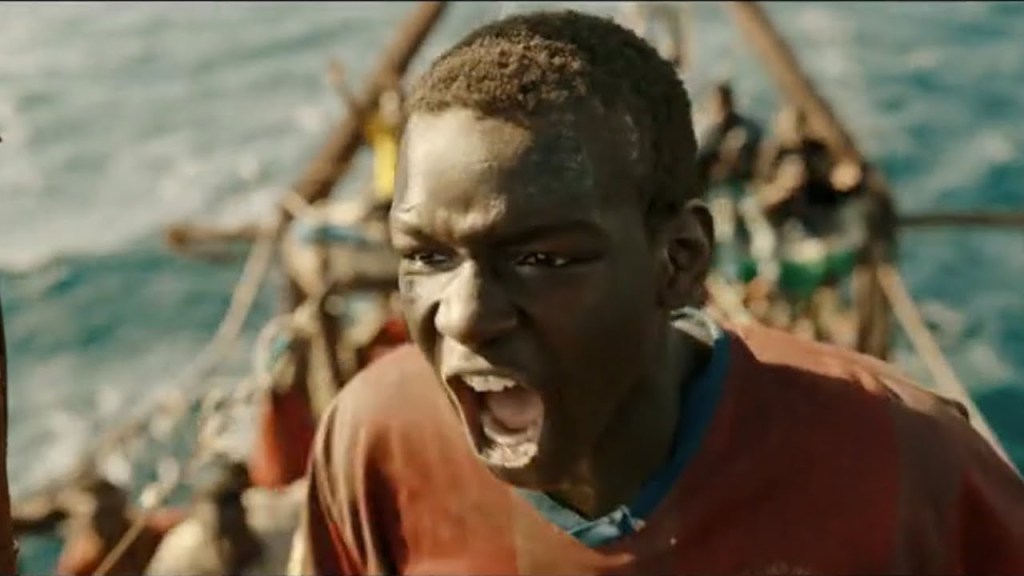
I was able to see this back at AFI Fest in October, with director Garrone on site for an introduction and a Q&A. There were two crucial aspects to this production that make it stand out nearly four months later. The first is that the emphasis on the story was to chronicle the entire journey of African refugees who cross the Mediterranean Sea to emigrate to Italy. Several films, especially documentaries – some even submitted by Italy in this category – focus on the endpoint of the odyssey, the humanitarian crisis on the Italian shores when the migrants arrive, many of them injured and malnourished. Garrone committed himself to showing the whole thing.
The second is that, in an exercise of life imitating art (and vice-versa), Garrone shot the film in chronological order, and the young actors playing the leads (Seydou Sarr and Moustapha Fall) were not given the appropriate script pages until just before recording. In doing so, Garrone was able to get as natural of reactions as possible out of his cast, because even they didn’t know their characters’ respective fates until it was time to roll the cameras.
And those fates are beyond compelling. Based on first-hand accounts of people who actually made the crossing (one of them joined Garrone for the Q&A along with the cast), this quasi-fictitious story focuses on two young men from Senegal who wish to move to Europe to pursue music careers, which they certainly can’t do in their poor village. Thinking that all they need to do is raise money to pay a smuggler, the realities of this trek become far more taxing than they could have imagined. Prices get raised. Corrupt soldiers and police solicit bribes or outright steal from them in exchange for not arresting and killing them. They watch as several people succumb to the desert elements and die without even the ability to stop and bury them. One of the boys even gets sold into slavery. All this is before they ever come close to boarding a boat and hitting the water, which is its own set of harrowing circumstances. These actors are put through their paces to an insane degree, and their anguish is worn openly on their faces. Even though this film is a work of drama, the leads come as close as possible to experiencing the real circumstances, and it shows in their performances.
Perfect Days – Japan – Directed by Wim Wenders

As intense as Italy’s entry gets, Japan counterbalances it with a simple, beautiful meditation on what really matters in life. A near-perfect marriage of filmmaker and actor, Wenders and Kōji Yakusho (who won Best Actor at Cannes for his performance and deserved a nomination here) present a gorgeous feel-good tale of contentment and happiness that can come when one is able to extricate himself from the pains of the modern world.
Yakusho’s Hirayama lives in a spartan apartment, sleeping on a futon and tending to small plants. He gets up at the crack of dawn, not by an alarm clock, but by the soothing sound of his neighbor sweeping the sidewalk. He rides around Tokyo doing the absolute bottom rung job of cleaning public toilets, his meager wages providing all he needs in life. He eats a meal at the same bar every day, occasionally visits a bathhouse for a deep clean of his own, and every week he goes to a secondhand bookstore to find new reading material, which he enjoys by lamplight before he turns in each night. As he makes his rounds, his van is energized by the sound of classic rock cassette tapes that he plays in rotation.
Everything else is observation and appreciation for the small joys in life. Hirayama helps a lost boy in a park find his parents. He takes photographs of trees, on film, which he has developed every week. He sits and eats a store-bought sandwich while people-watching. He aids his younger co-worker with his love life like an uncle who cares just enough to make sure the kid doesn’t make any devastating mistakes. He takes in his actual niece when she runs away from home, sharing his little pleasures and dispensing sage advice. He rarely speaks, but when he does, it’s with intention. “Tomorrow is tomorrow,” he says, adding, “today is today.”
It’s such a basic message, but it resonates absolutely. Over the course of the film we get hints to the traumas he’s suffered in the past, all of which left him with a new appreciation for the world around him once he was able to break free. At all times he conducts himself with dignity, never letting small annoyances get the better of him. He gets angry like anyone else, but once he’s said his piece, he gets down to business, knowing that this too shall pass. And while we see that he hasn’t put every bit of hurt behind him, we know that he’s satisfied with the path he’s chosen, a serenity we should all aspire to. Wonderfully acted and immaculately filmed, this is the type of film that would normally be a shoe-in to win this category, as it offers a truly unique perspective that anyone can understand regardless of language barriers.
Society of the Snow – Spain – Directed by J.A. Bayona

The most reductive way to look at Spain’s entry is to say that it’s a remake of Alive from 30 years ago. That didn’t stop All Quiet on the Western Front from being decreed the winner last year, so it’s certainly not disqualifying now. More importantly, this new telling of the Andes Disaster of 1972 is more than just a rehash. Director J.A. Bayona, more than redeeming himself for Jurassic World: Fallen Kingdom, instead treats the survivalist epic as an examination of the very concepts of hope and faith, bombarding his cast with the reality of the conditions that the crash victims (the still-living survivors were heavily consulted during the production) endured, to bring out the most human performances possible.
Shot over more than 100 days in the Spanish Sierra Nevada mountains (composited with actual footage from the Chilean crash site), Bayona gave his cast a similar treatment to what Garrone did in Io Capitano, but on a larger scale. Keeping his actors on a very strict diet to create the emaciated look of starvation, the project was filmed mostly in sequence, beginning with the crash and going through the eventual rescue, then reconvening a few weeks later for the opening scenes once the players had regained their weight.
The emphasis is on just how badly the odds were stacked against these people, with devastating setbacks piling on top of one another over the course of the story. Characters we come to know as real people die without warning, even when normal storytelling conventions would suggest that they’d make it. In a touching creative choice similar to Paul Greengrass’ United 93, every passenger on the plane is accounted for in the cast, with their names placed on the screen in honor and remembrance when the fictional version of them passes away. This is a move that distinguishes this film from Alive, as that one only used the real names of the survivors, not the dead. Bayona, however, understands that whether someone died on impact, when the plane broke apart, or days and weeks into the miracle effort, they were all people with lives and stories that deserve to be recognized.
From a production aspect, Bayona really makes you feel like you’re a part of the story. Much of the photography is very intimate and close up, the makeup highlights the wear and tear on these people’s faces and bodies as frostbite and dehydration take their toll, and the setting of the plane’s fuselage is so claustrophobic that every blizzard and avalanche feels almost interactive. I remember when I saw this at a screening seeing some people in the audience unconsciously folding their arms and gripping their shoulders, as if shivering just from the sight of the environmental conditions. That’s how engrossing some of these scenes are. It’s a shame that this was distributed by Netflix, because that’s an experience you can’t replicate on a television.
The Teachers’ Lounge – Germany – Directed by İlker Çatak
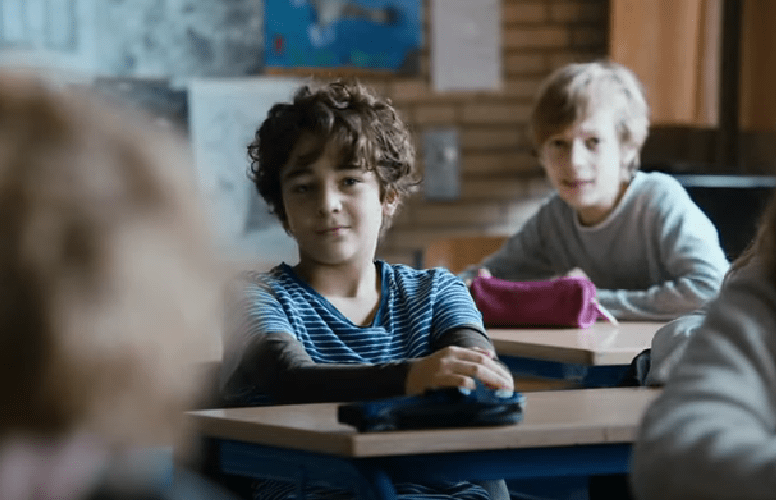
I wanted to love this film so much more than I ultimately did. The characters are very well fleshed out, Leonie Benesch and Leonard Stettnisch give fantastic performances in an ever-escalating battle of wits and wills, and this much smaller stakes story honestly gets the idea of the futility of combat across better than Germany’s Oscar-winning remake of All Quiet.
But if you’ve seen the film and/or read my review, you know what killed it for me. Before I say anything else, please remember that there is a general SPOILER ALERT in place for the entirety of the Blitz process, as every film nominated this year, save for Perfect Days, Io Capitano, and Animated Feature nominee Robot Dreams has been theatrically released in this country. Those first two will be out in the next couple of weeks. We’re still waiting on word for the third. As such, I’m operating under the assumption that you’ve either seen the work in question, or don’t mind knowing some crucial plot details as I go through this exercise. That said, if you don’t want to be spoiled on The Teachers’ Lounge, skip the next paragraph.
I hated the ending. Or rather, I should say that I hated the fact that there WAS NO ENDING! When young Oskar is carried out by police, handcuffed to his desk chair, the film just stops. The story hasn’t resolved at all, but the movie decides, “Okay, we’re done here.” NO WE’RE NOT! There’s so much left unanswered. Why did Oskar opt for arrest rather than capitulate? What’s going to become of him, given how bright he is? Why is the stalemate between him and Carla broken off screen? Who actually did steal the freaking money? There are so many fascinating and compelling story and character moments throughout this film, from Carla’s self-doubt to the compounding repudiations of the students, staff, and parents. It’s all begging for a conclusion, ANY conclusion, but the film just cops out and cuts to the credits. You can’t leave us hanging like that, refusing to answer any of the lingering questions you’ve asked and returned to at multiple points.
This almost entirely tanked the movie for me. I gave it a “B” grade when I reviewed it, but only because so much greatness was in the first 90 minutes that I couldn’t just dismiss it all because it fucked up the last 10. But man, did they blow it. This is the Falcons/Patriots Super Bowl of foreign films. The vast majority of it was thrilling, memorable, absolutely glorious… and then the director turned the moment of truth into Tom Brady. God what a missed opportunity!
The Zone of Interest – United Kingdom – Directed by Jonathan Glazer
Okay, let’s get to the presumptive winner now, shall we? If you read my review, you know I’m not a fan of this picture. It has an absolutely fantastic premise, but it’s wasted with a bunch of pretentious nonsense on the periphery that adds nothing to the proceedings. I love Jonathan Glazer’s work (Under the Skin is easily in my Top 5 all-time science fiction movies), but my lingering affection doesn’t cloud my judgment of this particular misfire.
The entire concept centers around the sight of a posh home with an upper middle class family living a life of ease, only with Auschwitz over the back fence because the patriarch is a Nazi commandant. That contrast is about as stark as it can get, and when you first realize what’s happening, it is legitimately shocking. The fact that this group of people can proceed as if everything is normal and happy when the literal worst human atrocity of modern history goes on within earshot is gob smacking, putting one of the greatest horrors ever into a terrifyingly quaint context.
I’m fully on board with that. There’s even a decent amount of escalation when it turns out that Sandra Hüller’s Hedwig is arguably the real monster of the group, casually threatening the gas chamber for any of her servants (Jewish or otherwise) who cross her when things don’t go her way. There’s something really compelling about the literal Nazi showing more grace and humanity as he oversees the murder of hundreds of thousands than his pampered hausfrau.
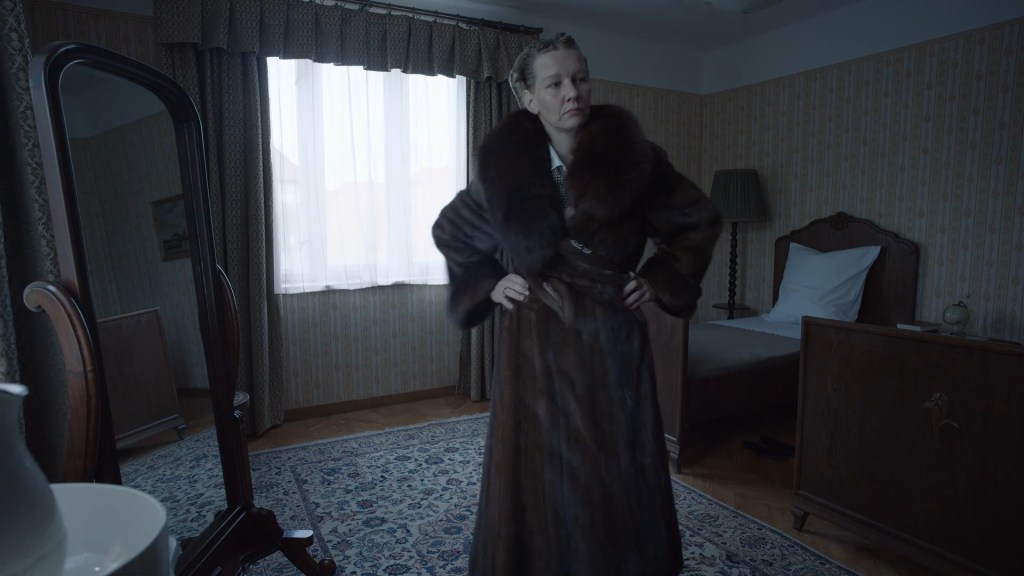
But once we’ve established all this, the story goes nowhere, mostly because there is no story. There are a couple of beats here and there about Rudolf Höss’ promotion and relocation, but that’s basically it. Everything else is just a series of vignettes, some related to the central idea (the sons of the household collecting discarded gold teeth or Hedwig trying on a prisoner’s fur coat), but most of which are just diversions meant to jangle your senses for no reason. I’m speaking of course about the night vision scenes of a nameless girl smuggling fruit to the laborers, accompanied by what sounds like the film itself vomiting on the audience, and the ending sequence where we just jump to the present day and watch people clean the Auschwitz museum. I understand that these scenes are open to interpretation, but they’re completely outside of whatever narrative Glazer was showing us, and they’re utterly without context, so when they happen, what little plot we have stops dead in its tracks. I mean, for fuck’s sake, when the film starts, we get the title screen, then over a minute of it fading out to black before we see even a single frame of the actual picture. That’s some Tár shit right there.
I’m not saying this is a bad movie, but it is needlessly overhyped, and to all but declare it the winner several months in advance is intellectual and artistic malpractice. This is a great idea that only goes so far, and can’t sustain itself because its creator refuses to tell a coherent story. In no way should it be given such laudatory treatment when it is, from a practical standpoint, incomplete.
***
Well, you know how I feel about the almost certain winner this year, but let’s make things official.
My Rankings:
1) Perfect Days
2) Society of the Snow
3) Io Capitano
4) The Teachers’ Lounge
5) The Zone of Interest
Who do you think should win? Vote now in the poll below!
Now, as mentioned, I see as many submissions as I can, whether they get nominated, make the shortlist, or are left out entirely. I was able to complete the shortlist this time around, so here’s how I’d rank the 15 semifinalists.
1) 20 Days in Mariupol – Ukraine
2) Perfect Days – Japan
3) The Monk and the Gun – Bhutan
4) Godland – Iceland
5) The Promised Land – Denmark
6) Four Daughters – Tunisia
7) The Mother of All Lies – Morocco
8) Amerikatsi – Armenia
9) Society of the Snow – Spain
10) Io Capitano – Italy
11) The Taste of Things – France
12) Fallen Leaves – Finland
13) The Teachers’ Lounge – Germany
14) Tótem – Mexico
15) The Zone of Interest – United Kingdom
From this, you can tell that I wholeheartedly disagreed with the Academy’s choice of the final five nominees, as only Perfect Days made my personal top five from this list of 15. But that’s not all. I successfully saw 38 of the 88 submissions, so here’s the entire ranking of my International Feature journey this past year.
1) 20 Days in Mariupol – Ukraine
2) The Peasants – Poland
3) Perfect Days – Japan
4) The Monk and the Gun – Bhutan
5) Godland – Iceland
6) The Promised Land – Denmark
7) Four Daughters – Tunisia
8) The Mother of All Lies – Morocco
9) The Shadow of the Sun – Venezuela
10) Amerikatsi – Armenia
11) Shayda – Australia
12) Concrete Utopia – South Korea
13) Society of the Snow – Spain
14) Io Capitano – Italy
15) The Taste of Things – France
16) The Settlers – Chile
17) Slow – Lithuania
18) Fallen Leaves – Finland
19) Voy! Voy! Voy! – Egypt
20) The Breaking Ice – Singapore
21) Bye Bye Tiberias – Palestine
22) Mami Wata – Nigeria
23) The Wandering Earth II – China
24) Inshallah a Boy – Jordan
25) 2018: Everyone is a Hero – India
26) The Teachers’ Lounge – Germany
27) Pictures of Ghosts – Brazil
28) Tótem – Mexico
29) Banel & Adama – Senegal
30) Smoke Sauna Sisterhood – Estonia
31) Thunder – Switzerland
32) Rojek – Canada
33) The Zone of Interest – United Kingdom
34) Goodbye Julia – Sudan
35) Marry My Dead Body – Taiwan
36) Tiger Stripes – Malaysia
37) The Delinquents – Argentina
38) About Dry Grasses – Turkey
Up next, it’s time to look MAH-VELOUS, DAH-LING! It’s Costume Design!
Join the conversation in the comments below! Which of the nominees have you seen? Which was your favorite? How many submitted films did you get a chance to actually watch? Let me know! And remember, you can follow me on Twitter (fuck “X”) and YouTube for even more content!

 I Actually Paid To See This
One thought on “Oscar Blitz 2024 – International Feature”