
By most measures, this year’s Oscar Blitz has been smoother than usual. I’ve kept ahead of schedule on the videos, I don’t find myself scrambling for things to write each night, and since I don’t have a gig at the moment, I’m not stressing myself out pulling double (or triple) duty. However, there was one element that has proven, shall we say, less than ideal, and that’s the compressed timeline. Not only did I only have five weeks to get everything done, but because so much of the prestige fare and campaigning was crammed into December, it created a massive backlog for reviews as I did my best to keep up.
That’s what has necessitated this mini-series about Netflix’s For Your Consideration portfolio, as well as the various other batch reviews for International submissions, Documentaries, and Animated Features. I only have so much time to cover everything, and unless I want to be doing three posts a day, this is the only method by which I can clear that backlog before Oscar Night, when I officially close the book on the previous year’s canon.
In my quest to be as organized as possible, I made a crucial error. I miscounted when I was putting together the “Jet-Setting” posts going over the International Feature shortlist. I kept fixating on nine as the amount left to review, and in my confusion surrounding Armand‘s release, I messed up and neglected one of the semifinalists, not realizing this fact until I covered the category on the Blitz earlier this week.
So, in the interest of thoroughness and to make up for my blunder, I will review it now. I still have three more Animated Feature submissions from Netflix to get to, and we’ll take care of that tonight as well, but I have to fix my mistake first. In all the years that I’ve done this blog, I’ve only ever failed to review a publicly-released film that I’ve seen once, and that was Irresistible back in 2020. That entire year was a clusterfuck because of the COVID pandemic, and I did review the film for my friends at No Rest for the Weekend, but I forgot to do it in this space, so I took a mulligan. But there’s no excuse here. Everything counts, regardless of quality, so let’s restore order right now, then we’ll get to the cartoons.
Touch – Iceland

Maybe there’s a chance that this film will eventually be considered appropriate for this post, because it is available on streaming right now (chiefly Amazon Prime), and after a brief theatrical run last spring, it was released on Peacock, as this is a Universal Pictures feature in every country but the U.S. (it’s under the Focus Features banner domestically). So maybe it’ll end up on Netflix in due course.
Anyway, on to the movie. If you saw my overall rankings of the International Feature category (I saw 26 of the 85 eligible films, including the entire shortlist of 15 semifinalists), you can guess that I really like this film, and I would have been perfectly fine with it getting nominated, though it just barely missed my personal top five. It’s a tender tale of romance and missed opportunities, a wistful exploration of culture and language bathed in the age-old practice of thinking about what might have been.
Egill Ólafsson plays Kristófer, a retired restaurateur and recent widower. He became a stepfather to Inga (Maria Ellingsen) when he married her mother, and while their relationship is loving, they keep each other at arm’s length, with Kristófer even forgetting to call on her birthday. Part of this is because his memory is beginning to fail him, and part of it is the fact that now that his wife is gone, his mind wanders to his first love, which ended in abrupt sadness. After seeing his doctor, it’s recommended that he take care of any unfinished business while he still has all his faculties, so on a complete whim, and with COVID lockdowns imminent, he flies to London to begin his search for the long lost Miko.
The film flashes back and forth between 2020 and the late 1960s. In the past, Kristófer (played in these segments by Palmi Kormakur) was a student of economics. Disillusioned with the idea of unfettered capitalism, he considers dropping out. When his friends call his bluff, he makes good and leaves school permanently, so that he can get the life experience of working for an honest wage, something his classmates endlessly mock due to their silver spoon upbringings. He takes a job at a Japanese restaurant as a dishwasher, where he meets Miko (Mitsuki Kimura, known professionally as Kōki), along with her father Takahashi (Masahiro Motoki), who owns the place.
Over the course of several months, Kristófer earns Takahashi’s trust and begins training as a chef, learning a passion for cooking that he never had in his studies. He also grows closer to Miko, eventually beginning a relationship with her in secret, as Takahashi has a habit of driving away Miko’s various suitors. One day, however, after Kristófer returns to London after the holidays, the restaurant has suddenly been closed, and Takahashi has taken Miko back to Japan. The only word left behind is a brief goodbye note and the back wages for the staff.
The journey for the elder Kristófer to find Miko is extremely heartwarming, especially against the backdrop of the pandemic. In a time where everyone had to separate and make sacrifices when it came to human contact, here is a man who must set that aside for what may be his last chance to learn the truth and get closure. It’s a lovely and painful irony, one that I recall vividly from my own experience, when I had to find a way to fly home a month into lockdown after my mother had her stroke. There’s so much fear and apprehension, and yet an understanding born from the yearning we all went through.
I only really had one major complaint, and that’s the fact that Kristófer and Inga’s relationship wasn’t properly explored. The thematic loss of family and the opportunity for fatherhood becomes a key point in the plot, but the way Kristófer simply casts Inga aside for this journey makes you wonder if he was ever truly committed to Inga or her mother. He married into this family, so you would assume he loved them, but none of his actions align with that presumption, evidenced by the fact that Inga herself never appears on camera, only a voice on the phone. It’s a bit of narrative clumsiness that doesn’t doom the film by any means, but it does drop it by a few points.
Still, I thoroughly enjoyed the overall story, and I love the idea behind it. We all have these watershed moments in our lives, where we either make a decision that permanently alters our path, or have one made for us. To be able to get an actual resolution to the alternative roads we couldn’t go down is a comfort I wish we all had. Some would forever second-guess themselves, but on the whole, I think it would offer peace of mind.
Grade: B+
***
Okay, on to the remaining animated films in the Netflix queue. One of these was included in the FYC campaign from the very beginning, one was added late, and the other one never made the page at all, because it’s not a Netflix property. As for that last one, it just felt weird not including it, as it was literally the only submission in the category on the streamer that I wouldn’t have otherwise covered, so even though its preview was literally “The Worst Trailer in the World” for last May, I decided to hold my nose and give it a chance.
The Garfield Movie
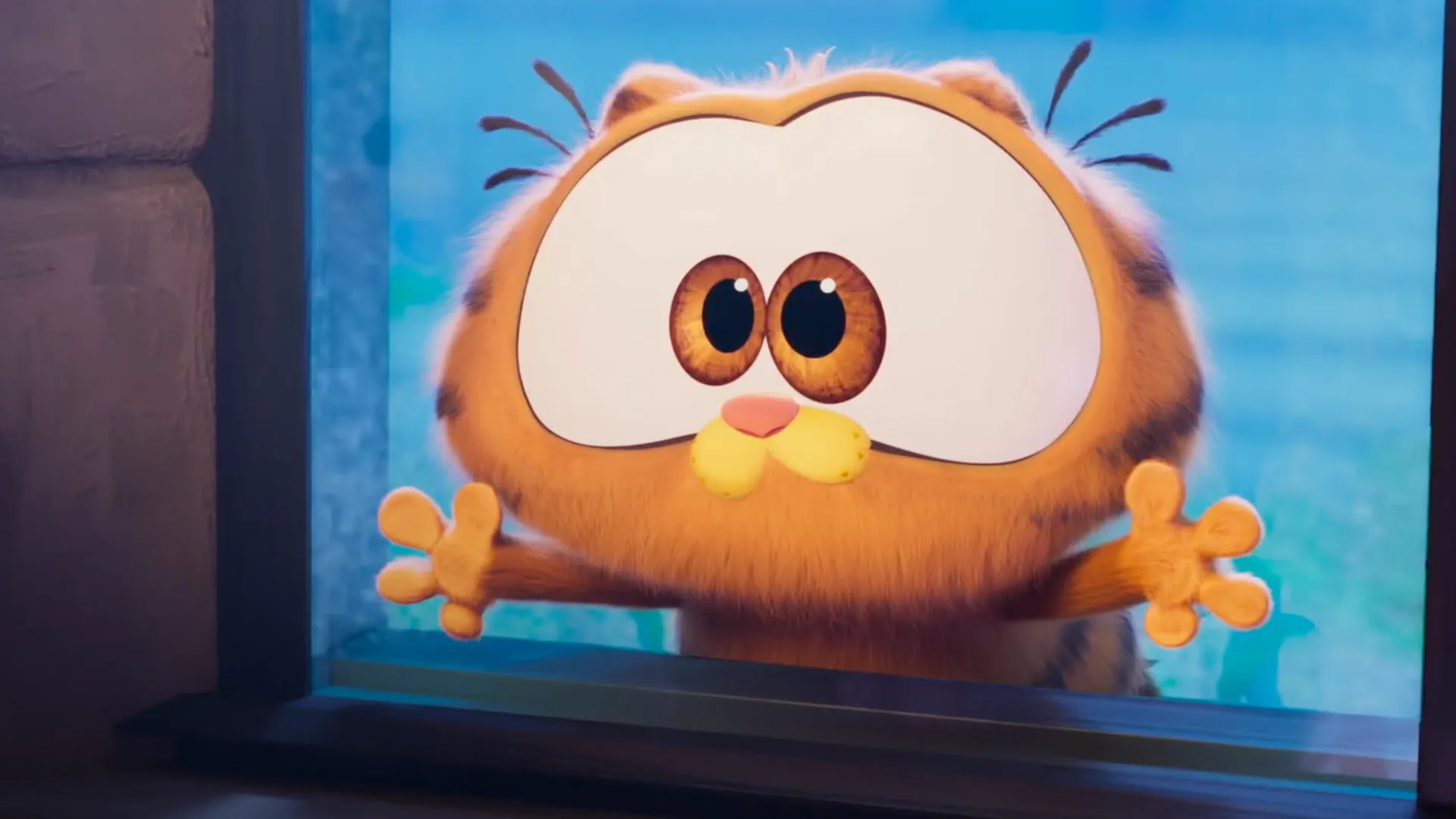
There was no way in Hell I was going to fork over my actual cash to see this in the theatre, but an hour and a half out of my life while sitting on my bed? Sure, why not. I can say I was surprised that this wasn’t the worst entry in the category for me, but that’s small praise. There are occasional hints at quality, but the problem is that the only real resemblance this movie has to its star is in how lazy it is.
I will give a modicum of credit that the flick at least lets you know very early how bad it’ll be. After kitten Garfield (Chris Pratt, completely miscast) is abandoned by his father Vic (Samuel L. Jackson, only improving on his performance from Paws of Fury by not making a painful PG-rated reference to “motherfucker”) and adopted by Jon Arbuckle (Nicholas Hoult doing the exact opposite of his literary role as J.R.R. Tolkien), we jump forward to Garfield as we all know him, ordering a ton of food on a delivery app. Not only does said app not disclose how Garfield is meant to pay for all this food, when it actually arrives, it’s not even remotely what he ordered. You are fully informed within five minutes that nothing matters in this flick apart from sight gags, the vast majority of which do not land.
Garfield’s happy, slothful life is thrown into disarray when he and Odie (Harvey Guillén playing a different Perrito, this one nonverbal and only communicating in whimpers and grunts) are kidnapped by the dastardly Jinx (Hannah Waddingham), a British Persian cat who somehow came to America to compete on a TV talent show (your guess is as good as mine), and after she failed she fell in with Vic as a small time crook. After a botched heist, Jinx was captured and “imprisoned” in a shelter. She escaped and abducted Garfield to lure Vic out of hiding. She makes a deal that she’ll let them all go if he completes the heist of several thousand gallons of milk.
So yeah, we have nothing but idiotic misunderstandings guiding this entire plot. The first is the obvious double-cross that we all know is coming, but that our trio of, I’ll say “heroes” fails to recognize, even when they’re told right to their face by Ving Rhames as a bull at the dairy who helps them out in order to free his wife (I have no idea). The second is perpetuating the trope of cats loving milk, even though the vast majority of adult cats are lactose intolerant. Seriously, pulling off this job would literally mean a sea of feline diarrhea for all involved. The third is that the filmmakers and studio suits seriously thought kids would care about abandonment issues for a comic strip cat.
Fourth, and most egregiously, this is a heist film… starring Garfield. Garfield, the fat, sedentary cat who loves lasagna and hates Mondays. Garfield, the sarcastic feline who would rather watch TV and sleep all day than even acknowledge his owner. This guy is going to pull of a heist, and he’s somehow going to do it with his even more obese father, both of them pulling off acrobatics that neither would even be remotely capable of, and somehow Odie’s going to be smarter than the lot of them.
This is just a fundamental misreading of the character. Garfield is funny because he represents the lazy bum in all of us, with a safe but sardonic sense of humor that pokes fun at life’s foibles. There is no universe where he would ever be caught up in this stuff. Even if he was kidnapped, he’d just remove the “kid” part and nap throughout the proceedings while someone else steals massive amounts of dairy products. It’s like Sony had a generic animated heist script on their desk and thought, What characters do we have a license for that we could stick into this? Oh Garfield? GENIUS! Sadly, that’s par for the course when it comes to non-Spider-Verse Sony Animation these days.
There are exactly two jokes that worked for me here. The first is that Jinx sends three animal henchmen to do the kidnapping. That trio quickly becomes a duo as Jinx just straight up eats one of them, a dark gag that’s completely out of place for this universe and character set, but I admit it made me laugh. The second is that Jinx got a villain song. It only plays over the credits because it was cut from the final film after the animatic was made. It’s by far the best thing in this disaster, so of course it doesn’t count in the actual story.
Grade: C-
Thelma the Unicorn

This was another one that made it into a TFINYW column, the same one as Garfield in fact. It wasn’t initially part of Netflix’s campaign, but right before Oscar nominations came out, it suddenly popped up on the page, a very late addition to the marketing. Was there something in this movie, or the public’s reaction to it, that indicated a potential dark horse chance? My guess is no, but I will admit that this had more substance than I had initially thought, to the point that I’m more mad that it didn’t fully realize its premise than I would have been if it just generically sucked.
In a world where talking animals coexist with humans (but still do largely unpaid manual labor – I wonder what George Orwell would have to say), we meet Thelma (voiced by Brittany Howard), a miniature pony who dreams of becoming a rock star, forming a band with her barnyard cohorts, two donkeys named Otis (Will Forte cashing a check) and Reggie (Jon Heder, grateful for a check). At this point, I’m already dreading the next 90 minutes of my life, because while I can buy a fantasy world with talking animals, I cannot accept one where hooved beasts of burden can play guitar. Nope, nuh-uh.
Anyway, the group gets an audition for some sort of music festival called “Sparklepalooza” (Perry Farrell should sue), but before they can even perform, the American Idol parody judges (including a duck) stop them because they don’t “look like” stars, and thus will never make it. I’m calling bullshit on two fronts. One, don’t book them for an audition if you’re not going to let them actually audition. At that point you’re just being a dick for no reason. Two, do none of these people see Thelma’s design? She’s adorable. And in what universe do people not love ponies?
In a moment of depression, and through a set of Rube Goldberg-esque coincidences, Thelma picks up a carrot in the yard later on, glues it to her forehead with what I hope is mud (she carts manure as her “job”), and a passing truck hits a pothole, spilling its contents of glitter and pink paint over the side, turning this little pony into a My Little Pony knockoff. In another passing car, a young girl named Suzie (Noelle Holsinger) notices and begs her moms to pull over so she can get a closer look. After several selfies, Suzie asks Thelma if she’s a real unicorn, and she says yes. Within moments, a massive crowd has gathered, and Thelma demonstrates her magic power by singing a song she wrote herself called “The Fire Inside,” which is admittedly 68,723% better than the garbage track of the same name that got Diane Warren another fraudulent Oscar nomination last year.
Before you can blink, Thelma is the biggest rising star in the world, attracting the attention of an exploitative greedy manager (Jemaine Clement), a blind producer who literally can’t care what Thelma looks like (Maliaka Mitchell), and the current “It Animal” pop star, a narwhal with an imitation Britney Spears voice (Ally Dixon/Baraka May), along with her devious assistant who’d do anything to keep the whale on top (Edi Patterson). Soon everyone’s trying to get a piece of Thelma and her rapidly growing fame, and Thelma herself is too swept up in the moment – and too focused on finally being recognized – to see the manipulations at play.
Now, here’s the thing. If you set aside the clichés and catalog tracks, the filmmakers actually have something here. In more capable hands, this would be an excellent satire of the current music industry. Thelma becomes an overnight sensation purely through social media attention. Her band is rejected based solely on physical appearance. The sleazy manager, Vic Diamond, has an entire studio dedicated to churning out pop hits, where the only “instruments” are Auto-Tune and a computer that spits out AI-generated generic lyrics. He also has Thelma “date” a horse named Danny Stallion (a versatile vocal performance from Fred Armisen) who only got famous through a dude-bro viral video, forcing him to play up this Kevin Federline-esque persona because the algorithm says that’s the only way he’ll keep his profile in the public consciousness.
There’s a lot of potential in this, even for a target audience that’s too young to understand the finer points of farce, but it never coalesces into something solid, instead falling back on tired “Liar Revealed” plot points and third act friendship conflicts. Vic himself admits that he’s a victim of this system, having changed his entire identity as a teenager in order to be seen (there’s also a great visual gag involving his horrendous teeth that made me legitimately bust out laughing). Does he get a nuanced resolution? Of course not. He’s the villain, so he gets basic comeuppance.
Sadly, even if this had come together, it would still feel kind of hollow. I mean, it’s really hard to send a message that substance should always matter over appearance when your parent company’s standard procedure is to generate as much content as possible that can be half-ignored while you watch something else on your phone. It reminds me of one of the saddest moments I’ve experienced working in this business. I’m not sure if I mentioned it before, so sorry if this isn’t new information. About eight years ago I worked on a game show, and while we were shooting I went to the stage and watched from the back. The audience warm-up guy chatted with some folks in the crowd, had them do stunts for gift cards, pretty standard stuff. When he saw a man in a fancy suit, he had him stand up for a quick interview, as he was the nicest-dressed person there. When asked what he did for a living, he said that he was a record company executive. Intrigued, the warm-up guy followed up by asking what an aspiring artist could do to get signed to a label, gesturing to some others who he had sing for those aforementioned gift cards. The exec responded, “How many followers do you have on Twitter and Instagram? I don’t care about nothing else, whether you can sing or not, whether you can play instruments, whether you have talent. If you look good and have lots of followers, that means I can advertise to them directly, and we’ll work everything else out afterwards. If you don’t have at least 100,000 followers, don’t even bother.”
This situation hasn’t improved, as Maya Hawke noted recently that directors are literally handed “follower count” sheets from studios and producers, requiring them to cast their movies with actors who collectively reach a benchmark of social subscribers. Deleting your TikTok could literally cost you a job, regardless of your ability. That is fucked up, and nothing in this movie, nor Netflix’s corporate attitudes, suggests that they really care about changing it for the better. It’s 100% talking out of both sides of your mouth to suggest that great talent will always win out when your entire business model (especially for awards) depends on algorithms and disingenuous marketing.
Grade: C
Ultraman: Rising

I confess I know very little about the Ultraman franchise, other than it being a Japanese property about a superhero who fights kaiju. Apparently this is the 44th movie in the series (which also spans TV and manga), and is perhaps the first joint production of Japan with the U.S. (though I may be wrong on that point). Directed by first-timers Shannon Tindle and John Aoshima and chiefly animated by Industrial Light & Magic, the film is a terrific entry point for those who wish to explore the character and his vast mythos.
The movie doesn’t waste time in explaining Ultraman’s powers or history, simply starting off in the early 2000s with the current Ultraman, Hayao Sato (Gedde Watanabe) balancing his heroics with his domestic family life with wife Emiko (Tamlyn Tomita) and baseball-loving son Kenji (Christopher Sean). When he’s called into action by the arrival of a giant monster in Tokyo, he promises that he’ll return in one piece before growing to massive size himself and engaging in battle.
We flash forward to the present, implying that Hayao did not make it back, because that’s how the dead-parent-in-a-kids-movie trope works, but instead we learn that injuries and old age have forced Hayao to retire, passing the mantle of Ultraman to the now-adult Kenji, who goes by Ken, while Emiko is the one who is missing and presumed dead. Emiko and Ken moved to America shortly after the opening events of the movie, and Ken grew up to be a famous ballplayer, breaking several records as a member of the Los Angeles Dodgers (the film’s rendering of Dodger Stadium, including the banner ads for local casinos, is uncanny). But with his father calling him home to take over the struggle against the kaiju, Ken has signed with a Japanese team, confusing his fans (it also doesn’t help that it’s the Giants, which serves as both a pun and a reference to the Dodgers’ biggest MLB rivalry).
Ken is reckless as Ultraman, and gets in the way of civilians as well as the Kaiju Defense Force (or KDF), led by a scientist named Onda (Keone Young, who I weirdly best remember as the Baba Ram from Surf Ninjas of all things) who carries an Ahab-like lust for vengeance after losing his own wife and child in a previous attack. Ultraman has always been about keeping the kaiju at bay and studying them, but Onda wants to straight up kill all of them. He seems to succeed in taking out a dragon called Gigantron, which was trying to protect its egg. Ultraman seizes the egg right before it hatches, and the infant imprints on him. Now he must raise “Emi,” as she’s eventually dubbed, with the help of his father and robotic assistant Mina (also Tamlyn Tomita, as she was intentionally designed to have Emiko’s voice), all while trying to get his career back on track, as he’s constantly hounded by probing questions from journalist Ami Wakita (Julia Harriman).
I’m guessing the most hardcore fans of this franchise probably weren’t enthused by having this Western adaptation basically be the equivalent of Adventures in Babysitting, and given what we did to Godzilla back in 1998, I’d be just as skeptical. But as it stands, this is a ton of fun. There’s proper balance between the action and the hijinks, the fight sequences are absolutely fucking gorgeous, and honestly, the design on Emi is goddamn adorable. This could have easily gotten bogged down by clichés, but for the most part, it keeps things believable within context, and as demonstrated with the preamble, the film is able to subvert some of the more trite genre conventions.
I also just kind of love how we simply dive right into things and trust the audience to work out the details on their own. The only “power” that’s really explained is a beeping color alarm on Ultraman’s chest that indicates his emotional state is too strong, which will force him to revert back to his normal human form. It’s there to set stakes and to show progression for Ken in the role without being too overt. It’s the lack of its presence that shows how far he’s come, and that’s an incredible touch. Rather than constantly call back to it, you just notice it less and less, and that connects the dots for you so you can keep focused on all the other awesome shit he does.
Now, I could nitpick this to death, especially all the stuff they get wrong about baseball, but it’s clear that accuracy is not the point. The point is pure adventure and fun, and the movie has that in spades. It’s also far more competent than similar fare, as it actually has the confidence to show the kaiju with proper lighting so we can see what’s going on, with the animation being so good (a really innovative mix of anime and 3D CGI) that the monsters look way more believable than anything in the Warner Bros. Monsterverse. It’s far from perfect, but like I said, for someone who had no real exposure to this series until now, I was surprised at how well I was able to follow along, and how easy it was to get engaged with the serious stakes while still getting solid laughs out of the goofy antics. If this is an indicator of what the Ultraman franchise is all about, I’ll be happy to seek out more. And if it’s not, then this was still a nice distraction.
Grade: B+
Join the conversation in the comments below! Did you see these films? Which was your favorite? How does one belch lasers, and can this skill be taught for parties? Let me know! And remember, you can follow me on Twitter (fuck “X”) as well as Bluesky, and subscribe to my YouTube channel for even more content, and check out the entire BTRP Media Network at btrpmedia.com!

 I Actually Paid To See This