
At the beginning of the year, I set a goal for myself to go full completist on potential contenders for next year’s Animated Feature Oscar race. I’ve tried several times to finish the whole list, but I’ve invariably missed some titles that had limited runs or which weren’t even screened in Los Angeles at all, meaning I’ve always come up just short. This time around, I vowed to be as aggressive as possible, to the point that if I see a listing in a theatre, I go, even if it’s something I would normally avoid like the plague (coughSNEAKScough). As my resources quickly dwindle and my unemployment reaches a point where I have to wonder if the universe has it in for me, this quest has been one of the few things that’s kept me going. As far as I know, I haven’t missed anything, other than movie spinoffs of a few anime TV series, which aren’t often submitted to the Academy anyway.
That’s what this rare edition of “DownStream” is all about. While Elio was the marquee animation debut for the month of June, and rightfully so, it was not the only one. Three more films ticked off their eligibility requirement by coming out in public theatres despite being made specifically for online viewing. One would assume that all three will be put forward at the end of the year, but will any of them get serious consideration? Do they surpass Pixar’s latest effort despite its permanent place as the front-runner in the category? They all have positive scores on Rotten Tomatoes, though only one has enough reviews to earn “Certified Fresh” status. So let’s dive in and see if these are truly worth your time, since they’re all readily available at your fingertips.
Lost in Starlight – Netflix
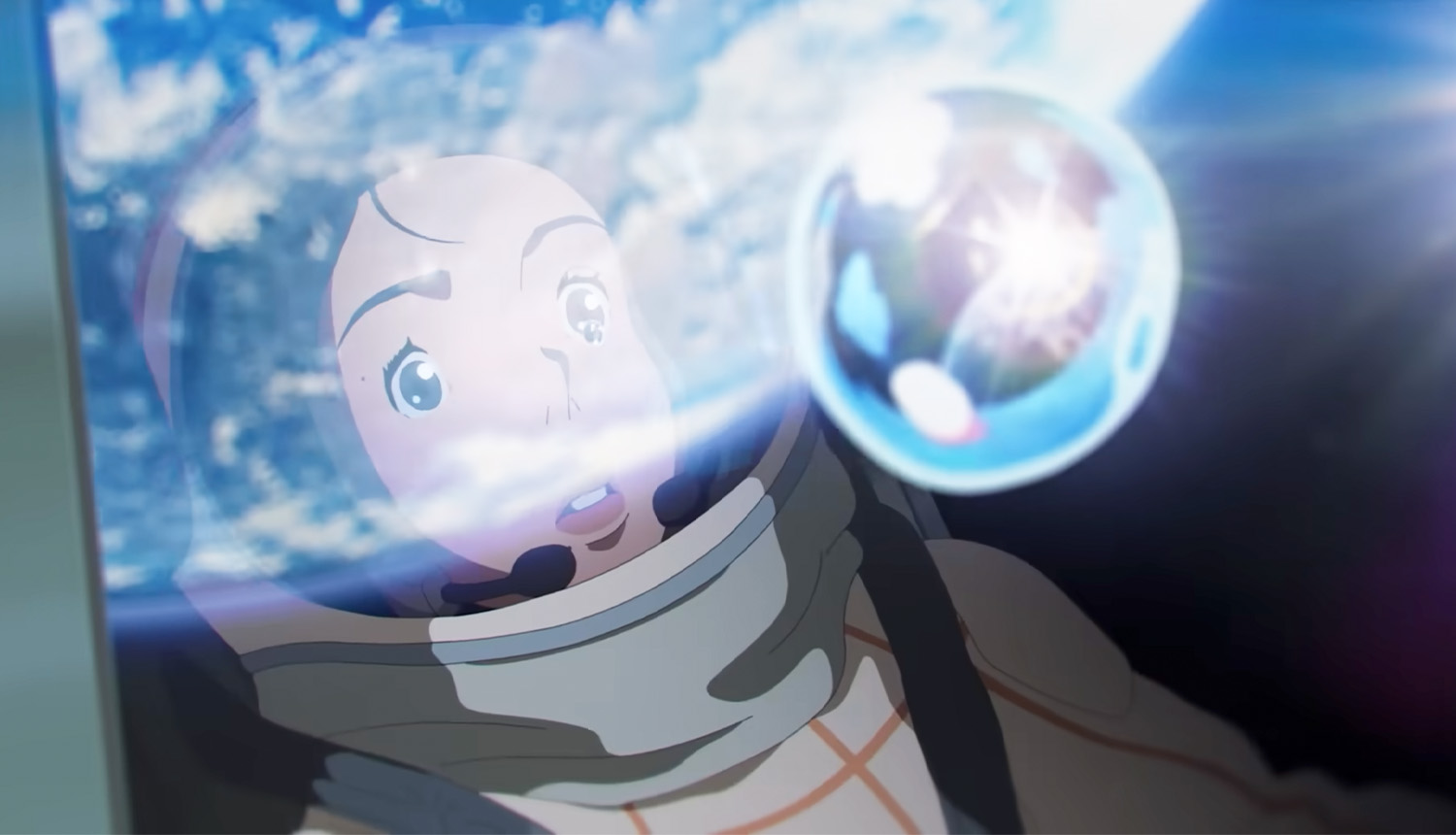
Okay, technically this came out on May 30, both in theatres and on Netflix, but I didn’t get a chance to see it until June 6 when it debuted in L.A. As far as I’m concerned, that’s enough to count for this column’s purposes. Anyway, Lost in Starlight, directed by Han Ji-won (not to be confused with Han Jin-won, who wrote Parasite), is a South Korean, futuristic science fiction romance about an unlikely couple united by their endless curiosity, though one half is constantly stargazing while the other is decidedly earthbound.
Nan-young (Kim Tae-ri in Korean, Maitreyi Ramakrishnan in the English dub) is a bright young astronaut preparing for a mission to Mars to begin rudimentary terraforming efforts by introducing plant life to the red planet. She is driven by the trauma of the loss of her mother, who died on a previous expedition when a freak storm wiped out the entire Martian base of operations. A mix of modern genius and nostalgic nerd, Nan-young keeps an old record player that belonged to her mom. When she accidentally breaks it, she tries just about every music shop in Seoul, unable to find anyone who can repair the old tech.
She eventually runs into Jay (Kyung Hong in Korean, Justin H. Min from After Yang and Beef in English), a musician and techie who works in a rundown shop. In a series of endearing meet-cutes and flirtations, the two become a couple, aided by the astronomical unlikelihood that Nan-young’s favorite song is an unreleased demo that just happens to have been written and performed by Jay himself. Their relationship is cutesy in all the best ways, with each one supporting the other in their ambitions, before the inevitable third act conflict when Nan-young is given the green light to actually go into space, terrifying Jay that she’ll suffer the same fate as her mom. There’s also a subplot about Jay being on the outs with former bandmates and not having the courage to sing until a climactic moment that doesn’t really have much bearing on anything.
The story is beyond schmaltzy, and you can pick it apart with ease. Thankfully, though, Han keeps the animation vibrant throughout, if not downright stunning. The use of shadow and lighting is superb, and the integration of 3D CGI interstellar effects blends in absolutely dazzling ways. It also helps that despite the anime aesthetic, Nan-young and Jay look like real people – at least, as much as they can be in a cartoon – and they feel like real people with actual goals and problems. Han makes sure that the visual profile is the only thing that looks truly over-the-top, and only in the most eye-popping manner. Yeah, the actual love story is cheesy and clichéd, but the ride is worth it. It’s not as memorable of a space adventure as Elio, but it doesn’t need to be.
Grade: B
Predator: Killer of Killers – Hulu/Disney+
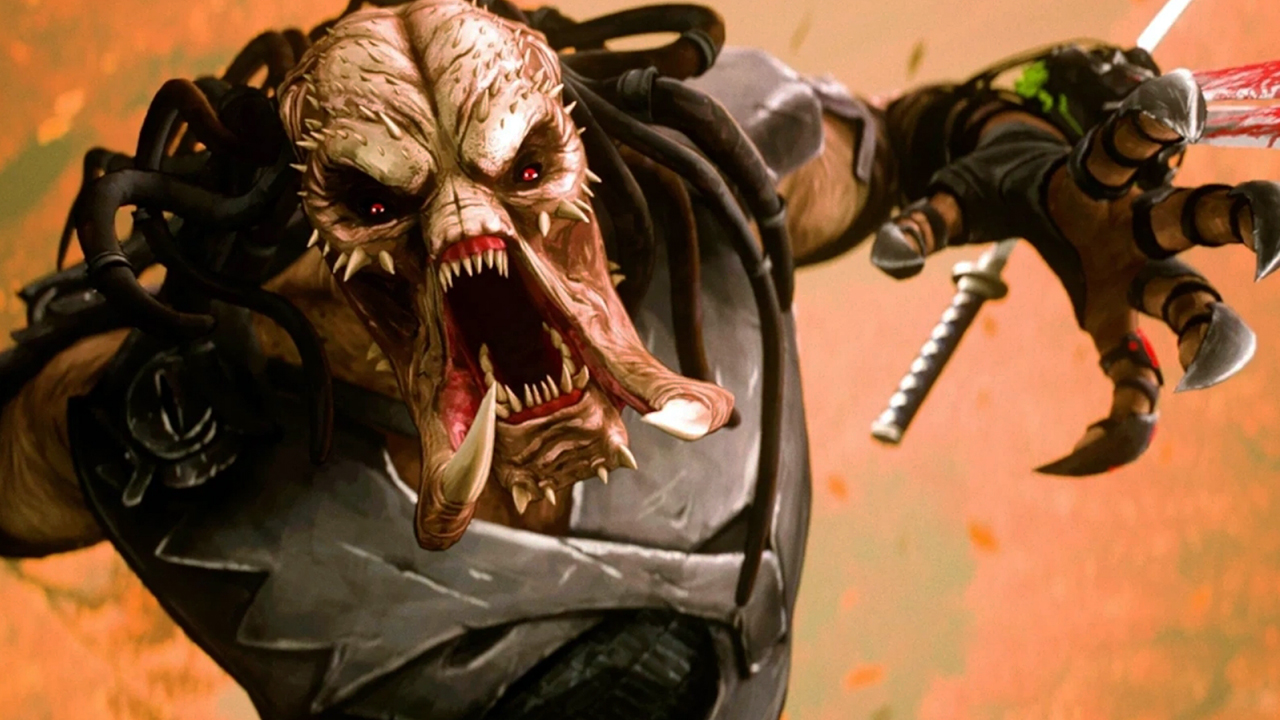
This film has come on like gangbusters, earning a 95% rating on RT, sustained through 95 ratings to date. Director Dan Trachtenberg, who helmed the surprise hit Prey, delivers his second entry in the Predator series ahead of the theatrical release of Badlands this November, and he’s definitely got another winner on his hands here. It’s certainly worth a look, especially if you’re into animated gore, but for me, Killer of Killers falls just a bit short. It’s not bad by any means, just not as stellar as its aggregate score would suggest.
This is an anthology film told in four parts, with the first three telling an individual story before the protagonists within combine for part four. The first is The Shield, starring Ursa (Lindsay LaVanchy as an adult, Cherami Leigh as a youth), a Viking warrior in the year 841. She’s on a quest for vengeance after another tribal leader forced her to kill her own father as a child. Now a mother herself, she hopes to train her son Anders (Damian Haas) to be just as ruthless, lethal, and merciless in aiding her revenge. The second is The Sword, featuring a largely silent lead in the form of Kenji (Louis Ozawa), seeking retribution on his brother Kiyoshi, who tried to kill him to appease their cruel samurai father in a quest for feudal succession in 1609. Finally, there’s The Bullet, a World War II vignette where a pilot named John Torres (Rick Gonzalez) is drafted into the Navy, but is considered inferior to his comrades, only to be their one hope of salvation in a dogfight in North Africa.
If these read like plot outlines for episodes of a TV show, that’s because they really do play out like that. With the addition of The Battle, where the three humans from vastly different time periods are transported in stasis to a Predator home world for a gladiatorial faceoff amongst themselves and eventually an alien warlord, this has all the earmarks of something that was intended to be a series rather than a feature film (although it apparently was only developed as a movie). Much like Moana 2 was retooled from its original form as a Disney+ half-hour program, this feels like it was meant to be a 10-episode run that was truncated to four, with each of the first three 25-minute segments leading into the next and the fourth teasing a sequel via cliffhanger. That doesn’t make it bad, just oddly out of place.
It also doesn’t help that the first three chapters all basically unfold in the same fashion. A Predator comes to Earth to hunt, yet it remains in hiding until the end, observing as our various heroes dole out the harshness, only revealing itself once the actual battle is over, as if it had a bye into a tournament final. Then it breaks out all its advanced technology, only to eventually be bested and killed, and the victorious human abducted to fight for the aliens’ later amusement (only Torres’ kidnapping is shown). In essence, the movie creates its own formula only to recycle it twice over in the span of just over an hour.
It would come off as completely stale and lame were it not for the visuals. The animation style is highly comparable to the Arcane series, and I’m sure that’s not by accident, given how popular the show is. Still, Trachtenberg and co-director Joshua Wassung go for the gusto on the action sequences, particularly when it comes to Ursa, who uses carved out wooden shields to both defend herself and decapitate all the fools. She kicks all the ass. Honestly, I would have liked it more if this was just a feature on her. Kenji and Torres are fine, and the film does give us just enough character development to give a damn about all three, but Ursa really should have been the solo star. If nothing else, it would have removed the cognitive dissonance of having her speak English in her segment and then old Norse at the end to create a language barrier between the three leads, whereas Kenji always speaks Japanese and Torres always speaks English (with a few side comments in Spanish). It makes even less sense when the Predators give them collars so that they can understand the big boss but not each other.
On the whole, this is some stylish fun that does not skimp on the blood spatter. It definitely comes off like a repurposed TV series rather than a movie, but it is still pretty good where it matters. I included the trailer in the June edition of “TFINYW,” and noted that the lack of pulled punches gave me hope that it wouldn’t be utter shit. That hope definitely paid off.
Grade: B-
KPop Demon Hunters – Netflix
Unfortunately, my inclusion of this entry in the monthly trailer mocking column was wholly justified. You might think this is spectacular if you look at RT, where it has a 96% rating, but that’s only based on 24 reviews, and almost all of them boil down to the same idea: Nice animation, great for fans of K-pop. But here’s the thing. I’m NOT a fan of K-pop. I don’t hate it per se, but it just never interested me. I’ve heard some of the bigger hit tracks, and they do nothing for me. As such, using it as the entire focus of this flick is basically calculated corporate torture for me. It’s not that this couldn’t have a mass appeal, it’s just that it doesn’t. If you’re not all-in on the music, this entire picture is excruciating, and that’s before we get to the obviously derivative elements and the ham-fisted branding hypocrisy.
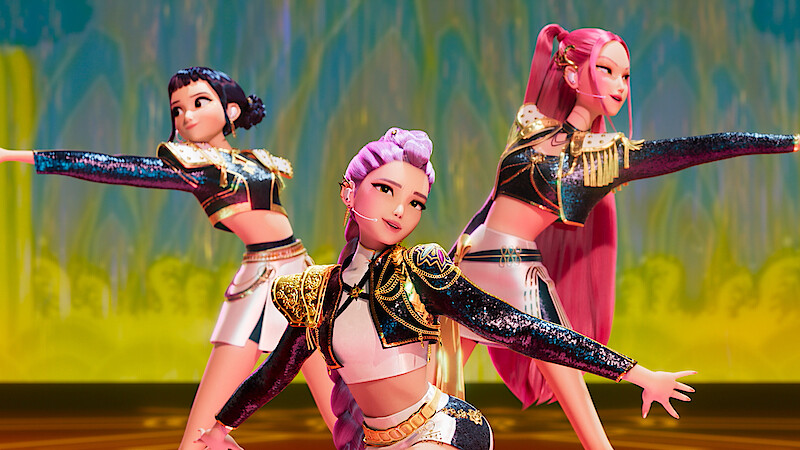
Produced by Sony, the synergy is apparent from the very first frame, as the entire film is animated like it’s a spinoff of the Spider-Verse franchise. This is where I instantly scoff at nearly every review of this picture, because critics go out of their way to call this an “original” art style. If you can’t see the literal writing on the wall here, you have no business doing this as your actual job. It’s a ripoff fully endorsed and encouraged by the parent company so that the viewer will subconsciously connect it to something that’s actually good and creative. It’s just the first of many cringe-inducing moments and elements where the film purports to poke fun at the shallow nature of the entertainment industry while actively engaging in it. Also added to the list are hyperactive squees from teenagers, basing every career move on social media trends, fake-out delayed reactions for comedic effect, insipid songs, unrealistic body image standards, and just a complete misunderstanding of the very mythology the story is cribbing from.
The movie’s stars are three young ladies who form the girl group HUNTR/X (pronounced like “hunt tricks,” though it’s still nonsense), who also double as hunters who slay demons that try to steal the souls of humans. There’s the lead singer Rumi (Arden Cho), dance and design specialist Mira (May Hong), and rapper Zoey (Ji-young Yoo). None of their personality traits really matter though, as both in music and battle, their skillsets interchange (in the first major number Mira raps more than Zoey, for instance), and for the purposes of story, the dynamic is quickly reset to “Rumi and the other two.” They vacillate between fighting cartoonish monsters while chugging energy drinks and slurping ramen like they’re about to die of starvation, just in case you weren’t sure which products the studio wants to sell your kids. After a successful showdown where they dive from their bifurcated private jet onto the stage to start their concert (which their manager Bobby, voiced by Ken Jeong, calls a “finale,” meaning the people who bought tickets got hosed), the trio opts to take a short hiatus, which Rumi immediately kiboshes by getting them to record and release another single overnight. This latest opus, called “Golden,” is supposed to clinch their fifth straight victory at the “Idol Awards” in a few weeks, and somehow solidify a “honmoon,” a barrier between the human and spirit world, keeping the forces of the demon king Gwi-Ma (Lee Byung-hun, the Front Man from Squid Game) permanently at bay, at least until the next generation of pop stars can be bred for the same purpose.
All I can say is… wha?
Co-director and writer Maggie Kang set out to tell a story that incorporated both her love of Korean pop culture and the traditional cultures of her homeland. To an extent she succeeds, but even this setup is convoluted as fuck, and built only for those with the shortest of attention spans. This is meant to be watched in the background while you’re playing on your phone, because if you try to keep up and stay focused on this for more than a minute, it just collapses under its own weight, especially since it dismisses the idea in Asian mythologies that demons aren’t inherently evil and substitutes it with a more Western, Abrahamic interpretation.
This is what ultimately makes Rumi’s arc so confusing (which I guess is an improvement on Mira and Zoey, who have no arc whatsoever). It’s revealed that she’s actually half-demon, and she’s spent her entire life hiding the markings on her body that would give her away. Rather than explore the admittedly well-worn idea that we are our choices and not our blood, the whole thing just devolves into another tired “liar revealed” story, because of course at some point Mira and Zoey are going to find out and think she’s a traitor for the sake of an ever-so-brief third act breakup.
This is facilitated by Gwi-Ma’s latest scheme, hatched by an underling demon named Jinu (Ahn Hyo-seop), to create a boy band to compete directly with HUNTR/X, called the Saja Boys (“saja” meaning “lion” in Korean; the group uses a lion as its logo). So we’re literally taking the worst part of Turning Red and making it the central conflict? Kill me. They burst onto the scene with the completely asinine hit, “Soda Pop,” and instantly the fickle K-pop fans are flocking to them in droves, eager to have their souls sucked out. However, Jinu has a tragic past which is why he’s a demon in the first place, and he and Rumi form a meaningless bond over it, creating the false tension that maybe things aren’t as binary as they seem when it comes to good and evil.
This could have worked if there was any attempt at nuance in the animation style or storytelling, but it’s all just noise – loud, obnoxious noise that you can’t escape. We never entertain the possibility that demons are anything but categorically bad. We never explore how Rumi’s parents might have gotten together, because it might have implied that demons are capable of love. For a film that supposedly takes jabs at the superficialities of modern pop, the worst practices are still firmly in place, particularly the fact that the girls are all plastic Asian Barbie dolls. Hard to say that it’s what’s on the inside that counts when your heroines are all impossible models. The closest thing we get to any commentary is Mira getting increasingly annoyed with herself when she gets hypnotized by the Saja Boys’ abs, and even then I can’t fully enjoy it because Hong’s sarcastic quips are just a pale imitation of Lake Bell’s version of Poison Ivy from the Harley Quinn show.
The worst offense of all is the so-called music itself. As a means to fight off the Saja Boys, the girls write a song called “Takedown,” which has the oh so poetic lyrics of “It’s a takedown, I’ma take you out, you break down like ‘What,'” “A demon with no feelings, don’t deserve to live, it’s so obvious,” and “I see your real face and it’s ugly as sin.” Rumi, dealing with her identity issues, wants to rewrite or even abandon the song entirely, because she finds it hateful and wrong. So naturally it’s played FOUR FUCKING TIMES THROUGHOUT THE MOVIE! They even include it during the credits, where it’s “covered” by the actual K-pop group Twice (it sounds exactly the same as it does in the main body of the film), and hilariously, the sequence includes live action footage of them recording the track, with each singer practically making out with the microphone they’re so close to it, the lyrics are written down on paper with no musical notation, and the shot constantly cuts to two faceless producers (literally we only see the backs of their heads) sitting at a computer mixing it all. Literally we’re shown why we shouldn’t care about this mass-produced garbage in the first place. It’s not enough that the alleged “song that will seal demons” is auto-tuned, we’re literally shown just how artificial this whole process is.
If you’re a fan of this stuff, I won’t judge. We all like things that others find stupid. Just admit what it is and don’t pretend it’s something profound. Have the self-awareness to lean into the cheese factor rather than insisting that it’s somehow something entirely different. This film tries to assert that awareness, but really it’s just a cynical attempt to cash in on something popular in the moment. In 10 or 20 years, I highly doubt that K-pop will have the same zeitgeist impact it has now, which leaves KPop Demon Hunters dated before it even gets started. Once the novelty finally wears off, whenever that happens, we’re just left with a lazy clone of much better animated fare, and no amount of glossy makeup is going to cover up those unsightly demon lines.
Grade: D
Join the conversation in the comments below! Have you seen any of these films? Which is your favorite? Do you think any of them have a shot at an Oscar nomination? Let me know! And remember, you can follow me on Twitter (fuck “X”) as well as Bluesky, subscribe to my YouTube channel for even more content, and check out the entire BTRP Media Network at btrpmedia.com!

 I Actually Paid To See This
7 thoughts on “DownStream – June Toons”