
I do my best each year to see as many movies as possible, with a particular igniting of the proverbial afterburners as we get closer to Oscar season. I know I’ll never have full feature completion by the time nominations come out and the Blitz begins, but most of the time I come within a reasonable striking distance, typically no more than five films or so, usually spread across one or two categories.
This year, however, hoo boy there was a lot to take in. When nominations were announced, there were a whopping NINE movies still to see, plus the Shorts when they come out next week. Those nine hopefuls were placed in five different categories, one for Documentary Feature, and two each for Best Actress, Makeup & Hairstyling, Original Song, and Visual Effects. As such, a herculean task was set before me to clear as many as possible before I started doing Blitz category breakdowns. It’s not that I can’t wait, but I know how crowded my schedule gets once we get into the full coverage, and I like sleep, dammit!
Thankfully, eight of the nine were available immediately through various streaming platforms and VOD rentals. The ninth, being the Documentary Feature nominee, had only gotten a one-week run locally, the week before the shortlists were announced, so anyone without clairvoyance didn’t get a chance to see it before it “mattered.” Being a fully independent film with no domestic distribution, there was no guarantee I’d ever get to see it. When I made my coverage schedule, I intentionally put that category right at the end, just before Best Picture, and hoped for the best. Luckily, the filmmakers agreed to two one-off screenings at local theatres, with a Q&A afterward, and I was able to check it off last week.
So now, all of the feature films nominated for an Oscar have been viewed, as well as 11 out of the 15 films on the Documentary Feature shortlist. As we’re now inside the Blitz, I have 16 movies still on my review backlog. I have six remaining for Documentary Feature (including the outlier nominee), the other eight nominated films, and two more that were left out of the running. That makes for some clean and simple batch reviews, starting with this one. We’ll cover four of the eight nominated films right here and now, then we’ll split off the docs, cover the other four features, and then close the book on 2025 with the two that didn’t get any Academy love. Sound good? Well, I don’t care. Let’s get to it!
If I Had Legs I’d Kick You
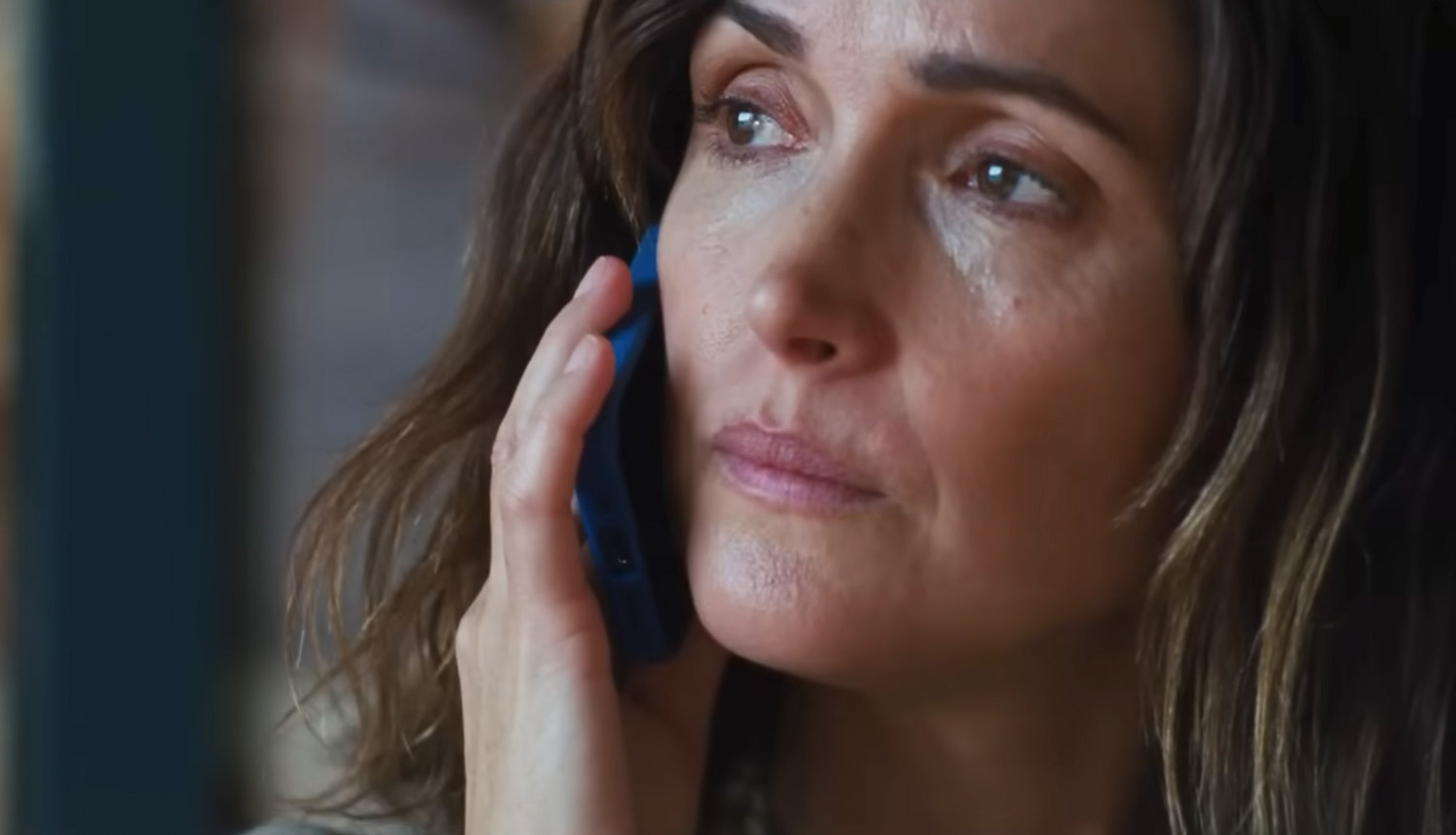
There’s been a glut of movies over the last few years dealing with the stress of motherhood. Some are insightful, like Tully, but most are just cheesy rom-coms where the “romantic” interest ultimately becomes the child, and they rarely offer anything beyond surface laughs and complaints about labor pains that we’ve all heard since at least the 1950s. Mary Bronstein (wife of Marty Supreme co-writer Ronald), however, has given us something profound and intriguing with If I Had Legs I’d Kick You, which garnered a Best Actress nomination for Rose Byrne. Strictly speaking, this is also a “comedy,” but only in the classical sense that it’s not an out-and-out tragedy. There are a lot of dark themes and instances of sardonic humor thrown in that really get to the heart of how a modern woman navigates the challenges and stresses of parenthood, offering a unique experience that really makes you think.
Byrne stars as Linda, a therapist juggling a lifetime’s worth of exasperating situations and obligations. In her professional life, she has major difficulty dealing with her patients, particularly Caroline (Danielle Macdonald), a new mother gripped with postpartum anxiety who insists on bringing her baby with her to sessions for fear of it dying in the hands of her husband or a sitter, and her pointedly nameless colleague (Conan O’Brien) who has sessions with Linda as part of their job (therapists and psychologists often see other therapists to make sure they’re not overwhelmed by all the harsh stuff they have to hear from their clients), but is uncomfortable with her forward nature and lack of boundaries. In her personal life, her husband Charles (Christian Slater) is a ship captain away on assignment, leaving her for weeks at a time as the sole caregiver to their also unnamed daughter (Delaney Quinn), who has nutrition issues that require a feeding tube. Any of this would be enough to drive someone up a wall, but unfortunately Linda doesn’t have that option, as a leaky pipe in her apartment building causes the upstairs unit to flood and collapse through her ceiling, forcing her to take her child to a motel until it’s repaired.
All of these stressors and more cause Linda to start spiraling, because she has no support system. She’s in a situation where everyone expects something from her, because in a vacuum what they’re asking for isn’t unreasonable, while offering nothing in return. She gets constantly rebuffed by O’Brien when she asks for collegial assistance. She gets harassed by the parking attendant at the hospital when she drops the girl off for her treatments. The doctors insist that Linda attend group sessions as a condition for even scheduling an evaluation to get the feeding tube removed, sessions that are not conducive to her schedule. Charles calls from overseas just to chat, but only wants to go on about the fun he’s having, and gets indignant when Linda wants emotional support for her problems. The landlord drags his feet fixing the ceiling. At the motel, the night desk clerk (Ivy Wolk) cares just enough about her job to throw up barriers every time Linda wants to buy a bottle of wine. A neighbor in the next room named James (rapper ASAP Rocky) attempts to be friendly but angrily and insultingly retaliates when Linda is resistant to the idea of socializing.
This is some real heavy shit, and sadly it’s easily relatable, even if you don’t have kids. My instant connection was to my financial woes, where all the bills (and the people behind them) demand payment, and assume I can afford it because I currently have enough in my bank account to cover their single expense. It doesn’t matter that unemployment barely gives me enough to cover rent and nothing else. It doesn’t matter that I’m unemployed. Even when applying for assistance from the government, all that matters is how much I bring in versus how much I pay in rent and utilities. All other obligations – credit cards, phone bills, car insurance, FOOD – are literally not allowed to be taken into account. So many times people simply fail to recognize that when we stress out, it’s not because of a single thing, but the Morton Salt “When it Rains, it Pours” amalgam of all the issues into an overwhelming mass. If it was just one thing, we’d all be able to handle it, even if it caused some distress. But when it’s a whole host of things, it feels like you’re drowning.
That’s the focus of Linda’s story, and a lot of the humor comes from the exhaustion of thinking, “What next?” Danielle gets so distraught that she literally leaves her baby in Linda’s office and walks out of her session. James goes to Linda’s apartment with her to assess the damage and see if he can offer an alternative to her landlord’s contractor, only to fall through the hole and break his leg. Everything just piles up in almost farcical ways, leading to a final moment that’s the perfect amount of fucked up for this kind of narrative. Through it all, Byrne plays it to the absolute hilt, and the cinematography and editing only aid her performance, with extreme close-up shots making for a very claustrophobic experience, and the fact that her daughter is never fully shown until the final moments means that our attention is always on Linda.
The only reason that this doesn’t quite approach the 2025 pantheon for me is in everything around Linda. There are some moments that stretch the limits of suspension of disbelief, and there are others where it seems that Linda is actively sabotaging herself. The biggest for me concerns the parking guy. He yells at her because she pulls up to the curb, then leaves her car there to take her daughter inside for her hospital visits. Why not just park the car? I know the kid doesn’t want to walk too far, but she also doesn’t want to go in without her mom, meaning that Linda either has to say no or violate the law, and she always chooses the latter. That sounds minor, and if it only happened once, it would be, but it happens almost a half-dozen times. Just park the damn car! I harp on this only because, again, I know the stress she’s under because I feel it myself, and one of the things you have to do is find whatever means you can to make your life a little easier, to release some of the pressure. Constantly violating hospital policy and traffic laws for no discernible gain is just shooting yourself in the foot like it’s an unarmed protester with a cell phone.
Aside from that, the supporting performances do little for me. O’Brien is good, and it’s cool to see him playing against type. He’s still funny, but not in the way he usually is, and he’s often far more serious and judgmental than we’ve ever seen him. Apart from him, however, the rest of the cast is one-note and unconvincing, particularly Wolk, Rocky, Macdonald, and Bronstein herself as the pushy doctor. All of their characters serve a function, but they’re so far below what Byrne has to pull off that it makes the whole affair feel like a Best Actress Showcase when it should be an ensemble piece with a clear lead.
Still, Byrne and Bronstein pulled off something pretty solid here. It reminded me of Shiva Baby, in the way that that film played out like a 90-minute panic attack where nothing can go right. A lot of us feel that same sense of hopelessness, and while it is effectively played for laughs, with this being far darker than Shiva, the sentiment is the same. Sometimes we just need a helping hand, and when no one is willing to extend it – and even slaps away yours for asking – it can lead to something that feels akin to punishment simply for existing.
Grade: B
Song Sung Blue

Debuting to much fanfare at AFI Fest and released on Christmas Day, Song Sung Blue was poised to campaign hard for the Oscars. Instead, all it got was a Best Actress nomination for Kate Hudson, one that many feel was unjustified, as her inclusion meant leaving Chase Infiniti off after her amazing breakout performance in One Battle After Another. While something of a crowd-pleaser, it was all but ignored this Awards Season, a sad casualty of the studios’ annual gamble of waiting until the last week of the year to release a prestige piece. Based on a 2008 documentary with the same title, the movie is entertaining, but ultimately suffers from the same fate as others in this subgenre. It’s fun, but I can all but guarantee you that the doc is better without ever having seen it.
The flick centers around Lightning & Thunder, a Neil Diamond tribute band out of Wisconsin that had achieved local celebrity status in the late 80s and early 90s. Hugh Jackman stars as Mike Sardina, aka “Lightning,” a recovering alcoholic with a heart condition (guess how the film ends) who performs as a classic rock cover singer. He lives alone in the house he inherited from his parents, has a teenage daughter named Angelina (King Princess) who visits occasionally, and likes to spend his time repairing cars and doing odd jobs for his friends to get by. At the state fair, he’s slated to go on stage as a Don Ho impersonator, but at the last second he refuses. Still, the evening is not a loss, as he meets Claire (Hudson), who’s playing Patsy Cline for the occasion, and who has two kids of her own, Rachel and Dana (Ella Anderson and Hudson Hensley). The two begin a relationship, and at Claire’s suggestion, she and Mike form a Neil Diamond act, with Mike dubbing her his “Thunder.”
In standard music biopic fashion, things start out shaky, with Mike insisting that they open their show with the deep cut “Soolaimón” rather than the crowd favorite “Sweet Caroline.” They get booed off the stage and Mike starts a fight at a biker bar at their first gig. He then relents for the next show, opening with “Sweet Caroline,” and suddenly they’re huge, selling out small venues and eventually opening for Pearl Jam (John Beckwith plays a reasonable facsimile of Eddie Vedder). Then, in keeping with genre conventions, at the height of their powers, the act is cut down by Claire getting hit by a car and losing her leg. From that point the film becomes about her recovery and the shared self-doubts of Claire and Mike, before finally getting back on track for the denouement that everyone can see coming.
The two headliners do a fine job, especially when it comes to the music, as they’re both good singers. We already knew this about Jackman, but Hudson acquits herself nicely as well. I’d argue that Claire is more of a supporting role than a lead, as Mike is the focal character and the story driver for the majority of the picture, with Claire taking center stage for about 15 minutes at the end of the second act, but she does a fine enough job, certainly better than the bulk of her output to date. She’s definitely improved as an actress over the last few years, but I think it’s a bit much to consider her for an Oscar here. Honestly, at times Ella Anderson is the best of the ensemble, playing Rachel as a very realistic teenager and 90s music aficionado. She’s honestly the most believable character in the whole thing.
I also really enjoyed the musical numbers, not just for the quality of the actual performances, but for the universal love of music that’s conveyed throughout. Nowadays pop music is treated as a monolith, where audiences are all but ordered to like and buy whatever the labels put out, otherwise you’re uncool, or just don’t know music. Those who do conform are the reason that rock and other styles are rapidly dying, and those who don’t are ostracized into toxic fandom as they cling to their one specific preference. But here, the emphasis is on the love of any and all music, exemplified by the Pearl Jam show, where Vedder comes out and joins Lighting & Thunder on “Forever in Blue Jeans.”
It’s a very reassuring element, especially in the way it’s presented. While it’s not exactly logical, Mike refuses to be Don Ho, not because he thinks “Tiny Bubbles” is a shitty song, but because his persona doesn’t align with a guy who wears Hawaiian shirts. On the flip side of that, there’s a funny scene where Vedder calls Mike to book the band, even though Mike doesn’t know who, or what, a “Pearl Jam” is, but at no point is he unreceptive to the idea, and Vedder admits that the reason he booked them is because despite being part of the Seattle grunge movement, he’s a huge Neil Diamond fan. For a lot of us so-called “rockers,” aging or otherwise, the spectrum of influences is why we love the music so much. Taking myself as an example, my favorite band all-time is Green Day, but I grew up listening to and loving Billy Joel more than anything. I was also raised on Motown, Elton John, Carole King, Bruce Springsteen, Eric Clapton, the Beatles, the Rolling Stones, Aerosmith, and yes, a bit of Neil Diamond (“America” is probably my favorite of his songs). As I got older, I incorporated Metallica, the Struts, Nirvana, the Who, Pink Floyd, Rush, and Paramore into my repertoire, and that’s not even counting R&B, hip-hop, country, and modern pop acts that I’ve enjoyed. Hell, when I finally got to see Billy Joel in concert, an event I had to wait until my 30s for despite singing his songs from the age of six, one of the coolest moments was when he and the band took a mid-show break, turning things over to his Head Roadie who absolutely nailed a three-song set of AC/DC. The beauty of rock and roll is that, despite Sammy Hagar’s assertion, there isn’t only one way to do it. It’s that ethos that’s been sadly missing from the music industry since the mid-00s, but which is delivered righteously in this movie, making every performance a toe-tapper, even the ones that you might not like as much as others (like Mike, I merely tolerate “Sweet Caroline” most of the time).
Where the film comes up a little bit short is in its almost slavish adherence to music biopic clichés, even when it doesn’t make sense. This is especially glaring given that we have a documentary to fact-check against. We don’t need to condense timelines or create scenes out of whole cloth for the sake of drama. It feels disingenuous at times to basically say, “If you want truth, go watch the other film. Here we’re just about making shit up for entertainment purposes.” It might be forgivable if these extra scenes were compelling, but they’re just generic instances of melodrama, particularly when it revolves around Claire’s injury, Mike’s temptations back to alcohol, and Rachel’s eventual pregnancy. You could almost set your watch by these plot beats.
In the end, this is a perfectly cromulent film, but I completely see why it was basically left off the Academy’s radar. Given Infiniti’s debut performance blowing people’s minds across the country, I’d argue this should have been left off entirely. Nothing is outright bad about the movie, and there are a few moments that truly feel inspired, but for the most part, it’s simple, adequate, and comforting without being essential, not unlike Neil Diamond himself.
Grade: B
Viva Verdi!

Nominated for Original Song, Viva Verdi! is a documentary we don’t often see competing for the Oscars, especially in the Documentary Feature category, mostly because it’s actually positive and not entirely depressing. I mean, look at the most recent history of the competition. When’s the last time there was a pure, feel-good movie nominated? Well, I can tell you, it was Summer of Soul, which won four years ago. Before that, you have The Mole Agent from the year before, though that pleasantness was predicated on accusations of abuse, and maybe My Octopus Teacher, which has a really downer ending. Otherwise, you have to go back to 2013 and 20 Feet from Stardom. The Documentary Branch just doesn’t like stories that make audiences happy, which is why this film is only up for the song that largely serves as a coda for the story. It’s a shame, too, because this is a wonderful film that people should definitely see, especially if they need a palate cleanser for the horrors of the world around them.
The movie showcases Casa Verdi, a retirement home in Milan, Italy created by famed composer Giuseppe Verdi specifically for musicians at a time when there weren’t many options for musical professionals once their careers ended, and many died in poverty. With an emphasis that this is not a “nursing” home, but rather an institute for preservation and continued education, the film gives audiences an array of wonderful music and nostalgic heartstring tugs from the residents, as well as the new talents they help foster.
Like any documentary, we get a hefty amount of anecdotes from composers, opera singers, and instrumentalists about their time in the spotlight, particularly from Claudio Giombi and Chitose Matsumoto, which are fascinating and endearing in the extreme. It’s also incredibly inspiring to see them teach young students and interns who also board at the house during their studies, because they understand that music is something to experience, to immerse oneself in. But most wondrous of all, they all still perform for one another as part of their daily routines. We see vocal warmups, aria recitations, the first hints of the nominated “Sweet Dreams of Joy,” and in a scene that will just drop your jaw, a woman approaching her 100th birthday playing “Flight of the Bumblebee” on her violin with incredible speed. It all comes back to this idea that the music itself keeps the residents young in spirit, and their minds focused. You’re endlessly wowed by their abilities, which help forge a vicarious bond through the screen.
And obviously, that emotional connection invites the viewer to supplement their own experiences and remembrances. My late mother spent the final three years of her life in a nursing home with dementia. There are plenty of heartbreaking moments my family and I went through in those days. But one of the few bright spots, relayed to us through the staff and sometimes seen in person, was how music brought Mom back to the brink of lucidity. Whenever we visited with my nephew, even after she had forgotten who I was, she still remembered the little ditties she used to sing to us, and to him. When a music therapist would visit to play guitar and sing some campfire songs, she would not only recall all the lyrics – even to tunes she hadn’t sang or played in decades – but could actually take the guitar and get back into the chord progressions with minimal coaching. What little was left of her mind was still tethered to reality by music, and I saw her face among all the others throughout this documentary, because I knew that its assertions of shared culture, history, and life-affirming healing were real.
Similarly, when I was 18, I got my first job in radio, and part of my weekly duties was to host a Sunday morning show on the AM side of the station dealing with the Big Band/Rat Pack era, called Memory Lane. During the course of my tenure, I would have a phone call before each week’s show with a man named Carl Dengler, who was a local bandleader, and had worked with the likes of Benny Goodman and Lawrence Welk in his time. He would tell me stories about his years in the business, including a really fun one about recording a version of “Bubbles in the Wine” in his kitchen, with his sink full of dish soap just so the band could have some bubbles floating around while they played for a sense of whimsy. Dengler was never a household name outside of New York, but he was still in the game, earning a living off his passion for years, and the Tuesdays with Morrie rapport we shared that summer before he passed a couple years later remains one of my most treasured experiences. I never met him in person. As I learned after his death, he himself was in a nursing home and blind from glaucoma, so he couldn’t venture out to the station. That just makes me all the more grateful for the talks we had each weekend.
This is the heart, the very soul, of Viva Verdi! It is a living example of music appreciation, in all the ways that term can be defined. Do some of the stories drag on a bit? Sure. Did we need an interlude where one of the residents gets lost on the way to his room? Not really. But music itself is imperfect. It’s all about the feeling you put into and the variations you apply to make it your own. In that respect, the film portrays the autumn years of these artists’ lives about as well as can be done. We should all be so lucky to spend our final days in such splendor.
Grade: B+
The Ugly Stepsister

It’s rare when you have multiple films from the same country that could easily be nominated for, and win, the International Feature Oscar, to the point where it’s sometimes sad that each nation is limited to a single submission. The Golden Globes will often brag about not having that rule, but it’s largely in service to having two or three films from France because the Hollywood Foreign Press Association was, for a time, French dominated. Most of the time, if there are multiple worthy entries from the same nation, the fact that the films themselves are cooperative efforts with other government and local bodies usually allows for another country to submit on behalf of itself and all the other involved territories. It doesn’t always work, and in those very uncommon situations, you do lament that an exception couldn’t be made.
Such is the case with The Ugly Stepsister, a Norwegian film that, sadly, had no chance against Sentimental Value, and is thus only up for Makeup. Written and directed by Emilie Blichfeldt in her feature debut, the film is a twisted retelling of Cinderella that takes a tragic look at the ways we figuratively and literally harm ourselves just to prove our own worth.
The story is taken from the perspective of Elvira (Lea Myren), one of two daughters to Rebekka (Ane Dahl). Rebekka has just married Otto (Ralph Carlsson), the widowed father of Agnes (Thea Sofie Loch Næss), and has moved into his family farm with Elvira and her sister Alma (Flo Fagerli). Elvira, a sweet but simple girl, fantasizes about marrying Prince Julian (Isac Calmroth), obsessing over a book of romantic poems he’s written. She imagines a life of love and safety, something she’s never experienced with her mother, who has only ever married for money. When Otto dies suddenly, the events of the fairy tale are somewhat set in motion, with Elvira enrolled in a finishing school so that she can be as presentable as possible at the upcoming ball to make a good first impression and maybe get a shot at a high society marriage, while Agnes, now nicknamed “Cinderella,” believes she must marry the prince in order to secure her own future, despite the fact that she maintains a sexual relationship with a stable hand named Isak (Malte Myrenberg Gårdinger).
Seeking only the financial gain that would come from Elvira being married to a nobleman, Rebekka drives the family into serious debt to change Elvira into something “desirable,” including removing her braces and having a nose job performed. She spares no expense, much to Agnes’ consternation, as she won’t even pay for a funeral for Otto, who in a dark running gag, remains rotting in the cellar. Taking to all of these painful transformations for the sake of her dream, Elvira even goes behind her mother’s back and secures a tapeworm egg, swallowing it so that she can lose weight, which Alma finds disturbing and disgusting. As Elvira learns more and harsher truths about the world she’s trying to enter, her continued self-abuse is all the more heartbreaking, leading to one of the most poetically horrid endings I’ve seen in a while.
Myren does a fantastic job in the lead role, emphasizing Elvira’s humanity while still remaining deeply flawed. This is a stark contrast, not to mention more satisfying, to the likes of Elphaba in Wicked or the title characters in the Maleficent and Cruella films, because this flipped and fractured fable isn’t about turning a villain into a hero because of “insert social issue here,” but rather showing how even the best of intentions can still result in cruel and morbid consequences. Elvira isn’t just willing to mutilate herself for the sake of marrying into royalty, but she also sabotages Agnes when the opportunity presents itself, and she even sets aside the reality of who the prince is once she meets him. This doesn’t make her ending a deserved one, but it does qualify certain outcomes. Elvira is turned into the heroine of a Greek tragedy instead of a Shakespearean one, where she has to live with the consequences of her actions, however noble they might have been in her own mind, rather than simply dying.
The makeup job in service of this catastrophe is superb, especially when you consider that no rational person would consider Elvira to actually be “ugly.” Most of the effects are subtle at first, with Elvira having slightly pudgy cheeks that Myren herself doesn’t. Then we get a little bit of blood when we see the first steps of the nose job. By the time we get to sewn in eyelashes, the tapeworm, and everything else, the payoff feels like the worst kind of organic outcome from a monstrously natural buildup. There were moments where I was genuinely wincing, and one where I nearly gagged. My stomach was upset, but I was still floored!
If you’re going to give us a different spin on a classic story, this is the way to do it. Like Renate Reinsve before her, I certainly hope Lea Myren becomes an international A-lister, and I really wish this film had a few more national partners so that it could have been submitted for International Feature. I don’t know if it would have been nominated, but any opportunity to get this in front of more eyes would have been welcome.
Grade: A-
***
That’s all for this installment. We’ve still got 12 more movies in the backlog, and we’ll eventually get to them all. I just hope I’ll get a few chances to nap in the meantime.
Join the conversation in the comments below! Have you seen these films? Should they have been nominated in their single category, or maybe even gotten more nods? What’s your favorite Neil Diamond song (don’t act like you don’t have one)? Let me know! And remember, you can follow me on Twitter (fuck “X”) as well as Bluesky, subscribe to my YouTube channel for even more content, and check out the entire BTRP Media Network at btrpmedia.com!

 I Actually Paid To See This
One thought on “Back Row Thoughts – So Much Blitzing, Part 1”