
There’s been an interesting shift in the dynamics of the Animated Short category over the last decade. For the longest time, this was a field dominated by Disney and Pixar (and Warner Bros. with Looney Tunes shorts before that), and even when they didn’t win, the eventual victor tended to be safe, kid-friendly fare. It was a visible microcosm of the idea that the animation art form was reserved for children.
Over the past 10 years, though, things have changed. The winner for 2016, Piper, fit the tradition. It was a brilliant, almost lifelike bit of Pixar computer animation about a small sandpiper bird that was ingenious because it conveyed a profound story without any dialogue. The same can be said for Bao two years later, though that was a bit easier to parse, as the characters were exaggerated humans. Still, the abstract concept of a Chinese mother seeing her son as a dumpling and feeling betrayed when he dates a white woman was an excellent way of depicting the immigrant experience.
The next year, Hair Love took the crown, which was still family-oriented, but it had a more narrow focus on a black family, and was willing to tug at the heartstrings in a slightly darker manner, as the young girl’s mother was going through chemotherapy. Two years previous, in between the Pixar victories, was Dear Basketball, another, much more personal, nod to black culture, through the eyes of Kobe Bryant.
Since then, the tide has all but fully turned into more mature and heavier fare. If Anything Happens I Love You broke hearts the world over with its honest and devastating look at school shootings. The Windshield Wiper offered looks at adult relationships and sex. War is Over! applied a John Lennon song to the horrors of World War I, ending on the hopeful note of the famous Christmas Ceasefire. Last year’s winner, In the Shadow of the Cypress, dealt with a strained relationship between a father and daughter with the fate of a beached whale in the balance.
The only “kiddie” film since 2020 to win the prize was 2022’s The Boy, the Mole, the Fox, and the Horse, which is still seen as an aberration. For one, it was extremely cloying and cutesy compared to the more evolved themes and tones of the other four nominees, and for two, given that it was picked up by Apple, it got far more promotion – some would argue unfairly – compared to the others.
We may have completely rewritten the rules for how this category is judged. Part of this is because Pixar just doesn’t make their beloved shorts anymore, or if they do, they don’t run them in advance of the latest Pixar feature, which was one of the ways to draw audiences in to the theatres and elevate box office. Now they can just put them on Disney+, where exactly no one cares, and not even bother with qualifying film festivals. What I’m saying is that if they still wanted to win, the House of Mouse could still run roughshod over the competition, but it seems that’s no longer the case.
But again, the crucial factor is that audiences and Academy voters are no longer seeing the medium as being strictly for young viewers. There was a time when it was extremely rare for the curated screenings to order the films in such a way that parents could take their kids out after a disclaimer for adult material. Now, that’s every year. More and more, “adult” animation is being recognized. It’s not that a children’s film can’t win, it’s just that you have to offer more than the warm fuzzies to stand out. It’s no longer safe to play it safe, and that can only push things forward.
This year’s nominees for Animated Short are…
Butterfly – Florence Miailhe and Ron Dyens
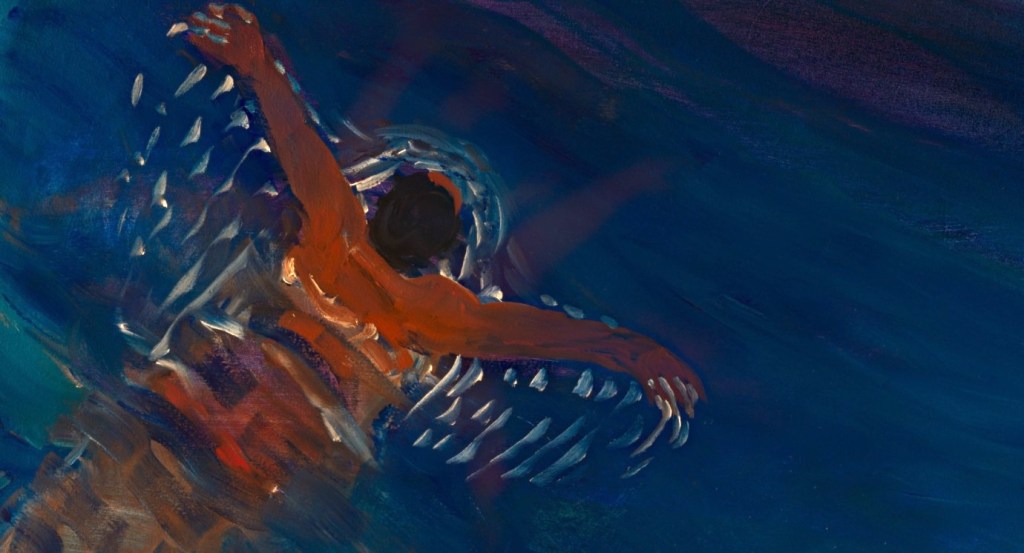
Our first candidate is a case in point for the thesis of the preamble. Using a style similar to oil on canvas (it looks closer to charcoal, though I’m far from an expert and can very easily be wrong on this), the film depicts an old man swimming in the ocean, flashing back to memories of his life. The film’s title is partly a reference to the butterfly stroke, a discipline in Olympic swimming, demonstrated by our lead throughout the short.
The man is Alfred Nakache, a French Jew born in Algeria. In the early part of the 20th Century, he was one of the best swimmers in the world, eventually competing for France in the 1936 Berlin Games, his relay team beating out the team from Nazi Germany. He led a happy life, marrying and having a child, setting world records in the pool, and eventually working to become a teacher and pass on his knowledge to the next generation of elite swimmers.
Then World War II started. France quickly surrendered, and the Vichy government stripped Nakache of his French citizenship. He and his family were eventually arrested by the Gestapo and shipped off to Auschwitz, where only Nakache survived. After the war, he would continue swimming competitively and teaching, representing France in the 1948 London Games. So yeah, leading off with the Holocaust. Where you at, Disney?
What sells this is the art style. While the colors are darker and more muted, which makes the various character models a bit harder to see compared to the other nominees, the actual animation is done in a way that looks like water flowing through paint. This approach not only works for the themes of the story, but also can create a sense of calm in what is some fairly provocative material. Whether that dulls or enhances the experience is open to interpretation, but it is key in giving the film an identity.
Forevergreen – Nathan Engelhardt and Jeremy Spears
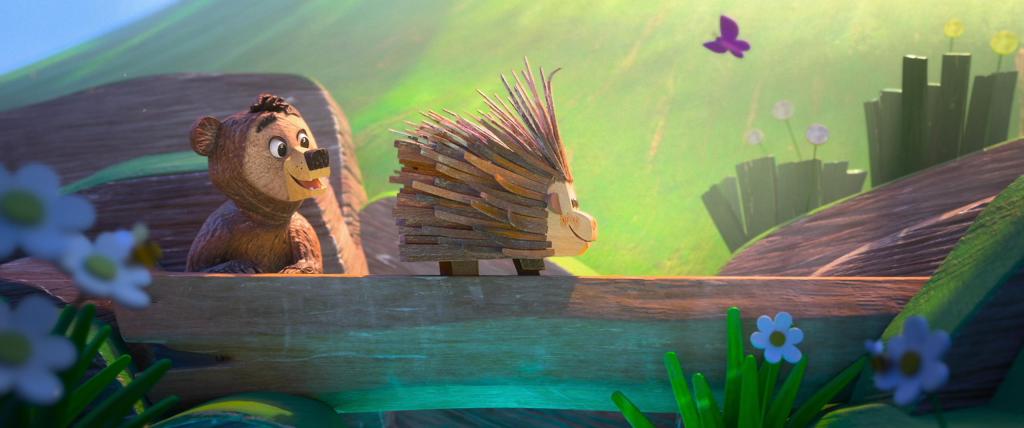
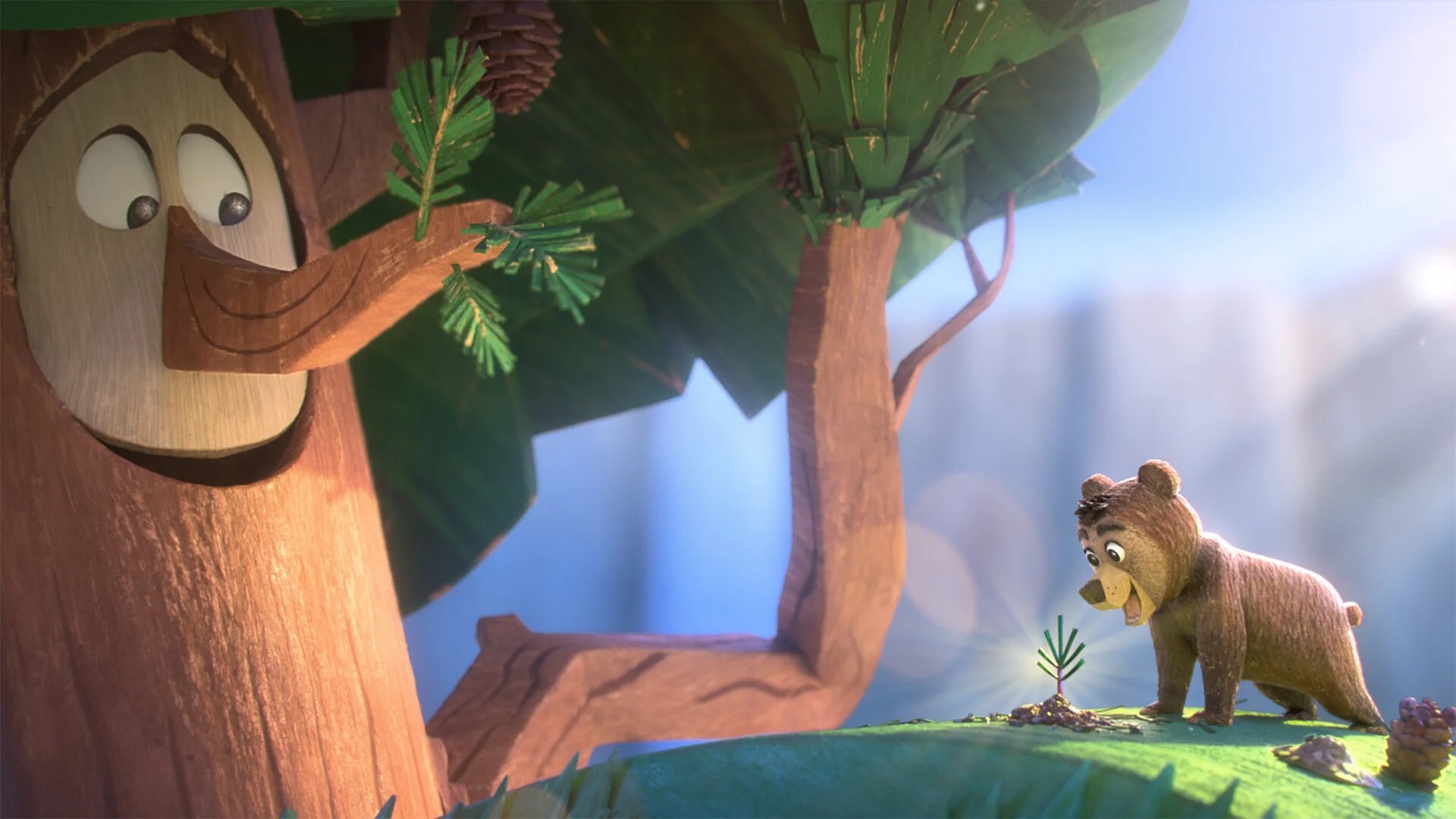
If recent trends get bucked and the voters want the category to return to the realm of kiddie fare, then Forevergreen is their candidate. Most of its wins during the festival run were in contests specializing in films for children and families. It’s also the closest in style and appearance to something Disney or Pixar would put out.
In a sort of update on The Giving Tree, a bear cub is saved from falling off a cliff by an anthropomorphic pine tree. Grateful, the bear spends time with his savior, eventually living in its branches, eating pine cones, and even learning how to plant and care for a sapling. The two have a loving child-guardian relationship. Things change when the bear gets his first taste of junk food, courtesy of an errant bag of chips. The adolescent ursine then craves more sugary and salty treats, rebelliously refusing the natural (but somehow meat-free in counter to a bear’s normal diet) sustenance the tree offers, and eventually runs off, seeking human campgrounds for more snacks. His recklessness then causes a forest fire, and it’s up to the tree to save him again, with much more dire consequences.
This is just some bullshit. The lesson of the film is literally, eating anything other than plants – even if you’ve evolved to eat meat – will kill your parents and destroy the world. You may think that’s an extremely hot take, but seriously, watch the damn film and tell me what else I was supposed to infer. Where are the cub’s parents? How can it live on tree seeds? How am I supposed to interpret the instant, drug-like addiction the bear gets to Doritos, other than the idea that “non-natural” food is bad and leads to disaster?
The film looks nice enough, like standard bright, Disney-esque 3D CGI with a somewhat blocky aesthetic that recalls wood carvings and construction paper. And when it’s a simple friendship between a bear and a tree, it’s at times downright pleasant. But again, it’s just too safe, and says very little of value (other than “eat your veggies”) while still being needlessly preachy. It plays like an imitation of Pixar, but without the actual poignancy. It’s like the filmmakers thought that pretty images and a so-called “aww” moment were enough. They may be right, but not with me.
The Girl Who Cried Pearls – Chris Lavis and Maciek Szczerbowski
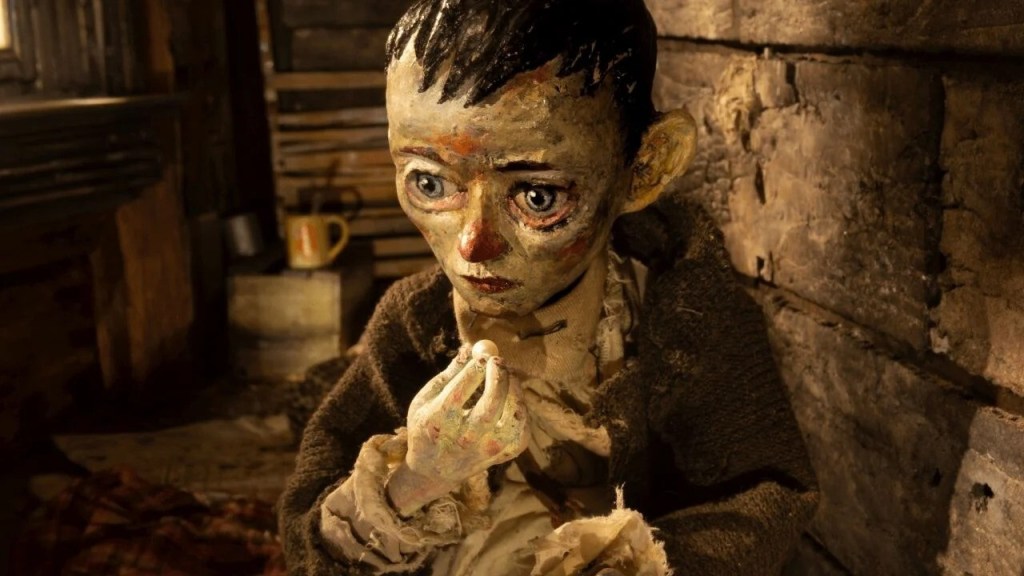
Oh thank God for Canada. I’ve said it before, I’ll say it again. Whenever you see the NFB (National Film Board) logo before an Animated Short candidate, you know you’re going to at least see something interesting, if not mind-blowing. The Girl Who Cried Pearls is another fine entry in the canon. Inspired by Lavis and Szczerbowski’s previous Oscar-nominated short, Madame Tutli-Putli (literally, the idea formed when a prop pearl necklace used in that film fell off the model and broke), the film is a bit of stop-motion wonder about the power of storytelling, even if the story itself is dubious.
A young girl sneaks around inside a richly-appointed study in her grandfather’s mansion. When Gramps catches her looking at a pearl, his most prized possession, he decides to tell her the story of how he got his fortune. As a dirt-poor homeless boy in Montreal, he would hide in a disused, ramshackle apartment in a duplex. The other unit was occupied, and he could see the family inside. A somewhat sickly father and his kind daughter were being abused by the dad’s second wife, sort of a parallel to Cinderella. At night, the girl would cry in her sleep, her tears turning into the most pristine of pearls, which would roll into a hole in the wall, accessible to the boy on the other side. He then hatches a scheme to collect the pearls, sell them to a pawn broker, and use the money both to enrich himself, and to make the girl’s life a little better, as he’s quickly fallen in love with her.
To say anything more would be to rob the film of its surprises, but suffice to say, it’s pretty damn good. The stop-motion style and the character designs evoke something out of Memoir of a Snail and The Nightmare Before Christmas – though with a decidedly dirtier, grimier aesthetic – meaning that the models are just that right amount of “off.” Things are ever so slightly tilted and oblong in a way that instantly draws the viewer in.
There are also some interesting subtleties and nuances to discuss as it relates to the plot. Without spoiling anything, you’ll be asking some fairly large questions once the credits roll, chiefly concerning which parts of the story are even real, and what lessons we’re supposed to glean from it. However, these are not frustrating questions, but ones that inflame the imagination, allowing the viewer to fill in the gaps in any number of ways. This is the good kind of ambiguity, which seems to be increasingly harder to pull off.
Retirement Plan – John Kelly and Andrew Freedman
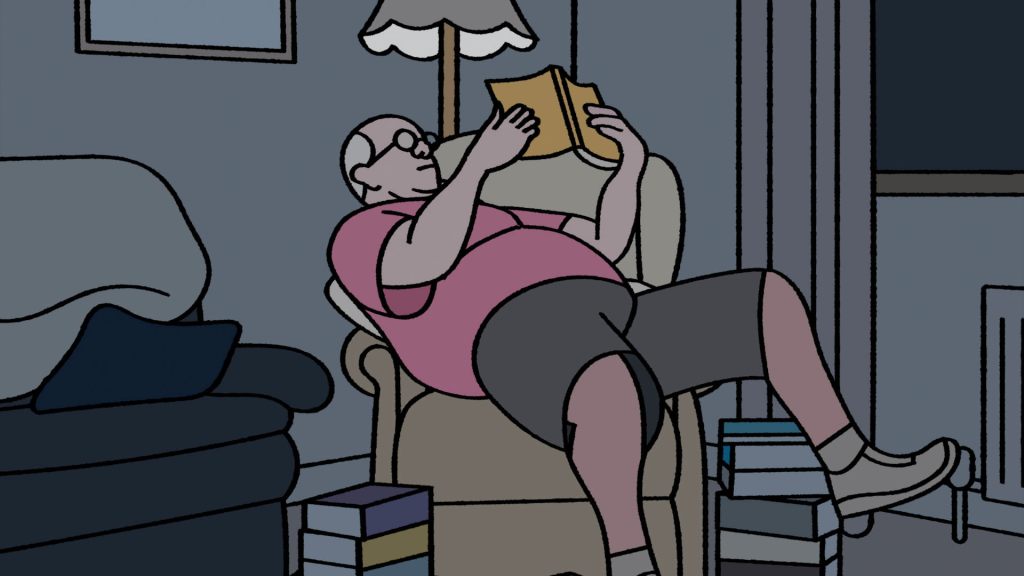
Much like the Oscar-winning Live Action Short from a few years ago, An Irish Goodbye, Retirement Plan is, for want of better phrase, very Irish. It’s got that perfect blend of dry humor, wit, hope, and melancholy that makes modern Irish drama (in all its forms) so unique and distinct compared to the rest of the world.
It’s a very simple film, both from a story and animation standpoint. Using fairly minimalist 2D animation with bold outlines, we take a flight of fancy as a middle-aged man named Ray (voiced by Domhnall Gleeson) muses about what he’ll do when he retires. We see some solid, ambitious ideas like learning a new language and getting a dog, humorous subversions of others, and of course, plans for his own demise, including “absolutely nailing my final words.”
This is easily the most straightforward and “normal” of the entries, but that’s also its charm. A lot of angst and anguish is being spread throughout the world at the moment, mostly because everyday people can’t see their way to even the most basic comforts of life. There have been numerous studies and news reports over the last few years that show the idea of retirement as unattainable. More and more people are working themselves to death, unable to save any money, while on the other end of the socioeconomic spectrum, the wealthiest interests push back retirement age, cut back or eliminate government retirement subsidies, and raise prices so that the rest of us have to work our entire lives just to break even.
So here’s Ray, with balding hair and a basic apartment, telling us in the form of an animated poem all the things he’s going to do, knowing as we all do the underlying tragedy that he’ll probably not accomplish any of it. But it’s the good humor he displays throughout, aided by the on-the-nose art style and editing, that gets us through the sadness in the subtext. Most people want exactly what Ray wants. They want to work hard, raise a family, have a few hobbies, and be able to retire with the freedom to do what they please, within reason. The fact that such an elementary idea is now played for Irish-style tragicomedy is at once an entertaining piece of relatable art and a damning indictment of the world around us.
The Three Sisters – Konstantin Bronzit
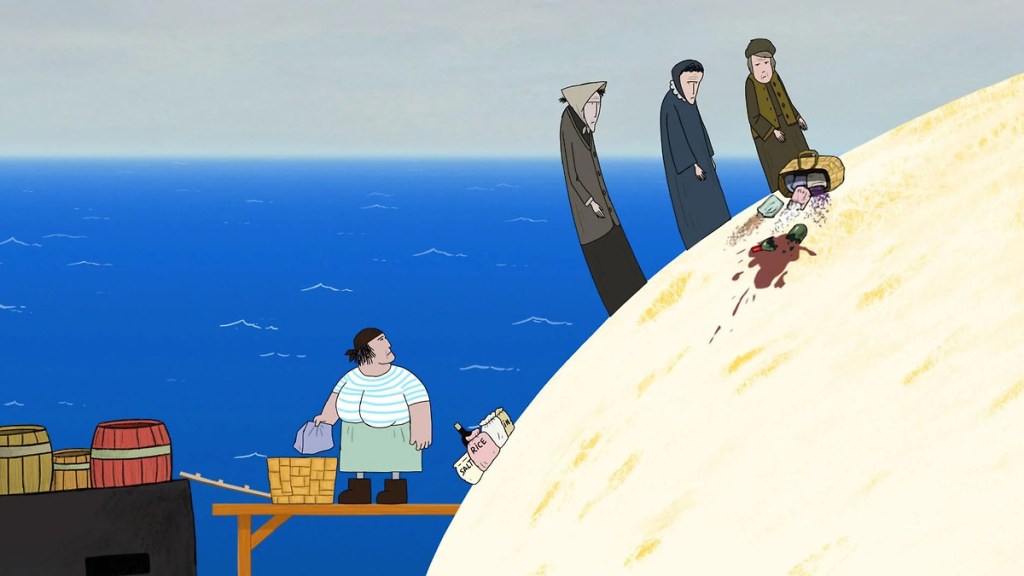
If you follow the world of animation, Bronzit’s name will be familiar to you. This is his third nomination in this category, after Lavatory Lovestory in 2009 and We Can’t Live Without Cosmos in 2016. It should be noted that for The Three Sisters, he’s credited as Timur Kognov rather than his own name. As he’s noted in interviews, he adopted the pseudonym as an experiment to see if the film would succeed on its own merits, rather than name recognition. As it is, the film is pretty intriguing.
The story concerns three women living alone on a remote island. At first I thought they were nuns, as the title font emphasized a cross-like pattern on the “T” in each word, and from the opening wide shot, their humble dresses and shawls could be mistaken for habits. But as we quickly learn, they are not ladies of the cloth. They each live in their own small house, and work together to keep up their tiny home on the sea, their only interaction with the outside world being a visiting ship that sells them food and provisions every once in a while. When a series of calamities instigated by seagulls results in the loss of their money and supplies, two of the three move in together so they can rent out the third house. A brash sailor comes along and leases the place, flirting with each of the sisters in turn. As the advances continue, each of the women sheds their more conservative garb for more revealing, “fun” outfits, competing with one another for the sailor’s affections. A comedy of errors ensues, and some key lessons are learned in delightfully silly ways.
The humor almost can’t work without the art style. Bronzit employs something of a minimalist style here, somewhat different from his usual output, and leans into the absurdity it allows. The island itself is basically a semicircular sand hill with the three houses on top. The curvature of the arc is how the sisters lose their money, and on a couple of occasions they even roll into the water themselves. Boats don’t so much dock there as run into the side and stop their momentum. The 2D nature of the design is an active element to the movement. There are shots that rotate the island to create the illusion of a 3D space, but the true action relies on the flat shapes. It’s a tad uncanny, but still enjoyable.
***
So, who gets my vote? Well, here’s the thing. I mentioned in the Documentary Short breakdown that we were looking at a fairly weak crop of candidates across the Short Film program, and this category is no exception. I don’t love any of these, and a couple of them I don’t even particularly like. The issue was laid bare during the screening itself. See, because cartoons tend to be on the shorter side, even for a short film category, the curators of these screenings often include “Highly Commended” entries to pad the runtime out to 90 minutes, you know, to justify charging you money to come to the theatre. These extra bits can sometimes be just fun distractions, and sometimes they’re other shortlisted films that weren’t nominated.
This time around, we had just one, and it was literally presented with a slate reading “Shortlisted But Not Nominated.” It was Éiru, the Cartoon Saloon short that preceded Little Amélie or the Character of Rain during its theatrical run. It’s head and shoulders better than all five nominees. The colors are dazzling, the animation style gorgeous, and the title character beyond memorable. From the moment you hear her shout, “WE ARE THE CLAN OF MIGHTY FLAME!” you’re already hooked. The child’s design – diminutive with flowing red locks that reach down to her ankles – is more distinct than anything we see of the actual nominees. When I watched the screening, Éiru was the only entry that got applause from the audience. I genuinely wondered why it was included, especially now that Taika Waititi is putting his name on this as the presenting sponsor. I think the message is clear on this one. Academy, you done fucked up.
My Rankings:
1) Retirement Plan
2) The Girl Who Cried Pearls
3) The Three Sisters
4) Butterfly
5) Forevergreen
Who do you think should win? Vote now in the poll below!
Up next, we’re getting closer to the main event, and we still have some actual intrigue in a couple of the major categories. We’ll look at one of them tomorrow, one of two acting contests that have three viable candidates heading into Oscar Night. It’s Best Supporting Actor!
Join the conversation in the comments below! Were you able to see any of these shorts? Which style of animation is your favorite? Do you prefer adult animation or more family-friendly stories? Let me know! And remember, you can follow me on Twitter (fuck “X”) as well as Bluesky, subscribe to my YouTube channel for even more content, and check out the entire BTRP Media Network at btrpmedia.com!


One thought on “Oscar Blitz 2026 – Animated Short”