
In a lot of ways, I’m an easy mark when it comes to movies. There are just some things that will instantly grab my attention and get me to come along for the ride. Animation? Obviously. Clever, farcical comedy? Of course. Anything directed by James Gunn, the Coen Brothers, or Charlie Kaufman? My ass is very likely in the seat. And, naturally, especially in this day and age, any opportunity to dole out the harshness to fascists, Nazis, and/or white supremacists is one I will almost certainly take, because it’s so easy to make something satisfying about the fantasy wish fulfillment of taking down the worst of our society with extreme prejudice.
So how did By Any Means manage to make this easy exercise boring as hell? Sadly, it’s all too simple: bad acting, shit writing, a “based on actual events” disclaimer used as carte blanche to make up a bunch of nonsense, skimping out on the action (and turning away from it when they do finally get to it), a horrendous makeup job, and invoking my least favorite bit of Awards Season chicanery. Let’s run them down individually, shall we?
We’ll start with the most glaring misfire, and that’s the story. Directed by Elegance Bratton and written by Sascha Penn, the film uses the real-world murder of Mississippi civil rights activist Vernon Dahmer (Giancarlo Esposito) as a backdrop for a bit of ultraviolent revenge fantasy, where a straight-laced black FBI agent teams up with a white mafia hitman to exert some extrajudicial justice in order to secure confessions and witness testimony to bring down the Klansmen who killed him. By the way, the murder itself is not a spoiler. If you’ve ever seen a movie before, you know Dahmer is marked for death the instant he appears on screen, advocating for voting rights and promising to pay poll taxes, because he’s the rare black man in the Jim Crow south who’s actually made a decent living for himself. He’s so sainted and goodly that there’s literally nowhere for him to go but to an early grave.
Exactly three things in this story actually happened. One, Dahmer was murdered by the Ku Klux Klan. Two, the FBI eventually did get a cooperating witness from among the assailants. Three, the Bureau did employ a notorious hitman off the books to aid them in “enhanced interrogations.” There’s no evidence he participated in this case, but you can forgive some dramatic license and revisionist history for the sake of entertainment.
The problem is that this isn’t entertaining, because the script is garbage, and the performances are somehow worse. Yahya Abdul-Mateen II plays our crusader of justice FBI agent, Wayne Strider, which may be the dumbest name in a movie since Sunny Hope in Megalopolis. He’s a Mississippi native who entered the Bureau while living in Chicago, and has returned home in hopes of making a difference in the community. He asks his boss (David Strathairn) for an opportunity to work on an active investigation, and the death of Dahmer, who just so happens to be a close family friend, provides that exact chance. Strider is very loosely based on former FBI agent Lindley DeVecchio. So loosely, in fact, that DeVecchio isn’t even black.
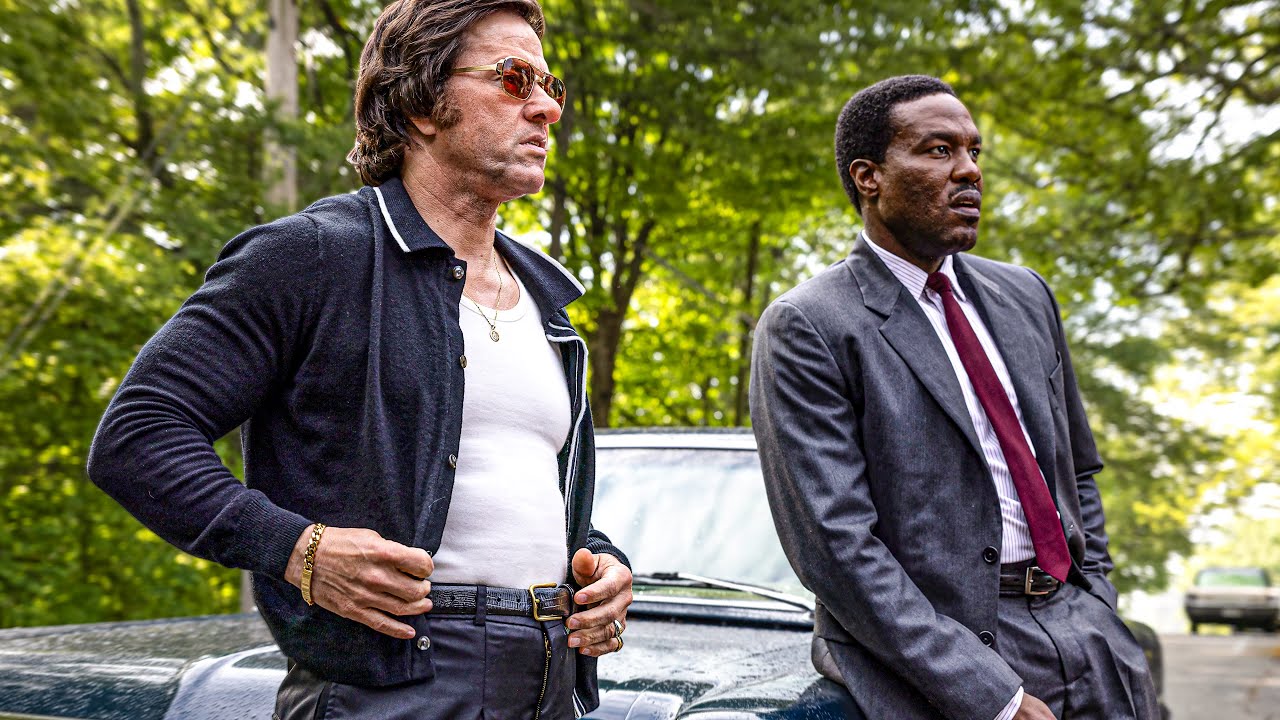
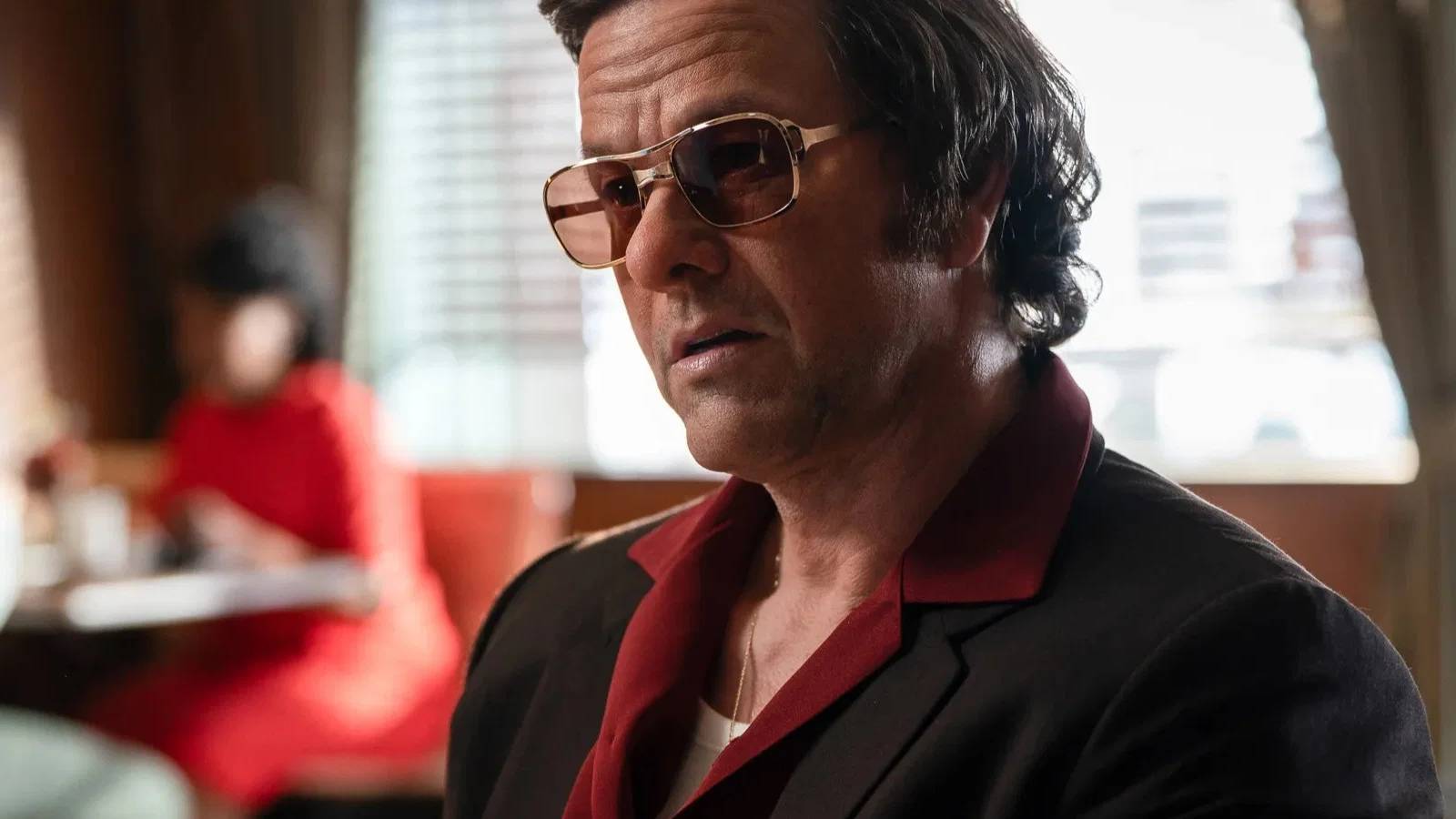
The extent of the inspiration appears to be the fact that DeVeccio was once the appointed “handler” for Greg Scarpa, a capo in the Colombo crime family (one of the infamous “Five Families” of the New York mafia), who had turned informant for the FBI and was used as an enforcer off the record. Strider gets the handler role here, accompanying Scarpa around Hattiesburg while they collect information. And who was the immaculately cast choice to play this 38-year-old Italian from Brooklyn? Why naturally Mark Wahlberg, the 55-year-old from Boston with an accent thicker than his biceps! Abdul-Mateen does the best he can with the material, occasionally giving us a good line read or facial expression, but Wahlberg is just chewing the scenery like its one of his family’s overpriced burgers, more concerned with showing off his guns in a wife-beater than actually firing one most of the time.
It’s clear that they’re going for a dynamic that blends Sidney Poitier and Rod Steiger in In the Heat of the Night with Jamie Foxx and Christoph Waltz in Django Unchained. But, at best, it comes off like a pale imitation of Mahershala Ali and Viggo Mortensen in Green Book (a film I liked, but it had no business winning Best Picture). The only thing it has in common with any of Quentin Tarantino’s revenge fantasies is that the script and the supporting cast (Ethan Embry, Will Brittain, and Jody Thompson chief among them) enjoy a sick sense of glee at the idea of rednecks talking like rednecks and saying “boy” and the n-word as often as possible. The closest thing to a good performance in this cast is Nicole Beharie as Wayne’s wife Allison, and even then she’s a stock “stand by your man and Jesus” character straight out of some horrible Tyler Perry abortion, only displaying any agency in one scene where she helps arrange a protest march against Wayne’s wishes.
All of this makes the film bad, but like I said earlier, the real crime is that it’s boring, and that’s because of the plot structure and the lack of focus on the actual violence. So much time is devoted to this tired “good cop/bad cop” shtick between Strider and Scarpa that we’ve seen a million times before, and it’s rarely interesting, save for an early scene where Scarpa “solves” a traffic stop with a local racist deputy. Apart from that, the core issue is spending the first two acts on a dick measuring contest that goes nowhere and ends up defeating its own purpose. Scarpa lives in a world with no rules, while Strider is a strict adherent, both for the sake of his career and his safety. Do we ever explore that need to religiously follow protocol for his own survival? Of course not. It’s just empty pretext to justify the pair of them arguing for a while until the reality of racism hits Strider one time too many, and he decides that vigilantism is the way to go. The reason this doesn’t work is that when Strider gets his orders from Strathairn and his assistant (Josh Lucas), he’s told not to question anything Scarpa does or interfere. So every time he butts heads with the capo, he’s directly disobeying the rules he holds so dear. Had he actually followed orders from the start, we’d have wound up in the same place, but we wouldn’t have wasted an hour to get there (one of the few points in the movie’s favor is that it’s mercifully only 105 minutes).
But even when we do get to the physical comeuppance, it’s weirdly muted. It’s not that the film pulls its punches, it’s that for all the buildup, it’s pretty much only punches. A couple people get shot, but mostly it’s just haymaker after haymaker. This is what you call torture? Eli Roth would be ashamed, both as a torture porn director and as the Bear Jew from Inglourious Basterds. The film opens with a scene where Scarpa is interrogating some random racist about a different incident, and we see the guy strapped to a chair and covered in blood from several welts and cuts about his face. Somehow, he actually asks, “Who’s there? What do you want from me?” It’s Mr. Blonde here to cut off your ear, WHAT DO YOU THINK?!
That’s the rub, though. We see a guy covered in blood, but we don’t see how he got all bloody. Scarpa does take a bat to his knees a couple of times, but otherwise it’s just punching, so how could the guy not remember what has clearly just happened? And more to the point, why couldn’t we see it? This carries over into the rest of the violent encounters, with the camera shying away from showing any actual damage in favor of the implication, as if a movie with blood, several “fucks,” and more racial slurs than an afterparty at Donald Trump’s “Midterm Convention” was somehow going to avoid an R-rating. I don’t get it. The only good thing about any of this is that the blood makeup is far more convincing than the prosthetic nose Wahlberg has to wear, which makes him look more like a failed clone of Michael Shannon than the actual Greg Scarpa. I don’t know what bet he lost to force him to wear that thing.
One last thing to cover, and that’s the music. The ambient score, composed by Terence Blanchard, isn’t terrible, but it’s clearly derivative of film noir and parodies thereof. I swear to God there were times where I thought I was hearing cues from Who Framed Roger Rabbit? instead of something original. It wouldn’t be so bad if this were an actual noir, but again, the closes it comes is an awareness that In the Heat of the Night existed.
But worst of all is, sadly, the real reason I went to see this movie, despite it already being out for a week and receiving mixed-to-negative reviews. This is the annual “Diane Warren Gets to Steal a Nomination” film. She was commissioned to write the over-the-credits title track to the film, and as usual, it’s the same goddamn song she writes every year to force the Music Branch of the Academy to reserve her a spot on Oscar Night where she will invariably lose again to the consternation of us all. The lyrics are right up there with “Applause,” “The Fire Inside,” “Somehow You Do,” “Dear Me,” and “The Journey.” They’re all about how the “rules” can’t hold you back, and that you need to accomplish your goals “by any means.” Now, this might have been germane if the film were about Malcolm X, who famously opined that racial justice would be achieved “by any means necessary,” but that’s in no way the case. Malcolm X is briefly mentioned by Scarpa in contrast to Dr. Martin Luther King, Jr. (odd that we’d invoke him in an FBI story where J. Edgar Hoover, who tried to take King down, is still running the agency), but it’s just to get the “roll credits” moment where he says the name of the movie. Otherwise there is no connective tissue. In fact, the messaging of the song is almost antithetical to the story, because to advocate getting personal results via a movie where torture and murder are used as interrogation tools is… not good.
There is one saving grace in the song (which is in the same key signature and tempo as the rest of Warren’s nominated tracks), and that’s the fact that instead of recruiting whatever random pop singer might be available/desperate enough for the paycheck, the song is performed by the Isley Brothers, or rather, lone surviving founding member Ronald and his younger brother Ernie. The vocals are good, but I did have to laugh at the fact that the song was recorded separately, and that Ronald’s parts were produced by someone who willingly chooses to refer to themselves as “Poo Bear.”
Were it not for the song, and by extension the convenience of it being in theatres now rather than trying to run it down in December (I don’t have Paramount+ and don’t ever plan to), I wouldn’t have bothered with this. It’s not an actively terrible film, it’s just incredibly dull. Again, while I personally abhor violence in real life, as far as I’m concerned, every Klansman deserves to be gutted like a fish and put on display along the interstate highways of the entire south, so the idea of seeing them get some well-earned karma for their decades of hatred on the big screen has an instant appeal to me. Instead, what we got was violence without action, an “actual events” story that basically didn’t happen, a fake nose so awful that Nicole Kidman in The Hours is wincing at it, a Brooklyn mobster with a Boston accent, and yet another fable of America’s racial past that once again boils down to that truly novel idea that racism is bad. It’s ironic that this has a title like By Any Means, because that implies effort and commitment, and this flick has neither.
Grade: D+
Join the conversation in the comments below! What film should I review next? Do you enjoy revenge fantasies? Is this finally the year where the Music Branch says, “Sorry, Diane, but even we can’t justify nominating a movie this bad”? Let me know! And remember, you can follow me on Twitter (fuck “X”) as well as Bluesky, and subscribe to my YouTube channel for even more content, and check out the entire BTRP Media Network at btrpmedia.com!


