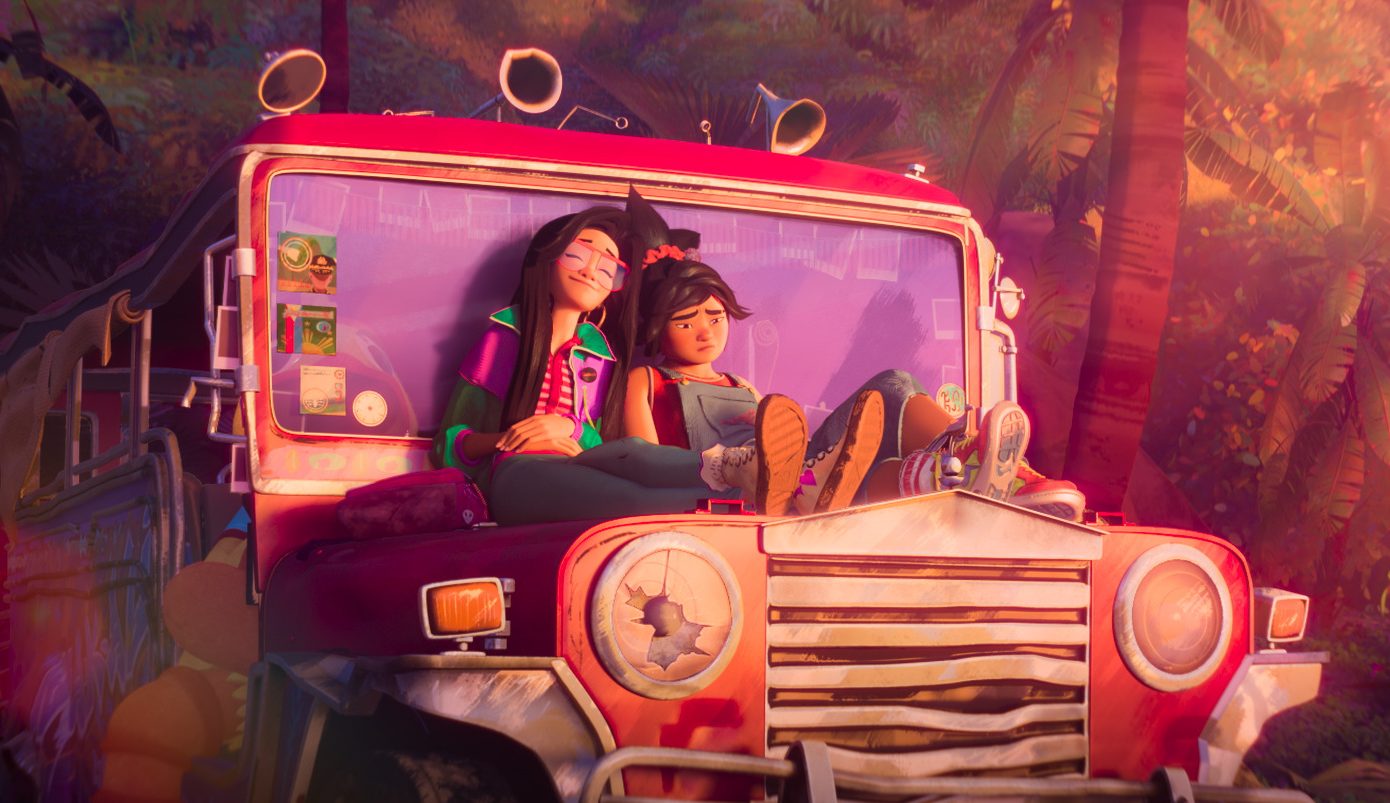

I’ve been lucky enough in my life to have several people that I’ve referred to as my “best friend.” The most recent one has held that title for the past 20 years. For me, either by coincidence or unconscious design, they’ve all basically filled the role of surrogate brother, as I only had a sister growing up, and living in a house with all women, I didn’t really have any male influence. Just having a “bro” with whom I could spend hours discussing TV shows, playing pick-up baseball, or nerding out over video games, was precious to me.
Obviously, as years have gone by, I’ve grown apart from most of them, and in some cases, lost contact entirely, as I was brought up in an age before social media. But crucially, I’ve never forgotten them. The experiences we had together have made me who I am as a person. Even if I don’t ever see or speak to them again, the impact they had is evergreen, and even a random moment of remembrance of something we shared, be it silly or consequential or even tragic, puts a smile on my face.
It’s that emotional core that grounds Forgotten Island and keeps it from flying off the rails. This latest effort from DreamWorks is bright, vibrant, and at times overly hyperactive. But it’s that platonic love that makes sure things stay as centered as possible despite the bonkers nature of the adventure. It’s also what makes the film irresistibly charming and incredibly funny.
Reuniting Joel Crawford and Januel Mercado, the directing team behind Puss in Boots: The Last Wish, the overall animation style follows that film’s design, which in itself is basically the DreamWorks version of the Spider-Verse format. In lesser hands, this could come off as cheap and derivative. However, the pair work tirelessly to make sure this picture has its own identity, and while the style is mimicked when it comes to some of the character designs and editing of the action sequences, you can definitely tell that they’re taking it in new directions and incorporating other influences, such as anime, pop art, and comic books. It also doesn’t hurt that they include some very eye-catching neon colors in their vast palette, further separating it from some of the intentionally muted hues of those other works.
The stars of the film are Jo (singer H.E.R.) and Raissa (Liza Soberano), two young women who met as elementary school students when Jo moved into town. Jo, thanks to her vivid imagination and stories from her grandmother, Lola Fatima (Dolly de Leon from Triangle of Sadness), introduces herself to her new classmates by graphically illustrating stories from Filipino mythology, particularly the titular island of Nakali and the dreaded vampire demon Manananggal. This gets her ostracized by the class and sent to the principal’s office for disruption, where she is later joined by Raissa, who also incurred the teacher’s ire by trying to use advanced mathematics to prove that the stories could actually be plausible. This rebellious streak forges the central friendship, and the two grow up as an inseparable duo, marking their memories with matching charms on a friendship bracelet.
Right off the bat, I love their dynamic. So often in these coming-of-age films, the main friendship is a case of “opposites attract,” and the eventual conflict comes from the two people just being very different at a basic level. That’s not really the case here. Both girls have distinct personalities, but it’s their similarities that initially draw them together and sustain their bond. Yes, Jo is a touch more boisterous than Raissa, and Raissa is clearly more book smart than Jo, but this is not a standard joining of an extrovert and an introvert. As we see throughout the film, both of them have outgoing and reserved tendencies depending on the situation, and each one complements the other when a shortcoming is highlighted in a particular moment. This makes their relationship so much more believable than similar, more contrived stories. Sadly, it also makes the clichéd third act breakup seem all the more superfluous, but even then, Crawford and Mercado do more with the trope than just having it serve as a plot obstacle for two minutes.
The other major plus in this pair’s favor is that we spend an appropriate amount of time with them, establishing how important they are to each other. In a lot of narratives within this genre, animated or live action, we basically get the bullet points and a quick montage before jumping into the plot proper, whether that involves a road trip, a separation, or any number of other predictable scenarios. With Jo and Raissa, we spend pretty much the entire first half hour firmly grounded in reality in their home in the Philippines. We watch them grow, celebrate, cheer, mourn, say hey to Jesus (80% of the population is Catholic), and generally just, well, LIVE as two people. Yes, some of it is compressed to montage vignettes, but other moments are held and played out to an appropriate degree, so that the eventual inciting incident of the film – Raissa deciding to move to America to go to college at CalTech – isn’t something that blindsides us watching in the auditorium. As much as the different plot points bounce around once the main adventure begins, we’re given enough time during the opening act to actually care about them so that we’re engaged when the wacky stuff gets going, which gives us genuine stakes when their friendship, and the memories thereof, are put at risk.

Once that character work is done, THEN we can get behind the zany hijinks. The day before Raissa is set to leave for the U.S., Jo convinces her to have one last night out together. Sitting at the beach, a mysterious glow reveals a magic sand dollar (the pattern on it matches the sun design on the Philippines flag in a nice artistic touch), which opens a portal to Nakali, proving Lola Fatima right all along. With an enthusiastic plea of “Tayo na,” a Tagalog phrase basically meaning, “Let’s go,” Jo and Raissa jump through and find themselves on the legendary island. After the initial amazement, we pull a Hangover and jump ahead a day to find Jo wearing a crown, Raissa having half her waist-length hair shaved off and a pair of sentient wings on her shoulders, and neither of them having any idea what had transpired over the last several hours, only that the sand dollar – their ticket home – is missing.
It’s at this point that we begin the wacky quest to retrace footsteps and meet several memorable characters, including a were-dog named Raww (Dave Franco), a mushroom-sized warlord (Ronny Chieng), a vainglorious merman (Kevin McCann), a demon named Batiba who trades in memories (Jenny Slate), a giant three-eyed baby (Manny Jacinto), a tree giant (Jo Koy), and the ever-feared Manananggal (Lea Salonga). There’s a LOT to take in with this colorful cast of side players, and there are definitely points where the youngest viewers could get lost in the sheer sensory overload. Hell, I’m in my mid-40s and I was getting dizzy at times. This can be to the overall film’s detriment, but thankfully, the focus on solid development between Jo and Raissa, along with some outstanding comedy, keeps us from getting as lost as our protagonists.
And when I say “outstanding comedy,” I mean it. For example, it’s one thing to have Chieng’s character – a Duwende – be a funny visual because it’s aggressive and violent despite being cute. It’s quite another for the cuteness to get cranked up to 11 by having little hearts pop up in the air after every step it takes, and for its name to be Truffle Wuffle, making it so adorable that Jo can’t help but “insult” it by trying to hug it. It’s one thing for Raww to go “full dog” whenever he sees a stick. It’s quite another to constantly have him wavering between human and canine completely outside his control, and yet do so in a way that remains consistent throughout, rather than just have him partially transform at the convenient whims of the script. It’s one thing to do a fart joke. It’s quite another to do a layered fart joke that provides one of the best payoffs to the evening of mystery in a way that’s patently absurd but still hilarious within context.
Structurally, there are some issues, like the aforementioned sugar rush-style pacing and the trite third act conflict. There are also times where the film gives Cruella a run for its money in terms of unnecessary needle drops, particularly in the first third. There’s a “solution” to the main problem in the story that actually contradicts a previously established one.
But really, there’s only one true problem with the story, and that’s the fact that there’s not enough of it. As much as I love that we spend a ton of time getting to know Jo and Raissa, there are still holes that needed to be filled. While the film goes out of its way to avoid certain genre trappings, in the end you can still argue that the central impasse boils down to one friend – Jo – not being willing to grow up. Oddly enough, in a worse film, you can get away with this, but because we have fully fleshed-out leads, it ends up backfiring, because it doesn’t make sense that Jo would be so selfish or oblivious as to not realize that even the best of friends do grow apart and separate. It doesn’t mean that the affection isn’t there, it’s just that life takes us in different directions, and no one has the right to stunt someone else’s growth for their own comfort.
Along a similar line, I did find it pretty hard to believe that this is the first time where their friendship has ever faced a crisis. Are you telling me that in the dozen or so years they’ve been palling around and watching Predator (great reference for the meme crowd) that they’ve never once had an outside test of their respective limits and boundaries? No other friends? No romantic interests? Puberty itself? Diverging interests and hobbies? Nothing? The best we get is one brief scene where Raissa half scolds Jo for being a great artist without the ambition to do anything with it, but we never really see that in the childhood scenes. Yes, she animates her presentation about mythical beasts, but that doesn’t lead to a conversation or other examples of an artistic passion. When Raissa brings it up, it kind of comes out of left field, but isn’t paid off in any significant way until the epilogue. Essentially, it’s the movie’s way of saying that both leads have to become successful in one way or another, or it creates an imbalance, which comes off as slightly disingenuous.
What I’m saying is that, while we are given plenty of information to show why these two love and need each other, we don’t really see how they interact with the rest of the world. Lola Fatima is an influence for a while, and there’s the brief involvement of Raissa’s parents (Amielynn Abellera and Mercado) comparing her to Jo as a “rocket” to a “rock” before we get to Nakali, but that’s basically it for outside contributions. This doesn’t sink the film by any means, but it is a noticeable gap in an otherwise juicy narrative that goes to decent length to answer all the other lingering questions and doubts, even the insignificant ones.
Thankfully, the visual gags, gorgeous animation, and note-perfect rapport between Jo and Raissa far outweigh these more trite hiccups. Do we need several scenes of Raissa’s dad singing karaoke? Of course not. Do we need pixies raving after they down an energy drink? Who would? But there’s an alchemy that makes it all work to the highest levels, because in spite of the fantasy elements, the outlandish art style, and the absolutely batshit nature of the adventure, the basic relatable dynamic that drives it all feels more real than so many other projects that intentionally lean into that verisimilitude. There are so many twists and turns in this story that it’s hard to predict where things will go next, even if you’re familiar with this type of film. But the one thing that you absolutely know from the moment you meet them is that Jo and Raissa are perfect for each other, and that no matter what, they’re going to be okay. And even as the best of friends go their separate ways, those of us who’ve experienced that type of bond know exactly how good that feels. And we always remember.
Grade: B+
Join the conversation in the comments below! What film should I review next? How much do you know about Filipino folklore? When was the last time you called your childhood bestie? Let me know! And remember, you can follow me on Twitter (fuck “X”) as well as Bluesky, and subscribe to my YouTube channel for even more content, and check out the entire BTRP Media Network at btrpmedia.com!


