When it comes to the Academy Awards, my judging criteria can vary wildly depending on my level of knowledge or expertise. For example, as a writer – both amateur and professional – I know exactly what appeals to me in a screenplay, namely clever dialogue and a consistent, coherent story. I haven’t acted in any regular capacity since high school, but I’ve done a few background gigs and pilots where I’ve had to perform beyond my normal personality, and I’ve trained in one form or another since sixth grade, so I feel qualified to analyze a nominated performance. On the flip side, a category like Makeup & Hairstyling is about as far from my sphere of experience as possible, so I can only go on pure personal aesthetics, and whether or not I “like” what I see.
But as I’ve mentioned before, I feel Film Editing is the topic where I have the most credibility. I began learning assembly editing in high school on an old deck from the 80s that mimicked a reel-to-reel system involving VHS tapes and two VCRs with a CD player attached if I wanted to lay down a music bed. I actually had to do that first and play the music over a black screen and then use the tapes to transfer video in time with it. When I was in college, starting in my sophomore year, the university invested in a major digital overhaul, creating an entire suite of edit bays where we learned Final Cut Pro, with each student having their own dedicated hard drive for their projects. It was through that system that I put together all my student films, as well as editing a TV pilot I helped make as a class in how sitcoms are made.
It took a year and a half after graduation to land my first full-time job in the industry, and I moved to Connecticut to work at ESPN. My title was Production Assistant to start, but my job was always editing. I used a combination of Edius (a functional PC-based system) and Quantel (a high-end, effects-driven system that was briefly popular in the mid-2000s because it was Zack Snyder’s weapon of choice when making 300), eventually working my way up to the title of Lead Content Editor before moving out to Los Angeles to pursue writing and producing. During gaps in employment, I went back to editing, as Fox Sports also uses Quantel, and of course all my YouTube videos are self-made using a very rudimentary system for Windows called Clipchamp. I don’t particularly like it, as there are so many features locked behind a paywall, but for the processing power my computer has, it’s the best I can do. If this year goes well, I do plan on replacing my machine with something that can handle Final Cut, Adobe Premiere, and/or Avid, which are considered the industry standards. Part of the reason I haven’t done more editing work in between gigs is because most places expect you to have it yourself, rather than providing their own equipment as the employer, and it’s an investment I haven’t been able to make yet.
In some way, shape, or form, I’ve been an editor for not just a sizeable chunk of my career, but nearly 2/3 of my life. I’ve learned about basic elements like shot selection, timing, audio sync, and color correction. I’ve done more advanced things like incorporating visual effects and even creating some of my own. There is something liberating about being at the controls to tell a visual story. At the same time, I’ve also experienced some very rough times where I was treated like a cog in the works, and the director or producer of a project had full creative say. I was just the monkey pushing buttons. It’s part of the reason why I switched professional paths. If I’m going to tell stories, I want them to be my own, or at least have some influence in how it’s told, rather than just executing someone else’s vision and then being a convenient scapegoat if it all goes wrong.
In one of my worst moments years ago, I got into an argument with a producer where he threatened to have me fired (I dared to question his authority in front of a PA) because on a particularly busy and stressful night, he checked a highlight I had done and wanted me to change an arrow graphic simply because he didn’t like it, and I called it nitpicking. He was trying to assert his position over me even though we operated in separate departments, while at the same time denigrating the work of a third department (Graphics) simply on personal taste, creating more work for me that was superfluous at best (it was a 30-second highlight of a meaningless college football game that I’m sure was forgotten 40 seconds after it aired). That incident led to a lengthy discussion where a lot of my issues were laid bare, and it’s what finally got me into therapy to deal with them, partly to save my job until I could leave on my own terms, but mostly to get my shit together and prioritize my personal and professional ambitions. It’s a moment I am very much not proud of, but it crystallized the experience of the work, for better or worse.
All this is to say that I fully understand and appreciate the amount of effort that goes into Film Editing, even though, strictly speaking, I’ve never worked as an editor on a real film. Professionally, I’ve only done television, and student projects don’t really count. So as I break down the category this year, know that any criticisms I have are not directed at the editors themselves. Typically only one or two leads are named when it comes to the actual award, but there are likely dozens who played a part. Sometimes they do great work, utilizing their skills at the highest level. Sometimes it looks like crap, but I pin that far more onto the filmmaker than the editor. Most of the time, if the job is done well, you don’t even notice it, because the finished product flows naturally. The artistic ability of a great editor will shine through, but when something noticeably bad happens, I know from experience that they’re likely just doing what they were told to do. So just keep that in mind as I dive into these candidates. Apologies for the lengthy and personal preamble, but fittingly I do consider myself much more a writer now than an editor.
This year’s nominees for Film Editing are…
Anora – Sean Baker
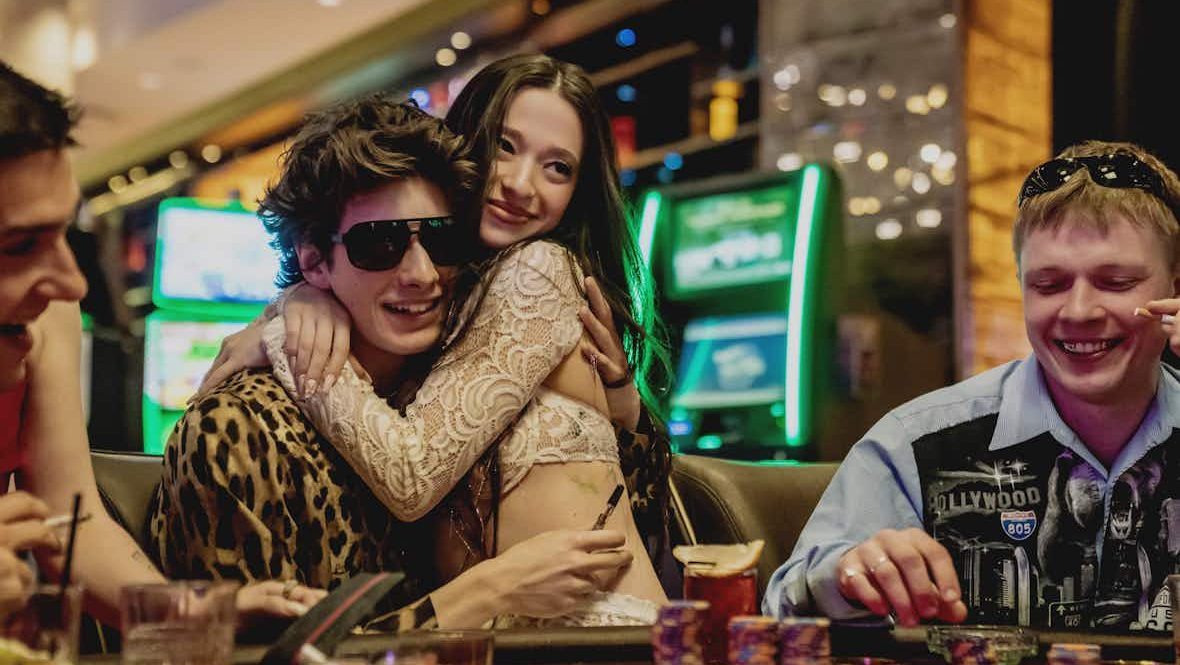
This is something of a rare case, where the lead editor is also the writer, director, and producer. Sean Baker, whether you’re a fan of his work or not (I loved Anora and Red Rocket, but I despised The Florida Project), prides himself on being something of a one-man band from a creative standpoint. He leans on others for areas where his expertise is lacking, but for the most part, he likes to take on as much of the responsibility as possible, ready for the praise or blame depending on the outcome, knowing that he executed his own vision as accurately as he could.
When it comes to Anora, he strikes a fairly delicate balance from the edit booth, compressing certain scenes for comic effect, while letting others breathe for dramatic effect. This is a pretty standard narrative discipline. Where it gets fun is when he reverses this tried and true practice as a means to tell the story as a fractured fairy tale. He lingers on shots of Mikey Madison and Yura Borisov arguing over the most petty and mundane of topics, making them look like an old married couple, because the tragic irony is that Ani sees Igor – a genuinely nice guy in a shit situation – as the worst of all romantic outcomes, the ultimate destruction and failure of the dream life she had mere days before. Conversely, her time spent with Vanya, which is presented as the largest bit of wish fulfillment possible, is diced into short vignettes, almost like snippets of memory from a massive drug high. The sex scenes in particular are extremely fast-paced, which lends a little bit of comedy (oh look, rich 20-year-old only lasts about five seconds, teehee), but in reality they’re much more devastating for how fleeting they are.
No better is this subversion demonstrated than in the midway scene where Vanya flees while Igor, Toros, and Garnik have to deal with Ani. This sequence is something like 20 minutes long, and it’s hilarious from beginning to end, with constant ebbs and flows of violence, profanity, and general ineptitude from all sides. Cuts are minimal, with several sustained shots keeping the scale of the space and the stakes of the moment front and center throughout. The natural inclination is to truncate this to just the major bullet points, but Baker resists the temptation, realizing the importance of letting the audience catch its collective breath along with the cast. This scene would have still been effective had it been edited in a traditional manner, but it’s one of the best of the year because it wasn’t. This is where someone like Sean Baker putting the onus on himself actually serves the higher purpose of the film rather than being a case where the creator has his fingers in too many soups. The need to keep a scene like this as long as possible is almost anathema to what editors are trained to do, and it’s hard to communicate that necessity on a technical level, because there’s an artistic angle that could get lost in translation, so just like for film in general, it’s better to just show rather than tell.
The Brutalist – Dávid Jancsó
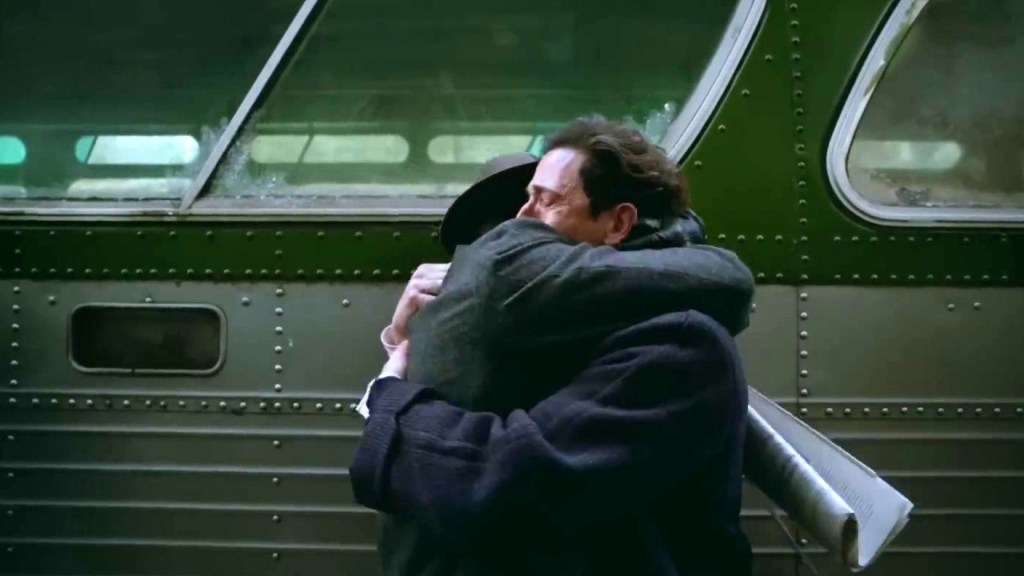
This is kind of a hard one to judge, because The Brutalist is so long. That’s not always a bad thing. There are several recent examples, like Drive My Car, Oppenheimer, and Killers of the Flower Moon, that are well over three hours long but never once feel like they drag. This film definitely does. Part of that is because the story doesn’t properly fill out the runtime, but that’s more a discussion for Original Screenplay, which I’ll cover in video form on Friday. The other major part of it, though, is that the slog is kind of the point.
As an artform and architectural style, brutalism is, by definition, rigid, sturdy, plain, and almost aggressively utilitarian. As Adrien Brody himself puts it in the film, his buildings are meant to endure, just like him and the Holocaust survivors to which he dedicates his craft. It’s not supposed to be flashy, but functional and lived-in, and you can easily argue that’s how the movie itself is assembled. Janscó employs several static shots, makes several cuts to what are essentially just different angles of the same scene, and holds for far longer than logic would dictate. He often only goes to quicker shots and more rapid cuts in the moments where László Tóth himself breaks down, particularly the heroin scenes, a subtle illustration that his foundations are becoming shaky.
That said, man does this movie take its time in ways it doesn’t need to, and it’s often at the expense of story. We are given no explanation, for example, as to why Zsófia suddenly starts talking again in the third act, even though her muteness was a pretty important element to the first two. Again, that could be intentional within the film’s motif, as a brutalist viewpoint would argue that it doesn’t matter why she talks, only that she does, because it means she’s fully realized. That’s all well and good, but then why do we need about 47 different scenes where László just lights up a cigarette? My aversion to smoking in movies notwithstanding, this is just gratuitous. They add nothing to the proceedings, and they take forever. Sitting in the theatre, I was reminded of the scene from The Room where Tommy Wiseau meticulously rigs his answering machine to record phone calls, even though a simple shot of connecting one cable would get the job done. Are we really campaigning for the highest honor in film when I can easily invoke The Room?
Finally, we have to address the elephant in the room that is generative AI. Despite the constant cries of above- and below-the-line workers to stop using it, there are two major ways The Brutalist employs it, and one of them applies here. AI was used to “shore up” some of the Hungarian accents, as none of the cast members are from that country, and that was incorporated into the edit as part of adjusting the audio, as artificial voices were blended with the on-set spoken dialogue and ADR recordings to create what we hear from the actors’ lips. This wouldn’t necessarily fall under the Sound category, as the Sound Editing element is more about effects and foley art, and The Brutalist isn’t even up in that category anyway. I don’t think audiences would have thought twice about absolute fidelity to Hungarian dialects, but apparently the powers that be thought it was necessary. Its use is an insult to hard-working PEOPLE who should not be replaced by machinery, and it kind of undermines the point of the film, which was using brutalist architecture to ensure that Jewish heritage and culture could not be erased by the Holocaust.
Conclave – Nick Emerson
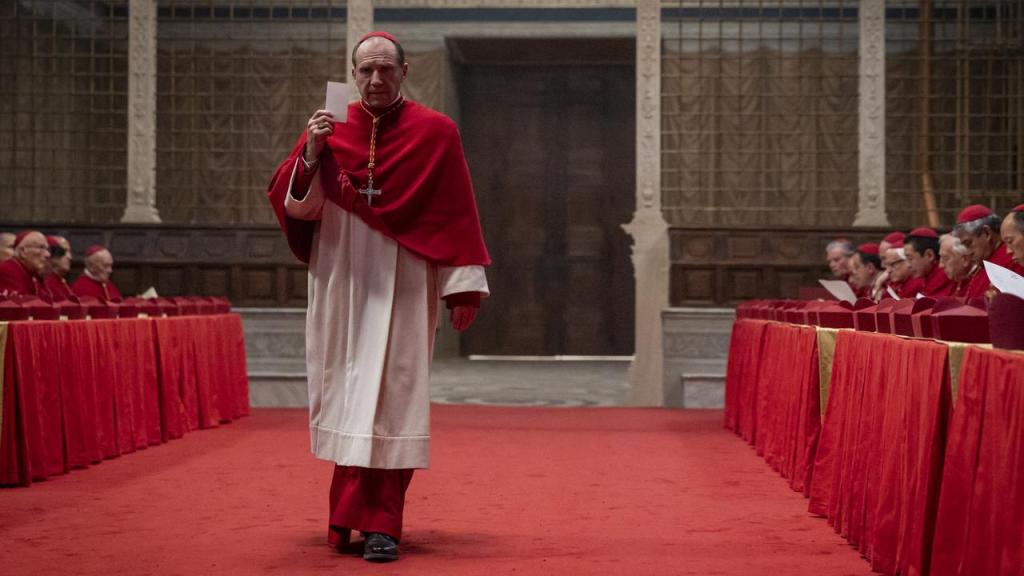
There are three major tasks when it comes to the edit of Conclave. The first is to keep building the tension and suspense at a proper pace, never escalating too quickly but also maintaining what you already have so that the audience doesn’t get bored. A lot of that comes down to story structure, but the technical skill in the booth is crucial as well. The way it works here is to choose shots that are both tight on time and framing, and strategically cut between them in an almost rhythmic fashion, like the ticking of a clock. There aren’t too many wide or long-lasting shots in the film, so Emerson makes them count when he has them. Each time Cardinal Lawrence makes his way up the aisle to cast his vote, it’s meant to look like he’s willingly marching to his own personal gallows, with the scene intercut with the nervous, entitled, or accusatory stares of his peers. As each ballot progresses, the speed picks up, with the more perfunctory moments (counting, announcing, sewing the cards through a thread, burning, etc.) pieced together to give the impression that each successive vote is more mechanical than personal, an expert illustration of how the process gradually saps the humanity out of the Church’s hierarchy and storied structure.
The second trick is keeping track of the moving pieces, particularly as it relates to the mysteries surrounding the papal election. A good portion of this is a credit to Edward Berger as a director, blocking the scenes and shooting them in such a way that keeps characters like Sister Agnes firmly in the background but always active. Sadly, Berger isn’t nominated, nor is the Cinematography, so it falls to talking about this category to bring all the laudatory elements together. In nearly every quiet scene around the sequester, something is going on that isn’t in the center of the frame. Sister Shanumi moves ever closer to Cardinal Adeyemi, leading to their eventual confrontation. Various Cardinals join and leave the table where Cardinal Tedesco holds court like an Italian version of Regina George. As Lawrence and Monsignor O’Malley have hushed discussions of evidence and suspicion on the chapel steps, passersby make subtle movements as if trying to eavesdrop. Sister Agnes herself is always looking in the right direction in all matters, right up until the moment when she finally breaks her silence. As Lawrence and Bellini take stock of the various campaigns, plots, and momentum shifts, we’re always presented an angle that shows exactly how and where someone might intrude.
It takes some effort to notice these moments, as it requires you to divert your attention a bit, but again, it feels like that’s the point. It’s a mystery. You’re meant to search for clues all over the place, and the edit provides you with ample opportunity. There’s also a very strong thematic angle to it, as the film clearly establishes its antagonists (Tedesco, Adeyemi, and Tremblay) as ambitious men who seek the power and influence of the papacy just as much as they would any sort of pious intention. As such, you can easily see any of these candidates as the type who would glorify themselves as well as the institution, demanding fealty through words rather than earning it through acts, and it wouldn’t be the least surprising if they delighted in telling the masses to “avert their gaze” as they’d see themselves as God’s emissary on Earth. That ego plays directly into their characterizations, and the edit toys with it as an artistic tool.
Then there are the private moments, typically in either Lawrence’s or Benitez’s quarters. In a small, almost Spartan space, the edit reverses the perception, using softer colors and lighting in contrast to the voting scenes to create a warm atmosphere of respite, coinciding with the breaks in the procedures, which lets the audience decompress and assess what they’ve just seen. Every thriller, especially political ones, needs these brief moments in between the sequences where they ramp things up, in order for the viewer to catch up and not be overwhelmed. These scenes happen at just the right times, allowing us to further connect with Lawrence as our cipher. He’s figuring things out at the same rate that we are. We’re not jumping ahead, and he’s not falling behind. Maintaining that is no easy feat, and Emerson pulls it off majestically.
Emilia Pérez – Juliette Welfling
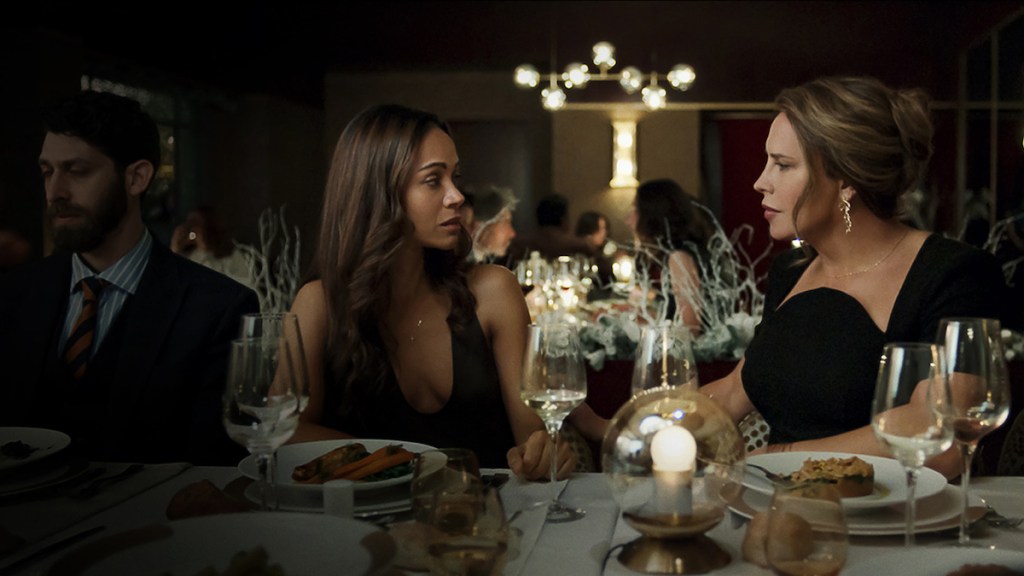
I almost pity Juliette Welfling, who was previously nominated for this award for The Diving Bell and the Butterfly, as she has arguably the most thankless job of anyone in this field, and anyone associated with the film. The burden is put upon her to make this parade of ignorance into something resembling a coherent story, seemingly based on the momentary whims of a man who is clearly trying to hack Awards Season with a bunch of box checks rather than make an actual movie. I applaud her efforts, but this is just a mess.
First of all, there’s basically no consistency in how scenes transition from one moment to the next, apart from awkward onscreen location splash plates. We get no real indication of the passage of time, the geography of a given location, or any firm establishment of mood and setting. As we pass from a “normal” exchange into and out of a song sequence, there is no connective tissue whatsoever. We just start singing, stop for no reason, and then resume dialogue, with the occasional change in the lighting setup as the only clue to the audience that anything has transpired. This is particularly jarring since nearly every musical number is in a different style, so we have nothing to ground the proceedings as a baseline for our collective reality.
As for the numbers themselves, they’re just a series of rapid-fire jump cuts with no logic or spatial awareness to them whatsoever. Continuity errors abound in the “Vaginoplasty” scene, as several background dancers and props are constantly being spun around and jostled about, but they rarely sync up from one shot to the next, because all the focus is on the doctor and Zoe Saldaña. During “El Mal,” Saldaña just prances about the room, pointing and kicking in the general direction of the people she’s mentally denouncing, only for the scene to clumsily cut back to Emilia at the lectern. There’s no rhyme or reason to any of it. Even “Mi Camino,” the one song I enjoyed, employs the oh so tired practice of using the edit to transition to and from different locations without a break in the song, which essentially translates to reality as Selena Gomez singing a line, and then waiting several minutes until she’s somewhere else to pick it back up.
It’s just lazy, and as I made clear in the preamble, I put this 100% on Jacques Audiard, not Juliette Welfling. She’s did the best she could with the marching orders she was given, but there’s just no saving this. The edit is needlessly hyperactive without conveying anything relevant to narrative or theme. Even the climactic attack is edited worse than a freaking Marvel film, where we somehow need eight cuts for a single gunshot or attempt to scramble in a vehicle. It’s all just noise, which sadly is in keeping with every other element of the movie.
Wicked Part One – Myron Kerstein
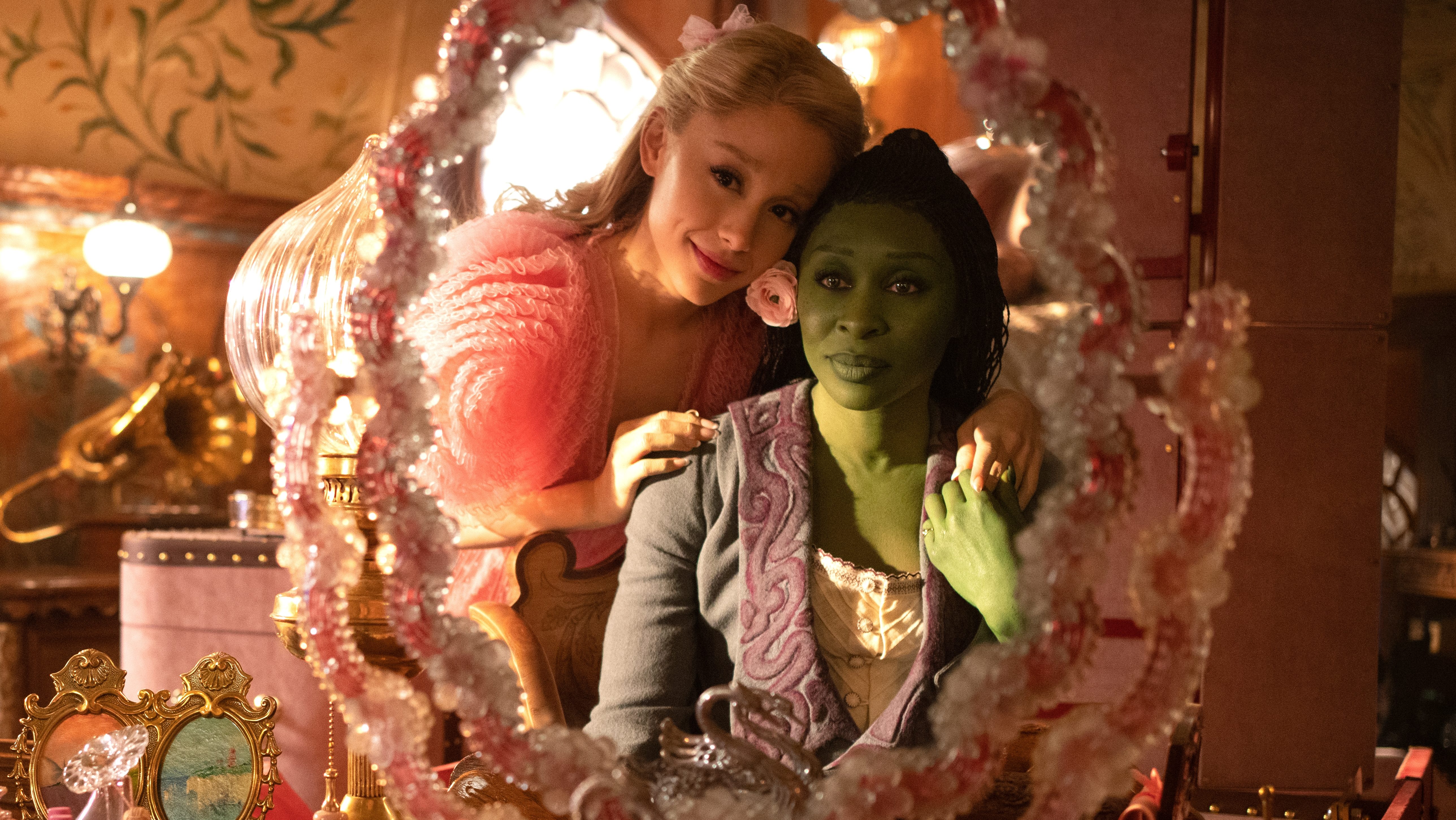
Kerstein is a frequent collaborator with director Jon M. Chu, having worked on Crazy Rich Asians and In the Heights. He’s also been nominated in the category before, for his work on tick, tick… BOOM!. Basically, he’s made his mark for his ability to edit in a way that maintains the high energy of a stage musical, as well as films inspired by their style. So you can guess why this particular job comes up short for me. Comparatively, Wicked Part One is utterly lifeless.
It’s not that the film doesn’t have its moments, and you can see the effort put into the more up-tempo numbers, but nothing in this movie comes close to the likes of the “Therapy” song that expertly cut between stage and set with increasing speed, or the display of mass choreography mixed with individual fantasies and asides that was the “$96,000” community pool scene. The closest Wicked gets to those insane levels of excitement is the “One Short Day” sequence, but that’s mostly down to the fact that we’re finally getting close to the end, and we’re all delighting in the cameos from Idina Menzel and Kristin Chenoweth.
Pretty much all the other major songs have some liveliness, but it feels more like an imitation of a stage play rather than a spontaneous exercise in musical cinema magic. Take “Dancing Through Life” for example. The set looks cool, but ultimately it’s just a bunch of people dancing around tables doing a Stomp impression while a couple people in the background run on giant hamster wheels, and then we cut to outside and do High School Musical in the courtyard. It’s more than competent, but you don’t feel anything like you did in those other movies. Similarly, we open on “No One Mourns the Wicked,” which starts with a cheap CGI tour of Oz (including Dorothy and her companions for some reason), then we get to Munchkinland, where quickfire jump cuts to medium and close-up shots substitute for choreography like a half-assed version of Chicago, and occasionally we check on Glinda looking bored. I think the worst offender of all is the “Ozdust Duet,” where suddenly Galinda and Elphaba become friends. I mentioned this in my review, but the scene reminded me of the (thankfully) short-lived game show, The Moment of Truth, which became a meme unto itself for the number of times it would just cut between extreme close-ups of the involved parties’ faces on every single question as an attempt to generate false tension before revealing if the given answer was a truth or lie. Sometimes the show would even go to commercial break in the middle of this nonsense, only to come back and recap before starting the cycle over.
All of this comes down to the film relying too heavily on nostalgia to get fans and audiences over the hump, but also because Chu decided to make this into two movies. The actual stage show lasts about as long as this half-picture does, and as such, Kerstein had the monumental task of padding this sucker out. If you kept this to the actual runtime of the show, he’d have been able to keep things punchy and tight, which helps fuel the overall energy of a scene. Instead, he had to find ways to make things longer, and it just didn’t work. Those who love this show, and the film by extension, were more than happy to forgive this, because it’s more time spent with something they enjoy. I totally understand that. But from a more objective viewpoint, it was just superfluous.
It’s almost a cruel joke to say that half a movie deserves an Oscar for Editing, but there is one more element that needs to be discussed, and that’s the color palette. I already mentioned this briefly when I went over Visual Effects, but color balance and correction is a part of the editor’s job, so it bears repeating here. The colors are drab and washed out to an insane degree. This was likely a side effect of optimizing the film for IMAX and other large format screens. If the colors of the original print are too bright, they become exponentially brighter on such a huge surface, and that can hurt the viewers’ eyes. At the same time, though, IMAX means an upcharge, so more money! Thus the decision was made that profit mattered more than quality, and those who didn’t want to pay extra had to sit through a desaturated color scheme that looks more dull than the actual sepia tone that was used in the 1939 film’s Kansas scenes. Art was sacrificed for economics, and I’ll never be okay with that. For all that was made about pink and green going so well together, in practice it might as well just be wallpaper.
***
So, you can pretty well guess where I stand here, and it’s a theme you’ll be seeing a lot over the course of the Blitz. For all the hype, the three films with the most overall nominations are demonstrably worse than the other two (which are both superb, and basically a coin flip for my pick), to the point that they shouldn’t even be in consideration in this field. The Brutalist at least had a point to what it was trying to do, but the execution still left plenty to be desired. Hopefully the Academy voters will realize this fact as we get closer to Oscar Night, but I have my doubts.
My Rankings:
1) Conclave
2) Anora
3) The Brutalist
4) Wicked Part One
5) Emilia Pérez
Who do you think should win? Vote now in the poll below!
Up next, all the world’s a stage… and we need some window dressings and props. It’s Production Design!
Join the conversation in the comments below! What editing tricks do you enjoy? Which of the categories do you feel most qualified to judge? No seriously, how is half a movie an actual nominee in a contest based around efficiency? Let me know! And remember, you can follow me on Twitter (fuck “X”) as well as Bluesky, and subscribe to my YouTube channel for even more content, and check out the entire BTRP Media Network at btrpmedia.com!

 I Actually Paid To See This
2 thoughts on “Oscar Blitz 2025 – Film Editing”