
I hadn’t intended to use the preamble for these category breakdowns as a pretense for personal anecdotes, but sometimes it just works out that way. The annual Oscar Blitz always has a lot of ground to cover, and as I go on, I find myself getting into certain grooves where I’m just able to type to my heart’s content and come up with something germane to the topic at hand. Sometimes it’s inside knowledge of the industry, sometimes it’s the history of the nominees, sometimes it’s just random stupid shit that connects for reasons that don’t even make sense until after I’ve read it over. So yeah, this wasn’t the goal at the start, but I have to talk about something, and these little nuggets of my past just happened to be the outlet that emerged, sort of like how all the questions in Slumdog Millionaire just happened to connect to Jamal’s life even though he had no formal education on the various topics. What I’m saying is, if you’re wondering how my life relates to this year’s Blitz… it is written… by me.
When I covered Original Screenplay last week, I talked about how much writing has meant to me over the years, while lamenting that I’ve not really gotten back into scripts since my college days. There’ve been a couple aborted attempts at rewrites and new ideas, but nothing’s materialized. I also mentioned that I haven’t ever gotten that euphoric high while doing an adaptation because I’ve never fully done one, so in that respect, I enjoy the Original category more than Adapted.
However, I did try to adapt something once before, and there’s another situation entirely where I’ve considered it. I’ll explain. In 2004, shortly after I graduated, I was sitting in my bedroom back home futzing on my computer, when I decided to give it a go. Over the previous few years, I had gotten into the Harry Potter series, much like everyone else on the planet. I even met my girlfriend at the time through an online Hogwarts-based RPG. It was all message boards, so you had to use your imagination, but it was fun. I even started writing my own fanfic about a “Mudblood” who got sorted into Slytherin as a parallel story to the long-awaited fifth book, which generated so much speculation in the leadup to its release, but that’s neither here nor there (though I did correctly predict that Ron would be a Prefect instead of Harry). The movies were my entry point into the series. I saw the first one with my mom as part of our annual Black Friday Family Film tradition, and fell in love. I had dismissed the books as kiddie fare up to that point, but when I saw it rendered on the big screen, I became an instant fan, and proceeded to read the four books that existed at the time within the span of a week. I would read them several more times in anticipation of the fifth book, which came out in 2003. I plowed through it in the fortnight before I went to Ireland for my summer abroad program, where I met said girlfriend in person for the first time.
Anyway, while I enjoyed the movies, I noticed that more and more was getting trimmed from the stories as they were made. The first one was pretty much the same as the book, with a few minor tweaks, but the second one started sidelining characters, and by the third film, Prisoner of Azkaban, which came out right after graduation, entire plot lines were being culled and new tangents were being put in instead. So on that summer evening, I thought to myself, how hard can it be? I took out my copy of Order of the Phoenix, and decided I would attempt to do what Steve Kloves had done three times over for massive paydays – turn an HP book into a script.
As the longest book in the series, I knew that adapting Order of the Phoenix would be no walk in the park, especially if there was any correlation between page counts of the novel and eventual screenplay. The U.S. edition of the book was 870 pages. Remember what I said last week about one page of script equating to about a minute of movie time? Well, if that held true for the actual source book, we’d be looking at a 14.5-hour affair. Thankfully, this was just a bit of a lark to see if I could do a proper adaptation. I wasn’t trying to actually sell this or insert myself into the production of the film series. I was a kid fresh out of college with no contacts in the industry, and no real infrastructure to make any. I just allowed myself the fantasy that I could mail a finished draft to J.K. Rowling herself and she’d see that I could make her work feature-length without culling the important side quests and lore (the Order’s history, the nature of prophecies, Firenze, the concept of Occlumency, the OWL exams, and the smear campaign against Harry), and thus find me some work. Beyond silly, I know, and obviously given her social downfall over the years, I doubt anyone’s asking her for favors these days. But it was enough to inspire me to make the attempt.
I made it through one chapter.
The plan was that I’d create a screenplay by simply lifting every line of dialogue and event from the book, then make adjustments once it was done. That way, I’d have a reference point to make sure that every change would be logically sound and not create plot holes. That was the theory, but the execution was exhausting. I spent that night transcribing the first chapter, “Dudley Demented,” into script format, and I mean I spent the entire night. I type relatively fast, but it still took over six hours, and without any embellishments, the script was over 60 pages, more than double the length of the book chapter. I knew I was beaten. I’d have to make this basically my job for the next six months if I was going to actually do this (and I already had a summer job that took everything out of me), and even if it worked, it would only be for my own edification. It just wasn’t worth the time, and I decided it was best left to the experts. The movie of Order of the Phoenix came out four years later, and while I enjoyed it, it was terribly compressed. I didn’t have to wonder why.
My other story is thankfully more positive, and quicker. Around 2012 or so, I wrote a short story. The idea had come into my head some months prior, and like any personal writing project, I let it gestate until I had it fully formed in my head. Then I just sat at my computer on a random Sunday and typed the whole thing out in one go. I showed it to my therapist, who was a bit of a literati and had a subscription to The New Yorker (now celebrating its 100th anniversary). He took it home with him (this was his request; I simply told him that I had written something and he asked for a copy), and at the next week’s session, he had two notes for me. The first was that I should polish it up a bit and submit it to The New Yorker, because he thought it was that good (I never did, as I was too nervous, though I’ve thought about it ever since).
The second was that, to him, it read like a screenplay. I hadn’t really thought of that, but it made sense. I wrote in present tense rather than past, so a lot of the action could easily look like scene direction. Also, while I wrote the dialogue in English, the story is set in Japan and the characters are all speaking in Japanese (save one crucial point late on), and he said it felt like he was watching a short film and reading the dialogue like onscreen subtitles, which he told me helped get the emotion across better than had I just written it in standard prose.
Ever since then, I’ve thought about what it would take to turn that story into a short, preferably an animated one, because I like imagining the story in anime style. So maybe that will be my eventual moment of zen in adaptation. If I ever do get this story published, there’s nothing saying I couldn’t turn it into the script that it apparently always kind of was. Part of the mystery of adaptation is what drives the writers to take someone else’s work, or even their own previous art, and transform it in such a way. Maybe that’s my pathway into that proverbial “zone.” I don’t honestly know, but it’s nice to ponder, and we’re all at a bit of a shortage when it comes to positive and aspirational wondering these days.
This year’s nominees for Adapted Screenplay are…
A Complete Unknown – James Mangold and Jay Cocks; based on the book Dylan Goes Electric! by Elijah Wald
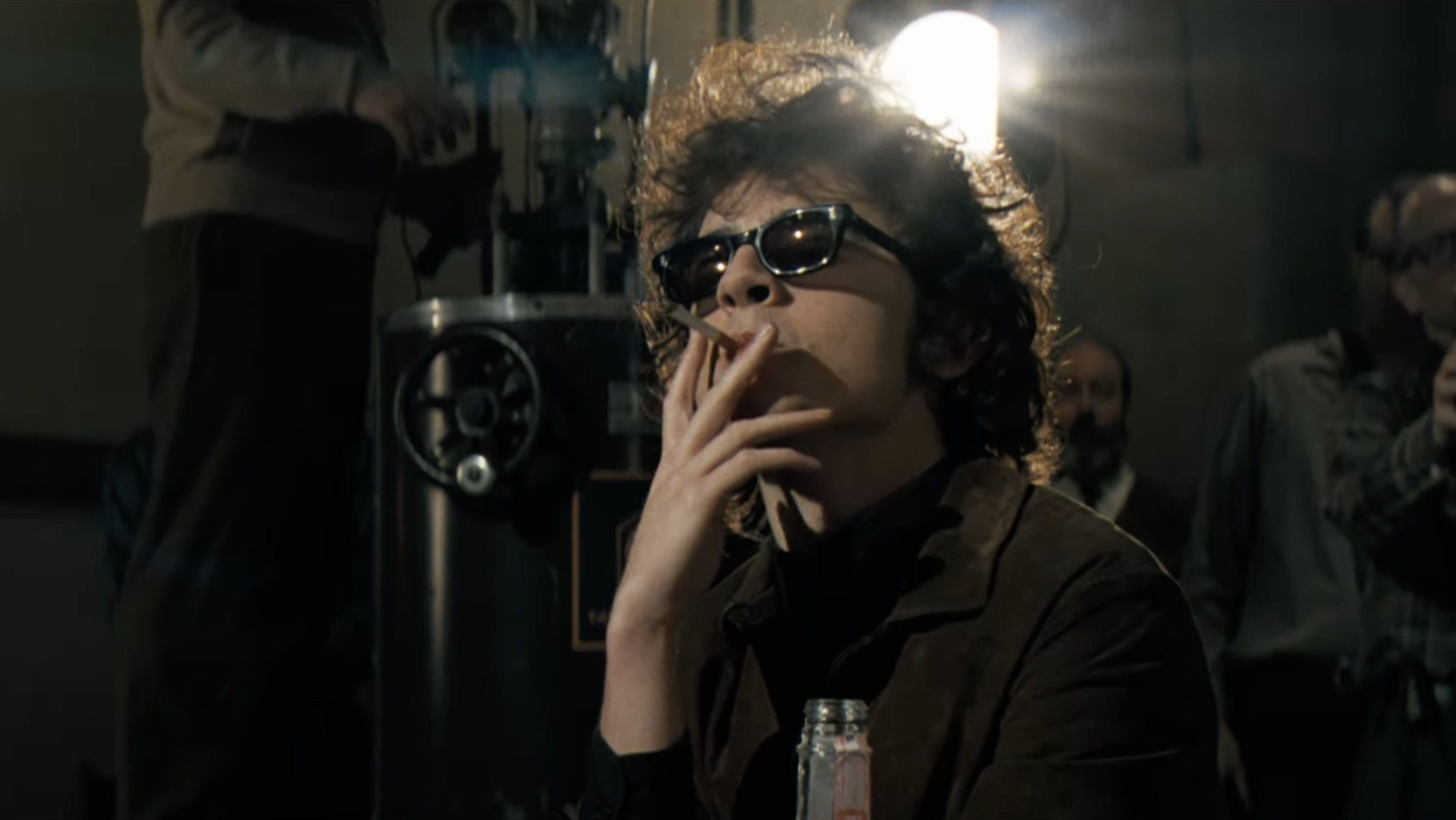
Sometimes a script’s source material is used as inspiration for a larger story. Sometimes it’s almost a direct translation. Sometimes it’s just a bunch of characters that are used in a completely different way, but the previous incarnation still has to be acknowledged. Sometimes, like in the case of A Complete Unknown, it’s just there to set some parameters.
There are exactly two ways in which the Dylan Goes Electric! book plays into this screenplay. The first is that it tells the viewer right away how much of Bob Dylan’s life and career we’ll be covering. While it feels incredibly tame by today’s standards, it was apparently quite the brouhaha when he used electric instruments at the 1965 Newport Folk Festival, and as we see in the final performance, it really did divide the crowd and the organizers, and Dylan really did get heckled and have shit thrown at him. I can’t imagine what those same people would think about Kendrick Lamar’s Halftime Show last weekend.
The second is the character of Sylvie Russo, played by Elle Fanning. This was a quasi-creation for the film, as there was no real Sylvie. However, she’s clearly based on Suze Rotolo, who was Dylan’s girlfriend at the time. As a special request from Dylan himself, her real name was not used, and instead a legally distinct composite character was created, though everyone who knows about Dylan’s life knows she’s Rotolo under a different name. This happens quite often when adapting real events and people, and why there’s always a disclaimer at the end of the credits about dramatic license.
As an actual screenplay, things are pretty straightforward. One of the few complaints critics had about this film was that it didn’t really do a deep dive into Dylan as an artist, instead offering a fairly standard music biopic where the audience acts as a constant companion to the main characters rather than flies on the proverbial wall learning secrets. This is how you get moments like Pete Seeger trying to sabotage Dylan’s performance (which never happened, though he did talk to the sound board operators because the amps weren’t calibrated for electric instruments, so he couldn’t hear Bob singing) or Johnny Cash offering his guitar in the final moments even though he wasn’t even at the Newport Festival that year.
Thankfully, the film is so engrossing and fun that for the casual viewer and fans of both Dylan and rock music, the formulaic script doesn’t really matter. Yes, the critics have a point, just like they did with Bohemian Rhapsody, but it doesn’t detract from the viewing experience. It does mean that this probably shouldn’t win an Oscar, but if that’s the bar set for every screenplay, the entire film industry would quickly die.
Conclave – Peter Straughan; based on the novel by Robert Harris

Peter Straughan is probably not someone you’ve heard of before now, but he has quite an eclectic résumé. Over the years he’s penned some pretty brilliant screenplays like the adaptations of Tinker Tailor Soldier Spy and The Men Who Stare at Goats, while also generating some pure stinkers like Our Brand is Crisis, The Snowman, and The Goldfinch. It just goes to show how difficult adapting someone else’s work can be. Some ideas, cultural practices, and psychological theories simply don’t translate to the screen. But when it does work, it can be damn near magical.
Such is the case with Straughan’s script for Conclave. Is it perfect? No. There are some moments that are decidedly cheesy, like Benitez’s speech about acceptance and peace that ultimately wins over the College of Cardinals, but they all serve a purpose, which is the idea of openness and honesty when it matters, and how a lie can be for the greater good.
So much time is spent around the various skeletons in the closet for the respective papal candidates, and they’re all paced out properly. Cardinal Lawrence finds things out in bits and pieces that make narrative and logical sense, and when he needs help, he finds it in Sister Agnes, who’s always present in the background, gathering her own information in silence. This way, when things are revealed, they don’t seem out of left field, but as the natural progression of the proceedings. As much as the Church – both the real one and the fictional one depicted here – relies on faith, the steady discovery of cold, hard fact is a refreshing subversion of expectations. It’s also extremely easy to follow along, even if you’re not a Catholic (I sure as hell am not), because while papal conclaves are shrouded in secrecy, we know enough that we can connect some dots with the information we do have. That’s a very mature way to keep the audience engaged. We don’t know for certain what goes on in the Sistine Chapel, but this is as good a guess as any, and it’s properly dramatic and suspenseful to boot.
And then, of course, there’s the big twist at the end. I won’t spoil in case you haven’t seen the film yet, but it definitely shocked me, as it did many others, and for some it was quite divisive. I love it because it makes a weird sort of sense, and the clues were there, so it doesn’t come completely out of nowhere. It’s just so stunning because it runs counter to the perceptions we have about the institution, and how religious culture wars have played out over the last decade-plus. I mean, there used to be a time when the Pope was considered the closest thing to God on Earth. Now, we have a pontiff who’s a bit liberal relative to the historically ultra-conservative Church, and rather than being followed and revered as infallible, we have scores of Catholics in this country – including clergy – who act in open rebellion because he doesn’t endorse their hatred and bigotry.
Not only does the twist fit perfectly within the parameters of the story and dialogue, it’s also a bit aspirational. It allows the viewer to ask questions of the film and of themselves, an open invitation for debate and discourse about what would happen in such a situation, and what we ourselves would do in Lawrence’s shoes. He spends the whole movie in a crisis of faith, and opines that doubt is better than certainty because it creates opportunities for self-examination and prayer. This ending is the answer he was seeking all along, a chance for grace and an understanding that a secret kept in good faith is its own form of divine trust.
Finally, I’ve said before that fidelity to source material isn’t always paramount. It matters more to tell a good story first, then you can go back and make sure that you’re not betraying your own inspiration. In this case, artistic honesty is crucial, because if you utterly change the original story, you’re undermining the very point of it. So, for all those who think the twist was just for shock value, know that it is in fact how the book ends. The only real changes from page to screen are changing the main character’s name (he’s Thomas Lawrence in the film, but Jacopo Lomeli in the book, an Anglicization for the sake of English-speaking audiences) and Benitez’s diocese (it’s Baghdad in the book and Afghanistan in the movie, an update done because the latter was more recently an active war zone), and those ultimately don’t affect the story. What really counted was kept pure, and if you’re curious, the novel expands on it further, so you can get even more insight into how the twist happened if you so choose. You don’t always have to be true to the source, but here, Straughan did exactly what was needed.
Emilia Pérez – Jacques Audiard, in collaboration with Thomas Bidegain, Léa Mysius, and Nicholas Livecchi; based on the opera libretto Emilia Pérez by Jacques Audiard and the novel Écoute by Boris Razon
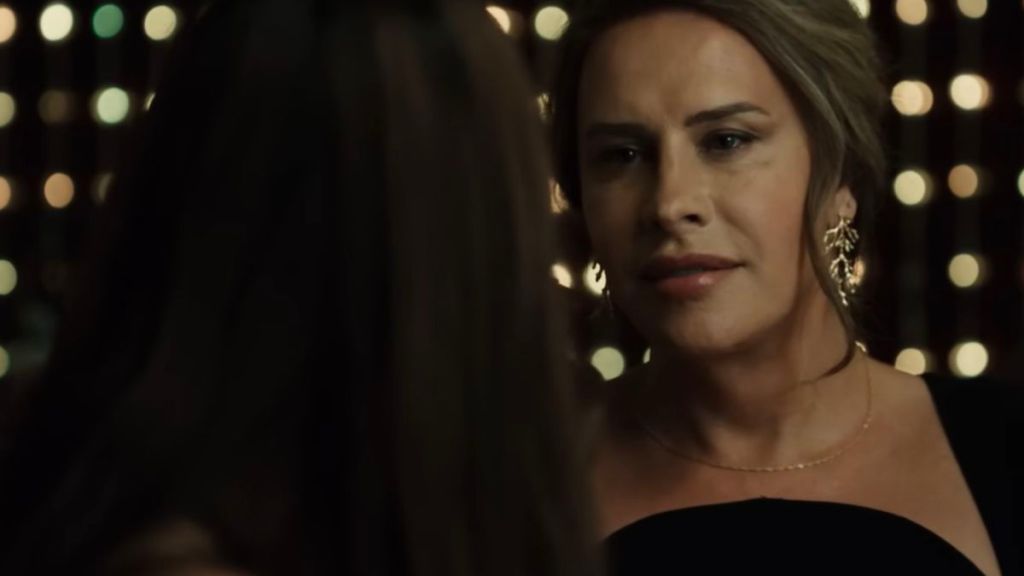
Finally, a bit of intrigue with this movie! To be clear, this is not something good or exciting about Emilia Pérez, but it is at least interesting. There are a ton of problems with this film, but when you read the description of this nomination and adaptation, at least part of it starts to make sense.
This began as an opera libretto, one that Jacques Audiard wrote before turning it into a motion picture. If you watch or read reviews of the flick, particularly the ones that thought it at least had potential despite being awful, you’ll find a common thread, the curiosity and suggestion that maybe this should have been an opera rather than a film. That way, the constant talk-singing that somehow counts as musical numbers actually makes sense. It also explains the over-the-top melodramatics and soap/telenovela performances. In the context of an opera, it fits. All the insults and misfires aside, it would at least track in that form. I’d honestly be willing to give this another chance if it was presented in the style that was originally intended.
But as has been well documented over the last few months, so much was lost in the translation. The story is terrible, and driven by painfully outdated stereotypes and negative portrayals of Mexicans and the trans community, painting the former as endlessly corrupt criminals at all levels of society and the latter as violent liars. The absolutely ignorant lack of research into Mexico and Latin American Spanish made for dialogue that native speakers have noted time and again does not gel. Audiard’s dismissive reaction to this almost fatal flaw only compounds the lack of integrity.
This further extends to the casting of Selena Gomez and Zoe Saldaña in the supporting roles. Both are American-born with Latin roots (Gomez’s father is Mexican and Saldaña is a mix of Puerto Rican and Dominican), but their heritage is only taken into consideration in the form of a couple tossed off lines. Rita mentions being Dominican and Jessi both brings up being American and wondering if she’ll be going back to the States. This wouldn’t be a big deal were it not for two factors. One, Adriana Paz is the only Mexican actress in the main cast, and the casting director has insultingly gone on record as saying that she couldn’t find any legitimate Mexican talent, so Americans were cast as well as Karla Sofia Gascón, who is from Spain but does telenovela work in Mexico. So already you’re writing off an entire country’s worth of performers and artists. Two, they’re still all speaking an Iberian dialect, not a Mexican or Dominican one. Imagine if the U.K. made a movie about the U.S. but only cast Australian actors and told them to speak exclusively in local slang. Wouldn’t that piss you off? That’s how this came off to Mexican viewers. A former colonial power made a movie about them without any understanding of how life actually works in their country (Audiard has admitted he’s never even set foot in Mexico, so me going to Cozumel as a port of call on a cruise makes me more qualified on the subject than him), and only used actors and dialogue reminiscent of another colonial power. Rather than, well, ADAPT to the settings and people he was depicting, Audiard simply phoned in a line of dialogue to replace the nationalities of his original characters and moved on, which is an entry-level failure for this style of scripting. If I ever do turn my short story into a script, you’d best believe that I’d hire a native Japanese speaker (I know a little but not nearly enough to go it alone) to make sure I was writing Japanese dialogue that made sense rather than just spitting out results from Google Translate. The fact that an Oscar-nominated filmmaker couldn’t be bothered to make even that much of an effort is a perfect example of why this flick has no business being here or in any other category.
The final nail in the script’s coffin is an element we don’t often discuss when it comes to this topic, but it’s definitely relevant to the picture’s overall failure. The movie was shot almost entirely in France, on soundstages. Those stages were built to create an image of Mexico as dirty, dingy, and dangerous, with murderous cartel thugs lurking around every corner. It requires conscious, deliberate thought to write these descriptions into the screenplay so that the production design team knows what they have to construct. Audiard, in his ignorance, intentionally wrote multiple scenes including taco stands, filthy streets filled with unpaved roads and puddles, and industrial sites that would fail any safety inspection. That’s how deep this bias goes, and yet another reason why this should have been rejected the moment it first screened at Cannes.
Nickel Boys – RaMell Ross and Joslyn Barnes; based on the novel, The Nickel Boys by Colson Whitehead
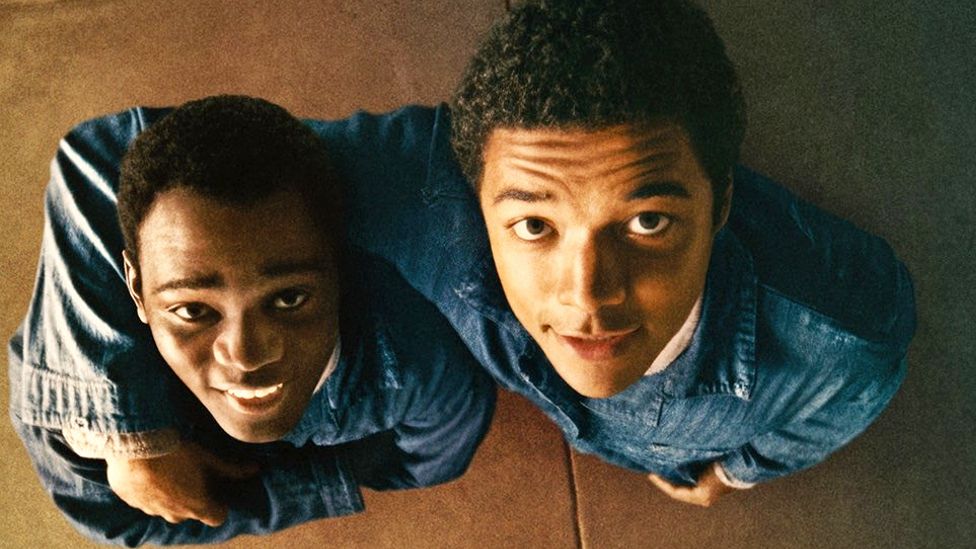
It is an absolute sin that this is the first, and last, time we’ll be discussing Nickel Boys before I break down Best Picture in a couple of weeks. This is the third straight year that a Best Picture nominee is only nominated outside of the top prize for its script, which means it’s all but eliminated from contention. Not only is this a disservice to the respective films (Women Talking and Past Lives), but it calls into question why we even have 10 Best Picture candidates when it’s clear some films have no chance, and it raises issues about the nomination process itself. How can something even claim to be one of the best films of a given year if the various branches of the Academy only deem one aspect as truly worthy of consideration? Mind you, this film should be up for Cinematography, and you could also make a case for Supporting Actress and Film Editing, which would give it a more complete portfolio for the top honors, but the voters didn’t do that, and instead it feels like tokenism.
Anyway, on to the script. Colson Whitehead’s novel is by all accounts one of the best of this century so far, winning the Pulitzer Prize for its heartbreaking dramatization of actual events that took place in southern reform schools during the Jim Crow era that served as little more than prisons and labor camps for black youth. The fact that the story hews so closely to the actual atrocities that took place at these institutions is gut-wrenching and visceral in the extreme.
RaMell Ross and Joslyn Barnes get this across really well, particularly with the contrasting dialogue between its two leads. Elwood, who has led a relatively privileged life for the time and his race, believes in the decency of people and hopes that justice will prevail for him, while Turner, who’s only known trouble and exploitation in his young life, counters with lived experience and cynicism. The two actors play off each other so well because they’re given such great material, allowing them to eventually come to consensus and balance in their respective worldviews, solidifying their bond through commonality. When circumstances change in such a way that Elwood starts doubting the world and Turner starts experiencing true kindness and empathy, it’s extremely moving because we’ve had these intersecting journeys.
The only part of the story that didn’t work for me honestly had nothing to do with the script itself. The twist ending is telegraphed for pretty much the entire runtime, but it’s an issue of casting rather than writing. In the future, we see an adult Elwood still dealing with the traumas he faced at Nickel and his crusade to get all those facilities shuttered and the remains of the lost boys recovered. He’s played by Daveed Diggs, who is one of my favorite actors. You only ever see him from behind, which is one of the lovely cinematic choices Ross makes, but you see enough to know it’s Diggs. And sadly, as much as I love his work, there’s something about his physical appearance in relation to the younger actor that really gives the whole game away. The script itself is tremendous, but we are robbed of the surprise.
Sing Sing – Screenplay by Greg Kwedar and Clint Bentley, Story by Greg Kwedar, Clint Bentley, Clarence Maclin, and John “Divine G” Whitfield; based on the book, The Sing Sing Follies by John H. Richardson and the play Breakin’ the Mummy’s Code by Brent Buell
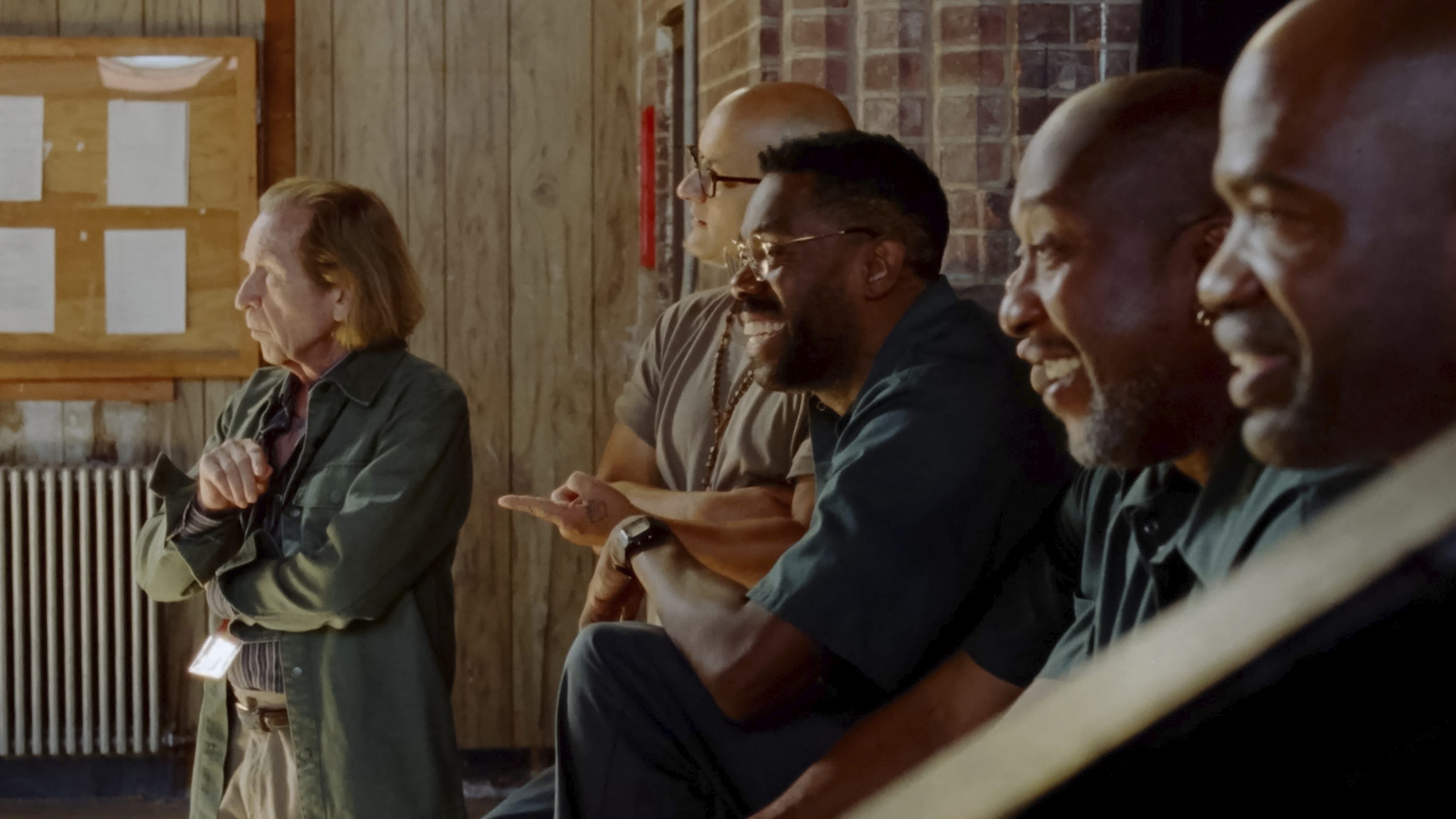
Wow, that was a mouthful, but it’s a major part of why this script is so good. The story of Sing Sing concerns the “Rehabilitation Through the Arts” (or RTA) program at Sing Sing prison, where inmates use the writing and production of stage plays as a means of behavioral therapy to prevent recidivism when they’re released. Much of the cast of the film is made up of formerly incarcerated men who benefitted from it. This includes the main characters, Divine G (Colman Domingo, though the real Divine G makes a cameo), and Divine Eye (Clarence Maclin playing himself).
The whole point of the program is collaboration, and we see that in the film. Participants pitch ideas, which are then worked into a script, they all audition for parts with no one guaranteed the role they necessarily want, they do acting and improv exercises together, and eventually, they put on the show, with costumes, sets, and all the other accoutrements necessary for a full production. It’s not only inspiring, but it shows just how much actual work goes into these things.
So it’s only natural that Maclin and Whitfield would contribute to the story, and that the play they put on is the real play written by Brent Buell, the director and mentor of Sing Sing’s program, played in the film by Paul Raci. It’s a near-perfect encapsulation of how art imitates life and vice versa. We literally watch these men learn crucial artistic skills and then put them to the most uplifting of uses. What’s not to love?
The only slight knock I have is with the story structure, which in a few places feels a little too derivative, particularly when it comes to our Divine Duo. Eye and G’s relationship starts out a bit contentious, but before long they’re very much Andy and Red from The Shawshank Redemption, only in this case it’s Red who was innocent all along while Andy is the guilty one who reforms. The performances are fantastic, but they do a bit of heavy lifting to make you forget the familiar dynamic. I don’t fault it too much, but it did stick out. Still though, you’d be hard-pressed to find a better story and more realistic dialogue within context, as unlike Emilia Pérez, you have the actual people being portrayed contributing to the story and the lines they’re saying. They essentially have veto power to make sure they’re not misrepresented, and that is fantastic.
***
Hoo, boy, this is a tough one. The bottom is clear, as is I think fourth place. It isn’t a bad script, just not a mind-blowing one. The top three, however? Damn. I wish I could write something even half as good. They each have unique features that distinguish them from the rest of the field, they all have great stories and dialogue, and they all teach valuable lessons. I’d be overjoyed if any of them took home the gold. For now, though, I have to go with the one that gave me the first legitimate jaw drop (in a good way) I’ve seen in years.
My Rankings:
1) Conclave
2) Sing Sing
3) Nickel Boys
4) A Complete Unknown
5) Emilia Pérez
Who do you think should win? Vote now in the poll below!
Up next, we close out Week 3 with another video breakdown, and appropriately it’s on Valentine’s Day, where millions of men and women will doll themselves up for a great Date Night. Wish I could say the same, but I’m ugly and unlovable, and I tend to spend the day being an ornery wee cuss. It’s Makeup and Hairstyling!
Join the conversation in the comments below! Have you ever tried adapting something into a script? Which writing category do you prefer? Would you want to see an actual opera about a transgender cartel leader? Let me know! And remember, you can follow me on Twitter (fuck “X”) as well as Bluesky, and subscribe to my YouTube channel for even more content, and check out the entire BTRP Media Network at btrpmedia.com!

 I Actually Paid To See This
2 thoughts on “Oscar Blitz 2025 – Adapted Screenplay”