
I am overjoyed at this year’s International Feature field. Not only is it one of the strongest we’ve seen in years, but for the first time since I’ve done the Blitz the result is genuinely in doubt. Yes, we had a bona fide shock last year when I’m Still Here beat out Emilia Pérez, but that’s 100% down to the backlash against the film itself after audiences actually got to watch it and realize how insulting and tone deaf it was (literally and figuratively) in regards to Mexicans and the trans community. Had the viewer reaction been even a little bit tepid, Pérez would have won, and right up until the envelope was opened, that was still the expectation, as most thought the blowback only killed its Best Picture and Best Actress chances. It was still considered a lock until Academy voters grew a spine.
But setting that aside, this contest, going back to when it was called Best Foreign Language Film, has been open-and-shut for more than a decade. A big part of this is the expansion to 10 Best Picture nominees, which opened up space for non-domestic entries to get a nod or two. The mere inclusion in that list of eight-to-ten rendered the International competition moot, because surely if it’s one of the best movies of the year, it automatically means it’s the best foreign entry. This is how the likes of The Zone of Interest, All Quiet on the Western Front, Drive My Car, Roma and Amour all locked up the prize, along with Parasite, which actually won the whole damn thing. Even outside of Best Picture, films nominated in multiple categories usually portend victory in this contest. Another Round was nominated for Best Director, while Ida was up for Cinematography, and you can argue Son of Saul won because it wasn’t nominated for Cinematography, which was revolutionary for its time. Then you had issue-based wins for The Salesman (director Asghar Farhadi was not allowed to come to the U.S. to accept the Oscar thanks to Donald Trump’s first travel ban on Muslim nations) and A Fantastic Woman (a trans story and part of a larger sweep of Mexican and Latin-American influences with The Shape of Water and Coco). Finally, you have The Great Beauty from 2013 winning because of the Academy’s larger bias (at the time) towards Italy and France. You have to literally go back to 2011 and A Separation, Farhadi’s first win in this category, for a situation where the competition wasn’t over before it even began.
And honestly, you have to wonder why it plays out like this so often. Over 80 countries submit a film every year, and the number keeps trending upward. There were 92 submissions this year, including first-time bids from Madagascar and Papua New Guinea (the latter was deemed ineligible, as were five others, leaving the official total at 86). And yet, it seems we have the same pool of nations represented year in and year out. Part of this is because of the nomination process. Any Academy member in good standing can vote for the shortlist, provided they watch a list of about 10-12 films provided by the Academy itself. Presumably these lists are either randomly generated, or weighted with a mix of smaller countries and traditional heavyweights. Once we get to the shortlist, again anyone can vote, but they have to watch all 15 films.
This is how we get situations like we had this year. There were several films that just didn’t belong on the shortlist, but they made it because of preferential treatment from voters. As I mentioned when I finished up my Netflix mini-series for this go-round, the streamer picked up and promoted two films with major American backing, one in the form of Martin Scorsese as a producer, the other with Sean Baker writing and editing. Neither film was that great, but the Hollywood endorsement likely counted more in voters’ minds than the actual quality of the picture. Similarly, festival hype always plays a part, as much ballyhooed entries like Germany’s Sound of Falling made the semifinals despite it being very confusing and at times obtuse. Very rarely are the films taken at face value and judged on purely qualitative grounds. If they were, we’d see a lot more creativity, not to mention debate, when it comes time to pick a winner.
Still, as it stands, this is, for once, this year’s winner is legitimate mystery heading into Oscar Night. We have two nominees that are also up in several other categories, including Best Picture. This is a situation that could have played out two years ago, but France submitted The Taste of Things instead of Anatomy of a Fall, which was the correct choice if you like actual good stories and acting, but bad if you only go by hype and messaging, which cleared the way for The Zone of Interest. Now, you’d assume that two films also being in the Best Picture conversation would make this a two-horse race, but two more hopefuls are also multiple nominees. One is up for Sound, while the other is nominated for Original Screenplay. Well, surely that means the lone solo nominee is out of the running, right? Don’t be so sure, because while it’s not in the final five for any other category, it kind of exists in a different space from the other four, making multiple nominations quite difficult. Given the elements at play that blur the line between reality and fiction, you could really only conceivably consider it in Sound, Film Editing, and maybe Best Director, and each of those contests are insanely deep this year. So really, it’s anyone’s guess.
This is what the competition should be EVERY year, not once every 15. If the inclusion of foreign films as genuine, credible Best Picture contenders has taught us anything, it’s that international cinema has stepped up its game, and that artistic and technical evolution should be recognized. At least for one cycle, it will be.
This year’s nominees for International Feature are…
It Was Just an Accident – France – Directed by Jafar Panahi
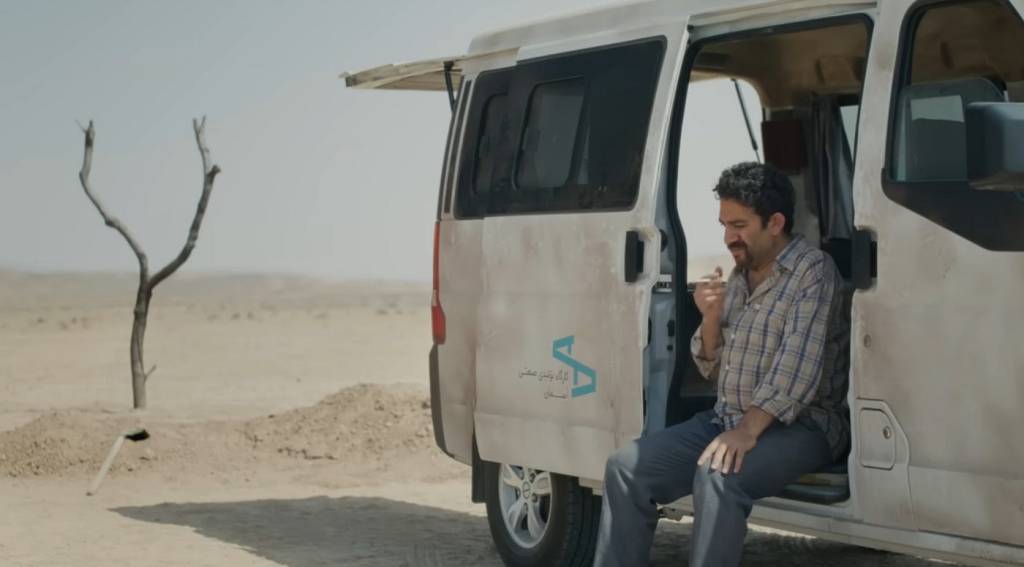
Similar to The Seed of the Sacred Fig last year, France’s submission is not actually a French film, but rather an Iranian one made in secret and smuggled out of the country for completion in Europe out of fear of legal reprisals. Writer-Director Jafar Panahi has run afoul of the regime many a time, and has even been imprisoned for his art’s critical angles. His persecution, combined with the sheer majesty of this film, earned him the Palme d’Or at last year’s Cannes Film Festival.
The film is a wonderfully clever dark farce, sort of like It’s a Mad, Mad, Mad, Mad World if it were about torture instead of treasure. Smartly written and beautifully shot, the picture is a sardonically funny madcap misadventure that asks the audience just how far they’d go for vengeance and/or justice, and appeals to our better angels to not stoop to the level of those who would oppress us.
This is about as directly critical of Iran’s government as the film gets, as the living MacGuffin is a man who our leads believe is the same jailor who beat and tormented them while they were political prisoners. There aren’t any grand statements about religion, the Ayatollahs, or repressive laws. Really, Eghbal, aka “Peg Leg,” could be any authoritarian bully. You could set this in Russia, Hungary, Cambodia, Myanmar, Afghanistan, Kyrgyzstan, or pre-democracy Brazil, Chile, or Argentina and get the same thematic result. The damning context is more that the film is set in Iran rather than anything specific the Iranian rulers do.
Once you set that aside, this turns into a deep, insightful tale of empathy and second chances, as each of our erstwhile protagonists is living a better life despite their trauma, and as they come to realize they shouldn’t act like the monster who harmed them – because even he is human – the story turns from morbid slapstick into something life-affirming, which the censors would do well to recognize, as attempting to suppress this only reinforces whatever agenda they think is against them here.
Of course, change is slow, and fools are even slower to realize their folly. Again, Panahi had to shoot the picture in secret, and then flee to France to edit it all together. The film is of course banned in Iran, and the regime sentenced him last year to another prison term in absentia, as well as punitive restrictions on his ability to work. The recent protests in Iran have sparked worldwide outrage, and Panahi was among the most vocal critics denouncing the government from exile. Should he ever return home, he could face serious consequences for speaking out. Every time the Revolutionary Guard puts a figurative hit on him, it only increases the film’s global profile, ensuring even more people see it.
The Secret Agent – Brazil – Directed by Kleber Mendonça Filho
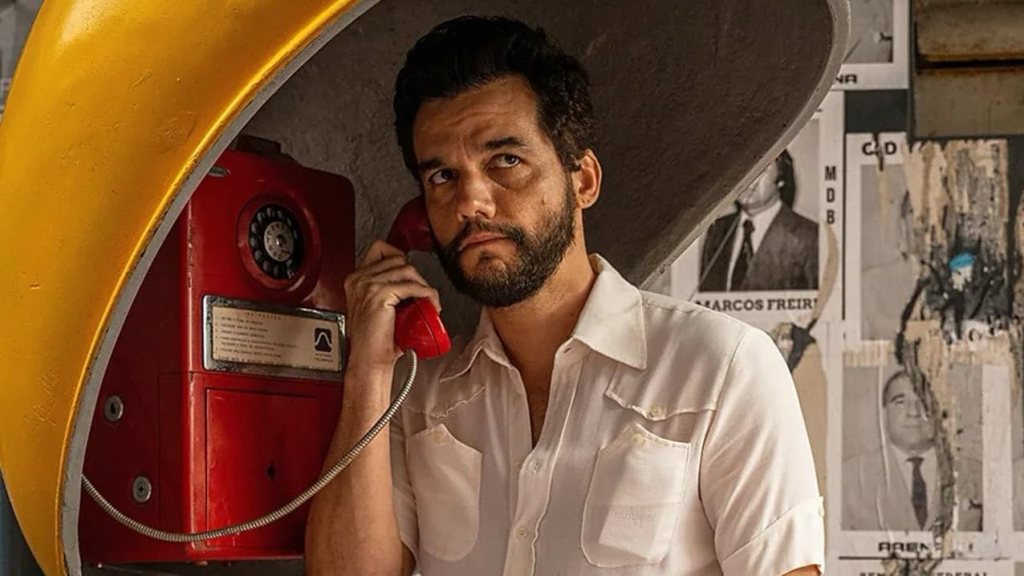
A lot of the fatigue in the current film industry centers on the fact that far too many movies pander to nostalgia and rely on established IPs to make money, never realizing that you can still appeal to our love of bygone cinema in ways that are genuinely entertaining and thoughtful. The Secret Agent is a perfect example. A hard-nosed political thriller in the style of the New Hollywood era of the 1970s, the film is an intriguing, nail-biting bit of action and suspense that could live right alongside The French Connection and others like it, and that’s before you get to the numerous outright references to Jaws.
Wagner Moura more than earns his Best Actor nomination, and Filho keeps his love and influence of cinema front and center throughout. That latter bit won’t surprise you if you saw his documentary Pictures of Ghosts from a couple years ago, which was also submitted by Brazil to the Academy. Film history is part of his identity, and he delights in his numerous homages to the blockbusters of his formative years. The picture is wonderfully shot and edited, with a fully committed ensemble, highlighted by Moura’s gritty survivalism, but supplemented by the likes of Tânia Maria and Udo Kier in his final role. The plot is alternately serious and silly, highlighting the anxieties of life under Brazil’s military dictatorship while also acknowledging that even in the worst of times, there are positive moments that make life worth living. It’s a poignant reminder of our own humanity in the face of authoritarianism.
Most crucially, I think, is the split between the main plot and the present-day work by Laura Lufési’s Flavia, as she researches the resistance movements and pieces together Armando’s fate. As we’ve seen in our own country over the past year, the last vestige of control is the Orwellian rewriting of history. Flavia’s role is to convey the importance of reconciling our past and atoning for pur collective wrongs. Here in the U.S., we’re literally seeing cases where the administration is trying to remove any mention of slavery and the Civil Rights movement from historical government landmarks, arguing that it’s anti-American and unpatriotic to admit that we as a nation ever did bad things. The sections with Flavia are a direct counterpoint, showing how crucial it is to find the truth, even if it’s ugly, because it can help us heal and move forward. Filho has his fun evoking images from cinema’s past, but it’s in service to the larger need to take a serious look at society’s sins.
Brazil finds itself in an interesting situation, defending the title after its very welcome upset last year. We haven’t had a repeat winner in this category since Denmark pulled off the feat with Babette’s Feast and Pelle the Conqueror back in the late 1980s. Seriously, it’s been nearly 40 years since we’ve had consecutive victors from the same country. If Filho gets the win, it’ll also be the first case of a non-European nation to have such an accomplishment (Sweden’s done it once, and France and Italy repeated multiple times up through the 70s; remember what I said about previous Academy bias).
Sentimental Value – Norway – Directed by Joachim Trier
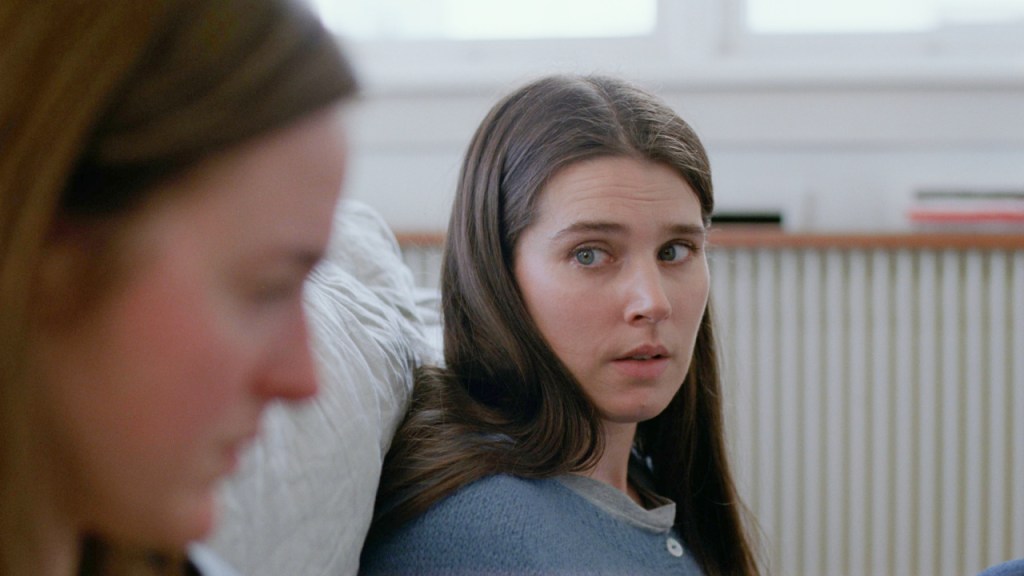
Every year it seems there’s one film that gets a ton of nominations but ultimately goes home empty-handed. There’s a good chance that Sentimental Value becomes that very unfortunate entry this time around. The film has nine nominations, tied for third-most of the lot, but it could very easily blank. It’s biggest chances are arguably here and in Supporting Actor, where Stellan Skarsgård is in with a decent shot after winning the Golden Globe (it’s basically down to him and Jacob Elordi).
I hope it at least gets something, because it’s one of the best films of the year, full stop. I was blown away by the performances, particularly Skarsgård and Renate Reinsve, and my heart ripped open a fair few times thanks to Trier’s tender yet honest portrayal of generational trauma. It’s rare when you can watch a movie and think to yourself, this is real life put on a screen, but this flick does it almost effortlessly.
I’m a bit of a sucker for self-reflexive cinema – movies about movies – and Sentimental Value is another superlative installment in the subgenre. The old adage of art imitating life is best displayed through this medium, and while it can at times come off as pretentious or too clever by half, here it doesn’t. It’s just a brutally credible tale of a broken family with the capacity to heal, so long as someone is willing to take the first step. The fact that the story centers on an actress and her filmmaker father is more window dressing than full framing device. Cinema holds up a mirror to society, yet for the Borg family, it’s been more like a microscope broadcasting their private drama to the world, and Nora and Agnes have spent their entire lives trying to form identities outside of it. It’s an utterly fascinating character study where we get to focus on four distinct characters on screen, a child character largely through third-person observation, and one entirely offscreen in the form of Agnes and Nora’s recently deceased mother. Then, of course, you have Elle Fanning’s Rachel, an accidental intruder upon the family grief, where professional happenstance forces her to assess and participate in it without proper context or understanding. It’s incredible.
It’s rare when you have a film this intellectual and cerebral while also just being pure entertainment. It’s worth nothing that, along with South Korea’s No Other Choice (which made the shortlist), Sentimental Value was an uncommon case where a foreign film got a mainstream release in the United States, partly because the cast is recognizable to American audiences (Skarsgård from the Marvel movies, Reinsve from A Different Man last year, and Fanning actually being an American), but also because the themes are universal and easy to find relatable. That could go a long way towards getting at least one solid win come Oscar Night.
Sirāt – Spain – Directed by Oliver Laxe
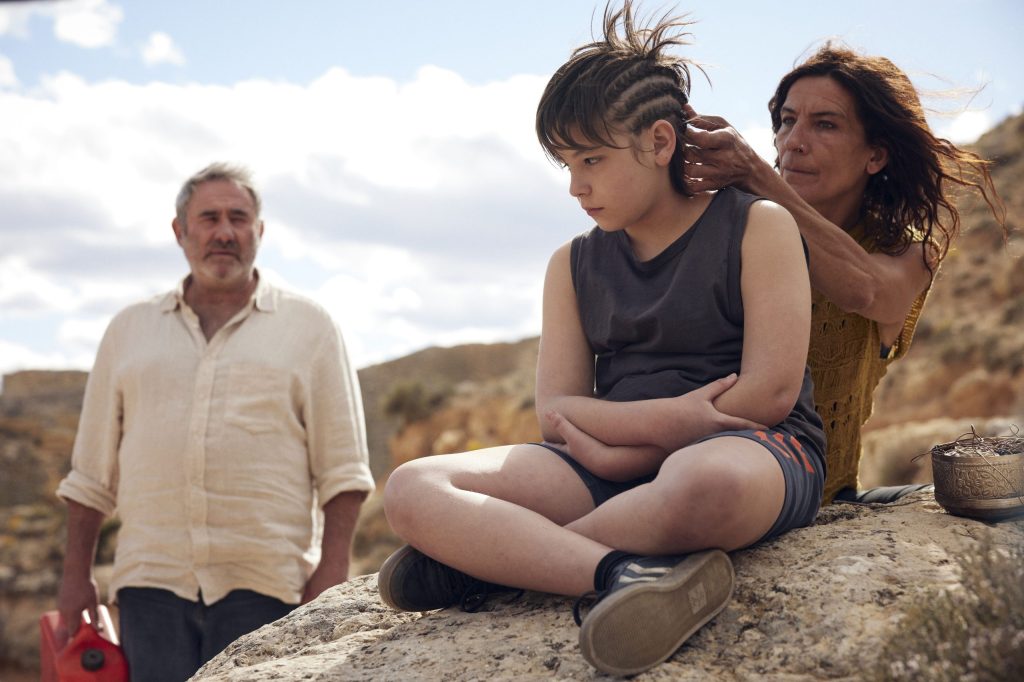
A spoiler alert for the eventual rankings, this is the only entry on the list that I didn’t like. And I mean really didn’t like. Looking at my grades for all of 2025, Sirāt got a C- while the rest of the nominees all got an A. That said, I fully understand why it’s here.
I know why a movie like this just rubs me the wrong way. When I watch a film, no matter its format, genre, or country of origin, the two things I care most about are character and plot. Those are the areas where this picture sorely lacks. Things start out promising enough, with Luis looking for his missing daughter with his son Esteban. The young woman had an affinity for rave culture, so it makes sense to search at a desert rave in Morocco, befriending a group of nomads traveling to the next party concert in hopes of reuniting. While it’s not the most exciting story, it’s at least an actual story.
The problem is that all of that is abandoned midway through in favor of the purgatorial metaphor based on the mythology of As-Sirāt, a razor-thin bridge that the dead must pass to enter Paradise, where the fires of Hell and the souls of sinners do everything to knock people off to join the damned. Even as allegory, this could work, but director Laxe seems to have just set aside the literary device for shock value, first killing two innocents as a means of showing that shit has indeed hit the fan, and from there it’s just randomness and explosions, the survivors learning no lessons or displaying any virtue to have earned their “Paradise,” which is never shown. We never take stock of what’s been lost, and nothing seems to have been gained by those who make it to the end. To me, that’s just bad storytelling.
However, I completely see why so many people love this film (it has a 93% rating on Rotten Tomatoes). It’s immaculately shot and edited, with Laxe making great use of the desert vistas to show just how lost these people are. The bombardment of rave and dance music that dominates the soundtrack is germane to the characters, and if you’re trying to give the viewer an impression of an audio and visual hellscape, mission accomplished. The first deaths make no sense within context, but they are definitely surprising and demonstrated in the most brutal of fashion. There are some impressive technical and artistic elements at play.
For me, though, it’s the same problem as F1. I can admit that this film is well made, but it’s not a good story. And if you can’t tell a good story, I don’t care how well you tell a bad one. I get why a lot of people like it, and I get why it’s here, but it has as much chance of getting my vote as I do of suddenly becoming Anna Kendrick’s boyfriend.
The Voice of Hind Rajab – Tunisia – Directed by Kaouther Ben Hania
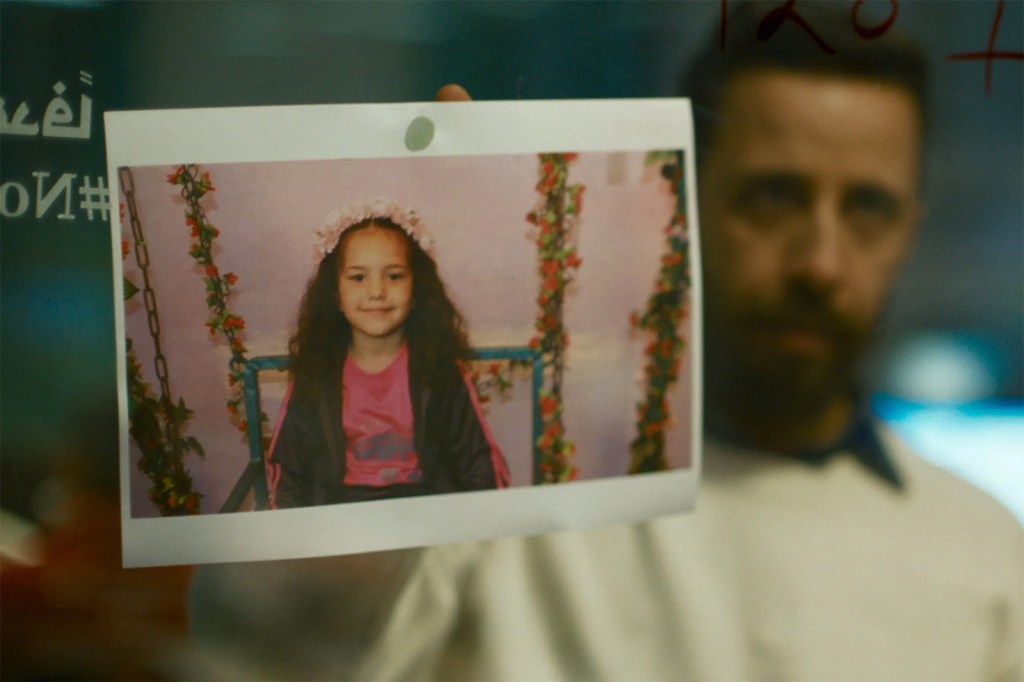
This was a difficult film to sit through, not because it was bad, but because it just destroyed me emotionally. It’s also hard to judge the film from the standpoint of artistic merit and entertainment, because this is a feature-length adaptation of real-life tragedy. As I said when I reviewed it, I hesitate to call it one of the “best” films of the year, because that almost feels like a disservice to the people who suffered through this incident, but it is inarguably one of the most important films of the year, if not THE most important.
For those blissfully unaware, two years ago, a six-year-old girl named Hind Rajab was trapped in a car in Gaza City, surrounded by the corpses of her aunt, uncle, and cousins, who had just been killed by the Israeli Defense Force as they attempted to flee their neighborhood, in compliance with a mandatory evacuation order as part of IDF’s offensive against Hamas. Literally and figuratively pinned down by the military, Hind Rajab called emergency services, and Red Crescent agents talked with her for hours while they tried to pull strings to get an ambulance to her location after an Israeli-imposed blockade.
Kaouther Ben Hania, who’s no stranger to this competition, made the choice to use the actual audio of Hind Rajab’s calls, employing lookalike actors to fill in the major roles at the call center to reenact the conversations. For an incredibly tense 90 minutes (especially if you don’t know how the situation resolved), you’re listening to a terrified little girl begging for help and pleading for her life, not understanding the delays and politics of a war that has nothing to do with her, but has already claimed a huge chunk of her family, and threatens to claim her as well.
To me, it’s a litmus test for your humanity. If you can hear her voice and not feel anything – or worse, if you can hear it and come up with some sociopathic qualification about Palestinians as people – then I genuinely fear for your basic goodness and sense of empathy. No matter what your feelings are about Israel, Palestine, the war, terrorism, or any number of related topics, this is just the heartbreaking story of a child hoping for deliverance, and it was a crucial choice for Ben Hania to present it in such a way. Some have called it propaganda and bad taste, but those people are just telling on themselves. If you think helping a kid is propaganda, then you’ve already bought in to the propaganda that anti-Palestinians have sold you. If you think it’s in poor taste to use the actual audio, I honestly doubt that’s the real issue, and I’m guessing you’d object to a child actor recreating it. What you think is poor taste is just telling the story at all, because it’s a living counter to the narrative that the Palestinian people somehow deserve this, or that there isn’t genocide going on in the enclave, which is just willful ignorance. There’s a lot of nuance that can be debated about the conflict, but there’s no ambiguity here. The IDF killed Hind Rajab’s family, her life was in danger, and she called out for help. Whatever your opinions are about anything else on the periphery, to say that her story doesn’t deserve to be told, and in the most visceral way possible, is simply disingenuous at best and malicious at worst.
Ben Hania understands the fine line she has to walk almost innately, given her experience on Four Daughters, which was nominated for Documentary Feature a few years back. Combining dramatic actors with real-world events and trauma is a very delicate business, and she knows how to do it in a way that’s brutally honest but empathetic, serving the purpose of giving the audience the most complete picture possible, in hopes of raising awareness and inspiring positive action. This is the one nominee that isn’t up for any other awards, but as I said in the preamble, it’s hard to squeeze it in anywhere else because of the specific direction Ben Hania took in making this film. Because we have to deal with this traumatic and traumatizing story only in this context, we’re forced to look it dead on without trying to shift it into another conversation. This is the one and only chance to address the uncomfortable and gut-wrenching, but still necessary circumstances surrounding this poor girl’s plight, and that could be enough to put it over the top against four candidates with much more competitive résumés.
***
Overall, I saw 27 of the 86 eligible films in the competition this year. It’s not my biggest tally, but I still completed the shortlist and then some. Like I said earlier, this is the strongest field I’ve seen since I started doing the Blitz, and for the first time in ages, I genuinely don’t know who will win. I’d say The Secret Agent has the inside track, as it’s won the Critics’ Choice and Golden Globe, but you also have Sentimental Value up for five more awards, including Joachim Trier for Best Director, so nothing’s a lock yet. For me, it really does come down to the overall quality of what I saw (again, four A grades), and the importance of the stories being delivered to the audience. All of them left an impression on me, but there was one where I came out of the screening to a theatre in dead silence, with commiserations taking place in the lobby as I left. I’ve never had to ask a stranger, “Are you okay?” after seeing a movie before. One film changed that, and I’ll never be the same again.
My Rankings:
1) The Voice of Hind Rajab
2) The Secret Agent
3) It Was Just an Accident
4) Sentimental Value
5) Sirāt
Who do you think should win? Vote now in the poll below!
And now, as I do every year, here are my complete rankings for the competition, starting with the shortlist:
1) The Voice of Hind Rajab – Tunisia
2) Kokuho – Japan
3) The Secret Agent – Brazil
4) No Other Choice – South Korea
5) It Was Just an Accident – France
6) Sentimental Value – Norway
7) Late Shift – Switzerland
8) All That’s Left of You – Jordan
9) Palestine 36 – Palestine
10) The President’s Cake – Iraq
11) Homebound – India
12) Belén – Argentina
13) Left-Handed Girl – Taiwan
14) Sound of Falling – Germany
15) Sirāt – Spain
And now, all 27 that I took in:
1) The Voice of Hind Rajab – Tunisia
2) Kokuho – Japan
3) The Secret Agent – Brazil
4) No Other Choice – South Korea
5) 2000 Meters to Andriivka – Ukraine
6) It Was Just an Accident – France
7) Sentimental Value – Norway
8) The Tale of Silyan – North Macedonia
9) Dog of God – Latvia
10) Late Shift – Switzerland
11) Mr. Nobody Against Putin – Denmark
12) All That’s Left of You – Jordan
13) Palestine 36 – Palestine
14) Eagles of the Republic – Sweden
15) A Poet – Colombia
16) Happy Birthday – Egypt
17) Orphan – Hungary
18) The President’s Cake – Iraq
19) Reedland – Netherlands
20) The Mysterious Gaze of the Flamingo – Chile
21) Magellan – Philippines
22) Homebound – India
23) Belén – Argentina
24) My Armenian Phantoms – Armenia
25) Left-Handed Girl – Taiwan
26) Sound of Falling – Germany
27) Sirāt – Spain
Up next, normally this is where I use my Spotify account for the first and only time in a calendar year, but since I’m tired of being forced to listen to 90 seconds of ads after every other track, I opted for YouTube instead. It’s Original Score!
Join the conversation in the comments below! How many international films did you see last year? What’s the most important element in judging the best ones? What would you do if given the chance at revenge against someone who wronged you? Let me know! And remember, you can follow me on Twitter (fuck “X”) as well as Bluesky, subscribe to my YouTube channel for even more content, and check out the entire BTRP Media Network at btrpmedia.com!

 I Actually Paid To See This
One thought on “Oscar Blitz 2026 – International Feature”