
In addition to all the various bits of history and significance to this year’s Oscars, the Supporting acting categories offer their own rarity. This year is but the sixth time in the long legacy of the Academy Awards where we have multiple nominees from the same film in BOTH contests. We have two from One Battle After Another on the men’s side, and two from Sentimental Value on the women’s.
The last time this happened was fairly recently, just three years ago. Back then we had two Supporting Actor candidates for The Banshees of Inisherin and two Supporting Actress hopefuls from Everything Everywhere All at Once. In the latter case, Jamie Lee Curtis even got the win.
However, before that intriguing little duet of duos, we have to go back over 60 years to the 1950s, where amazingly, the statistical feat happened three separate times. In 1959, Arthur O’Connell and George C. Scott were up for Anatomy of a Murder while Susan Kohner and Juanita Moore were nominated for Imitation of Life. In 1954, it was Lee J. Cobb, Karl Malden, and Rod Steiger all up for On the Waterfront and Jan Sterling and Claire Trevor competing for The High and Mighty. Most stunning of all, in 1957, Arthur Kennedy and Russ Tamblyn were nominated for Supporting Actor while Hope Lange and Diane Varsi were nominated for Supporting Actress, all of them in Peyton Place.
Before that insanity, it happened one other time, back in 1939. Hattie McDaniel became the first black actress to win an Oscar for her role in Gone with the Wind over her co-nominee Olivia de Havilland, and on the men’s side of the equation, both Harry Carey Sr. and Claude Rains were up for Mr. Smith Goes to Washington. That was only the fourth year in which supporting performances were included in the ceremony.
What’s interesting in all this is, it could have easily gotten more compact. There were quite a few people upset that Miles Caton wasn’t nominated for his star-making turn as Sammie in Sinners, myself included. When it comes to the ladies, it wouldn’t have been too hard to make a case for Hailee Steinfeld. This means that, had things played out just a bit differently, we could have had two films with two nominees each in both fields, and four total from the same film across both categories. That’s how stacked the acting competitions were this past year.
Does this mean anything for actual results on Oscar Night? Probably not. In the previous five instances where we had double nominees on both sides, only twice have we seen wins, and both times it was on the Supporting Actress side (McDaniel and Curtis). This is likely because having multiple performances highlighted from a single film tends to split votes. There might be some momentum behind Sean Penn, which would give us the first Supporting Actor win from a double-dipper, but even if it happens, that doesn’t necessarily portend doom for the two women from Sentimental Value. The fact that they’re the only ones who haven’t picked up a win during Awards Season to date is more an indicator of their chances. It’s just a fun observation to noodle around for a bit, a momentary curiosity I thought up this morning when I was pondering what I was going to say in this preamble. It was literally, “Huh. We have two up on this side from one movie and the same for Supporting Actress. I wonder if that’s ever happened before…” But that’s the beauty of this process, and of the Oscars themselves. There’s always something to learn.
This year’s nominees for Best Supporting Actor are…
Benicio del Toro – One Battle After Another
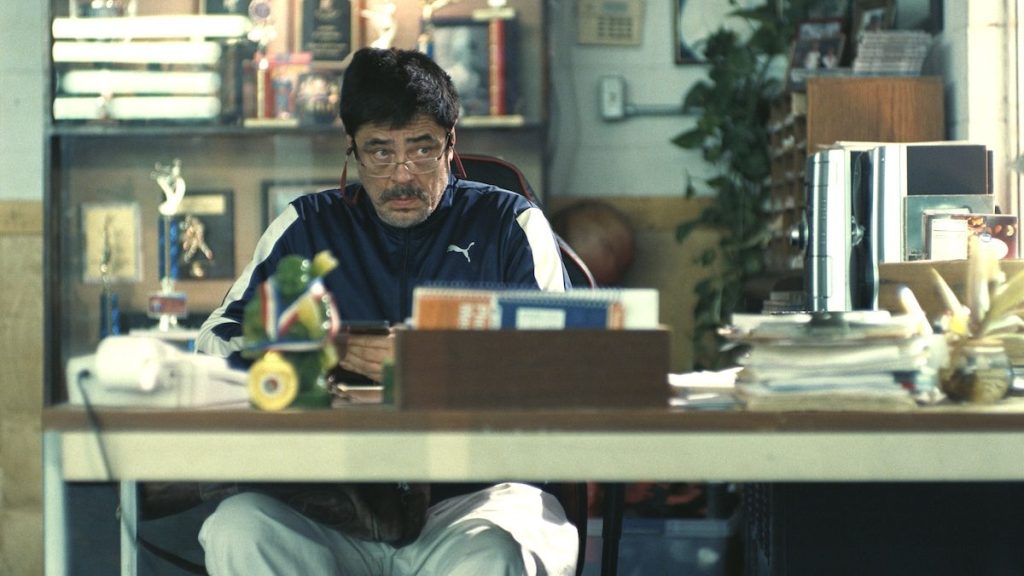
In One Battle After Another, there are basically two active characters who link Leonardo DiCaprio’s Bob and Chase Infiniti’s Willa (I don’t consider Teyana Taylor’s Perfidia to be “active” in this context, as she flees before the main events of the film and has no role in Willa’s life). The first is Col. Lockjaw, who we’ll get to shortly, and the other is Sergio St. Carlos, Willa’s karate instructor, who runs his own version of the Underground Railroad for immigrants out of his apartment building, and who eventually helps Bob get out of the city and save his daughter.
Sergio is the lesser of those two characters, mostly because his role is limited to quick bits of comic relief. Benicio del Toro sells every second he’s on screen to get the most out of that comic relief – and believe me he has some great moments – but that’s basically the extent of his time. He’s literally playing a support role, using his network of teenagers and refugees to facilitate Bob’s rescue of Willa, and giving himself up when the time comes, knowing he’ll live to fight another day.
Del Toro’s performance is more about what Sergio represents rather than who he is. His quick thinking and coordination skills show how government subversion has evolved since Bob and Perfidia’s time in the French 75, opting for a more subtle approach with plausible deniability. This is evidenced in his final moments on screen, where he leads police on a high-speed chase, feigns ignorance of their sirens when he finally pulls over, and acts in a way where he’ll get a DUI arrest rather than a more serious charge.
When it comes to his immigrant housing network, he stands in as the bogeyman that white supremacists and xenophobes have cooked up in their own minds to justify domestic crackdowns and atrocities. He’s operating right under their noses, smuggling Hispanic and Latino migrants throughout the community, infiltrating society with *gasp* DAY LABORERS AND CLEANING LADIES! AAAAAAAAAHHHHHHH! It’s all about using his good humor and his position to satirize prejudice. Even his occupation plays into this. As a martial arts instructor, he’s all about discipline and tactics, but the film is also relying on your unconscious bias to react and question the idea of someone called “Sensei Sergio.” All of this is great stuff, but it doesn’t directly tie in to del Toro’s performance, more the archetypes of the character. Don’t get me wrong, del Toro does a great job, and he’s often hilarious. It’s just that, this field is very tight, and he ultimately takes a back seat to another character and actor within this same film.
Jacob Elordi – Frankenstein
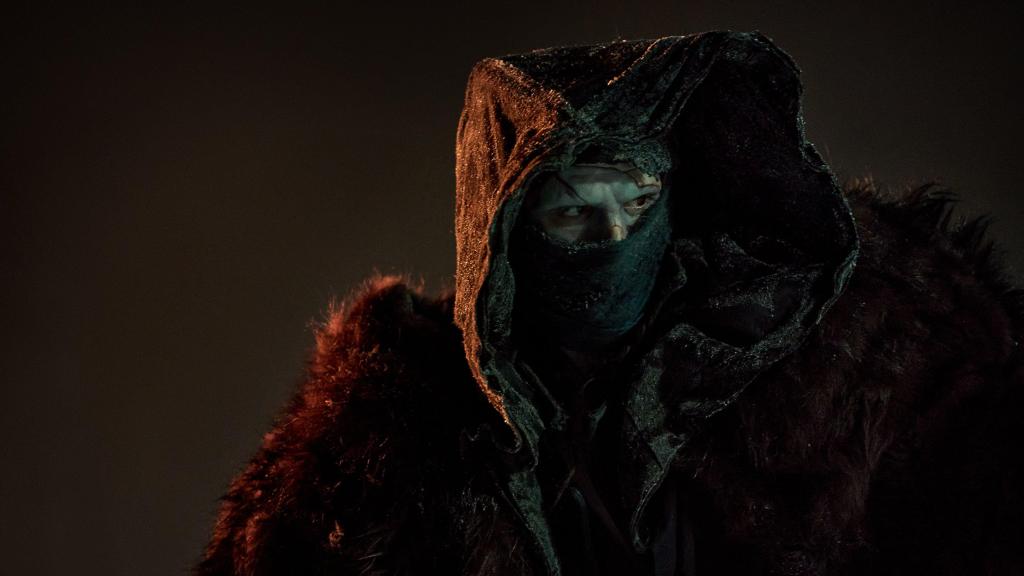
The heart of what makes Frankenstein great as a story is the humanity of the Creature, the fact that he’s not a monster, but a gentle soul in a body he can’t properly tame. He’s filled with regret over his own existence, and while he’s capable of feats of terrible strength, all he truly wants is a companion to share and lessen his own grief and loneliness.
Jacob Elordi nails this aspect, at least when the script calls for him to do so. We see him learn and become more eloquent and sympathetic, which is exactly what the character should do. Even when he’s more feral, only able to say Victor’s name for a lengthy period of time, Elordi infuses that single word with proper emotion, frustration, and intellect when the moment calls for it.
The problem with his depiction is two-fold, and to be fair, it’s more the fault of director Guillermo del Toro than Elordi. As the actor, he just does what he’s told, but that doesn’t mean he gets a complete pass. In the back half of the film, as we hear the Creature’s side of the story, there are simply far too many moments where he lapses back into a primal beast, not because he’s experiencing some kind of emotional distress or mental backslide, but because the script decides that in this particular moment, he can roar, rip people in half, and lift an entire fucking boat. It’s tonal whiplash, and again, while that’s more on del Toro, Elordi doesn’t do much to inject any nuance into these reversals.
The second is del Toro’s strange obsession with making monsters fuckable. Because of this, so much of the Creature’s early character development is far too focused on how hot his abs are, which just denigrates Elordi as an actor and as a person. No one cares how horny Elizabeth gets at seeing a postmortem six-pack, and in those moments, Elordi does nothing to disabuse his director of this creepy gaze. If Mary Shelley’s intent was to make the Creature bang, believe me she would have found a way.
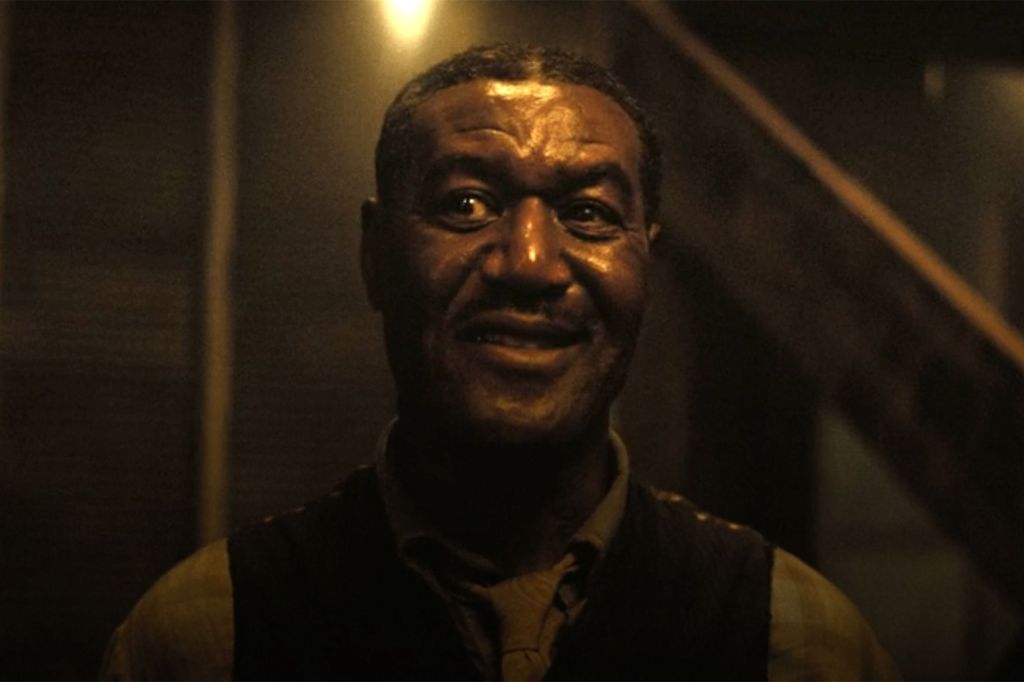
Delroy Lindo – Sinners
One of the hardest things to do in modern horror films is make the audience care about the cannon fodder. If you’re a fan of the genre, you can basically tell within the first few moments of meeting a character if they’re marked for death. As such, it’s hard to get attached, even more so when it’s clear that the actors and filmmakers involved just don’t care to try. You see this a lot in slasher films with an obvious “final girl” character. Everyone else is just waiting for their inevitable death scene, and we as viewers can only hope that they go out in an enjoyable fashion.
Part of the reason why Sinners is so good is that Ryan Coogler took the time to make pretty much all the characters likable, with detailed backstories and motivations anchored by solid performances. Because of the in medias res opening, we know Sammie survives the vampire onslaught of the previous night, but we don’t know the fates of any others. They could all live, they could all die, or there could be a creative mixture of both. Framing the story like that allows the entire cast to wring pathos out of their characters, doomed or not.
Delroy Lindo as Delta Slim is a prime example. When we first meet him, he’s busking at the train station, scoffing at Sammie because, as he puts it, he’s “got socks older than you.” He’s eventually swayed by Sammie’s talents, and the promise of a juicy payday for playing the juke, enough to let him continue drowning his sorrows in booze. In the span of just a few minutes, Lindo has shown us how this character is vulnerable, jaded, and damaged, but still has the capacity for hope and the ability to change and embrace something new. By the time the party starts, he’s taken it upon himself to be Sammie’s hype man, teaching him the ways of the blues.
When the vampire siege begins, it’s Lindo who seems the most hurt by every victim, as these are good people he’s known for most of his life. It genuinely breaks his heart when Cornbread and others get turned, because he feels powerless to save them, or himself. His hope for whatever salvation can come then lies in Sammie, in making sure that he can survive and endure, so Slim willingly risks himself as a diversion, knowing that it’s already too late for him. In doing so, he ends up teaching Sammie the greatest lesson of all when it comes to the blues. It requires pain and hardship, and seeing all of your erstwhile influences die horribly in a single night provides the necessary trauma to mold the young man into the legend he’ll eventually become.
With nearly every line he delivers, Lindo is there to make us care about Slim, more than we reasonably would for any other obviously walking dead character in a genre film. From the moment we meet him we know he’s a goner, but Lindo makes sure we feel his loss, earning his brief hero moments, whether they’re funny or serious. That’s incredibly difficult to pull off, and sadly reminds us that he was somehow NOT nominated for Da 5 Bloods.
Sean Penn – One Battle After Another
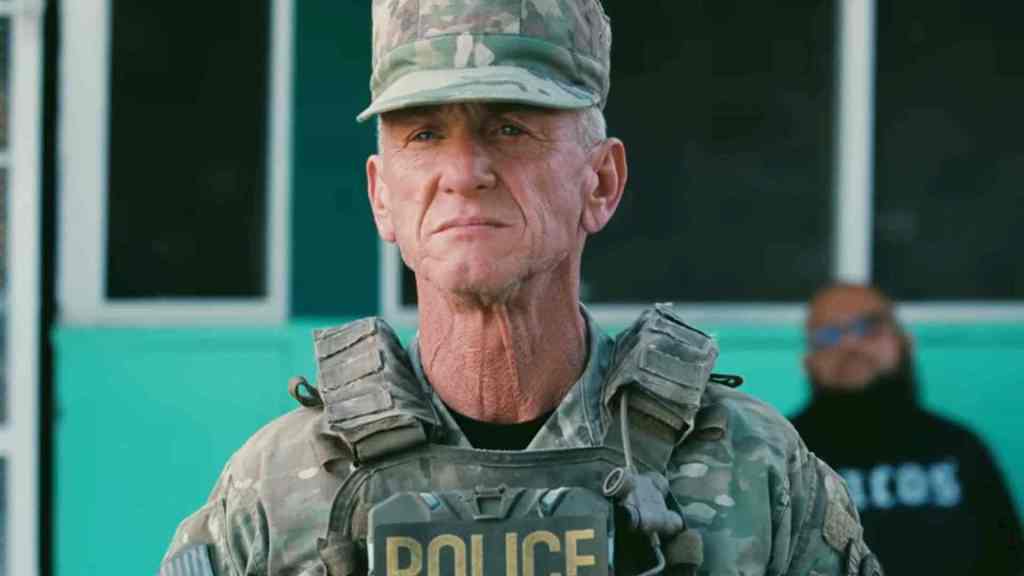
I am not a Sean Penn fan. I’ve said it many times. I find him pretentious, humorless, and incredibly self-absorbed. I’m also on record as saying that he didn’t earn either of his Oscars to date, as his roles in Mystic River and Milk paled in comparison to Bill Murray’s in Lost in Translation and Mickey Rourke’s in The Wrestler. Those were once-in-a-career turns that redefined what we thought those actors could do, and yet the Academy gave it to Penn for playing a bland grieving father and a gay stereotype.
All that said, he fucking kills it as Col. Lockjaw. From the sneering sense of superiority, to his seething hatred of anyone and everyone that doesn’t kiss his feet, to the Steve Bannon-esque belief that he’s more genetically advanced despite being physically repugnant, to his callous disregard for human life, to his very awkward gait where he puffs out his emaciated chest, Penn perfectly embodies the psychotic sickos and sycophants that are advancing the white supremacy agenda, both within the context of the film and the reality of our current politics.
He’s the perfect antagonist, not just for this particular satire, but for the modern world. Dissent is treason. Free speech is probable cause for violence. Anyone born different than him and his ilk are inherently inferior and should be subjugated to his whims. Faith itself is an instrument to empower him and those like him to rule by a warped idea of divine right. All people are merely a means to an end. To wear the uniform and represent those who fought for our freedoms while working tirelessly to denigrate and destroy those very freedoms is at the heart of the walking contradiction that is our current national discourse.
And true to such a repellent character, there are two elements that Penn sells spectacularly. The first is more overt, his fetishization of Perfidia. Yes, in true “every accusation is a confession” fashion, the fact that he hates black people so much only makes him that much more aroused when an assertive black woman takes control. But that’s also part of his twisted game. He thinks this is sexual play, not an actual shift in a power dynamic or an acknowledgement of value and equality. He gets off because, in his mind and through his actions, he’s letting Perfidia seize the moment and act in an aggressive manner, and he expects her to be his plaything after she turns state’s evidence. The fact that she leaves witness protection and flees the country is not just a betrayal of her agreement, but an unforgivable act of rebellion against his God-given claim to her as property.
The second is that, like so many of the idiots we deal with from this subset of sub-humans, he’s so convinced of his own brilliance that he ends up making foolish mistakes that ultimately doom him. His greatest ambition is to join the Christmas Adventurers Club, the highest honor possible for a white nationalist in this world. He wants to be seen as someone who fought the good fight for racial domination and be rewarded for it with a position among the elites. As he’s being vetted, he’s asked if he’s ever had interracial relations, and the fear that he might get exposed for his affair with Perfidia is enough to launch a targeted crusade of chaos, drawing far too much attention to himself and his perceived allies, just so he can tie up the loose end and kill his potential bastard daughter. The irony, of course, is that if he leans even further into his hatred, and brags that he made Perfidia into his sexual beast, using her only for his pleasure so that she “knows her place” or some other such nonsense, he’d have probably been congratulated for his conquest and welcomed into the organization. Instead, he not only lies, but takes overt action that suggests that he cannot be trusted, and so he’s considered a liability and dealt with accordingly. That paranoid overcorrection is at the heart of all the cruelty we see from the current administration, from the Epstein Files to Iran and everything in between. They expect to be worshipped and have their word taken at face value, even when they contradict themselves, and if they ever get called out, it’s more important to silence opposition in grandiose fashion, even when it can, and does, backfire. Penn embodies that cognitive dissonance almost perfectly.
Just, please, cut away from his boner.
Stellan Skarsgård – Sentimental Value
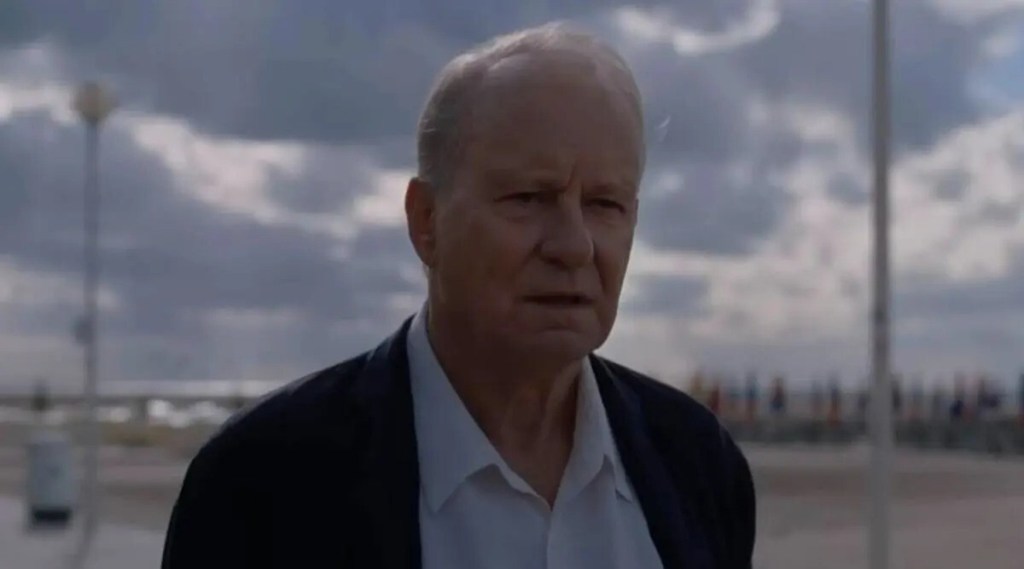
Sean Penn may have played the most bombastic supporting character of 2025, but Stellan Skarsgård probably played the most important. As filmmaker Gustav Borg, Skarsgård shoulders the emotional weight of generations, trying to take the first steps towards healing and reconciliation, and shows in immaculate detail just how difficult such a process can be.
On the surface, Gustav kind of looks like an analog to Werner Herzog, a brilliant director who’s personable and clever, but who seeks deep and profound subject matter for his films, often being forced to work independently of the studio system because moneyed interests won’t fund his projects, no matter how good they are. This is what forms the basis of his friendship and collaboration with Elle Fanning’s Rachel, because as an A-list celebrity looking for a chance to challenge herself, her status and connections allow for the possibility of Netflix financing his latest picture. You can tell he’s uncomfortable playing such a game, but he’s already been disappointed once in this story, so he’s willing to bite his tongue in order to get something of value out of this.
Because as the film shows, he’s witnessed a lot of trauma, but has also caused some in turn. As much as the plot of Sentimental Value revolves around Renate Reinsve’s Nora, it’s Gustav who has arguably experienced the most pain and suffering. As a child, he came home from school one day to see his mother had committed suicide, an event he wants to recreate in his new film in the most direct and messed up display of exposure therapy imaginable. As a husband, he was so ill-equipped to handle his wife’s mental illness that he buried himself in his work to escape, and eventually just left entirely, becoming at best an absentee father, and at worst a manipulative opportunist, using his daughters in his movies and spinning it as a form of bonding while making them handle some really heavy material.
For three generations Gustav has hurt and been hurt, and Sentimental Value shows what he’s learned, how he wants to make things right, and just how far he has to go. Skarsgård plays it brilliantly. He wrote his new film with Nora in mind, not because he wants his daughter to substitute and recreate his own mother’s death, but because he actually understands what he put her through, and how he might have been partly responsible for Nora’s own attempt on her life. He wants to be better, and he knows the only way out is through. At the same time, he falls back into old patterns, particularly with his drinking, and he even tries to enlist his grandson Erik into the picture, creating the risk that he’ll keep making the same mistakes again. Skarsgård has to convey all of these layers within his performance without ever losing sight of Gustav’s true intent, to mend the metaphorical cracks in the foundation of his home and family, as well as the physical ones in the actual house. It takes an incredible amount of discipline and performative nuance to make Gustav a character with whom we can empathize and sympathize, but Skarsgård makes it seem effortless.
***
This is genuinely a tough one to call, both from my own personal preference and for the winner on Oscar Night. Three of the five have already taken home hardware this Awards Season, and even the two who haven’t have legitimate cases. Hell, just the fact that Delroy Lindo was on stage at the BAFTAs when John Davidson had his Tourette’s-induced racial outburst might be enough to get a few more sympathetic votes and put him over the top. Normally there are one or two performances that you can discount as being subpar or just wholly undeserving of a nomination, but not this time. This isn’t as strong as the Best Actor field, but only by a few degrees. There’s no wrong choice here, and as I’ve often said, that should be the case every year.
My Rankings:
1) Stellan Skarsgård
2) Sean Penn
3) Delroy Lindo
4) Jacob Elordi
5) Benicio del Toro
Who do you think should win? Vote now in the poll below!
Up next, we take a look at the category that accounted for 22% of my post-nomination Blitz viewing, because OH MY GOD THE ROCK LOOKS SLIGHTLY LESS LIKE THE ROCK! It’s Makeup & Hairstyling!
Join the conversation in the comments below! What was the best supporting performance you saw last year? Do you think films should be limited to one acting nominee per category? What are some stellar performances from actors you don’t really like? Let me know! And remember, you can follow me on Twitter (fuck “X”) as well as Bluesky, subscribe to my YouTube channel for even more content, and check out the entire BTRP Media Network at btrpmedia.com!

 I Actually Paid To See This
One thought on “Oscar Blitz 2026 – Best Supporting Actor”