
One of the reasons I love animation so much is that it’s the only medium that can go to the most fantastical lengths to tell the most basic of stories. Limited only by the imagination of the artists who create it (and the corporate whims of their studio overlords at times), the majestically creative ways that universal truths are distilled through animation fascinates me to no end.
This is why I follow the artform whenever and wherever I can, and why I make it my increasingly quixotic mission each year to clear the submission list for the Animated Feature Oscar. Even in the worst entries, there’s something worth examining, because it takes an incredible amount of talent – talent I fully admit I don’t have, which is why I admire it so much – to bring it to fruition. That doesn’t mean cartoons get an automatic pass just for existing, but they do warrant at least a passing glance, and oddly it makes things even more tragic when the the end result is terrible, because so much potential and skill was wasted on garbage.
For this column, we’ll take a look at three recent releases, all of which focus on singular lead characters, specifically mortal human beings. Part of the allure of this kind of cinema is in how the human condition is translated through various designs and art styles, and often we find that represented in more abstract characters and themes, from animals to robots to aliens and everything in between. But for these three, we remain grounded and centered on actual people, which as we’ll see, is basically the only grounded aspect of the actual films.
Jinsei – VOD
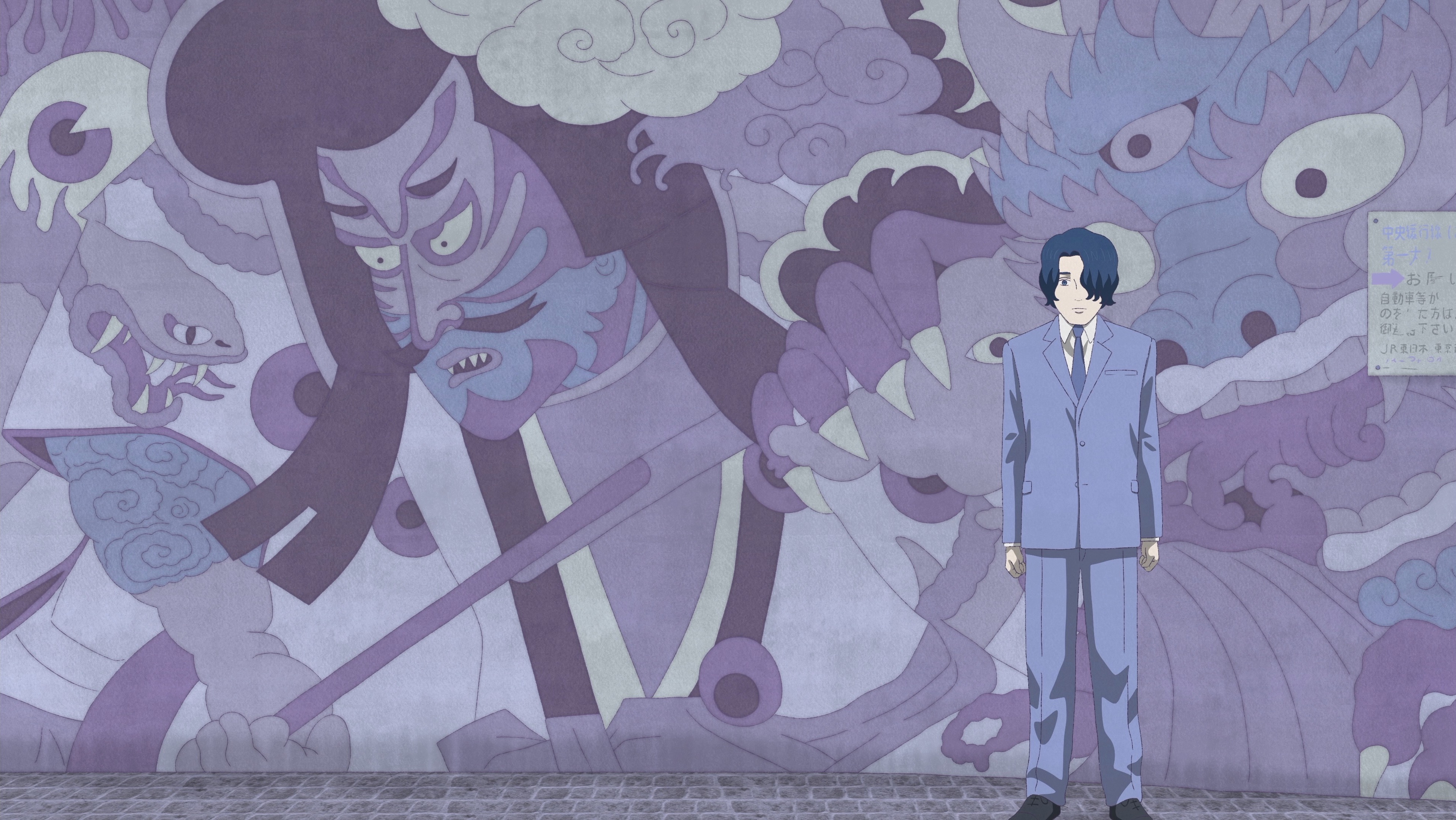
Named after the Japanese word for “life,” Jinsei delivers exactly what it promises, the life story of one individual, often presented in the most minimalist of terms. But as the film progresses, we learn that there’s so much more to our lead than just a standard “life story.”
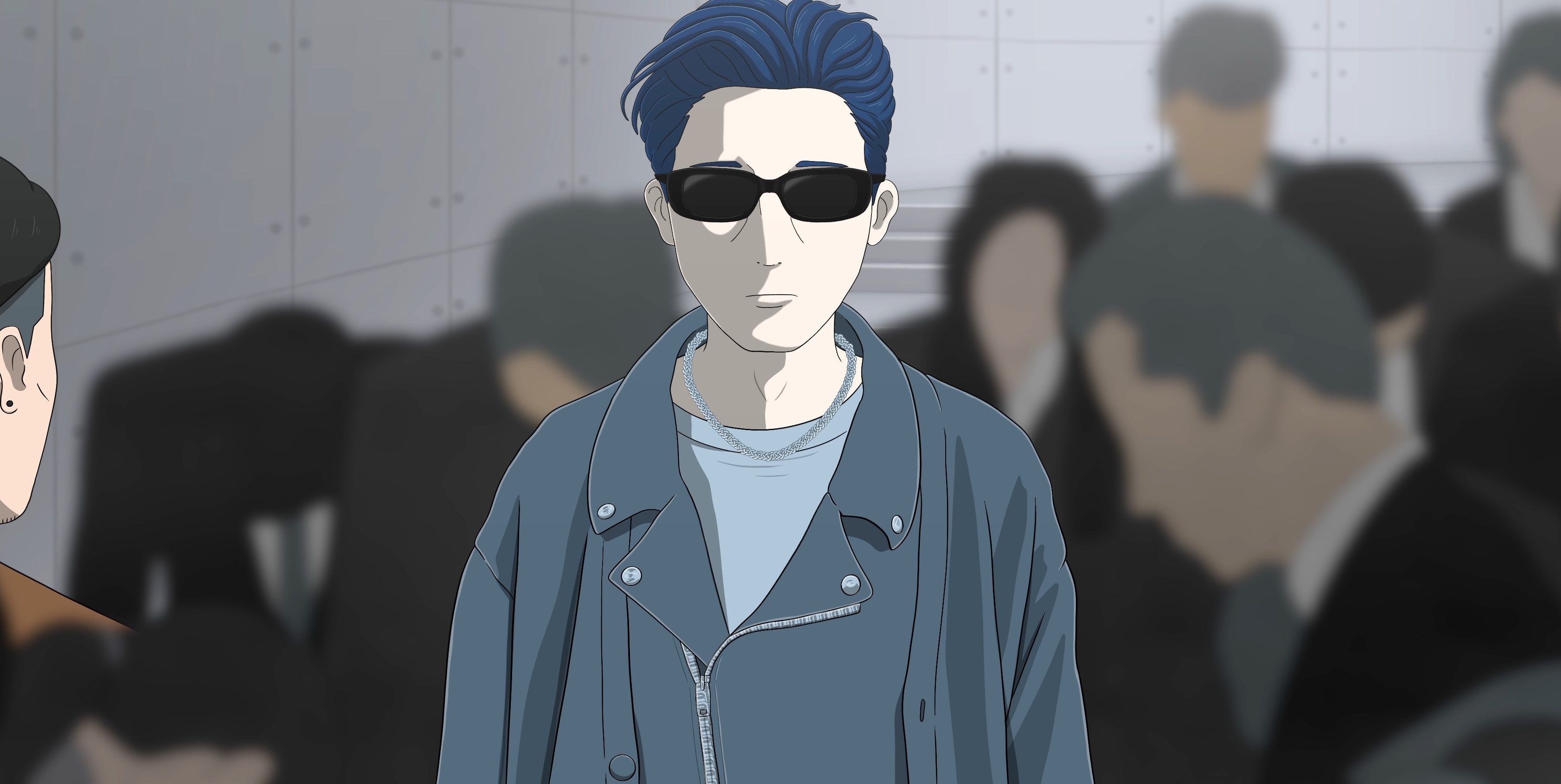
Written, directed, edited, and hand animated by first-timer Ryuyu Suzuki after financing the project through crowdfunding, Jinsei is all about what happens along the margins, figuratively and literally. The film opens with what can best be described as the beginning of Up by way of early Mike Judge cartoons. In the span of a few short minutes, we see a young couple fall in love, conceive a child, go through marital difficulties, separate, reconcile, and eventually go their separate ways, before a shockingly tragic denouement. What makes it sting, however, is in how we see it. It’s all done in Academy ratio with almost no color and no dialogue, and the series of scenes and vignettes are all centered through the windshields of a car. We’re given all the pertinent details purely through facial expression and activity along the periphery of each shot. This immediately establishes the core motif that our main character, Se-chan (voiced by Japanese rapper Ace Cool), the offspring of the couple who dominate this prologue, is at once the central focus of the film, yet still something of a passenger in his own story. In one of the first lines of the entire picture, Se-chan narrates that he goes by many names, but never his actual one, because the climax of this sequence robbed it of any meaning or emotion.
From there, each phase of Se-chan’s life becomes more and more surreal, and Suzuki delights in playing with the scenery and the frame. Se-chan spends much of his adolescence without uttering a word, eventually making a friend named Kin (Taketo Tanaka) by bonding over a fascination with J-pop boy bands, to the point that they both end up joining one. Se-chan alternately becomes a pop idol, an actor, a hero, a murderer, and an urban legend before eventually marrying a reporter and fast-forwarding to a dystopian future where the human race is all but extinct and the preservation of the species is overseen by aliens. In all of these passages, he is simultaneously the center of everyone’s world, and completely alone in his own mind.
It’s utterly insane, but incredibly life-affirming, because of the uncompromising way Suzuki handles his own material. We’re given hints as to motivations and thought processes, but it’s left to the viewer to put the pieces together and interpret Se-chan’s entire existence in their own way. This is done through chapters where the aspect ratio gradually changes and expands, only to abruptly shrink back to 4:3 when we need to emphasize how our protagonist feels boxed in. What begins as almost monochromatic gets dotted with color here and there, before becoming a splash of vibrancy, before reverting to a sterile grayscale. Characters who meant nothing in early scenes suddenly find themselves as crucial players in Se-chan’s world (and Suzuki’s screen), only to be relegated back to the sidelines once their part is over. At times it reminded me of a fucked up version of It’s a Wonderful Life if it was filtered through 2001: A Space Odyssey. Se-chan’s life touches so many others, but once their relevance to him is gone, so too is their relevance to us watching.
At so many points, this could have fallen apart under its own thematic weight, but Suzuki – especially for a debut filmmaker – deftly resists the urge to let this drown in pretentiousness. Instead, through Se-chan, Suzuki lets us see what we want to see, while also making sure we’re given every piece of information necessary to draw our own conclusions, reinforcing the essential elements of what we would consider a life well lived. It’s inspiring, lovely, and horrific in equal measure. It’s not a good life, or a bad life, but it is unmistakably… life.
Grade: A-
I Am Frankelda – Netflix

This is kind of an odd one from a prospective awards standpoint. This film from Mexico – apparently the first stop-motion feature in the nation’s history – technically came out last year. It screened at Annecy, got released domestically, and competed for the Annie Awards back in February. However, it wasn’t submitted to the Academy last year, and Netflix picked it up for international distribution and an English dub this year, releasing it briefly in theatres in mid-June, which implies that the streamer at least intends on making sure it’s eligible for next year’s Oscars. Regardless of its fate with various governing bodies in the future, this is still an intriguing film that most certainly deserves your attention, as it keys in on the importance of imagination and individual ambition.
The story revolves around a young woman named Francisca Imelda (Mireya Mendoza) growing up in mid-19th Century Mexico. After the death of her mother, who taught her the value of art and beauty in all things, Francisca channels her sorrow through writing “terror” stories, manifestations of her nightmares surrounding mortality and her inability to fit in as a “proper” lady. People call her weird and shun her, while her overbearing grandmother (Magda Giner) works to essentially beat the strangeness out of her through chores, church, and basic shaming.
However, there is one who does believe in her, a demon named Herneval (Arturo Mercado, Jr.), the prince of Topus Terranus, an alternate dimension of horror that subsists on human fear, particularly those created by Francisca herself. The kingdom is in danger, as people are becoming less and less afraid, and the nightmares made by the royal master Procustes (Luis Leonardo Suárez) are too mundane to sustain them. Crossing over to the human world, Herneval invites the newly-dubbed “Frankelda” (a portmanteau pseudonym of Francisca’s name that she develops after a publisher rejects her work on sexist grounds) to take over for Procustes and save his world with her writings.
What follows is a highly imaginative and dazzling musical spectacle, with some incredible designs (Procustes is a giant green spider, for example, while Frankelda herself takes on the appearance of something akin to a Corpse Bride version of Marie Antoinette) and fantastic songs. Even in Spanish, a language I basically do not understand, I was swept up by the gorgeous melodies and nearly operatic vocals, with the visuals complementing the song rather than substituting for lyrics I couldn’t comprehend.
If there’s one major nit to pick, it’s in the underlying plot structure. See, the reason why Procustes has fallen out of favor is because his nightmares have become, as several characters assert, too cliché. The problem with this line of thinking is that Frankelda’s ideas aren’t demonstrably that different, and the flow of the film itself succumbs to those very clichés. The biggest example of this is Procustes himself, who is so obviously evil and shady that it beggars belief how he’s able to manipulate anyone, much less lead a coup against the royal family. The so-called “new” terrors Frankelda imagines are just personifications of insecurity and existentialism, which existed in reality and fiction long before the setting of the movie, to say nothing of cinema in general. Even the art style, which is gorgeous, can reductively be written off as The Nightmare Before Christmas crossed with a Rankin-Bass Christmas special. I’m not that cynical about it, but I can’t argue against anyone who is.
There were points where I was genuinely worried if I could engage with the material given the derivative narrative beats, however, evidenced by the fact that I didn’t watch the flick in one sitting. When I first put it on, I got about 25 minutes in before I got bored and had to stop and divert my attention to different stimuli. The next day, once I got back in, I finished it fine, and it definitely stuck the landing despite its flaws. It’s just that the few times where it has trouble with pacing are also the same moments where the tropes are the most glaring. Sadly, this is why a film like this shouldn’t be on a streamer at all, and should have gotten a full theatrical release. Because when you’re in an auditorium, you’re forced to pay attention. On Netflix, it’s so easy to get distracted if you’re not 100% hooked from the start. This is a very good piece, but my real fear is that the streaming model will be to its ultimate detriment.
Grade: B
Avatar Aang: The Last Airbender – Paramount+/VOD

Speaking of films that should have been in theatres…
If you’re not aware of the travails this movie has gone through in advance of its release, it serves as a microcosm of all the problems with modern Hollywood (with the exception of AI, because if that ended up in this picture, it’d be an automatic F from me). Work began on the project in 2021, with many of the creative forces behind the original Avatar: The Last Airbender TV series behind it, part of a deal with Paramount and Nickelodeon to create a new Avatar Studios department with the express directive to make new content in the show’s universe, particularly after the creators left the Netflix live action series due to, shall we say, professional differences. A ton of work went into this film, with the intent that it get a full theatrical release.
The powers that be at Paramount then suddenly decided, “Nah, fuck that, our streamer sucks and it needs more eyeballs,” so it became a Paramount+ exclusive. Then, due to backlash from both the fanbase and the artists who put their various blood, sweat, and tears into this effort, Paramount bent slightly, deigning to release it in a single theatre each in both New York and Los Angeles for the bare minimum one-week run at three shows a day to get Academy eligibility. Sadly for me, the lone L.A. theatre was in Burbank, a 45-minute drive away, and I no longer have a car, so I was unable to see it in its intended format. Instead, I used part of the balance of an Amazon gift card to buy it off of Prime ($15), because I also don’t have Paramount+. Also, fuck Paramount+! Just for good measure, despite all this rigmarole, the film was leaked online in advance of the release anyway.
The reason this needed to be on a big screen is that you can tell, even in a smaller format, that a ton of work went into the animation, updating the show’s signature blend of 2D hand-drawn designs with integrated CGI in a way that is at times spellbinding, and would only have been more eye-popping in an auditorium, especially the immaculately choreographed action and fight sequences. This is the biggest strength of the picture, but it also carries over into its biggest weakness, which is the story and dialogue. On a big screen, it’s easy to ignore these shortcomings, but on a TV or computer, they become all the more obvious, ironically making a case to not even bother with a feature film at all.
The movie is set some 13 years or so after the events of the original show, and serves as a sort of bridging story between Avatar: The Last Airbender and The Legend of Korra. Most of the original group of characters are back, only now they’re adults with different voices. Some of these work, like Jessica Matten sounding enough like Mae Whitman to make Katara convincing, as well as Román Zaragoza from Ghosts as Sokka. Some of the others, like K-pop star Eric Nam as Aang and Dionne Quan as Toph feel a bit off, and as much as I enjoy Steven Yeun, his voice doesn’t match Zuko at all. Part of the reason for not bringing back the original cast is that they wanted more adult-sounding voices, to which I reply that many of the actors themselves grew up alongside their characters, so it wouldn’t be that distracting. Another big part was the desire to have an ethnic match between the characters and voices, to which I say, um, Dante Basco is still Asian the last time I checked, so why couldn’t he still play Zuko?
Anyway, since the end of the series, Team Avatar has built a new town called Republic City, meant to be a united hub of all the four nations living in harmony. Aang, now fully realized as the Avatar (he can control all four elements and enter the Avatar State at will), has been travelling the world with his trusty animal companions Appa and Momo (both still “voiced” by Dee Bradley Baker, the only original cast member to return to my knowledge), collecting artifacts and studying the history of his lost people, the Air Nomads. At the Southern Air Temple, he’s attacked by a separatist group called The Denied, made up of non-bending warriors who resent a class divide that seems to be forming between those who can bend the elements and those who can’t. They nearly kill Aang and steal a map left behind by a mysterious “Lost Avatar” named Sonam (Freida Pinto), who had the power to bestow airbending as a gift. Reuniting the team (and solidifying his romantic relationship with Katara because the fans would riot otherwise), Aang gives chase, but not before discovering another airbender trapped in a frozen spirit orb just like he was after he ran away during the Fire Nation’s original invasion 100 years previous.
This new, muscular bender is named Tagah, is voiced by Dave Bautista, and is obviously the real villain, so much so that the Denied quickly become background characters, including one called Kallik (Geraldine Viswanathan) who begins to doubt her mission when Aang spares her life, but we never really learn anything about her, so I’m not sure why we’re meant to care. Tagah’s eventual heel turn is so telegraphed that the audience is already auto-playing the next thing on their Paramount playlist before the plot catches up to the reveal.
Again, this is where the large format quality of the animation both saves and dooms the film. The movie runs just over an hour and a half, about the same total time as the four-part finale to the original series, and when you put the two side by side, you see the core problem. Visually, this flick one-ups that climax at every turn, expertly expanding the world and making the most out of every set piece. Narratively and thematically, though, it just highlights the shortcomings, because you quickly realize that the animation is really all we have going for us most of the time.
Now, I should preface this next bit of criticism with the confession that I haven’t watched Korra, and I only recently fully binged Avatar in anticipation of the film. It’s one of those shows that was always “on my list,” because so many people had gushed over the art and storytelling quality for years, but I just never got around to it. A few years ago, when I was home preparing for my mother’s funeral, my sister sat me down and showed me the first six episodes. I recognized how good it was, but my heart just wasn’t in it to fully dive in. I finally ripped the band-aid off when I learned of the shit distribution model this movie would get.
And of course, I loved it. There are a few subpar episodes here and there (“The Great Divide,” “The Beach,” “Jet”), but for the most part, I was astonished at the quality of the writing, the development of the characters, and the sheer scale of the universe that was created for it. I was particularly taken with the anime style and action orchestration, particularly within the confines of an SD program from the mid-00s. The finale wrapped things up quite neatly, but still left me with burning questions. Did Azula lose her mind completely? Did Toph reconcile with her parents? Why isn’t Suki MY girlfriend instead of Sokka’s? Most of these questions I’m sure were answered in expanded universe books and comics in the two decades since, and a feature film seemed like the perfect opportunity to depict one of these epilogue stories (I’ve heard The Search, about the fate of Zuko and Azula’s mother, is a must-read).
Instead, Avatar Aang lives in a frustrating middle ground between fan service and fresh narrative, and it doesn’t really know how to balance things out, which seems contrary to Aang’s entire character. Tagah is meant to be this super forceful threat, but there’s no way he could be as intimidating as Fire Lord Ozai, because the show built him up over two seasons before fully unleashing him and his menace, so the whole thing feels both rushed (especially in the resolution) while also dragging us along until the flick fully reveals his antagonism, even though we all see it coming. In the show, you could write that off as part of story structure for children’s programming, but the show is over 20 years old now. Those young fans have grown up and (hopefully) developed critical thinking skills. They don’t need their hands held for this. Everything about Tagah’s design and outdated resentment tell us he’s the real baddie, and that’s without even considering the meta implication of casting Bautista. Seriously, look at his film career. If he’s used for comic relief, he’s usually a good guy, but if he’s ever cast for a “serious” role, it’s almost always as a villain, or at least a deeply flawed antihero. We spend so much time on him, but never in a way that advances the story or sets up anything but an anodyne conclusion.
This in turn affects the rest of the film in ways that ultimately degrade it. The Denied could have been intriguing opponents (I’ve heard the rift between benders and non-benders is a major theme of Korra, which I plan to watch in due course), but their threat is quickly neutered in favor of Tagah, and we as an audience are robbed of some more potential reunions with beloved characters. Sokka makes a couple of jokes early on about being a warrior without bending skills, but this could have easily been enhanced by bringing in Suki (she appears in a still frame cameo during the credits), Mai, Ty Lee, any of the surviving Freedom Fighters, or Master Piandao. Such a move would have raised the stakes of the conflict and served as a fun nod, because we could demonstrably show that non-benders are just as valuable. Hell, we even went over this ground in “Sokka’s Master” when Sokka trained as a swordsman under Piandao because he felt that being the only non-bender in the group isolated him.
Even the characters we do have are somewhat shortchanged. Toph is still the baddest of badasses, but she’s reduced to a few one-liners for much of the proceedings. Katara openly embraces and smooches Aang when we first see them together, reinforcing their coupling (there’s one pity joke for the “Zutara” shippers), but after that she’s basically just the wet blanket who scolds Aang for his selfishness rather than being the emotional core that grounds him. But hey, at least we made a point of bringing in Ken Jeong to play the Cabbage Merchant for two whole callbacks, so mission accomplished.
As amazing as this film would look on the big screen, these narrative flaws illustrate that maybe this show should just stay, well, a show. Tagah could have been impressive if we had multiple episodes to flesh him out. The absence of so many classic characters could be waved off if they make an appearance over the course of a season-long arc. The idea that the Earth Kingdom was once as hostile and destructive as the Fire Nation would be awesome to explore over several smaller stories. Most importantly, we could do all that while still keeping the cast in that perfect sweet spot zone between silly and serious. The fact that this version of Aang is utterly humorless might be the biggest sin of the whole affair.
All this is to say that the movie is still good, but far from great, because it simply prioritized the wrong things, and because of the corporate chicanery that landed it for all intents and purposes as a TV movie anyway, we’re left with the desire to see more, but only if the format is appropriate to the story being told. Again, I just power-loaded the entire show into my eyeballs in the span of two weeks, so maybe if you were a fan from the beginning, this is all you need to rekindle your love of this property. If that’s the case, I certainly understand. But from where I sit, speedrunning the whole affair while still fully ingesting its importance, this movie can’t help but feel like a letdown.
At least M. Night Shyamalan had nothing to do with this one.
Grade: B-
***
That’s all for this installment. The quest for cartoon completion continues!
Join the conversation in the comments below! Have you seen these films? Which was your favorite? Is Toph the greatest of all time, or of any time that can ever be conceived? Let me know! And remember, you can follow me on Twitter (fuck “X”) as well as Bluesky, subscribe to my YouTube channel for even more content, and check out the entire BTRP Media Network at btrpmedia.com!


