
With the world being in the state it is, we often find ourselves in need of something, anything, that can distract from all the problems and anxieties we encounter on a daily basis. We’re surrounded by existential dread in the forms of rising prices, eroding civil and human rights, and gaslighting from the very government that’s supposed to look out for our interests. Because of that, we need an escape, some form of comfort food, a sweet diversion that reminds us that everything isn’t so bad.
How about some cookies?
The first feature documentary I’ve taken in this year, Cookie Queens is a welcome salve of pleasantry amidst a swirl of awful. Directed and produced by Alysa Nahmias (with celebrity EP credits for Prince Harry and Meghan Markle), the creative force behind the acclaimed Wildcat and the Oscar-shortlisted Unrest, presents audiences with intercut stories that border on the treacly, but quickly become essential viewing because of how they emphasize a communal effort to encourage aspiring leaders of the future.
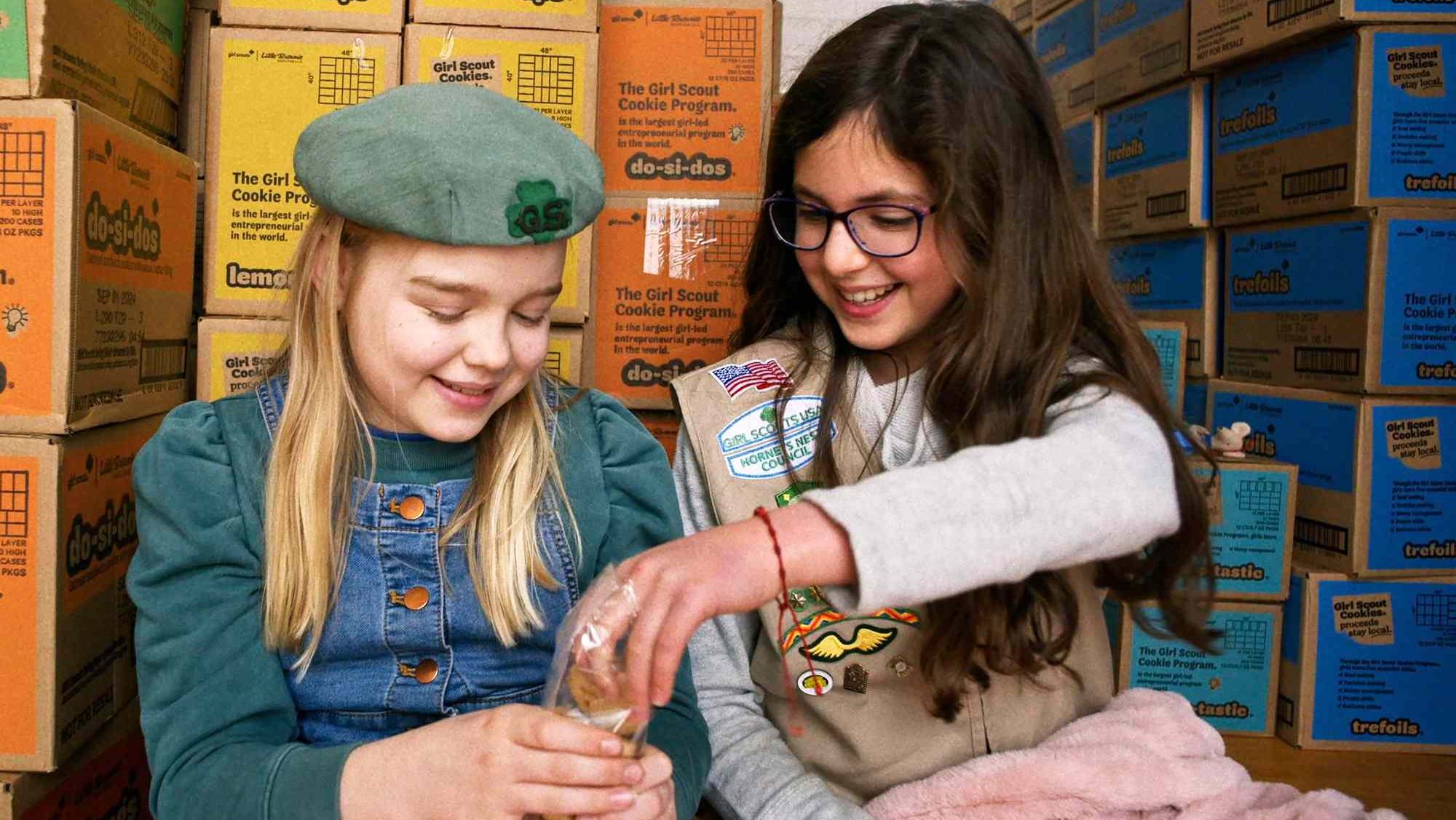
The film focuses on four Girl Scouts pulling out all their respective stops to sell as many boxes of cookies as possible during the somewhat brief “season” for the beloved treats. Over the course of what is to be a truncated run of only five weeks, each one has their own version of success. Olive from Charlotte is a highly-motivated Type-A girl boss who has set sales records in her district for seven years running, and her success has been highlighted by local media in North Carolina. In Chino, Nikki is facing her first major push, having something of a family reputation to live up to, after her now-teenage sisters Nala and Nyah had become top sellers. Her ultimate goal is to sell enough to earn the money to finance a trip to Europe, one her siblings have already taken, and which her mother holds her to. Young Shannon Elizabeth in El Paso hopes to be able to attend a scouting camp with the proceeds from her sales. Contrasting them all is Ara from San Diego, a five-year-old with juvenile diabetes who’s more in it for the experience than anything else. This is spotlighted by the fact that while the other three girls have sales goals in the thousands (or tens of thousands) of boxes, Ara just wants to sell 55 total initially, a number she bumps up to 60 so that she can get a branded bandanna as a prize.
Over the course of about 90 minutes, we see each youngster attempt their own unique tactics. Ara, having just started this journey, is content to just drag a wagon around and sell what she can with a simple request to passersby if they want some. Shannon Elizabeth tries traditional methods of setting up booths and going door-to-door. Olive has a website and aggressively works to cultivate an online following to move the product, complete with her dad filming social media videos for her and coaching her on her camera presence. Nikki’s sisters went viral with cheers and dances when they were younger, so she’s trying to replicate that. Each approach has its advantages and disadvantages, and there’s a lot of attention spent on how they adapt over the course of the campaign.
Now, this could have just been a chance to go “Awwwww” at precocious youths putting their collective best feet forward, but Nahmias knows that to make this resonate, it has to be more than just a puff piece. Because we all know Girl Scout Cookies, and we all have our favorites (Samoas/Caramel deLites and Tagalongs/Peanut Butter Patties for me). If all we got was an hour and a half of sales, it’d be adequate, but it wouldn’t really advance anything to show what this process can really feel like, nor would we get a real chance to celebrate our subjects overcoming adversity.
That’s the opportunity Nahmias takes to make this into something more, as each child encounters some hardship along the way. Ara certainly has the fewest concerns, but she still wants to feel the sense of accomplishment in meeting her self-assigned numbers, and given how young she is, any disappointment could be devastating to her little world. Nikki feels the pressure to live up to her sisters, whom she clearly sees as role models, especially when their sales start dropping because some potential customers point out that they look “too old” to be Girl Scouts. This forces Nikki into a position where she feels she has to pick up some perceived slack on Nala and Nyah’s parts, while also trying to break into their adolescent world and be treated as an equal. There’s even a slight push from her mother, who never got a chance to be a scout, and who enrolled all three of her daughters to give them the opportunity she never had, and Nikki feels the weight of trying to justify that investment.
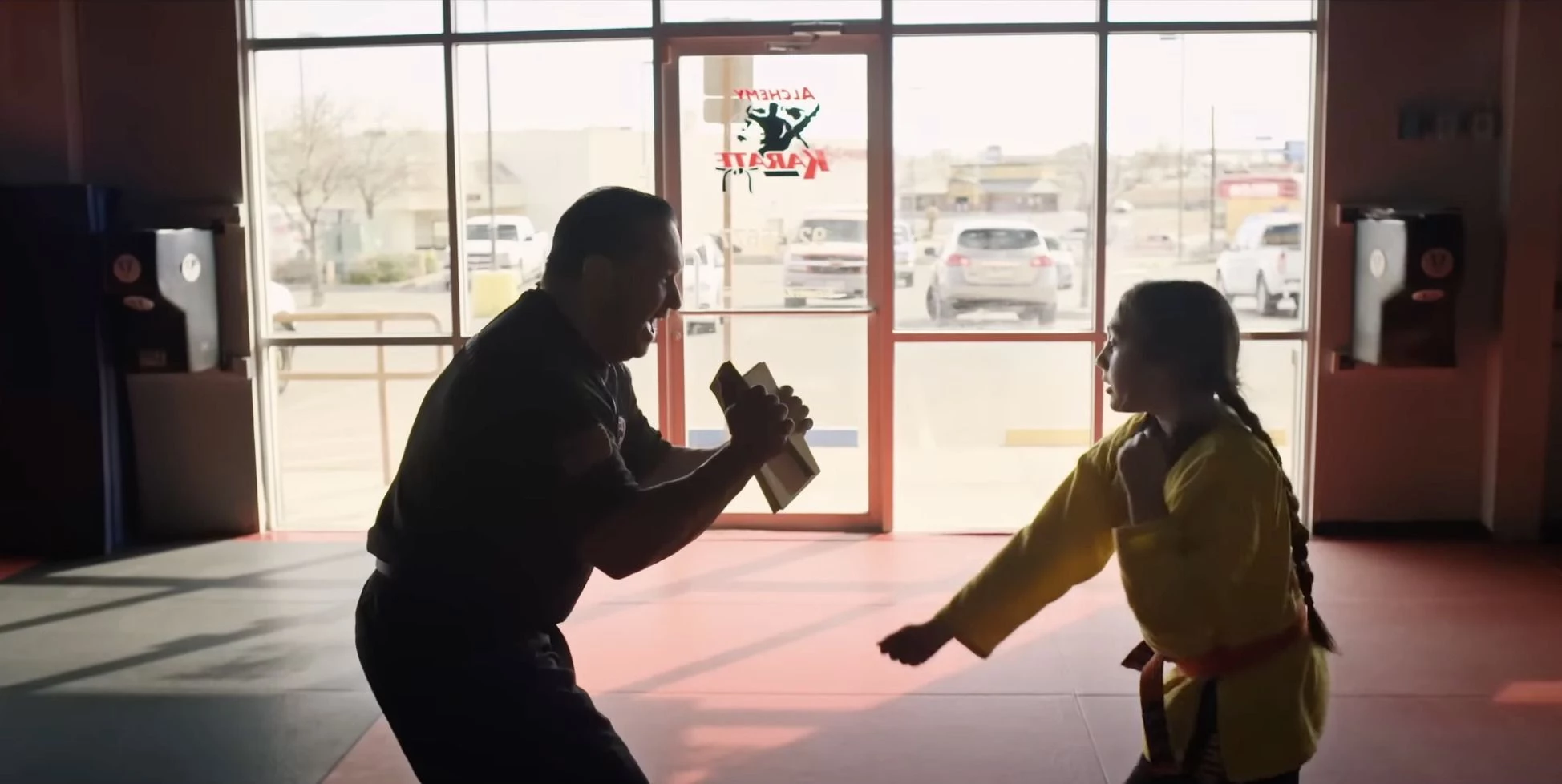
Speaking of investments, Shannon Elizabeth has the hardest go of the bunch, but she’s rarely aware of it. As her parents note, this racket is run like a lot of multi-level marketing schemes, where the girls and their families have to buy the cookies in advance, then sell them and send the profits back to the organization. I’d wager that for many kids, this isn’t that big of an issue, because they only order what they know they can sell, but for Shannon Elizabeth, who lives in a working class household and has a high benchmark to clear so that she can make it to camp, this represents a significant gamble on her family’s part. If she doesn’t meet her goal, her parents are still on the hook for the cost. They do their best to keep her blissfully ignorant of the stakes, so as not to stress her out with these hard truths, but candidly they often worry about whether they can afford to pay for any unsold cookies, especially when they can’t afford to just send the girl to camp in the first place.
All of this comes back to the central idea that these are extraordinary young women who are participating in a time-honored rite of passage, but crucially still need to be allowed to be kids. No better is this illustrated than through Olive, who is constantly pushing herself to go beyond her limits, to the astonishment and worry of her parents. Nearly every waking moment is devoted to this endeavor, including etiquette classes where she spends an entire social event going over numbers with her dance partner. She often tells her mother (who is also her troop leader) that she wants to quit, but there’s this odd sort of addictiveness to the process that won’t allow her to give it up entirely. She’s already developing behaviors of a zero-sum capitalist, even though she still speaks with something of a speech impediment where she slurs her r’s. It’s darling, but also somewhat tragic. That need to be as brutally honest as a family film can be is what sells the finished product to the audience far beyond our nostalgia for the confections themselves.
I’ve been on the periphery of this annual exercise many a time, as my mother and sister were heavily involved in GSA over the years. Mom was a lifelong scout, eventually becoming a troop leader and a counselor at the Grove Point camp in Maryland (which closed in 2022, although the land was donated to the state to extend wildlife refuge property). My sister also attended that camp, and her crowning achievement in sales was getting a pin for hitting 400 boxes during one season. When the film showed numerous scenes of crates piled up in living rooms and the girls filling out spreadsheets to account for their stock, I got serious flashbacks to the same thing happening in my house growing up. Hell, I was even the collateral recipient of some of the perks of this business, as I and a couple other “troop brothers” got to participate in camping trips and pizza parties the group earned as a reward for great sales. And obviously, even though I’ve never been a Girl Scout myself (what with having Y chromosomes and gonads), I still got reminded of all the school fundraisers I had to participate in, selling God knows what for the prize of a neon green velcro wallet that I thought was just the coolest thing EVER at the time, or having my mom sell choir/band candy to her coworkers to finance a Broadway trip in middle school (where she accompanied as an official chaperone).
Nahmias brings it all full circle by highlighting the ingenuity of her protagonists, regardless of the scale of their ambitions, and by making sure to include as much support for them as possible. Olive has her parents and her best friend by her side. Shannon Elizabeth has her family and karate instructor. Nikki has her sisters. Ara has her dad and little brother. More than anything else in these myriad tales of individual perseverance versus harsh reality, each girl’s story emphasizes that when you put your all into something, you never do it alone. This is what leads to the triumph of big moments like Shannon Elizabeth finally figuring out a solution to boost her numbers towards the end, or in cute but poignant asides where Ara tries to sell to a fellow diabetic and realizes that there should be a sugar-free option. Yeah, there should be! Give me access to non-sugar Samoas and I will invent money for you to take all of it so I can have them!
There are a couple hiccups here and there from a production aspect, mostly in terms of dialogue. At several points, particularly with Olive, the girls speak in terms well above their normal grade level, which gives the impression that they’re being prompted for certain deliveries. It is a bit odd to hear someone who can’t properly enunciate talk about “pwofit mawgins” and such. It didn’t bother me all that much, in fact it was ironically adorable, but I can see how it might rub some people the wrong way. Similarly, all the minors in the film are credited with just their last initials for the sake of anonymity, but two of our leads have their surnames spoken out loud, so it kind of defeats the purpose. Again, I don’t care about that, but if someone else does, I can’t blame them.
What matters is the core commitment to showcasing these girls and their developing skills, particularly when it comes to problem-solving, and the people they have behind them helping them to succeed. Part of the credo of the Girl Scouts is that everyone tries hard to “be a sister” to every other scout, and that spirit definitely shines through. The cookie sale is just a convenient and familiar backdrop to convey this universal need for empathy and support. We all love those sweet treats, and we all cheer for those tiny beacons of humanity who present them to us. Thankfully the movie goes so much deeper, not just into the minutiae of the actual capitalistic process, but to what it actually means to set goals, be they humble or lofty, and use that essential combination of hard work and brain power to meet and exceed them. Obviously Nahmias wasn’t going to have us ride along with these girls only to see them fail, because that’s not the type of film this is. However, the bumps in the road are what make the journey worth taking, and in that respect, Cookie Queens is not only entertaining and endearing, but also inspiring. This world is utter shit at times, but it’s such a relief to be reminded that there is hope for the future, even if all we get out of it personally is a tasty dessert.
Grade: A
Join the conversation in the comments below! What film should I review next? Have you seen any documentaries in theatres this year? What’s your favorite flavor of Girl Scout Cookie? Let me know! And remember, you can follow me on Twitter (fuck “X”) as well as Bluesky, subscribe to my YouTube channel for even more content, and check out the entire BTRP Media Network at btrpmedia.com!


One thought on “The Thin Mint Line – Cookie Queens”